

Clutch-Verified Laravel Case Studies by Acquaint Softtech
These laravel project case studies demonstrate how Acquaint Softtech modernized enterprise systems, strengthened fintech backends, optimized payment platforms, and built scalable real estate infrastructure with measurable impact.

Acquaint Softtech
Case studies of Laravel development projects serve a purpose that general capability claims cannot: they demonstrate how specific business problems were solved with specific technical decisions that produced specific, measurable outcomes. A statement that “Laravel is fast and scalable” is a marketing claim. A description of how a regulated fintech platform strengthened its audit trail without degrading transaction throughput and passed a compliance review that had previously failed is evidence.
This article presents four case studies from different industries and application types, each following the same structure: the business challenge before engagement, the technical approach and specific Laravel decisions made, the measured outcomes achieved, and the business impact in commercial terms. All four projects were delivered by Acquaint Softtech teams, and client identities are referenced where publicly available through verified Clutch reviews. Technical and commercial details are drawn directly from those verified accounts.
KEY TAKEAWAYS
|
Case Study 1: Enterprise App Modernization for Online Bank
Client: Xoala — Neo Bank, Sweden | Duration: Aug 2024 – Feb 2025 | Budget: $10,000–$49,999 | Verified Clutch Review
Business Challenge
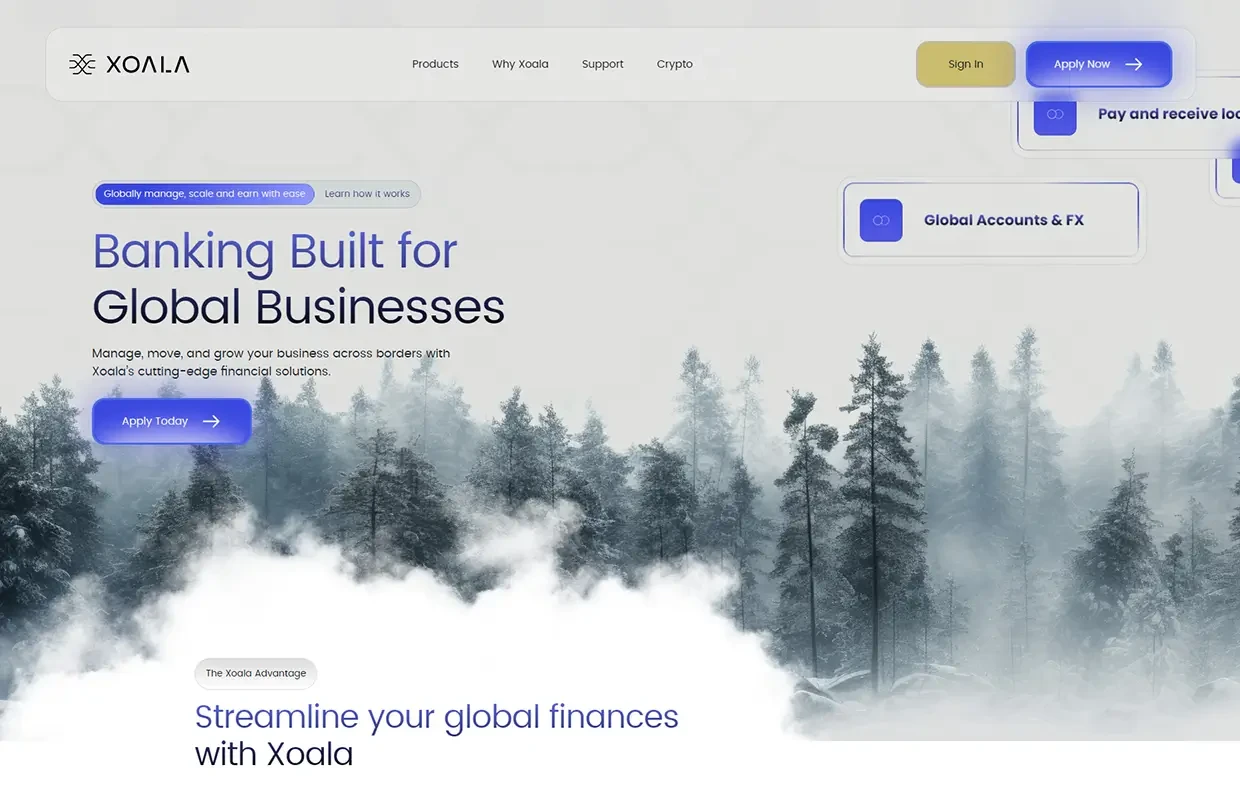
Xoala is a fully regulated Neo Bank providing corporate banking, global payments, card acquiring, and cryptocurrency solutions through a single unified portal built for financial institutions, brokers, crypto firms, iGaming companies, and global businesses. The core backend had been developed rapidly to support product launch, and while it handled parallel banking, card acquiring, and crypto workflows, it had accumulated three critical architectural weaknesses that posed growing regulatory and operational risk.
Internal incident investigations required piecing together information from multiple disconnected systems, making compliance responses slow and incomplete. Access controls were ambiguous across banking, compliance, and support team roles, creating regulatory exposure. And the system’s live payment, IBAN, and wallet activity meant any modernization had to be executed without service disruption a constraint that ruled out a full platform rewrite.
Laravel Solution
Acquaint Softtech was engaged specifically for enterprise application modernization, using Laravel as the backend foundation to restructure sensitive workflows incrementally. Rather than a disruptive full rewrite, the team focused on reinforcing and modernizing the system layer by layer while keeping live operations unaffected throughout.
The engagement delivered: refactoring of legacy backend logic handling financial and crypto operations into clearer, modular Laravel services; implementation of encrypted storage for sensitive operational and compliance data; comprehensive audit logs tied to user actions, system events, and API calls; strengthened API authentication flows across internal services and third-party integrations; and strict access guards reflecting real operational roles across banking, compliance, and support functions.
The project was managed with structured documentation and realistic timelines suited to a regulated financial environment. When regulatory considerations required adjustments mid-delivery, changes were handled transparently without disrupting the delivery timeline.
Measured Outcomes
Audit trail completeness | Incident investigation no longer required assembling data from multiple systems audit trails were complete and readable in a single view |
Access boundaries | Team-level access controls clearly defined and enforced across banking, compliance, and support roles |
System reliability | Live payment, IBAN, and wallet activity maintained throughout modernization with no service disruption |
Security vs. performance | Stronger auditability and encrypted storage delivered without degradation of transaction throughput |
Compliance readiness | System behaviour became predictable under regulatory scrutiny internal reviews became measurably faster to complete |
“They worked as an extension of an internal engineering team as opposed to an external vendor.” — Nick Kundnani, Founder, XOALA (verified Clutch review, Feb 2026, 5.0/5.0) |
Case Study 2: Custom Software Development for FinTech Company
Client: MAP FinTech, Cyprus | Duration: Aug 2024 – Mar 2025 | Budget: $50,000–$199,999 | Verified Clutch Review

Business Challenge
MAP FinTech is a leading global regulatory technology provider specialising in reporting solutions for complex international regulations including EMIR, MiFIR, SFTR, ASIC, MAS, FATCA, DAC6 and CRS. The company has successfully processed billions of transactions and serves more than 200 B2B clients worldwide. As the platform scaled to accommodate new regulatory requirements across multiple jurisdictions simultaneously, three interconnected problems had emerged.
Audit trails were incomplete and inconsistent, making internal compliance reviews slow and difficult to evidence for regulators. Access controls had evolved organically and no longer reflected actual operational roles, creating both security gaps and regulatory exposure. And parts of the enterprise application were becoming difficult to extend under new regulatory requirements without risking regressions in existing reporting pipelines that could not be interrupted.
Laravel Solution
Acquaint Softtech began with a full audit of existing backend flows to identify audit gaps, access ambiguities, and scalability risks before writing a single line of new code. Modernization was then handled incrementally a critical approach given the live regulatory reporting pipelines that served over 200 active clients.
The scope covered six technical workstreams: refactoring legacy backend components into maintainable Laravel-based services; introducing encrypted data handling for sensitive regulatory and client data; implementing detailed and immutable audit logs tied to user actions and system events; strengthening API authentication and authorisation layers; defining strict access guards aligned with internal roles and compliance boundaries; and ensuring backward compatibility with existing reporting workflows throughout.
Project management aligned with how regulated fintech teams operate: planning was detailed, risks were openly discussed, and no shortcuts were taken to meet artificial deadlines. When regulatory clarifications required scope adjustments, the team responded with structured options rather than vague reassurances.
Measured Outcomes
Compliance review efficiency | Internal compliance reviews became noticeably smoother audit trails were clearer and data movement traceable at each stage |
Issue investigation speed | Operational teams reported significantly fewer ambiguities when investigating incidents or responding to regulatory questions |
System performance | Compliance improvements delivered without degrading performance, even under transaction-heavy workloads |
Regulatory extensibility | Legacy components refactored into modular Laravel services now accommodate new regulatory requirements without regression risk in live pipelines |
Access control clarity | Strict access guards aligned with internal roles eliminated the ambiguities that had created ongoing regulatory exposure |
— Panayiotis Omirou, CEO, MAP FinTech (verified Clutch review, Feb 2026, 5.0/5.0) |
Case Study 3: Custom Software Development for Payment Processing Firm
Client: FLIQA Payments, Slovenia | Duration: Mar – Nov 2025 | Budget: $10,000–$49,999 | Verified Clutch Review
Business Challenge
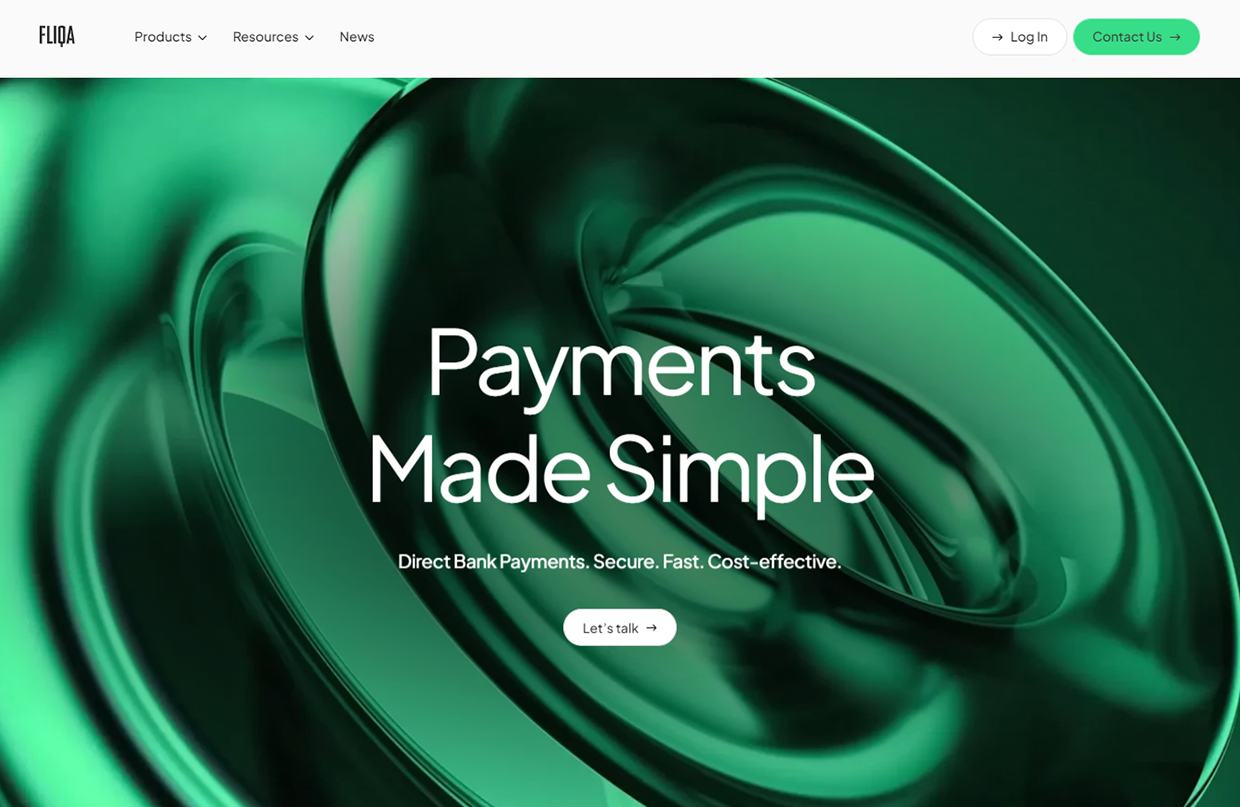
FLIQA Payments provides bank collection and payout services to businesses. As the platform grew, four operational problems had converged: financial events could not be reliably explained after the fact because audit data was fragmented across the system; internal access controls were insufficiently tight, creating both security and operational risk; compliance-focused features could not be added without rewriting substantial parts of the platform; and transaction speed could not be compromised while adding regulatory capability.
The business needed a partner who would start from how money actually moved through the system rather than imposing a generic technical solution — and who understood that in payment processing, adding compliance features that slow transactions is not an acceptable outcome.
Laravel Solution
Acquaint Softtech approached the engagement methodically, beginning with a thorough analysis of the actual financial transaction flow before any implementation began. Laravel was used as the foundation to improve and extend the existing backend, with performance-conscious implementation throughout every compliance feature was tested against transaction throughput benchmarks before deployment.
The delivered scope included: encrypted storage for sensitive financial and banking data; structured audit logs capturing actions, actors, timestamps, and system context for every financial event; role-based access controls preventing unauthorised access without adding friction to operational workflows; strengthened API security layers across all endpoints; and a modular service architecture that allows future compliance features to be added without platform-wide changes.
Measured Outcomes
Financial event traceability | Every financial action can now be fully explained after the fact audit data is structured, complete, and immediately accessible without manual assembly |
Compliance review quality | Compliance reviews became more structured and reliable, with data movement traceable at each transaction stage |
Issue resolution speed | Teams resolve operational issues more quickly because incident investigation no longer requires manual data assembly across disconnected system components |
Platform confidence | Client reported measurably higher internal confidence in the platform’s behaviour and reliability following delivery |
Security vs. throughput | Compliance-focused features added without degrading transaction processing speed the primary business constraint was met in full |
— Nina Strajnar, Co-Founder & CEO, FLIQA Payments (verified Clutch review, Jan 2026, 5.0/5.0) |
Case Study 4: Custom Backend Development for Real Estate Company
Client: Croisette Real Estate Partner Iceland | Duration: Sep 2024 – Apr 2025 | Budget: $10,000–$49,999 | Verified Clutch Review
Business Challenge
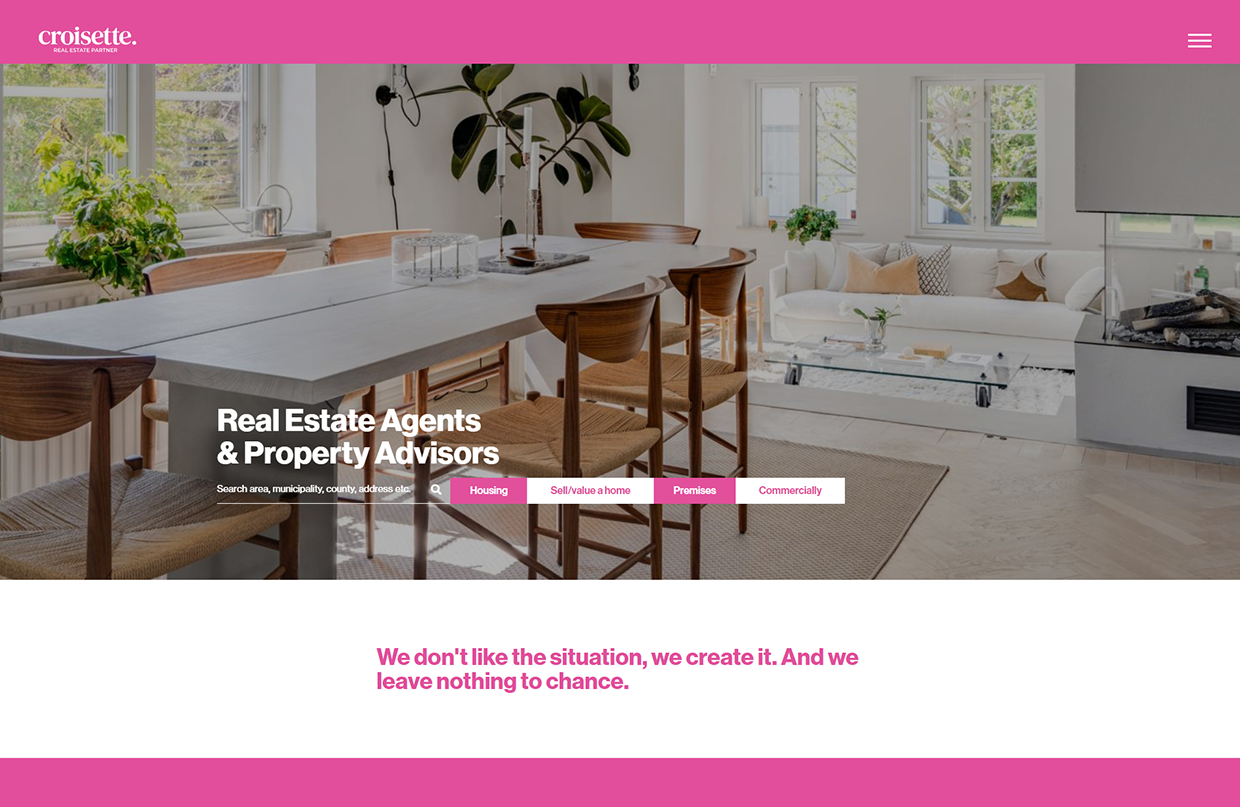
Heimstaden AB is a major residential real estate owner and industrial partner, leveraging extensive strategic and operational expertise across multiple markets. Managing a large residential portfolio at scale creates operational complexity that generic property management software handles poorly: unit condition updates move through inconsistent channels, tenant service requests accumulate in disconnected systems, payment reconciliation produces exceptions that require manual investigation, and cross-team visibility into portfolio status remains limited.
The business needed custom software features that reflected the specific operational workflows of large-scale residential management tracking unit updates with proper audit trails, managing tenant requests from submission through resolution without email chains, and surfacing payment exceptions before they became disputed items.
Laravel Solution
Acquaint Softtech developed custom software features within the existing backend infrastructure, using Laravel to build the operational layer that Heimstaden’s property management workflows required. The engagement focused on the specific problems producing the most operational friction rather than a platform-level rebuild a pragmatic approach that delivered faster value.
Key deliverables included: unit update tracking that captured condition changes, maintenance events, and status transitions with a clear audit trail linked to each property record; a tenant request management workflow moving service requests from submission through assignment, progress tracking, and resolution without relying on email chains; structured ticket management that made historical requests searchable and linked to the relevant unit and tenancy record; and payment reconciliation features that surfaced stuck payments before they reached disputed status.
The project was managed with a stable and transparent style that the client noted explicitly in their verified review: clear milestones, prompt responses to questions, and a team that understood the residential property management context well enough to make decisions that fit operational reality.
Measured Outcomes
Stuck payment reduction | Measurable reduction in payments reaching stuck or disputed status reconciliation issues surfaced earlier in the process |
Tenant misunderstandings | Fewer tenant misunderstandings due to structured request tracking and status visibility replacing ad-hoc email communication |
Ticket search time | Significant reduction in time spent locating historical tickets linked unit and tenancy records made historical data immediately accessible |
Operational transparency | Cross-team visibility into unit status and tenant request progress improved without requiring additional coordination overhead |
Project delivery | All milestones met on schedule; team’s stable, transparent project management style noted in verified client review |
Built on Laravel. Proven in Production. Verified on Clutch.
Conclusion
The four case studies presented here share common patterns: the presenting problem in each case was an architectural limitation that had accumulated as the business grew — incomplete audit trails, ambiguous access controls, fragmented operational data, or legacy components that resisted extension under new requirements. The solution in each case addressed the root cause rather than the symptom, and the most impactful improvements came from application-level work rather than infrastructure changes.
Laravel's architectural patterns modular service design, encrypted storage, structured audit logging, role-based access guards, and queue-based processing are the specific technical tools that produce these outcomes consistently across regulated industries. These are also the core reasons why businesses choose Laravel for mission-critical applications over alternative frameworks. The commercial results were measurable within the project timeline in every case: compliance reviews became faster, incident investigations became clearer, and operational teams reported higher confidence in their systems.
All four applications described were delivered by Acquaint Softtech teams through our Laravel development services. As an Official Laravel Partner with 70+ in-house engineers and over 15 years of delivery experience, we bring the same structured approach to every engagement from discovery through deployment and into ongoing maintenance.
FAQ's
-
What are typical outcomes from a successful Laravel development project?
Measured outcomes from successful Laravel projects we deliver consistently include: compliance and auditability improvements that pass regulatory reviews without degrading system performance; staff time savings of 60–80% for process automation applications; response time improvements of 80–95% for applications with N+1 query problems identified in discovery audits; and security and access control strengthening that makes incident investigation and compliance responses faster without introducing operational friction for end users.
-
How long do successful Laravel application modernization projects typically take?
For mid-scale modernization engagements involving incremental refactoring of existing components rather than full rebuilds: 6 to 8 months from signed scope to production, as shown in the case studies above. Timeline varies primarily by regulatory environment complexity (each compliance workstream adds 2–4 weeks of validation), integration scope (each third-party API integration adds 2–5 days), and whether the existing codebase requires a discovery audit before work begins which we recommend for all regulated-environment engagements.
-
What are the most common root causes of compliance and auditability gaps in Laravel applications?
In order of frequency from our engagement findings:
Audit logs that are incomplete, inconsistent, or not tied to specific user actions and system events
Access controls that evolved organically and no longer reflect actual operational roles
sensitive data stored without encryption because it was added incrementally without a security review
API authentication implemented for the initial use case and not updated as integrations expanded
Backward compatibility assumptions that make legacy components difficult to refactor without regression risk. All five are application-level problems that infrastructure changes cannot solve.
-
How does Acquaint Softtech approach projects in regulated industries?
We begin every regulated-environment engagement with a discovery phase that maps existing data flows, access patterns, and compliance requirements before writing code. Modernization is handled incrementally to protect live operations. Our teams work within NDA-backed processes, ISO-aligned workflows, and direct communication structures that keep both technical and compliance stakeholders informed throughout delivery. As an Official Laravel Partner, we bring framework-level depth to security architecture that generic development teams cannot replicate.
We’re Acquaint Softtech, your technology growth partner. Whether you're building a SaaS product, modernizing enterprise software, or hiring vetted remote developers, we’re built for flexibility and speed. Our official partnerships with Laravel, Statamic, and Bagisto reflect our commitment to excellence, not limitation. We work across stacks, time zones, and industries to bring your tech vision to life.
Table of Contents
Get Started with Acquaint Softtech
- 13+ Years Delivering Software Excellence
- 1300+ Projects Delivered With Precision
- Official Laravel & Laravel News Partner
- Official Statamic Partner