

Speaking on NativePHP Air v3 at Laravel Ahmedabad: Building Mobile Apps Without Leaving Laravel
A first-hand reflection from the Laravel Ahmedabad Community Meetup on NativePHP Air v3, and why Laravel teams can finally ship native mobile apps without leaving the stack they already know

Chirag Daxini
Introduction
I am Chirag Daxini, a Technical Project Manager with 11+ years in software development and delivery at Acquaint Softtech. Most of my work sits where architecture meets execution: turning a business goal into a scalable application and keeping a cross-functional team moving while we get there.
I recently had the opportunity to speak at the Laravel Ahmedabad Community Meetup on a topic I have been genuinely excited about: NativePHP Air v3. This post is less about the slides and more about why this shift matters, and what stayed with me after the room emptied out.
Why I Picked This Topic
For years, the answer to “we need a mobile app” meant adding a stack your Laravel team did not own. A separate React Native or Flutter codebase, or a native team writing Swift and Kotlin. More layers, more handoffs, and more places for a project to slow down.
NativePHP changes that equation. It lets PHP and Laravel developers build genuinely native iOS and Android apps from a single Laravel codebase, using an embedded PHP runtime that runs on the device. No Swift. No Kotlin. The codebase you already maintain becomes the app.
The Big Shift: Mobile Without Leaving Laravel
The headline from v3, also called Air, is simple. NativePHP for Mobile is now completely free and MIT licensed. Not a trial, not a feature-capped tier. The core framework and the essential plugins are open source at zero cost. That single change removes the biggest barrier that kept most Laravel teams from ever trying it.
Your app runs entirely on-device and works offline-first, so you are not tied to a constant server connection. For a team that already thinks in Blade, queues, events, and migrations, the learning curve is small. You are not learning mobile from scratch. You are extending what you already do well.
What Actually Changed in v3 (Air)
.webp "What Actually Changed in v3 (Air)")
A few things I focused on in the session, in plain terms:
Free and open source. MIT licensed, with no license keys, no private repositories, and no subscription to start building.
Modular plugin system. The old monolith is gone. Each native capability, such as camera, file access, dialogs, and share, is now a standalone Composer package. You install only what you need, which keeps the app lean.
Smaller, faster apps. PHP binaries are roughly half the size of earlier versions, so apps boot faster and download quicker.
A plugin marketplace. First-party and third-party plugins now live in one place, which opens the door for the community to build and share their own.
Testing Without the Pain: Jump
One part that always drew nods in the room was Jump. Testing on real devices used to mean gigabytes of tooling and, for iOS, a Mac with Xcode. With Jump you install a free app on your phone, run a single Artisan command, scan a QR code, and your Laravel app loads on the device. No recompile to see a change, just a refresh. Jump even bundles the first-party plugins, including the premium ones, so you can try features before you commit to them.
This is the part that got the most questions. NativePHP now ships Mimi, an AI-assisted way to build mobile apps. It is browser-based, supports voice input, and is powered by Claude from Anthropic together with Laravel Boost. You can describe the app you want and go from idea to a testable build in minutes, then ship to the App Store and Play Store from the same flow.
What I find more interesting than the demo is the direction. AI is becoming a first-class part of how Laravel applications get built, not a bolt-on. At Acquaint Softtech we are already investing in this through our work on Laravel AI development and broader AI development services, helping teams add real intelligence to their products instead of chasing hype. Mimi is a sign of where the whole ecosystem is heading.
Why This Matters for Businesses, Not Just Developers
The technical story is interesting. The business story is the one I keep coming back to.
When mobile lives inside your existing Laravel development workflow, you ship faster because one team owns web and mobile, your feature-parity problem mostly disappears, and your maintenance cost drops because there is one codebase to reason about instead of three. That is a real advantage for product teams that want to move quickly without ballooning their stack or their headcount. If you want the hands-on, step-by-step version, my colleagues have written a separate walkthrough on building cross-platform apps with Laravel and NativePHP.
What Stays the Same
A point worth repeating: NativePHP does not replace your stack. Everything you rely on in Laravel still works. Routes and controllers, Eloquent, Blade, Livewire, Inertia with Vue or React, middleware, queues and jobs, events, and Artisan commands all behave the way you expect. NativePHP simply adds native mobile capabilities on top. That is exactly why it is easy to adopt without rewriting what already works.
The Real Takeaway From the Meetup
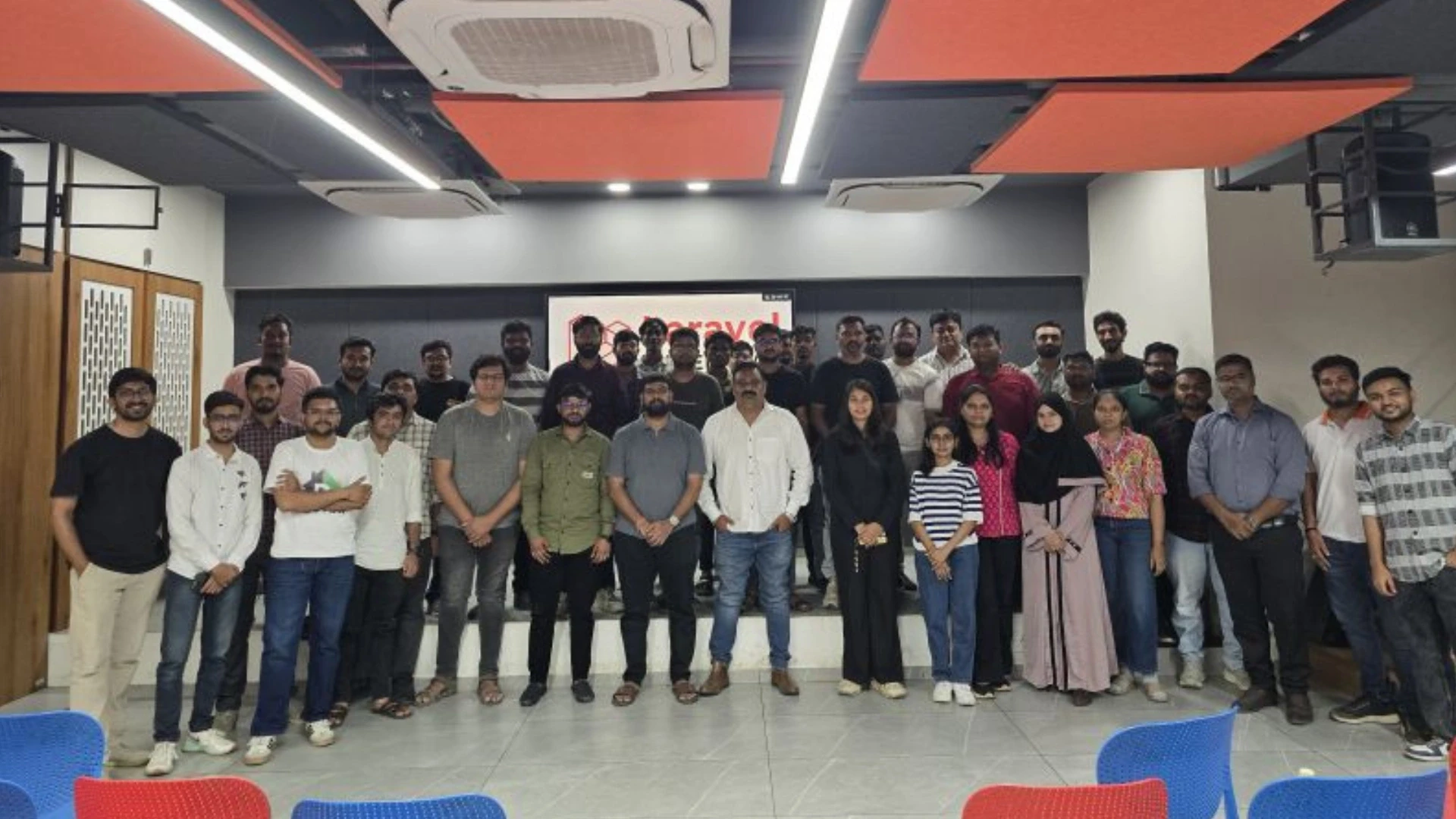
The session was about technology, but the part that stayed with me was the room itself. The questions were sharp. The hallway conversations were better than some conference keynotes I have sat through. You could watch developers connect the dots in real time: “wait, so my existing Laravel app could just become the mobile app?”
That energy is the actual point of a community. Frameworks and tools come and go. What compounds is a group of people willing to learn out loud, challenge each other, and share what is working. A heartfelt thank you to the Laravel Ahmedabad Community team for building a space where that happens.
How We Approach This at Acquaint Softtech
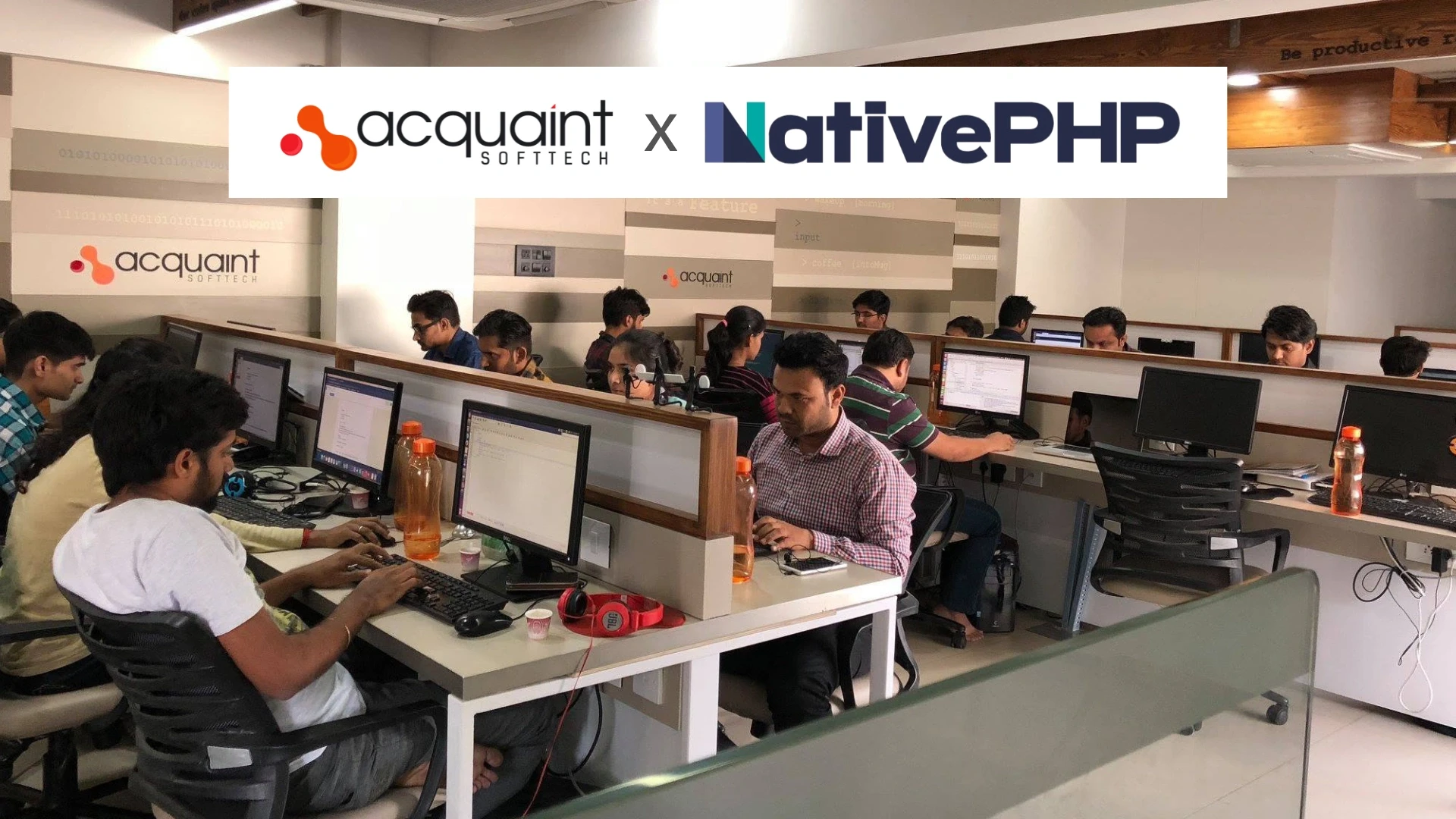
At Acquaint Softtech we have spent 13+ years building with Laravel, and we are an official Laravel and Laravel News partner. Tools like NativePHP fit naturally into how we already work: pick the simplest stack that solves the problem well, and avoid complexity we will have to maintain forever.
If you are a Laravel-first team weighing your mobile options, there are a few ways we help:
Need to extend your team for a mobile push? Our IT staff augmentation model lets you add experienced engineers without a long hiring cycle.
Building from the ground up? You can hire Laravel developers or hire remote developers who already think in this ecosystem.
Adding intelligence to your product? Our Laravel AI development team helps you build AI-driven features on top of the stack you already trust.
View the Full Presentation
If you want the complete walkthrough I shared on stage, including the version timeline, the plugin system, Jump, Mimi, and the wider NativePHP ecosystem, you can go through my full slide deck here: NativePHP Air v3 at the Laravel Ahmedabad Meetup 2026 (Presentation).
Closing Thoughts
NativePHP Air v3 is not just a clever tool. It is a signal of where the Laravel ecosystem is heading: fewer layers, more reach, and a community that keeps lowering the barrier to building real things.
I left the meetup with the same feeling I walked in with, only stronger. The future of Laravel is being built by the people who show up, ask questions, and share what they learn. I am glad to be one of them, and grateful to everyone who made the conversation worth having.
Not Sure If NativePHP Is the Right Fit for Your Mobile App?
The right call depends on how much native device access you need, how complex your app is, and whether your team is already Laravel-first. Send us a short description of what you are building and we will tell you whether NativePHP makes sense, what it would take, and where a different approach might serve you better. An honest read before you commit a single sprint
With over 11 years of experience in web application development and project management, I excel in leading cross-functional teams to deliver innovative digital solutions. My expertise spans eCommerce platforms, ERP systems, and JS & PHP-based frameworks, including WordPress, React JS, and Laravel. As a Technical Project Manager, I specialize in strategic planning, system design, and end-to-end project execution, transforming complex ideas into scalable, high-impact applications.
Table of Contents
Get Started with Acquaint Softtech
- 13+ Years Delivering Software Excellence
- 1300+ Projects Delivered With Precision
- Official Laravel & Laravel News Partner
- Official Statamic Partner
Related Blog
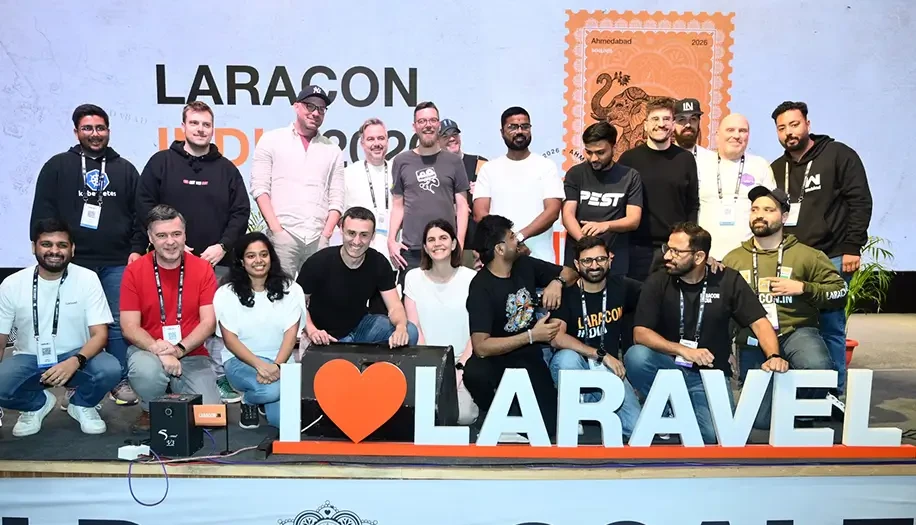
My Laracon India 2026 Journey: From Attendee to Speaker
A first-hand look at Laracon India 2026, sharing the journey from attendee to speaker along with insights on Laravel AI development, vector databases, and intelligent applications.
Chirag Daxini
February 10, 2026
What Laracon India 2026 Taught Us About the Future of Laravel
Laracon India 2026 confirmed Laravel’s transformation into an AI-native, enterprise-ready application platform. With the launch of the Laravel AI SDK, free NativePHP mobile tooling, and a strong focus on scalability, DevOps, and security, Laravel is now a strategic choice for startups and enterprises alike. For organizations outsourcing development, partnering with experienced Laravel teams is the key to turning this innovation into real ROI.
Chirag Daxini
April 14, 2026India (Head Office)
203/204, Shapath-II, Near Silver Leaf Hotel, Opp. Rajpath Club, SG Highway, Ahmedabad-380054, Gujarat
USA
7838 Camino Cielo St, Highland, CA 92346
UK
The Powerhouse, 21 Woodthorpe Road, Ashford, England, TW15 2RP
New Zealand
42 Exler Place, Avondale, Auckland 0600, New Zealand
Canada
141 Skyview Bay NE , Calgary, Alberta, T3N 2K6