

How Property Management Software Works: Tenant Portals, Lease Tracking, and Maintenance Automation
Property management software unifies tenant onboarding, lease tracking, rent collection, and maintenance, all automated, with no manual handoffs. Most landlords notice the gap only after a dispute, missed payment, or backlog. The real questions: how it works, the build cost, and whether it custom-fits your portfolio.

Manish Patel
As Head of Tech and Client Success at Acquaint Softtech, a software product development company with over 1,300+ projects delivered across 13 years, I have watched property managers lose tenants, miss lease renewals, and spend three hours a day on maintenance follow-up, not because they lacked a system, but because their system was four spreadsheets, two WhatsApp groups, and one shared inbox.
When a maintenance request disappears in a thread, the tenant escalates. When a lease renewal reminder does not fire, the landlord loses the window to negotiate rent. When the rent ledger is in one file, and the maintenance log is in another, the property manager spends the first hour of every morning reconciling two sources of truth that should never have been separate.

- Landlords and property managers managing leases, rent, and maintenance manually.
- Product teams building tenant portals, rent collection, or maintenance systems.
- Real estate developers are choosing between custom and ready-made property management software.
- Founders building PropTech SaaS platforms for residential or commercial properties.
This article explains how production-grade property management software features actually work: the tenant portal, lease tracking, maintenance automation, and the full feature architecture, along with exact build costs and a decision framework Acquaint Softtech uses across every PMS engagement. For the broader PropTech context, see our master guide to PropTech platform development in 2026.
Property management software" means different things to different teams, from a simple rent tracker to a full multi-property platform with integrated accounting and IoT maintenance. That distinction drives build scope, integrations, and cost.
Most landlords underestimate what a full lifecycle platform actually requires and end up paying more to bolt on modules that should've been built in from day one. A dedicated software development team for a real estate platform solves this by building a PMS that scales without expensive retrofitting at the 200-unit mark. The definition of your platform determines everything; get that right before touching the stack.
What Property Management Software Actually Is (and What It Is Not)
.webp "What Property Management Software Actually Is (and What It Is Not)")
The regulatory environment your PMS operates in is shifting rapidly. The White House Executive Order on Removing Regulatory Barriers to Affordable Home Construction (March 2026) directs HUD to streamline permitting and compliance frameworks, changes that directly affect how lease compliance modules and inspection workflows need to be configured in any production-grade PMS built today.
Tenancy Record System
The PMS holds a structured record for every tenant: identity verification, application history, occupancy dates, lease versions, communication log, and payment history. The tenant record is the entity all other modules attach to. Without it, maintenance tickets, rent ledgers, and renewal workflows have no single anchor.
Lease Lifecycle Engine
The lease module tracks every version of every tenancy agreement, with automated triggers for renewal windows, rent escalation clauses, break clauses, and deposit milestones. The lease is not a PDF stored in a folder. It is a structured data object with dates, amounts, and rules that the platform enforces automatically.
Financial Ledger and Rent Engine
The rent engine processes scheduled payments, late fee calculations, partial payment allocations, and owner disbursements from one ledger. Every financial event is timestamped and linked to the tenant record, the lease, and the property unit, so reconciliation is automatic, not manual.
Maintenance and Operations Layer
Maintenance tickets, contractor dispatching, inspection scheduling, and work order histories live in the same platform, not a separate app. The maintenance layer links to the property unit record, so every repair history is available at lease renewal and informs the owner statement at period end.
Tenant Portal: The Resident-Facing Layer Explained
The tenant portal is the interface through which a resident interacts with the landlord system. It handles applications, onboarding, rent payment, maintenance requests, communication, and lease document access. A tenant portal built correctly reduces inbound calls to the property manager by 60 to 80 percent, because tenants self-serve everything they would otherwise call about.
The tenant does the action. The platform triggers the response. The property manager reviews exceptions, not every interaction. Below is the architecture of a production-grade tenant portal, module by module.
Portal Module | What the Tenant Does | What the Platform Automates |
Application and screening | Submits application, uploads ID, consents to credit check | Runs background check via Plaid or TransUnion, scores applicant, notifies landlord |
Onboarding and move-in | Signs lease digitally, pays deposit, and uploads utility readings | Generates lease PDF, records deposit in ledger, triggers welcome sequence |
Rent payment | Pays via bank transfer, card, or direct debit on the scheduled date | Post payment to the ledger, issue a receipt, send a 3-day reminder, calculates late fee if missed |
Maintenance request | Submits ticket with photos, priority, and preferred access times | Routes to the correct contractor, sends an acknowledgement, tracks status, and notifies on resolution |
Communication and notices | Reads notices, responds to inspection requests, queries statements | Delivers notice to portal and email, logs read receipts, and archives all communication |
Lease renewal | Reviews renewal terms, signs or initiates renegotiation | Triggers renewal window 90 days before expiry, presents offer, and archives the signed renewal |
Move-out and deposit | Submits notice, schedules final inspection, and provides forwarding address | Calculates deductions, generates an itemized statement, and processes a refund or claim |
The tenant portal runs on a mobile app development platform for residents and a web dashboard for property managers. For portfolios with mixed residential and commercial units, the portal must handle different lease types and payment schedules from the same interface. Acquaint Softtech's React Native app development team builds tenant portals that serve iOS and Android from one codebase, reducing long-term maintenance overhead. In the UK and Australia, over 75 percent of tenant interactions with a landlord system happen on a smartphone, building web-first and retrofitting mobile later produces a worse user experience at a higher cost.
Lease Tracking and the Lifecycle Every Landlord Needs to Automate
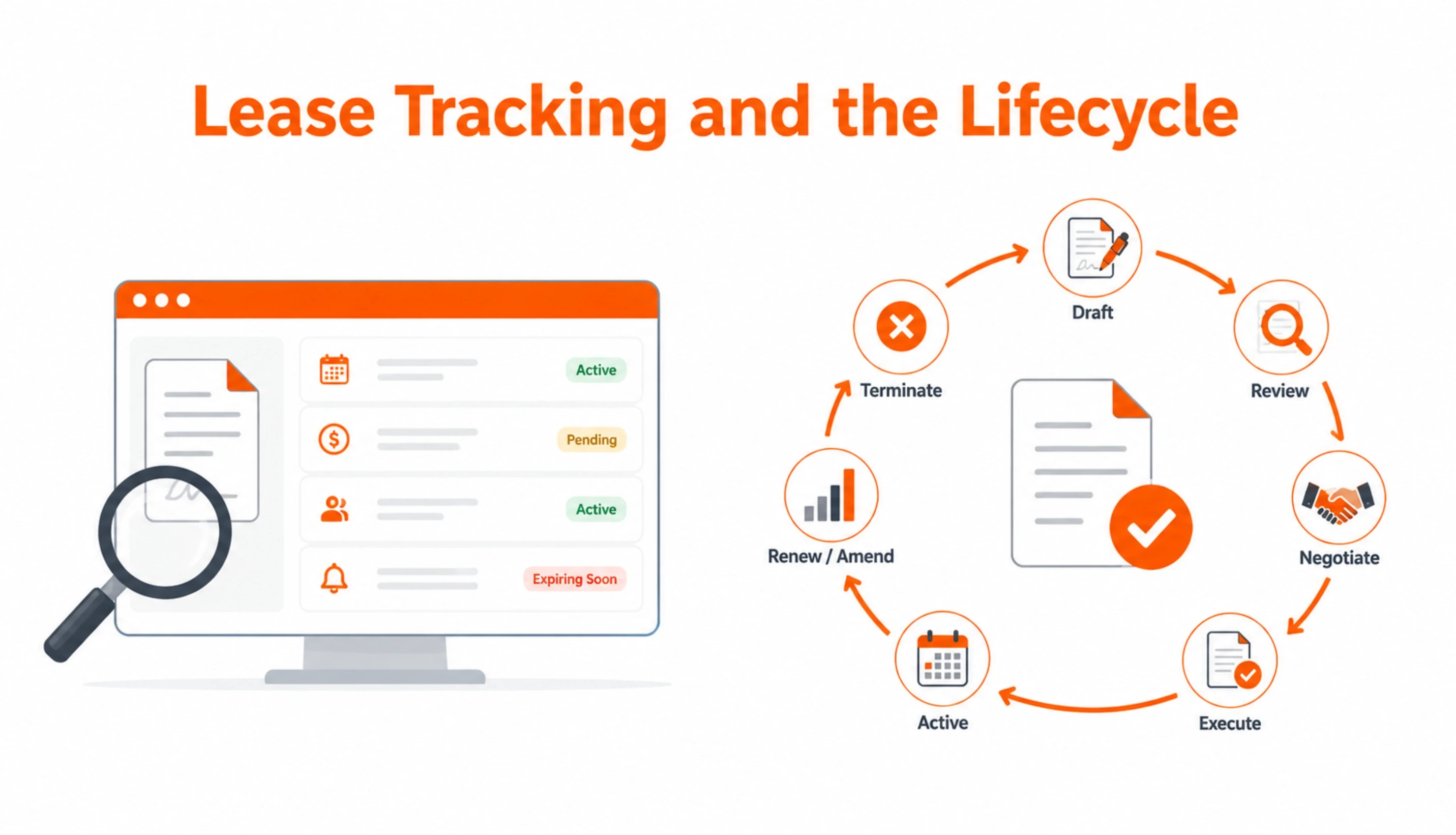
A lease is not a document. It is a structured data object with start date, end date, rent amount, escalation schedule, break clause windows, deposit terms, and renewal eligibility. Property managers who store leases as PDFs in folders are not tracking leases - they are archiving them. The difference is expensive: missed renewal windows, unnoticed break clauses, and manual rent escalations that fire late or not at all.
A lease management module in a production-grade platform tracks the lease as a living data object. Each of the seven events below is automated - no property manager needs to remember to trigger it.
The Automated Lease Lifecycle: 7 Triggered Events
1 | Lease Creation and Digital Signing The lease is generated from a template with tenant-specific data pre-filled - name, unit, start date, rent amount, deposit, and special conditions. The tenant signs via the portal. Both parties receive a PDF copy. The lease record is created with all date fields indexed for future trigger evaluation. |
2 | Rent Escalation Trigger If the lease contains a rent review clause, the platform calculates the new rate at the review date, notifies both parties, and updates the rent engine automatically. The property manager approves before the change goes live. Common in UK Assured Shorthold Tenancies (ASTs) and Australian residential leases. |
3 | Break Clause Window Notification Break clauses are stored as structured dates, not notes in a PDF. The platform notifies the property manager and tenant 60 days before the window opens so neither party is caught off-guard by a right to exit they did not anticipate. |
4 | Renewal Window Trigger 90 days before the lease end date, the platform opens a renewal workflow. The property manager configures the renewal offer. The tenant receives the offer in the portal and signs or initiates a counteroffer. No calendar reminder needed. No email chase required. |
5 | Holdover Detection If the lease expires without renewal or notice to vacate, the platform flags the tenancy as holdover and notifies the property manager. The legal implications vary by jurisdiction, US state law, UK Housing Act, and Australian Residential Tenancies Act. The platform surfaces the status; the property manager handles the response. |
6 | Notice to Vacate Processing When the tenant submits a move-out notice via the portal, the platform calculates the notice period against the lease terms, confirms the legal notice date, schedules the final inspection, and opens the deposit reconciliation workflow. |
7 | Deposit Reconciliation and Return After the final inspection, the property manager records deductions in the platform. The platform generates an itemized deposit statement, posts the deduction to the ledger, and processes the refund through the payment integration. Every step is timestamped for compliance. |
The lease data architecture requires a scalable backend development service that indexes lease dates, tenant IDs, and unit records for fast querying across large portfolios. For reference, the global real estate platform case study documents how Acquaint Softtech managed 162,000+ property records and the data model decisions that kept query performance under 200ms at portfolio scale.
Maintenance Automation: How Request-to-Resolution Works Without Manual Follow-Up
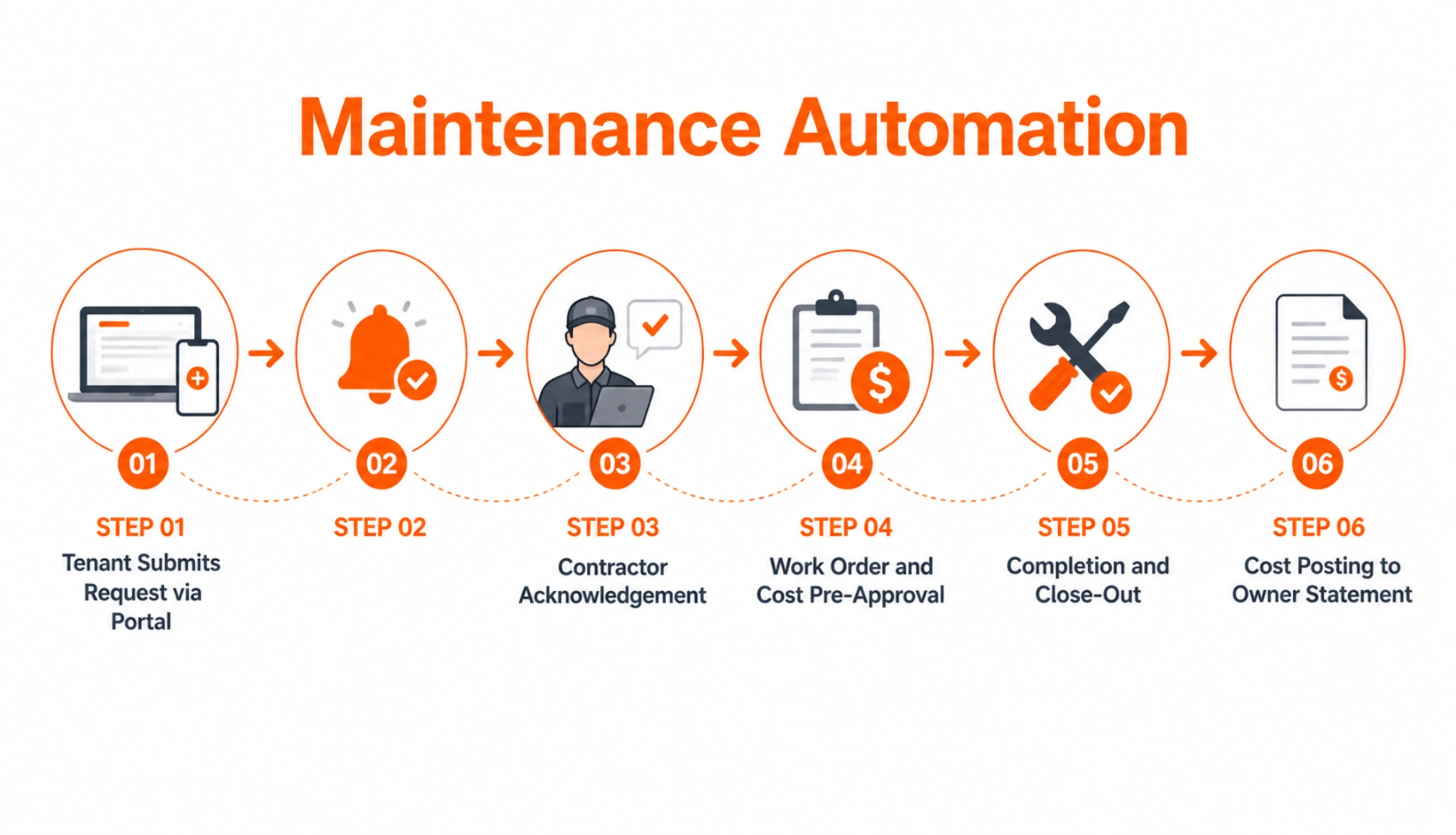
Maintenance is the highest-friction operational area in property management. A tenant submits a request. The property manager receives it, identifies the right contractor, contacts them, confirms availability, follows up on completion, and marks the ticket closed, every step manual, every handoff a potential failure point. A single maintenance workflow on a 50-unit portfolio can consume 4 to 6 hours of property manager time per week.
Maintenance automation removes the manual handoffs. The tenant submits. The platform routes. The contractor receives. The property manager monitors exceptions, not every ticket. Below is how the request-to-resolution flow works in a properly built system.
STEP 01: Tenant Submits Request via Portal
The tenant selects the issue category (plumbing, electrical, HVAC, appliance, structural), uploads photos, rates urgency (routine vs emergency), and specifies preferred access windows. The platform timestamps the request and creates a structured ticket with all fields captured.
STEP 01: Tenant Submits Request via Portal
The tenant selects the issue category (plumbing, electrical, HVAC, appliance, structural), uploads photos, rates urgency (routine vs emergency), and specifies preferred access windows. The platform timestamps the request and creates a structured ticket with all fields captured.
STEP 02: Automated Category Routing
The platform routes the ticket to the correct contractor category based on predefined assignment rules. Emergency tickets bypass the queue and trigger immediate SMS and email to the on-call contractor. Routine tickets enter the standard dispatch queue.
STEP 03: Contractor Acknowledgement
The contractor receives the ticket via the contractor portal or SMS. They confirm availability, propose an access time, and accept or escalate the ticket. The platform sends the confirmed time to the tenant automatically, no property manager intermediary needed.
STEP 04: Work Order and Cost Pre-Approval
For jobs above a configurable cost threshold, typically $200 to $500 USD, the platform generates a work order and routes it to the property manager for approval before the contractor proceeds. Below the threshold, work orders are auto-approved.
STEP 05: Completion and Close-Out
The contractor marks the ticket complete, uploads a photo of the completed work, and logs the final cost. The platform notifies the tenant and requests resolution confirmation. If the tenant confirms, the ticket closes. If not, it reopens with a flag for property manager review.
STEP 06: Cost Posting to Owner Statement
The maintenance cost posts automatically to the relevant property unit's expense ledger and appears in the next owner statement. No manual data entry. No reconciliation between the maintenance log and the accounting system.
The benchmark that matters A well-built maintenance module means the property manager touches fewer than 20 percent of tickets directly. The other 80 percent move from submission to close without manual intervention. If the property manager is touching more than 50 percent of tickets, the routing configuration or contractor response Service Level Agreement (SLA) needs adjustment - not the platform itself. |
Want to See a PMS Architecture Built for Your Portfolio Size?
Acquaint Softtech builds property management platforms for portfolios from 50 to 10,000+ units. We send a team structure, module breakdown, and developer profiles within 48 hours. You interview before you commit. No retainer required.
The Full Feature Architecture: What a Production-Grade PMS Includes
A property management platform is not a list of features. It is a set of interconnected modules where each one depends on the data output of others. The tenant portal depends on the tenant record. The rent engine depends on the lease terms. The maintenance module depends on the unit record. The owner's statement depends on the financial ledger. Build one module in isolation, and you build a siloed tool. Build them as a system, and you get a platform.
Below is the full architecture of a production-grade PMS, the 8 modules that belong in the initial build and the integrations that connect the platform to external services.
Module | What It Does | Key Data It Owns |
Tenant Onboarding and Screening | Application intake, identity verification, background and credit check, applicant scoring, and lease offer generation | Applicant records, screening scores, and decision audit trail |
Lease Management | Lease creation, digital signing, versioning, renewal workflow, break clause tracking, and holdover detection | Lease terms, renewal history, signed documents, and clause dates |
Rent Collection and Ledger | Scheduled payment processing, late fee calculation, partial payment allocation, receipt generation, and refund handling | Rent ledger per unit per tenant, payment history, and arrears log |
Tenant Portal (Resident App) | Self-service rent payment, maintenance request submission, document access, notice receipt, and communication log | Tenant actions, read receipts, message archive |
Maintenance Ticketing and Dispatch | Request intake, contractor routing, work order generation, cost tracking, completion verification, and owner statement posting | Ticket log, contractor assignments, cost per unit |
Inspection and Compliance | Scheduled inspection workflows, condition reports, photographic evidence, and compliance certificate tracking | Inspection records, certificate expiry dates, and condition history |
Owner Portal and Statements | Net income summaries, expense breakdowns, occupancy reports, maintenance cost history, and tax documentation | Owner financial records, disbursement history, and owner-facing reports |
Reporting and Analytics Dashboard | Portfolio occupancy rates, rent arrears by unit, maintenance backlog, lease expiry calendar, and financial performance by property | Aggregated operational metrics, trend data, exportable reports |
Key Third-Party Integrations for a Production PMS
Integration | Purpose | Common Providers |
Payment Processing | Rent collection, deposit handling, late fee charging, and owner disbursement | Stripe, GoCardless, Braintree, Dwolla |
Bank Verification and Tenant Screening | ACH bank link for direct debit, income verification, credit and eviction history | Plaid, Yodlee, TransUnion SmartMove |
Digital Signature | Lease signing, renewal agreements, and inspection reports | DocuSign, HelloSign, Adobe Sign |
Accounting and Tax | Expense categorization, owner statement export, tax document generation | QuickBooks, Xero, Sage |
Listing Syndication | Vacancy advertising to Zillow, Realtor.com, Rightmove, Domain (AU) | RESO Web API, direct feed, Entrata |
Communication | SMS, email, and in-app notifications to tenants and contractors | Twilio, SendGrid, AWS SES |
The database development and optimisation underneath a production PMS handles multi-tenant data isolation, time-series rent ledger entries, and full-text search across maintenance and communication records. For a portfolio of over 500 units, the database architecture at the start determines whether the platform scales without expensive rewrites at 1,000 units.
Building a PMS? Let Acquaint Architect the Module Sequence for Your Portfolio.
We scope PMS builds for landlords, PropTech startups, and real estate developers. Our team defines the module sequence, integration map, and database schema before a single line of code is written. Proposal delivered within 48 hours.
What Does It Cost to Build Property Management Software in 2026?
The cost to build property management software in 2026 ranges from $28,000 for a focused Minimum Viable Product (MVP) covering tenant portal, rent collection, and basic maintenance ticketing, to $95,000 to $180,000 for a full production platform with all 8 modules, third-party integrations, mobile apps for tenants and contractors, and an owner portal. The range is wide because the scope varies significantly. Below is how Acquaint Softtech structures costs across three engagement tiers.
Engagement Tier | What It Covers | Monthly Rate (USD) | Equivalent In-House Cost | Annual Saving |
MVP PMS (3 to 4 months) | Tenant portal, rent collection engine, basic maintenance ticketing, lease record, one payment integration (Stripe or GoCardless) | $14,000 to $22,000/month | $28,000 to $40,000/month in-house | 40% to 50% |
Standard PMS Platform (5 to 7 months) | All MVP features plus inspection module, owner portal, reporting dashboard, digital lease signing, contractor portal, SMS and email notifications | $18,000 to $28,000/month | $38,000 to $55,000/month in-house | 35% to 45% |
Enterprise PMS (8 to 14 months) | All Standard features plus multi-region compliance (GDPR, RERA, Fair Housing Act), advanced analytics, IoT integration for smart access, multi-language tenant portal, white-label for franchise | $22,000 to $38,000/month | $50,000 to $80,000/month in-house | 40% to 50% |
What the Monthly Rate Includes at Acquaint Softtech
Full-stack development team: Laravel or Node.js backend, React or Vue.js frontend, React Native mobile, matched to your architecture requirements
Quality Assurance (QA) engineering and testing on every sprint cycle
DevOps and infrastructure management on AWS, DigitalOcean, or GCP, depending on your compliance requirements
Project management and weekly sprint reporting with a named project manager
Integration development for payment, tenant screening, and digital signing providers
Database architecture and query optimization for your target portfolio size
90-day post-launch support window included at no additional cost
The rate the client pays is the rate. No additional employer overhead, benefits cost, or recruitment fee on top. Acquaint Softtech sends a team structure and developer profiles within 48 hours of the initial scoping call. The client interviews developers before the engagement starts.
Authority Context: The Cost of Manual Property Management According to the National Association of Realtors (NAR), over 48 million rental units in the US are managed by small to mid-size landlords using fragmented manual processes. The average cost of a late or missed rent payment across a 50-unit portfolio is $1,200 to $2,400 per year in admin time and collection costs. A properly built rent automation module recovers this cost in the first operating quarter. Source: NAR Research, 2025 Rental Housing Report - nar. realtor |
The 5 Questions That Tell You Whether to Build or Buy a PMS
The build-vs-buy decision for a property management platform is not primarily a cost decision. It is a fit decision. Off-the-shelf PMS products, Buildium, AppFolio, Rent Manager, Arthur Online, and Console Cloud, cover standard residential workflows well. They break down at the edges: unusual lease structures, multi-jurisdictional compliance, custom owner reporting, proprietary system integration, or white-labelling for a franchise. These five questions identify where your operation sits. For guidance on when an MVP development approach is the right first step rather than a full platform build, the answer usually follows from Q5 below.
Q1: Does your portfolio include lease types or tenancy structures that off-the-shelf PMS products do not support (commercial, mixed-use, co-living, purpose-built student accommodation, short-term within long-term)?
Yes: A custom platform or heavily customized off-the-shelf system is necessary. Standard lease modules do not handle mixed lease types without expensive workarounds.
No: Standard residential off-the-shelf PMS covers your needs. AppFolio or Buildium serve portfolios of up to 5,000 standard residential units.
Q2: Do you need to white-label the tenant portal and owner portal for a property management franchise or multi-brand operation?
Yes: White-labelling is not available on most standard PMS products. Build a custom platform or evaluate enterprise tiers such as Yardi Voyager, which carry $80,000 to $250,000 per year in licence fees.
No: Standard branding within an off-the-shelf product is sufficient for single-brand operations.
Q3: Do you operate across more than one jurisdiction with meaningfully different compliance requirements (US and UK, US and UAE, or Australia and New Zealand)?
Yes: Multi-jurisdictional compliance, Fair Housing Act (FHA), Housing Act 1988 (UK), Real Estate Regulatory Authority (RERA) UAE, Residential Tenancies Act (AU), requires custom logic that off-the-shelf products handle inconsistently.
No: Single-jurisdiction operations are well-served by off-the-shelf products with jurisdiction-specific configurations.
Q4: Do you need to integrate the PMS with proprietary internal systems such as a custom accounting system, bespoke CRM, existing owner portal, or IoT access control?
Yes: Integration APIs in standard PMS products are limited. Custom integration layers are expensive and brittle at scale. A custom-built platform with a well-designed API layer is more durable.
No: Standard integrations, QuickBooks, Xero, Stripe, and Plaid are available in most off-the-shelf products.
Q5: Is the PMS itself a product you intend to sell or license to other property managers as a vertical Software as a Service (SaaS) play?
Yes: You are building a SaaS product, not buying operational software. The entire build must be architected as multi-tenant SaaS from day one. Off-the-shelf is not an option.
No: If the PMS is internal operational software only, evaluate off-the-shelf first before committing to a custom build.
If you answered Yes to 3 or more questions, a custom build is the right structure. Acquaint Softtech can scope the build based on your Yes answers in one working session. For the staff augmentation model, where your internal team leads the build and Acquaint augments specific skill gaps, the scoping session identifies which modules to build first and which engineers to bring in.
Answered Yes to 3 or More Questions? Let Us Design Your PMS Build Plan.
Send us your Yes answers, and we will return a module build sequence, team structure, and cost range within 48 hours. No retainer. No commitment until you have interviewed the proposed team.
Common Misconceptions About Property Management Software
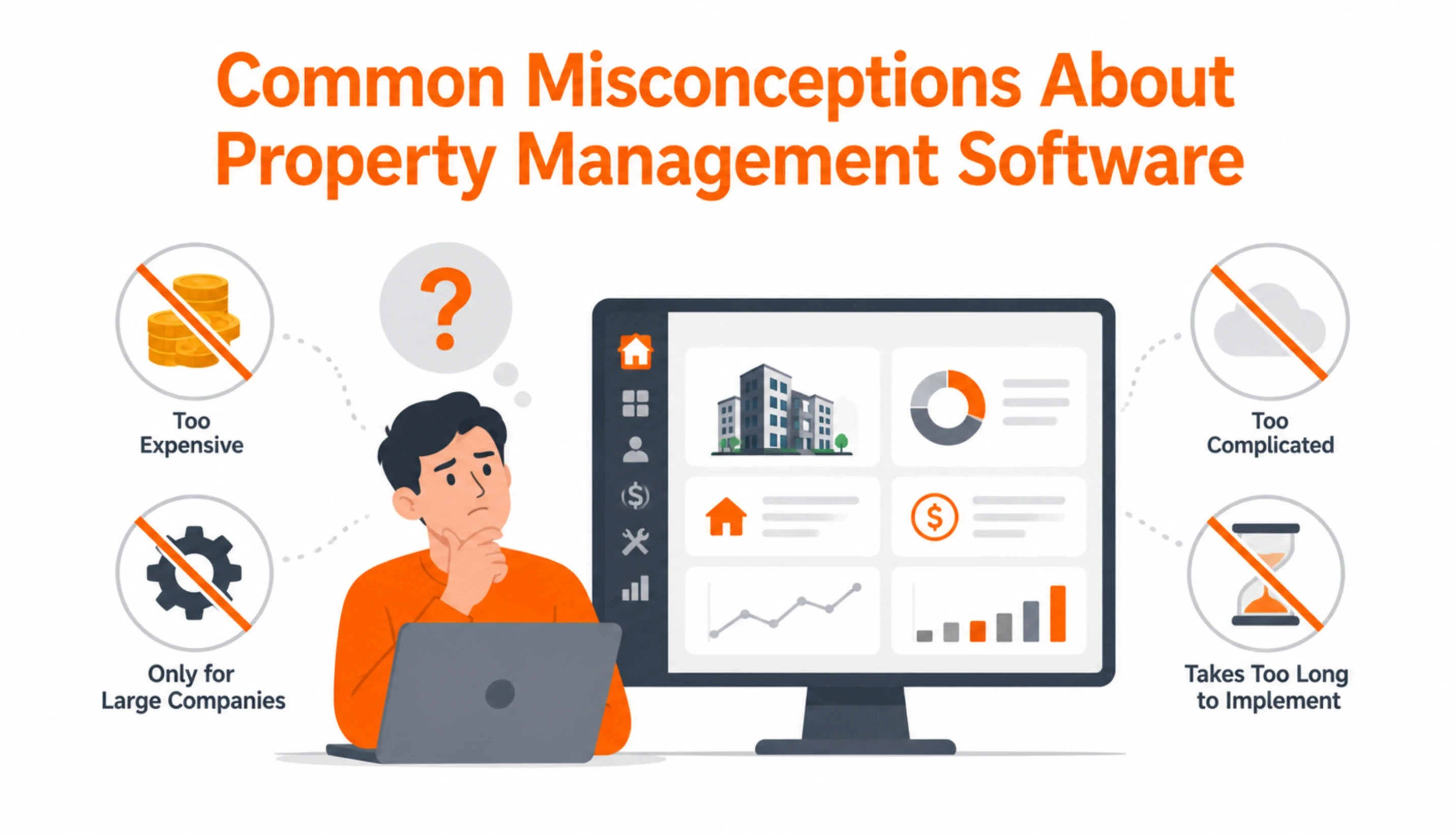
Property management software is one of the most misunderstood categories in PropTech. The misconceptions below consistently surface in scoping conversations and cause projects to underdeliver on their operational goals. Correcting them before the build starts saves significant rework.
Misconception: A PMS is just a payment collection tool with a few extra features. Reality: A payment engine is one module of a PMS. The defining value of a production-grade platform is the lease lifecycle engine, the maintenance coordination layer, and the data model that connects tenant records, unit records, and financial records into one source of truth. A payment tool without these layers is not a PMS - it is a billing SaaS with a property name field. Landlords who build payment tools first and add lease and maintenance modules later typically rebuild the data model in year two at higher cost than doing it correctly in year one. |
Misconception: Off-the-shelf PMS products are almost always cheaper than building custom. Reality: For standard residential portfolios under 500 units in a single jurisdiction, off-the-shelf products such as AppFolio at $1.49 per unit per month or Buildium at $50 to $460 per month are cheaper to operate. For portfolios over 500 units, multi-jurisdictional operations, or any portfolio with non-standard lease structures, the annual licence cost of enterprise PMS products ($80,000 to $250,000 per year for Yardi Voyager or MRI Software at scale) exceeds the cost of a custom build within 24 to 36 months. Total Cost of Ownership (TCO) analysis over 5 years almost always favours custom for complex operations. |
Misconception: The mobile app is a nice-to-have addition after the web portal is built. Reality: The tenant portal is used primarily on mobile. Building the web portal first and retrofitting mobile later produces a degraded user experience and a higher development cost than building mobile-first from the start. The correct architecture decision is to design the API layer once and deliver the tenant-facing experience via a React Native or Flutter app that shares the same endpoints as the web portal. Acquaint Softtech's dedicated Laravel and React Native development team is built for exactly this pattern: one API, two surfaces, shared authentication and notification infrastructure. |
Misconception: Maintenance automation means the property manager does less work overall. Reality: Maintenance automation changes the work, not just the volume. The property manager shifts from doing repetitive manual handoffs to supervising exceptions and managing contractor quality. The first 90 days after a maintenance module launches typically show an increase in visible ticket volume, because tenants who previously did not bother submitting requests now submit them easily. The increase is not a failure - it is a signal the product is working. The total time spent on maintenance drops significantly; the nature of the remaining work changes from coordination to oversight. |
Ready to Build a Property Management Platform That Scales Beyond 200 Units?
From tenant portals to lease lifecycle automation and maintenance dispatch, Acquaint Softtech builds PMS platforms for portfolios from 50 to 10,000+ units. Our dedicated Laravel and React Native team can be deployed within 48 hours. You review, interview, and approve before the engagement starts.
Frequently Asked Questions
-
What features does property management software need?
A production-grade property management platform needs eight core modules: tenant onboarding and screening, lease management with lifecycle automation, rent collection and financial ledger, a tenant-facing portal (web and mobile), maintenance ticketing and contractor dispatch, inspection and compliance tracking, an owner portal with financial statements, and an analytics dashboard.
-
How does a tenant portal work in a property management system?
A tenant portal is a secure, authenticated interface where a resident completes every interaction with the landlord without calling or emailing. The tenant submits their rental application, uploads identity documents, signs the lease digitally, pays rent on a scheduled date, submits maintenance requests with photos, reads notices, and accesses their lease and payment history, all from one interface.
-
How do you automate maintenance requests in property management software?
Maintenance automation works by replacing manual handoffs with structured routing rules. When the tenant submits a ticket, the platform identifies the issue category, routes it to the correct contractor based on predefined assignment rules, sends the contractor a work order, notifies the tenant of the assigned contractor and expected access window, and tracks the ticket to close. Completion is confirmed by contractor upload and tenant confirmation. Property managers touch fewer than 20 percent of tickets manually in a well-configured system.
-
How much does property management software development cost in 2026?
A focused MVP covering tenant portal, rent collection, lease records, and maintenance ticketing costs $28,000 to $55,000 to build over 3 to 4 months at Acquaint Softtech rates. A standard full-feature platform with all 8 modules, integrations, and mobile apps costs $85,000 to $150,000 over 5 to 7 months.
-
How long does it take to build a property management app?
A minimum viable property management app, tenant portal, rent engine, and maintenance ticketing- takes 3 to 4 months to build and deploy at Acquaint Softtech. A standard platform with all core modules takes 5 to 7 months. Enterprise-grade builds with multi-jurisdictional compliance, IoT, and white-labelling take 8 to 14 months.
-
Should I build or buy property management software?
Build when three or more of these are true: your lease structures are non-standard (commercial, co-living, student accommodation), you need white-labelling for a franchise or multi-brand operation, you operate across multiple jurisdictions with different compliance requirements, you need custom integrations with proprietary internal systems, or the PMS is a SaaS product you intend to sell.
-
What tech stack is best for property management software?
The most common production stack at Acquaint Softtech for a PMS is Laravel (PHP) or Node.js for the backend API, React or Vue.js for the web frontend, React Native for iOS and Android tenant and contractor apps, PostgreSQL or MySQL for the primary database, Redis for session management and notification queuing, and AWS for infrastructure.
-
What compliance requirements apply to property management software?
Compliance requirements depend on jurisdiction. In the US, Fair Housing Act compliance is mandatory; the platform cannot apply screening criteria that discriminate on protected characteristics, and the audit trail for every screening decision must be preserved. In the UK, platforms handling tenant deposit data must comply with the UK General Data Protection Regulation (GDPR) and the Tenancy Deposit Protection scheme.
I lead technology and client success at Acquaint Softtech with one goal in mind. Deliver work that feels personal, reliable, and worthy of long term trust. I stay close to both our clients and our developers to make sure every project moves with clarity, quality, and accountability.
Table of Contents
Get Started with Acquaint Softtech
- 13+ Years Delivering Software Excellence
- 1300+ Projects Delivered With Precision
- Official Laravel & Laravel News Partner
- Official Statamic Partner
India (Head Office)
203/204, Shapath-II, Near Silver Leaf Hotel, Opp. Rajpath Club, SG Highway, Ahmedabad-380054, Gujarat
USA
7838 Camino Cielo St, Highland, CA 92346
UK
The Powerhouse, 21 Woodthorpe Road, Ashford, England, TW15 2RP
New Zealand
42 Exler Place, Avondale, Auckland 0600, New Zealand
Canada
141 Skyview Bay NE , Calgary, Alberta, T3N 2K6
Your Project. Our Expertise. Let’s Connect.
Get in touch with our team to discuss your goals and start your journey with vetted developers in 48 hours.