

The Complete Guide to PropTech Software Development in 2026
PropTech is not a real estate website with a login. It is a system of record that manages listings, leases, ledgers, and work orders on a single accountable platform. Here is what it costs, how it is built, and how to pick a partner in 2026.

Acquaint Softtech
This guide explains what PropTech software development means in 2026, how to approach it in phases, what it costs, and how to choose between build, buy, or extend. It also addresses the most common issue: defining the right category from the start to avoid rework and delays.
At Acquaint Softtech, most PropTech projects don’t fail because of bad code. They fail because the software is treated like a simple website instead of a structured platform. When MLS feeds, tenant records, and operations are not connected properly, listings go outdated, reports don’t match, and teams waste time across multiple tools. This directly impacts conversions and business efficiency.
With 13+ years of experience and 1,300+ delivered projects, this is a pattern we have consistently seen. This proptech software development guide 2026 is based on that real experience, and reflects how our software product development services are applied in real-world PropTech platforms. Real estate software is not one system. It includes multiple categories like property management, listing platforms, rental marketplaces, brokerage CRMs, smart building systems, and AI-driven tools, each requiring a different architecture and approach.

- Founders are choosing between custom PropTech platforms and existing solutions.
- Product teams managing MLS feeds, lead flow, and reporting systems.
- CTOs planning property management or rental marketplace platforms in 2026.
- Real estate businesses are evaluating long-term PropTech development partners globally.
The 2026 Snapshot: Why PropTech Stopped Being Optional
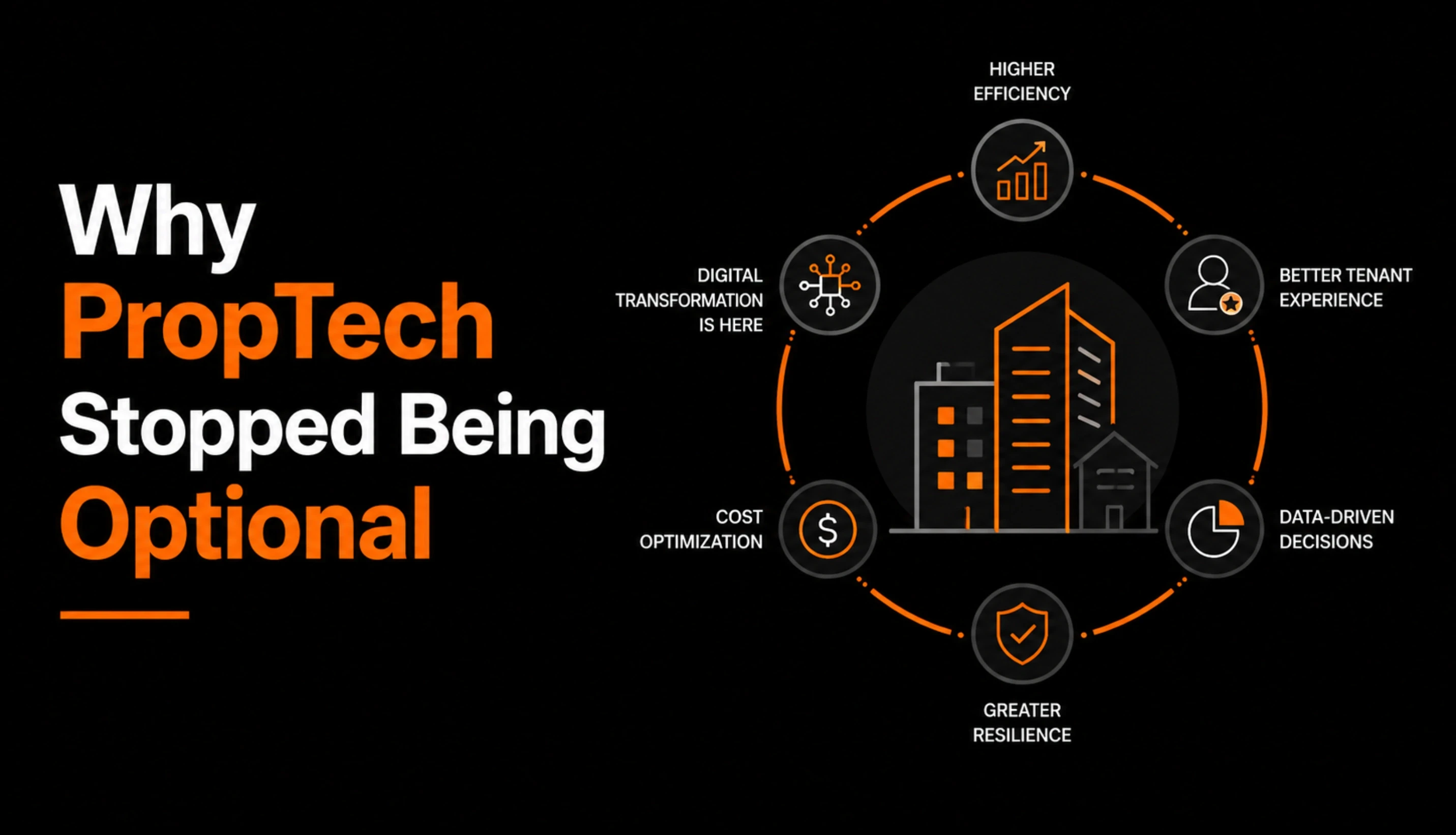
Three years ago, real estate software types were something brokerages discussed in board meetings and rarely shipped. In 2026, the conversation has flipped. The Statista PropTech market overview 2026 reports that the category crossed $40 billion in annual spend globally, and the National Association of Realtors 2026 member survey showed agents using integrated platforms close 24% more deals than those working from spreadsheets. That gap is not closing. It is widening.
What changed? Three things. First, MLS and IDX standards finally matured through the Real Estate Standards Organization Web API, which means listing syncs no longer depend on a developer who happens to know one specific feed. Second, tenant expectations reset after 2023; a 12-year-old can pay rent on Venmo, so paying rent on a PDF invoice feels broken. Third, compliance got teeth.
The quick scoreboard
Below is the 2026 scoreboard Acquaint Softtech uses in discovery calls to frame the conversation. Read each number once. Then read them again, because every one is a decision trigger.
PropTech 2026, in Six Numbers
|
The first number explains why the category is crowded. The middle four explain why most crowded-category entrants fail. The last two explain the gap Acquaint Softtech fills for serious builders, whether through staff augmentation or a full Dedicated Software Development Teams engagement.
What PropTech Actually Is (and the 4 Things It Must Own)
.webp "What PropTech Actually Is (and the 4 Things It Must Own)")
Ask ten operators what PropTech means, and you will get ten definitions. Most are wrong. What is proptech? Property technology is engineered software that converts a real estate operating model into a structured platform with data ownership, role-based access, listing-standard integration, and automated financial accountability. That is the full definition. Everything else is featured.
The simpler way to say it is the one Acquaint Softtech uses with a COO on a first call. A PropTech platform is the system of record. If the spreadsheet still wins an argument, the platform has failed.
The listing record
Every listing its photos, its attributes, its status, its price history, its agent attribution lives inside the platform as a first-class record, synced from the MLS or IDX feed on a defined cadence. No cadence means stale listings. Stale listings mean lost leads. Lost leads mean the platform quietly lost its purpose three weeks ago, and nobody noticed.
The tenant and lease record
The tenancy agreement, the signed documents, the renewal date, the rent schedule, the escalation clauses all living in one place. Not in an email. Not in a PDF on someone's laptop. Not in a filing cabinet in a building the property manager visits twice a year. In the platform, version-controlled, searchable, and exportable.
The money flow
Rent invoices, auto-debit, late fees, partial payments, owner-tenant ledgers, vendor payouts, and management fees. This is the single feature most landlords ask about first and the one most DIY platforms handle worst. A proper money module handles scheduled debits through Stripe or Plaid, enforces late fee rules automatically, and generates owner statements that are tax-ready without a manual export.
The audit trail
Every state change -a lease signed, a rent paid, a maintenance ticket closed, a listing price adjusted - is logged with a timestamp and an actor. When a Fair Housing complaint arrives, a tax authority asks for a report, or a tenant disputes a charge, the answer takes five minutes to produce, not five days. This is the difference between a platform and a prayer.
One-Line Rule
Property technology explained in a single sentence: if a PropTech platform does not own the listing, the lease, the money, and the audit trail in one place, it is not a platform - it is a dashboard pretending to be one.
Six Flavors of PropTech: Pick Yours Before You Spend a Dollar
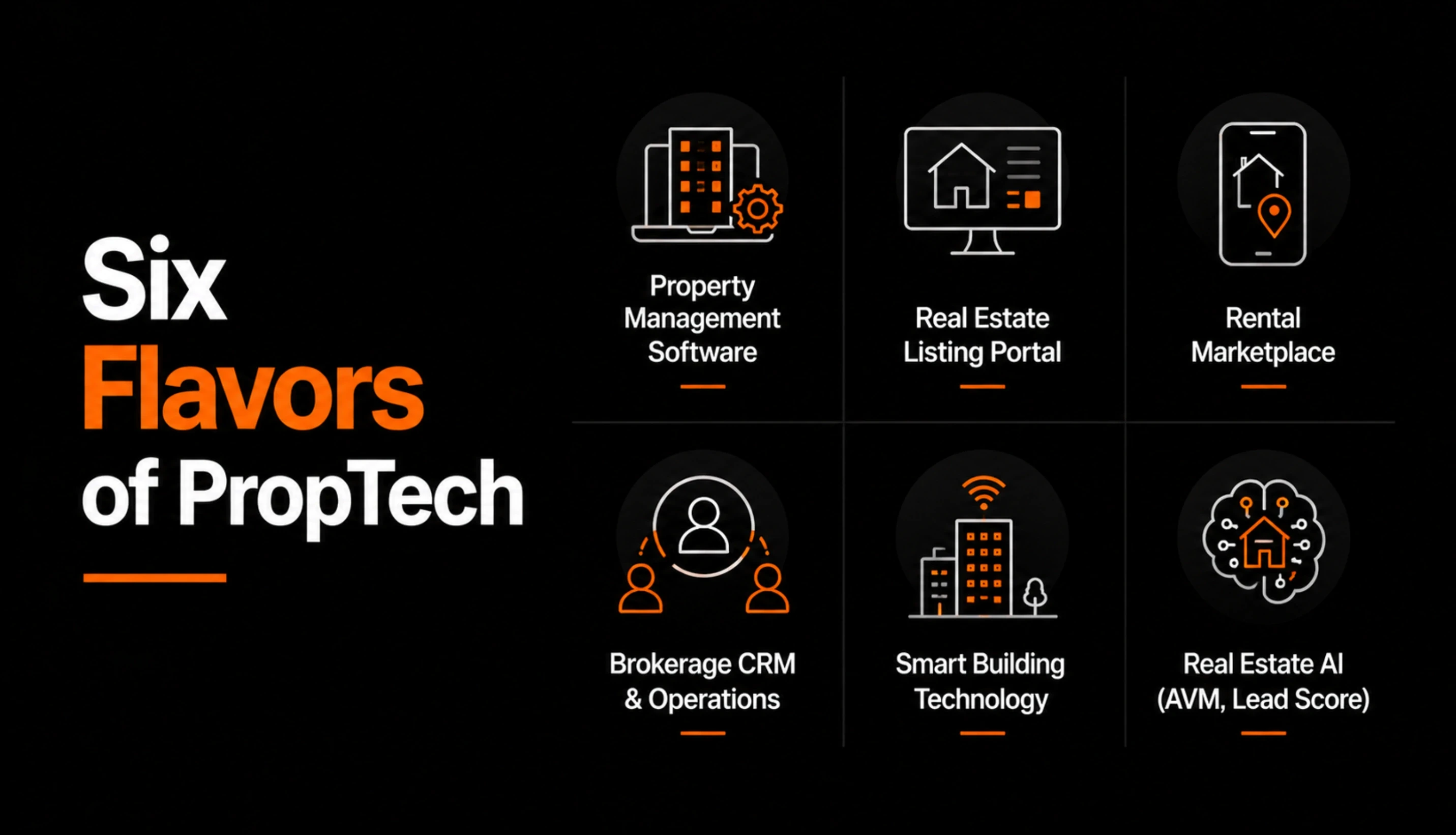
Most real estate software types fail scoping because the team tries to be two categories at once. PropTech has six distinct categories, not one. The table below is the first page Acquaint Softtech shares with any client in a Discovery Workshop. Pick one column before writing a line of code.
Category | Primary User | Owns (Core Data) | 2026 Budget Range |
Property Management Software | Property Manager, Landlord | Tenant, Lease, Rent Ledger, Work Order | $85K – $220K |
Real Estate Listing Portal | Agent, Buyer, Renter | Listing, MLS/IDX Feed, Search Index | $70K – $180K |
Rental Marketplace | Tenant, Landlord, Operator | Listing, Booking, Payment, Review | $95K – $250K |
Brokerage CRM & Operations | Agent, Broker, Admin | Lead, Agent, Commission Split, Deal | $60K – $160K |
Smart Building Technology | Facilities, Tenant, Landlord | IoT Device, Sensor Event, Access Log | $120K – $300K |
Real Estate AI (AVM, Lead Score) | Agent, Investor, Analyst | Model, Feature Store, Inference Log | $80K – $220K |
2026 Build Budget by Category - Upper Range (USD) |
Smart Building Technology ████████████████████████████████████ $300K |
Rental Marketplace ██████████████████████████████ $250K |
Property Management Software ██████████████████████████ $220K |
Real Estate AI (AVM) ██████████████████████████ $220K |
Real Estate Listing Portal ██████████████████████ $180K |
Brokerage CRM & Operations ███████████████████ $160K |
These ranges are for a first production release, not a throwaway MVP and not a five-year roadmap. They assume delivery through offshore engineering at India rates, which is the cost model most US, UK, Australia, and UAE clients use in 2026. For teams that prefer short-term augmentation before a full team, it staff augmentation is the entry point. For teams building the full category from scratch, Product Development is the right page. For teams modernizing an existing legacy portal, Version Upgrade Services handles the migration without breaking live operations.
How to know which category fits
The category is defined by the primary user and the core data the platform owns. If the primary user is a property manager and the core data is a lease, the category is property management software. If the primary user is a buyer hunting for a home and the core data is a listing, the category is a real estate listing portal. When those two are in scope for the same build, the answer is not "combine them." The answer is "ship category one first, category two second, and do not lie to yourself about the timeline."
Not Sure Which PropTech Category Fits Your Business?
Send us a short description of your idea, your users, and your launch geography. Acquaint Softtech runs a category-fit read and returns a written recommendation with budget, timeline, and stack notes - within 48 hours. Free. No pitch deck. No follow-up spam.
From Zero to Launch: The 5 Phases Every Serious Build Moves Through
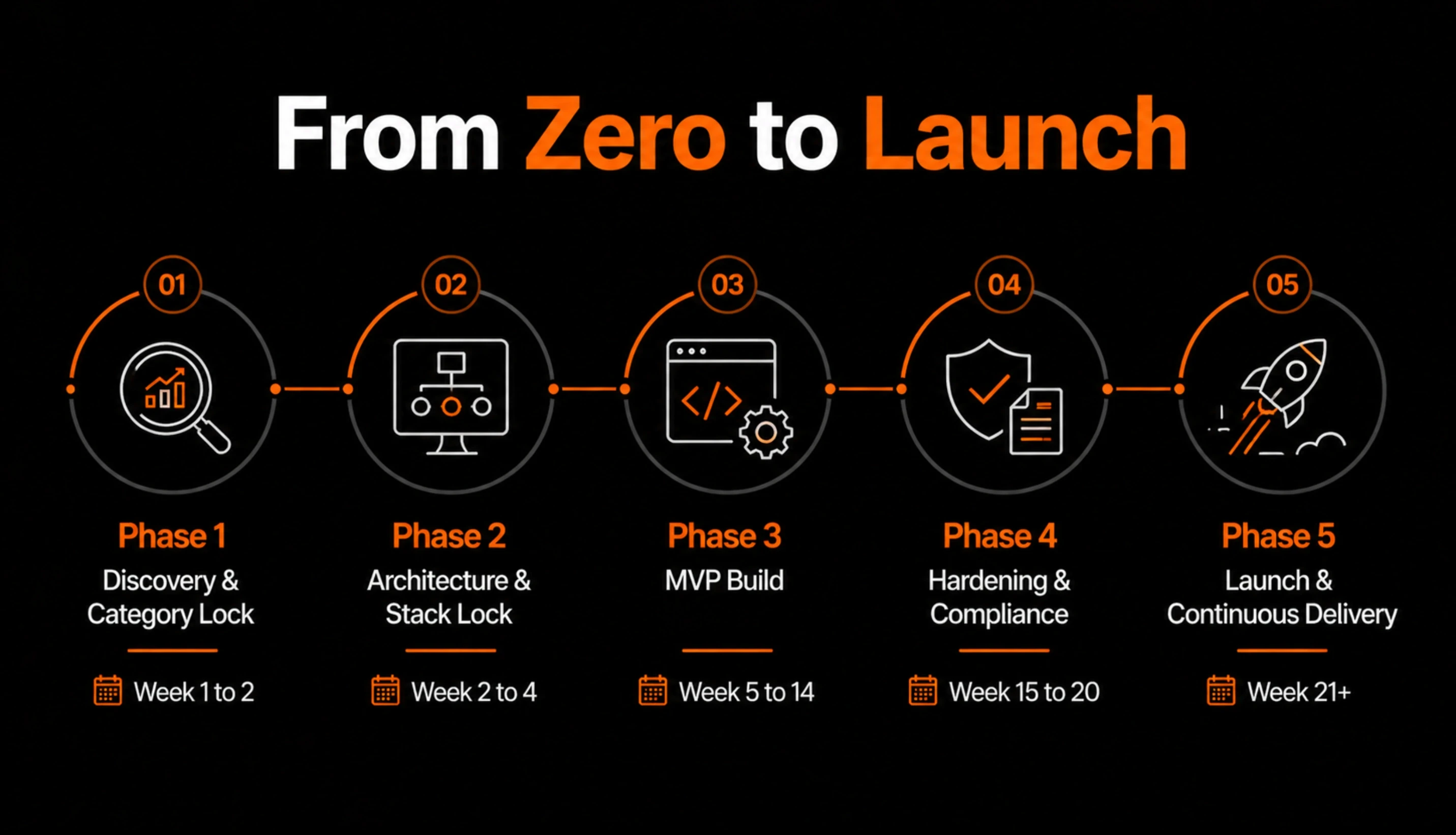
How to build proptech platform projects that actually ship on time? Move through five phases in order. Skip anyone, and the launch date slips. These are the phases Acquaint Softtech runs for every engagement, whether the client arrives through MVP Development or through Software Product Engineering.
Phase 1 - Discovery & Category Lock
The team confirms the category, the primary user, the MLS or IDX feeds in scope, and the integrations that are non-negotiable (DocuSign, Stripe, Plaid, QuickBooks, tenant screening). The deliverable is a written scope with named modules, named integrations, and named risks. If the scope returns as a feature list with no named integrations, discovery has failed, and the build will fail three months later.
Phase 2 - Architecture & Stack Lock
A senior engineer, often working as a CTO, locks the real estate app tech stack, the database schema, the MLS ingestion pattern, the auth model, and the hosting plan. Output: a one-page architecture diagram with every external call labelled and every compliance boundary drawn. No code is written until this page is approved in writing.
Phase 3 - MVP Build
The team ships the smallest version of the platform that owns its category data end-to-end. For property management, that is one tenant onboarded, one lease signed, one rent cycle collected, and one maintenance ticket closed. For a listing portal, that is one MLS feed ingested, normalized, and searchable on a map. The proptech MVP guide rule: own the category data end-to-end, do not chase feature parity with a ten-year-old incumbent.
Phase 4 - Hardening & Compliance
Fair Housing checks for the US, GDPR for the UK and EU, RERA for the UAE and India, PCI scope for any rent collection flow, penetration testing, role-based access review, and an audit log test on every financial state change. This is the phase most teams skip. Every team that skips it pays for the shortcut inside the first three months of live operation.
Phase 5 - Launch & Continuous Delivery
Soft launch to a controlled tenant or brokerage group, then public release, then continuous delivery. This is where Support and Maintenance and planned version upgrades start. Leaving this unowned is the single most common reason PropTech platforms quietly decay in their second year.
The 5-Phase Timeline at a Glance
|
The Feature List Nobody Sends You (But Every Landlord Needs)
.webp "The Feature List Nobody Sends You")
Property management system features are the largest single scope inside PropTech, so the inclusion list below is written for that category. For a listing portal, a rental marketplace, or a brokerage CRM, the structure is identical, with different data at the center. Every item below is a concrete deliverable the client receives, not a benefit sentence dressed up as a feature.
Tenant Onboarding & Digital KYC
Tenant invite flow, ID document upload, credit and background check through integrated bureau APIs, and digital signature on the tenancy agreement. This replaces the email-plus-spreadsheet onboarding most landlords still run in 2026 and cuts onboarding time from 9 days to 24 hours.
Lease Lifecycle Management
Lease creation, renewal reminders, expiry alerts, rent escalation clauses encoded as rules, and a full signed-document archive with version history. The platform, not the property manager's inbox, owns the lease. Renewal reminders fire 90, 60, and 30 days out automatically.
Rent Collection & Ledgers
Scheduled rent invoices, auto-debit via Stripe or Plaid, late fee rules, partial payment handling, owner-tenant ledger reconciliation, and digital receipts. Integrations live in the Backend Development layer, usually on a Laravel or Node.js service, with the money flow audited on every transaction.
Maintenance Ticketing & Vendor Workflow
Tenant-submitted work orders with photo upload, vendor dispatch with auto-routing, cost approval thresholds, and closed-loop confirmation before the ticket is resolved. Every state change is logged. Every vendor interaction is scored. Every repair has a cost record tied to the unit and the tax year.
Owner Statements & Financial Reporting
Monthly owner statements with rent roll, vacancy, repair costs, management fees, and tax-ready exports. Accounting integrations with QuickBooks, Xero, or Zoho Books, depending on the region. A landlord with 40 units should receive a clean statement in one click, not a PDF assembled manually on the last day of the month.
Vacancy, Listing Sync, and MLS/IDX Publishing
When a lease ends, the unit auto-appears in the listing module with current photos and attributes. For platforms that push to external feeds, the publishing module follows the RESO Web API standards that most 2026 MLS integrations rely on. For platforms pulling from IDX feeds, the sync cadence is configurable per feed and logged.
Role-Based Access, Multi-Tenancy, and White Label
Every user has a role. Every role has a permission set. Every property management company on a multi-tenant platform gets its own domain, its own branding, and its own data isolation. For firms that need this at scale, white label development delivers the multi-tenant architecture as a productized offering.
The Non-Negotiables - 7 Features, 1 Rule• Tenant onboarding with digital KYC • Lease lifecycle management with e-signature • Rent collection with integrated payment rails • Maintenance ticketing with vendor workflow • Owner statements with tax-ready exports • Vacancy sync to the listing and MLS/IDX module • Role-based access, multi-tenancy, optional white label
One rule: if any of these seven still live in a spreadsheet, the platform is incomplete. Full stop. |
Real Estate App Tech Stack: What to Pick, What to Skip, When to Switch
Real estate app tech stack decisions are not fashionable. They are a function of three things: which category you are building in, which integrations you depend on, and which talent pool you can realistically hire from. The table below is what Acquaint Softtech recommends in 2026, tuned for US, UK, Australia, and UAE clients with global delivery from India.
Layer | Default Pick (2026) | Strong Alternative | When to Switch |
Backend (monolith start) | Laravel 11 (PHP 8.3+) | Node.js (NestJS) | Heavy real-time data → Node.js |
Backend (AI / ML services) | Python (Django / FastAPI) | Go | AVM, lead scoring → Python |
Frontend web | React 18 | Vue 3 | Brokerage team preference |
Mobile (tenant + agent) | React Native | Flutter | Offline-first IoT → Flutter |
Database (core OLTP) | PostgreSQL 16 | MySQL 8 | Deep JSON / geo → PostgreSQL |
Search (listings, map) | Elasticsearch 8 | Meilisearch | Sub-500K listings → Meilisearch |
Queue/background jobs | Redis + Horizon | RabbitMQ | Cross-service events → RabbitMQ |
Hosting/infrastructure | AWS (multi-region) | GCP, Azure | Existing cloud contract |
Default for a new PropTech platform in 2026: laravel development services on the backend, React on the web, React Native on mobile, PostgreSQL as the core database, Elasticsearch for listing search, AWS for hosting. Python comes in as a service layer for AVM, predictive pricing, or lead scoring through ai development services or the newer laravel ai development path for teams staying Laravel-native. Go and Node.js enter the stack when real-time listing updates or high-throughput event streams are the bottleneck.
Why Laravel by default?
It pairs a mature ecosystem with rapid delivery velocity, and Acquaint Softtech is an Official Laravel Partner with 70+ multi-stack engineers in-house. Why React Native for mobile by default?
Because the same team can deliver React Native App Development for a tenant app and an agent app simultaneously, with shared components. When the mobile workload demands heavy offline sync or native performance for IoT sensors, the team switches to Flutter App Development without changing the backend.
The "when to switch" rules
Switch backend to Node.js when sub-100ms listing updates are a product requirement, not a nice-to-have. Switch database to dedicated geo services when search crosses 5M listings. Switch search from Elasticsearch to Meilisearch when the operational overhead of Elasticsearch exceeds the engineering time saved. Switch mobile from React Native to Flutter when offline-first is a first-class requirement. Switch hosting providers only when a client has an existing enterprise agreement, never for vendor preference.
Who you actually hire
Building a PropTech platform is not about hiring one type of developer. It is about bringing together the right mix of specialists who understand both technology and real estate workflows.
For the backend, most growing platforms rely on hire laravel developers to build a strong, scalable foundation. They handle complex logic like listings, user roles, and integrations in a structured way.
For mobile experiences, especially when you want smooth performance across devices, teams usually go with hire react native developers. This helps you launch faster without compromising on user experience.
When it comes to pricing intelligence or AVM (Automated Valuation Models), you will need to hire python developers. They work on data models, prediction systems, and analytics that power smarter decisions.
If your platform leans more towards a JavaScript ecosystem, then hire MERN stack developers becomes important. They help manage flexible, real-time applications using Node. js-based architecture.
Infrastructure is another critical layer that many teams underestimate. This is where hire devOps engineers comes in. They ensure your platform is stable, secure, and can scale without breaking during high traffic.
Finally, none of this works smoothly without coordination. That is why teams rely on hire project managers. They keep everything aligned, from MLS integrations to payment compliance and release cycles, making sure nothing falls through the cracks.
Get a Stack Recommendation Built for Your Exact Workload
Send us your listing volume, MLS feed count, mobile requirements, and compliance footprint. Acquaint Softtech returns a named stack - named services, named hosting regions, named integrations - within 48 hours. No vendor lock-in pitch. No hidden assumptions. Just the stack.
The Real Cost of PropTech in 2026 (Priced in Honest Numbers)
.webp "The Real Cost of PropTech in 2026")
Proptech development cost in India ranges are the base case for a majority of US, UK, Australia, and UAE clients today, because offshore delivery in 2026 is production-grade, not the 2010s connotation of "cheap and late." The table below shows the three engagement sizes Acquaint Softtech runs, with the monthly rate the client pays, the equivalent in-house cost in the US or UK for the same seat count, and the annual saving in hard dollars.
Engagement Size | Monthly Cost | Equivalent In-House (US/UK) | Annual Saving |
Small Team (3 devs + QA + PM) | $13,000 to $18,000 | $42,000 to $55,000 | $288K to $444K |
Medium Team (5 devs + QA + PM + TL) | $20,000 to $28,000 | $65,000 to $85,000 | $540K to $684K |
Large Team (8 devs + QA + PM + TL + Arch) | $32,000 to $42,000 | $105,000 to $140,000 | $876K to $1,176K |
Management overhead for every tier runs 1 to 2 hours per week of client time, because the team arrives with its own tech lead and project manager already in place. The monthly rate includes the developer's salary, benefits, laptop, software licenses, office space, HR, training, and local payroll tax. There is no employer-of-record surcharge. There is no recruiter fee. The rate the client pays is the rate, with no additional employer overhead stacked on top.
What is actually included every month
What the Monthly Rate Includes at Acquaint Softtech• Full-time developers with an average tenure of 24+ months at the firm • A dedicated tech lead and project manager are assigned before development starts • QA engineer embedded on every sprint, not bolted on at release time • 95% first-time delivery on agreed sprint goals, verified across 1,300+ projects • Weekly demo, a written Friday status note, monthly retrospective • NDA and IP ownership with the client from day one, independently verifiable on our Clutch profile • Seamless developer replacement within 48 hours if a fit issue emerges • 40% average cost savings versus traditional in-house US or UK hiring |
Get a Written PropTech Cost Estimate in 48 Hours
Share your category, MLS feed count, mobile scope, and compliance footprint. Acquaint Softtech returns a written cost estimate - with a team roster, monthly run rate, and expected release plan - inside 48 hours. You interview every developer before the start date. You approve every invoice line.
Build, Buy, or Extend? The 7-Question Test That Ends the Debate
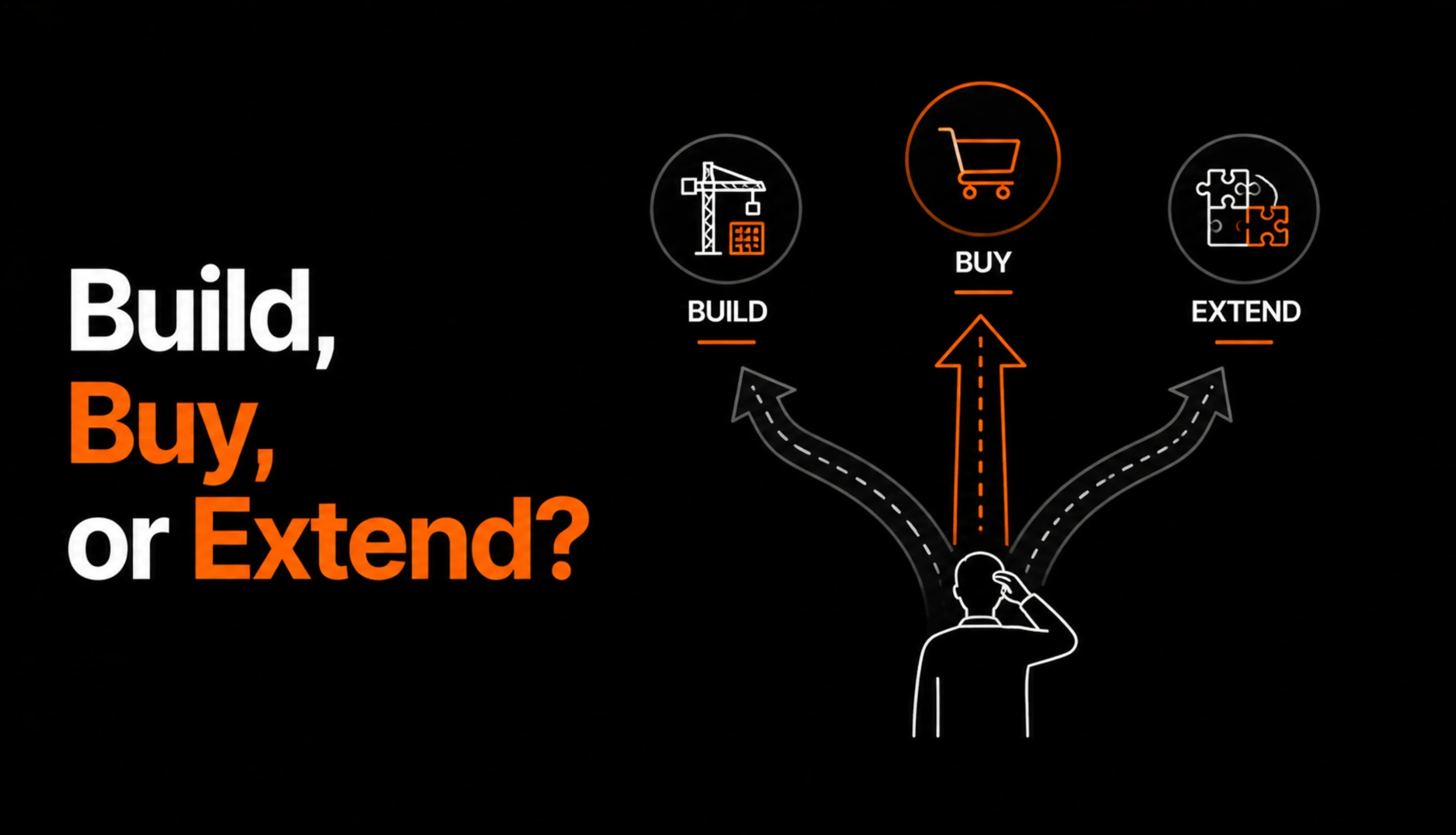
Custom real estate software company pitches, off-the-shelf SaaS, and extending what you already run are three different decisions, not one. The framework below is exactly what Acquaint Softtech runs in a discovery call: seven questions, each with a Yes or No answer, each with a named outcome. Run it once, and the right path is obvious.
Do you run 3 or more MLS, IDX, or listing feeds today?
Yes = custom build is justified; off-the-shelf rarely handles multi-feed normalization cleanly. No = start with an IDX-embed SaaS and revisit after 12 months of listing growth.
Do you manage 500+ units across 2 or more locations?
Yes = property management system features as a custom build pay back inside 24 months on staff time alone. No = AppFolio, Buildium, or similar SaaS is usually the faster first step.
Do you have non-standard lease clauses (rent-to-own, co-living, fractional, corporate)?
Yes = custom build, because off-the-shelf lease modules rarely model these cleanly. No = SaaS with a solid accounting integration is sufficient.
Do agents or tenants need a mobile app with offline-first behaviour?
Yes = React Native or Flutter custom build, because offline sync is an architecture decision, not a feature toggle. No = a responsive web app covers most 2026 agent and tenant flows.
Do you need AVM, lead scoring, or AI-assisted valuation?
Yes = a Python service layer behind the platform, delivered through Development Services. No = defer AI to year two and keep the first release simple.
Do you operate across multiple compliance regimes (US Fair Housing + UK GDPR + UAE RERA)?
Yes = custom build with region-aware policy modules and separate audit trails per region. No = SaaS with a single compliance footprint is fine for a single-country operation.
Is there a named internal owner for the platform for the next 24 months?
Yes = custom build is safe to start. No = defer the build until an internal owner exists, or bring in Virtual CTO Services to hold the role for the first 6 months.
The Decision Rule Answered Yes to 4 or more of Q1 through Q7: custom PropTech build is justified, start with a Discovery Workshop. Answered Yes to 2 or 3: extend existing SaaS with a light custom layer, Staff Augmentation is the fastest path. Answered Yes to 0 or 1: stay on off-the-shelf SaaS and revisit in 12 months as you grow. |
MLS, IDX, RESO, VOW: The Acronym Jungle, Decoded in Plain English
Every PropTech conversation eventually collides with an acronym wall. Clearing it up front saves weeks of miscommunication. Here is the plain-English decoder for the six acronyms every Founder, Head of Product, and CTO needs to know before signing a scope.
Acronym | Stands For | What It Actually Is |
MLS | Multiple Listing Service | A regional cooperative database of for-sale and for-rent properties, run by local boards of Realtors. |
IDX | Internet Data Exchange | The standard that lets brokerage websites display MLS listings publicly with proper attribution. |
VOW | Virtual Office Website | A member-gated site showing MLS data that IDX does not permit publicly. |
RESO | Real Estate Standards Org. | The body that maintains the Web API and Data Dictionary used by modern MLS integrations. |
AVM | Automated Valuation Model | An AI model that estimates a property's market value from recent comparables and features. |
RERA | Real Estate Regulatory Authority | Regulatory body in India and the UAE that governs project registrations and buyer disclosures. |
Why this matters for scoping
If a vendor proposes "MLS integration" without naming the feed (Bright MLS, CRMLS, MRED, MIBOR, ARMLS, etc.), the scope is incomplete. If the conversation is about a public-facing site showing listings, the acronym is IDX. If it is a gated broker-only view, the acronym is VOW. If the integration uses the modern API, it uses the RESO Web API.
If it uses the older XML-over-HTTP spec, it uses RETS, which most feeds are sunsetting through 2026 and 2027. These distinctions change both the build time and the integration cost by 15 to 40%.
Four Myths That Kill PropTech Projects (And What Is Actually True)
.webp "Four Myths That Kill PropTech Projects (And What Is Actually True)")
Four misconceptions show up in almost every PropTech discovery call. Each one has killed more projects than any technical failure ever has. Paired below with the reality Acquaint Softtech has observed across 1,300+ projects and real estate engagements with clients like Andrew Fortune at Great Colorado Homes, Christian Fladeland at Heimstaden Group, and Styrmir Karlsson at Croisette.
# | Myth | Truth |
|---|---|---|
1 | A PropTech platform is basically a CRM with a listings page. | A CRM tracks leads and communications, while a PropTech platform manages listings, leases, and financial ledgers as core records. They are complementary systems, not substitutes. Treating them as the same often leads to costly rebuilds in year two. |
2 | We can build a PropTech MVP in 4 weeks using freelancers. | A realistic MVP takes 10 to 14 weeks for a single category with a dedicated team. Faster builds usually skip compliance, audit trails, or integrations, which create serious issues later. |
3 | Outsourcing property management apps saves money but reduces quality. | This is outdated. Modern offshore teams deliver both quality and cost efficiency. Companies like Acquaint Softtech demonstrate strong delivery performance along with significant cost savings compared to US or UK hiring. |
4 | If the engagement ends, we lose our code or data. | A professional partner ensures full client ownership from day one. All code, data, and access credentials belong to the client and must be clearly defined in the contract. |
For real production examples and practical implementation insights, you can explore detailed case studies on this page. It showcases how different real-world projects were executed, giving you a clearer understanding of how a production-grade engagement actually works in practice.
Answered Yes to 4+ Questions? Let's Build Your PropTech Team
Acquaint Softtech sends a team structure, named developer profiles, and a first-sprint plan within 48 hours. Every developer is interviewed before the start date. If a fit issue emerges, seamless replacement inside 48 hours, no contractual friction, no invoice disputes, no lost weeks.
Frequently Asked Questions
-
How much does PropTech development cost in 2026?
PropTech development cost in 2026 ranges from $70,000 to $300,000 for a first production release, depending on the category. A property management software development build lands between $85,000 and $220,000 for version one.
A real estate listing portal starts at $70,000, and a smart building platform can reach $300,000 when IoT infrastructure is in scope. Every month, a dedicated team runs between $13,000 for a small 3-developer team and $42,000 for an 8-developer team with an architect and QA. The rate the client pays is the rate, with no employer overhead on top.
-
What features does property management software need?
A complete property management system should include tenant onboarding with digital KYC, lease management, rent collection, maintenance workflows, owner reporting, vacancy synchronization, and role based multi tenancy access. If critical operations still rely on spreadsheets or email, the platform is not fully complete.
-
What is the best tech stack for real estate apps in 2026?
The standard real estate app stack in 2026 typically includes Laravel 11 for the backend, React for web, React Native for mobile apps, PostgreSQL for the database, Elasticsearch for property search, and AWS for hosting. Python is commonly used for AI features like lead scoring and property valuation, while Go or Node.js are added for real time updates and high traffic event processing. The final stack depends on the business model and integration requirements.
-
How long does it take to build a proptech MVP?
A proptech MVP in 2026 typically takes 10 to 20 weeks depending on the platform type. A property management MVP usually requires 12 to 14 weeks, a listing portal with MLS integration takes around 10 to 12 weeks, and a rental marketplace with booking and payments takes 14 to 20 weeks. Timelines shorter than 10 weeks often skip critical compliance and audit requirements.
-
Is a custom real estate software company better than off-the-shelf SaaS?
It depends on the 7-question framework in this guide. Fewer than 2 Yes answers, stay on SaaS. Between 2 and 3 Yes answers, extend SaaS with a light custom layer. Four or more Yes answers, a custom build is justified and pays back inside 24 to 36 months on staff time savings and revenue enablement. The decision is not about code ownership; it is about whether the integration, compliance, and data-model scope of the business actually fits into a generic product.
-
What is proptech in simple terms?
What is proptech? Property technology is software that turns real estate operations, listings, leases, rent, maintenance, and compliance into a structured platform with one source of truth. Property technology explained in one line: the platform replaces the spreadsheet as the system of record for listings, leases, and ledgers.
-
How do I hire proptech developers the right way?
Hire proptech developers through a partner that assigns a named team before you sign, lets you interview every developer before the start date, and writes IP ownership into the contract from day one.
At Acquaint Softtech, the deployment promise is 48 hours from the signed engagement letter to a team structure with named developers, a named tech lead, and a named project manager. Replacement, if needed, happens within 48 hours with no contractual friction. This is a default, not a premium.
-
What happens to my MLS data and tenant records if the engagement ends?
In any legitimate PropTech engagement, the client owns the code, the database, the MLS feed credentials, the tenant records, the hosting account, and the repository from day one. This is a contract term, not a negotiation point. On the engagement end, the client retains full access, the team hands over credentials in writing, and replacement should not require significant client effort to coordinate.
-
Can Acquaint Softtech deliver PropTech for US, UK, Australia, and UAE clients?
Yes. Acquaint Softtech has delivered PropTech and real estate engagements across the US, UK, Australia, and the UAE, including a 3-year brokerage website partnership with Great Colorado Homes, rent and payments work with Heimstaden Group in the Nordics, and lead management for Croisette.
-
How fast can a PropTech team actually start?
48 hours from the signed engagement letter. The team arrives with a tech lead, project manager, QA engineer, and 3 to 8 developers named in writing, with developer profiles ready for client interviews. No developer starts before client approval. If a fit issue emerges inside the first sprint, replacement happens within 48 hours.
We’re Acquaint Softtech, your technology growth partner. Whether you're building a SaaS product, modernizing enterprise software, or hiring vetted remote developers, we’re built for flexibility and speed. Our official partnerships with Laravel, Statamic, and Bagisto reflect our commitment to excellence, not limitation. We work across stacks, time zones, and industries to bring your tech vision to life.
Table of Contents
Get Started with Acquaint Softtech
- 13+ Years Delivering Software Excellence
- 1300+ Projects Delivered With Precision
- Official Laravel & Laravel News Partner
- Official Statamic Partner
Related Reading

Custom Healthcare Software Development: An End-to-End Guide
Custom healthcare software is revolutionizing the medical industry by providing tailored solutions that enhance patient care, streamline processes, and improve security. Discover the benefits, challenges, and step-by-step guide to building effective custom healthcare software. Learn how expert developers can help you stay ahead in the evolving healthcare landscape.

Mukesh Ram
February 27, 2025
Healthcare & IT Staff augmentation - A success partnership
Healthcare IT staff augmentation bridges skill gaps and reduces workloads by hiring remote developers. This strategy enhances IT capabilities, ensuring smooth implementation and management of advanced technologies in healthcare organizations.
Mukesh Ram
August 6, 2024
Proof of Concept: Why is it important in software development?
Discover how a Proof of Concept (PoC) can validate your project's feasibility, enhance stakeholder trust, and streamline development processes effectively.
Acquaint Softtech
April 28, 2025India (Head Office)
203/204, Shapath-II, Near Silver Leaf Hotel, Opp. Rajpath Club, SG Highway, Ahmedabad-380054, Gujarat
USA
7838 Camino Cielo St, Highland, CA 92346
UK
The Powerhouse, 21 Woodthorpe Road, Ashford, England, TW15 2RP
New Zealand
42 Exler Place, Avondale, Auckland 0600, New Zealand
Canada
141 Skyview Bay NE , Calgary, Alberta, T3N 2K6