

Building an Uber Clone for US Carpooling Demand
Gas prices at $3.84/gal and rising? The USA carpooling market is exploding. Learn why a Laravel-powered Uber clone is the strategic move for founders in 2026.

Chirag Daxini
Introduction
With rising gas prices fueled by ongoing tensions in the Middle East, commuting in the USA is becoming expensive again.
Now here’s the opportunity. While everyone debates cost-cutting, smart founders are building platforms that turn commuting into a shared economy advantage. This is where building an Uber clone tailored for carpooling demand becomes more than a tech project. It becomes a business strategy.
For visionary CEOs and startup founders, this isn't just a crisis; it’s a massive market opening. While traditional ride-hailing services struggle with rising operational costs, a dedicated carpooling Uber clone offers a leaner, more sustainable alternative.
With the average gas price now at a new high since September 2023 at $3.84 per gallon and climbing, you would be building an app that is a solution for commuters across the country. This article provides more information on building an Uber clone for carpooling.
USA Carpooling Trends in 2026
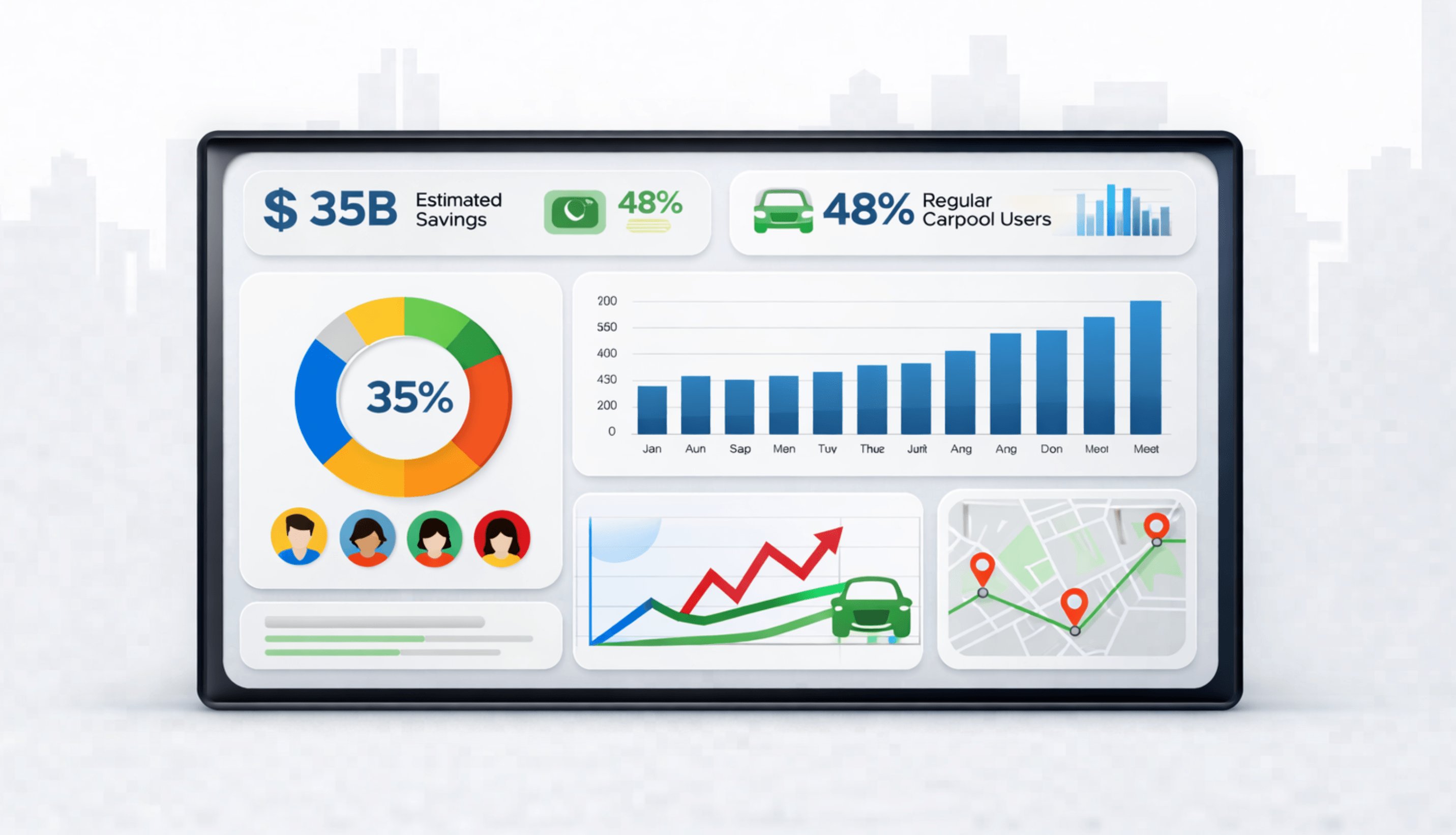
The numbers tell a story of rapid adoption and massive ROI. According to recent data from Research and Markets:
The global carpooling market is projected to reach $15.1 billion in 2026.
It is expected to grow at a CAGR of 16.8% between 2026 and 2030, reaching $28.01 billion.
In the USA specifically, the shift toward "corporate ride sharing" is the new gold rush as companies look to offset commuting costs for their employees.
Carpooling:
Because sharing a ride is better than sharing your entire paycheck with the gas station. There are many reasons why carpooling demand is exploding in the USA:
Cost Efficiency:
Individual car ownership costs are peaking, driving users toward shared mobility.
Environmental Mandates:
Federal incentives in the USA are increasingly favoring high-occupancy vehicle (HOV) solutions.
Urban Congestion:
With average commute times in cities like Los Angeles hitting nearly 54 minutes, people are desperate for a way to reclaim their time and sanity.
Don't let empty seats stall your ROI
The US carpooling market is shifting from a convenience to a necessity. At Acquaint Softtech, we build the architecture that handles millions of concurrent routes without breaking a sweat.
Core Features of Uber Clone For Carpooling
A carpooling app is only as good as its feature set. Here's what I recommend as non-negotiables for the US market:
For Riders:
One-tap ride booking with smart matching
Real-time driver tracking on a map
Estimated arrival time and route preview
In-app secure payment (Stripe, Braintree)
Ride history and receipt generation
SOS/Emergency alert button
Driver ratings and reviews
For Drivers:
Route optimization dashboard
Earning tracker and payout history
Passenger profile preview before acceptance
Trip scheduling (not just on-demand)
In-app document upload for verification
For Admin:
Real-time fleet visibility dashboard
Dynamic surge pricing controls
Fraud detection and dispute management
Analytics: user retention, ride frequency, peak hours
Driver background check integration (Checkr API)
MVP Features:
Here is what you must build first:
User Authentication (OAuth, Phone Login)
Ride Matching Algorithm
Real-Time GPS Tracking
Split Fare Calculation
Driver & Rider Ratings
In-App Payments (Stripe, PayPal)
Bonus Features of an Uber Clone for Carpooling:
Here are a few advanced features to give you a competitive edge:
Recurring ride scheduling, perfect for daily commuters
Green commute badges
Employer-sponsored carpool programs
AI-based route optimization
Dynamic pricing based on occupancy
Corporate carpool dashboards
Carbon footprint tracking
Tech Stack That Scales
As a technical project manager who has led dozens of cross-functional teams, a pretty UI won't save a weak backend. To handle the "USA-scale" demand, you need a stack that is both resilient and agile.
We use Laravel 13 for the core logic due to its enterprise-grade security and the new Reverb database driver. This allows for horizontal scaling and real-time WebSocket communication without the massive infrastructure overhead of traditional Redis setups. For the frontend, React JS or Flutter delivers the "butter-smooth" user experience Americans expect.
The Architecture Stack:
Backend: Laravel 13 (PHP 8.3+)
Real-time Updates: Laravel Reverb (for instant driver-rider matching)
Mobile: Flutter or React Native (single codebase, dual-platform reach)
Database: PostgreSQL with PostGIS (essential for complex geolocation queries)
Example route and controller snippet:
// routes/api.php
Route::post('/rides/request', [RideController::class, 'create'])->middleware('auth:sanctum');
// app/Http/Controllers/RideController.php
public function create(Request $request) {
$ride = Ride::create([
'user_id' => $request->user()->id,
'pickup_lat' => $request->pickup_lat,
'dropoff_lat' => $request->dropoff_lat,
'fare_estimate' => $this->calculateFare($request)
]);
// Broadcast to nearby drivers via Laravel Echo
return response()->json($ride);
}
Example: Laravel API for Ride Matching
Route::post('/match-ride', function (Request $request) {
$rides = Ride::where('origin', $request->origin)
->where('destination', $request->destination)
->where('available_seats', '>', 0)
->get();
return response()->json($rides);
});
Architecture Framework for High Growth
The Strategic Development Lifecycle
Discovery & Wireframing:
We map every user journey to ensure carpooling use cases are airtight before a single line of code is written. This phase validates your business model against real-world USA market demands to prevent costly mid-project pivots.
MVP Build:
Our team builds a high-performance matching engine using a robust Laravel backend and a seamless Flutter frontend for dual-platform reach. We focus on core features such as real-time GPS and secure payments to get your product to market quickly.
Testing & Security:
We subject the platform to rigorous load testing to ensure stability during peak morning and evening commute surges. Our security protocols follow strict industry standards, protecting sensitive user data and financial transactions from day one.
Launch & Monitoring:
We manage the entire App Store submission process while setting up real-time analytics to track initial user behavior. This ensures a smooth debut and provides the critical data needed to understand how commuters interact with your platform.
Iteration & Scaling:
We integrate AI-driven route optimization to reduce travel times and increase the efficiency of every shared ride. This data-backed approach allows your business to scale as gas prices and commuter demand continue to fluctuate.
Monetization Models That Actually Work
In the mobility sector, "growth" is a vanity metric; "revenue" is the reality. To make your carpooling app profitable, you must move beyond simple ride-splitting. A transaction-based fee, typically 10-15%, remains the gold standard for immediate ROI.
However, forward-thinking CEOs are now pivoting toward corporate subscription models. This provides recurring revenue while helping enterprises offset the record-high gas prices fueled by the ongoing Middle East conflict.
Revenue is the oxygen of a startup; without a solid monetization model, even the best code is just a hobby. Here are a few strategies:
Commission per ride (10–20%)
Subscription for frequent commuters
Corporate tie-ups (B2B SaaS model)
Surge pricing during peak hours
How Much Does It Cost to Build a Carpooling App?
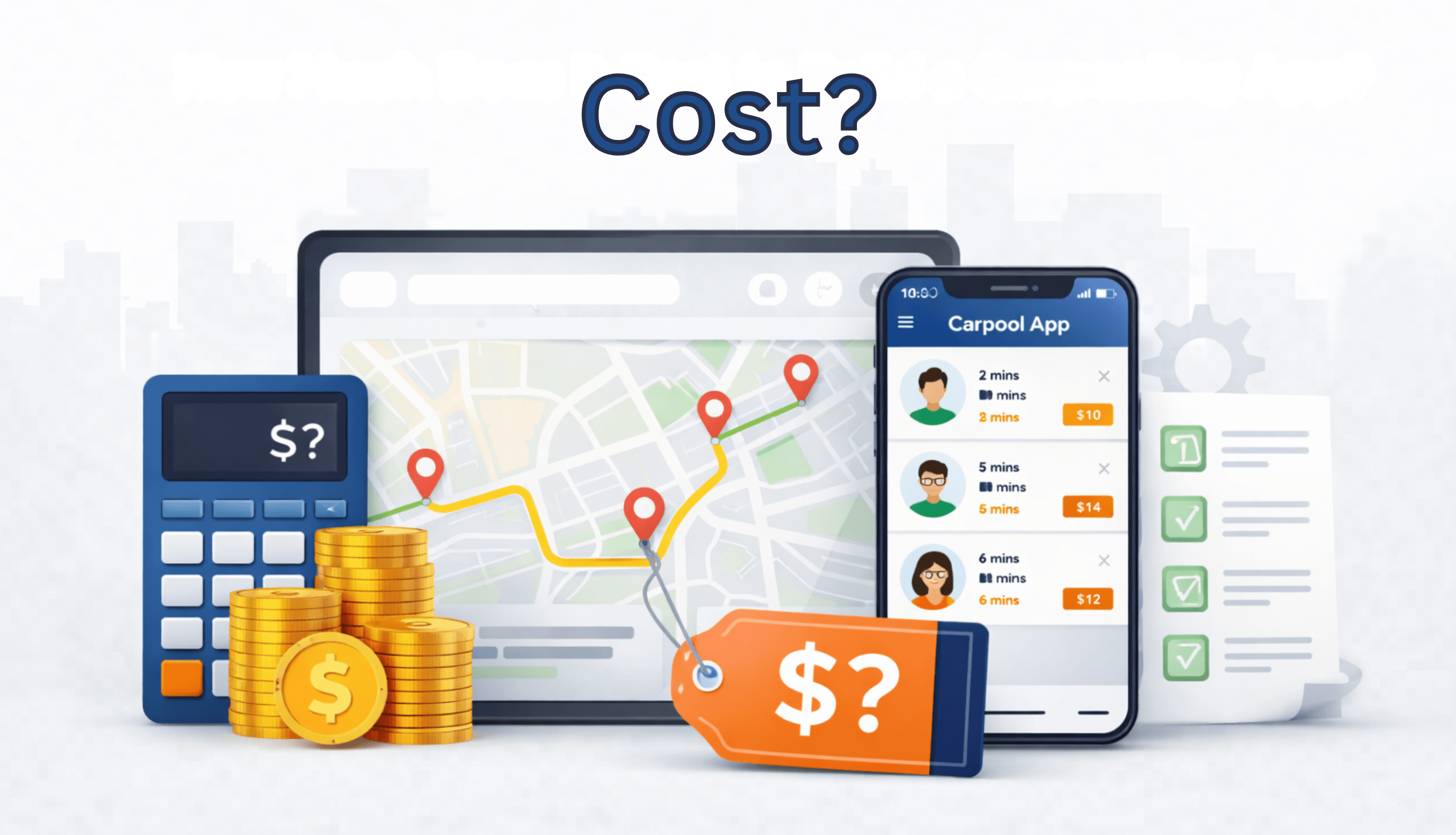
The estimated cost in the USA market:
MVP: $25,000 – $60,000
Scalable Platform: $80,000 – $150,000+
However, outsourcing to India can reduce costs by 40–60% without compromising quality. For example, Acquaint Softtech's development costs are $25-$49/hr.
Acquaint Softtech is a well-established software development company with over 13 years of experience. We have over 70 dedicated developers with expertise in various technologies.
At the same time, the typical timeline:
MVP: 10–14 weeks
Full Product: 6–9 months
Challenges CEOs Must Solve
Hiring an in-house team risks six-figure salaries, a long ramp-up, and sudden turnover. Firms can outsource to a software development company like Acquaint Softtech, removing those headaches.
Our staff augmentation model lets you scale from 5 to 50 developers in 48 hours without hiring risk. Fixed-price Uber clone app development projects stay on budget and launch in 90 days, often 40% faster than internal teams.
Some of the other challenges that require the expertise of trained developers include:
Driver supply vs rider demand imbalance
Regulatory compliance (state-level laws)
Real-time performance under load
Trust & safety mechanisms
Why Acquaint Softtech Is the Right Partner
The Middle East conflict and rising fuel prices have created a "perfect storm" for the carpooling industry. An Uber clone designed specifically for the USA market is no longer a luxury; it’s a high-demand necessity.
Don't let your competitors fill the gap while you’re stuck in the planning phase. Let’s build something that solves real-world problems and generates real-world ROI.
At Acquaint Softtech, we aren't just coders; we are business partners. We’ve been recognized by TrueFirms for excellence in IT staff augmentation and have over 70 professionals ready to scale your vision.
Hire remote developers to build your top-notch carpooling solution from Acquaint Softtech. We understand that your goal isn't just "an app"; it's a high-conversion business engine.
Own the road before the competition does
Moving from a concept to a market-ready Uber clone requires more than just code; it requires a strategic engineering partner. Let’s scale your vision with a battle-tested Laravel and NativePHP framework. Build your MVP with Acquaint Softtech.
Frequently Asked Questions
-
How much does it cost to build an Uber clone for carpooling?
A basic MVP can range from $40,000 to $60,000, while a feature-rich version with AI-driven matching and custom analytics can exceed $150,000.
-
Why use Laravel for a ride-sharing backend?
Laravel 13 offers unmatched security, real-time capabilities with Reverb, and a robust ecosystem that speeds up development and ensures long-term scalability.
-
Can an Uber clone handle high traffic?
Yes, by using horizontal scaling and optimized database queries (like those provided by our team), your app can handle thousands of concurrent users seamlessly.
-
What features are essential for a successful Uber-like carpooling app in the US?
A strong carpooling app needs real-time ride matching, GPS tracking, fare splitting, and secure payments. Features like driver verification, ratings, and route optimization are critical for trust and efficiency. AI-based matching can further improve ride utilization and reduce wait times.
-
What are the biggest challenges in launching a carpooling platform in the US?
Regulatory compliance, user safety, and driver supply are the biggest hurdles. Each state may have different transportation laws, and ensuring insurance coverage is crucial. Building trust through verification systems and maintaining ride quality are key to long-term success.
With over 11 years of experience in web application development and project management, I excel in leading cross-functional teams to deliver innovative digital solutions. My expertise spans eCommerce platforms, ERP systems, and JS & PHP-based frameworks, including WordPress, React JS, and Laravel. As a Technical Project Manager, I specialize in strategic planning, system design, and end-to-end project execution, transforming complex ideas into scalable, high-impact applications.
Table of Contents
Get Started with Acquaint Softtech
- 13+ Years Delivering Software Excellence
- 1300+ Projects Delivered With Precision
- Official Laravel & Laravel News Partner
- Official Statamic Partner
Related Blog
.jpg "On-demand home service apps: A Complete Development Guide")
On-demand home service apps: A Complete Development Guide
Unveil the top features and trends driving the popularity of home service apps in today’s fast-paced world.

Mukesh Ram
August 22, 2024.webp "How To Hire a Top On-Demand App Development Company (2026 Guide)")
How To Hire a Top On-Demand App Development Company (2026 Guide)
An on-demand app development company builds custom software that connects users with instant services, goods, or transport through real-time digital platforms. These agencies handle the multi-sided architecture behind customer apps, service-provider dashboards, and admin panels. To hire the right one, research the market, set your priorities, make inquiries, check credentials, and choose the apt partner. Core features include real-time GPS tracking, secure payments, push notifications, and admin dashboards.
Mukesh Ram
October 24, 2019
From Concept to Launch - On-Demand Delivery App Development
Transform an idea into a successful on-demand delivery app with a well-defined process. Conceptualizing features, designing, developing, & launching the app, are all crucial.
Mukesh Ram
October 24, 2024Your Project. Our Expertise. Let’s Connect.
Get in touch with our team to discuss your goals and start your journey with vetted developers in 48 hours.