

How to Reduce SaaS Onboarding Drop-Off: Progressive Disclosure and Tours
SaaS onboarding drop-off happens when users sign up but fail to reach their first moment of value before losing interest. The most effective way to reduce it is progressive disclosure: revealing features gradually, guiding users to one meaningful action at a time through contextual tooltips, checklists, and interactive product tours.

Manish Patel

- You are a product manager or CTO whose SaaS sign-up conversion is below 30%.
- Users are dropping off after sign-up but before completing their first meaningful action.
- You want to implement progressive disclosure without a full UX rebuild.
- You are building or redesigning the onboarding flow for a B2B SaaS platform.
- You want to know which onboarding patterns (checklists, tours, tooltips) work for which product types.
- You are evaluating whether to build onboarding in-house or work with a specialist team.
SaaS onboarding in 2026 is a systems problem, not just a UI challenge. The key is how quickly a new user reaches their first moment of value, as poor onboarding leads to early drop-off before activation. Modern SaaS platforms now rely on progressive disclosure, product tours, and activation flows to guide users step by step toward meaningful actions, improving retention and reducing churn.
This shift is supported by global digital adoption trends, with the International Telecommunication Union (ITU) reporting that over 74% of the world population is now online, increasing demand for intuitive, guided software experiences. Building these systems effectively often requires end-to-end software product development such as software product development, where onboarding, architecture, and analytics are designed together as a single growth system.
What Is SaaS Onboarding Drop-Off and Why It Matters
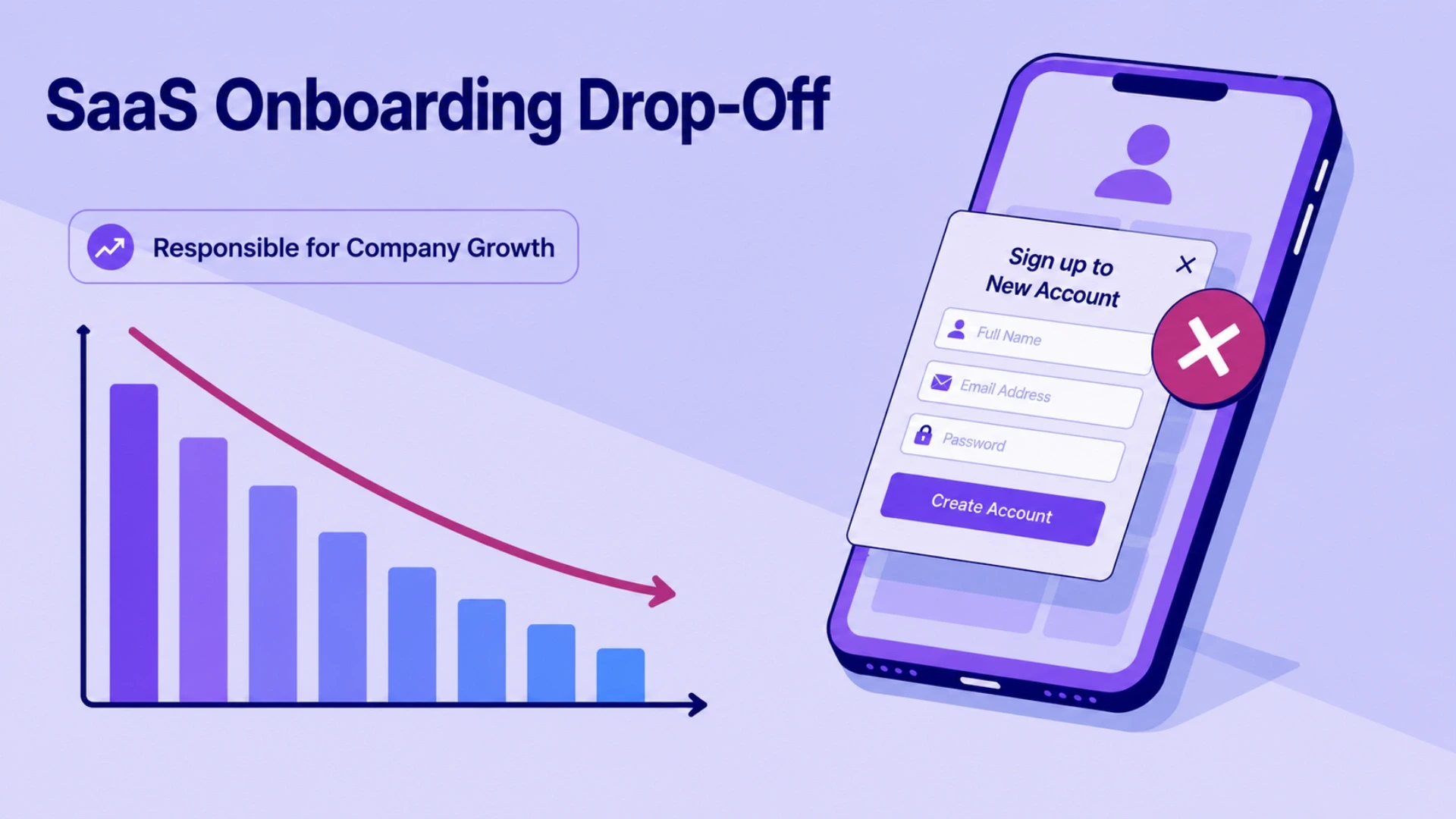
SaaS onboarding drop-off is the gap between sign-up and the user completing their first meaningful action, often caused by confusing or overloaded product experiences. It is a major revenue issue, with studies showing most users churn due to weak onboarding, and those who don’t see value within 5–15 minutes are far more likely to leave.
This directly impacts growth, as low activation rates mean most sign-ups never convert into paying customers. Improving onboarding is therefore a high-impact priority for SaaS teams, often requiring structured software product development such as software product development to redesign the full activation experience.
The True Cost of Poor Onboarding
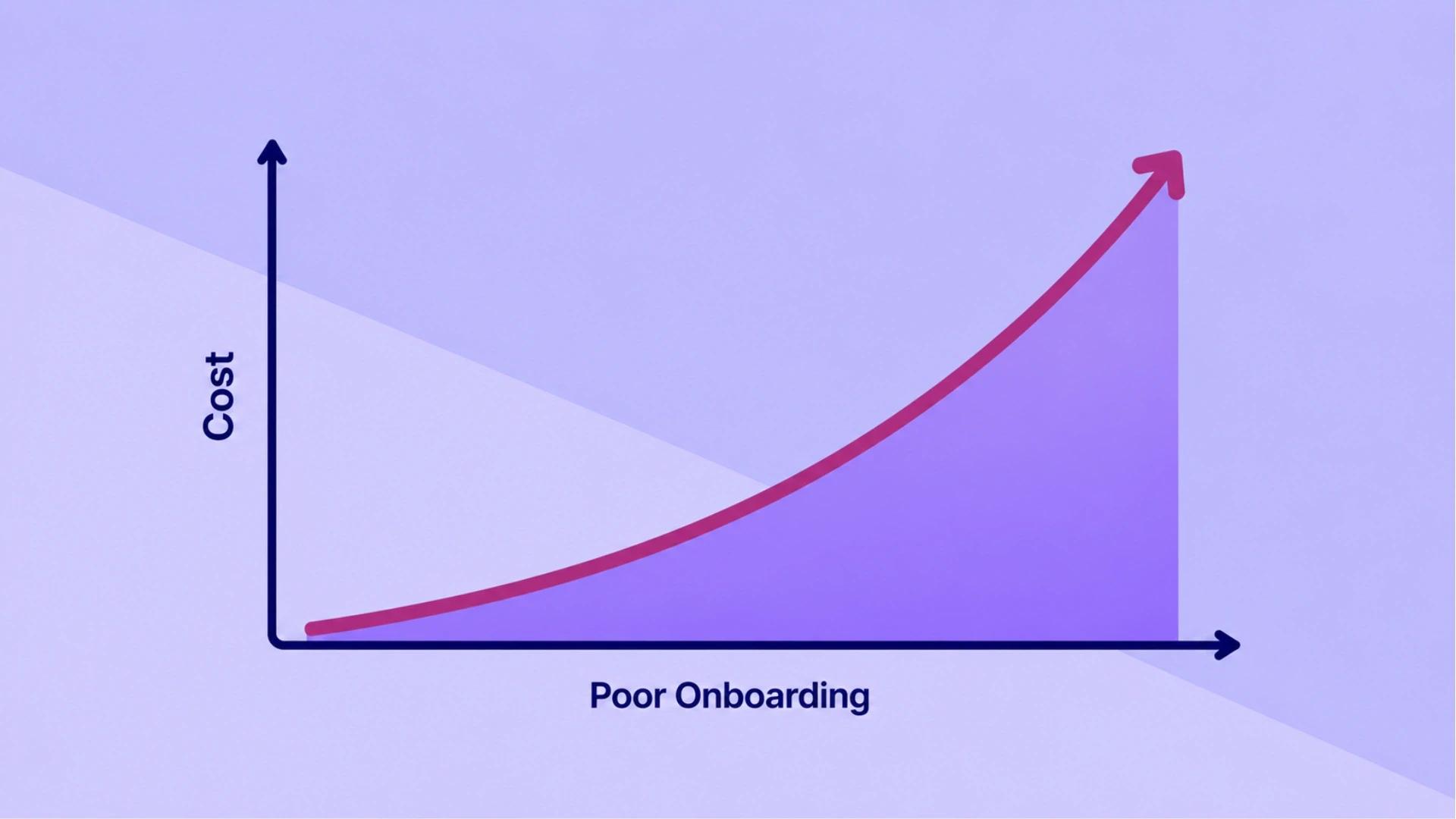
Poor onboarding is the leading preventable cause of early churn in SaaS products. It is not caused by bad product features, wrong pricing, or a mismatch in the target market. It is caused by a design failure: showing new users too much at once, asking them to configure too much before they see any value, or failing to guide them to the single action that reveals why the product exists.
The data is consistent across multiple 2025 and 2026 sources. According to Userpilot and Appcues data, only 47% of SaaS companies provide interactive walkthroughs to guide new users. Yet products with interactive tours onboard users twice as fast as those without. Interactive walkthroughs produce 70% better retention than passive tutorial documentation. The majority of SaaS products are still relying on documentation, welcome emails, and unguided exploration to activate users who need structured guidance to reach their first moment of value.
From Acquaint Softtech's experience across 1,300+ software projects, the onboarding problems that cause the most drop-off are predictable and fixable:
Feature overload at first login: Presenting the full product interface without any guidance or sequencing.
Form-first onboarding: Asking users to complete extensive profile or configuration steps before showing them anything valuable.
No empty-state design: Leaving new users facing a blank dashboard with no direction on what to create first.
No progress indicator: Users cannot see how far they are through setup, so they do not know whether they are close to being done.
No behaviour-triggered guidance: Contextual help only appears on manual request, not at the moment users show signs of hesitation.
Teams building a new SaaS product or redesigning an existing one frequently engage Acquaint Softtech's discovery workshop services to map the activation funnel before writing code. Discovery workshops identify the exact step in the onboarding sequence where users are dropping off, the features they are trying to reach, and the gap between the intended path and the actual path. Without this mapping, onboarding improvements are guesswork.
For products already in production, the support and maintenance services team at Acquaint Softtech uses session replay analysis, funnel tracking, and exit survey data to diagnose exactly where and why users are abandoning the onboarding flow. This diagnostic step is the prerequisite for any meaningful onboarding improvement.
Losing Users After Sign-Up? Let's Fix It.
Acquaint Softtech has redesigned onboarding flows for 40+ SaaS products across the USA, UK, and Europe. Teams deploy within 48 hours of brief. 1,300+ projects delivered. 4.9/5 on Clutch.
What Is Progressive Disclosure and How It Works in SaaS
Progressive disclosure is a UX design principle first named by Nielsen Norman Group that reduces cognitive load by presenting only the information and actions a user needs at their current stage, and revealing additional features and settings only as the user progresses. In a SaaS onboarding context, it means structuring the new-user journey so that each screen asks the user to complete exactly one primary action, with everything else hidden or deprioritised until that action is complete.
Progressive disclosure research from Nielsen Norman Group shows it can reduce task completion time by 20 to 40% while simultaneously improving comprehension. For SaaS onboarding specifically, products using progressive disclosure see 35% fewer support tickets during onboarding compared to those presenting all features upfront. Users progress faster, retain more of what they have learned, and feel more confident continuing to explore the product independently.
Disclosure Level | What Users See | Why It Works |
Level 1 (First Login) | One key action like create item or invite team | Reduces confusion and gives quick win |
Level 2 (First Session) | Core features + contextual guidance | Builds confidence and improves time-to-value |
Level 3 (Return Visits) | Advanced features and integrations | Avoids overload and supports exploration |
Level 4 (Power User) | Admin tools, APIs, automation | Keeps complexity for advanced users |
How does progressive disclosure differ from a product tour?
Progressive disclosure is an architectural principle applied across the entire product interface: it determines which features are visible at which stage. A product tour is a specific implementation of guided onboarding: a sequence of steps that actively directs users through the interface. Product tours are one tool for delivering progressive disclosure, but progressive disclosure applies to every design decision in the product, not just the guided tour sequence.
Implementing progressive disclosure correctly requires frontend engineering decisions that affect how the product is built, not just how it looks. Feature visibility logic must be tied to user state, account completeness, and plan tier. Acquaint Softtech's MERN stack developers implement progressive disclosure by building user state machines that track completion of onboarding milestones and control which interface elements are rendered at each stage. This approach is more robust than CSS-based visibility hiding, because it prevents users from encountering incomplete features by navigating directly via URL.
For mobile SaaS products where screen space is limited and user attention is even shorter, progressive disclosure is especially critical. Acquaint Softtech's React Native developers design mobile onboarding flows that present a maximum of three actionable elements per screen, with deeper configuration accessible through secondary navigation that new users are not directed to until their initial setup is complete.
The 5 Onboarding Patterns That Reduce Drop-Off
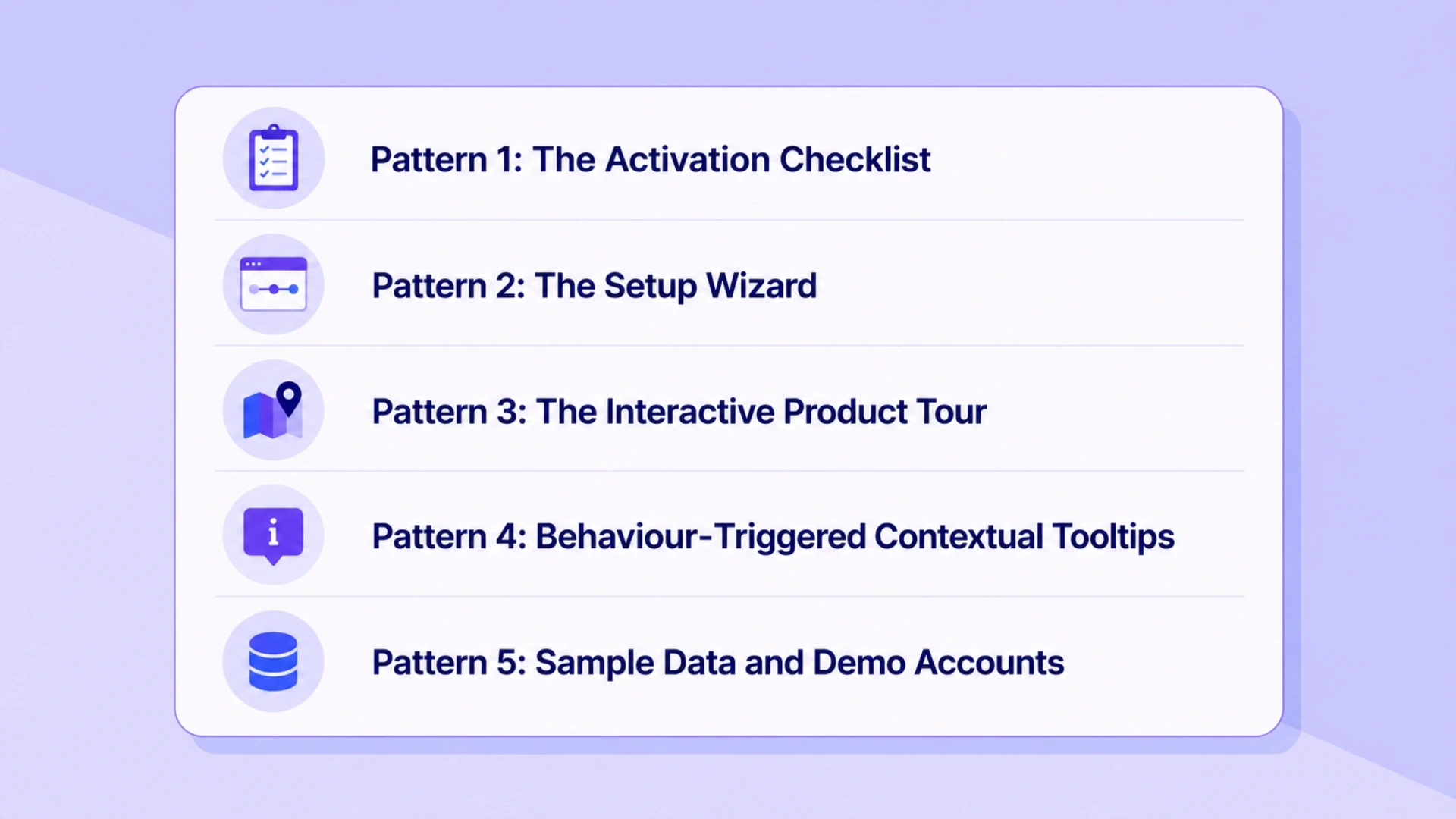
Not all onboarding patterns work equally for every SaaS product. The right pattern depends on the product's complexity, the user's prior experience with similar tools, and whether the primary conversion event is a solo user reaching an aha moment or a team completing a collaborative workflow. These five patterns, drawn from Acquaint Softtech's delivery experience, cover the majority of B2B SaaS onboarding scenarios.
Pattern 1: The Activation Checklist
An activation checklist presents users with four to seven specific actions they need to complete to get full value from the product. Each action is clearly described, checkable, and links directly to the relevant part of the product. Progress is visible at all times. This pattern works because it converts an open-ended exploration task into a finite, completable list.
According to UserGuiding's 2026 research, apps with gamification elements including progress bars and checklists see 50% higher completion rates than those without. The psychological principle is well established: users who can see progress toward a defined endpoint are more motivated to continue than users facing an undefined exploration task.
Acquaint Softtech builds activation checklists as a first-class product feature, not a modal overlay. The checklist is embedded in the sidebar or dashboard, persists between sessions, and updates in real time as users complete actions. The engineering approach uses event-driven state management so the checklist reacts to actual user behaviour rather than relying on users to manually mark items complete. Teams needing this built correctly engage Acquaint Softtech's dedicated software development teams rather than attempting it as a quick frontend addition, because the state management across sessions and devices adds meaningful complexity.
Pattern 2: The Setup Wizard
A setup wizard guides users through required configuration steps in a fixed sequence before they access the main product interface. It works best for products that cannot deliver value until the user has completed some mandatory setup, such as connecting an integration, importing data, or creating an initial configuration. The risk is asking users to complete too many steps before they see any value.
The sweet spot, based on 2026 benchmarks from design research firm DesignRevision, is three to seven core steps with progressive disclosure used to defer advanced configuration to a post-activation flow. Flows longer than twenty steps reduce completion rates by 30 to 50%. Each additional form field reduces completion by an average of 5 to 7%. The wizard's job is to get users to their first moment of value, not to collect every piece of account information the product might eventually need.
Pattern 3: The Interactive Product Tour
An interactive product tour is a step-by-step overlay sequence that highlights specific interface elements, explains their purpose, and asks users to click or interact with them in real time. Unlike a video tutorial or documentation page, the interactive tour keeps users inside the product. They perform real actions rather than watching someone else perform them.
Interactive product tours increase feature adoption by 42% according to UserGuiding's 2026 data. Products with guided tours onboard users twice as fast as those relying on passive documentation. 74% of users prefer onboarding that adapts to their behaviour, skipping steps they have already completed. The most effective tours are therefore not linear sequences but branching flows that detect what the user has already done and adjust the guidance accordingly.
Building an adaptive product tour requires the frontend to query user state at each step and render a different path based on what the user has already completed. Acquaint Softtech's frontend development team implements this using a tour state machine that stores completion events server-side, ensuring the tour continues correctly when users return across different sessions or devices. Client-side-only tour implementations reset on every login, which frustrates returning users who have already completed part of the sequence.
Pattern 4: Behaviour-Triggered Contextual Tooltips
Contextual tooltips appear at the moment a user encounters a feature for the first time or shows hesitation signals such as hovering on an element for more than two seconds, scrolling back up a page, or opening and immediately closing a modal. They provide a one-line explanation plus a direct action link, without requiring the user to leave the current context to find help.
Products using contextual help systems see 35% fewer support tickets during onboarding compared to those relying on external documentation pages, according to research cited by SaasFactor in 2025. The tooltip pattern is particularly effective for secondary features that are not part of the main onboarding flow but that new users frequently encounter and do not understand. Rather than building a comprehensive help centre that users must navigate to separately, contextual tooltips surface the right answer in the right place at the right moment. Teams that want to implement this pattern correctly engage Acquaint Softtech's AI development services to build behaviour-detection logic that triggers tooltips based on dwell time, error rate, and navigation patterns rather than simple feature-first-visit flags.
Pattern 5: Sample Data and Demo Accounts
The most common cause of activation failure in data-driven SaaS products is the empty dashboard problem: a new user logs in and sees an interface designed to display data that they do not yet have. The solution is pre-populating the account with realistic sample data that demonstrates the product's value immediately, without requiring the user to import or create real data first.
Sample data accounts should be realistic enough to demonstrate every major feature, clearly labelled as sample content so users know it is not real data, and easily replaceable when the user is ready to work with their own information. For SaaS products in sectors such as project management, CRM, or analytics, a well-designed sample data set reduces median time-to-activation by an average of 40% because users spend their first session exploring rather than importing. Acquaint Softtech's team has built sample data systems for SaaS products in logistics and field service management, referenced in the company's case studies portfolio.
How to Build a Product Tour That Actually Converts
A product tour that converts has three properties that distinguish it from the standard overlay sequence most SaaS products ship: it is role-aware, it ends at the aha moment rather than at the last feature, and it is resumable. Most product tours fail because they are built as a marketing exercise, not as an engineering deliverable. They are static, linear, and fragile.
The technical implementation of a high-converting product tour requires four engineering components that are commonly underestimated during scoping:
Tour state management: A server-side record of which steps the user has completed, visible across devices and sessions.
User segmentation logic: The ability to serve different tour paths to different user roles or plan tiers on the same product.
Event emission: The tour fires analytics events at every step completion, skip, and abandonment so the product team can measure drop-off at each step.
Re-entry logic: When a user abandons the tour mid-flow and returns, the tour resumes at the correct step rather than restarting from the beginning.
Tour Property | Poor Implementation | High-Converting Implementation |
Personalisation | Same tour for all users | Role-based, tailored experience |
Trigger Timing | Starts immediately on login | Starts after user shows intent |
Length | 12–20 steps, feature-heavy | 4–7 steps focused on value |
Resumability | Restarts from beginning | Continues from last step |
Analytics | Only completion tracked | Step-level drop-off tracking |
Sanjay Prajapati, a senior engineer at Acquaint Softtech with experience building onboarding systems for SaaS platforms in the UK, USA, and Europe, notes that the aha moment varies significantly by product vertical. For a project management SaaS, the aha moment is typically creating the first task and assigning it to a team member. For an analytics SaaS, it is generating the first report with the user's own data. For a CRM, it is logging the first activity against a contact. The product tour must be designed around the specific aha moment of the product, not around its feature set.
Building a product tour with these properties requires frontend and backend engineering working together from the specification stage. Teams that bolt on a tour after the product is built typically end up with a fragile overlay that breaks when the underlying UI changes. Acquaint Softtech's React Native developers and full-stack engineers build tour infrastructure as a first-class product component with its own state management layer, its own test suite, and its own analytics pipeline.
For SaaS products targeting European enterprise clients, the onboarding flow must also address GDPR consent for analytics collection used to track tour completion and activation events. Acquaint Softtech has built GDPR-compliant onboarding analytics systems for clients in Germany, France, and the Netherlands where consent-gated tracking is required by law. The UK Information Commissioner's Office guidance on cookies and similar technologies is the relevant authority reference for UK-based SaaS products tracking onboarding behaviour.
Build an Onboarding System That Converts
Acquaint Softtech engineers build role-aware, resumable product tours and progressive disclosure systems for B2B SaaS. Up to 40% cost reduction vs Western agencies. Teams deployed within 48 hours.
Measuring Onboarding Success: Metrics That Matter
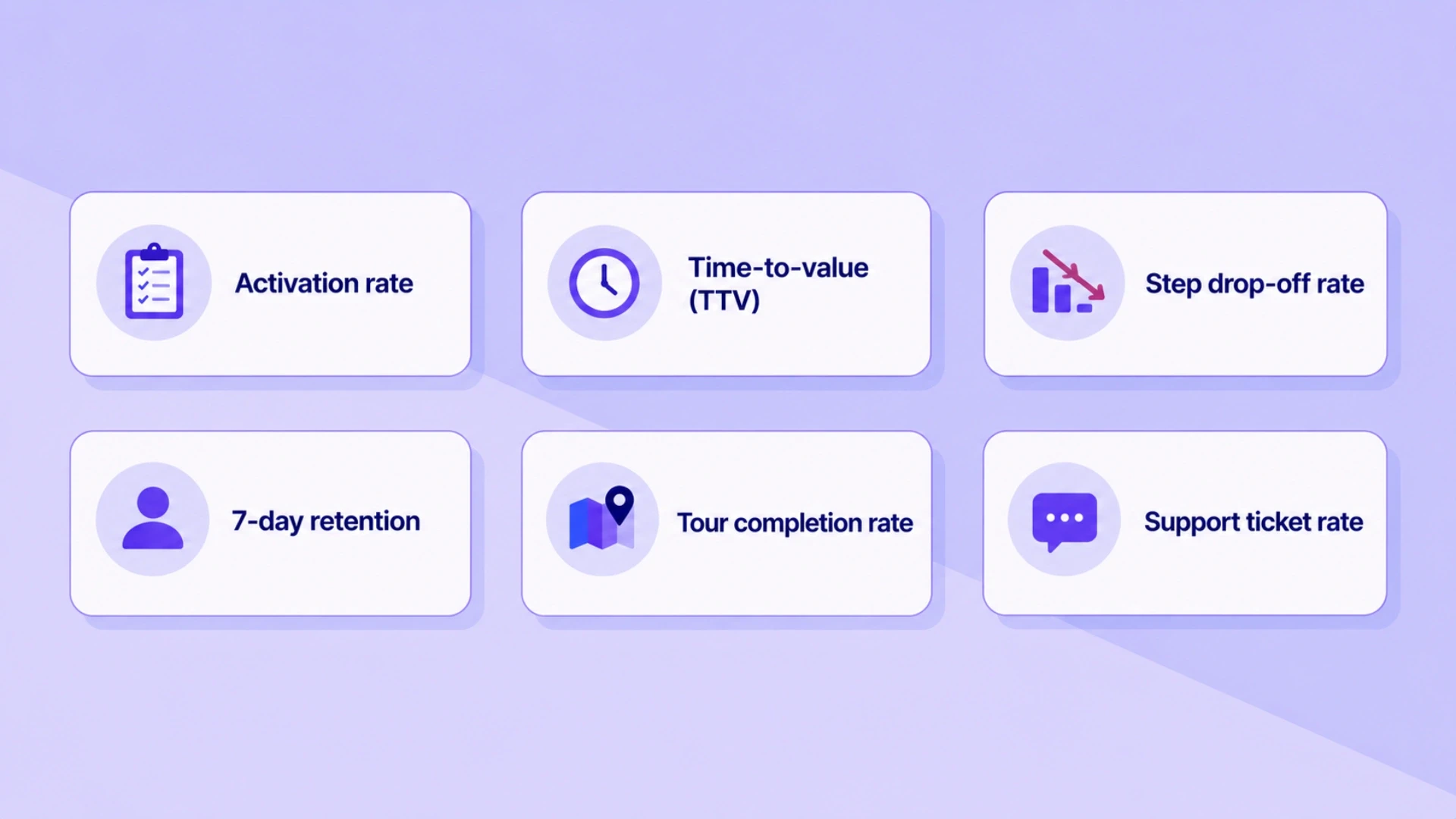
Most SaaS teams measure onboarding by a binary: did the user complete the tour or not? That metric tells you almost nothing useful. The metrics that drive onboarding improvement are step-level and time-based, and they connect onboarding behaviour to downstream revenue outcomes.
Metric | What It Measures | Target Benchmark |
Activation rate | % of users completing onboarding action | 40–60% (B2B SaaS) |
Time-to-value (TTV) | Time to first meaningful action | Under 5 minutes |
Step drop-off rate | Abandonment at each onboarding step | Flag if >30% |
7-day retention | Users returning within 7 days | 65–80% |
Tour completion rate | % completing onboarding tour | >50% |
Support ticket rate | Help requests in first 7 days | ~35% reduction target |
What is the most important onboarding metric?
Time-to-value is the single most predictive onboarding metric for long-term SaaS retention. It measures how long it takes a new user to complete the specific action most correlated with staying subscribed. Slack's activation event is 2,000 messages sent. Dropbox's is the desktop app installed and a file synced. Canva's is a design exported. For each SaaS product, this event is different and must be identified from cohort analysis of users who retained versus churned. Once identified, every onboarding design decision should optimise for getting users to that event as quickly as possible.
Implementing proper onboarding analytics requires an event pipeline that tracks granular user actions, a cohort analysis capability to compare activation patterns between retained and churned users, and A/B testing infrastructure to validate onboarding changes before rolling them out to all users. Acquaint Softtech's Python developers build event pipelines and cohort analysis systems for SaaS products that do not yet have the data infrastructure to answer activation questions from their existing analytics stack.
For SaaS teams that need DevOps infrastructure to support onboarding event tracking at scale, including managed Kafka pipelines, BigQuery or Redshift integration, and real-time dashboard tooling, Acquaint Softtech's DevOps engineers configure this infrastructure as part of the product engineering engagement rather than as a separate data project.
The Acquaint Softtech Onboarding Audit Framework
The Acquaint Softtech Onboarding Audit Framework is a structured six-step process for diagnosing and improving SaaS onboarding performance. It has been applied across 40+ SaaS onboarding redesigns and consistently identifies the same category of problems that cause drop-off.
ACQUAINT SOFTTECH ONBOARDING AUDIT FRAMEWORK
Step 1: Activation Funnel Mapping
Map the full journey from sign-up to the first action correlated with 30-day retention. Identify every step the user must complete and every decision they must make along the way.
Step 2: Step-Level Drop-Off Analysis
Instrument every step with event tracking. Identify the specific steps where more than 25% of users abandon the flow. These are the critical fix points.
Step 3: Session Replay Review
Watch recordings of real user sessions in the first 10 minutes of use. Identify the moments of hesitation, confusion, and abandonment. What are users clicking that does not lead anywhere useful?
Step 4: Empty State and First-Login Audit
Review every screen a new user encounters before completing their first meaningful action. Eliminate every screen that does not contribute directly to reaching the aha moment.
Step 5: Progressive Disclosure Redesign
Restructure the information architecture so that only Level 1 features are visible at first login. Build the state management to unlock Level 2 and Level 3 features progressively.
Step 6: Tour and Tooltip Implementation
Build or rebuild the product tour as a resumable, role-aware, analytically instrumented sequence. Add behaviour-triggered tooltips at the five highest-friction interaction points identified in Step 3.
SaaS teams that want to run this audit and implement the resulting changes without pausing feature development work with Acquaint Softtech's staff augmentation model, which adds specialist onboarding engineers to the existing team rather than replacing or redirecting in-house capacity.
For early-stage SaaS products that have not yet launched and want to build their onboarding system correctly from day one, the MVP development engagement includes onboarding architecture as a defined deliverable within the build scope, rather than treating it as a feature to be added after the core product is complete. This approach produces significantly higher activation rates at launch.
Case Study: SaaS Onboarding Redesign Delivered by Acquaint Softtech
CASE STUDY: B2B Project Management SaaS, UK
Client: Series A B2B project management SaaS company, UK. Target market: creative agencies and professional services firms with 10 to 200 employees.
Situation: The client had 1,200 monthly sign-ups but a 17% activation rate. Users were signing up, exploring the interface briefly, and churning without completing their first project. Exit surveys showed that 61% of non-activated users said the product was too complicated to get started with. The client's internal team had attempted two previous onboarding redesigns without material improvement.
Diagnosis: Acquaint Softtech ran a full onboarding audit using the six-step framework. Session replay analysis revealed that 73% of new users encountered the blank project board and navigated away within 90 seconds. The product presented 11 navigation items on first login. There was no tour, no checklist, and no sample data. The onboarding email sequence was the only activation mechanism.
What Acquaint Softtech Built:
• A role-based signup flow (4 user roles with different default views) replacing the single generic interface.
• An activation checklist with 5 steps, embedded in the sidebar, tracking completion server-side for cross-session persistence.
• Sample project data for all new accounts, clearly labelled, demonstrating every core feature with realistic content.
• A 6-step adaptive product tour triggered after the user views the sample data for more than 10 seconds, ending at the creation of the user's first real task.
• Behaviour-triggered contextual tooltips at the 8 highest-friction interaction points identified in session replay review.
• A real-time activation dashboard for the client's product team showing step-level drop-off, time-to-value by cohort, and tour completion rates.
Outcome: Activation rate increased from 17% to 54% within 8 weeks of deployment. Median time-to-value dropped from 23 minutes to 4.5 minutes. 7-day retention for activated users increased from 41% to 68%. Support tickets in the first week of use fell by 38%. The client's trial-to-paid conversion rate improved by 22 percentage points over the following quarter.
Team: Two frontend engineers, one UX engineer, one backend engineer for state management and analytics pipeline. Deployed 48 hours after discovery call. Project duration: 11 weeks.
For SaaS teams in the USA, UK, and Europe looking to replicate this outcome, Acquaint Softtech's white label software development team has also delivered onboarding redesigns for white-label SaaS products where the onboarding flow must be customisable per tenant, allowing each enterprise client to configure their own welcome sequence and sample data set.
The blog post How to Outsource SaaS Product Development Without Losing Control on acquaintsoft.com covers how clients maintain full product ownership through the engagement model used in this case study and others like it.
Join 200+ Tech Companies Who Scaled With Acquaint Softtech
From onboarding audits to full SaaS product builds, Acquaint Softtech delivers measurable activation improvement across B2B SaaS products in the UK, USA, Europe, and Australia. 4.9/5 Clutch rating. 50+ verified reviews. Premier Verified.
Frequently Asked Questions
-
What is SaaS onboarding drop-off?
SaaS onboarding drop-off is when users sign up but abandon the product before completing their first meaningful action or reaching the aha moment. It is typically caused by feature overload, lack of guided progression, confusing empty states, or asking users to configure too much before delivering any value. Products with poor onboarding lose up to 90% of new users before they ever convert.
-
What is progressive disclosure in UX?
Progressive disclosure is a UX design principle where only the information and actions relevant to the user's current task are displayed, with additional complexity revealed as the user advances. In SaaS onboarding, it means showing new users one primary action at a time and hiding advanced features until the user has demonstrated competence with the basics. It reduces cognitive load and increases task completion rates by 20 to 40%.
-
How do you reduce SaaS onboarding drop-off?
The most effective approaches are: implementing progressive disclosure to reduce first-login complexity, building an activation checklist that guides users to complete four to seven defined steps, adding a role-aware interactive product tour that ends at the aha moment, pre-populating accounts with sample data to solve the empty dashboard problem, and adding behaviour-triggered contextual tooltips at high-friction interaction points. Combining these reduces drop-off by 30 to 50% in most B2B SaaS products.
-
What is the aha moment in SaaS?
The aha moment is the specific user action most strongly correlated with long-term retention. It is the point at which the user understands, from direct experience, why the product is worth paying for. Slack's aha moment is 2,000 messages sent. Dropbox's is a file synced across devices. Every SaaS product has a different aha moment, identified through cohort analysis comparing retained and churned users. Good onboarding design exists to get every new user to this moment as quickly as possible.
-
How long should a SaaS onboarding flow take?
Research from DesignRevision (2026) indicates that onboarding flows taking five to fifteen minutes produce optimal completion rates. The first value moment should arrive within two to five minutes of first login. Flows longer than twenty steps reduce completion rates by 30 to 50%. The sweet spot is three to seven core steps that get the user to their aha moment, with all remaining configuration deferred to a progressive post-activation sequence.
-
What is the difference between a product tour and a product walkthrough?
A product tour is an interactive overlay sequence where users take real actions inside the product guided by highlighted elements and instructional callouts. A product walkthrough typically refers to a passive video or slideshow showing the product being used. Interactive tours produce 70% better retention than passive walkthroughs because users are performing real actions and building muscle memory rather than watching a demonstration. Most modern SaaS products use interactive tours rather than passive walkthroughs.
-
Does Acquaint Softtech build SaaS onboarding systems?
Yes. Acquaint Softtech has redesigned onboarding flows and built progressive disclosure systems for 40+ B2B SaaS products across the UK, USA, Europe, and Australia. Services include full onboarding audits using the six-step Onboarding Audit Framework, role-aware product tour development, activation checklist engineering, behaviour-triggered tooltip systems, and onboarding analytics pipelines.
-
What tech stack is used to build product tours?
Product tours are typically built using React state machines for tour step management, server-side event storage for cross-session persistence, and custom tooltip components built in the same framework as the product frontend. For React-based SaaS frontends, Acquaint Softtech builds tour infrastructure natively rather than using third-party overlay tools, because native builds integrate cleanly with the product's state management and analytics pipeline without adding third-party script dependencies to the application.
I lead technology and client success at Acquaint Softtech with one goal in mind. Deliver work that feels personal, reliable, and worthy of long term trust. I stay close to both our clients and our developers to make sure every project moves with clarity, quality, and accountability.
Table of Contents
Get Started with Acquaint Softtech
- 13+ Years Delivering Software Excellence
- 1300+ Projects Delivered With Precision
- Official Laravel & Laravel News Partner
- Official Statamic Partner
India (Head Office)
203/204, Shapath-II, Near Silver Leaf Hotel, Opp. Rajpath Club, SG Highway, Ahmedabad-380054, Gujarat
USA
7838 Camino Cielo St, Highland, CA 92346
UK
The Powerhouse, 21 Woodthorpe Road, Ashford, England, TW15 2RP
New Zealand
42 Exler Place, Avondale, Auckland 0600, New Zealand
Canada
141 Skyview Bay NE , Calgary, Alberta, T3N 2K6