

MERN vs MEAN Stack: Key Differences and Which One to Pick in 2027
MERN and MEAN share the same back end (MongoDB, Express.js and Node.js); the only difference is the front end: React in MERN, Angular in MEAN. Pick MERN for flexible, fast-moving products and a larger hiring pool; pick MEAN for large, structured enterprise apps or teams already skilled in Angular.

Chirag Daxini
The MEAN stack vs MERN stack decision is really a choice between Angular and React, because the rest of the stack is identical. Both use MongoDB for data, Express.js for the API and Node.js on the server, so your database design, backend code and hosting barely change. For most new business apps we recommend MERN stack development, but MEAN is the better fit in some situations.

- You are choosing a JavaScript stack for a new web app or SaaS product.
- Your team is debating React versus Angular for the front end.
- You want to know which stack is easier and cheaper to hire for.
- You are a CTO, founder, product owner or engineering manager in the US, UK, Europe, Australia or New Zealand.
This guide compares the two stacks side by side, explains how React and Angular differ for business applications, answers whether one is faster, and covers hiring, so you can make the choice based on your product and team rather than trends.
One rule of thumb runs through the whole comparison: choose the front end your team can maintain for years, because the back end will be the same either way.
What Are the MERN and MEAN Stacks?
MERN stands for MongoDB, Express.js, React and Node.js. MEAN stands for MongoDB, Express.js, Angular and Node.js. Both are full-stack JavaScript stacks, so one language runs from the browser to the database.
Layer | MERN | MEAN |
Database | MongoDB | MongoDB |
API framework | Express.js | Express.js |
Server runtime | Node.js | Node.js |
Front end | React (library) | Angular (full framework) |
MERN vs MEAN: Key Differences
Factor | MERN (React) | MEAN (Angular) |
Front-end type | UI library, choose your own tools | Complete framework with built-in tools |
Language | JavaScript or TypeScript | TypeScript by default |
Structure | Flexible, team-defined | Opinionated, consistent |
Learning curve | Gentler to start | Steeper at first |
Built-in features | Fewer; add libraries | Routing, forms, HTTP, testing included |
Best for | Fast-moving products, MVPs, SaaS | Large enterprise apps, big teams |
Mobile path | React Native shares skills | Separate mobile approach |
The practical difference is freedom versus convention. React lets each team choose its own routing, state and form tools, which is fast but can drift. Angular decides most of those for you, which takes longer to learn but keeps large codebases consistent.
React vs Angular for Business Apps
Where React Fits Best
Products that change often, such as MVPs and early SaaS.
Teams that want to share skills with a React Native mobile app.
Interfaces built from many reusable components, such as dashboards and customer portals.
Where Angular Fits Best
Large enterprise applications with many developers working in one codebase.
Form-heavy internal systems, such as finance, insurance or operations tools.
Organisations that want strong conventions and TypeScript throughout.
Both are actively maintained. A 2 November 2027 roundup of React ecosystem releases lists mid-October security updates to React, a reminder that whichever front end you choose, someone on the team must own regular upgrades.
Which Is Better, MERN or MEAN?
Neither stack is better in general. MERN is the better choice for most startups, SaaS products and customer-facing apps because React is flexible, widely used and pairs well with React Native. MEAN is the better choice for large, structured enterprise apps and for teams that already work in Angular.
Your situation | Better choice | Why |
MVP or early-stage product | MERN | Faster to start and change |
Customer-facing SaaS | MERN | Flexible UI and large ecosystem |
Web plus mobile app | MERN | Shared skills with React Native |
Large enterprise system | MEAN | Consistent structure at scale |
Team already skilled in Angular | MEAN | No retraining cost |
Form-heavy internal tools | MEAN | Strong built-in forms |
Is MERN Faster Than MEAN?
No, not in any way most users would notice. The back end is identical, so API speed, database queries and server performance are the same in both stacks. Front-end speed depends far more on how the app is built, such as bundle size, data fetching and unnecessary re-renders, than on React versus Angular.
Shared back-end choices matter more. Node.js 26 became the long-term support release on 28 October 2027, with fixes until April 2029, according to a 30 October 2027 release report, and that upgrade decision applies equally to MERN and MEAN apps.
Which Stack Is Easier to Hire For?
MERN is usually easier to hire for, because React developers are more widely available in most markets. Experienced Angular developers are common in enterprise teams, but the overall pool is smaller.
Cost is similar either way. Through Acquaint Softtech, you can hire MERN stack developers from $22 per hour, on hourly, monthly or fixed-price terms.
If your project needs Angular, you can hire MEAN stack developers from the same $22 per hour, or $3,200 per month full time, with developers able to start within 48 hours. Because rates match, the decision can follow the right technology rather than price.
Not sure whether MERN or MEAN fits your product?
Share your product, team and roadmap. Our engineers will recommend the right stack and give you a cost and timeline estimate, with an NDA signed first.
Alternatives Worth Comparing

MERN and MEAN are not the only options. Two comparisons come up often when teams are deciding:
If search visibility for content pages matters, a server-rendered React framework can outperform a plain single-page app. Our MERN vs Next.js comparison explains when each one wins.
If machine learning or data work is central to the product, a Python back end may suit you better. Our MERN vs Django comparison covers that trade-off.
MERN in Practice: Workflow Platform Case Study
Stack ehf., a Reykjavik-based digital product company, replaced spreadsheet and email approvals with a centralised workflow platform built on MERN by a 6 to 10 person Acquaint Softtech team over about 1,400 hours, detailed in the MERN workflow management platform case study.
React suited the product’s visual workflow builder and configurable admin panel, while the Node.js back end handled role-based access and real-time notifications. Approval cycles that used to take several days became noticeably shorter.
Ready to build your product on MERN?
Start with a short discovery call. We will map your architecture, team and timeline, and you can interview the developers before they start.
Frequently Asked Questions
-
Which is better, MERN or MEAN?
MERN suits most startups and SaaS products; MEAN suits large, structured enterprise apps and Angular teams.
-
Is MERN faster than MEAN?
Not noticeably. The back end is identical, and front-end speed depends mainly on how the app is built.
-
Which stack is easier to hire for?
Usually MERN, because React developers are more widely available than Angular developers in most markets.
-
What is the main difference between MERN and MEAN?
The front end: MERN uses React and MEAN uses Angular. MongoDB, Express.js and Node.js are the same.
-
Can I switch from MEAN to MERN later?
Yes. The back end can stay largely the same, but the Angular front end must be rebuilt in React.
With over 11 years of experience in web application development and project management, I excel in leading cross-functional teams to deliver innovative digital solutions. My expertise spans eCommerce platforms, ERP systems, and JS & PHP-based frameworks, including WordPress, React JS, and Laravel. As a Technical Project Manager, I specialize in strategic planning, system design, and end-to-end project execution, transforming complex ideas into scalable, high-impact applications.
Table of Contents
Get Started with Acquaint Softtech
- 13+ Years Delivering Software Excellence
- 1300+ Projects Delivered With Precision
- Official Laravel & Laravel News Partner
- Official Statamic Partner
Related Blog
Laravel vs MERN Stack in 2025: The Best Choice for Startups
Struggling to pick between Laravel and MERN Stack in 2025? This startup-focused guide breaks down the pros, cons, and best use cases.

Acquaint Softtech
July 24, 2025
MEAN Stack or MERN Stack? Your 2024 Web Stack Decision
Deciding between MEAN and MERN stacks for your next project? This guide compares their components, benefits, and real-world applications to help you choose wisely

Mukesh Ram
May 16, 2024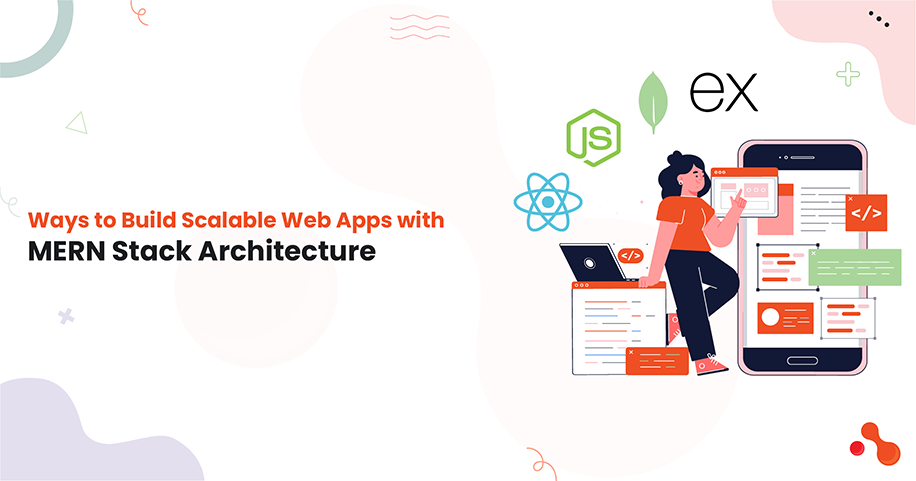
Ways to Build Scalable Web Apps with MERN Stack Architecture
Discover how to build scalable web apps with MERN stack by structuring code, databases, and deployment workflows for modern growth.
Acquaint Softtech
August 26, 2025India (Head Office)
203/204, Shapath-II, Near Silver Leaf Hotel, Opp. Rajpath Club, SG Highway, Ahmedabad-380054, Gujarat
USA
7838 Camino Cielo St, Highland, CA 92346
UK
The Powerhouse, 21 Woodthorpe Road, Ashford, England, TW15 2RP
New Zealand
42 Exler Place, Avondale, Auckland 0600, New Zealand
Canada
141 Skyview Bay NE , Calgary, Alberta, T3N 2K6