

Python Developer Hourly Rate: What You're Actually Paying For
Python developer rates range $20-$150+/hr in 2026. See what experience, specialisation & hidden costs actually determine the price. Save 40% with vetted offshore talent.
$20–$150+/hr
global Python developer rate range in 2026$129,000
median total US compensation (Glassdoor, Feb 2026)40%
cost savings with offshore staff augmentation vs. US in-house48 hrs
to onboard a vetted developer with Acquaint Softtech
$20–$150+/hr - global Python developer rate range in 2026
$129,000 - median total US compensation (Glassdoor, Feb 2026)
40% - cost savings with offshore staff augmentation vs. US in-house
48 hrs - to onboard a vetted developer with Acquaint Softtech
The internet is full of Python developer salary data, and almost all of it is presented the same way: a headline average, a wide range, and a regional breakdown. What’s rarely addressed is why the number sits where it does for any specific hire. A $30/hr Upwork developer and a $130/hr US-based AI engineer are both called “Python developers.” The difference isn’t a mystery, but it does require unpacking.
This guide takes a different approach. Instead of another table of averages, we work through what each component of the rate actually reflects: experience depth, specialisation, hidden costs, industry context, and engagement model risk. Then we show you what Acquaint Softtech offers and why it consistently delivers 40% cost savings without the quality trade-offs you might expect. If you’re about to hire Python developers, read this before you make any decisions.
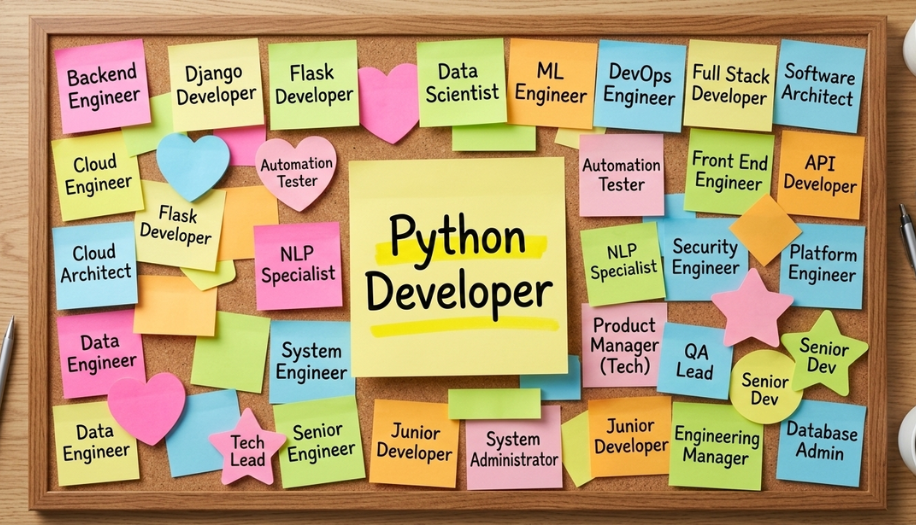
Python’s dominance is no longer a trend, it’s structural. The 2025 Stack Overflow Developer Survey placed Python at 57.9% developer adoption, making it the most-used language for the third consecutive year. But adoption alone doesn’t explain the rate pressure. Three specific forces are tightening the supply-demand gap:
The US Bureau of Labor Statistics projects 15% growth in software developer roles through 2034. Python-specific roles in AI, data engineering, and backend SaaS are growing faster than that headline figure.
The AI boom has created a new demand tier. Developers who can deploy machine learning models to production APIs, not just train models in notebooks are commanding premiums that simply didn’t exist three years ago. Every generative AI product runs on Python-native tools: TensorFlow, PyTorch, LangChain, FastAPI.
Junior developer hiring collapsed at large tech companies over 2023–2025. The share of junior developers in overall IT employment dropped from 15% to 7% over three years, compressing the mid-market talent supply and pushing experienced Python engineers into a seller’s market.
Market signal: Python developer median US salary reached $129,000 total compensation in February 2026 according to Glassdoor, a figure that includes base salary, bonuses, and profit-sharing. That’s up roughly 8% from the 2024 figure, tracking well above general wage growth.
Rather than a single-platform figure, here is a cross-referenced view from five independent sources updated in early 2026. The variance is itself informative:
US Python Developer Salary - 2026 Multi-Source Comparison
Source | Average / Median (US) | Hourly Equiv. | Sample / Method |
Glassdoor (Feb 2026) | $128,630 median total | ~$62/hr | 2,247 anonymous US submissions |
ZipRecruiter (Feb 2026) | $123,523 avg annual | ~$59/hr | National payroll + job posting data |
Built In (2026) | $127,649 total comp | ~$61/hr | Developer-reported, US only |
Jobted (2026) | $108,670 avg annual | ~$52/hr | BLS data + Jobted postings blend |
PayScale (2026) | $91,180 avg | ~$44/hr | Smaller self-report sample; skews early-career |
The $44–$62/hr spread across platforms reflects methodology differences, not data errors. PayScale’s lower figure comes from a smaller, earlier-career sample. Built In’s 2026 data shows developers with 7+ years reaching $150,000 base salary. Coursera’s 2026 salary guide (which draws on Glassdoor) puts the typical range at $96k–$170k total annual pay, reflecting how wide the band is even within the US market. The right benchmark depends on what experience tier you actually need.
Global Hourly Rates: Region-by-Region Reality Check
Region | Junior | Mid-Level | Senior | Notes |
USA / Canada | $40–$70 | $60–$100 | $100–$150+ | Highest cost; tightest supply of senior engineers |
UK / Germany / Netherlands | $45–$75 | $65–$100 | $85–$120 | Strong EU market; GDPR compliance adds demand |
Poland / Romania / Czech Rep. | $22–$45 | $38–$65 | $55–$80 | Competitive tech market; EU timezone advantage |
Brazil / Argentina / Mexico | $20–$40 | $35–$60 | $50–$75 | US timezone overlap; growing Python community |
India (offshore / agency) | $12–$25 | $20–$40 | $35–$60 | Largest pool; best cost/quality ratio when vetted |
Upwork global (all Python) |
| $30 median |
| Platform-blended; reflects mixed experience levels |
Note: Upwork’s own cost data places the platform median for Python developers at $30/hr, with typical rates of $20–$40/hr. That reflects the global distribution of freelance talent on the platform. For structured offshore engagements with proper vetting and IP protection, the effective rate is higher. But, the total cost of engagement is still substantially lower than US in-house hiring once taxes, benefits, and onboarding are factored in.

Python developer rates don’t exist on a simple quality spectrum. They reflect five compounding variables. Getting the wrong one wrong doesn’t just waste the hourly rate, it creates downstream costs.
Value Driver 1: Production Experience Depth
There’s a substantial difference between writing Python scripts and shipping multi-tenant SaaS products at scale. Bluelight.co’s 2026 salary guide puts mid-level US Python developers at $143,658/year (∼$69/hr) on ZipRecruiter, a 20% premium over entry-level that maps directly to production experience. At senior level, $150k+ base reflects engineers who can architect systems, not just build features.
Value Driver 2: Specialisation Premium
General web development and AI/ML are priced differently because they require different depth. Glassdoor’s 2026 industry breakdown shows Financial Services Python developers earning a median of $144,375 - $16,000 more than the overall average. Fintech compliance (PCI-DSS), healthcare (HIPAA), and production AI (model deployment, vector databases, RAG pipelines) all command specialisation premiums of 20–40% over baseline rates. A developer who has shipped a FastAPI-served TensorFlow model to production costs meaningfully more than one who knows the framework from a tutorial.
Value Driver 3: Framework Fluency vs. Familiarity
This is the gap most buyers discover too late. Configuring Django from a tutorial is different from having shipped multi-tenant Django SaaS with Celery task queues, Redis caching, and optimised ORM queries under production load. The same developer listed as “Django Developer” on a platform may be billing at $35/hr or $95/hr. The rate reflects the depth, and the depth is what you’ll experience when something breaks at 2am.
Value Driver 4: Communication Quality in Distributed Teams
In remote and distributed environments, communication isn’t a soft skill, it directly affects delivery velocity. A developer who surfaces blockers early, explains architecture decisions clearly, and participates productively in sprint ceremonies reduces management overhead and rework cycles. This is a quality dimension the hourly rate doesn’t automatically capture but that you experience in every interaction. It’s also why staff augmentation from a vetted partner differs from freelance hiring: the communication screening is part of the vetting process, not something you discover post-hire.
Value Driver 5: Engagement Model Risk
A freelancer who disappears mid-sprint costs far more than their hourly rate implies. Arc.dev’s rate data places the global average Python developer rate at $61–$80/hr across engagement types, but the variance in outcomes is far wider than the variance in rates. Continuity protection, IP clarity, and replacement guarantees are value components that don’t show up in the hourly number but materially affect the total cost of a project.
Most discussions of Python developer cost stop at the hourly rate or annual salary. The full picture, as outlined by Flexiple’s hiring cost analysis and Abbacus Technologies’ breakdown, includes recruitment, onboarding, benefits, infrastructure, and continuity risk. Here’s how the numbers compound:
Cost Component | US In-House | Freelance (Marketplace) | Acquaint Softtech |
Base rate | $60–$100/hr ($125k–$210k/yr) | $20–$150/hr (varies widely) | $20/hr or $3,200/month |
Employer taxes + benefits | + 25–40% on base salary | None | None |
Recruitment / screening | $10k–$30k per hire | Your time screening profiles | Zero - pre-vetted for you |
Onboarding / ramp time | 4–8 weeks partial productivity | 1–3 weeks | 48 hours to sprint-ready |
IP & code ownership | Clear via employment contract | Often contested or unclear | Full NDA + IP assignment Day 1 |
Dev leaves? Cost to replace | Full rehire cycle (weeks–months) | Restart from scratch | Free replacement + full handover |
Estimated total annual (mid-level) | $180k–$260k all-in | Highly unpredictable | ~$38k–$45k/yr |
Real number: US total employer cost for a mid-level Python developer (salary + benefits + taxes + overhead) routinely runs 1.5x–2x base salary. A $125k salary becomes $180k–$200k annual spend. That multiplier is the actual driver behind offshore staff augmentation’s 40% savings, not just a lower sticker rate.
For a full breakdown of hiring models and vetting criteria, see our complete guide to hiring Python developers.
Which industry you’re hiring for shapes both the skill requirements and the rate. Glassdoor’s 2026 industry salary data for Python developers in the US reveals significant sector variation:
Industry | Median Total Pay (US) | Hourly Equiv. | Key Skill Drivers |
Financial Services | $144,375 | ~$69/hr | Fraud detection, trading systems, PCI-DSS compliance |
Nonprofit & NGO | $135,943 | ~$65/hr | Python Software Foundation skews this segment upward |
Telecommunications | $134,510 | ~$65/hr | Network automation, large-scale data pipelines |
Healthcare / HealthTech | $128,004 | ~$62/hr | HIPAA-compliant data handling, EMR integrations |
Human Resources & Staffing | $121,045 | ~$58/hr | Dashboard + reporting work; lower technical complexity |
SaaS / General Web (est.) | $115k–$130k | $55–$62/hr | Framework-dependent; broad experience band |
For SaaS product development, healthcare, and fintech, industry-specific Python expertise isn’t optional. A developer unfamiliar with HIPAA data handling requirements or PCI-DSS compliance can introduce security vulnerabilities that cost exponentially more to fix than the rate differential saved. Our Python development services span all major industry verticals with developers who have shipped in each context.
Acquaint Softtech is a software development company and staff augmentation partner based in India, serving clients across the USA, UK, Australia, Canada, Europe, and the Gulf. Every Python developer on our team is a permanent in-house employee, not a freelancer, not a subcontractor, not a marketplace match. Production-experienced, pre-vetted, NDA-backed, and onboard in 48 hours.
Our Track Record:
- 1,300+ projects delivered globally
- 70+ multi-stack engineers in-house
- 95% first-time delivery on sprint goals
- 40% average cost savings vs. traditional hiring
- 5★ rating across 35+ verified Clutch reviews
- 98% job success rate on Upwork (1,293+ reviews)
Python Developer Pricing at Acquaint Softtech
Plan | Rate | Hours / Scope | Ideal For |
Part-Time / Hourly | From $20/hr | Up to 4 hrs/day | Bug fixes, small features, technical audits, POCs |
Full-Time Dedicated | $3,200/month | 176 hrs/month | Sprint-based continuous product development |
Fixed-Budget Project | From $5,000 | Fixed scope + timeline | Defined builds with milestones and zero overruns |
Every plan includes: Full NDA • IP ownership from Day 1 • Free replacement guarantee • Direct developer access • Zero agency markup
Every Acquaint Engagement Includes
48-hour onboarding - profiles shared in 24 hours, sprint-ready in 48. See how →
100% in-house team - no freelancers, no subcontractors, no hidden layers
Multi-stage vetting - framework depth, production debugging, communication quality, and code review judgment assessed before any client match
Full NDA + IP assignment - before a single line of code is written. Your code is yours, completely and permanently
Continuity guarantee - free replacement with full context handover if a developer leaves. Your timeline is never held hostage
US, UK, EU timezone overlap - daily standups, sprint reviews, real-time Slack or Teams communication. No 24-hour feedback loops
Python Specialisations Available
Web Frameworks: Django, FastAPI, Flask, Pyramid, Tornado
AI & ML: TensorFlow, PyTorch, scikit-learn, Keras, Pandas, NumPy, LangChain, LlamaIndex
Data Engineering: Apache Airflow, Spark, ETL pipelines, pgvector, Pinecone
Databases: PostgreSQL, MySQL, MongoDB, Redis, DynamoDB
Cloud & DevOps: AWS Lambda, GCP Cloud Run, Azure Functions, Docker, Kubernetes, GitHub Actions
Frontend Integration: React, Next.js, Vue.js via clean API contracts, also see our dedicated Django developers
for how these frameworks fit into a broader Python architecture and frameworks decision, see our guide.
What Clients Actually Say
Client: "Alpesh was very fast in his delivery. Built a beautiful frontend template which looked exactly like the example I sent through. The project matched expectations and I will definitely work with Acquaint Softtech again!" — James Verney, Upwork (Python/Django engagement)
Client: "Acquaint Softtech’s work transformed our data handling process, saving 200 hours per week and reducing report creation time from four days to one." — Rafal Styczen, Chairman, Ailleron (Clutch, AI Development)
Client: "We have been so impressed with them that it’s now developed into a 3-year relationship and it’s still going strong." — Gavin, Founder
The right model depends on three variables: project stage, engagement duration, and how much delivery risk you can absorb. Here’s a practical framework:
1. Short-term or task-specific? Part-time hourly at $20/hr. Pay only for what you need. View hourly options →
2. Continuous sprint-based development? Full-time dedicated at $3,200/mo. The developer becomes a genuine team member with product context. Explore dedicated teams →
3. Well-scoped project with a defined outcome? Fixed-budget from $5,000. Milestones, zero overruns, end-to-end accountability. See software product development →
4. Scaling a team around a Python backend? Multiple roles through staff augmentation. One partner, full ownership, flexible scale.
Decision principle: Never optimise purely for the lowest rate. The cost of a bad Python hire : rework, re-architecture, security incidents, re-onboarding regularly exceeds 3x the developer’s annual rate. Vetting quality, continuity protection, and IP clarity matter as much as the number on the invoice.
Ready to Hire? Get Pre-Vetted Python Developer Profiles.
We delivered 1,300+ projects globally, saved clients up to 40%. Our 70+ in-house engineers are ready to embed in your workflow, your sprint, and your codebase from Day 1.
-
What is the average Python developer hourly rate in 2026?
In the US, the effective hourly rate ranges from ~$44/hr (PayScale, early-career sample) to ~$62/hr (Glassdoor, median total comp). For senior US-based developers with AI/ML expertise, $100–$150+/hr is common. Globally, Arc.dev places the average at $61–$80/hr across engagement types. The Upwork platform median is $30/hr, reflecting globally distributed freelance talent. Offshore developers from India with production experience cost $20–$40/hr through a vetted partner like Acquaint Softtech.
-
Why is there such a large range in Python developer salary data across platforms?
Different platforms measure different populations. Glassdoor (Feb 2026) shows $128,630 from 2,247 US submissions and includes bonuses; PayScale shows $91,180 from a smaller, earlier-career self-reported sample. Built In’s 2026 data shows $127,649 total compensation with 7+ year developers reaching $150k base. The right benchmark depends on which experience tier and compensation structure matches your specific hiring need.
-
What hidden costs should I budget for beyond the rate?
For US in-house hiring: employer taxes and benefits (25–40% on top of base salary), recruitment fees ($10k–$30k per hire), 4–8 weeks of reduced productivity during onboarding, and equipment and software licenses. Per Flexiple’s analysis, total annual cost for a mid-level US in-house Python developer routinely reaches $180k–$260k when all factors are included. For freelancers: platform fees (often passed through), your time screening candidates, and the cost of continuity failure when a developer becomes unavailable mid-project.
-
Do AI/ML specialisations really cost that much more?
Yes, the premium is real and growing. Glassdoor’s industry salary data shows Financial Services Python developers (who often work on ML and algorithmic systems) earning $144,375 median - $16,000 above the overall average. Engineers who have deployed TensorFlow or PyTorch models to production APIs, built RAG pipelines with pgvector, and integrated LLM workflows command 20–40% rate premiums over general backend developers. Our AI development services team carries exactly this production-level capability.
-
Is offshore Python development a quality risk?
Only when vetting is absent. The rate difference between US and India-based developers is geographic, not a skill proxy. India produces more software engineers annually than any other country, and many work across the same frameworks, cloud platforms, and AI tools as their US counterparts. The quality risk comes from inadequate technical screening. At Acquaint Softtech, every developer passes a multi-stage internal assessment covering framework depth, production history, communication quality, and code review judgment before joining any client team. You still conduct your own interview, we just ensure you’re interviewing someone who has already cleared the baseline.
-
How quickly can a Python developer actually start on my project?
Through traditional recruitment: 4–12 weeks on average. Through Acquaint Softtech: 48 hours from shared requirements to a sprint-ready developer. Share your requirements, receive 2–3 pre-vetted profiles within 24 hours, conduct your own technical interview, and your chosen developer integrates into your tools and codebase within two working days. No agency intermediaries, no procurement overhead, no prolonged onboarding ramp.
-
What should I actually test in a Python developer interview?
Go beyond the coding challenge. Test: (1) System design - can they architect a scalable API with clear data flow? (2) Database reasoning - do they understand N+1 issues, query optimisation, and indexing strategy? (3) Production debugging - can they trace a slow endpoint through logs and profiling tools? (4) Security awareness - do they know about SQL injection, CSRF, JWT best practices? (5) Code review judgment - do their PRs reflect maintainable patterns or clever shortcuts? At Acquaint Softtech, every developer has cleared all five criteria internally, your interview focuses on project fit and communication quality.
-
Which Python developer hourly rate model gives the best ROI for a SaaS startup?
For early-stage SaaS, the full-time dedicated developer at $3,200/month delivers the best cost-to-output ratio. 176 focused hours per month from an engineer who understands your product context, accumulates codebase knowledge sprint-over-sprint, and doesn’t context-switch between clients. Compare that to $180k+/year for a US in-house equivalent or a freelancer who resets their context every engagement. Our dedicated development teams page explains exactly how this model scales.
-
What Python frameworks should I expect my developer to know in 2026?
It depends entirely on what you’re building. Django suits feature-rich web apps and multi-tenant SaaS with a batteries-included approach. FastAPI delivers the highest throughput for async APIs and AI model serving. Flask fits lightweight services and rapid prototyping. TensorFlow and PyTorch are non-negotiable for production AI/ML. Celery + Redis handles background task queues and async workflows. Every Acquaint Python developer is assessed on framework depth, not just surface-level exposure before being matched to any project.

We’re Acquaint Softtech, your technology growth partner. Whether you're building a SaaS product, modernizing enterprise software, or hiring vetted remote developers, we’re built for flexibility and speed. Our official partnerships with Laravel, Statamic, and Bagisto reflect our commitment to excellence, not limitation. We work across stacks, time zones, and industries to bring your tech vision to life.
Related Blog

The Complete Guide to Hiring Python Developers in 2026: Rates, Models, Vetting and Red Flags
A complete guide to hiring Python developers in 2026. Compare real hourly rates across India, Eastern Europe and the US, choose the right engagement model, vet candidates correctly, and avoid the red flags that cost companies months of wasted budget.
Acquaint Softtech
March 4, 2026
Python Development in 2026: Architecture Patterns, Frameworks and Real-World Industry Applications
Explore Python backend architecture patterns, framework comparisons (Django vs FastAPI vs Flask), scalability decisions, and real-world Python development use cases across healthcare, FinTech, SaaS, EdTech, and logistics in 2026.
Acquaint Softtech
March 4, 2026
Hidden Costs of Hiring a Python Freelancer vs a Dedicated Agency
That $50/hr Python freelancer may cost you more than a $3,200/month dedicated agency. We break down every hidden cost category with real 2026 data before you make your next hire.
Acquaint Softtech
March 14, 2026Your Project. Our Expertise. Let’s Connect.
Get in touch with our team to discuss your goals and start your journey with vetted developers in 48 hours.