

From a Frontend Problem to an Open-Source Plugin: My Tailwind CSS v4 Talk at Laravel Ahmedabad
The story behind tailwindcss-fluid-scale, from a frontend headache that kept following me across projects to an open-source Tailwind CSS v4 plugin I shared at the Laravel Ahmedabad Community Meetup.

Sagar P
Introduction
I am Sagar Pansuriya, a frontend-focused engineer at Acquaint Softtech. I have spent more than ten years building and scaling SaaS and enterprise platforms, and most of my work lives where design meets engineering.
At the recent Laravel Ahmedabad Community Meetup, I spoke about something personal: how a recurring frontend problem turned into an open-source Tailwind CSS v4 plugin called tailwindcss-fluid-scale. This is the story behind it, the problem, the build, and why I chose to give it away.
The Problem That Started It
Most responsive design still works in jumps. You set a font size, add a media query for tablet, then another for desktop. The text snaps from one size to the next at each breakpoint. It works, but it is rigid. Values get scattered across the stylesheet, and the result rarely matches the smooth scaling a designer actually pictured.
I kept running into the same class of bugs across different projects: a heading that looked right on desktop and cramped on a small laptop, spacing that felt fine at one width and awkward at another. Every fix was another media query patched onto a growing pile. At some point the pattern was obvious. The problem was not the project. It was the approach.
Why I Stopped Patching and Started Building
The cleaner answer already exists in the platform: the CSS clamp() function. It lets a value scale smoothly between a minimum and a maximum based on the viewport, instead of snapping at fixed breakpoints. The math behind it is fiddly to write by hand for every element, though, which is exactly the kind of repetitive work a tool should handle.
So I built tailwindcss-fluid-scale. You define the small-screen value and the large-screen value, and the plugin generates the fluid scale for you. Typography and spacing flow naturally across every device in between. Fewer media queries, fewer one-off overrides, and far fewer of those “it looks broken on this one screen size” tickets.
Building It for Tailwind CSS v4
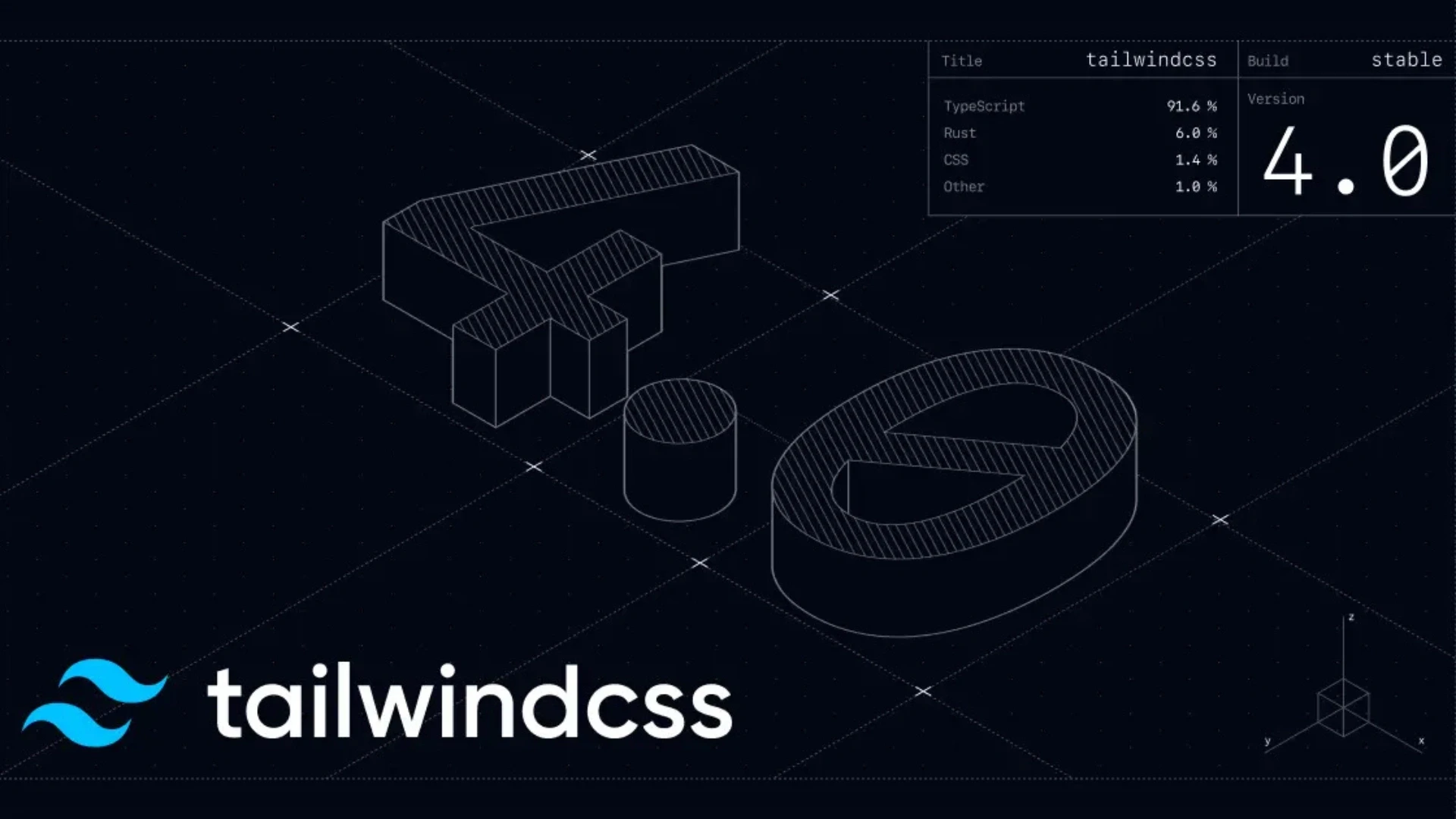
Tailwind CSS v4 moved to a CSS-first configuration. Instead of a large JavaScript config file, you set up your theme and register plugins directly in CSS. It is faster and closer to the platform, but it also meant older fluid-scaling plugins built for v3 stopped working. Rather than retrofit an old approach, I designed the plugin around the new architecture from the start. Working with the framework's direction instead of against it made the whole thing simpler and more durable.
Why I Made It Open Source
I could have kept it as an internal utility. I chose to open-source it instead, for a few reasons.
The problem is not mine alone. Every frontend team hits the breakpoint problem. A shared tool saves a lot of people from solving the same thing twice.
Open source makes the tool better. Real-world usage, issues, and pull requests surface edge cases no single project would ever hit.
It is how I learned. Almost everything I build sits on top of someone else's open-source work, including Laravel and Tailwind themselves. Contributing back is the rent you pay for that.
Shipping something publicly also raises your own bar. When you know other developers will read the code, you write it more carefully. That pressure made the plugin cleaner than it would have been as a private helper.
What Open Source Teaches You About Building Products
Maintaining a public plugin is a crash course in the things that matter for client work too: clear interfaces, sensible defaults, and documentation someone can actually follow. It pushes you to think in systems rather than one-off fixes.
That mindset carries straight into how we build at Acquaint Softtech. Whether it is a Tailwind and Laravel frontend or a React interface for a MERN stack product, treating the frontend as a system, not a pile of screens, is what keeps a product easy to extend as it grows.
Where AI Fits Into This
Someone at the meetup asked where AI sits in frontend work now. My honest take: AI is genuinely good at the repetitive parts, scaffolding components, suggesting utility combinations, and catching inconsistencies, but it works best on top of a clear system. A well-defined design system or a focused tool gives an AI assistant the rules to follow, which is when these tools start saving real time. We help teams put that to work through our AI development services, pairing solid foundations with practical AI assistance rather than hype.
Why This Matters Beyond One Plugin
A team that thinks this way ships faster, spends less time on visual bug fixes, and keeps a consistent look and feel as the product expands. A team that does not pays for it later in slow releases and rising maintenance cost.
If your team needs that capability quickly, our IT staff augmentation model lets you add experienced frontend engineers without a long hiring cycle, or you can hire dedicated developers who already think in systems and component architecture.
The Real Takeaway From the Meetup
.webp "The Real Takeaway From the Meetup")
The session was about a plugin, but the highlight for me was the room. Developers asked sharp questions, shared the frontend problems they were wrestling with, and traded ideas about where this craft is heading. Sharing a small open-source project and watching people immediately connect it to their own work was the best part of the day.
If you would like a broader overview of the event, including the other sessions, discussions, and community highlights, I have covered them in my detailed Laravel Ahmedabad Meetup June 2026 recap.
After more than a decade in this field, I have learned that good engineering rarely happens in isolation. It grows through conversations, honest feedback, and people willing to build and learn in the open. A big thank you to the Laravel Ahmedabad Community team and everyone who attended.
How We Approach This at Acquaint Softtech
.webp "How We Approach This at Acquaint Softtech")
The way we build frontends comes down to a few habits:
Solve the pattern, not the symptom. Fix the root cause once instead of patching the same bug across screens.
Build systems, not screens. Consistent spacing, type, and components so the product scales without rework.
Staff for the gap you actually have. A frontend specialist, a full team, or AI-assisted delivery on top of a clean foundation.
If any of that maps to where your product is right now, you can hire MERN stack developers, explore Laravel development, or talk to us about staff augmentation.
Closing Thoughts
tailwindcss-fluid-scale started as a fix for a problem that kept following me from project to project. Making it open source turned a private workaround into something other developers can use, improve, and learn from. That is the part I am proudest of.
The best frontend work is quiet. When the system is right, things just scale, and nobody files a ticket about it. I left the meetup looking forward to more conversations, more building in the open, and more sharing of what we learn along the way.
Is Your Frontend Slowing Your Product Down?
As products grow, inconsistent spacing, one-off responsive fixes, and ad hoc components pile up into technical debt that slows every release. Send us a short description of your stack and where it hurts, and we will tell you whether a design-system cleanup, a scalable component library, or an added engineer is the fastest path forward. A clear read before you refactor blindly.
With over 9 years of hands-on experience in web application analysis, design, planning, and management, I have had the privilege of transforming ideas into dynamic digital solutions. From handling eCommerce platforms to robust ERP systems, my expertise spans across JS & PHP-based frameworks and CMS like: WordPress, React JS, and Laravel.
Table of Contents
Get Started with Acquaint Softtech
- 13+ Years Delivering Software Excellence
- 1300+ Projects Delivered With Precision
- Official Laravel & Laravel News Partner
- Official Statamic Partner
Related Blog
.png "How I Solved the Full-Width Layout Challenge Using CSS")
How I Solved the Full-Width Layout Challenge Using CSS
As a frontend developer, I often face layout challenges. In this blog, I share how I achieved a full-width inner section across all devices using CSS Grid, viewport units, and aspect ratio. This is a single reusable solution for hero images and responsive layouts.
Sagar P
September 11, 2025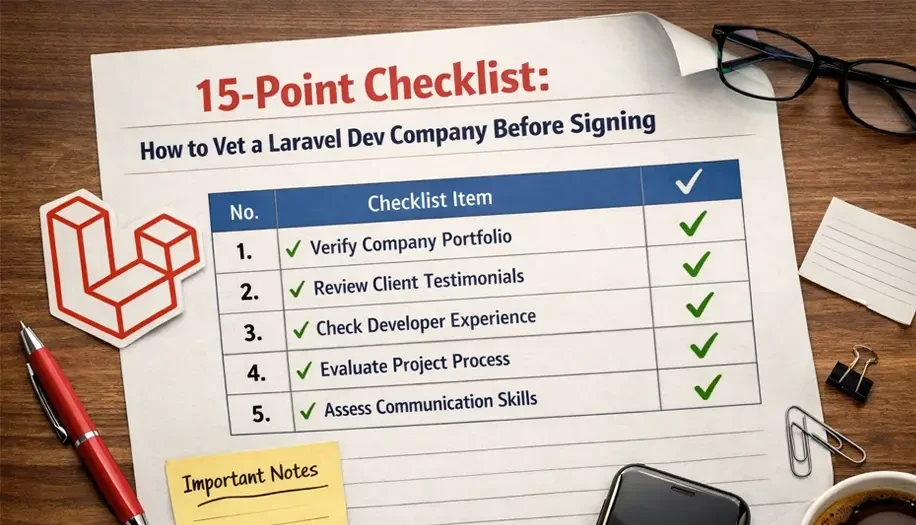
15-Point Checklist: How to Vet a Laravel Dev Company Before Signing
Before you sign with any Laravel dev company, ask these 15 questions. We built this checklist from 1,300+ projects. Most CTOs skip at least 8 of them.

Acquaint Softtech
March 8, 2026.jpg "Best Laravel Development Agencies and Official Partners")
Best Laravel Development Agencies and Official Partners
Discover your ultimate guide to the best agencies for Laravel development. These elite Laravel partners bring unmatched expertise, seamless scalability, and cutting-edge innovation to ensure your project thrives in a competitive digital landscape

Mukesh Ram
March 21, 2025India (Head Office)
203/204, Shapath-II, Near Silver Leaf Hotel, Opp. Rajpath Club, SG Highway, Ahmedabad-380054, Gujarat
USA
7838 Camino Cielo St, Highland, CA 92346
UK
The Powerhouse, 21 Woodthorpe Road, Ashford, England, TW15 2RP
New Zealand
42 Exler Place, Avondale, Auckland 0600, New Zealand
Canada
141 Skyview Bay NE , Calgary, Alberta, T3N 2K6