

AI Content Detection and Humanization in 2026: How It Works, and How Much You Can Trust It
How AI content detectors actually work, how accurate they really are in 2026, what humanizers do, and what all of it means if you are building content features into a product. An honest, engineering-led guide.

Zubair Pateljiwala
Ask a teacher, an editor, or a hiring manager what keeps them up at night in 2026, and a common answer is a version of the same worry: I can no longer tell what a person actually wrote. That single anxiety has built a market worth hundreds of millions of dollars for AI content detectors, and a matching market for humanizers that promise to make AI text read as human. Both sides are growing, both make confident accuracy claims, and the independent evidence tells a more complicated story than either side markets.
At Acquaint Softtech, a software development partner with 1,300+ projects across 13 years, we get asked three questions about this: should we build detection into our product, can we trust a detector’s score, and is humanization a real feature or a liability. This guide answers all three honestly. It explains how detection actually works, how accurate it really is this year, what humanizers do, and what any of it means if you are building content features into a product.

- Founders and product leads adding AI writing, moderation, or content-integrity features
- Educators, publishers, and hiring teams deciding how much to trust a detector score
- SEO and content leads worried about detection affecting their published work
- Engineering leads scoping a detection, plagiarism, or content-provenance feature
- Anyone who has been told "this reads like AI" and wants to know what that claim is worth
What AI Content Detection Actually Claims to Do
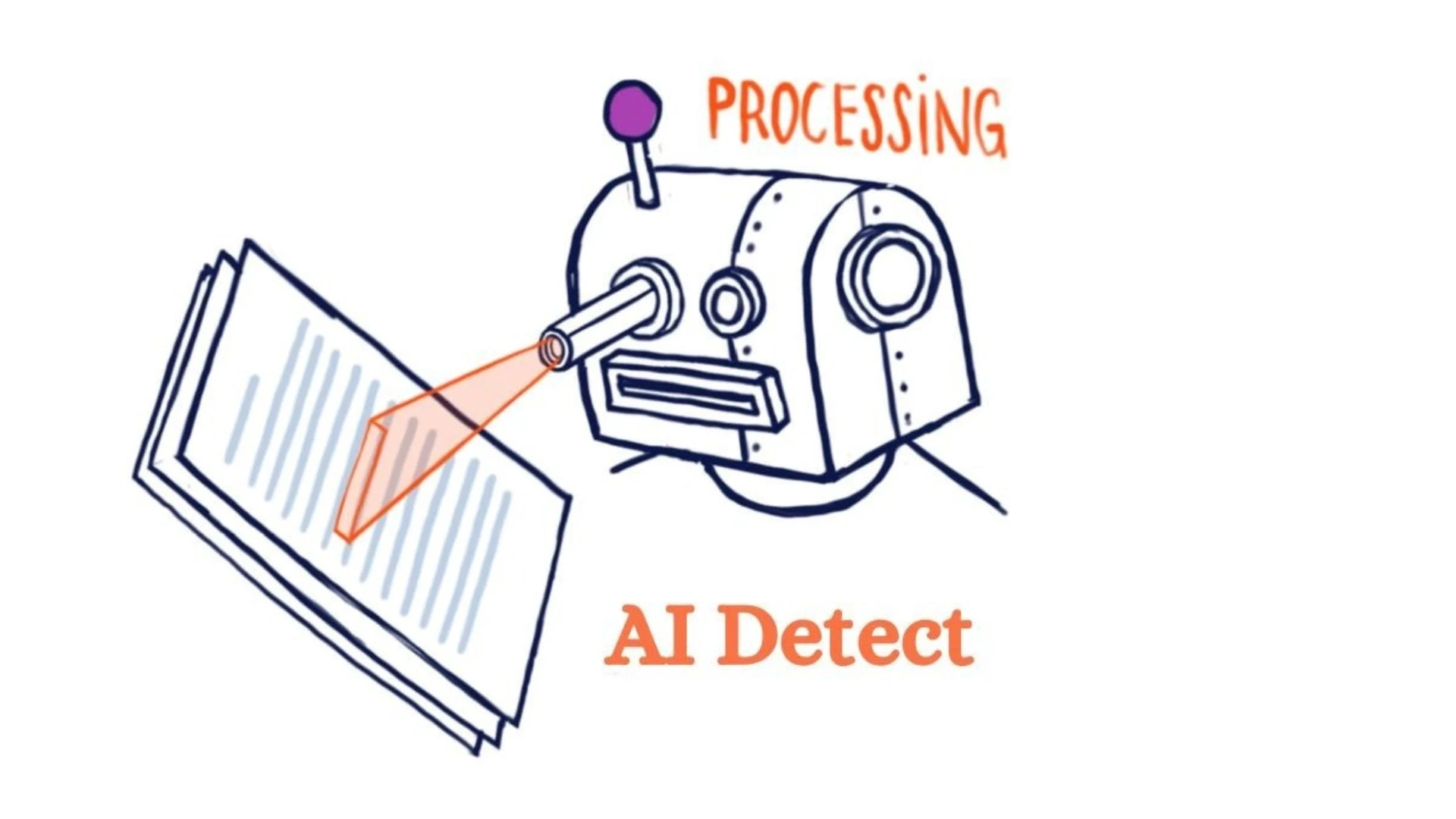
An AI checker takes a piece of text and returns a judgment, usually a probability or percentage, of how likely it is that a machine wrote it. This is a different job from plagiarism detection, and the difference matters. Plagiarism tools match text against a corpus of existing sources to find copying. AI text is technically original: a model can produce a sentence that has never existed before. So a detector is not asking whether the text was copied. It is asking how it was written, human or machine, from the statistical shape of the words alone. That is a much harder question, and it is the root of every reliability problem that follows.
How AI Detectors Work Under the Hood
Almost every text-based detector relies on some combination of four signals.
Perplexity. A measure of how predictable each next word is. Language models are trained to produce statistically likely sequences, so AI text tends to have lower perplexity, meaning it is smoother and less surprising. Human writing usually contains more unexpected word choices, which reads as higher perplexity.
Burstiness. A measure of variation in sentence length and structure. Humans tend to mix long and short sentences unevenly. AI output is often more uniform. Detectors treat low variation as a machine signal.
Neural classifiers. The strongest current approach. A transformer model is fine-tuned on large corpora of human and AI text so it learns subtler patterns than raw statistics can capture. The best commercial detectors are built this way, and they outperform simple perplexity checks by a wide margin.
Watermarking and provenance. A fundamentally different approach that does not guess at all. Instead of analysing the text after the fact, it reads a signal embedded when the content was generated, such as Google’s SynthID for text, or it checks content credentials under the C2PA standard. This is far more reliable than statistical detection, but only for content that was watermarked at the source.
How Accurate Are They, Really? The 2026 Evidence
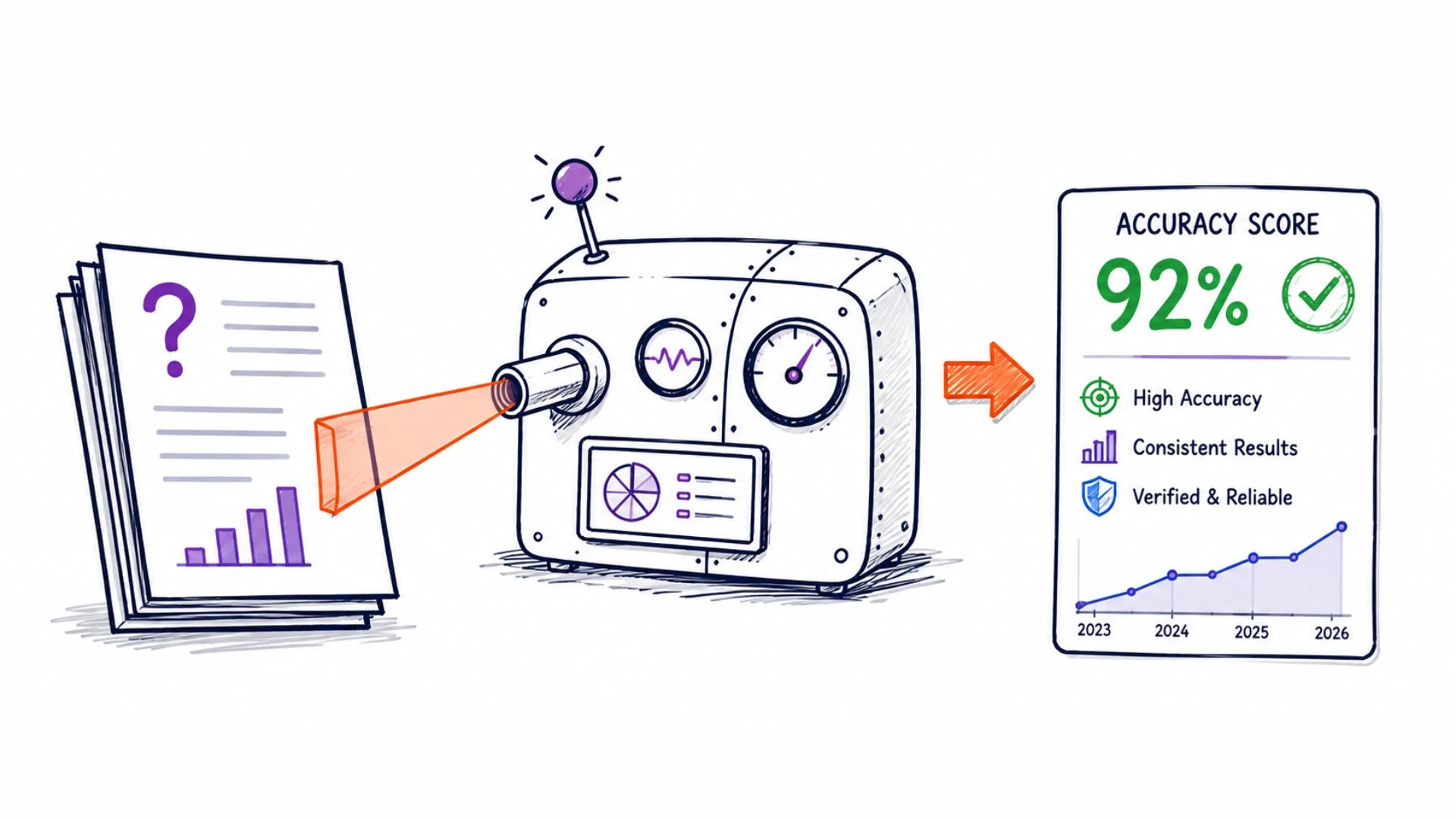
This is the section vendors do not put in their marketing, and the one that matters most if you are going to act on a score.
The picture in 2026 is uneven. On long, unedited machine text, the strongest independently tested detectors reach very low false-positive rates, on the order of well under one percent in University of Chicago Booth testing. But that is the best case for the best tool. Most popular and free detectors are far less reliable. Short passages, under a few hundred words, produce unstable results across the board. And for nearly every tool, accuracy falls sharply once text has been paraphrased or edited, which is exactly what happens to real writing in the real world.
There is also a deeper problem that no amount of engineering removes. A text-only detector powerful enough to reliably catch AI writing will, by mathematical necessity, also flag some genuine human writers. False positives are not a bug waiting to be patched. They are built into the approach. The more aggressively a detector catches machine text, the more human writers it wrongly accuses.
The bias problem is the sharpest edge of this. A widely cited 2023 Stanford study found that a group of major detectors flagged roughly sixty percent of essays written by non-native English speakers as AI-generated, with nearly every essay flagged by at least one tool, even though a human wrote every single one. Detectors read the simpler vocabulary and more predictable structure common in second-language writing as a machine signal. Any system that penalises people for how they learned English is an ethical and legal liability, not just a technical flaw.
The practical conclusion, and the one responsible institutions have now adopted, is simple: a detection score is a signal, never proof. It can start a conversation. It cannot end one. Using a percentage as sole evidence to accuse a student, reject a candidate, or take down a piece of content is both unreliable and, increasingly, litigated.
The full comparison of the leading detectors for 2026, with independent accuracy and false-positive data, is in our best AI content detectors guide.
What "Humanization" Tools Actually Do, and Why the Arms Race Never Ends
Humanizers sit on the other side of the same coin. They rewrite AI text to raise its perplexity and vary its structure, with the goal of lowering a detector’s score. Against weaker detectors this works, and some popular detectors degrade sharply after a few rewriting passes. Against the strongest, current humanizers are far less effective. The two sides improve in response to each other, which is why this is correctly described as an arms race with no stable end state.
The strategic point for anyone building a product or a workflow is that betting on either permanent evasion or permanent trust is building on sand. A humanizer that beats today’s detectors may fail next quarter, and a detector you trust today may be wrong about a real person tomorrow. The durable, defensible way to humanize AI text is editing for readability, tone, and clarity, not laundering machine text to pass it off as human. Used for deception, they carry a double cost: the rewrites often read worse than the original, and in academic or professional settings the integrity risk is real.
Where This Matters: Education, Hiring, Publishing, and SEO
Detection shows up in four places, each with a different stake.
Education. The largest and most fraught use, and the one where false positives do the most human damage. A wrongly flagged student, disproportionately a non-native speaker, can face an accusation that is hard to appeal. This is where "signal, not proof" matters most.
Hiring. Detectors are used to screen applications and take-home tests. The same false-positive risk applies, with the same fairness problem, and the same rule: never automate a rejection on a score.
Publishing and media. The concern is authenticity and disclosure. Here the field is shifting away from after-the-fact detection toward provenance: labelling and content credentials that travel with the file.
SEO and content. The common fear is that search engines penalise AI-written content. The honest answer is that search systems judge quality, usefulness, and originality, not which tool produced the text. Low-effort, unhelpful content fails whether a human or a model wrote it, and genuinely useful content ranks either way. Chasing a low detector score is the wrong target. Writing something worth reading is the right one.
Adding AI Into Your Content or Trust Workflow?
Acquaint Softtech builds content-integrity, moderation, and AI features on MERN and MEAN stacks: detection and provenance checks, human-in-the-loop review, and audit trails that hold up. Tell us your product and stage. We will match you with vetted AI and MERN engineers and have them in your sprint in 48 hours.
If You Are Building a Detection or Content-Integrity Feature
If detection or provenance is going into your own product, the architecture question is less about the model and more about how the score is used. This mirrors the layered approach we describe for building an AI video generation platform, where provenance and watermarking play the same role. Start by deciding what you actually need: a real-time signal at the point of submission, batch scanning of a large content library, provenance verification of watermarked files, or a human review queue. Each implies a different build.
The layers that matter are an ingestion and preprocessing step, a scoring engine, a policy and threshold layer, a human review workflow, and an audit log. The most important design decision runs through all of them: never let a score trigger an automatic penalty. Surface it as one input to a human decision, show the uncertainty rather than a bare percentage, and log every check so that any accusation can be reviewed and appealed. A content-integrity feature that punishes people automatically on a probability is a lawsuit waiting to happen.
On the scoring engine itself, you have three real options, and the honest recommendation for most teams is the middle one, covered in the cost section below: rent a strong commercial detector through an API, keep a provenance reader for watermarked content, and do not try to train your own classifier unless detection is your core product.
What It Costs: The Approaches Compared

The cost of detection depends entirely on which approach you choose, and each buys a different balance of reliability and upkeep.
Approach | How it works | Reliability in 2026 | Cost profile |
|---|---|---|---|
Statistical | Perplexity and burstiness, no training | Low, easily thrown off | Cheap to build, weak live |
Neural classifier | Transformer fine-tuned on human vs AI text | Higher, needs constant retraining | GPU training plus inference |
Commercial API | Vendor model (Pangram, GPTZero, Originality) | Best available, still not proof | Per-check fee, no upkeep |
Watermark and provenance | Reads SynthID or C2PA signal | Reliable only if applied at generation | Integration cost, partial coverage |
What these figures do not capture:
The retraining treadmill: a self-trained classifier decays as new models ship, so its real cost is continuous, not one-time
Human review time, which is the largest running cost of any responsible detection workflow
The cost of a wrong call: a false accusation carries reputational and legal risk that dwarfs the per-check fee
Provenance coverage gaps, since watermark reading only works on content that was watermarked at generation
The full model-by-model pricing and accuracy comparison for 2026 is in our best AI content detectors guide.
Not Sure Whether to Build or Buy Detection?
Tell Acquaint Softtech what you are trying to protect and at what volume. We will recommend whether to integrate a commercial detection API, add a provenance reader, or build something custom, with a cost model, within 24 hours. No commitment required.
Recommended Tech Stack
.webp "Recommended Tech Stack")
For most teams the stack mirrors what we recommend for any AI feature, and it is a MERN-family setup at heart, so a team already running React and Node can extend it without a new discipline.
Layer | Recommended choice | Why it fits content integrity |
|---|---|---|
API and orchestration | Node.js with Express | Handles constant waiting on external detection and provenance APIs without stalling |
Provider routing | One internal interface over all detectors | Swap or combine detection vendors as their accuracy shifts, with no rewrite |
Review interface | React | Shows a probability with its uncertainty and an appeals path, never a false-certain verdict |
Records and audit log | MongoDB | Logs every check so any accusation can be reviewed, which is not optional here |
Batch scanning | Redis with BullMQ | Queues and paces scanning of large content libraries in the background |
Classifier and embeddings | Python microservice | Keeps any custom model or embedding work in its strongest ecosystem |
Provenance reader | SynthID and C2PA checks | Reads watermarks and content credentials, the most reliable signal available |
The design goal across every layer is the same: the score is one input, every decision is logged, and no single vendor is load-bearing. Teams that need to add this capacity quickly bring in Node.js and MERN developers or a dedicated development team to own the build.
Accuracy, Fairness, and Compliance: What You Cannot Skip
Three things separate a responsible content-integrity feature from a liability. Test for bias before you ship, using writing from non-native speakers, technical writers, and heavy editors, because a detector that penalises any of these groups will eventually penalise your users. Be transparent in the interface: present a probability with its uncertainty, never a verdict, and give people a clear path to appeal. And align with where regulation is heading. Disclosure and labelling of AI-generated content is becoming an expectation under frameworks such as the EU AI Act, and provenance signals like SynthID and C2PA content credentials put you on the right side of that shift. The through-line is the same one that runs through this whole article: treat detection as a signal that supports a human decision, never as a machine that makes one.
A Realistic MVP, and Build Versus Buy
For almost every team, the right build is to integrate a strong commercial detection API behind a routing layer, add a provenance reader for watermarked content, layer your own thresholds and human review on top, and log everything. Ship that, learn from real cases, and expand. Do not train your own detection classifier unless detection is the product you sell. This is the same discovery-first discipline we bring to any AI application build.
Build the workflow, the transparency, and the audit trail, because that is where your product earns trust. Rent the detection signal, because on its own it is a commodity you cannot win by owning. When teams need to add capacity, they bring in our AI/ML engineers or MERN stack developers through staff augmentation or a dedicated development team.
Ready to Build? Acquaint Softtech Has Vetted AI and MERN Engineers Available Now.
Pre-vetted engineers with production experience in AI feature integration, review workflows, queue systems, and audit-grade logging. Tell us your stack and we will send matched profiles within 24 hours. Engineer in your sprint in 48 hours.
Frequently Asked Questions
-
How do AI content detectors work?
Most rely on statistical signals such as perplexity, which measures how predictable the writing is, and burstiness, which measures variation in sentence structure. AI text tends to be smoother and more predictable than human writing. The strongest detectors add a neural classifier trained on human and AI examples. A separate approach, watermarking and provenance, reads a signal embedded when the content was generated rather than guessing after the fact.
-
Are AI detectors accurate in 2026?
The best independently tested tools are reliable on long, unedited machine text, with false-positive rates well under one percent. Most popular and free tools are far less reliable, short passages are unstable, and accuracy drops sharply on edited or paraphrased writing. No detector can prove that a person did or did not use AI, which is why a score should be treated as a signal, not evidence.
-
Can an AI detector be wrong about human writing?
Yes, and this is the most important limitation. Any detector strong enough to catch AI will also flag some genuine human writers. A well-known Stanford study found that major detectors flagged roughly sixty percent of essays by non-native English speakers as AI, though humans wrote all of them. Never act on a score alone.
-
What does an AI humanizer actually do?
It rewrites AI text to make it less predictable and more varied, aiming to lower a detector’s score. It works against weaker detectors and much less against the strongest. Its durable, honest use is editing for readability and tone. Using it to pass machine text off as human is both a quality risk, since rewrites often read worse, and an integrity risk in academic or professional settings.
-
Does Google penalize AI-generated content?
Search systems judge quality, usefulness, and originality, not which tool produced the text. Low-effort, unhelpful content fails whether a human or a model wrote it, and genuinely useful content can rank either way. Optimising for a low detector score is the wrong goal. Producing something worth reading is the right one.
-
Should I build my own detector or use an API?
For almost everyone, use a commercial API behind a routing layer and add a provenance reader for watermarked content. Training your own classifier only makes sense if detection is the product you sell, because keeping it accurate means an endless retraining race against specialists.
-
Is it safe to act on a detection score?
Only as one input to a human decision. Show the uncertainty, keep an audit log, and provide an appeals path. Using a probability as sole grounds to accuse, reject, or remove is unreliable and increasingly a legal risk.
I am Zubair Pateljiwala, a digital marketing professional with 15+ years of experience in SEO, content marketing, and performance marketing. As the Marketing Head at Acquaint Softtech, I focus on helping technology businesses improve their online visibility through SEO, GEO, AEO, and AI-driven content strategies. I enjoy transforming complex software development concepts into practical, easy-to-understand content that helps businesses make informed technology decisions.
Table of Contents
Get Started with Acquaint Softtech
- 13+ Years Delivering Software Excellence
- 1300+ Projects Delivered With Precision
- Official Laravel & Laravel News Partner
- Official Statamic Partner