

How to Build an AI Video Generation Platform in 2026: Architecture, Models, and What It All Costs
Everything you need to build an AI video generation platform in 2026: what to build versus rent, the model landscape after Sora, the architecture and pipeline, real per-second costs, and the safety layer you cannot skip.

Zubair Pateljiwala
Two years ago, AI video meant six second clips that flickered, hallucinated hands, and fell apart the moment anything moved quickly. That is no longer where the field is. By 2026 the leading models generate clean 1080p and native 4K, hold a character’s face steady across a shot, and in some cases render synchronized speech in the same pass. The result is that building an AI video product has gone from a research problem to an engineering problem, and a large number of founders are now asking us the same question: what does it actually take to ship one.
At Acquaint Softtech, a software development partner with 1,300+ projects across 13 years, we have this conversation often, including our work on AI features for MEAN and MERN stack apps. This guide answers it from the builder’s side. Not a tool review, and not a list of prompts. It covers how these platforms are put together, which decisions carry the most cost and risk, and where teams most often get it wrong.

- Founders and product leads evaluating whether to build an AI video product and what it takes
- Engineering leads scoping the architecture for a text-to-video, avatar, or AI ad platform
- Teams deciding whether to train a model, self-host open weights, or build on foundation-model APIs
- Product teams whose AI generation costs are unpredictable and eating into margin
- Companies that prototyped on a model now being retired, such as Sora, and need a durable architecture
What an AI Video Generation Platform Actually Is: The Five Products
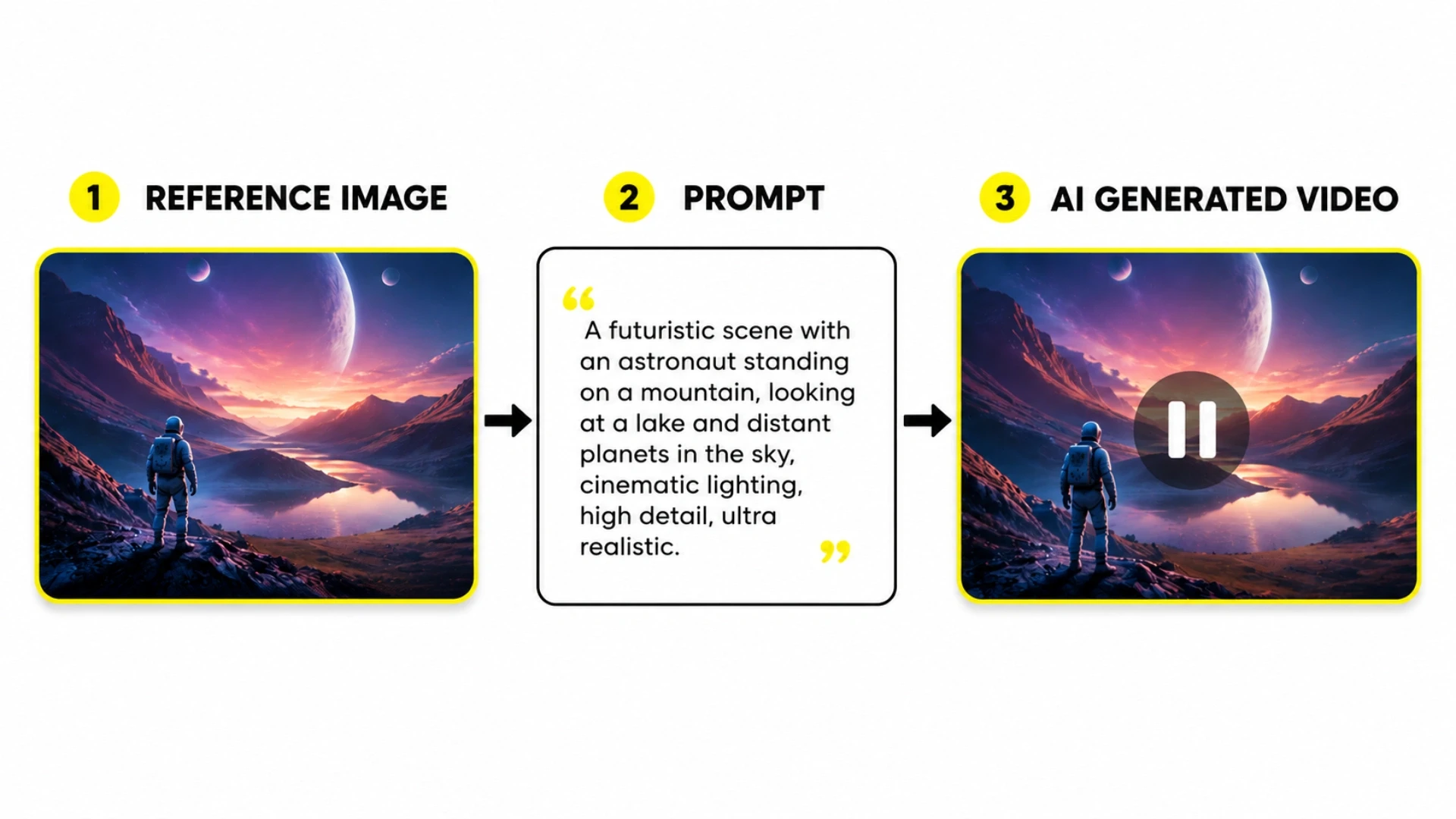
The phrase covers at least five different products, and the first mistake teams make is not deciding which one they are building. Each has a different pipeline, a different buyer, and a different cost profile.
Text-to-video and image-to-video generators. The user describes a scene or uploads a start frame, and the platform returns a short clip. This is the cinematic category, and the most expensive to run.
Avatar and presenter platforms. A talking-head video is generated from a script, usually with a chosen or cloned voice. Training videos, sales messages, and localization live here. Synthesia and HeyGen are the reference points.
AI UGC and ad generators. The platform turns a product URL or a few images into short vertical ads for Reels, TikTok, and Shorts. The value is volume and speed, not cinema.
Script-to-video and repurposing tools. Long recordings, webinars, or blog posts become short clips with captions and reframing. This overlaps heavily with editing.
Video editing with generative assists. A timeline editor where generation is one feature among many, closer to Runway’s product than a pure model wrapper.
Pick one to start. A platform that tries to be a cinematic generator and an avatar tool and an ad factory on day one will ship none of them well.
Know What to Build. Now Get the Team to Build It.
Acquaint Softtech builds the platform layer around foundation models: orchestration, job queues, multi-model routing, post-processing, billing, and moderation, on MERN and MEAN stacks. Tell us your product type and stage. We will match you with vetted engineers and have them in your sprint in 48 hours.
The Decision That Shapes Everything: Build the Model or Build on Foundation Models

Almost no one building a product today should be training a video generation model from scratch. Training a competitive model costs tens of millions of dollars in compute, requires a specialist research team, and produces something a well funded lab will match within months. The economics only work for a handful of foundation labs.
The realistic path for a product company is to build the platform layer on top of one or more foundation models that already exist, reached through their APIs. Your value is not the model. Your value is the workflow around it: a clean interface, a reliable job system, sensible defaults, good post-processing, fair pricing, and a safety layer buyers can trust. That is a software and product problem, which is exactly the part a competent engineering team can own.
There is a middle path worth knowing about. Several strong open-weight models now ship under permissive licenses, which means you can self-host them on your own GPUs. That trades a per-generation API fee for the fixed cost and operational burden of running inference infrastructure. or rent a cloud render farm instead of buying hardware outright. That trades a per-generation API fee for the fixed cost and operational burden of running inference infrastructure. It only makes sense at high, steady volume, and only once you have the GPU operations skill in house. Most teams should start on APIs and revisit self-hosting when the monthly API bill clearly exceeds what dedicated infrastructure would cost.
The 2026 Model Landscape and What It Means for Architecture
The market moved fast, and any specific ranking will be stale within a quarter, so treat the names below as the categories that matter rather than a permanent leaderboard. Verify current terms and pricing on each provider’s own documentation before you commit a budget.
As of 2026 the leaders sort into roles rather than a single winner. Google Veo 3.1 is the all-round quality and native-audio pick, producing 4K with synchronized speech. Kling 3.0 from Kuaishou is the value leader at roughly ten cents per second of output, several times cheaper than the premium tier, with strong cinematic motion. Runway Gen-4.5 is the choice when you need tight creative control, camera direction, and a real editing workflow around the model. ByteDance’s Seedance and Alibaba’s Wan family round out the top, and MiniMax Hailuo, Luma, Vidu, and Pika each own a niche.
Two facts carry direct architectural weight.
Do not build your pipeline on a single model, and do not build it on a model that is being retired. OpenAI’s Sora, the model that made AI video famous, was pulled as a standalone product in April 2026 and its API is scheduled to shut down in September 2026. Any team that hard-wired Sora into its pipeline is now doing an unplanned migration. The lesson is structural: treat the model as a swappable component, not a foundation.
A multi-model routing layer is the correct default. Because different models win at different jobs, and because access and pricing shift constantly, serious platforms route each job to the best available model and keep fallbacks ready. Multi-model API aggregators exist specifically for this, offering one integration point to dozens of models at per-second rates that in 2026 run roughly from five cents to forty cents. Integrate providers directly or go through an aggregator, but either way, design for many models behind one internal interface.
For open-weight self-hosting, the cleanest licensing stories in 2026 are the Apache-licensed models in the Wan, LTX, and Hunyuan families, several of which are free to use commercially below a revenue threshold. Read the license before you ship, every time, because terms differ and some proprietary models require a visible provenance watermark on every output.
The full model-by-model comparison for 2026, with strengths, pricing, and API access, is in our best AI video generation tools guide.
Reference Architecture: The Layers That Matter
A production AI video platform is best understood as a set of layers. The generation itself is only one of them, and it is not the part that decides whether your product succeeds.
Client layer. Web and mobile interfaces where users write prompts, upload references, watch progress, and download results. Because generation is slow, the client must be built around waiting: progress states, the ability to leave and come back, and notifications when a job is done.
API and orchestration layer. Your own backend, which authenticates users, validates and enhances prompts, enforces limits and credits, decides which model to use, and manages the lifecycle of every job. This is where your product logic lives and where most of your engineering effort should go.
Job and queue layer. Generation takes anywhere from under a minute to several minutes per clip, so it cannot run inside a normal request. Every generation becomes an asynchronous job placed on a queue, picked up by workers, tracked through states, and reported back through polling or webhooks. Getting this layer right is the difference between a demo and a platform.
Model routing layer. A single internal interface that hides which provider is doing the work. It handles provider selection, retries, fallbacks when a provider is slow or down, and per-provider rate limits. When a model is deprecated, as Sora was, you change this layer and nothing else.
Post-processing layer. Raw model output is rarely the final deliverable. This layer handles trimming, aspect-ratio conversion, captions, stitching multiple shots into a longer sequence, watermarking, and transcoding. Much of it runs on standard tools such as FFmpeg.
Storage and delivery layer. Generated videos are large. They belong in object storage such as S3, served through a CDN, with clear rules on retention and access control. Storage and egress are a real cost line, not an afterthought.
Billing and metering layer. Since every generation has a hard external cost, you must meter usage precisely and tie it to credits or plans. This has to be correct from day one, because an unmetered generation is money leaving your account.
Safety and moderation layer. Covered in its own section below, because in this category it is not optional.
The Generation Pipeline, Step by Step
A single user request travels through the system like this.
1. Input and validation. The user submits a prompt, optional reference images, and settings such as duration and aspect ratio. The backend validates the input and runs it through the moderation check before spending any money.
2. Prompt enhancement. Most raw user prompts are weak. A quality platform quietly rewrites and enriches them, often using a language model, so the underlying video model gets clear instructions. This single step separates good products from thin wrappers.
3. Job creation. The request becomes a job with a unique id, saved to the database, and pushed onto the queue. The user immediately sees a generating state rather than a spinning request.
4. Model routing and submission. A worker picks up the job, the routing layer selects the model, and the request goes to the provider. The worker records the provider job reference and moves on, so one worker is never blocked waiting.
5. Polling or webhook. The system polls the provider for status or receives a webhook when the clip is ready. Providers fail and time out, so this step needs retries with sensible backoff and a maximum attempt count.
6. Post-processing. The finished clip is trimmed, reframed, captioned if needed, watermarked, and transcoded.
7. Storage and notification. The final asset lands in object storage behind the CDN, the job is marked complete, credits are deducted, and the user is notified.
8. Failure handling. When a generation fails after retries, the user is told clearly and, importantly, not charged. Silent failures and wrongful charges are the fastest way to lose trust in this category.
The Hard Problems
The architecture above is straightforward to draw and difficult to run well. These are the parts that decide the outcome.
Latency and the psychology of waiting. A clip can take minutes. You cannot make the model faster, so you manage the wait: honest progress, the freedom to queue several jobs, a cheaper fast-preview model for iteration, and notifications. Many providers offer a lighter, cheaper variant of their flagship for exactly this iteration loop, and using it for drafts before the final render improves the experience and protects your costs.
Cost per generation. Every clip costs real money the moment it is requested, whether or not the user keeps it. Rejection rates are high, so users often generate several clips to get one they like. Your pricing and credit system have to assume that reality, or your margin disappears.
Consistency. Holding a character, product, or style steady across a sequence is still the central unsolved difficulty in AI video. Handle it with reference images, seed control where supported, and honest product expectations, rather than promising continuity you cannot deliver.
Queue behavior under load. When a hundred users each queue several jobs, provider rate limits and your own worker capacity become the bottleneck. The queue layer needs fair scheduling, priority tiers, and graceful behavior when a provider throttles you.
Clip length. Single-pass generation still tops out around fifteen to twenty seconds in 2026. Anything longer is stitched from multiple shots, which is a product and engineering decision, not a setting you toggle. Build the stitching workflow deliberately if long-form is part of your promise.
What It Costs to Run: The Honest Unit Economics
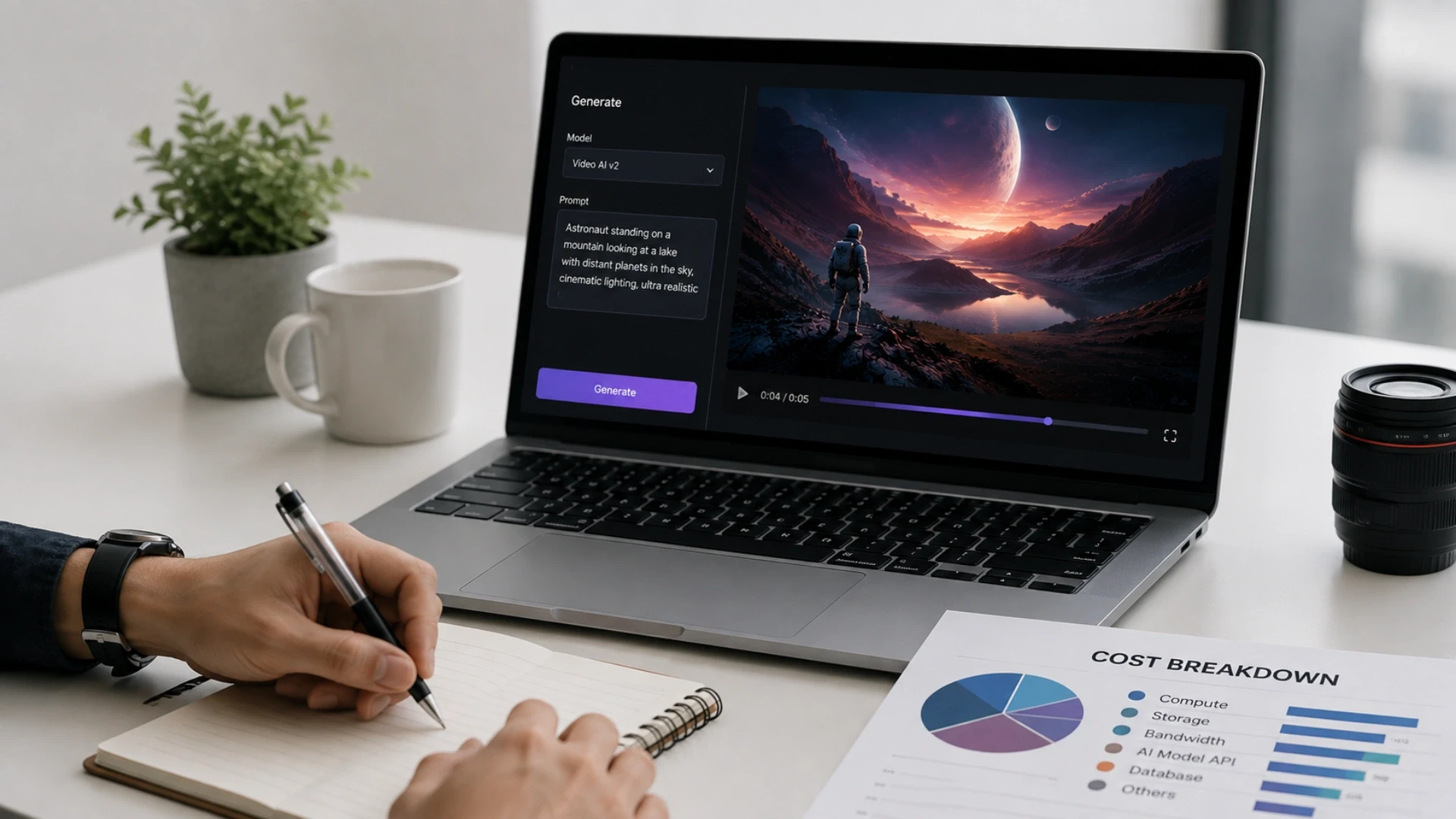
Because the underlying cost is external and per-second, the economics of an AI video platform are unusually legible, which is good news if you model them honestly. We apply the same discipline when scoping any media-heavy product, such as a live video streaming application.
Model tier | Example models (2026) | Approx cost per second | Cost per 30-sec clip |
|---|---|---|---|
Open-weight, self-hosted | Wan, LTX, Hunyuan families | Infra cost, not per second | Depends on GPU use |
Value tier | Kling 3.0 | Around $0.10 | Around $3 |
Premium tier | Veo 3.1, Runway Gen-4.5, Seedance | $0.10 to $0.40 | $3 to $12 |
Legacy, retiring | Sora 2 (API ends Sep 2026) | Up to $0.75 | Up to $22.50 |
What the per-generation cost above does not include:
Object storage for every generated and intermediate file
CDN egress when users stream and download their videos
Prompt-enhancement language-model calls on every request
Failed and rejected generations, which still cost money
Your own compute for orchestration, queue workers, and post-processing
The implication for pricing is direct. A flat unlimited plan in this category is financial suicide unless you cap it carefully, because a single heavy user can generate a bill larger than their subscription. Credit systems, tiered plans, cheaper preview generations, and a clear policy of not charging for failed jobs are what keep the business alive. Model your worst-case user before you set a price, not your average one.
The detailed cost breakdown by volume, resolution, and model mix is in our AI video generation cost guide.
Want a Real Cost Model for Your AI Video Product?
Tell Acquaint Softtech your target volume, resolution, and clip length. We will model per-generation cost, storage, and egress, and give you a build-versus-rent recommendation within 24 hours. No commitment required.
Recommended Tech Stack
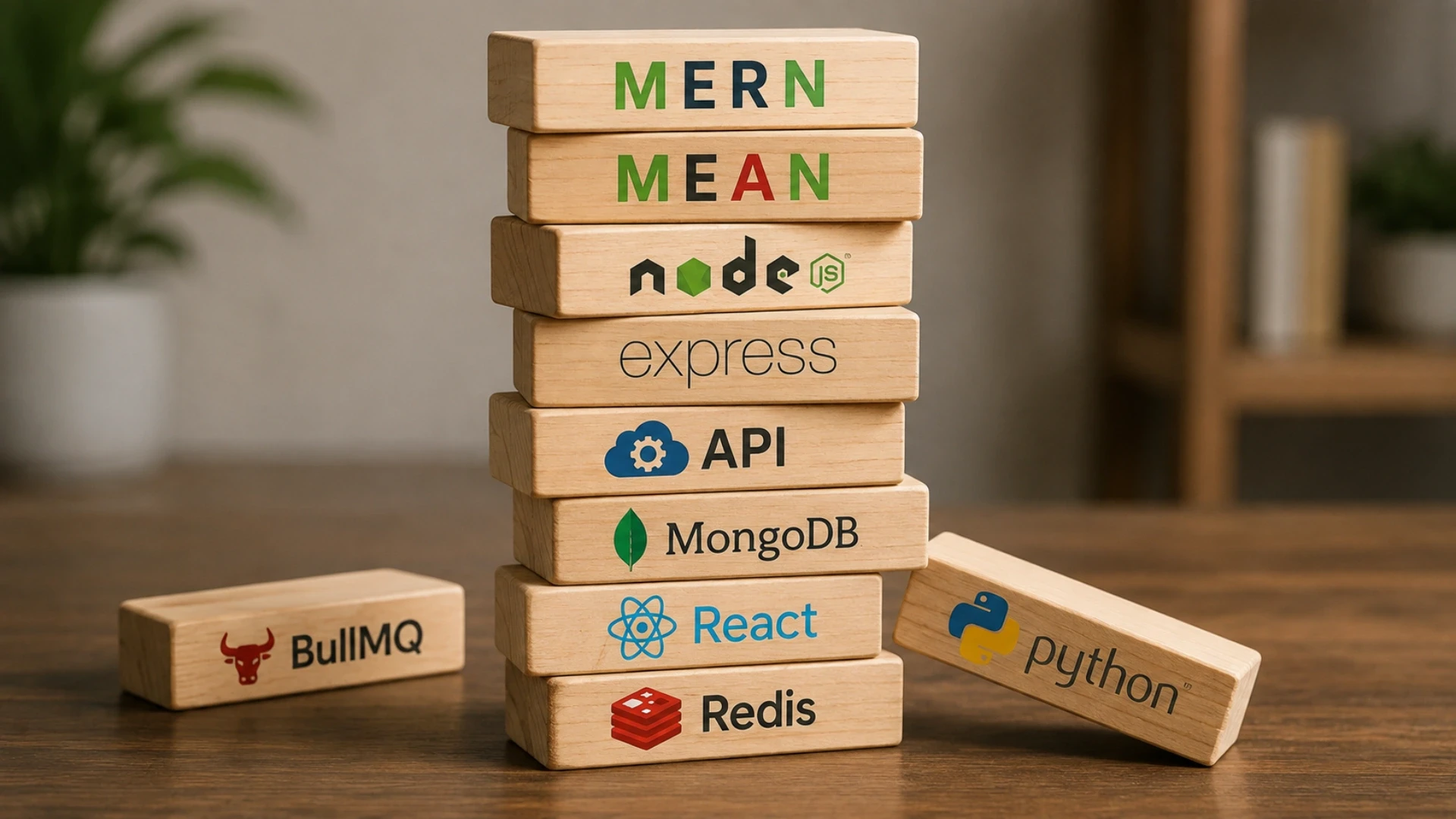
For most product teams, and certainly for the MERN and MEAN teams we work with most often, a sensible and proven stack looks like this.
Use Node.js with Express for the orchestration and API layer, since its non-blocking model suits a system that spends most of its time waiting on external providers. Use React for the client, built around asynchronous job states. Use MongoDB for job records, user data, and generation metadata, which map naturally to a document model. Use Redis with a queue library such as BullMQ for the job and worker layer.
Keep a small Python microservice for any work that genuinely needs the Python ecosystem, such as certain model integrations or media processing, and let it talk to the Node backend over a clean internal API. Use FFmpeg for post-processing, S3 for storage, and a CDN such as CloudFront for delivery.
The point of this stack is not novelty. It is that every piece is well understood, hires are available, and the failure modes are known. In a category where the models change every quarter, a boring and reliable platform underneath is a feature.
Safety, Moderation, and Rights: The Layer You Cannot Skip
AI video sits on top of the most sensitive misuse surface in generative AI, because a realistic clip of a real person doing something they never did is a genuine harm, not a hypothetical one. A platform that ignores this will face provider bans, legal exposure, and reputational damage. Treat the safety layer as core architecture.
At minimum, a responsible platform screens prompts and uploads before generation to block sexual content involving real or apparent minors, non-consensual intimate imagery, and impersonation of real people without consent. It enforces likeness and consent rules for any avatar or face feature, so users cannot generate a real person without a clear basis to do so. It preserves provenance on outputs, since several major models now attach an invisible provenance signal such as SynthID by default and the C2PA content-credentials standard is becoming an expectation for AI-generated media. And it keeps clear records and a takedown process, because you will need them.
This is not only an ethical position, though it is that. It is also a commercial one. The providers whose models you depend on enforce these rules in their terms, and a platform that becomes known for enabling deepfakes loses its model access and its buyers at the same time.
A Realistic MVP, and Build Versus Buy
The fastest credible version of this product is narrow on purpose. Pick one of the five product types. Integrate one or two models through a routing layer you can extend later. Build the asynchronous job system properly, because it is the spine of everything. Add prompt enhancement, basic post-processing, a credit-based billing system, and the moderation checks. Ship that, learn from real usage, then widen. This is the same discovery-first approach we bring to any AI-driven application build.
Build the platform layer, because that is your product and your differentiation. Rent the model layer through APIs, because that is a commodity you cannot win by owning. The teams that get this backwards, spending months on model work while shipping a weak product, tend to be overtaken by teams that treated the model as a swappable input and put their effort into workflow, reliability, and trust.
When teams need to add capacity, they bring in our MERN stack developers or AI/ML engineers who integrate directly into their sprints, whether through staff augmentation or a dedicated development team.
Ready to Build? Acquaint Softtech Has Vetted AI and MERN Engineers Available Now.
Pre-vetted engineers with production experience in Node.js orchestration, queue systems, model API integration, and media processing. Tell us your stack and we will send matched profiles within 24 hours. Engineer in your sprint in 48 hours.
FAQ's
-
Do I need to train my own video model to build a platform?
No. For almost every product company, training a model from scratch is neither affordable nor necessary. You build the platform on top of existing foundation models reached through APIs, and your value is the workflow, reliability, and safety around them.
-
How much does it cost to generate a video?
At 2026 API rates, premium models run roughly ten to forty cents per second of output, so a thirty second clip costs from about one and a half dollars to over twenty dollars depending on model and resolution, before your storage and delivery costs. Verify current rates on each provider’s documentation.
-
Which AI video model should I build on in 2026?
Do not build on one model. Route between several behind a single internal interface, and avoid any model being retired, such as Sora, whose API is scheduled to shut down in September 2026. Common anchors in 2026 are Veo 3.1 for quality and audio, Kling 3.0 for value, and Runway Gen-4.5 for control, with open-weight Wan or LTX models if you plan to self-host.
-
Why does generation take so long, and can I make it faster?
A clip can take from under a minute to several minutes because the underlying computation is heavy. You cannot make the model itself faster, so you design around the wait with asynchronous jobs, progress states, cheaper preview generations for iteration, and notifications.
-
What is the single most important part of the architecture?
The asynchronous job and queue system, combined with a model routing layer. Together they let the platform handle slow generations at scale and swap models in and out without a rebuild, which matters greatly in a market where models are retired regularly.
-
How do I keep the platform safe and compliant?
Screen prompts and uploads before generation, enforce consent and likeness rules for any face or avatar feature, preserve provenance signals such as SynthID and C2PA content credentials on outputs, and keep records and a takedown process. Your model providers require this in their terms, and it protects both your users and your business.
-
How long does it take to build an MVP?
A focused MVP for a single product type, one or two models, a working job system, basic post-processing, billing, and moderation, is typically a matter of weeks rather than months when the model layer is rented rather than trained. The timeline depends most on the depth of the safety layer and the number of output formats you support at launch.
I am Zubair Pateljiwala, a digital marketing professional with 15+ years of experience in SEO, content marketing, and performance marketing. As the Marketing Head at Acquaint Softtech, I focus on helping technology businesses improve their online visibility through SEO, GEO, AEO, and AI-driven content strategies. I enjoy transforming complex software development concepts into practical, easy-to-understand content that helps businesses make informed technology decisions.
Table of Contents
Get Started with Acquaint Softtech
- 13+ Years Delivering Software Excellence
- 1300+ Projects Delivered With Precision
- Official Laravel & Laravel News Partner
- Official Statamic Partner