

Building a Native Mobile App for Your SaaS: Strategic and Technical Trade-Offs
A SaaS mobile app lets users access your platform on iOS and Android with push notifications, offline access, and a native-like experience. For most SaaS businesses, React Native is the most cost-effective choice, using one codebase for both platforms.

Zubair Pateljiwala
Why a Mobile App Is a Bigger Decision Than It Looks. Your customers keep asking for a mobile app, so it feels like an obvious yes. Then the quotes come in: building separate iOS and Android apps means two codebases, two skill sets, and roughly double the budget and timeline. Many teams either overspend on full native apps they did not need, or rush out a weak app that frustrates users and damages the brand. Acquaint Softtech's software product development teams see both mistakes regularly.

- Your customers are asking for a mobile app of your SaaS product.
- You cannot decide between native, cross-platform, and a progressive web app.
- You want a mobile presence without doubling your engineering budget.
- You need offline access, push notifications, or device features on mobile.
- You are worried about App Store and Play Store approval and ongoing maintenance.
- You want to know the real cost and timeline of a SaaS mobile app.
The real problem is that a mobile app for SaaS strategy is a decision about cost, performance, and maintenance for years, not a quick add-on. The fix is to choose deliberately between native, cross-platform, and a progressive web app based on what your product actually needs. Teams that hire React Native developers for a cross-platform build often get a near-native app for both platforms at close to half the cost of two native apps.
This guide walks through the strategic and technical trade-offs so you choose the right path the first time. The guide, Benefits of React Native as Cross-Platform App Development, explains why a single codebase serving both platforms is the starting point for most SaaS apps.
What a SaaS Mobile App Actually Is

How is a SaaS mobile app different from a website?
A SaaS mobile app is a dedicated iOS or Android application that connects to the same backend as your web product, giving users a mobile-native way to use the service. It is not just your website in a smaller window. A real mobile app uses device capabilities the browser cannot, such as push notifications, offline storage, the camera, and biometric login, and it feels at home on the phone.
Understanding what a SaaS mobile app is at this level matters because it sets expectations. Users who download an app expect it to be faster, smoother, and more capable than the mobile website, and an app that simply wraps the website in most cases disappoints them.
Why do SaaS products add mobile apps at all?
The SaaS mobile app benefits are concrete. A well-built app increases engagement through push notifications that bring users back, supports use on the move where a laptop is impractical, and signals that the product is a serious, modern platform.
For many SaaS categories, mobile is where a meaningful share of usage now happens, so an app is less a luxury than an expectation. Acquaint Softtech's dedicated software development teams build mobile apps that share the web product's backend, so data stays consistent across web and mobile without duplicating the business logic.
The SaaS mobile app trends 2026 point toward cross-platform frameworks dominating, offline-first design becoming standard, and AI features moving into the app itself. The guide Best React Native App Development Companies notes that SaaS is among the industries benefiting most from scalable cross-platform apps.
Teams that hire mobile app developers with SaaS experience design the app around the existing API rather than rebuilding the backend, which keeps the project focused on the mobile experience itself.
The Three Paths: Native, Cross-Platform, and PWA
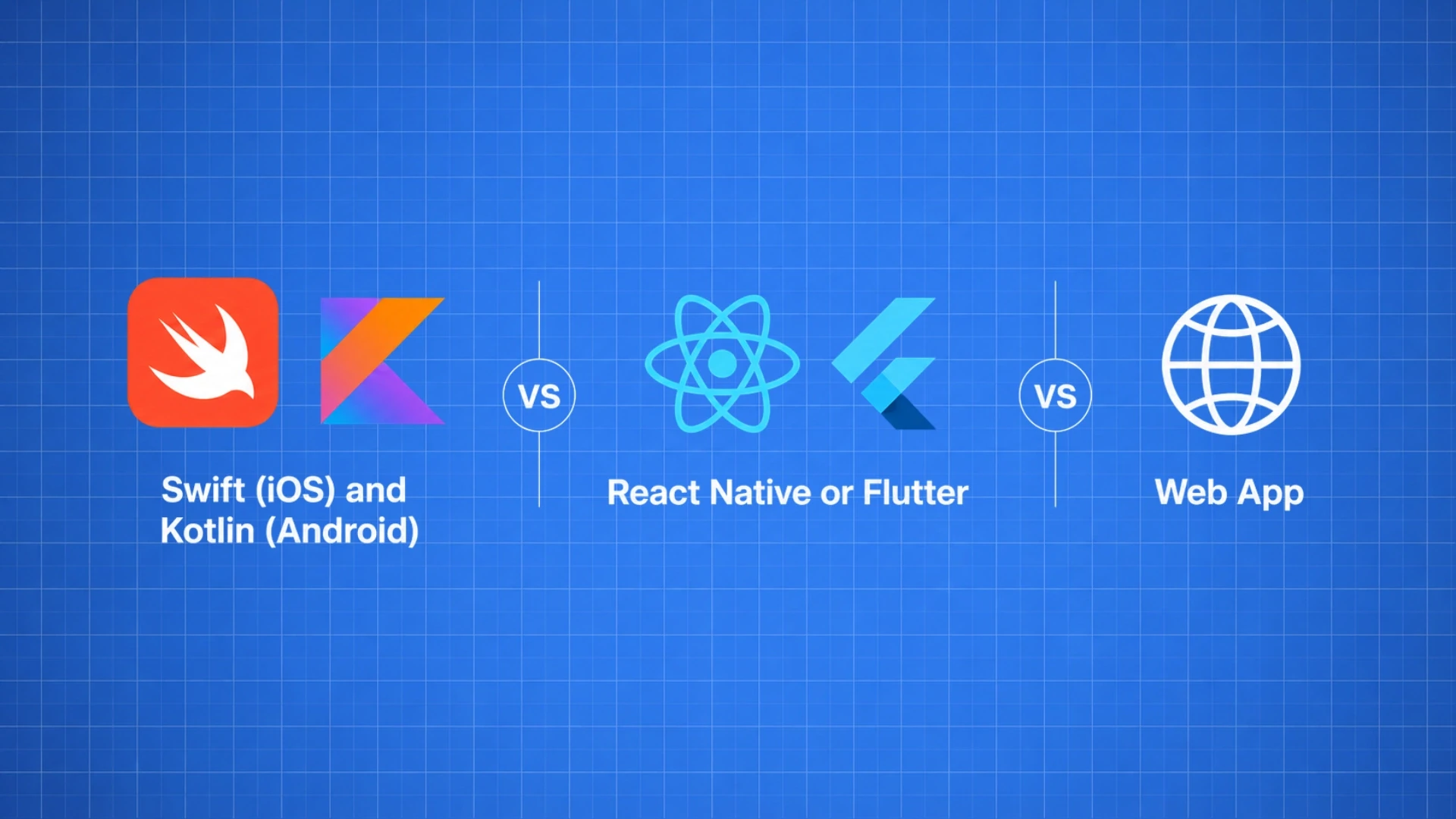
What are the three ways to build a SaaS mobile app?
Every SaaS mobile app is built one of three ways, and the choice shapes cost, performance, and maintenance for the life of the product. Choosing well is the most important decision in the whole project.
Path | What It Is | Best For |
Native | Separate Swift (iOS) and Kotlin (Android) apps | Performance-critical or device-heavy apps |
Cross-platform | One React Native or Flutter codebase for both | Most SaaS apps; best cost-to-quality balance |
PWA | Your web app installed to the home screen | Simple apps, fastest and cheapest to ship |
How do native, cross-platform, and PWA differ?
Native means building two separate apps, one in Swift for iOS and one in Kotlin for Android, each delivering the best possible performance and full access to device features, at the cost of two codebases to build and maintain. Cross-platform means writing one codebase, usually in React Native or Flutter, that runs on both platforms, delivering a near-native experience from a single project. If you are planning to build scalable cross-platform solutions, you can hire MEAN stack developers.
A progressive web app, or PWA, is your existing web application enhanced so users can install it to their home screen and use it offline, with no app store involved. It is the fastest and cheapest path, but it has the least access to device features and no app store presence. Acquaint Softtech's React Native development services most often steer SaaS clients toward cross-platform, because it captures most of the benefit of native at a fraction of the cost.
Native, Cross-Platform, or PWA? Get the Decision Right.
Acquaint Softtech helps you choose the right mobile path for your SaaS and builds it for both app stores. 1,300+ projects delivered. Teams deployed within 48 hours.
The Strategic Trade-Off: Do You Even Need a Native App?
When is a mobile app actually worth building?
Before choosing how to build, answer whether you should build at all. A mobile app is a long-term commitment to maintain two more surfaces, so it should earn its place. The strategic question is whether your users genuinely need mobile, or whether a responsive web app already serves them well enough. If you decide to proceed with development, you can work with experienced teams and hire Laravel developers to ensure scalable and efficient backend support for your application.
A native or cross-platform app is worth it when users need the product on the move, when push notifications drive real engagement, when offline access matters, or when device features like the camera are core to the experience. If none of these apply, a polished mobile website or a PWA may be the smarter, cheaper choice.
How do you avoid overbuilding too early?
One of the most common SaaS mistakes is overbuilding mobile too early, committing to expensive native apps before validating that users will actually use them. The disciplined approach is to start with the lightest option that proves demand, often a cross-platform MVP, and expand only once usage justifies it. React Native is widely used for exactly this, enabling faster prototyping and cheaper iteration so startups can validate the idea before investing further.
Acquaint Softtech's discovery workshop services help teams decide whether mobile is worth it now, and which path fits the stage they are at.
The guide How to Outsource SaaS Product Development covers the engagement models that let you build a mobile MVP without overcommitting budget or control.
The Technical Trade-Off: Performance, Features, and Code Reuse
What do you gain and lose with cross-platform?
The technical heart of the decision is what you trade when you choose one codebase over two. Cross-platform frameworks like React Native let you reuse most of your code across iOS and Android, which is where the cost savings come from, and modern versions deliver performance close enough to native that users cannot tell. If you are planning a similar cross-platform build, you can hire MERN stack developers.
The trade-off is that the most demanding workloads like heavy 3D graphics, intensive real-time processing, or very deep platform-specific integrations still run best in fully native code. For the forms, lists, dashboards, and notifications that make up most SaaS apps, this trade-off costs nothing noticeable.
How much code can you actually reuse?
With React Native, a large share of the codebase is shared across both platforms, and the framework transforms components into genuinely native iOS and Android elements rather than web views. The result is a real native experience from one project, which is what makes the SaaS mobile app architecture decision land so often on cross-platform.
Where a feature genuinely needs platform-specific native code, React Native allows native modules for just that piece, so you reuse everything else. Acquaint Softtech hires React Native developers to build this hybrid where it helps, keeping the shared codebase large while dropping to native only for the parts that need it.
The guide Best React Native App Development Companies confirms that scalable cross-platform apps are why SaaS, fintech, and healthcare teams choose React Native. Teams that hire iOS developers alongside a cross-platform team get the native expertise needed for those platform-specific modules without building the whole app twice.
React Native in Practice: CLI vs Expo and When It Fits
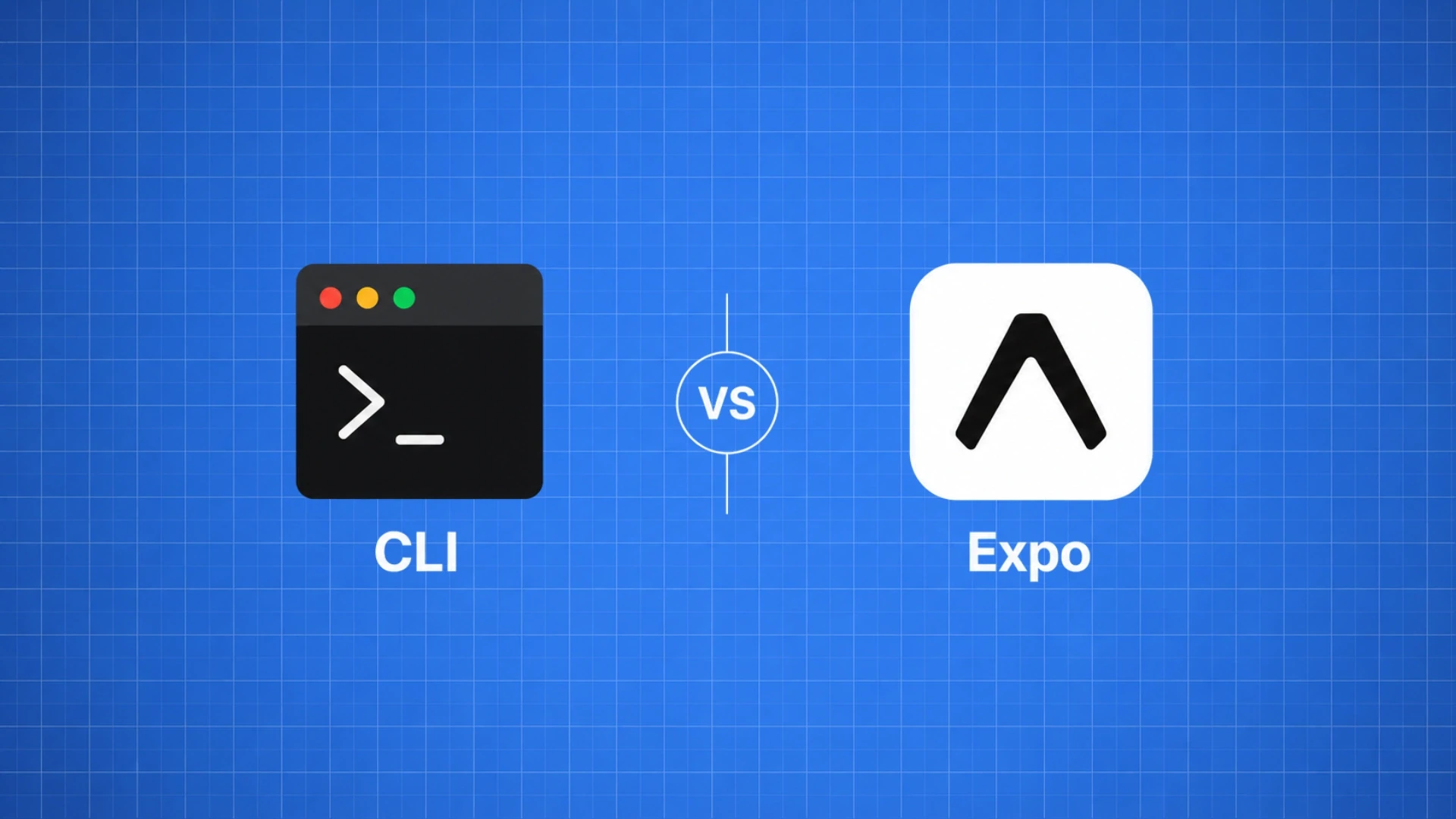
What is the difference between React Native CLI and Expo?
Once you choose React Native, the next decision is how to build it: the React Native CLI or the Expo toolchain. Expo is a set of tools that makes starting and shipping a React Native app dramatically faster, handling much of the build and deployment complexity for you. The CLI gives you full control and unrestricted access to native code, at the cost of more setup and maintenance.
For most SaaS apps, Expo is the faster, simpler starting point and now supports the large majority of what apps need. The CLI is the right call when you need extensive custom native modules that fall outside what Expo supports.
When does React Native fit, and when does it not?
React Native fits when the app shares common business logic and a similar interface across platforms, which describes most SaaS companion apps. It fits less well when the core of the app depends on heavy platform-specific functionality that would need native code anyway.
This is the same native-versus-cross-platform judgement applied at the framework level: choose cross-platform when the shared surface is large, and native when the platform-specific surface dominates. Acquaint Softtech hires cross-platform developers assess this fit before a line of code is written, so the framework choice matches the product rather than the trend. Teams that hire Android developers for the native modules pair them with the React Native team so platform-specific features are built correctly where they are genuinely needed.
Ship to Both App Stores From One Codebase
Acquaint Softtech builds React Native and Flutter apps that feel native on iOS and Android from a single codebase. Up to 40% lower cost than Western agencies. Deployed within 48 hours of brief.
The Features a SaaS Mobile App Cannot Skip
What features does every SaaS mobile app need?
Certain features separate a real SaaS mobile app from a thin website wrapper, and skipping them is what makes users abandon an app. These are the SaaS mobile app features that users now treat as table stakes rather than extras.
The essentials are secure authentication, including biometric login, push notifications to drive re-engagement, offline access so the app works without a perfect connection, and fast, smooth navigation that feels native to the platform.
Why is offline support so important on mobile?
Unlike a web app, a mobile app is used on trains, in lifts, and in places with poor signal, so it must handle being offline gracefully. Offline-first design stores data locally and syncs it back when the connection returns, so the user is never blocked by a dropped network.
This is one of the SaaS mobile app best practices that most affects perceived quality, because an app that breaks the moment the signal drops feels fragile.
Acquaint Softtech hires app developers to build offline-first sync so the app stays usable regardless of connection, with conflicts resolved cleanly when devices reconnect.
App Store Strategy, Approval, and Ongoing Maintenance
What does getting into the app stores involve?
Shipping a SaaS mobile app does not end at writing code; it must pass Apple App Store and Google Play review, each with its own rules. Apple's review is stricter, and apps are rejected for issues from privacy disclosures to payment handling, so planning for review from the start avoids painful last-minute rejections.
A common surprise for SaaS teams is that Apple requires its in-app purchase system for digital subscriptions sold inside the app, which takes a commission, a real factor in how you handle billing on mobile.
Why is mobile maintenance an ongoing commitment?
A mobile app is never finished. Apple and Google release new OS versions every year that can break apps, devices change, and both stores require apps to stay current or risk removal. This ongoing maintenance is a real cost that teams must budget for, not a one-time build expense.
Cross-platform helps here too, because one codebase means one set of updates rather than two. Acquaint Softtech's support and maintenance services keep apps current with OS releases and store requirements, so the app does not quietly break or get delisted months after launch.
The guide How to Outsource SaaS Product Development explains the ongoing engagement models that cover maintenance as well as the initial build.
Cost, Timeline, and Tech Stack for a SaaS Mobile App
How long does a SaaS mobile app take to build?
Timeline depends on the path and the feature set. A cross-platform MVP is far faster to ship than two native apps, which is a major reason most SaaS teams start there.
App Scope | Typical Timeline | Relative Cost |
PWA from existing web app | 2 to 5 weeks | Lowest |
Cross-platform MVP (React Native) | 8 to 16 weeks | Moderate |
Two full native apps (iOS + Android) | 20 to 36 weeks | Highest |
How much does a SaaS mobile app cost to build?
A PWA built from an existing web app typically costs $8,000 to $20,000 with an offshore partner. A cross-platform React Native app with core SaaS features runs roughly $25,000 to $70,000. Two fully native apps run $60,000 to $150,000 or more, since you are effectively building twice.
The main cost driver is the feature set and the number of platforms, not the framework itself. Teams weighing a SaaS mobile app development cost estimate or deciding whether to hire developers for SaaS mobile app work should price cross-platform first, since it usually delivers the best value. Acquaint Softtech delivers these builds at up to 40% lower cost than equivalent USA or UK agency rates, a meaningful saving for a multi-platform app.
What tech stack is best for a SaaS mobile app?
For most SaaS apps in 2026, React Native with Expo is the strongest starting stack, giving one codebase for both platforms with fast shipping and a near-native experience. Flutter is a strong alternative when a highly custom, pixel-consistent interface matters. Fully native, Swift for iOS and Kotlin for Android, is reserved for performance-critical or deeply device-integrated apps.
The backend is typically the same API that powers your web product, with secure token authentication and an offline-sync layer added for mobile. For teams weighing a SaaS mobile app development company in India against local options, the cross-platform skill set is what delivers both platforms economically. For senior mobile engineers on demand, Acquaint Softtech offers staff augmentation to add them within days, and a custom SaaS mobile app solution can be scoped through a dedicated development team engagement for longer builds.
Case Study: A SaaS Mobile App Delivered by Acquaint Softtech
CASE STUDY: Field-Service SaaS Mobile App, USA
Client: Growth-stage field-service SaaS in the USA whose web product was used by office staff, but whose field technicians needed a mobile app to work on site, often with poor connectivity.
Situation: The client believed they needed two native apps for the best experience and had been quoted a budget and timeline that would have delayed launch by months and consumed most of their engineering budget. Their technicians needed offline access, push notifications for new jobs, and the phone camera for proof-of-work photos.
Diagnosis: Acquaint Softtech's review found no case for two native apps. The required features, forms, job lists, notifications, camera, and offline sync, are exactly what React Native handles well. Building cross-platform would halve the cost and timeline while delivering the experience technicians needed.
What Acquaint Softtech Built:
A single React Native app with Expo, serving both iOS and Android from one codebase against the client's existing API.
Offline-first sync so technicians could complete jobs with no signal and sync automatically when back in coverage.
Push notifications for new job assignments and schedule changes, driving faster response times in the field.
Camera integration for proof-of-work photos attached directly to job records, with biometric login for security.
App Store and Play Store submission handled end to end, including the privacy and review requirements.
Outcome: The app shipped to both app stores in 13 weeks at roughly half the cost of the two-native-app quote the client had received. Field technicians adopted it quickly because offline mode meant it worked everywhere they did. Job completion data flowed back in real time once devices reconnected, giving the office live visibility for the first time. Because it was one codebase, every later update shipped to both platforms at once, keeping ongoing maintenance affordable.
Team and Timeline: One mobile lead, two React Native engineers, one QA engineer. Deployed within 48 hours of brief. App delivered in 13 weeks across both platforms.
Join 200+ Companies Who Went Mobile With Acquaint Softtech
From a cross-platform MVP to a full native build, Acquaint Softtech ships SaaS mobile apps that users love, on both app stores, without doubling your budget. 4.9/5 on Clutch. 50+ verified reviews. Premier Verified.
Frequently Asked Questions
-
What is a SaaS mobile app?
A SaaS mobile app is a dedicated iOS or Android app that connects to the same backend as your web product. It uses device features like push notifications, offline storage, and the camera that a browser cannot, giving users a faster, more capable mobile experience than the website.
-
Should I build native or cross-platform for my SaaS?
Cross-platform with React Native or Flutter is the right choice for most SaaS apps, delivering a near-native experience from one codebase at about half the cost of two native apps. Choose fully native only for performance-critical or deeply device-integrated apps.
-
What is the difference between native, cross-platform, and a PWA?
Native means separate Swift and Kotlin apps with the best performance but double the work. Cross-platform means one React Native or Flutter codebase for both platforms. A PWA is your web app installed to the home screen, the cheapest option but with the least device access and no app store presence.
-
How do you build a SaaS mobile app?
Decide whether you need a mobile app, choose native, cross-platform, or PWA, then build against your existing backend API. Add the essentials: secure authentication, push notifications, and offline sync. For most SaaS products, a cross-platform React Native MVP is the fastest, most economical starting point.
-
How much does a SaaS mobile app cost to build?
Approach
Cost Range
PWA from existing web app
$8,000 – $20,000
Cross-platform (React Native)
$25,000 – $70,000
Fully native apps
$60,000 – $150,000+
Cost advantage
Up to 40% lower
-
How long does SaaS mobile app development take?
A PWA takes 2 to 5 weeks. A cross-platform React Native MVP takes 8 to 16 weeks. Two fully native apps take 20 to 36 weeks. Cross-platform is far faster because one codebase serves both iOS and Android at once.
-
What features does a SaaS mobile app need?
The essentials are secure authentication with biometric login, push notifications to drive re-engagement, offline access so the app works without a connection, and fast native-feeling navigation. Offline support matters most, since mobile users are often on poor or no signal.
-
What tech stack is best for a SaaS mobile app?
React Native with Expo is the strongest stack for most SaaS apps in 2026, giving one codebase for both platforms with a near-native feel. Flutter suits highly custom interfaces. Native Swift and Kotlin are reserved for performance-critical apps. The backend is usually the same API that powers the web product.
I am Zubair Pateljiwala, a digital marketing professional with 15+ years of experience in SEO, content marketing, and performance marketing. As the Marketing Head at Acquaint Softtech, I focus on helping technology businesses improve their online visibility through SEO, GEO, AEO, and AI-driven content strategies. I enjoy transforming complex software development concepts into practical, easy-to-understand content that helps businesses make informed technology decisions.
Table of Contents
Get Started with Acquaint Softtech
- 13+ Years Delivering Software Excellence
- 1300+ Projects Delivered With Precision
- Official Laravel & Laravel News Partner
- Official Statamic Partner
Related Blog
React Native for Cross-Platform Apps in 2026: Real Benefits and Trade-offs
React Native lets you build Android and iOS apps from one JavaScript and TypeScript codebase, typically sharing most of the code across both platforms. Its real benefits are reuse, fast development with instant preview, and a huge ecosystem of libraries. Since 2019, it has matured completely: the old bridge was replaced by the New Architecture, which fixed the performance and animation weaknesses it was once criticised for. It is now a mainstream choice used by Shopify, Discord and Microsoft, not the risky newcomer early articles described.

Mukesh Ram
April 19, 2019
Top React Native App Development Companies
React Native is an open-source JavaScript framework developed by Meta, widely used for building high-performance. According to Statista, React Native holds a 32% market share, making it the most widely used cross-platform mobile framework globally with brands like Facebook, Instagram, and Shopify relying on it for production-grade mobile experiences. This growing adoption has made finding a reliable React Native development company a top priority for businesses aiming to deliver scalable, native-like applications faster.
However, searching for the top React Native app development companies often surfaces hundreds of vendors claiming similar expertise - making evaluation frustrating for founders and product teams. To simplify this, we reviewed 100+ React Native service providers across Clutch, GoodFirms, and industry directories, shortlisting firms with 10+ years of experience, verified client feedback, and proven large-scale mobile project delivery.

Acquaint Softtech
April 8, 2026
Essential Monetization Strategies for SaaS Products
Looking to boost your SaaS revenue? Discover the top monetization strategies that successful SaaS companies use to maximize profits! Unlock the full potential of your SaaS product.
Mukesh Ram
September 12, 2024India (Head Office)
203/204, Shapath-II, Near Silver Leaf Hotel, Opp. Rajpath Club, SG Highway, Ahmedabad-380054, Gujarat
USA
7838 Camino Cielo St, Highland, CA 92346
UK
The Powerhouse, 21 Woodthorpe Road, Ashford, England, TW15 2RP
New Zealand
42 Exler Place, Avondale, Auckland 0600, New Zealand
Canada
141 Skyview Bay NE , Calgary, Alberta, T3N 2K6