

How to Hire, Onboard and Ship Production Code With a Remote Laravel Dev in 14 Days
Day 1: developer confirmed. Day 3: first PR submitted. Day 11: production code shipped. This is the exact timeline we run for every new engagement. Here is every step, every owner, every obstacle to avoid.

Acquaint Softtech
The Gap Between Hiring and Shipping Is Where Engagements Lose the Most Time
Most CTOs who engage a remote Laravel developer through staff augmentation accept a 3 to 6 week ramp-up period as the cost of a new engagement. They expect the developer to spend the first weeks orienting, asking questions, getting familiar with the codebase. They expect the first production code to ship in week 4 or 5 at the earliest.
That expectation is the problem. It is not an accurate description of what is possible. It is a description of what happens when the onboarding is improvised.
The 14-day timeline in this article is not theoretical. It is the actual timeline we run for every new engagement. Day 1: developer confirmed. Day 3: first PR submitted and reviewed. Day 7: developer is in the sprint. Day 11: production code shipped. Day 14: full sprint velocity established.
The difference between a 14-day timeline and a 6-week timeline is not developer capability. It is onboarding preparation. The detailed framework for the full 3-month onboarding arc is in our remote Laravel developer onboarding checklist. This article covers the sprint to production: the exact 14-day sequence that gets a remote Laravel developer from confirmed to shipping.

- Codebase README and local setup guide sent the evening before Day 1 (not on the morning of)
- GitHub, Jira, and Slack access provisioned before the developer's first working hour
- A named internal point of contact who can respond within 4 hours during the overlap window
- A first sprint task that is specific, completable in 2 to 3 days, and does not require full codebase knowledge
- A code review turnaround of same-day on the first PR
- If any of these five are missing, the 14-day timeline is not achievable. The article covers how to prepare each one.
Pre-Day 1 Preparation (48 Hours Before Start)
.webp "Pre-Day 1 Preparation (48 Hours Before Start)")
The 14-day timeline starts before Day 1. Every hour of preparation the client does before the developer's first working hour is recovered 3x in reduced ramp-up time. Here is exactly what needs to happen in the 48 hours before Day 1.
Client-side preparation (your responsibilities):
Write or update the codebase README. Minimum content: local environment setup step by step, key dependencies and versions, how to run the test suite, how to deploy to staging, and any non-obvious patterns or known tech debt areas.
Provision all access: GitHub repository with appropriate branch permissions, Jira or Linear project access with the active sprint visible, Slack workspace with at minimum #engineering, #standup, and #[project-name] channels, and staging environment URL and credentials.
Prepare a first task. Pick the single most appropriate first task from the backlog: a specific, well-scoped bug fix or a small well-defined feature. Write acceptance criteria. Do not assign a complex feature as a first task.
Confirm the communication model in writing: standup format (written or video), time, channel, and blocker escalation path. Send this to the developer before Day 1.
Prepare a Day 1 introduction call agenda: 30 minutes maximum. Introductions, communication model confirmation, architecture overview walkthrough, and first task briefing.
Acquaint-side preparation (what we do before Day 1):
Brief the developer on your company, product, and tech stack using notes from the scoping call. The developer does not arrive on Day 1 with zero context.
Send you a developer profile document covering the developer's background, relevant Laravel experience, and recent projects similar to your codebase.
Confirm the developer has reviewed the codebase README you sent (if sent the evening before) and has questions ready for the Day 1 call.
Set up the Week 1 check-in call for Day 5 or 6 to review what worked, what was unclear, and what needs adjustment before Week 2.
The 14-Day Day-by-Day Timeline
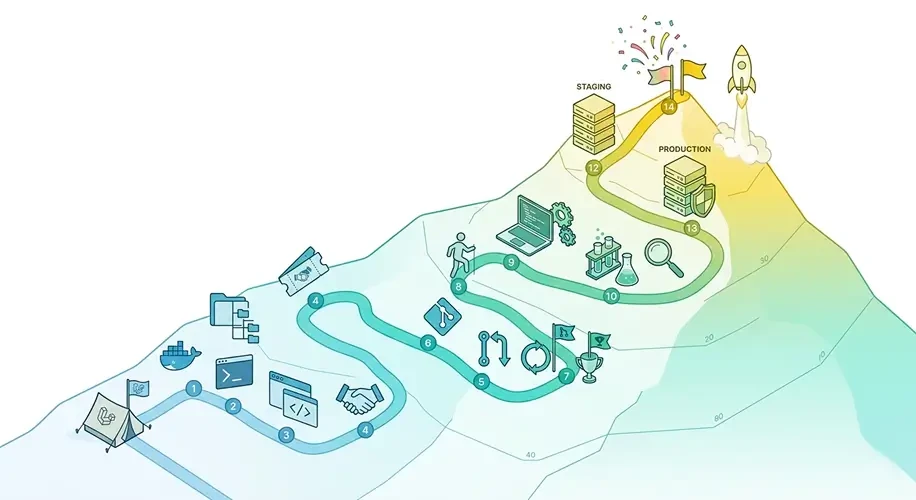
Each day below specifies what needs to happen, who owns it, and what determines whether the timeline holds. The timeline is tight but achievable when preparation is complete.
Day 1: Access, Context, and First Task Briefing |
Owner: Client (call, access confirmation) | Acquaint (developer briefing, standup format) |
Day 2: First Code, Architecture Questions, Blocker Identification |
Owner: Developer (coding, questions) | Client (4-hour response SLA) |
Day 3: First PR Submitted |
Owner: Developer (PR submission) | Client tech lead (same-day review) |
Day 4: First PR Merged, Second Task Assigned |
Owner: Developer (revisions) | Client (merge, second task assignment) |
Day 5: Week 1 Check-In Call (20 Minutes) |
Owner: Client + Developer (check-in call) | Acquaint (parallel developer check-in) |
Days 6 to 7: Full Sprint Integration Begins |
Owner: Developer (sprint participation) | Client (PR review cadence maintained) |
Days 8 to 9: First Feature-Level Work and Velocity Signal |
Owner: Developer (feature task, self-estimation) | Client (velocity signal review) |
Days 10 to 11: Production Code Shipped |
Owner: Developer (deployment ready code) | Client (staging review, production approval) |
Days 12 to 14: Full Velocity and Sprint Continuity |
Owner: Developer (full sprint velocity) | Client (retrospective, Sprint 2 planning) |
The 5 Obstacles That Break the 14-Day Timeline
Every engagement we have run that did not hit the 14-day timeline failed at one of these five points. None of them are the developer's fault. All of them are preventable.
1. README not sent before Day 1
Why it happens: Client believes the README can be shared during the Day 1 call. The developer spends Day 1 setting up an environment that should have been set up the night before. Day 3 PR target slips to Day 5.
Prevention: Send the README and local setup guide the evening before Day 1. Block 30 minutes the night before to do this. It saves 2 days of ramp-up time.
2. First PR review takes 48 to 72 hours
Why it happens: Client tech lead is busy when the first PR comes in. The review waits. The developer, unsure whether the PR will be accepted, does not start the next task. Day 5 check-in reveals the developer has been waiting since Day 3.
Prevention: Same-day review on the first PR is not optional. Block time on Day 3 afternoon specifically for this review. The message it sends about review expectations is more valuable than the code it reviews.
3. Second task not assigned until after the first PR cycle completes
Why it happens: Client waits to see the first PR before deciding what comes next. The developer has no work between PR submission and the review outcome. 24 to 48 hours of dead time accumulates.
Prevention: Assign the second task on Day 4 regardless of whether the first PR has been reviewed. The developer should always have the next task confirmed so they can begin context-loading while waiting for review.
4. Blocker resolution takes more than 24 hours during the overlap window
Why it happens: Developer hits a blocker at 10 AM their time. Client does not see the Slack message until the next day. Developer is stuck for 24 hours waiting for a decision that would take 5 minutes to make.
Prevention: Confirm the blocker escalation path and response SLA in the Day 1 call. If the overlap window is limited, establish a designated Slack channel for blockers with a named responder and a 4-hour response commitment.
5. Sprint 2 planning not completed before the end of Week 2
Why it happens: Week 2 ends with full sprint velocity almost reached. Sprint 2 planning has not happened. Developer starts Week 3 without confirmed tasks. Momentum built over 14 days is broken on Day 15.
Prevention: Sprint 2 planning is a mandatory output of the Day 14 retrospective. It is not scheduled for the following week. It happens in the same session or immediately after, before the developer signs off on Day 14.
The 14-Day Timeline Is Ready When You Are. It Does Not Wait.
Every sprint that runs without the right capacity is a sprint that can never be recovered. The backlog does not shrink while you research. The developer who would have been in production by Day 11 is still unconfirmed. If your next sprint starts in less than 2 weeks and you have a capacity gap, the window to meet the 14-day target from today is open for approximately the next 72 hours. Tell us what you need.
What Acquaint Softtech Brings to the 14-Day Timeline
The 14-day timeline requires two sides to be prepared. Here is exactly what Acquaint Softtech brings to every new engagement to make this timeline achievable, not aspirational. For the full 3-month framework beyond these 14 days, see our remote Laravel developer onboarding checklist.14 Days Is the Target. Preparation Is the Variable.
48-hour deployment | From engagement confirmation to developer Day 1 in 48 hours. The developer is pre-vetted, briefed on your company and stack from scoping notes, and ready on the confirmed start date without a recruitment cycle. |
Pre-Day-1 developer briefing | We brief the developer on your company, product, tech stack, and key architectural context before their first working hour. They do not arrive cold. They arrive with context. |
Developer profile document | Sent to you before Day 1: developer background, relevant Laravel experience, recent projects, and assessment results. You know who is starting before they start. |
Week 1 check-in call | Facilitated by Acquaint Softtech with both you and the developer at the end of Week 1. We identify friction points before they affect Week 2. Included in every engagement at no additional cost. |
95% sprint delivery rate | Our delivery rate reflects the system we bring to every engagement. Standards, review process, blocker management, and sprint discipline are embedded in how our developers work. |
Replacement within 48 hours | If the developer is not the right fit within the first two sprints, replacement is initiated within 48 hours at no additional cost. The replacement developer receives a full briefing from the exiting developer. |
14 Days Is the Target. Preparation Is the Variable.
The developer who reaches production in 11 days and the developer who reaches it in 6 weeks are often the same skill level. The difference is whether the client sent the README the night before Day 1 or on the morning of. Whether the first PR was reviewed the same day or 3 days later. Whether Sprint 2 was planned before Day 14 ended or the week after.
Every hour of preparation before Day 1 recovers 3 hours of ramp-up time. The 14-day timeline is not a stretch target. It is the baseline for engagements that start correctly. If you want to run the timeline against your next staff augmentation engagement, tell us your current setup and your next sprint date. We will tell you whether the 14-day target is achievable from where you are and what needs to be in place to get there.
Staff Augmentation | Hire Laravel Developers | Hire Remote Developers | Software Development Outsourcing
FAQ's
-
Is it really possible to have production code shipped within 14 days of hiring a remote developer?
Yes, consistently, when the preparation on the client side is complete. The 14-day timeline requires the README and local setup guide to be available before Day 1, access to be provisioned before the developer's first working hour, a well-scoped first task to be assigned on Day 1, the first PR to be reviewed the same day it is submitted, and Sprint 2 to be planned before the end of Day 14. When all five of these conditions are met, the timeline holds. When any one of them is missing, the timeline slips by the amount of time it takes to address the gap.
-
What is the biggest mistake that delays the first production deployment?
Waiting to assign the second task until after the first PR is reviewed and merged. When the developer submits their first PR and has no confirmed next task, they pause. The pause can last 24 to 48 hours depending on review turnaround. The fix is simple: assign the second task on Day 4 regardless of where the first PR is in the review cycle. The developer context-loads the second task while waiting for the review outcome.
-
How does Acquaint Softtech achieve 48-hour developer deployment?
We maintain a bench of pre-vetted senior Laravel developers who have been through our technical assessment process. When a new engagement is confirmed, we match the client's requirements against the bench, identify the best fit, brief the developer on the client's company and stack from our scoping call notes, and send the client a developer profile document before Day 1. The 48 hours covers the matching, briefing, and documentation steps. There is no recruitment cycle because the vetting has already been done.
-
What if the first developer is not the right fit?
Replacement is initiated within 48 hours at no additional cost. The replacement developer receives a full briefing from the exiting developer covering codebase context, sprint history, and known technical decisions. The transition is structured to preserve as much context as possible. In our delivery history, the engagements that required replacement almost always had the same pattern: the first task was too complex, the review feedback was too slow, or the blocker resolution was too uncertain. Fixing those process elements before the replacement reduces the likelihood that the second developer faces the same friction.
-
What does a well-scoped first task look like?
A well-scoped first task is completable in 1 to 2 days, does not require full knowledge of the codebase to execute, has clear acceptance criteria written before the task is assigned, and has a right answer that the client tech lead can verify without extensive discussion. A bug fix in a specific component with a clear expected behaviour is ideal. A well-defined small feature addition also works. An open-ended performance review, a full architectural assessment, or a complex new feature with dependencies are not appropriate first tasks.
We’re Acquaint Softtech, your technology growth partner. Whether you're building a SaaS product, modernizing enterprise software, or hiring vetted remote developers, we’re built for flexibility and speed. Our official partnerships with Laravel, Statamic, and Bagisto reflect our commitment to excellence, not limitation. We work across stacks, time zones, and industries to bring your tech vision to life.
Table of Contents
Get Started with Acquaint Softtech
- 13+ Years Delivering Software Excellence
- 1300+ Projects Delivered With Precision
- Official Laravel & Laravel News Partner
- Official Statamic Partner
Related Reading
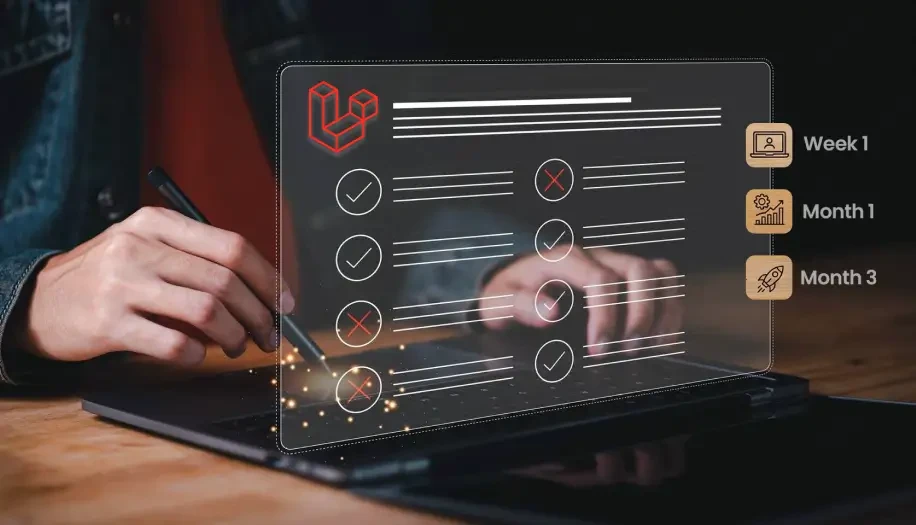
Onboarding Checklist for Remote Laravel Developers: Week 1, Month 1, Month 3
Most offshore engagements fail in Week 1, not Week 10. This checklist covers every onboarding step for remote Laravel developers: Week 1 setup, Month 1 integration, Month 3 performance.
Acquaint Softtech
March 13, 2026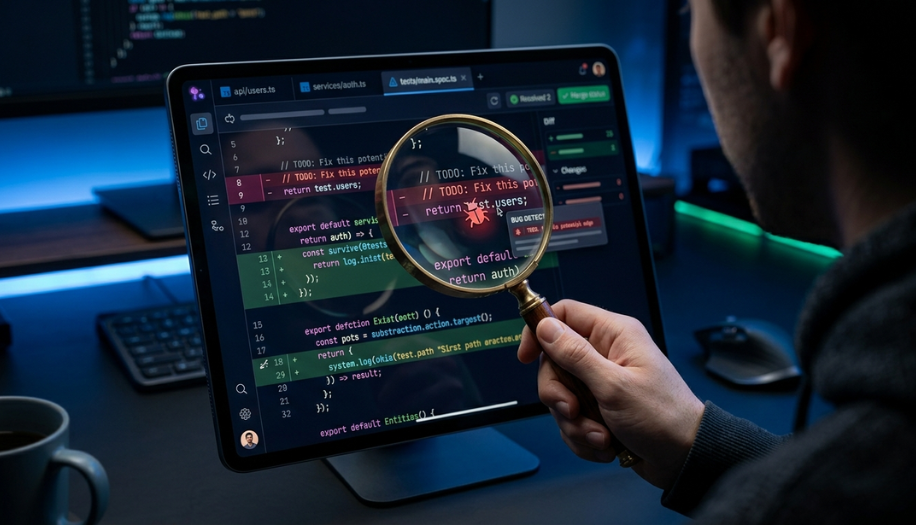
How to Guarantee Code Quality From an Offshore Dev Team: The 6-Layer QA Process
Offshore teams do not write bad code because they are offshore. They write bad code because the quality process was never defined. This 6-layer QA framework fixes that before the first line is written.
Acquaint Softtech
March 18, 2026
Staff Augmentation vs Upwork vs Agency: Real Cost Breakdown for CTOs in 2026
Staff augmentation, Upwork, or a dev agency? The real cost difference in 2026 is bigger than most CTOs expect. Here are the actual numbers with zero fluff.