

Building On-Demand Healthcare Apps: Doctor Consultation, Medicine Delivery
An on-demand healthcare app lets patients consult doctors, order medicines, and book home sample collection from a phone. It works by connecting patients, doctors, pharmacies, and labs through secure video consultation, e-prescriptions, prescription-validated medicine delivery, and phlebotomist dispatch, all built on a compliant, encrypted health-records backbone.

Manish Patel

- You want to know how Practo and 1mg work before you build.
- You are scoping a telehealth, e-pharmacy, or diagnostics platform.
- You are unsure how to handle patient data, privacy, and compliance.
- You need a real cost and timeline before pitching investors.
- You are choosing a development partner for a healthcare build.
Introduction
A patient opens an app feeling unwell and, within minutes, consults a doctor, gets a prescription, orders medicine, and even books a lab test at home. It feels effortless, almost invisible. But behind that simplicity lies one of the most complex systems in tech: healthcare. Every action is tied to strict regulations, sensitive patient data, and zero margin for error.
Most teams start with a clean UI and basic video consults, but quickly hit reality—data security, prescription validation, patient history access, and legal responsibility for every medical step. Because in healthcare, the real product isn’t the app. It’s the compliance backbone, the secure records system, and the verification workflows that keep every decision safe, legal, and trusted.
This article opens up that machinery. It explains how on-demand healthcare apps work, lays out the doctor consultation platform architecture, the medicine delivery integration, and the home sample collection workflow, and shows how compliance shapes every decision. The telemedicine market alone is large and growing fast, projected by several industry analysts to expand from roughly USD 144 billion in 2025 toward USD 680 billion by 2035, which is why getting the engineering and the compliance right carries enormous stakes.
As CIO of Acquaint Softtech, I have led the architecture of secure, compliant healthcare and EMR platforms, the records backbones, consultation systems, and compliance controls described in this guide, across a company that has delivered 1,300+ projects over 13+ years through full-cycle software product development for clients across the USA, UK, Europe, Australia, and New Zealand. The patterns below come from systems my teams ran in production, handling real patient data under real regulatory scrutiny. If you want the wider category context first, this guide to on-Demand app development in 2026, which frames healthcare alongside ride-hailing, food delivery, and logistics apps. Read on to see exactly how care reaches the patient.
What On-Demand Healthcare Actually Covers
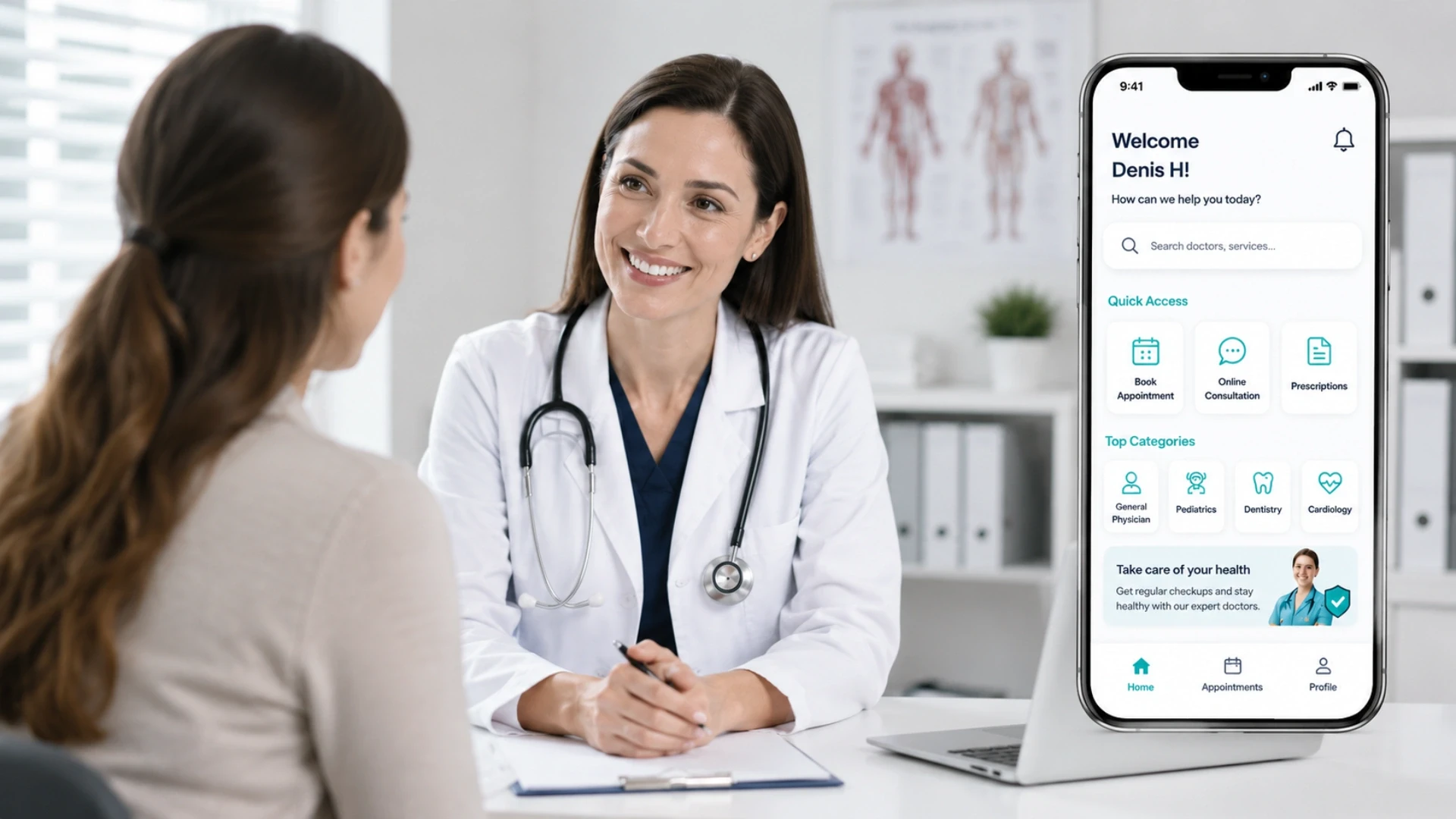
On-demand healthcare covers three connected service lines: doctor consultation and telehealth, online pharmacy and medicine delivery, and home sample collection with diagnostics. Platforms like Practo and 1mg combine these into one app, letting a patient move from a video consultation to a delivered prescription to a booked lab test without switching services.
People search for how Practo and 1mg work because these platforms blend several services that used to be separate. A patient can consult a doctor, fill the resulting prescription, and book a diagnostic test from a single account, with their history carried across all three. Building one of these means deciding which service lines to launch first and how tightly to integrate them, and that scoping is exactly what Acquaint Softtech runs with MERN stack developers who have built each line in production.
The three service lines share a foundation but differ sharply in their workflows. Consultation is about scheduling, video, and clinical notes. Pharmacy is about catalogues, prescription validation, and delivery. Diagnostics is about dispatching a trained collector to the patient's home and returning lab reports securely. Treating them as one undifferentiated build is a mistake; treating them as three connected systems on a shared core is the approach that scales, and it is why a dedicated software development team that designs for modularity matters here more than in almost any other category.
Most successful platforms launch with one strong service line and expand, rather than building all three at once. A telehealth-first launch proves the clinical and compliance model, after which pharmacy and diagnostics extend naturally on the same patient identity and records.
Why Healthcare Apps Are Different: Compliance Is the Foundation
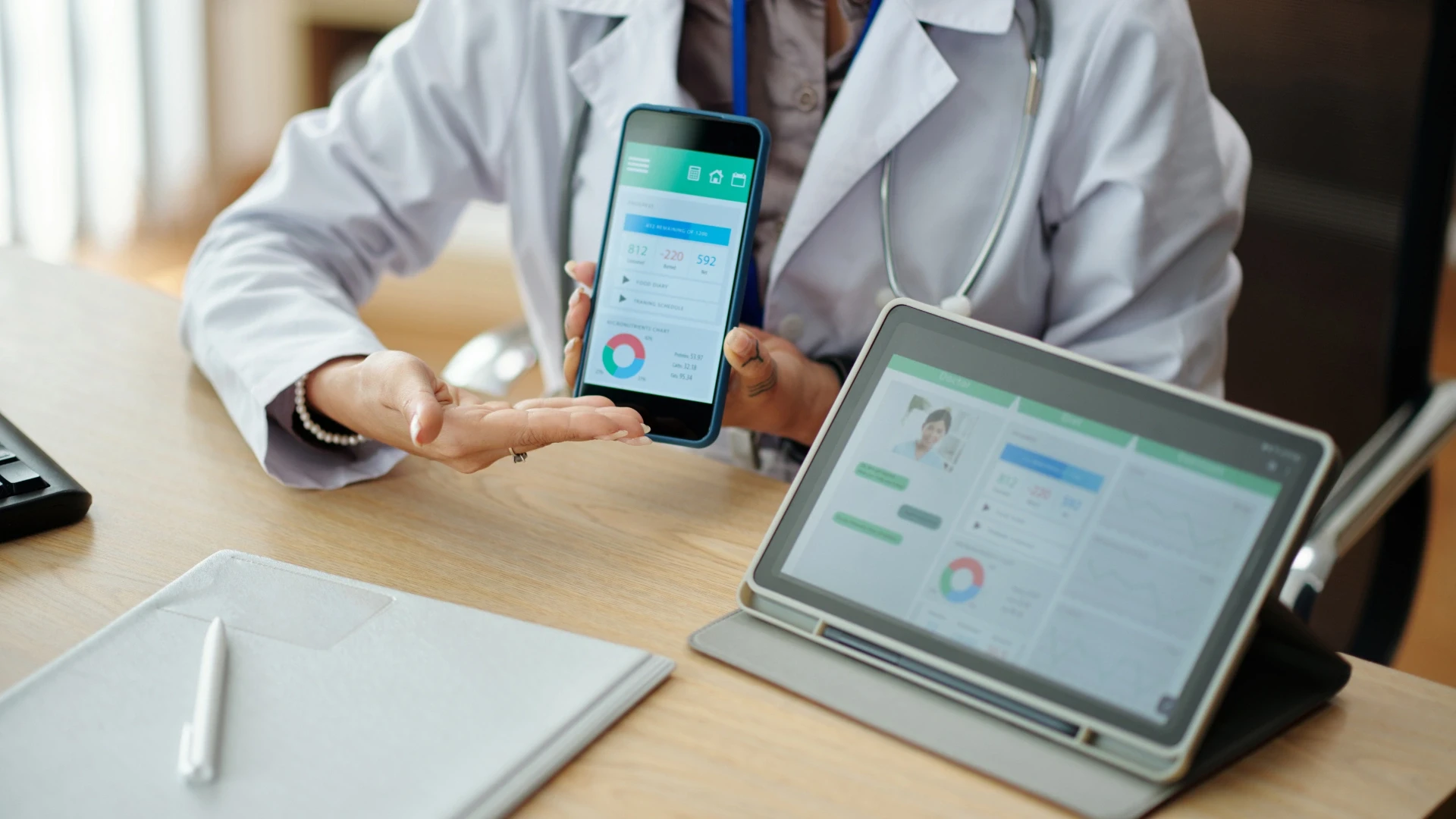
Healthcare apps are different because they handle protected health information, which is governed by laws like HIPAA in the USA, GDPR in Europe, and the DPDP Act in India. Compliance is not a feature added at the end; it shapes the architecture, the data model, the hosting, and the access controls from the very first sprint.
In every other on-demand category, you can launch a rough version and harden it later. In healthcare, you cannot, because the data is protected health information and the rules apply from day one. A platform serving the USA must meet HIPAA, one serving Europe must meet GDPR, and one in India must meet the DPDP Act, each with specific requirements for consent, encryption, audit logging, and breach reporting. Acquaint Softtech treats compliance as an architectural input from the start, often bringing a virtual CTO service to the table to set the regulatory posture before design begins.
Compliance touches everything. Patient data must be encrypted in transit and at rest, every access to a record must be logged for audit, consent must be captured and revocable, and data residency rules may dictate which country your servers sit in. These are not toggles; they are decisions baked into the data model and the infrastructure. Getting them wrong means a rebuild at best and a regulatory penalty at worst, which is why specialist compliance engineering, available through staff augmentation services, is a sound early investment.
The reassuring part is that compliance and good engineering point the same way: encryption, least-privilege access, audit trails, and clean data separation are simply good architecture made mandatory. Build them in early, and they protect the business as it grows.
Service Line 1: Doctor Consultation and Telehealth

Doctor consultation apps let patients book and hold appointments with doctors over secure video, chat, or phone. The platform manages doctor discovery, slot scheduling, the consultation itself, clinical notes, and an e-prescription at the end, with the whole encounter recorded against the patient's medical record for continuity of care.
Telehealth is the clinical heart of an on-demand healthcare platform, and it is more than a video call bolted onto a booking screen. The patient discovers a doctor by specialty and availability, books a slot, joins a secure consultation, and leaves with notes and an e-prescription. The video layer must be secure and reliable, and the surrounding scheduling and records flow must be clinically sound. Acquaint Softtech builds the patient and doctor apps for this with React Native developers so both sides share one consistent, real-time experience.
The e-prescription is the critical output and the point where clinical and pharmacy systems meet. A prescription generated in the consultation must be structured, attributed to a licensed doctor, and carried into the pharmacy line for validated dispensing. Doctor consultation apps live or die on this continuity, and the live scheduling and session backend that powers it rewards a team experienced with real-time systems, which is why MEAN stack developers are a common fit for the consultation pipeline.
Scheduling deserves the same care as in any booking platform: availability grids per doctor, time-zone handling, cancellations, and follow-up bookings, all without double-booking. The slot-scheduling patterns are close cousins of those in other on-demand booking products, and the on-demand home services app development guide details a comparable appointment and provider-availability engine that maps cleanly onto telehealth.
Want a Telehealth Build That Is Compliant From Day One?
Acquaint Softtech designs the consultation, records, and compliance layers in the architecture phase, before production code is written. 1,300+ projects delivered. Teams deployable within 48 hours of brief. Build healthcare the safe way, the first time.
Service Line 2: Online Pharmacy and Medicine Delivery
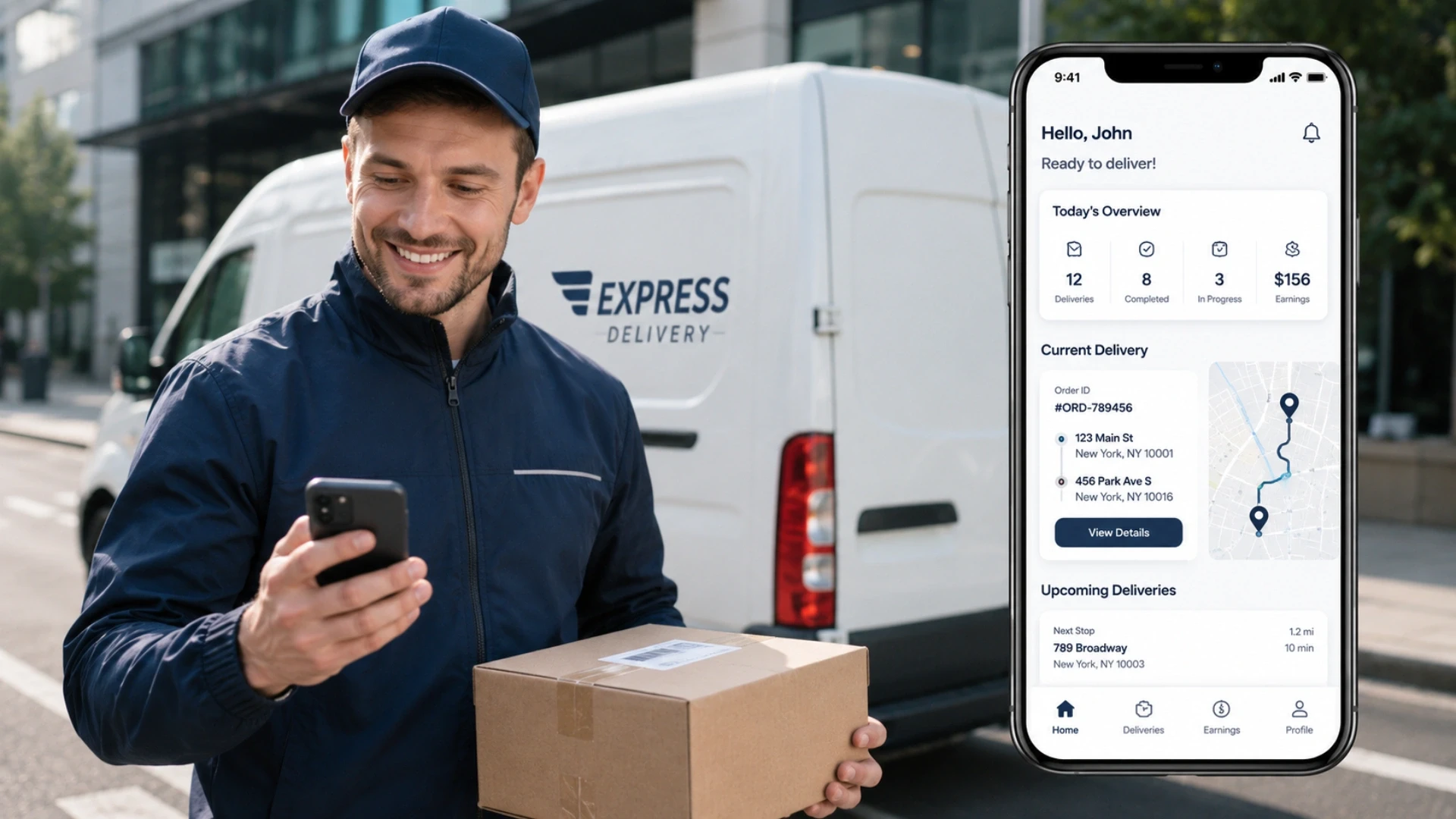
Online pharmacy apps let patients order medicines, upload or receive a prescription, and have them delivered. The platform validates the prescription, checks the medicine against the catalogue and inventory, processes payment, and dispatches a delivery partner, with controlled or prescription-only drugs gated behind verification before dispensing.
The pharmacy line looks like e-commerce but carries a clinical responsibility e-commerce never does: a prescription must be validated before certain medicines can be dispensed. The medicine delivery integration must connect the catalogue, the patient's prescription, pharmacy inventory, and a delivery network into one flow. Acquaint Softtech builds this commerce-and-validation layer with Laravel developers, whose framework suits catalogue, order, and rule-based validation logic.
Prescription validation is the gate that keeps the platform lawful. For over-the-counter items, the flow is simple, but for prescription-only or controlled medicines the system must verify a valid, attributed prescription, sometimes with a pharmacist review step, before the order proceeds. This gating logic, plus inventory accuracy across pharmacies, is where the engineering depth sits, and keeping it reliable at scale is helped by DevOps engineering that ensures the inventory and order services stay performant under load.
Once an order is validated and paid, the last step is delivery, which is a logistics problem identical to the courier model: assign a partner, route them, track the parcel, and confirm receipt.
Service Line 3: Home Sample Collection and Diagnostics
Home sample collection apps let patients book a diagnostic test, have a trained phlebotomist visit their home to collect a sample, and receive results digitally. The platform schedules the visit, dispatches the nearest qualified collector, tracks the sample to the lab with chain-of-custody integrity, and delivers the report to the patient and doctor securely.
Diagnostics is the most logistically complex service line because it moves a physical, time-sensitive, and safety-critical item: a biological sample. The home sample collection workflow starts with booking a test and a slot, then dispatching a trained phlebotomist to the patient's address, much like dispatching a service professional. Acquaint Softtech builds the dispatch and routing logic for this with Python developers who handle the location matching and scheduling constraints.
What makes diagnostics different from any other dispatch is chain of custody. A sample must be labelled correctly, kept within temperature and time limits, and tracked from the home to the lab so results are never misattributed. The platform must integrate with laboratory systems to receive results, and then route reports back to the patient and the consulting doctor securely. Acquaint Softtech adds intelligence to this flow, such as demand forecasting and routing, with AI and ML engineers who optimise collector allocation across a city.
The final step, returning results, is where diagnostics rejoins the records backbone: a report must attach to the correct patient record and become visible to the right doctor for follow-up. The dispatch-and-tracking spine here is the same one used in delivery platforms, and the complete process of on-demand delivery app development walks through the field-dispatch and tracking model that sample collection adapts.
Get a Service-Line Blueprint for Your Healthcare Platform
Acquaint Softtech clients save up to 40% versus Western agency rates, with a 95% on-time sprint delivery record and a 4.9/5 Clutch rating from 50+ verified reviews. Book a scoping call and receive a detailed architecture and cost blueprint within 48 hours.
The Shared Backbone: Records and Interoperability
All three service lines only feel like one platform if they share a single patient identity and a unified medical record. This backbone is what lets a consultation, a prescription, and a lab report appear together in one patient timeline, and it is the part that turns three separate tools into a coherent healthcare experience. Acquaint Softtech builds this records-and-identity core with Django developers, whose framework suits structured, relational health data.
Backbone Layer | What It Does | Why It Matters |
Patient identity | One secure account per patient | Links all services to one person |
Medical records | Unified history and documents | Continuity of care across lines |
Interoperability | HL7 and FHIR data exchange | Connects to labs, EHRs, insurers |
Interoperability is the technical word for healthcare systems talking to each other, and standards like HL7 and FHIR are how that happens. A platform that speaks FHIR can exchange records with hospital EHRs, laboratory systems, and insurers, which is increasingly expected rather than optional. Designing for these standards from the start avoids costly custom integrations later, and Acquaint Softtech delivers this through flexible software development outsourcing that adds integration specialists when a new system must be connected.
The records backbone is also where the strictest access controls live, because a unified record is powerful and therefore sensitive. Role-based access ensures a pharmacist sees the prescription, but not the full psychiatric history, and a phlebotomist sees the test order but not unrelated records.
Building Trust: Security and Data Protection

Trust is the currency of healthcare software. A patient shares their most private information on the assumption it is safe, and a single breach can end a platform's reputation overnight. Security is therefore not a layer you add; it is woven through encryption, access control, infrastructure, and monitoring. Acquaint Softtech engineers this from the infrastructure up with DevOps engineering, building encrypted, access-controlled, audited environments from the first deployment.
The security essentials a healthcare platform needs
Encryption everywhere: Patient data encrypted both in transit and at rest, with managed keys.
Role-based access control: Every user sees only the data their role requires, enforced at the data layer.
Audit logging: Every access to a record is logged, time-stamped, and attributable for compliance.
Consent management: Patients grant and revoke consent for data use, with the platform honouring it automatically.
Secure video and messaging: Consultations and chats are end-to-end protected so clinical conversations stay private.
Beyond the technical controls, trust is reinforced by transparency: clear privacy policies, visible consent, and honest communication when something changes. Patients and regulators both reward platforms that treat data protection as a duty rather than a checkbox. Keeping these protections current as threats and rules evolve is exactly what Acquaint Softtech's support and maintenance services are designed to handle long after launch.
Security also underpins the business case, because enterprise healthcare buyers and insurers will not partner with a platform that cannot prove its controls. A demonstrably secure platform wins contracts that an insecure one never will. The trust-and-verification discipline here mirrors the provider-vetting rigour described in the on-demand home services app development guide, applied in healthcare with the highest possible stakes.
Tech Stack and Integrations for Healthcare in 2026
Technology choices for a healthcare platform balance real-time capability with the security and interoperability the category demands. The combinations below suit platforms aiming to scale across cities and regions while staying compliant. The integration layer, connecting labs, pharmacies, EHRs, and payment, is as important as the core, and Acquaint Softtech assembles these builds with MERN stack developers who keep the patient experience consistent across web and mobile.
Layer | Recommended Technology | Why It Fits Healthcare |
Mobile Apps | React Native | One codebase for patient and doctor apps |
Backend Services | Node.js plus Python | Real-time consultation plus data processing |
Database | PostgreSQL encrypted | Structured records with strong security |
Video | WebRTC or a secure SDK | Private, reliable consultations |
Interoperability | HL7 and FHIR | Exchange with labs, EHRs, and insurers |
Payments | Stripe or Razorpay | Compliant billing and split payouts |
Cloud | HIPAA-eligible AWS or GCP | Compliant, auditable hosting |
Delivery and Dispatch | Maps plus routing APIs | Medicine delivery and sample collection |
The video layer deserves a deliberate choice: WebRTC or a healthcare-grade video SDK that supports encryption and reliability, because a dropped or insecure consultation is a clinical failure, not just a glitch. Pairing that with HIPAA-eligible cloud hosting and a FHIR-ready data layer gives a foundation that scales without compromising compliance.
Integrations are where healthcare timelines often slip, since each lab, pharmacy network, or EHR has its own interface. Budgeting time for these connections from the start, rather than discovering them late, keeps the project on track. The same stack decisions, framed around budget, appear in the cost to develop an on-demand taxi booking application, a useful reference because the real-time and dispatch layers overlap with healthcare delivery and collection.
Cost to Build a Healthcare On-Demand App in 2026

Healthcare on-demand app cost in India and other offshore hubs varies widely because a single-service telehealth MVP and a full three-line platform are different products, and compliance work adds to every tier. The ranges below reflect Acquaint Softtech project economics for dedicated teams, and the wise starting point is a focused MVP delivered through flexible software development outsourcing that proves one service line before expanding.
Scope | Estimated Cost (India Team) | Timeline |
MVP: one service line, compliant | $35,000 to $60,000 | 14 to 20 weeks |
Standard: two lines, records, payments | $65,000 to $120,000 | 22 to 32 weeks |
Advanced: three lines, FHIR, analytics | $120,000 to $200,000 | 32 to 44 weeks |
Enterprise multi-region platform | $200,000 to $350,000+ | 44 to 60+ weeks |
Western agency rates for the same scope run 40 to 60% higher, driven by overhead rather than engineering quality. A team comparing where to hire developers for a Practo clone should weigh delivered outcomes and compliance track record over hourly rate, because a cheap team that mishandles patient data creates a liability far larger than any saving. The dependable route is a dedicated software development team with healthcare experience that grows with the platform.
The factors that push healthcare cost up are specific to the category: compliance and security work add to every sprint, video and interoperability are specialist integrations, prescription validation and chain-of-custody are real workflows, and each connected lab or pharmacy is its own integration. Planning for these from the start avoids surprises, and the breakdown of the cost to develop an on-demand courier services app shows how the delivery and dispatch portion, shared by medicine delivery and sample collection, is scoped.
Case Study: A Secure Platform for Clinicians
Case Study: HospitalNote, Cloud-Based EMR for Clinicians
Client: HospitalNote, a medical practice software provider (Owner Abdirizak Mohamed).
Challenge: Clinicians needed a secure, cloud-based electronic medical records system to store and retrieve patient health records from anywhere, reduce human error, and let patients book online and hold video consultations, all while meeting strict data-protection requirements.
Approach: Acquaint Softtech's Laravel developers built a cloud-based EMR on AWS with a secure patient-records store, an intuitive clinician interface, and a patient portal supporting online booking and video consultations. The team optimised performance and engineered the platform for secure remote access to sensitive health data.
Results: Clinicians gained a secure, accessible EMR that simplified daily tasks and reduced errors, patients could book and consult remotely, and the platform was delivered GDPR-compliant with health data held in a hardened cloud environment, on time despite demanding performance requirements.
Why It Matters for On-Demand Healthcare: The parallels are direct. The secure records store maps to the shared medical-records backbone, the patient portal with video maps to the telehealth service line, and the GDPR-compliant AWS environment maps to the compliance foundation every healthcare platform needs.
The secure, compliant records-and-consultation layer at the heart of this project is exactly what an on-demand healthcare platform needs as its foundation. Acquaint Softtech builds that capability through end-to-end software product development, pairing clinical-grade engineering with infrastructure that satisfies regulators and patients alike.
Founders should judge a partner by delivered outcomes rather than promises. A full library of verified engagements across healthcare, marketplace, and mobility work is available, and independent client ratings can be checked on the Acquaint Softtech Clutch profile, where the company holds a 4.9/5 score with Premier Verified status.
Why Acquaint Softtech for Healthcare Development
In healthcare, what you design in the first sprint is not just code; it’s the foundation of trust, safety, and legal survival. The records backbone, compliance layers, and patient journey flows silently decide how far your platform can scale, and how safely it can operate.
And here’s the truth most teams miss: the MVP builder doesn’t just deliver software; they define the system’s future risk. That’s why experience in regulated healthcare isn’t optional; it’s the difference between building a product and building liability. Acquaint Softtech brings that depth through MERN stack experts and healthcare specialists who have already shipped secure EMR and telehealth systems at scale.
What actually makes the difference in healthcare builds:
Compliance is the foundation, not a feature → GDPR-ready, audit-safe systems from day one
Real-world healthcare delivery experience → EMR, telehealth, and secure records across global markets
Architecture that survives scale → hardened cloud infrastructure built for sensitive medical data
Consistency over chaos → long-term engineers who stay with the product as it grows
Speed with responsibility → fast delivery without compromising regulatory safety
Why it stands out in execution:
13+ years of healthcare-grade engineering experience
1,300+ projects across 20+ industries worldwide
24+ months average team engagement for stable ownership
48-hour team deployment with rapid sprint kick-off
4.9/5 Clutch rating with 95% on-time delivery across complex builds
Because in healthcare tech, the real product isn’t the app you see, it’s the invisible system that keeps every patient record safe, every consultation compliant, and every decision legally sound.
Ready to Build a Healthcare Platform Patients Can Trust?
Join 200+ technology companies that scaled with Acquaint Softtech. 1,300+ projects delivered. 4.9/5 Clutch rating. 50+ verified reviews. Teams deployable in 48 hours. The fastest path from idea to a secure, compliant healthcare platform.
Frequently Asked Questions
-
What is Practo and how does it work?
Practo is an all-in-one healthcare platform that connects patients with doctors for appointments, video consultations, e-prescriptions, medicine delivery, and lab tests through a unified patient record system. It simplifies the entire patient journey in one app ecosystem.
-
How does Practo work technically?
A patient searches for a doctor → books an appointment or video consult → the doctor provides a diagnosis and e-prescription → medicines or tests are delivered → all data is stored in a secure patient record. This ensures continuity of care across every interaction.
-
How does Practo online consultation work?
Patients can connect with doctors via chat, audio, or video within minutes, share reports, receive prescriptions, and get follow-up guidance through the app. It removes the need for physical clinic visits in many cases.
-
How does Practo handle prescriptions?
Doctors issue digital prescriptions after consultation, and pharmacies validate them before dispensing medicines, especially for controlled drugs. This helps prevent misuse and ensures regulatory compliance.
-
How does Practo medicine delivery work?
Users upload or receive prescriptions, which are verified by pharmacists before medicines are packed, dispatched, and delivered via last-mile logistics. Delivery is tracked in real time for transparency.
-
How does home sample collection work in Practo?
Patients book lab tests, and trained phlebotomists visit their home to collect samples, which are then sent to partner labs, and results are updated digitally. Reports are securely attached to the patient profile.
-
What is the architecture of a healthcare app like Practo?
It uses a secure records backbone with separate services for consultation, pharmacy, diagnostics, payments, and notifications, all built on compliant cloud infrastructure. This ensures scalability and safety under medical regulations.
-
What tech stack is used in healthcare apps?
Most platforms use React Native for apps, Node.js and Python for the backend, encrypted databases, WebRTC for video calls, and HL7/FHIR standards for health data exchange. This enables interoperability and real-time communication.
-
How much does it cost to build a Practo-like app?
A healthcare MVP costs $35K–$60K, a standard platform costs $65K–$120K, and advanced systems with full integrations exceed $120K+, depending on compliance and features. Costs increase with security and regulatory requirements.
-
Is compliance required for healthcare apps?
Yes, healthcare apps must follow HIPAA (US), GDPR (Europe), or DPDP Act (India) because they handle sensitive patient data and prescriptions, making security and encryption mandatory. Compliance is a core part of system design, not an optional feature.
I lead technology and client success at Acquaint Softtech with one goal in mind. Deliver work that feels personal, reliable, and worthy of long term trust. I stay close to both our clients and our developers to make sure every project moves with clarity, quality, and accountability.
Table of Contents
Get Started with Acquaint Softtech
- 13+ Years Delivering Software Excellence
- 1300+ Projects Delivered With Precision
- Official Laravel & Laravel News Partner
- Official Statamic Partner
Related Blog
The Complete Guide to On-Demand App Development in 2026
Not every on-demand app is Uber. Not every marketplace is Amazon. This 2026 guide maps every platform type, its architecture, real cost, and the cold-start sequence that separates launches that work from those that fail.

Acquaint Softtech
May 7, 2026
How Ride-Hailing Apps Work: Driver Matching, Tracking, and App Architecture
Ride-hailing apps are not simple taxi dispatchers. They are real-time logistics engines built on matching algorithms, GPS infrastructure, and dynamic pricing. Here is exactly how they work.
Manish Patel
May 14, 2026
Food Delivery App Like Zomato & DoorDash: Architecture, Features, and Scale
Zomato and DoorDash are not apps. They are data platforms. Every feature you see in the consumer interface is the output of a precisely designed data model, a set of platform entities with defined relationships, and a state machine with explicit transition rules. This guide walks through the data architecture, the platform design decisions, and the six scaling triggers that tell you when the platform needs to grow.
Manish Patel
May 21, 2026India (Head Office)
203/204, Shapath-II, Near Silver Leaf Hotel, Opp. Rajpath Club, SG Highway, Ahmedabad-380054, Gujarat
USA
7838 Camino Cielo St, Highland, CA 92346
UK
The Powerhouse, 21 Woodthorpe Road, Ashford, England, TW15 2RP
New Zealand
42 Exler Place, Avondale, Auckland 0600, New Zealand
Canada
141 Skyview Bay NE , Calgary, Alberta, T3N 2K6