

End-to-End FinTech Product Development: From Idea to Launch
End-to-end fintech product development covers everything from idea validation to launching a compliant fintech product. It includes MVP development, security, and regulatory compliance from day one.

Acquaint Softtech
Most fintech ideas die not in the code but in the gap between a working app and an approved one. A team builds for months, then discovers the product needs a license it cannot get, or fails an audit a bank partner requires, and the launch stalls. End-to-end fintech product development closes that gap by treating the build and the regulatory journey as one connected process, from the first idea to RBI approval in India, FCA authorisation in the UK, or the equivalent in your market. The difference between shipping and stalling is whether compliance is designed in from day one or bolted on at the end. Acquaint Softtech's software product development services take fintech products through this full journey for clients across the USA, UK, Europe, UAE, and India.
The regulatory reality is the defining factor in 2026. Fintech regulation is now more complex, more fragmented, and more actively enforced than a few years ago, and compliance overhead alone adds 30 to 40% to a fintech engineering estimate, according to 2026 development research.

- You are taking a fintech product from idea to launch and want to know every phase involved.
- You need to understand how the build and the regulatory approval path fit together.
- You are weighing your own license against launching under a partner's permissions.
- You plan to launch in the USA, UK, Europe, UAE, or India and need the regulator map.
- You want a realistic cost and timeline before committing to a development partner.
Acquaint Softtech has delivered 1,300+ software projects across 20+ industries in 13+ years, with 70+ in-house engineers, and clients in the USA, UK, Europe, Australia, and New Zealand deploy fintech products within 48 hours of a brief. That depth across build and compliance is what carries a product from concept to a launched, approved reality.
This article explains what end-to-end development means, the two parallel tracks of build and approval, each development phase, the regulatory path in five key markets, the own-versus-partner license decision, and the real cost, timeline, and tech stack. For the broader context on building and scaling fintech products, start with the complete guide to software product development.
What End-to-End FinTech Development Really Means

End-to-end fintech development is the complete journey of building a financial product, from idea and validation through design, engineering, security, and regulatory approval, to a live launch and beyond. It differs from ordinary software development in one decisive way: the product is not done when the code works; it is done when it is both functional and legally permitted to operate. That means engineering and compliance advance together rather than in sequence. Teams that hire dedicated developers with fintech experience plan for the regulator from the first sprint, not the last.
The 2026 shift is from raw scale to resilient, compliance-led building. The industry has moved away from rapid experimentation toward products that fit within an increasingly sophisticated regulatory framework, using compliance as a competitive advantage rather than a cost. A product designed for approval from the outset launches faster and earns the trust that wins institutional partners, which is the core of a mature software product engineering services approach.
End-to-end also means owning the whole chain: discovery, UX, backend, integrations, security, audit support, and post-launch evolution as rules change. For a wider view of how to evaluate a partner capable of the full journey, this roundup of best MERN stack development companies in India breaks down the criteria that matter for regulated builds.
What is end-to-end fintech product development?
End-to-end fintech product development is the full journey of building a financial product from idea to a launched, regulator-approved service. It spans discovery and validation, compliance-ready design, MVP and full build, security and audit, and regulatory authorisation with bodies like the RBI or FCA. Unlike ordinary software, a fintech product is only finished when it is both functional and legally permitted to operate, so engineering and compliance run together.
Take Your FinTech Product From Idea to Approval
Acquaint Softtech builds compliance-ready fintech products for FCA, RBI, EU, and UAE paths, with the regulatory track planned from sprint one. Deploy your first fintech engineer within 48 hours of the brief.
The Two Parallel Tracks: Build and Regulatory Approval
The single most important idea in end-to-end fintech development is that two tracks are running at once: the product build and the regulatory approval, and they must run in parallel, not one after the other. The build track moves through discovery, design, MVP, and scale. The regulatory track moves through scoping which licenses apply, preparing the application, engaging the regulator, and securing authorisation. Sequencing them, building first and seeking approval later, is the classic, expensive mistake. Acquaint Softtech's React Native and product developers build to the regulatory requirements as they emerge, so the two tracks stay aligned.
Why parallel matters: regulatory authorisation timelines run separately from and often longer than the build, so starting the regulatory track late adds months of idle waiting at the end. Add the regulatory timeline alongside development, not after it, and the two finish close together. Managing both tracks at once is a core software product engineering services discipline that generalist teams routinely underestimate.
Stage | Build Track | Regulatory Track |
Start | Discovery, validation | Scope licenses, sandbox |
Middle | MVP and core build | Prepare application |
Late | Security, audit, scale | Engage regulator |
Launch | Go live | Authorisation granted |
Keeping the tracks synchronized is also what avoids scope additions triggered by regulatory discovery, one of the most common causes of fintech delays.
Should you build a fintech product before getting regulatory approval?
No; the build and the regulatory approval should run in parallel, not in sequence. Regulatory authorisation timelines run separately from and often longer than development, so starting the regulatory track late forces months of idle waiting after the product is built. The right approach scopes licenses during discovery and prepares the application while engineering proceeds, so both tracks finish close together.
Phase 1: Discovery, Validation, and Regulatory Mapping
The first phase proves the idea is worth building and maps the regulatory terrain before a line of production code is written. Discovery defines the core problem, target users, and differentiators; validation tests real demand and willingness to pay; and regulatory mapping identifies which regulator governs the core activity and what licensing it triggers. Acquaint Softtech's discovery and validation workshops run all three together, so the product vision and the compliance reality are aligned from the start.
Regulatory mapping is the step that makes fintech discovery different. The key questions are who regulates your core activity, who might regulate your partnerships, and where exposure increases as you scale, because the answers shape the entire roadmap. A feature that looks simple can trigger licensing that adds months, so it is far cheaper to learn this in discovery than after the build. This mapping is a core part of a fintech discovery workshop, paired with the demand validation that proves the idea is worth the regulatory effort.
The output of Phase 1 is a validated concept, a feature roadmap split into MVP and later phases, and a clear regulatory path, the foundation everything else builds on. The deeper validation methodology behind this phase is detailed in the broader fintech guidance on acquaintsoft.com, and the build framework decision is compared in this guide on Laravel vs MERN stack for startups, published on acquaintsoft.com.
What happens in the fintech discovery phase?
The discovery phase defines the core problem, target users, and differentiators, validates real demand and willingness to pay, and maps the regulatory terrain, identifying which regulator governs the core activity and what licensing it triggers. Its output is a validated concept, a phased feature roadmap, and a clear regulatory path. Doing regulatory mapping here, rather than after the build, prevents the most expensive fintech mistakes.
Phase 2: Compliance-Ready Design and MVP Build
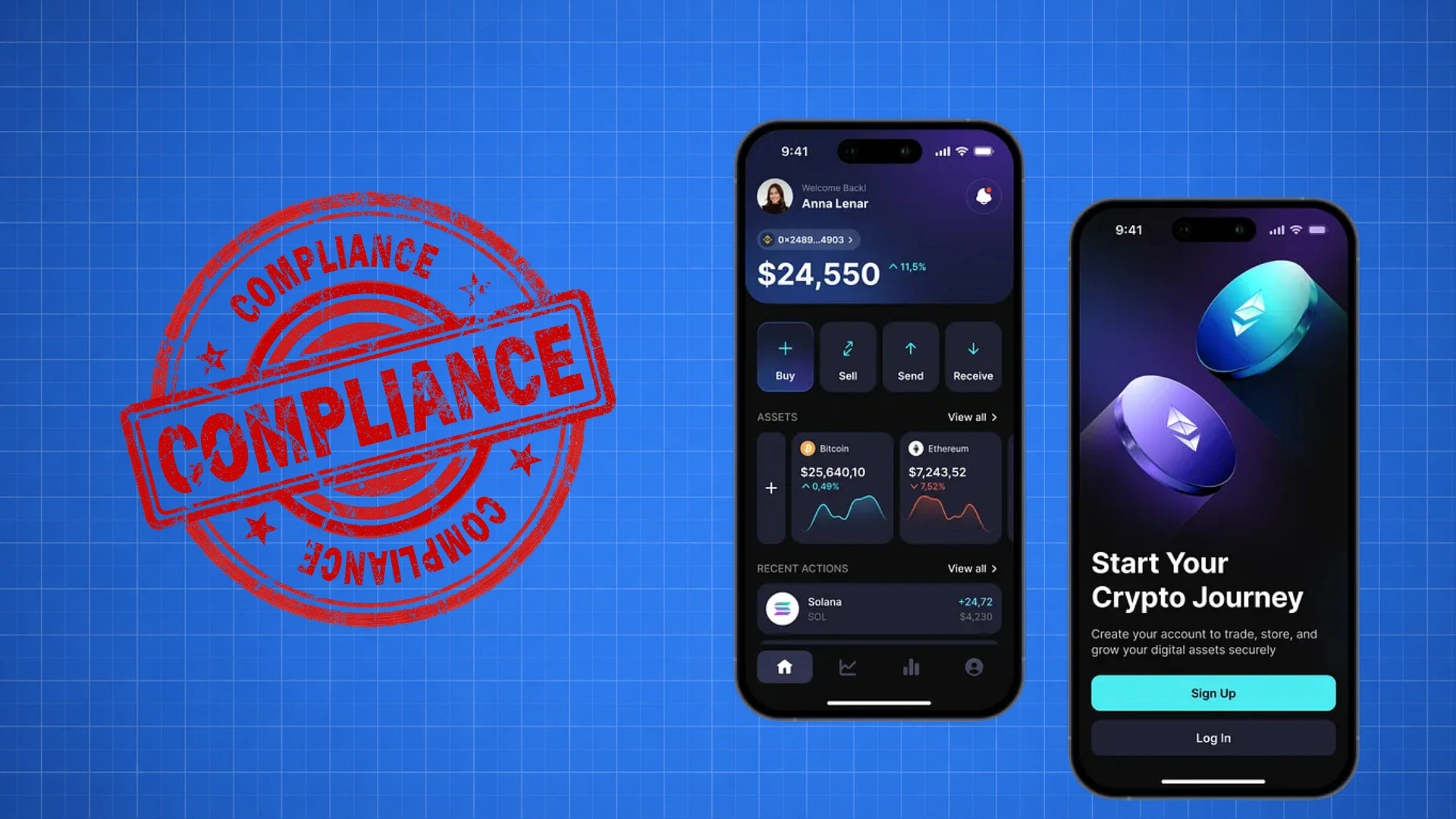
Phase 2 turns the validated concept into a working MVP with compliance built into the architecture, not added later. For any product that handles payments, user data, or financial transactions, compliance-ready architecture is a version-one requirement, because retrofitting it costs more and often forces a full rebuild. The MVP focuses on one core workflow, proving the product with real users while meeting the compliance its activity legally requires. Acquaint Softtech's React Native developers build cross-platform MVPs with KYC, security, and audit logging designed in from the first sprint.
Building cross-platform with React Native or Flutter shares most of the codebase across iOS and Android, cutting timeline and budget significantly at this stage; the right call for most fintech MVPs. The MVP is also where integration complexity becomes real: payment gateways, KYC providers, bank or BaaS connections, and sandbox dependencies all add calendar time that sits outside the team's control. Managing that complexity is a core software development outsourcing capability.
The discipline that defines this phase is scope control: every feature deferred to a validated phase two is budget not spent on an unproven idea, and scope additions are a leading cause of delay. The MVP-first sequencing that keeps cost and risk down is documented in this story on how a startup saved $60K a year on remote hiring.
Does a fintech MVP need to be compliant?
Yes. Any fintech MVP that handles payments, user data, or financial transactions needs compliance-ready architecture from version one, including KYC flows, audit trails, encryption, and access controls. Retrofitting compliance after launch usually forces a re-architecture of core systems, which is slower and far more expensive. The MVP should prove one core workflow while meeting the compliance its activity legally requires.
Build Compliance-Ready From Sprint One
Acquaint Softtech delivers end-to-end fintech builds at up to 40% lower cost than Western agencies, at $25 to $49 per hour, with 95% on-time sprint delivery and a 4.9/5 rating from 50+ verified Clutch reviews. Deploy your first fintech engineer within 48 hours of a brief.
Phase 3: Security, Audit, and Certification

Before a fintech product can launch or win a bank partner, it must pass security and audit scrutiny that ordinary apps never face. This phase hardens the product: penetration testing, PCI DSS engineering for card data, audit-trail infrastructure, and preparation for certifications like SOC 2 that enterprise customers and partners increasingly demand before they sign. Acquaint Softtech's DevOps and security engineers build and harden this layer so the product is audit-ready rather than scrambling at the end.
These items are a non-negotiable infrastructure layer, not optional polish: KYC and AML integration, security engineering, penetration testing, audit logging, and SOC 2 preparation together form the backbone regulators and partners inspect. Sequencing them correctly matters, because compliance and security certification often gate the launch, and starting them late stalls everything behind them. Getting this right is a core software product engineering responsibility.
This audit-ready discipline, access control, traceability, and maintainability across financial operations is exactly what verified clients highlight about Acquaint Softtech, as covered in this overview of the company's Clutch recognition and verified results, published on acquaintsoft.com.
What security and certifications does a fintech product need?
A fintech product needs KYC and AML integration, PCI DSS engineering for card data, encryption, penetration testing, and audit-trail infrastructure, plus preparation for certifications like SOC 2 that enterprise customers and partners increasingly require. These form a non-negotiable infrastructure layer that regulators and bank partners inspect, and because certification often gates the launch, this work must be sequenced early, not left to the end.
The Regulatory Path by Region: RBI, FCA, US, EU, UAE
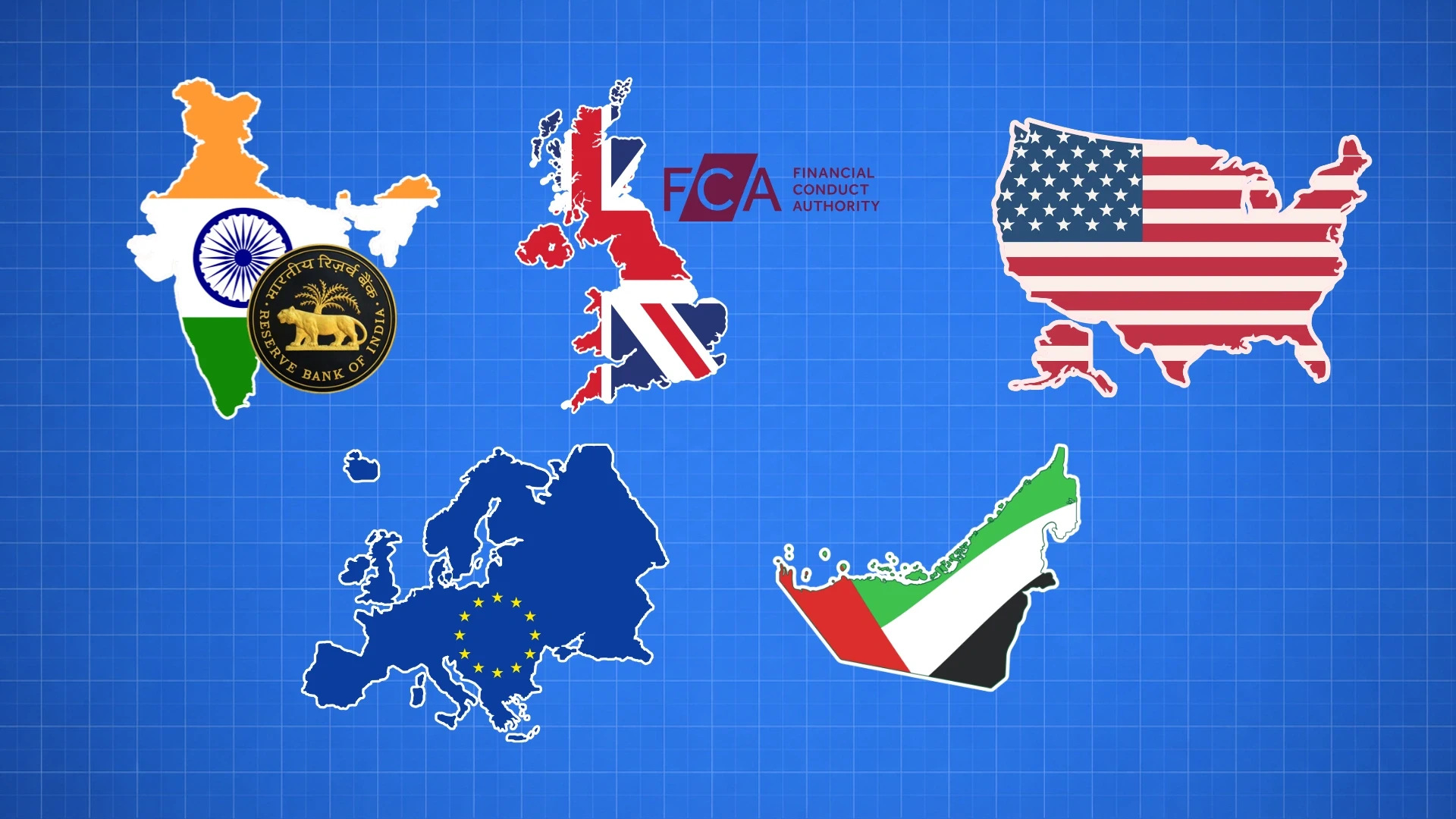
Every market has its own regulator, licensing triggers, and sandbox options, so the approval path must be mapped to where you launch. The good news is that most major markets now offer faster, more supportive routes for innovative fintechs than they did a few years ago. Acquaint Softtech's dedicated development teams build to each regulator's requirements across these five markets.
India (RBI): the RBI is the primary regulator, with the Digital Lending Directions 2025 and payment-aggregator licensing; multiple bodies (RBI, MeitY, IRDAI) govern different activities, and the DPDPA covers data.
UK (FCA): the FCA authorises EMIs and payment firms, runs a regulatory sandbox, offers free Pre-Application Support (PASS), and is targeting quicker, more predictable authorisations in 2026.
USA: fragmented; federal bodies plus state-by-state money-transmitter licenses, so many fintechs partner with a sponsor bank or BaaS provider rather than license in all 50 states.
Europe (EU): more centralised, with EMI and payment licenses that can passport across the EEA, governed by frameworks like PSD2, soon PSD3, and MiCA for crypto.
UAE: the DIFC's DFSA Innovation Testing Licence and the ADGM's FSRA RegLab let fintechs test regulated products in a sandbox before full authorisation, with the UAE Central Bank governing onshore payments.
The strategic lesson is to use sandboxes and pre-application support where they exist, because they cut both risk and time. Most G20 markets now offer a controlled environment to test under relaxed rules, and engaging the regulator early through programs like the FCA's PASS or the UAE's RegLab smooths the path. Mapping this correctly across markets is where software development outsourcing to a multi-region partner pays off.
Many fintech founders also rely on virtual CTO services to align regulatory requirements, technology architecture, and market expansion strategies from the outset. The compliance-tracking discipline behind it is covered in this overview of Acquaint Softtech's Clutch recognition, published on acquaintsoft.com.
Market | Regulator | Fast Route |
India | RBI (plus MeitY) | PA license, sandbox |
UK | FCA | Sandbox, PASS support |
USA | Federal + state | Sponsor bank / BaaS |
Europe | National + EU | EMI passporting |
UAE | DFSA / FSRA | ITL / RegLab sandbox |
How do you get RBI or FCA approval for a fintech product?
For RBI approval in India, identify which activity you perform (such as payment aggregation or digital lending), meet the relevant RBI directions, and apply for the specific license, often after a sandbox test. For FCA authorisation in the UK, scope whether you need EMI or payment-firm permissions, use the FCA's free Pre-Application Support and sandbox, then submit a full application. Both work best when the regulatory track runs in parallel with the build.
Own License vs. Partner License: The Launch Decision
One decision shapes the entire timeline: do you obtain your own license, or launch under a partner's regulatory permissions? Getting your own license gives full control but takes a long time; an EMI or banking license can take 12 to 18 months, so many fintechs launch first by partnering with an already-licensed provider, then pursue their own authorisation later once they have revenue. Acquaint Softtech's React Native and product developers build to either path, integrating partner infrastructure or supporting an own-license application. For startups looking to accelerate market entry, their white-label software development services can also help launch compliant fintech solutions faster while reducing development complexity.
The partner route is how most successful fintechs spent their first 12 to 24 months. Rather than securing an EMI license directly, a team partners with a licensed EMI; rather than obtaining open-banking permissions, it uses regulated infrastructure providers; rather than collecting money-transmitter licenses across many US states, it partners with a treasury or banking-as-a-service provider. This lets the product launch under existing permissions while building revenue, a strategy best scoped in a discovery workshop.
The right choice depends on your model, capital, and timeline: partner to launch fast and validate, own a license when scale and economics justify the wait. The framework decision behind a build that can switch from partner to own infrastructure is compared in this guide on Laravel vs MERN stack for startups.
Timeline trap: Founders routinely budget for the build but forget the license clock. An own EMI or banking license can take 12 to 18 months, far longer than the build, so planning to get your own license before launch can delay revenue by over a year. Launching under a partner's permissions first is how most fintechs avoid that trap.
Should you get your own fintech license or use a partner's?
Launch under a partner's license first if you want to reach the market fast and validate, since an own EMI or banking license can take 12 to 18 months. Partnering with a licensed EMI, open-banking provider, or banking-as-a-service platform lets you launch under existing permissions while building revenue. At the same time, working with experienced teams that hire MEAN stack developers can help accelerate fintech platform development and reduce time to market. Pursue your own license later, once scale and economics justify the time and cost. Most successful fintechs start with the partner route.
Cost, Timeline, and the Tech Stack End to End
End-to-end cost is set by product type and regulatory scope, then multiplied by feature complexity and integrations. A B2B fintech tool without direct money handling runs roughly $30,000 to $80,000 for an MVP; a consumer payments or lending product with regulated infrastructure runs $80,000 to $250,000; and a full Series A-ready platform runs $200,000 to $600,000-plus, with regulatory legal advice and compliance costs on top. Acquaint Softtech delivers this through React Native and product engineering at up to 40% below Western agency rates.
Timelines run 3 to 18 months on the build side: a B2B MVP in 4 to 6 months, a consumer payments or lending MVP in 6 to 12 months, and a full platform in 12 to 24 months, with the regulatory authorisation timeline added alongside. Compliance overhead adds 30 to 40% to the engineering estimate, and post-launch costs run $70,000 to $290,000 per year for APIs, hosting, audits, and regulatory updates. India-based teams cut total cost by up to 40%, the saving documented in this story on how a startup saved $60K a year on remote hiring.
The end-to-end tech stack is API-first and cloud-native: React Native or Flutter for cross-platform apps, Laravel, Node.js, or Python for the backend and risk logic, PostgreSQL for auditable data, and integrations to KYC, payment, and banking providers. Founders building these products often hire React Native developers with fintech experience to move fast while keeping compliance intact.
Product Type | US / UK / Europe Cost |
B2B fintech tool | $30K–$80K / £24K–£64K / €28K–€75K |
Consumer payments or lending platform | $80K–$250K / £64K–£200K / €75K–€235K |
Series A-ready fintech platform | $200K–$600K+ / £160K–£480K+ / €188K–€565K+ |
Compliance overhead | +30–40% across all regions |
How much does end-to-end fintech development cost?
The cost of end-to-end fintech development varies by product scope and region. A B2B fintech MVP typically costs $30K–$80K (US), £24K–£64K (UK), or €28K–€75K (Europe). Consumer payments and lending platforms range from $80K–$250K, while Series A-ready fintech products often require $200K–$600K+ before licensing and legal costs. Compliance requirements usually add 30–40% to engineering budgets, and annual post-launch operations can cost $70K–$290K. Working with experienced India-based development teams can reduce overall development costs by up to 40% while maintaining delivery quality.
How Acquaint Softtech Delivers FinTech End to End
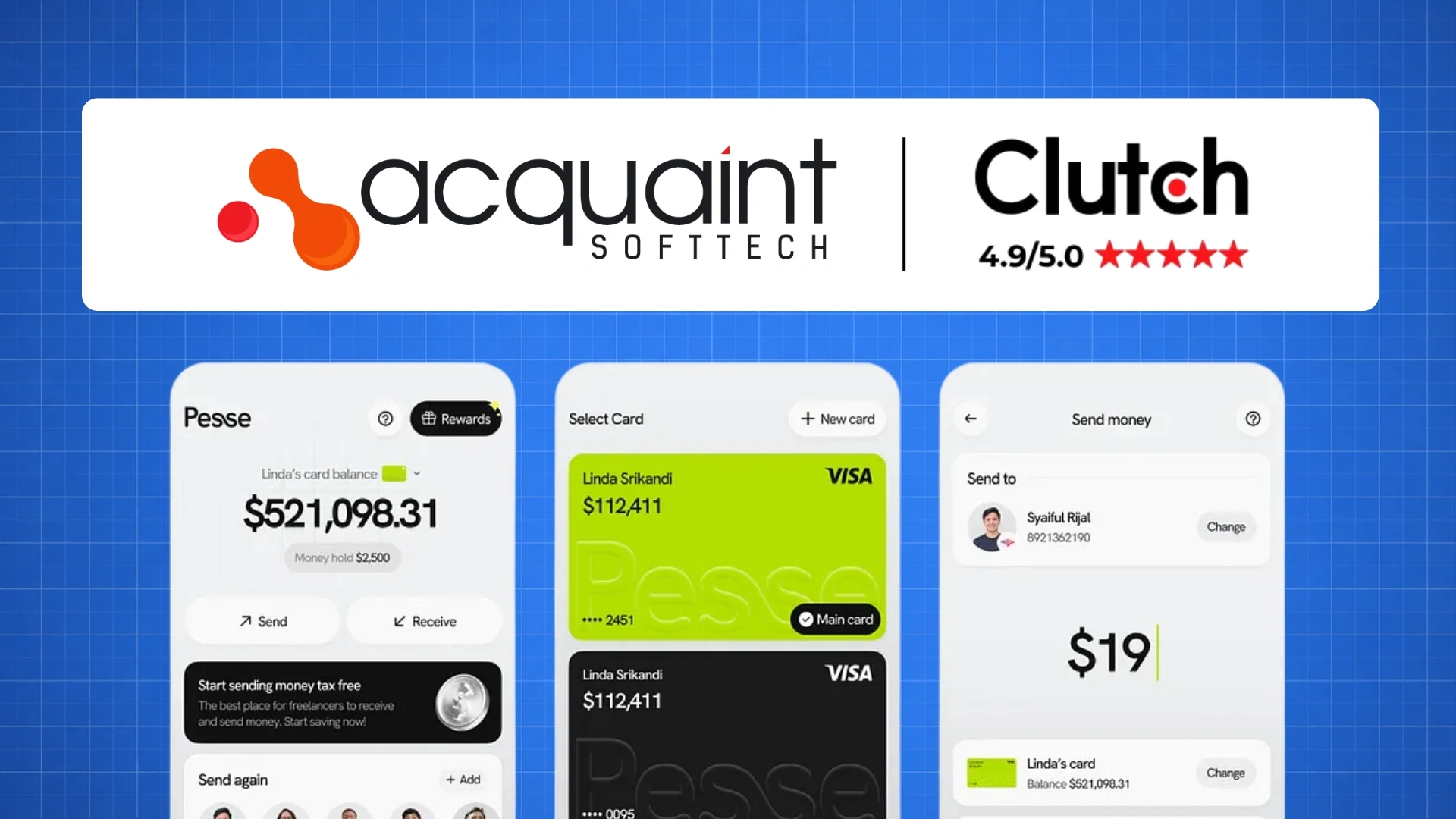
Acquaint Softtech has delivered 1,300+ software projects across 20+ industries in 13+ years, with 70+ in-house engineers across React Native, Laravel, Python, Node.js, and DevOps. End-to-end fintech is a core capability, spanning discovery and validation, compliance-ready design, MVP and full build, security and audit, and support for FCA, RBI, EU, and UAE regulatory paths for clients across the USA, UK, Europe, UAE, and India. Engagements begin with a discovery and scoping phase that maps the product, the regulator, and the licensing path before development starts.
Example: SuperFi, a UK fintech taken from concept to launch
SuperFi Finance, a UK client, engaged Acquaint Softtech to take a credit-and-debt-management product from concept to launch. The team validated the core idea, built an MVP first with a minimalist single-page interface for the central workflow, then expanded into a full website and mobile app with credit card management, a debt-free calculator, expert credit-score guidance, and an administrator panel, all delivered within a tight deadline.
Verified client review (Clutch): Gerhard Drobits, CEO of Hybopay Finance in Dublin, said in a verified Clutch review that Acquaint Softtech understood the constraints from the start and designed around them, completing every milestone on time and adapting promptly to changes mid-project. A separate verified reviewer noted the team added security and auditing depth without slowing the system, across banking, card, and crypto operations, the qualities an end-to-end fintech build depends on.
The Acquaint Softtech 4-Phase End-to-End Framework
Discovery and regulatory mapping (weeks 1 to 2): validate the idea, define the roadmap, and map the regulator and licensing path for the target market.
Compliance-ready MVP (months 1 to 5): build one core workflow cross-platform with KYC, security, and audit logging designed in from sprint one.
Security, audit, and approval (parallel): harden security, prepare certifications, and run the regulatory track via sandbox or partner license.
Launch and evolve (ongoing): go live under the chosen license, then add features, markets, and own-license authorisation as you scale.
Go From Idea to Approval With Acquaint Softtech
From discovery and compliance-ready design to security, audit, and RBI or FCA approval, this is the full journey one partner can own. Join 200+ tech companies who scaled with Acquaint Softtech: 4.9/5 on Clutch from 50+ verified reviews, 95% on-time delivery, and fintech engineers deployed within 48 hours of brief.
Frequently Asked Questions
-
How much does end-to-end fintech development cost?
A fintech MVP typically costs $30K–$80K for B2B tools, $80K–$250K for payments or lending products, and $200K–$600K+ for Series A-ready platforms. Compliance can add 30–40%, while India-based teams may reduce costs by up to 40%.
-
What is included in end-to-end fintech development?
It covers product discovery, compliance planning, UI/UX design, development, KYC and payment integrations, security testing, regulatory support, launch, and ongoing maintenance.
-
How long does fintech development take?
A B2B MVP takes 4–6 months, consumer fintech products 6–12 months, and enterprise platforms 12–24 months, depending on complexity and compliance requirements.
-
What is the best tech stack for fintech apps?
Most fintech platforms use React Native or Flutter for mobile apps, Laravel, Node.js, or Python for the backend, and PostgreSQL for secure, auditable data management.
-
Why is compliance important in fintech development?
Compliance ensures adherence to financial regulations, reduces legal risk, improves security, and typically accounts for 30–40% of total engineering effort.
-
How do fintech companies get RBI approval in India?
Businesses must identify the required license, meet RBI guidelines, complete compliance checks, and often participate in regulatory sandbox programs before approval.
-
How do fintech startups get FCA authorization in the UK?
Startups determine whether they need EMI or payment permissions, engage with FCA support programs, and submit a detailed compliance and operational application.
-
Should a fintech startup get its own license?
Most startups launch faster by partnering with a licensed provider first, then pursue their own EMI or banking license once they achieve market traction and scale.
-
What are the main integrations required for fintech platforms?
Core integrations include KYC providers, payment gateways, banking-as-a-service platforms, fraud detection systems, sanctions screening, and audit logging tools.
-
How can fintech startups reduce development costs?
Using experienced India-based development teams, cross-platform frameworks like React Native, and launching under partner licenses can significantly lower costs and accelerate time to market.
We’re Acquaint Softtech, your technology growth partner. Whether you're building a SaaS product, modernizing enterprise software, or hiring vetted remote developers, we’re built for flexibility and speed. Our official partnerships with Laravel, Statamic, and Bagisto reflect our commitment to excellence, not limitation. We work across stacks, time zones, and industries to bring your tech vision to life.
Table of Contents
Get Started with Acquaint Softtech
- 13+ Years Delivering Software Excellence
- 1300+ Projects Delivered With Precision
- Official Laravel & Laravel News Partner
- Official Statamic Partner
Related Blog
.webp "How to Build a Digital Lending Platform: Complete 2026 Guide")
How to Build a Digital Lending Platform: Complete 2026 Guide
A digital lending platform is four workflow systems that must all work flawlessly: origination, underwriting, disbursement, and servicing. This guide builds each one, with AI credit scoring, compliance mapping, and real 2026 cost data.

Ahmed Ginani
May 25, 2026.webp "The Complete Guide to FinTech Software Development in 2026")
The Complete Guide to FinTech Software Development in 2026
Complete guide to fintech software development 2026: all five verticals, compliance architecture, real build sequences, AI capabilities, and fintech development cost, from 1,300+ delivered projects.
Acquaint Softtech
May 6, 2026
Top 10 Software Product Engineering Companies in 2026
As businesses continue to shift toward digital-first strategies, partnering with a software product development company to build scalable and reliable software products has become essential for staying competitive. Companies across industries now rely on product engineering partners to accelerate innovation, shorten development cycles, and deliver high-quality digital experiences that meet evolving user expectations.
With increasing investments in cloud, AI, and platform modernization, demand for product engineering expertise is growing rapidly. Recent market insights indicate the global engineering services market is projected to surpass $1 trillion by 2030, highlighting the critical role engineering partners play in driving product innovation and long-term growth.

Zubair Pateljiwala
March 7, 2025India (Head Office)
203/204, Shapath-II, Near Silver Leaf Hotel, Opp. Rajpath Club, SG Highway, Ahmedabad-380054, Gujarat
USA
7838 Camino Cielo St, Highland, CA 92346
UK
The Powerhouse, 21 Woodthorpe Road, Ashford, England, TW15 2RP
New Zealand
42 Exler Place, Avondale, Auckland 0600, New Zealand
Canada
141 Skyview Bay NE , Calgary, Alberta, T3N 2K6