

How to Build a Digital Lending Platform: Complete 2026 Guide
A digital lending platform is four workflow systems that must all work flawlessly: origination, underwriting, disbursement, and servicing. This guide builds each one, with AI credit scoring, compliance mapping, and real 2026 cost data.

Ahmed Ginani
How to Build a Digital Lending Platform
A digital lending platform has four mandatory workflow systems: (1) Loan Origination System (LOS), application capture and eligibility routing; (2) Credit Scoring Engine, bureau + AI-based underwriting; (3) Loan Management System (LMS), EMI calculation, repayment scheduling, collections; (4) Borrower Portal, self-service status, documents, repayment. All four must function before the first loan is disbursed. Failure in any system has a different legal consequence.
Cost: $18,000–$32,000/month for a 4–6 engineer team. MVP timeline: 18–28 weeks.

- Founders building consumer, MSME, or mortgage lending platforms.
- CTOs designing digital lending architecture (LOS, LMS, scoring, borrower portal).
- Teams implementing AI credit scoring with regulatory compliance needs.
- Product managers defining compliant lending feature roadmaps.
- Businesses evaluating digital lending development vendors in India.
As Head of Partnerships at Acquaint Softtech, a digital lending platform development company India clients across the US, UK, Australia, Europe, and UAE rely on, I scope lending platform builds every month. The pattern I see most often: a founder treats the lending platform as a single product, builds a user-facing loan application form, and only discovers in week fourteen that the credit scoring engine, the LMS, the disbursement rails, and the regulatory reporting module are all separate systems with separate compliance obligations. This guide prevents that.
The goal is a complete operational blueprint for how to build a digital lending platform in 2026, the four-system architecture, the AI credit scoring layer that is now standard, the digital lending platform features list mapped by launch phase, the compliance obligations by jurisdiction, the digital lending platform tech stack by component, and the digital lending platform development cost from real delivery data. For the broader FinTech context, the Complete FinTech Software Development Guide is the master reference. For the payment disbursement layer inside your lending product, see How Payment Gateways Work.
The Four-System Architecture Every Lending Platform Must Have
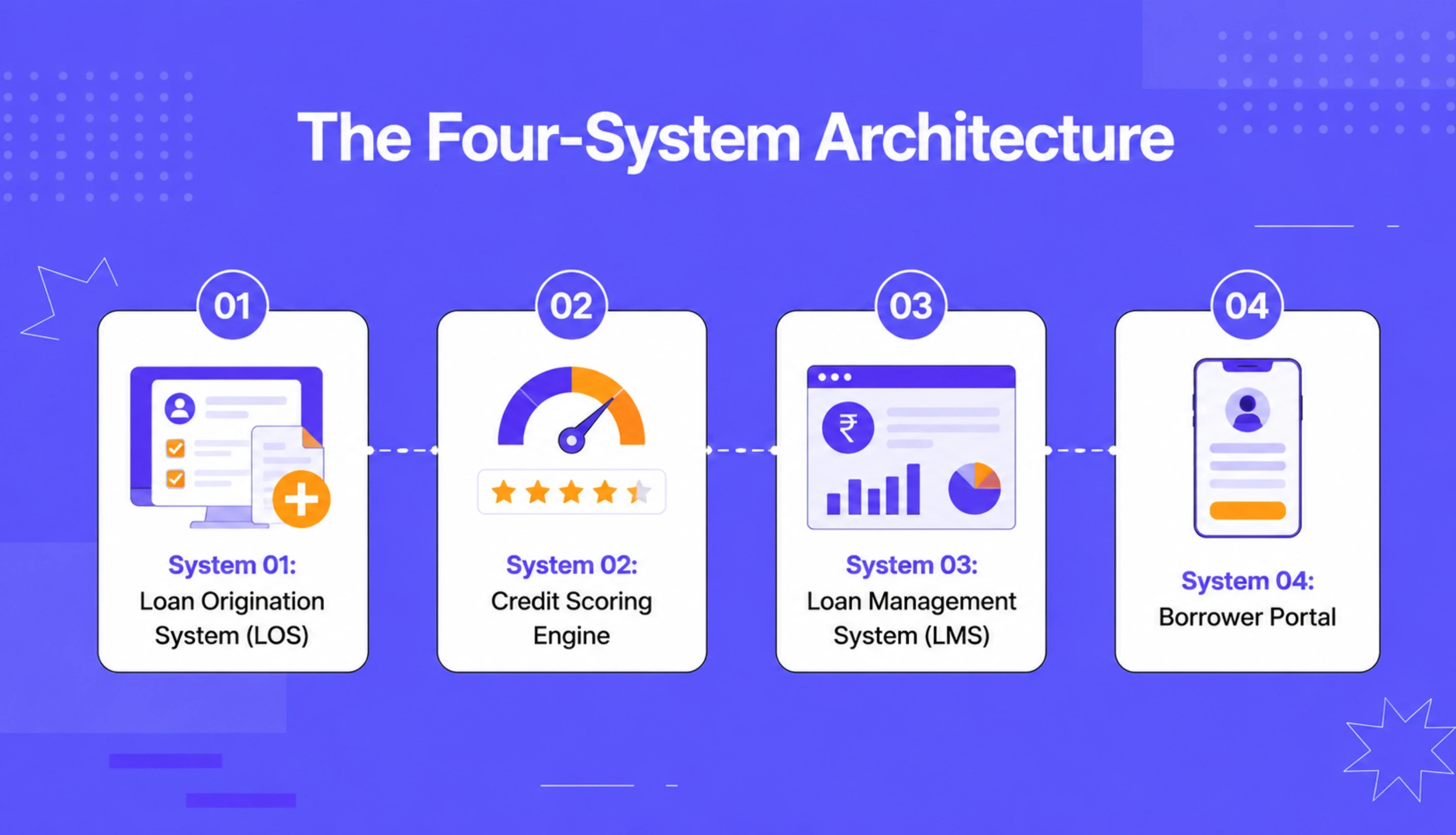
The most dangerous misconception about digital lending platforms is that they are a single product. They are four distinct systems with separate data models, compliance requirements, and dependencies that must work together on every loan. A failure in any one system leads to financial loss or legal risk. Understanding this before development starts is critical, which is why a structured approach to software product development is essential.
System 01: Loan Origination System (LOS) - The Entry Gate
The LOS is the workflow that takes a borrower from first touch to credit decision. It captures the application (personal data, loan amount, purpose, income declaration), validates eligibility (age, geography, existing loans, blacklist check), enriches the application with bureau data, and routes the enriched application to the underwriting engine. Every interaction in the origination workflow is logged, for compliance, for model training, and for dispute resolution.
Must exist at launch:
• Application form with server-side validation (never trust client-side only)
• E-sign integration for loan terms acknowledgement (Aadhaar eSign in India; DocuSign/HelloSign in US/UK)
• Bureau pull, Experian, CIBIL, TransUnion, or Equifax, at application submission (not later)
• Bank statement upload or account aggregation API (Plaid US; Finbox/Perfios India; TrueLayer UK)
• Duplicate application detection, same PAN/SSN with an open application in another pipeline stage
• Application status tracking, borrower must be able to query status without calling support
Compliance note: US: TILA (Truth in Lending Act) requires APR disclosure before commitment. UK: FCA Consumer Credit Act requires pre-contract credit information in a standard European format. India: RBI FLDG guidelines govern co-lending origination; NBFC Master Directions require KYC completion before loan sanction.
System 02: Credit Scoring Engine - The Risk Decision Maker
The credit scoring engine receives the enriched application from the LOS and makes the underwriting decision: approve, decline, or approve with modified terms. In 2026, production lending platforms use a hybrid model: bureau-based score as the primary signal, overlaid with an AI/ML model trained on the platform's own loan performance data. The engine must produce a decision in under 5 seconds for consumer loans (borrower UX expectation) and must generate an adverse action notice for every declined application.
Must exist at launch:
• Bureau score integration: FICO (US), Experian/Equifax Score (UK), CIBIL/CRIF (India)
• Alternative data scoring model: bank statement cash flow analysis, UPI velocity, utility payment history
• Decision rules engine: hard cutoffs (minimum bureau score, maximum debt-to-income ratio, blacklist) applied before ML model
• Explainability layer: every decline must produce 2–4 human-readable adverse action reasons (FCRA/FCA requirement)
• A/B testing framework: ability to run two scoring models simultaneously on traffic splits to validate new models before full rollout
• Model monitoring: daily score distribution monitoring to detect drift (fraud pattern changes, economic shock, data pipeline failure)
Compliance note: US: ECOA (Equal Credit Opportunity Act) prohibits disparate impact. FCRA requires an adverse action notice within 30 days of a decline. UK: FCA Consumer Duty requires fair treatment in lending decisions.
System 03: Loan Management System (LMS) - The Lifecycle Engine
The LMS manages the loan from disbursement through final repayment or write-off. It calculates and schedules every EMI (Equated Monthly Instalment), tracks payment receipt and allocation (principal vs interest vs fees), manages missed payment workflows (reminder → soft collections → hard collections → legal), handles prepayment and foreclosure calculations, classifies loans into NPA (Non-Performing Asset) buckets on schedule, and generates all regulatory reports. A lending platform without a correctly designed LMS will produce incorrect interest calculations within the first payment cycle.
Must exist at launch:
• EMI calculation engine: flat rate and reducing balance methods; correct proration for mid-month disbursements
• Payment allocation logic: payments must be allocated in correct order — fees → interest → principal (varies by jurisdiction and loan type)
• Collections workflow: automated escalation (D+1 SMS → D+7 call → D+30 collections queue → D+90 NPA classification)
• NPA classification: automatic bucket assignment per RBI/FCA/FDIC schedules (Standard → Sub-Standard → Doubtful → Loss)
• Prepayment calculator: correct outstanding principal calculation after partial prepayment; prepayment penalty computation if applicable
• Loan statement generation: borrower-facing repayment schedule with outstanding balance, next due date, and total cost of credit
Compliance note: India: RBI Income Recognition and Asset Classification (IRAC) norms — NPA classification must run automatically at 90 DPD (Days Past Due). UK: FCA forbearance rules — collectors must follow specified scripts and cannot contact borrowers more than 3 times per week. US: FDCPA restrictions on collection contact timing and methods.
System 04: Borrower Portal - The Self-Service Interface
The borrower portal is the user-facing layer through which borrowers monitor their loan status, make repayments, upload required documents, and initiate repayment plans or dispute resolutions. For borrowers seeking quick financial assistance, integrating a borrower portal with a payday loan platform provides a convenient way to track applications, manage repayments, upload documents, and communicate with lenders from a single dashboard. It is the lowest-complexity of the four systems technically, but it is the system borrowers interact with most, and poor UX here drives support ticket volume, increases default rates (borrowers who cannot easily find their due date miss it), and triggers regulatory complaints.
Must exist at launch:
• Dashboard: outstanding balance, next EMI amount, next due date, days to due date, total amount paid, remaining tenure
• Repayment initiation: UPI (India), ACH debit (US), Faster Payments / Direct Debit (UK), integrated with collections to auto-cancel reminder workflows on payment receipt
• Statement download: downloadable PDF loan statement for tax purposes and credit applications
• Document upload: income proof re-submission, address proof update, bank account change request, each with admin review workflow
• Dispute/grievance module: SEBI/RBI/FCA-compliant grievance filing with acknowledgement receipt and SLA tracking
• Repayment plan request: hardship repayment plan initiation, required under FCA Consumer Duty (UK) and RBI Fair Practices Code (India)
Compliance note: UK: FCA requires an accessible complaint process and an 8-week final response commitment. India: RBI requires a grievance redressal mechanism with a 30-day resolution SLA for NBFCs. US: CFPB examines whether the complaint process is accessible and responsive.
Scoping a Lending Platform Build? Get an Architecture Blueprint in 48 Hours.
Acquaint Softtech has delivered LOS, LMS, and AI credit scoring systems for lending clients across the US, UK, Australia, India, and the UAE. We return a proposed architecture covering all four systems, compliance obligations by jurisdiction, and team structure within 48 hours of your brief.
AI Credit Scoring in 2026: Building the Underwriting Engine That Beats the Bureau
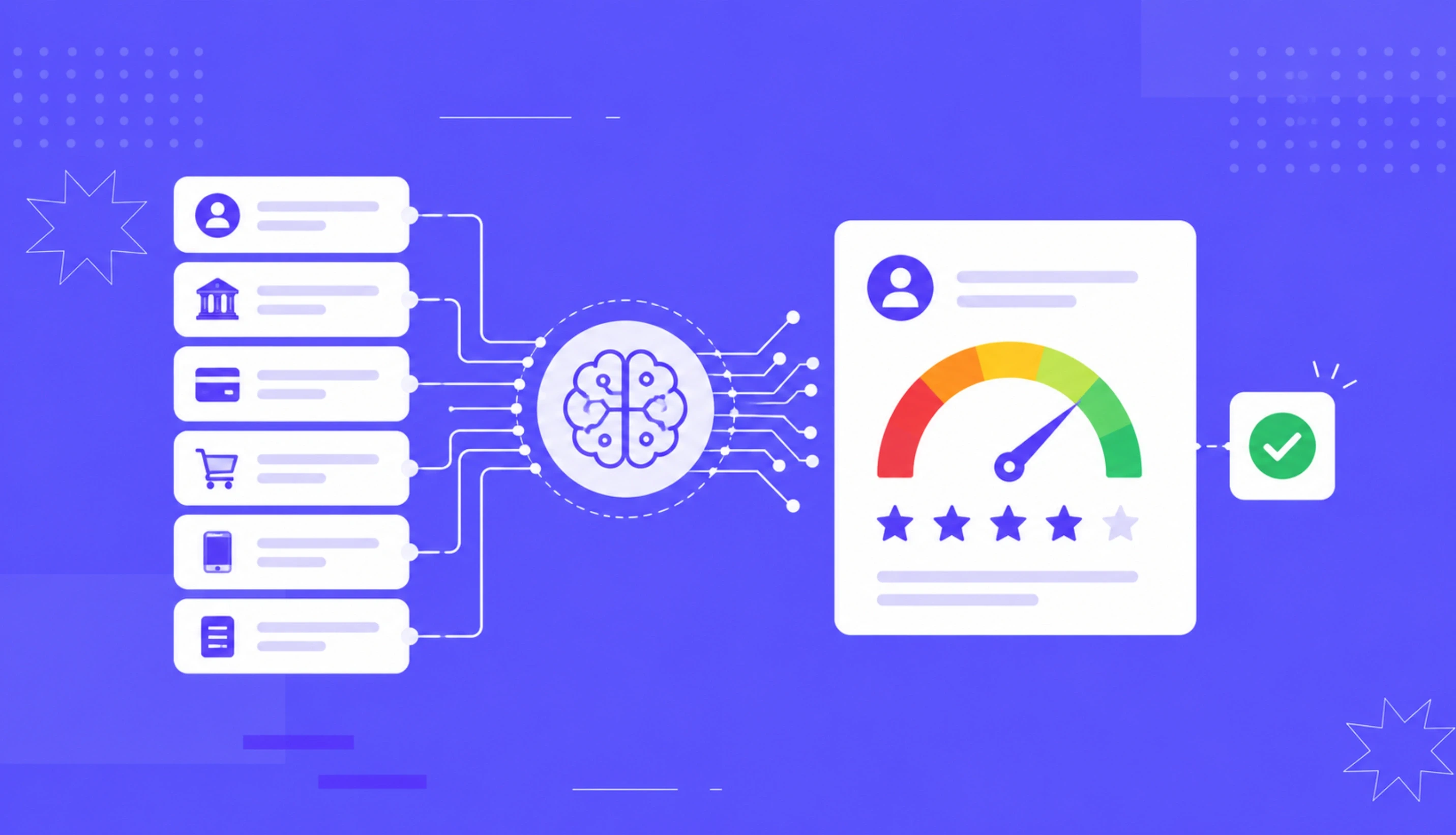
Traditional bureau-based credit scoring excludes an estimated 1.7 billion adults globally who are unscored or thin-file. In 2026, AI credit scoring using alternative data is not an R&D experiment; it is a production-deployed system in every serious lending platform serving emerging markets or underserved segments.
For companies building such systems, it is critical to hire AI/ML engineers who can design, train, and deploy scalable, explainable credit models. The components below define what an AI credit scoring engine requires to be production-viable and regulatory-compliant.
Alternative Data Sources: What Goes Into the Model
Data Source | What It Tells the Model | Integration Method | Regulatory Consideration |
Bank statement cash flow | Average monthly income, recurring expense patterns, overdraft frequency, cash flow volatility, salary regularity | Account aggregation API: Plaid (US), TrueLayer (UK), Finbox/Perfios (India) | Consent required. Data must be discarded after the decision (GDPR/PDPA). Cannot retain raw bank data longer than needed for underwriting. |
UPI/payment transaction history | Transaction velocity, merchant category distribution, round-number patterns (fraud signal), counterparty diversity | Fintech BaaS API or direct UPI data partner (India only) | India: UPI data access requires explicit borrower consent. NPCI guidelines apply. Not available in US/UK. |
Utility and rent payment | Payment discipline outside formal credit, tenure at address, lifestyle stability | Experian Boost (US), CreditLadder (UK), and CRIF India alternative data products | Must be consented. Adverse action based on utility data requires specific adverse action language in the decline notice. |
Mobile metadata (device, app) | Device ownership duration (newer device = lower risk proxy), app usage patterns, location consistency | SDK embedded in borrower app, with explicit consent disclosure | ECOA (US) and GDPR (EU/UK) scrutiny: must demonstrate no proxy discrimination. Regular model fairness audit required. |
Social and professional data | Employment tenure, employer category, LinkedIn-verified role (B2B lending) | Manual or third-party enrichment | High regulatory scrutiny in the US (ECOA protected characteristics correlation risk). Use only with legal review. |
Existing loan repayment behaviour | DPD history on prior loans from the same platform or from bureau Trade Lines | Platform internal data + bureau Trade Lines | Gold standard signal. Most predictive single variable for default in all markets. No consent issues — directly from the credit file. |
Model Architecture: From Raw Data to Credit Decision
The production AI credit scoring architecture at Acquaint Softtech uses a four-stage pipeline that separates data ingestion from feature engineering from scoring from decision delivery, enabling each stage to be updated independently as the model improves.
Stage 1: Data Ingestion
Bureau API pull (synchronous, <2s), bank statement upload and parsing (Finbox/Perfios OCR + structured extraction), UPI history API call, and internal loan history query all execute in parallel. Results are assembled into an application enrichment object stored in the feature store. Raw data is retained only for the model training period (30–90 days), then discarded per data minimization obligations.
Stage 2: Feature Engineering
Raw data is transformed into model features: bureau score percentile, average 3-month net cash flow, salary regularity score (standard deviation of monthly credits normalized by mean), overdraft rate (% of months with overdraft), debt-service ratio (declared EMIs / net income), and UPI merchant category diversity score. Features are computed by a Python service (pandas + custom transformers) and stored in the feature store alongside the application ID. For teams that need to scale this data engineering and feature pipeline quickly without long hiring cycles, leveraging staff augmentation services allows you to add experienced Python and ML engineers directly into your workflow.
Stage 3: Scoring Engine
Component | Function |
|---|---|
Gradient Boosting Model | Uses XGBoost or LightGBM to evaluate loan risk |
Output Scores | Returns default probability, loan grade (A–F), and SHAP explanation values |
SHAP Values | Explain which factors most influenced the lending decision |
Inference Speed | Under 150ms response time |
Model Training | Retrained weekly using new repayment data |
Monitoring | Daily score checks with PSI alerts for distribution shifts above 10% |
Stage 4: Decision and Adverse Action
The scoring engine output passes through a rules gate (hard cutoffs: bureau score <580 → auto-decline regardless of ML score; DTI >55% → auto-decline). Approved applications receive a credit limit and interest rate from a pricing model. Declined applications receive an adverse action notice generated from the top 4 SHAP values - translated into human-readable English using a template library that satisfies FCRA (US), FCA Consumer Duty (UK), and RBI Fair Practices Code (India) requirements.
Build vs Buy: AI Scoring Engine Decision
Build custom (recommended when >5,000 loans/month): Full control over features, model architecture, and training data. No vendor dependency. Explainability output maps directly to your adverse action notice templates. Build cost: 8–14 weeks with a Python ML engineer + backend engineer. Ongoing retraining: 1 day/week of ML engineer time.
Third-party bureau score only (recommended for <500 loans/month): FICO (US), Experian Score (UK), CIBIL (India). No custom model required. Adverse action notice uses standardized bureau reason codes. Limitation: excludes thin-file borrowers; no competitive differentiation on underwriting quality.
White-label scoring API (e.g., ScoreMe, Lenddo, CredoLab): Faster to deploy (2–4 weeks integration vs 8–14 weeks build). Vendor dependency risk. Limited customization. Explainability output may not satisfy all jurisdictions' adverse action requirements; verify before selecting.
Digital Lending Platform Features List: Mandatory vs Post-MVP
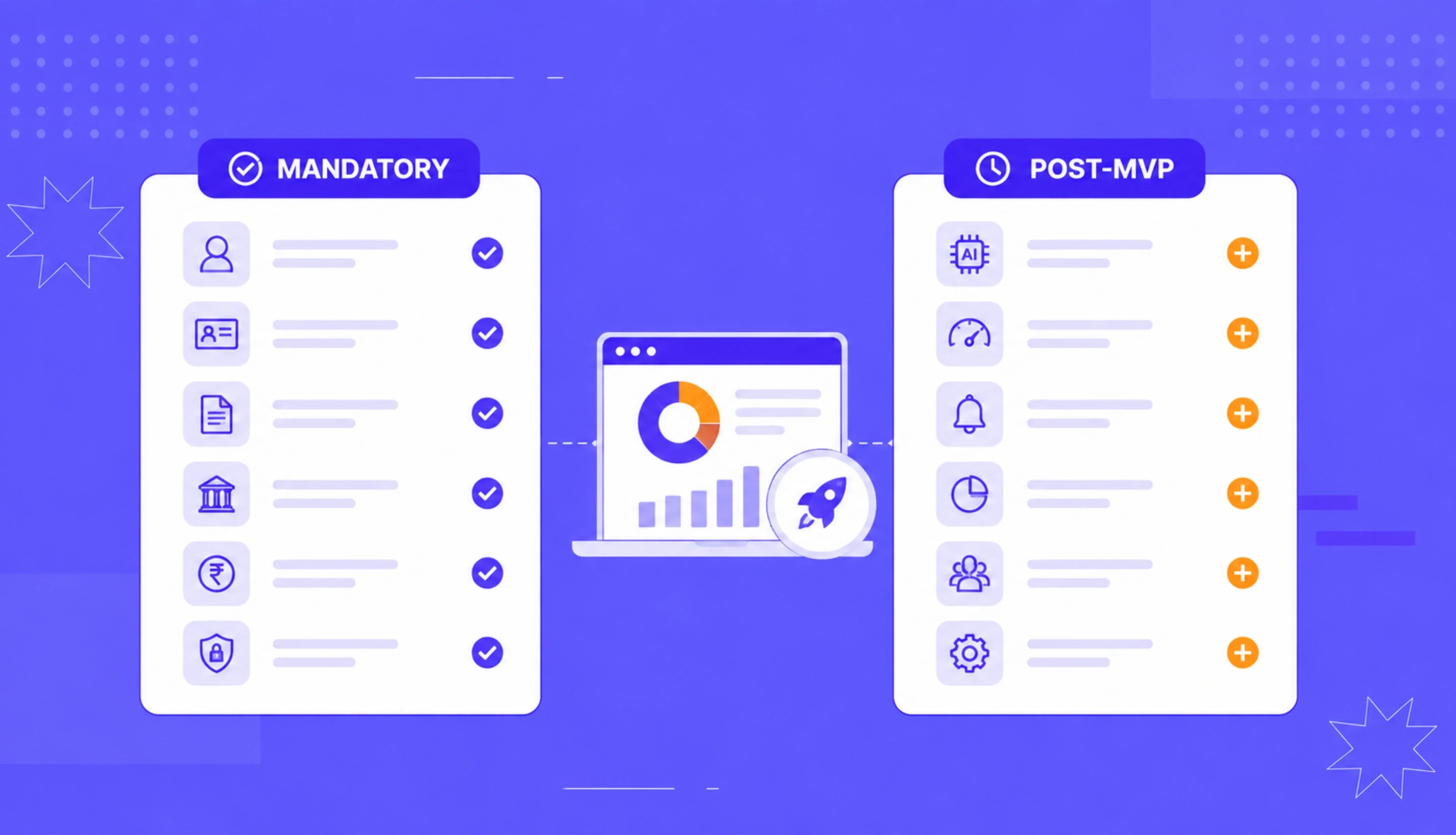
Every lending platform build is pulled toward premature complexity. A product team with six loan types, four collections strategies, and three underwriting models in sprint one will deliver none of them correctly. The feature classification below, built from Acquaint Softtech's delivery data across lending platforms in the US, UK, India, UAE, and Australia, defines what goes live on day one and what waits.
Feature | Priority | Reason |
|---|---|---|
KYC Identity Verification | Compliance Mandatory | Required before loan disbursement |
Bureau Credit Pull | Compliance Mandatory | Needed for regulated underwriting |
E Sign Loan Agreement | Compliance Mandatory | Legally required before approval |
TILA / APR Disclosure | Compliance Mandatory | Mandatory lending disclosure |
Adverse Action Notices | Compliance Mandatory | Required for declined applications |
EMI Calculation Engine | Compliance Mandatory | Prevents incorrect loan disclosures |
Payment Allocation Logic | Compliance Mandatory | Ensures regulatory compliant repayment handling |
Grievance Module | Compliance Mandatory | Required for borrower complaint handling |
Bank Statement Analysis | Launch Recommended | Improves approval rates for thin file borrowers |
Automated Collections | Compliance Mandatory | Needed for scalable collections management |
Borrower Dashboard | Launch Recommended | Reduces missed payments and support tickets |
Repayment Initiation | Launch Recommended | Enables borrower repayments and auto collections |
NPA Auto Classification | Compliance Mandatory | Required for loan risk classification |
Multi Loan Type Support | Post MVP | Added after core lending workflows stabilize |
Loan Restructuring | Post MVP | Needed as loan volume increases |
Co Lending / FLDG Module | Post MVP | Required for banking partnerships |
Regulatory Reporting Automation | Post MVP | Necessary at larger operational scale |
Loan Marketplace Integration | Post MVP | Expands loan distribution channels |
Digital Lending Platform Tech Stack: Component-by-Component
The digital lending platform tech stack is determined by three requirements: sub-5-second underwriting decisions for consumer loans, ACID-compliant financial data storage for loan ledgers and repayment records, and an ML pipeline that can retrain the scoring model weekly on new repayment data without disrupting production inference. These requirements drive specific technology choices at each layer.
Layer | Technology | Key Purpose |
LOS API | Laravel (PHP) | Workflow management and async processing |
LMS Core Engine | Python (Django) + Celery + Redis | Financial calculations and scheduled tasks |
AI Scoring Engine | FastAPI + XGBoost + MLflow | Fast credit scoring and model management |
Feature Store | Redis + PostgreSQL | Real-time and historical feature storage |
Loan Ledger Database | PostgreSQL + Read Replica | Secure and accurate loan records |
Bank Statement Processing | Finbox / Perfios / Plaid + OCR | Bank statement extraction and processing |
Borrower Portal | React JS + React Native | Web and mobile borrower access |
Payment Disbursement | IMPS / ACH / Faster Payments | Loan disbursement and payment processing |
Collections Workflow | Laravel Queues + Twilio + SendGrid | Automated collection process |
Infrastructure | AWS (EKS + RDS + SageMaker) | Deployment, security, and ML operations |
Acquaint Softtech’s Laravel developers handle the core Loan Origination System (LOS) workflow along with the borrower portal, ensuring smooth application processing, authentication flows, and real-time loan status tracking. For the backend intelligence layer, businesses can hire Laravel developers, who are experienced in building scalable FinTech architectures. On the data and decisioning side, Python developers design and implement the Loan Management System (LMS) along with the AI credit scoring pipeline, including feature engineering, model training, and real-time risk decisioning.
If you are planning to strengthen your underwriting engine, you can hire Python developers with expertise in ML-based lending systems and financial data processing. For the customer-facing experience, React Native developers build the mobile borrower application, enabling seamless onboarding, EMI tracking, payment initiation, and document uploads across Android and iOS with a single codebase. You can hire React Native developers to deliver high-performance cross-platform lending apps with smooth UX and secure payment flows.
On the infrastructure and reliability layer, DevOps engineers manage AWS architecture, CI/CD pipelines, security hardening, and the deployment pipeline for both backend services and ML models, ensuring high availability and compliance-ready environments. Companies looking to scale infrastructure efficiently can hire DevOps developers with experience in FinTech-grade cloud systems and production ML deployments. Across all these layers, the execution is structured so that the first engineer can be deployed within 48 hours of engagement confirmation, allowing product development to start immediately without waiting for lengthy onboarding cycles.
The Lending Platform Build Sequence: 22 Weeks to First Disbursement
Phase 1 Wks 1–3 | Phase 2 Wks 4–8 | Phase 3 Wks 9–13 | Phase 4 Wks 14–17 | Phase 5 Wks 18–20 | Phase 6 Wks 21–22 |
Foundation: Data model + Compliance register + Bureau API sandbox | LOS Build: Application form + KYC + eSign + Bureau pull | Scoring Engine: Features + XGBoost + Adverse action + Rules gate | LMS Build: EMI engine + Collections + NPA rules | Borrower Portal: Dashboard + Repayment + Statements | UAT + Launch: Pen test + Beta disbursement + Monitoring |
Phase 1 – Foundation (Weeks 1–3): Set up compliance framework (CFPB/TILA, FCA, RBI), finalize data model (loan applications, ledger, repayments, audit logs), secure bureau and bank statement API access, and provision AWS infrastructure with security, encryption, and logging.
Phase 2 – Loan Origination System (Weeks 4–8): Build application form, KYC verification, bureau pull workflow, e-sign integration, cost-of-credit disclosure module, and real-time loan application tracking system.
Phase 3 – Credit Scoring Engine (Weeks 9–13): Develop feature engineering pipeline, train AI/ML model (XGBoost), implement rules engine, adverse action generator (SHAP-based), model monitoring, and A/B testing framework.
Phase 4 – Loan Management System (Weeks 14–17): Build EMI calculation engine, repayment schedule generator, payment allocation logic, automated collections workflow (D+1 to D+90), NPA classification, and disbursement processing system.
Phase 5 – Borrower Portal (Weeks 18–20): Create borrower dashboard, repayment system, loan statements, grievance module, and document management system with full admin workflow.
Phase 6 – Testing & Launch (Weeks 21–22): Perform security testing (OWASP), full UAT with real loan lifecycle simulation, legal compliance review, beta disbursement rollout, and production monitoring setup.
Critical Sequence Rule
Bureau API production access takes 4–8 weeks from application. If you start this process in Week 5 (after the LOS UI is built), the scoring engine cannot go live until Week 13 at the earliest, adding 4–8 weeks to the overall timeline. Start the bureau API production application in Week 1, in parallel with data model design. This is the single most common cause of lending platform timeline overruns.
Building a Lending Platform? Get a Team Scoped to All Four Systems.
Acquaint Softtech has delivered LOS, LMS, and AI scoring engines for lending clients across the US, UK, Australia, India, and the UAE. Share your lending product brief, and we return a team structure, system architecture, and cost model within 48 hours. You interview every engineer before the first sprint.
Digital Lending Platform Development Cost in 2026
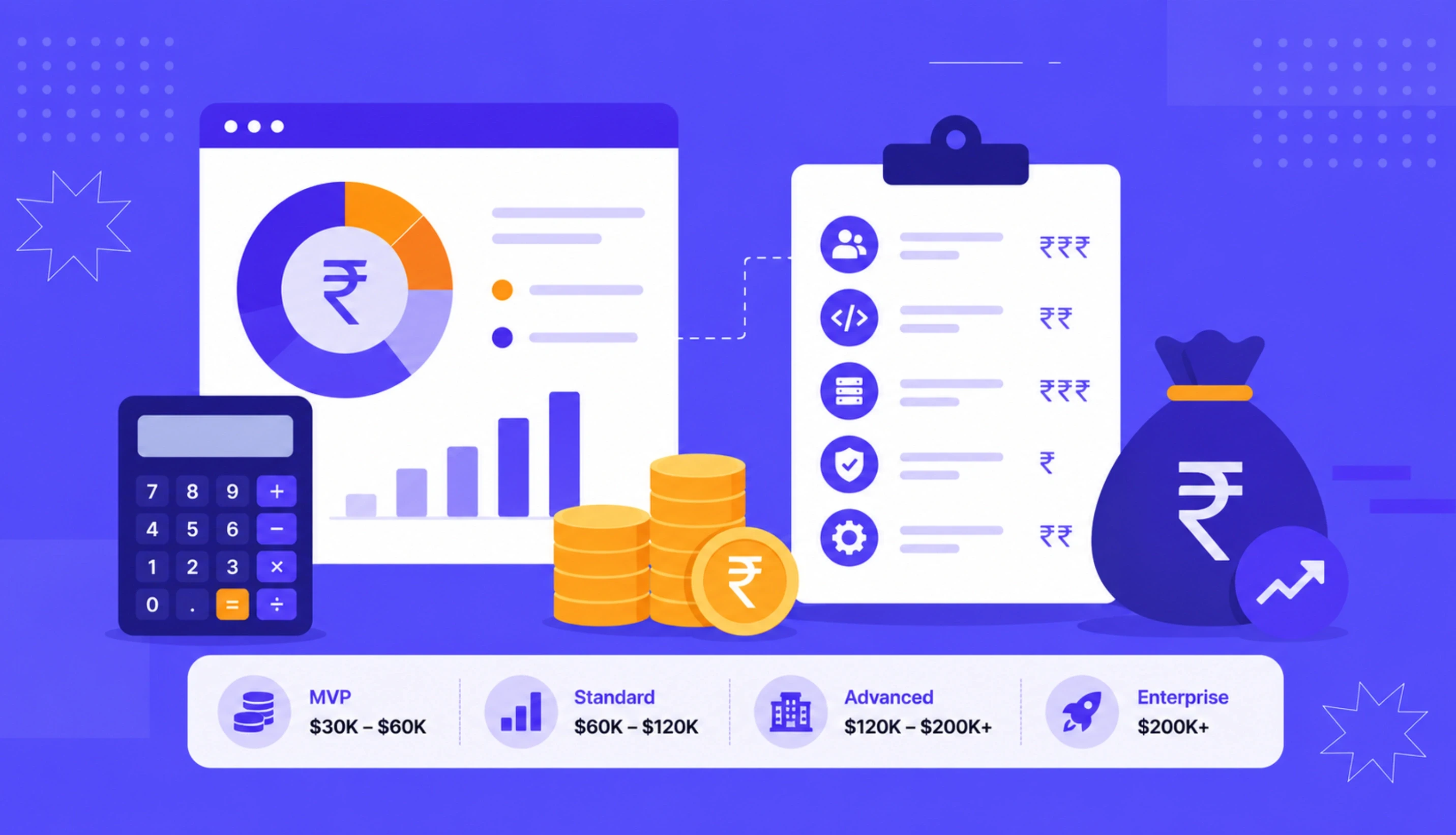
Digital lending platform development cost has three components: engineering team cost, third-party data provider cost (bureau, bank statement analysis, e-sign), and compliance cost (legal review, pen test, regulatory registration). Most cost guides cover only the first. All three must be budgeted before the first sprint begins; third-party costs alone can add $30,000–$80,000 to a lending platform launch budget.
Component | Tier | Key Details |
Product Scope | Tier 1 / 2 / 3 | MVP → Multi-product → Full-stack platform |
Team Size | Tier 1 / 2 / 3 | 4–5 → 6–8 → 10–14 engineers |
Monthly Team Cost | Tier 1 / 2 / 3 | $18K–28K → $28K–45K → $50K–75K |
In-House Cost | Tier 1 / 2 / 3 | $48K–70K → $75K–115K → $135K–195K |
Annual Savings | Tier 1 / 2 / 3 | $360K–504K → $564K–840K → $1M+ |
MVP Timeline | Tier 1 / 2 / 3 | 18–24 → 26–36 → 40–56 weeks |
Bureau API Cost | Tier 1 / 2 / 3 | $0.20–2 → volume pricing → direct license |
Bank Statement Cost | Tier 1 / 2 / 3 | $0.50–3 → volume pricing → custom pipeline |
Legal & Compliance | Tier 1 / 2 / 3 | $15K–40K → $30K–80K → $80K–200K+ |
Pen Test Cost | Tier 1 / 2 / 3 | $8K–20K → $15K–35K → $25K–60K |
What Every Acquaint Softtech Rate Includes
All assigned engineers (Laravel, Python ML, React Native, DevOps), no hidden staffing costs
Dedicated tech lead who owns architecture quality, code review, and sprint delivery
QA and security testing are integrated into every sprint, not billed as a separate engagement
Compliance architecture review and integration checklist produced before sprint 1
NDA and IP assignment executed at engagement start, client owns all code from day one
48-hour deployment for the first engineer and for any team scaling or replacement requirement
The rate the client pays is the rate, with no additional employer overhead on top
For the specific hire resources on a lending team: hire Laravel developers for the LOS and borrower portal, hire Python developers for the LMS and ML scoring engine, hire MERN stack developers for the admin and collections dashboard, hire DevOps engineers for the AWS ML infrastructure. Discovery workshop available via our discovery workshop services before any development commitment is required.
Lending Platform Compliance by Jurisdiction: What You Must Implement Before Launch
Digital lending compliance is the most jurisdiction-specific area of FinTech. A lending platform that is fully compliant in India has a completely different compliance architecture from one that is compliant in the UK or the US. The map below covers the four major markets Acquaint Softtech serves, with specific technical requirements for each.
Requirement | US / UK / India | Implementation |
Licensing | State licenses / FCA authorization / RBI NBFC registration | Start from Month 1 alongside development |
Credit Disclosure | TILA / SECCI / RBI Fair Practices | Mandatory screen before e-sign |
Adverse Action Notice | Required with the decline reasons | Automated notice generation |
Collections Conduct | Contact limits and compliance rules | Configurable workflow rules |
Data Retention | 25 months–10 years, depending on the region | Automated retention and deletion policies |
Ready to Build Your Lending Platform? First Engineer in 48 Hours.
Acquaint Softtech has delivered digital lending platforms, LOS, AI scoring engines, and LMS for clients in the US, UK, Australia, India, and the UAE. Send your brief. We return a team structure, compliance register outline, and cost estimate within 48 hours. You interview every engineer before the first sprint.
Frequently Asked Questions
-
How much does digital lending platform development cost in 2026?
Lending Platform Type
Estimated Team Cost
Timeline
Consumer Loan MVP
$18,000–$28,000/month
18–24 weeks
Multi Product Lending Platform
$28,000–$45,000/month
Depends on scope
Full Stack Lending Infrastructure
$50,000–$75,000/month
Enterprise scale
Third party integrations and compliance setup can add $30,000–$80,000 as a one time launch cost. In house hiring savings can range from $360,000 to over $1M annually depending on the platform tier.
-
What features does a digital lending platform need?
Compliance-mandatory at launch (cannot disburse without): KYC identity verification, bureau credit pull, e-sign loan agreement, TILA/APR disclosure (US), adverse action notice generator, EMI calculation engine using reducing balance method, payment allocation logic (fees → interest → principal), and grievance module.
Launch-recommended: bank statement alternative data scoring, automated collections escalation workflow, borrower dashboard with next EMI visibility, and repayment initiation integrated with LMS. Post-MVP: multiple loan types, loan restructuring automation, co-lending module (India), and regulatory reporting automation.
-
How long does digital lending platform development take?
A consumer loan MVP for a single market usually takes 18–24 weeks with a 4–5 engineer team. The process includes compliance setup, LOS development, scoring engine, LMS, borrower portal, testing, and launch. One of the biggest causes of delays is late bureau API approval, which should start in the first week alongside development.
-
What is the best tech stack for a digital lending platform?
Laravel (PHP) for the Loan Origination System and borrower portal, rapid workflow development with built-in queues for async bureau pulls. Python (Django + FastAPI) for the LMS engine and AI scoring endpoint, exact Decimal arithmetic for financial calculations, and sub-150ms ML inference. XGBoost for the credit scoring model with SHAP explainability for adverse action notices.
PostgreSQL for the loan ledger, ACID compliance with Decimal column types, never FLOAT for monetary amounts. React Native for the mobile borrower app. AWS (EKS + SageMaker + RDS + WAF) for ML model management and PCI/security-compliant infrastructure.
-
Do I need AI credit scoring, or can I use bureau scores only?
Bureau scores only are sufficient for markets where bureau coverage is high (US, UK) and your target borrowers are prime or near-prime. As soon as you target thin-file, no-file, or unbanked borrowers, MSMEs in India, gig workers in the US, or first-time borrowers in any market, bureau scores exclude 30–60% of your potential addressable market.
-
What is a Loan Management System (LMS) and why does it matter?
The LMS manages the entire loan lifecycle after disbursement by calculating EMIs, tracking payments, allocating repayments correctly across fees, interest, and principal, handling collections workflows, classifying NPAs, and generating repayment schedules and statements. A properly designed LMS is critical because incorrect payment allocation can lead to inaccurate balances and interest calculations, creating serious regulatory compliance risks.
-
What lending licence do I need to launch in India?
Consumer lending in India requires RBI NBFC registration. Minimum net owned funds: ₹2 Crore for NBFC-MFI (microfinance); ₹10 Crore for general NBFC. Application to RBI: 3–6 months processing time. The RBI also recognises co-lending models where an NBFC originates loans and a bank funds them, the FLDG (First Loss Default Guarantee) guidelines govern the financial structure and the technical implementation (escrow account, repayment routing, reporting).
For P2P lending: a separate NBFC-P2P licence with ₹2Cr minimum capital is required. Acquaint Softtech's discovery workshop produces the exact licensing roadmap for your specific loan product before any development begins.
-
Can I build a digital lending platform with an India-based development team?
Yes. The regulatory obligations sit with the licensed lending entity in the operating jurisdiction — not with the development partner. Acquaint Softtech delivers lending platform builds for clients in the US, UK, Australia, India, and the UAE, operating under each client's compliance framework. The standard protections: NDA and Data Processing Agreement before the first call, IP assignment to the client from day one, and a security-vetted development environment.
For lending platforms handling borrower PII and financial data, Acquaint Softtech signs a full Data Processing Agreement covering GDPR (EU/UK) or equivalent obligations. The first engineer deploys within 48 hours of engagement confirmation.
I help agencies and founders scale their tech teams with the right developers at the right time. At Acquaint Softtech, I focus on building long term partnerships and making remote hiring simple, predictable, and results driven. My goal is straightforward to help businesses grow faster with reliable dedicated developers.
Table of Contents
Get Started with Acquaint Softtech
- 13+ Years Delivering Software Excellence
- 1300+ Projects Delivered With Precision
- Official Laravel & Laravel News Partner
- Official Statamic Partner
Related Blog
.webp "The Complete Guide to FinTech Software Development in 2026")
The Complete Guide to FinTech Software Development in 2026
Complete guide to fintech software development 2026: all five verticals, compliance architecture, real build sequences, AI capabilities, and fintech development cost, from 1,300+ delivered projects.

Acquaint Softtech
May 6, 2026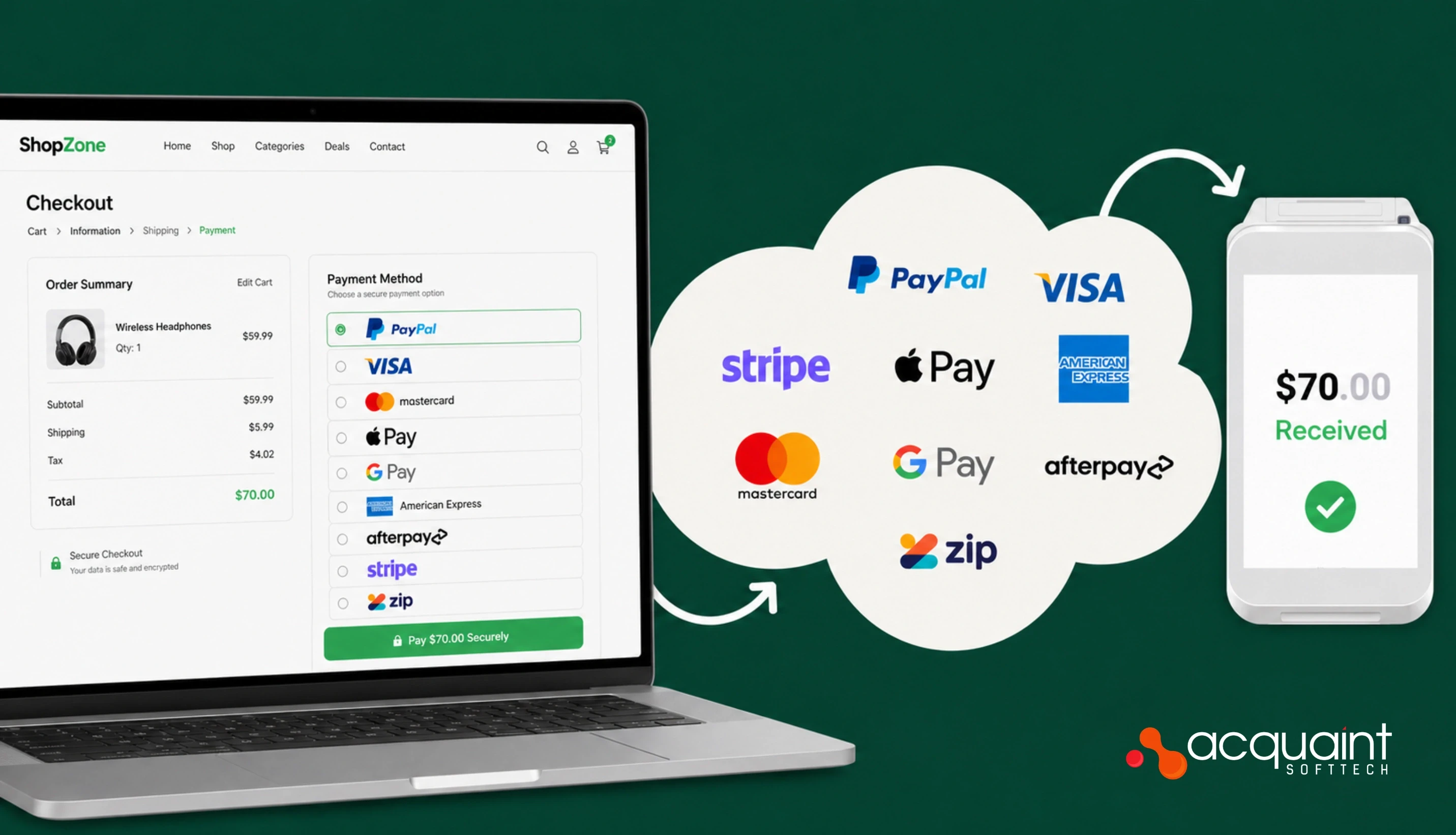
How Payment Gateways Work: Transaction Flow, APIs, and Settlement Explained
A payment gateway is not a checkout button. It is a 7-step transaction pipeline that authenticates, routes, scores, and settles every card payment in under 2 seconds. Here is exactly how it works.
Ahmed Ginani
May 11, 2026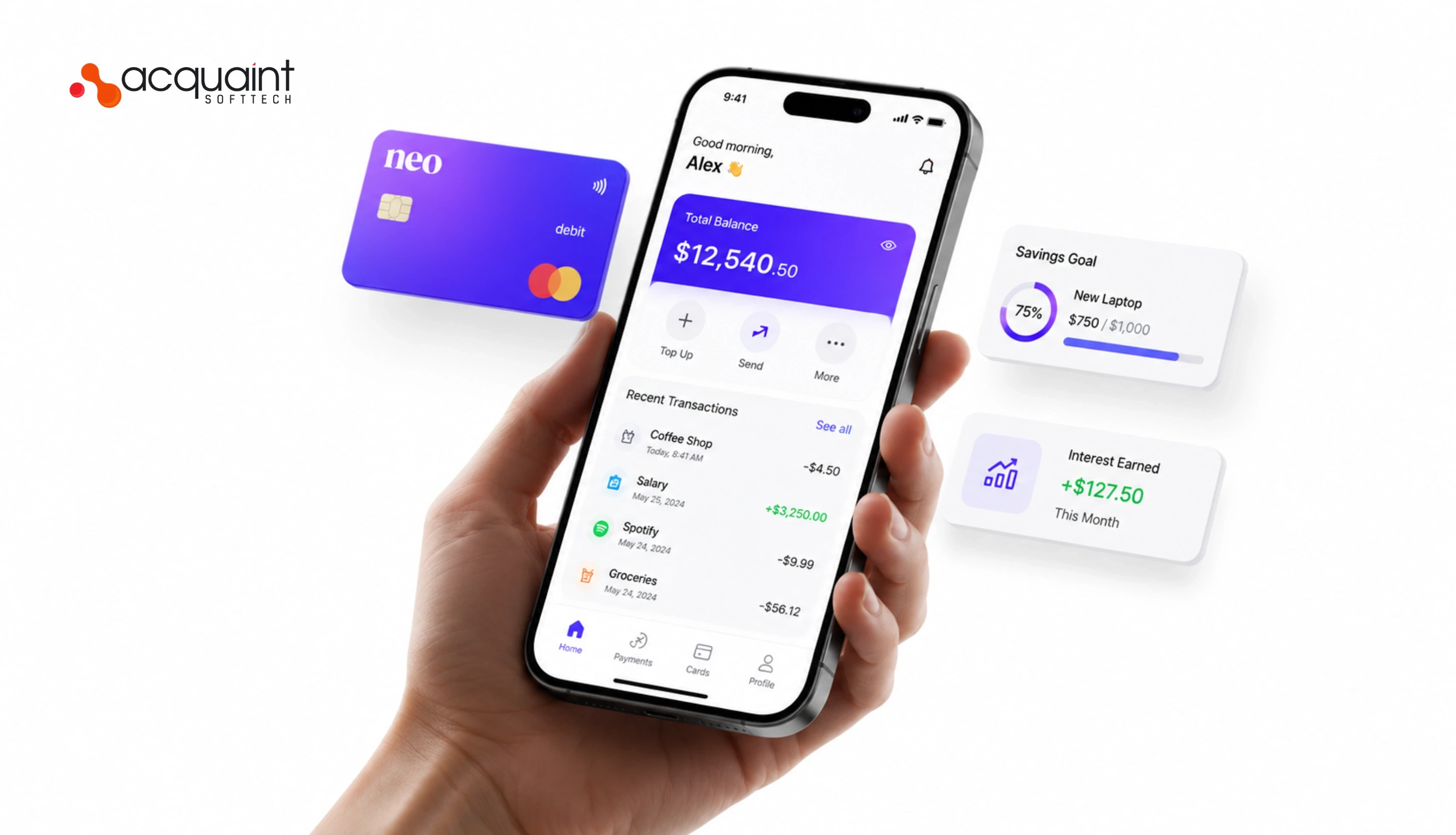
How to Build a Neo Bank: Licensing, Architecture, KYC AML, and Launch Roadmap
Building a neo-bank in 2026 starts with one decision that determines everything else: BaaS consumer or direct licence. This guide covers both paths, licensing, ledger design, KYC/AML, feature roadmap, tech stack, and real cost data.

Manish Patel
May 18, 2026India (Head Office)
203/204, Shapath-II, Near Silver Leaf Hotel, Opp. Rajpath Club, SG Highway, Ahmedabad-380054, Gujarat
USA
7838 Camino Cielo St, Highland, CA 92346
UK
The Powerhouse, 21 Woodthorpe Road, Ashford, England, TW15 2RP
New Zealand
42 Exler Place, Avondale, Auckland 0600, New Zealand
Canada
141 Skyview Bay NE , Calgary, Alberta, T3N 2K6