

FinTech App Development Cost in 2026: Real Pricing by Feature and Complexity
A fintech app typically costs $20,000–$300,000+ to build, depending on features and compliance. The biggest cost factors are app type, security, integrations, and regulatory requirements.

Ahmed Ginani
Ask three agencies what a fintech app costs and you will get three wildly different numbers, because fintech app development cost in 2026 is not one figure; it is a range that swings from $20,000 to over $300,000 depending on what you build, who you build it for, and where your team sits. The single most expensive mistake a founder can make is treating the headline range as a quote and discovering the real drivers compliance, integrations, and team location, only after the budget is set.
This guide gives you the real numbers by feature and complexity so you can scope and defend a budget with confidence. Acquaint Softtech's software product development services price and build fintech apps across payments, lending, neobanks, and investment for clients in the USA, UK, Europe, and UAE.

- You are a founder or product leader budgeting a fintech app and need real 2026 numbers.
- You want pricing broken down by app type, feature, and complexity, not a single vague range.
- You need to know which features and compliance items quietly consume most of the budget.
- You are comparing team locations and want to understand how rates change the total.
- You want to defend a budget to investors and avoid the hidden post-launch costs that sink projects.
The market makes the investment worth scoping carefully. The global fintech market crossed $340 billion in 2024 and keeps growing, drawing founders into a space where one technical mistake carries legal and financial consequences, according to 2026 market data. Acquaint Softtech has delivered 1,300+ software projects across 20+ industries in 13+ years, with 70+ in-house engineers, and clients in the USA, UK, Europe, Australia, and New Zealand deploy fintech products within 48 hours of a brief, at up to 40% lower cost than Western agencies. That combination is exactly what keeps a fintech budget realistic.
This article explains cost down by app type, by feature, by the compliance and security tax, by team location, and by stage, then covers the hidden post-launch costs and how to cut costs without cutting corners. For the broader context on building and scaling fintech products end to end, start with the complete guide to software product development in 2026, the master pillar this article supports.
Want a Real Quote, Not a Vague Range?
Acquaint Softtech scopes fintech app builds in a short discovery phase and delivers at up to 40% lower cost than Western agencies, at $25 to $49 per hour. Deploy your first fintech engineer within 48 hours of a brief.
The Quick Answer: Fintech App Cost Ranges in 2026

A fintech app costs between $20,000 and $300,000-plus in 2026, and where you land depends mostly on your stage and complexity rather than the feature wishlist. A validation MVP with one core flow runs $50,000 to $90,000, a production-ready app with full PCI DSS and KYC compliance runs $150,000 to $300,000, and an enterprise platform with complex ledgers and heavy regulation exceeds $350,000. Teams that hire dedicated developers who understand fintech compliance from day one avoid the costly rework that inflates these ranges.
The reason the range is so wide is that validating a payment idea requires fundamentally different investment than launching a regulated lending platform or scaling an existing fintech to enterprise. The architecture strategy you choose can affect the budget more than the feature list itself, which is why an API-first software product engineering approach pays back over the life of the product.
Treat cost as a sequence of strategic investments, not a fixed price tag: an MVP validates the idea, a mid-scale build supports growth, and an enterprise platform competes at scale. For a wider view of how to evaluate a fintech delivery partner before committing budget, this roundup of top MERN stack development companies in India, published on acquaintsoft.com, breaks down the criteria that matter.
Build Level | Timeline | Cost Range (US / UK / EU) |
Validation MVP | 3–6 months | $50K–90K / $45K–85K / $40K–80K |
Production + Compliance | 6–12 months | $150K–300K / $130K–280K / $120K–260K |
Enterprise Platform | 12–18+ months | $350K+ / $320K+ / $300K+ |
AI-Heavy Fintech App | +20–40% cost | Adds 3–6 months (all regions) |
How much does a fintech app cost to build in 2026?
In 2026, fintech builds scale fast with cost and complexity rising at each level. A Validation MVP takes about 3–6 months and sits around $40K–$90K depending on EU, UK, or US markets. A production-ready compliant app jumps to $120K–$300K+ over 6–12 months, while enterprise platforms cross $300K–$350K+ with 12–18+ months of build time. Add AI-driven capabilities like fraud detection or credit intelligence, and expect 20–40% higher investment and extra development time across all regions.
Cost by App Type: Payments, Lending, Neobank, and More
The app type sets the baseline range, because each category demands different financial workflows, compliance layers, and integrations. A budgeting or personal-finance app sits at the lower end, while a neobank or crypto exchange sits at the top. Acquaint Softtech's dedicated development teams scope each type to its real cost drivers rather than a generic per-app figure.
App Type | MVP to Full (USD) | Main Cost Driver |
Personal finance/budgeting | $45K to $270K | Data aggregation |
Payments/wallet | $50K to $250K | Gateway, PCI DSS |
Lending | $70K to $450K | Credit bureau, scoring |
Neobank | $80K to $300K+ | Core banking, KYC |
Investment / robo-advisor | $80K to $300K | Algorithms, brokerage |
Crypto / Web3 | $80K to $600K+ | Wallet custody, security |
Lending apps illustrate the spread well: a simple loan-offer MVP might be $70,000 to $180,000, while full lending with credit-scoring algorithms, bank-API checks, and extensive KYC and AML runs $180,000 to $450,000, driven mainly by credit-bureau integrations and regulatory review. The deeper mechanics of that category are covered in this guide on how to build a digital lending platform.
Neobanks and crypto exchanges sit highest because of core-banking integration, multi-account logic, and wallet custody and key management. Matching the build to the right category and scope before pricing is a core product engineering services task, since a mispriced category is the most common reason fintech budgets overrun.
Which type of fintech app costs the most to build?
Crypto and Web3 apps cost the most, often $80,000 to $600,000-plus, because of wallet custody, key management, and blockchain integration. Neobanks and full lending platforms follow, driven by core-banking integration, credit-bureau connections, and heavy compliance. Personal finance and budgeting apps cost the least, typically $45,000 to $270,000, because they rely mainly on data aggregation.
Cost by Feature: What Each Line Item Adds
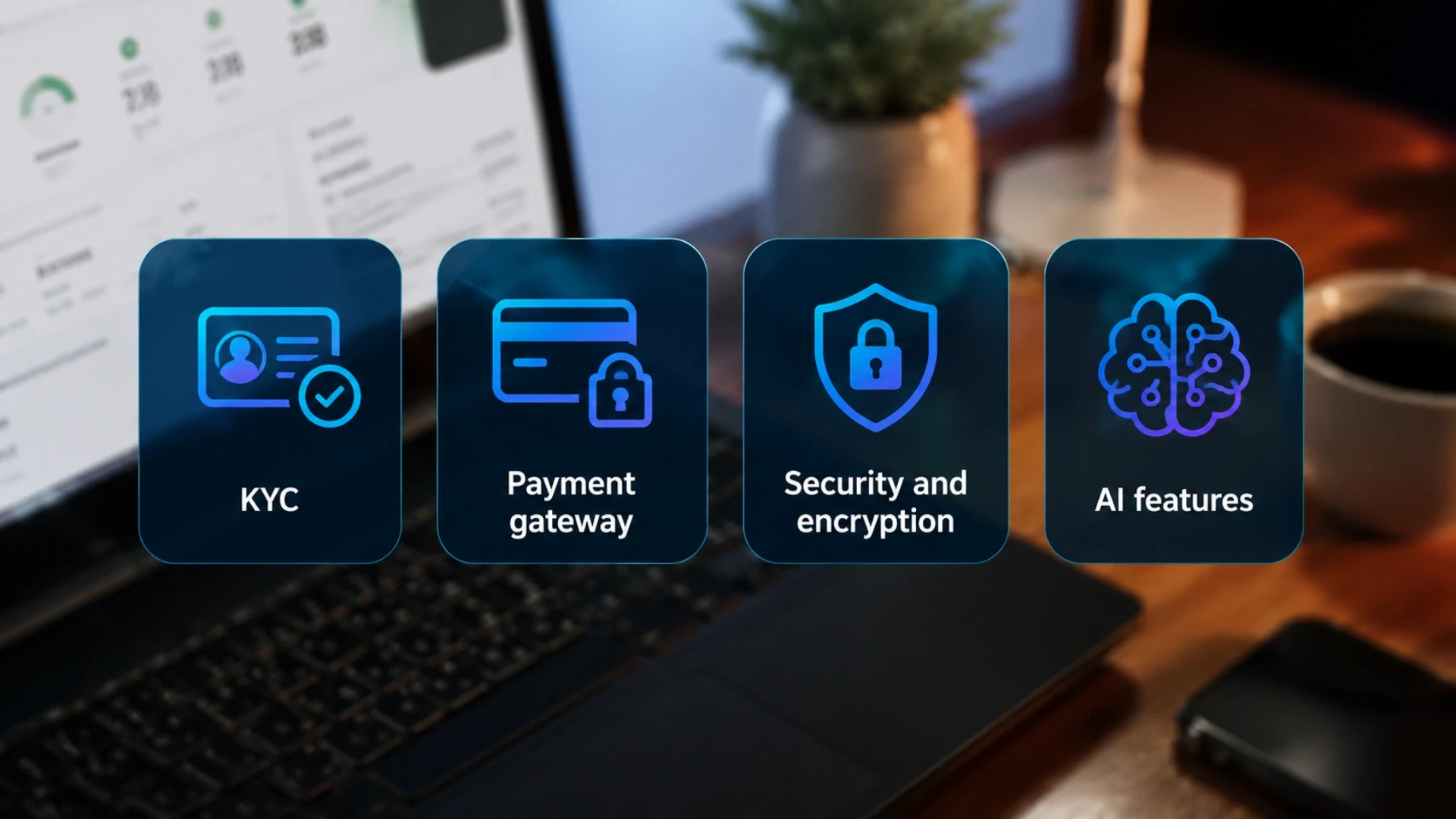
Once the app type sets the range, individual features define the final number, and a few line items eat far more of the budget than founders expect. User verification is the fastest-growing cost in 2026: integrating a KYC provider like Sumsub or Onfido costs $15,000 to $30,000 at the implementation stage, and that is only the starting point as biometric liveness gets more sophisticated. Acquaint Softtech's Python developers build these verification and decisioning features with the integrations priced in from the start.
KYC and identity verification: $15,000 to $30,000 to implement, plus ongoing per-verification fees, and rising as deepfake-resistant biometrics become standard.
Payment gateway integration: a significant build line plus PCI DSS scope, since handling card data raises the compliance burden sharply.
Security and encryption: basic auth adds little, but fraud detection, advanced encryption, and penetration testing add real cost.
AI features: fraud detection, robo-advisory, or predictive analytics add 20 to 40% on top, starting around $150,000 for an AI-heavy MVP.
The lesson is that the visible features, the screens and flows, are rarely what drives the bill; the invisible ones, verification, security, and integrations, are. Scoping these deliberately is where an experienced software development outsourcing partner saves the most money. The front-end patterns that keep the visible app affordable are explained in this complete MERN stack development guide.
What features cost the most in a fintech app?
The costliest features are usually invisible to users: KYC and identity verification ($15,000 to $30,000 to integrate plus ongoing fees), payment gateway integration with its PCI DSS scope, advanced security like fraud detection and penetration testing, and AI features such as fraud detection or robo-advisory, which add 20 to 40% on top. Visible screens and flows are rarely the main cost driver.
The Compliance and Security Tax: 30 to 40% of Budget

Compliance and security are the line items that separate fintech from ordinary app development, and together they can consume 30 to 40% of the total budget. PCI DSS for card data, KYC and AML for identity, GDPR or CCPA for privacy, and the encryption, fraud detection, and penetration testing that protect funds are all non-negotiable. Acquaint Softtech's DevOps engineers build this security and compliance layer correctly the first time, which is far cheaper than retrofitting it after a failed audit.
These layers carry both build cost and certification cost. A SOC 2 certification alone can run $10,000 to $100,000, and obtaining licenses such as an Electronic Money Institution or Virtual Asset Service Provider permit requires significant capital beyond the software. Treating compliance as a first-class part of the build, not a late add-on, is the discipline behind every regulated software product services engagement.
This audit-ready discipline across banking, card, and crypto operations is exactly what verified clients highlight about Acquaint Softtech, as covered in this overview of the company's Clutch recognition and verified results.
How much of a fintech app budget goes to compliance?
Compliance and security together typically consume 30 to 40% of a fintech app budget. This covers PCI DSS for card data, KYC and AML for identity verification, GDPR or CCPA for privacy, and security work like encryption, fraud detection, and penetration testing. Certifications add more: SOC 2 alone can cost $10,000 to $100,000, and licenses such as EMI or VASP require significant capital.
Cut Your Fintech Build Cost by Up to 40%
Acquaint Softtech delivers compliance-ready fintech apps at $25 to $49 per hour, up to 40% below US agencies, with 95% on-time sprint delivery and a 4.9/5 rating from 50+ verified Clutch reviews. Deploy your first fintech engineer within 48 hours of brief.
Cost by Team Location: Why Geography Moves the Total 2 to 3x

Where your developers sit affects the total more than almost any other single factor; the same project can swing two to three times in cost based on team location alone. A San Francisco or London team charges $150 to $250 per hour, while skilled India-based teams deliver comparable fintech work at a fraction of that, cutting total cost by up to 40%. Acquaint Softtech's React Native developers deliver fintech apps at $25 to $49 per hour without sacrificing compliance expertise.
The cheapest hourly rate is not the same as the best value. What matters is the combination of technical capability, fintech compliance expertise, and communication quality, because a team that understands PCI DSS and KYC from day one avoids the rework that erases any rate savings. This is the value proposition behind software development outsourcing to an experienced offshore partner rather than the lowest bidder.
Cross-platform frameworks compound the savings: React Native or Flutter share 70 to 80% of the codebase across iOS and Android, cutting development cost 30 to 40% versus building each platform natively. A real example of the savings is documented in this story on how a startup saved $60K a year on remote hiring.
Region | Hourly Rate (USD) | Notes |
US / UK (SF, London, NY) | $150 to $250 | Highest cost |
Western Europe | $80 to $150 | Mid-to-high |
Central / Eastern Europe | $50 to $80 | Mid-range |
India | $25 to $49 | Up to 40% saving |
How does team location affect fintech app cost?
Team location can move the total cost by two to three times. US and UK teams in cities like San Francisco or London charge $150 to $250 per hour, Central and Eastern Europe runs $50 to $80, and skilled India-based teams deliver comparable fintech work at $25 to $49 per hour, cutting total cost by up to 40%. The best value combines a competitive rate with genuine fintech compliance expertise.
Cost by Stage: MVP, Growth, and Enterprise
Cost depends less on features and more on your business stage, because a founder validating an idea needs a fundamentally different investment than someone launching with funding or scaling a regulated platform. The MVP stage proves one core workflow cheaply; the growth stage hardens it for real users and compliance; the enterprise stage scales it across products and markets. Acquaint Softtech's dedicated development teams scope each engagement to the stage, which keeps early spending lean and later spending justified.
Matching investment to stage is what prevents both under-building (a fragile app that cannot scale) and over-building (an expensive platform before the idea is proven). An MVP takes 3 to 6 months, a standard app 6 to 12 months, and an enterprise platform 12 to 18-plus months, and trying to compress those timelines usually raises cost rather than lowering it, a trade-off best managed through IT staff augmentation that scales the team with the stage.
The smartest founders start with the MVP to test the waters, then reinvest once unit economics are proven. The deployment and scaling patterns that carry an app from MVP to enterprise are detailed in this MERN stack app deployment guide.
How long does fintech app development take?
A fintech MVP takes 3 to 6 months, a standard production app takes 6 to 12 months, and an enterprise platform takes 12 to 18-plus months. The timeline depends on feature scope, compliance requirements, the number of integrations, and whether you build cross-platform or native. Compressing the timeline usually raises cost rather than lowering it.
The Hidden Costs Most Founders Miss
Most founders budget for initial development and forget the costs that arrive during and after launch, which is where projects typically overrun. These are not optional extras; they are the running cost of operating a regulated financial product. Acquaint Softtech’s product engineering services, including Hire MEAN Stack Developers, help surface these hidden components during the discovery phase so the budget reflects the true total cost of ownership, not just the initial build.
Third-party API fees: payment, KYC, credit-score, fraud, and banking APIs start around $500 per month and scale to $5,000-plus, often $2,000 to $8,000 monthly.
Cloud hosting: $2,000 to $10,000 per month for a production fintech app, rising with users and data.
Compliance maintenance: evolving rules like GDPR, CCPA, and PCI DSS add 10 to 20% to the annual budget, plus annual audits of $10,000 to $50,000.
Maintenance: ongoing maintenance typically runs 15 to 20% of the initial build cost per year.
Across these, expect $30,000 to $100,000-plus per year in post-launch costs for a real product. Planning for them upfront is the difference between a sustainable fintech and one that runs out of runway after launch, which is why an experienced development outsourcing partner builds them into the plan from the start. The deployment and scaling choices that keep these running costs predictable are detailed in this MERN stack app deployment guide.
What are the hidden costs of fintech app development?
Hidden post-launch costs include third-party API fees ($2,000 to $8,000 per month), cloud hosting ($2,000 to $10,000 per month), compliance maintenance that adds 10 to 20% to the annual budget, plus audits of $10,000 to $50,000, and ongoing maintenance at 15 to 20% of the build cost per year. Together these run $30,000 to $100,000-plus annually, and most founders under-budget for them.
How to Cut Fintech App Cost Without Cutting Corners
Lowering fintech app cost does not mean picking the cheapest vendor or stripping features; in this niche, that approach leads to higher costs later through rework and compliance fixes. The real levers are scope, architecture, and team, applied with discipline. Acquaint Softtech's software product development services apply all three to keep the budget lean without compromising on the parts that cannot be cut.
Scope to one core flow: the cheapest fintech app is the one scoped correctly; start with one workflow, not ten features.
Build cross-platform: React Native or Flutter cuts cost 30 to 40% versus separate native iOS and Android builds.
Use third-party APIs: integrate proven KYC, payment, and credit providers rather than rebuilding compliance from scratch.
Choose the right team location: a skilled offshore team with fintech expertise cuts cost up to 40% without adding rework risk.
Invest in compliance early: getting PCI DSS and KYC right the first time is far cheaper than fixing a failed audit.
The single biggest saving is scoping correctly, because every feature you defer to a validated phase two is money not spent on an unproven idea- the discipline behind every product engineering services engagement. The framework decision that keeps a cost-efficient, maintainable build is compared in this guide on Laravel vs MERN stack for startups, published on acquaintsoft.com.
How can I reduce fintech app development cost?
Reduce cost by scoping to one core workflow for the MVP, building cross-platform with React Native or Flutter to save 30 to 40%, integrating proven third-party KYC and payment APIs instead of rebuilding compliance, choosing a skilled offshore team with fintech expertise to save up to 40%, and investing in compliance early to avoid expensive rework. The cheapest fintech app is the one scoped correctly.
How Acquaint Softtech Prices and Builds Fintech Apps

Acquaint Softtech has delivered 1,300+ software projects across 20+ industries in 13+ years, with 70+ in-house engineers across React Native, Laravel, Python, Node.js, and DevOps. Fintech app engineering is a core capability, spanning payments, lending, neobanks, investment, and crypto for clients in the USA, UK, Europe, and UAE, at $25 to $49 per hour, up to 40% below Western agencies. Engagements begin with a discovery and scoping phase that turns a vague range into a real, defensible estimate before development starts.
Example: SuperFi, a UK fintech app built MVP-first
SuperFi Finance, a UK client, engaged Acquaint Softtech to build a fintech app helping users manage credit card debt, calculate a time-to-debt-free figure, and earn rewards for timely payments. The team built an MVP first, designing a minimalist single-page interface for the core workflow, then expanded into a full website and mobile app with credit card management, a debt-free calculator, expert credit-score guidance, and an administrator panel, all delivered within a tight deadline. This MVP-first approach, scoping one core flow before scaling, is exactly the cost-control strategy this guide recommends, and the full project is documented in the SuperFi fintech app case study.
Verified client review (Clutch): Gerhard Drobits, CEO of Hybopay Finance in Dublin, said in a verified Clutch review that Acquaint Softtech understood the constraints from the start and designed around them, completing every milestone on time and adapting promptly to changes mid-project, the kind of predictable delivery that keeps a fintech budget on track.
Read all 50+ verified client reviews, where Acquaint Softtech holds a 4.9/5 rating with Premier Verified status, and for context on how the company ranks among engineering partners, see this list of the best software product engineering companies in 2026, published on acquaintsoft.com.
The Acquaint Softtech 4-Phase Fintech Pricing Framework
Discovery and scoping (weeks 1 to 2): map every feature, integration, and compliance item to turn a range into a fixed, defensible estimate.
MVP build (months 1 to 4): build one core workflow with the compliance it legally needs, cross-platform to control cost.
Validate and harden (months 4 to 8): test with real users, harden security and compliance, and price phase two against proven demand.
Scale (months 8 onward): add features, markets, and integrations as unit economics justify the investment.
Get Your Fintech App Scoped and Priced
Stop guessing at the budget. Acquaint Softtech turns a vague range into a real estimate in a short discovery phase. Join 200+ tech companies who scaled with Acquaint Softtech: 4.9/5 on Clutch from 50+ verified reviews, 95% on-time delivery, up to 40% cost savings, and fintech engineers deployed within 48 hours of brief.
Frequently Asked Questions
-
How much does a fintech app cost to build in 2026?
Category
Cost (2026)
Validation MVP
$50K – $90K
Production App (with KYC & PCI DSS)
$150K – $300K
Enterprise Platform
$350K+
AI Features Add-on
+20% – 40%
-
What features does a fintech app need, and what do they cost?
A fintech app needs user verification (KYC, $15,000 to $30,000 to integrate plus ongoing fees), secure authentication, a payment gateway with PCI DSS scope, account and transaction management, security like encryption and fraud detection, and an admin dashboard. AI features such as fraud detection or robo-advisory add 20 to 40% on top. The invisible compliance and security features drive most of the cost.
-
How long does fintech app development take?
A fintech MVP takes 3 to 6 months, a standard production app takes 6 to 12 months, and an enterprise platform takes 12 to 18-plus months. The timeline depends on feature scope, compliance requirements, the number of integrations, and whether you build cross-platform or native. Compressing the timeline usually raises cost rather than lowering it.
-
What is the best tech stack for a fintech app?
The best fintech tech stack pairs React Native or Flutter for cross-platform apps (saving 30 to 40% versus native) with Laravel or Node.js for the backend, Python for AI and risk models, and PostgreSQL for auditable financial data. It leans on third-party KYC, payment, and credit APIs to lower cost, with security built on OAuth 2.0, encryption, and PCI DSS-aligned design.
-
Why is fintech app development more expensive than other apps?
Fintech apps cost more mainly because of security and regulation. They require intense encryption, fraud detection, KYC and AML, PCI DSS, and audits that ordinary apps do not, and these compliance and security layers alone can consume 30 to 40% of the budget. One bug in a financial app can cause legal liability and lost funds, so the engineering bar is far higher.
-
What are the hidden costs of a fintech app?
Cost Area
Monthly / Annual Cost
Third-party APIs
$2K – $8K / month
Cloud Hosting
$2K – $10K / month
Compliance Maintenance
+10–20% annually
Compliance Audits
$10K – $50K / year
App Maintenance
15–20% of build cost/year
-
How can I reduce fintech app development cost?
Scope to one core workflow for the MVP, build cross-platform with React Native or Flutter to save 30 to 40%, integrate proven third-party KYC and payment APIs instead of rebuilding compliance, choose a skilled offshore team with fintech expertise to save up to 40%, and invest in compliance early to avoid rework. The cheapest fintech app is the one scoped correctly.
I help agencies and founders scale their tech teams with the right developers at the right time. At Acquaint Softtech, I focus on building long term partnerships and making remote hiring simple, predictable, and results driven. My goal is straightforward to help businesses grow faster with reliable dedicated developers.
Table of Contents
Get Started with Acquaint Softtech
- 13+ Years Delivering Software Excellence
- 1300+ Projects Delivered With Precision
- Official Laravel & Laravel News Partner
- Official Statamic Partner
Related Blog
.webp "How to Build a Digital Lending Platform: Complete 2026 Guide")
How to Build a Digital Lending Platform: Complete 2026 Guide
A digital lending platform is four workflow systems that must all work flawlessly: origination, underwriting, disbursement, and servicing. This guide builds each one, with AI credit scoring, compliance mapping, and real 2026 cost data.
Ahmed Ginani
May 25, 2026
Top 10 Software Product Engineering Companies in 2026
As businesses continue to shift toward digital-first strategies, partnering with a software product development company to build scalable and reliable software products has become essential for staying competitive. Companies across industries now rely on product engineering partners to accelerate innovation, shorten development cycles, and deliver high-quality digital experiences that meet evolving user expectations.
With increasing investments in cloud, AI, and platform modernization, demand for product engineering expertise is growing rapidly. Recent market insights indicate the global engineering services market is projected to surpass $1 trillion by 2030, highlighting the critical role engineering partners play in driving product innovation and long-term growth.

Zubair Pateljiwala
March 7, 2025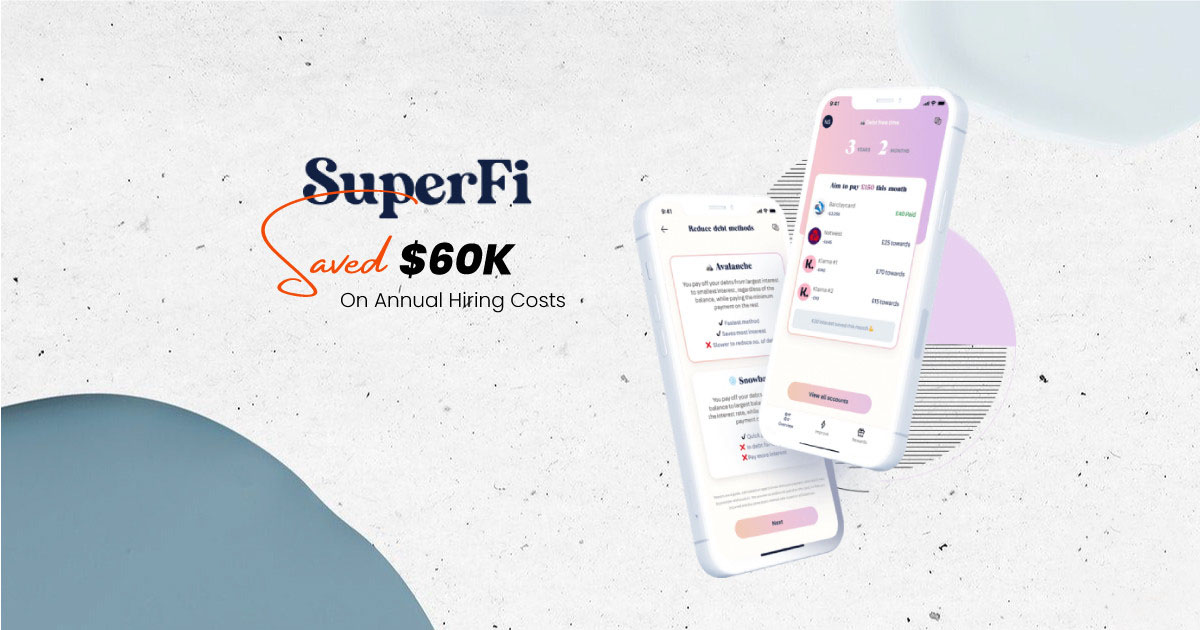
SuperFi Saved $60K On Annual Hiring Costs - Here Is How They Did It
Develop your software solution at an affordable cost, with more flexibility and better focus. Find out how!

Mukesh Ram
December 8, 2023India (Head Office)
203/204, Shapath-II, Near Silver Leaf Hotel, Opp. Rajpath Club, SG Highway, Ahmedabad-380054, Gujarat
USA
7838 Camino Cielo St, Highland, CA 92346
UK
The Powerhouse, 21 Woodthorpe Road, Ashford, England, TW15 2RP
New Zealand
42 Exler Place, Avondale, Auckland 0600, New Zealand
Canada
141 Skyview Bay NE , Calgary, Alberta, T3N 2K6