

Laravel Microservices and API-First SaaS: Why Scalable Companies Are Going Modular in 2026
Scalable SaaS companies are moving to modular, API-first Laravel because it improves team velocity, enables independent scaling, isolates failures, and supports partner and mobile integrations. Most start with a modular monolith and use the strangler pattern to reach microservices only where the business benefits justify it.

Kalpesh Rajora
As a Project Manager at Acquaint Softtech, an Official Laravel Partner recognized by Laravel's creator Taylor Otwell, the question I hear most from SaaS founders and CTOs is this: why is our Laravel app getting harder to change with every release? A change that took an afternoon two years ago now takes a sprint. One small feature touches ten places. A single bad deploy can take the whole product down. The team is bigger, but it ships less. The cause is rarely code quality and almost always the shape of the architecture. The way out is modular, API-first Laravel, and this is exactly the kind of architecture work our Software Product Development team does day to day.

- CTOs and founders whose Laravel application is getting harder to maintain as the team and codebase grow
- Teams whose developers are stepping on each other's work and whose releases are slowing down
- Product leads who want to scale specific parts of a SaaS without scaling the entire application
- Engineering teams unsure whether to choose a modular monolith or microservices architecture
- Companies that need a clean API-first foundation for mobile apps, partner integrations, and AI tools
- Teams that want to modernize Laravel architecture without a risky full rewrite
This is not a fad. The industry consensus, captured well in Martin Fowler's widely cited writing on microservices, is that you earn the right to split a system by first building clear internal boundaries, then extracting services only where they pay off.
Done right, the payoff is real: faster teams, independent scaling, and a product other systems can build on. Done wrong, you trade one big problem for many small ones. That is why getting the design right early matters, and where a short Discovery Workshop pays for itself before a single service is split out.
What API-First, Modular Laravel Actually Means
Two ideas sit underneath the trend, and they are easy to mix up. Getting them straight makes every later decision clearer. Modular means your application is split into well-defined domains, billing, accounts, notifications, and reporting, each owning its own data and logic, with strict rules about how they talk to each other.
API-first means you design the API contract for each capability before building the screens that use it, so your web app, your mobile app, and any partner all talk to the same documented API. Nothing reaches into the database behind the scenes.
Modular monolith vs microservices: the honest comparison
Most teams should not jump straight to microservices. Here is the trade-off in plain terms.
Factor | Single monolith | Modular monolith | Microservices |
Team speed at scale | Slows as it grows | Fast, clear ownership | Fast, fully independent |
Operational complexity | Low | Low to medium | High |
Independent scaling | No | Limited | Yes, per service |
Failure isolation | Weak | Moderate | Strong |
Best for | Early MVPs | Most growing SaaS | Large, high-scale platforms |
For most products, a modular monolith is the sweet spot, and the safest place to start before extracting services. Teams without spare senior capacity for this often hire Laravel developers who have drawn these boundaries before, or hire developers to see how modular builds scale in real projects across modern web ecosystems.
Monolith or Microservices? Ask a Senior Laravel Architect.
Tell us how your Laravel app is structured today. A senior engineer will tell you whether a modular monolith or microservices fits, and map your domain boundaries. This conversation takes 15 minutes.
Why Scalable SaaS Companies Are Shifting to Modular Laravel
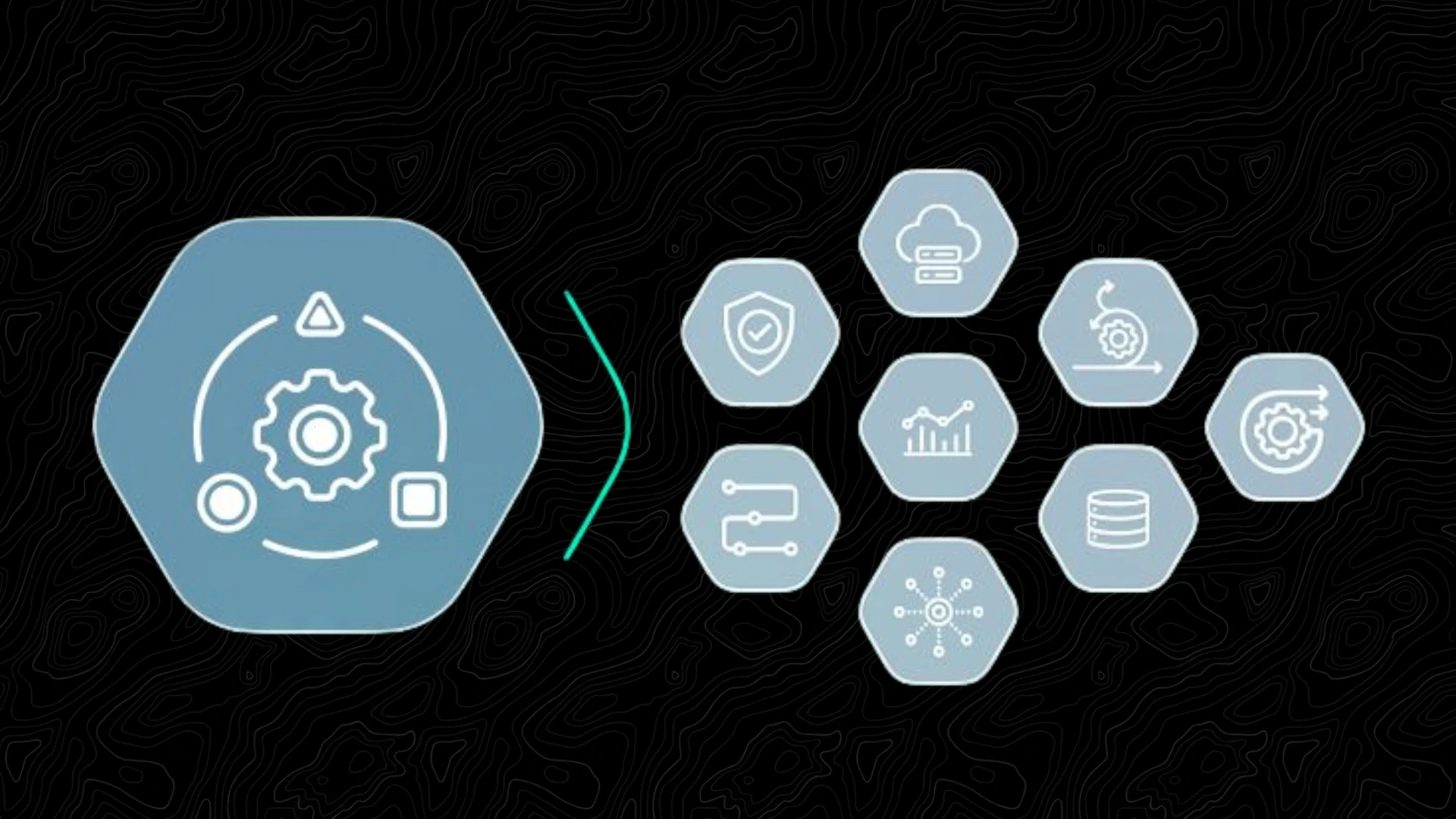
Four pressures push companies this way once they pass product-market fit, and each maps to a real business cost.
First, teams stop blocking each other: with clear module boundaries, the billing squad and the onboarding squad ship in parallel instead of queuing behind one shared codebase.
Second, you scale only what is hot, adding capacity to a hammered reporting engine without paying to scale the entire app.
Third, a failure stays contained, so a bad day in notifications does not take checkout down with it.
Fourth, your product becomes a platform: an API-first design means partners, a mobile app, and AI tools can all build on one stable, documented interface.
Realizing these gains is mostly an execution problem, which is why growing teams lean on Staff Augmentation to add senior Laravel hands for the modularization push without long-term overhead.
How Laravel Supports an API-First, Modular Architecture
This is where Laravel quietly shines. Almost everything you need to build modular, API-first services is first-party or core ecosystem, so you are not bolting on foreign tools.
Laravel tool | What it gives your modular, API-first build |
Sanctum | Lightweight token and SPA authentication for your APIs and first-party clients. |
Passport | Full OAuth2 server for partner and third-party API access with scopes. |
API Resources | Clean, versionable JSON contracts that hide your database from API consumers. |
Queues + Horizon | Move work between modules asynchronously and scale workers per workload. |
Events + listeners | Let modules react to each other without tight coupling. |
Reverb | First-party websockets for real-time features across services. |
Octane | Long-lived workers for high-throughput API services that need low latency. |
Rate limiting | Per-tenant and per-client API limits to protect shared services. |
A typical modular Laravel SaaS keeps each domain behind its own API, authenticates with Sanctum internally and Passport for partners, passes work between domains through queued jobs and events, and exposes everything through versioned API Resources.
Standing up this backbone safely is specialist work, so most teams add a DevOps engineer alongside the Laravel developers to handle deployment, scaling, and observability per service.
If your app is on an older Laravel release, Version Upgrade Services get you onto a current version where these tools are first-party.
How to Move From a Monolith Without a Risky Rewrite
The biggest fear is a big-bang rewrite, and it is the right fear, because rewrites usually run late and are risky. You do not need one. The proven approach is the strangler pattern: grow the new modular structure around the old monolith and retire the old parts gradually.
Step 1: Find the seams
Audit the codebase and map the natural domain boundaries and the riskiest coupling. This is where you decide what becomes a module and in what order.
Step 2: Put an API in front
Route traffic through an API layer so callers no longer reach into internals. Now you can change what is behind the API without breaking anyone.
Step 3: Extract one module at a time
Pull out the highest-value or highest-pain domain first, give it a clean API and its own data ownership, and route to it. Repeat. Each step ships independently, so there is no single scary cutover.
Step 4: Keep it backward compatible
Old workflows keep working throughout. This is exactly how regulated platforms modernize without downtime, as the case study below shows. Because each step is contained, teams often run this with a small Dedicated Software Team owning the migration while product work continues in parallel, and founders who want a senior second opinion on sequencing use Virtual CTO Services before committing.
Planning a Migration? Get a Free Monolith-to-Modular Map.
Tell us how your Laravel app is structured today. A senior engineer sends a one-page migration map: your natural module boundaries, the safest order to extract them, the API and auth plan, and a rough effort estimate per module, so you can move without a rewrite.
Proof point: we modernized a regulated fintech platform serving 200+ active clients with zero downtime.
Case Study: A Regulated Fintech Platform, Modernized Into Modular Laravel
This is a verified project from our portfolio. It shows the strangler pattern applied under the hardest conditions: a live, regulated platform serving 200+ active clients that could not go down or break compliance for a moment.
Stage | What happened |
Situation | A regulated fintech platform with live regulatory reporting pipelines serving 200+ active clients. Legacy backend with audit gaps, access ambiguities, and scalability risks, where any downtime or compliance slip was unacceptable. |
Action | A full audit of backend flows first, then incremental modernization across six workstreams: refactoring legacy components into maintainable Laravel services, encrypted handling of sensitive data, immutable audit logs tied to every user and system action, stronger API authentication and authorization, strict role-based access guards, and backward compatibility with existing reporting throughout. |
Result | A strengthened, immutable audit trail with no loss of transaction throughput, and a compliance review passed that had previously failed, delivered incrementally with the platform live the entire time. |
The lesson maps directly onto this article. The team did not rewrite. They put clean boundaries and APIs around a live monolith and modernized it piece by piece, exactly the modular, API-first path, while keeping a regulated system running and compliant. To scope a modernization like this for your platform, Software Development Outsourcing delivers it against a fixed plan.
Why Acquaint Softtech Approaches Laravel Microservices This Way
We rarely recommend jumping straight into microservices. After 200+ Laravel projects across SaaS, fintech, healthcare, and enterprise platforms, we have seen that most scaling problems are caused by unclear boundaries, not by a lack of services. That is why our approach starts with a modular monolith: we help clients define domain boundaries, establish API contracts, and separate business capabilities before introducing operational complexity.
When a specific domain genuinely needs independent deployment or scaling, we use the strangler pattern to extract it safely. For teams that need dedicated implementation help, you can also hire developers to support scaling in a structured way. Our goal is not to create more services; it is a system that stays maintainable, scalable, and cost-effective as your company grows.
What Modular Laravel SaaS Costs in the US, UK, EU, and Australia
Cost depends mostly on scope and on where your team sits. Two products with the same features can differ 3x in price based only on the region of the developers. The figures below are indicative 2026 ranges for a senior Laravel build, to help you budget, not a quote.
Region | Senior Laravel rate (per hour) | Modular SaaS MVP | Full modular platform |
United States | $100 to $180 | $110k to $200k | $250k to $500k+ |
United Kingdom | £80 to £140 | £90k to £160k | £200k to £400k+ |
European Union | €75 to €135 | €85k to €150k | €190k to €380k+ |
Australia | A$110 to A$190 | A$150k to A$260k | A$330k to A$650k+ |
Acquaint (offshore) | $22/hr or $3,200/mo | $35k to $70k | $90k to $200k |
The pattern holds across regions: an Official Laravel Partner working offshore typically delivers the same scope at 50 to 70% less than US, UK, EU, or Australian local rates, with the same seniority. Here is where the budget actually goes.
Phase | Share of build | What it covers |
Discovery + architecture | 10 to 15% | Domain boundaries, API contracts, data ownership |
Core modules + APIs | 45 to 55% | Building each domain behind a clean, versioned API |
Auth, billing, multi-tenancy | 15 to 20% | Sanctum/Passport, subscriptions, tenant isolation |
DevOps + observability | 10 to 15% | Per-service deploy, scaling, monitoring |
QA + hardening | 10% | Testing, security, rate limiting, load checks |
To get accurate cost and architecture estimates, many SaaS companies hire developers with experience in Laravel microservices and modular architecture before starting a migration. After launch, Support and Maintenance keep each module secure, updated, and scalable as traffic grows.
Ready to Go Modular? Get a Costed Modular Laravel Plan.
Book a 30-minute call with a senior Laravel engineer. You leave with a clear plan: modular monolith or microservices, your module map and API design, the migration order, a timeline, and a fixed price for your region and scope.
From $22/hour or $3,200/month · Matched in 24 hours · Engineer ready in 48 hours
I am Kalpesh Rajora, a Project Manager at Acquaint Softtech with 8+ years of experience leading Laravel and full-stack delivery teams. I specialise in sprint planning, client communication, and shipping complex software projects on time across distributed teams. I write about the delivery side of software: how projects are scoped, where timelines slip, and what keeps remote teams aligned.
Table of Contents
Get Started with Acquaint Softtech
- 13+ Years Delivering Software Excellence
- 1300+ Projects Delivered With Precision
- Official Laravel & Laravel News Partner
- Official Statamic Partner
Related Reading
.webp "How Laravel Deployment Turns Slow, Risky Releases Into 5-Minute Deploys")
How Laravel Deployment Turns Slow, Risky Releases Into 5-Minute Deploys
Laravel deployment improves scalability and team productivity through automated, zero-downtime pipelines on managed infrastructure like Laravel Cloud, cutting release time from 45 minutes to under 5 and freeing up 20–35 engineer hours monthly.
Kalpesh Rajora
June 24, 2026
How Laravel 13 Helps Developers Build Faster PHP Enterprise Applications in 2026
Laravel 13 (Released March 17, 2026) redefines modern PHP by making AI, modern syntax, standardized APIs, and passwordless security first-party, while keeping upgrades painless: No upgrade-breaking changes and about a ten-minute move from Laravel 12. That combination removes the last reasons enterprises hesitated to standardize on PHP.
Kalpesh Rajora
July 1, 2026
AI-Native Laravel Development: How Laravel Lets You Ship AI-Ready SaaS Without Rebuilding Your Stack
Laravel became AI-native in 2025 to 2026 with three first-party packages: the AI SDK, Boost, and MCP. Here is how a Laravel-native team adds secure, multi-tenant AI features in days, not months, with a Clutch-verified case study.
Kalpesh Rajora
July 3, 2026India (Head Office)
203/204, Shapath-II, Near Silver Leaf Hotel, Opp. Rajpath Club, SG Highway, Ahmedabad-380054, Gujarat
USA
7838 Camino Cielo St, Highland, CA 92346
UK
The Powerhouse, 21 Woodthorpe Road, Ashford, England, TW15 2RP
New Zealand
42 Exler Place, Avondale, Auckland 0600, New Zealand
Canada
141 Skyview Bay NE , Calgary, Alberta, T3N 2K6