

How Laravel 13 Helps Developers Build Faster PHP Enterprise Applications in 2026
Laravel 13 (Released March 17, 2026) redefines modern PHP by making AI, modern syntax, standardized APIs, and passwordless security first-party, while keeping upgrades painless: No upgrade-breaking changes and about a ten-minute move from Laravel 12. That combination removes the last reasons enterprises hesitated to standardize on PHP.

Kalpesh Rajora

- You are wondering whether PHP is still a safe long-term bet in 2026.
- You run a Laravel 12 or older app and are unsure if or when to upgrade.
- You need AI features but do not want to bolt on a separate stack.
- Your buyers or board ask about security, SSO, and modern standards.
- You want enterprise-grade Laravel without enterprise-grade risk.
The question every cto is asking: is php still a serious choice for a new enterprise app in 2026?
That is the question I get from technical founders and CTOs almost every week, usually phrased as “is PHP dead,” “should we still build on Laravel,” or “will this look dated to our board in two years?” It is a fair worry, and Laravel 13 is the clearest answer yet. It is also why teams hire Laravel developers with confidence again: the framework just made a quiet but decisive move toward modern, AI-ready, enterprise-grade PHP.
Here is what makes it quiet. Laravel 13 shipped on March 17, 2026 with No code-breaking changes and a roughly ten-minute upgrade path. There was no drama, no rewrite, no scary migration. And yet, underneath that calm release, the framework added a stable AI SDK, modern PHP attributes, first-party JSON:API support, passkey authentication, and native vector search. Stability on the surface, a step change underneath. That combination is exactly what enterprises have been waiting for.
This is not vendor spin. The official Laravel 13 release notes lay out each of these additions and confirm the minimal-upgrade promise. Laravel also remains the most widely used PHP framework and routinely tops developer surveys, so this is the mainstream of server-side web development moving forward, not a niche bet.
So the honest answer to the board is: PHP in 2026, on Laravel 13 and PHP 8.3, is a modern, fast, secure, AI-ready platform. The one real prerequisite is being on PHP 8.3, which is where Version Upgrade Services earn their place. The rest of this article shows exactly what changed, why it matters for enterprise adoption, what to do about it, and what it costs across regions.
- Laravel 13 was released on March 17, 2026, announced by Taylor Otwell at Laracon EU 2026.
- It requires PHP 8.3 as a minimum and ships with No API-breaking changes from Laravel 12; most apps upgrade in about 10 minutes.
- The Laravel AI SDK became production-stable on the same day, giving a first-party, provider-agnostic API for text, agents, embeddings, audio, images, and vector search.
- New in 13: PHP Attributes (about 15 locations), first-party JSON:API resources, passkey authentication, PreventRequestForgery, Queue::route(), and a Reverb database driver.
- Laravel 12 receives bug fixes until August 2026 and security fixes until February 2027, so there is no forced rush.
EXPERT INSIGHT “For most teams, Laravel 13 is the upgrade you can start on a Tuesday and trust by Friday. The framework was never the hard part. The hard part is deciding to move and having a partner who has already done it on live, regulated systems. That is the worry we take off your plate.” Kalpesh Rajora, Project Manager, Acquaint Softtech |
What actually shipped in Laravel 13

What is new in Laravel 13?
Laravel 13 is not a flashy rewrite; it is a set of carefully chosen additions that move the framework into AI-first, standards-first territory. The headline is the Laravel AI SDK going production-stable, which is why AI Development Services teams treat 13 as the version where AI features stop being bolt-ons and become part of the framework.
Here is the practical list, in plain terms, of what changed and why each one matters.
Feature | What it does | Why it matters |
AI SDK (stable) | Provider-agnostic API: text, agents, embeddings | Ship AI in PHP; swap providers in one line |
PHP Attributes | Optional attribute syntax (~15 places) | Cleaner, modern classes |
JSON:API resources | First-party JSON:API responses | Standard APIs for mobile and partners |
Passkey auth | Passwordless login via Fortify | Phishing-resistant sign-in |
PreventRequestForgery | Origin-aware CSRF protection | Stronger than token-only |
Queue::route() | Queue routing per job, in one place | Cleaner infrastructure |
Reverb DB driver | Real-time without a Redis dependency | Lower operational cost |
Native vector search | whereVectorSimilarTo with pgvector | Semantic search built in |
The thread running through all of it is that AI moved from the edges into the core. Semantic search, embeddings, and agents are now query-builder and first-party concerns, which is why teams increasingly Hire AI/ML Engineers to put these capabilities to work rather than leave them unused.
If you build SaaS, these additions compound: JSON:API for clean integrations, the AI SDK for product features, passkeys for enterprise sign-in. Our Laravel SaaS development guide shows how they fit a real product.
Why “zero breaking changes” is the real headline
Is the Laravel 13 upgrade hard?
For most well-maintained Laravel 12 apps, no. The upgrade takes around ten minutes, and tools like Laravel Shift automate most of it. The one real prerequisite is PHP 8.3, and getting there cleanly is exactly what Upgrade Services handle: runtime first, then the framework. If teams need additional backend expertise during such transitions, they often also work with specialists like hire python developers.
This matters more than any single feature. Enterprises do not fear new versions; they fear risky migrations. A major release that adds AI, modern syntax, and stronger security without forcing a rewrite removes the usual reason to delay. The places to check before promoting to production are narrow and known: custom CSRF flows now under PreventRequestForgery, cache serialization and naming defaults, and any hand-rolled framework integrations.
That predictability is why a managed upgrade beats a rushed one. Running the audit, the compatibility review, and the tests before touching production is steady, low-drama work, and keeping it that way over time is what Support and Maintenance is for.
It also pays to choose who does it carefully. The difference between a verified Official Laravel Partner and a generic agency shows up most in migrations, and our guide on the Official Laravel Partner vs any agency explains how to check in 30 seconds.
Why Laravel 13 accelerates enterprise adoption
Is Laravel good for enterprise applications?
Increasingly, yes, and 13 is why. Enterprises evaluate a stack on a short, strict checklist: security, integration, AI readiness, upgrade risk, and total cost. Laravel 13 answers each one, which is why Software Product Development on Laravel is now a defensible choice in front of a procurement team, not just an engineering one.
Here is the enterprise checklist mapped to what Laravel 13 actually delivers.
Enterprise need | Laravel 13 answer | Business impact |
AI in the product | First-party AI SDK | AI features, no vendor lock-in |
Clean integrations | First-party JSON:API | Faster partner and mobile work |
Strong authentication | Passkeys via Fortify | Phishing-resistant sign-in |
Hardened security | PreventRequestForgery, PHP 8.3 | Fewer attack surfaces |
Low upgrade risk | No backward compatibility breaks | Predictable, lower TCO |
Real-time, cheaper | Reverb database driver | Live features, less infra |
For larger organizations, the decision is rarely only technical; it needs someone who can defend the architecture and roadmap to leadership. That is where Virtual CTO Services help, translating Laravel 13's strengths into a plan a board will sign off on.
And because the framework scales, the same choice holds from MVP to enterprise load. Our Laravel SaaS architecture blueprint shows the path from a first release to hundreds of thousands of users without a rewrite.
“Is PHP dead?” The data says the opposite

Is PHP still relevant in 2026?
Very much so. The “PHP is dead” line has been repeated for a decade while PHP quietly powered a large share of the web. In 2026, PHP 8.3 brings typed class constants, a more useful json_validate(), cleaner readonly properties, and JIT gains, and Laravel 13 builds modern, AI-ready tooling on top. This is why Laravel developers remains one of the most in-demand searches in web hiring, not a fading one. If you’re exploring talent options for modern web builds, you can also look at hire mean stack developers.
The honest nuance: PHP 8.2 and earlier are aging out, and that is the version of “dated PHP” the critics are right about. Laravel 13 requiring PHP 8.3 is the framework drawing a clear line: modern PHP only. Teams still on old runtimes feel the pain; teams on 8.3 with Laravel 13 are on a fast, type-safe, well-supported platform.
The practical takeaway for a growing team is that capacity is easy to find and easy to scale. When a release or a roadmap needs more senior hands, Staff Augmentation adds vetted Laravel engineers quickly, which is not true of every framework people chase as “newer.”
If you are starting fresh rather than upgrading, the modern PHP story is even simpler: build new on Laravel 13 from day one. Our guide to building an MVP with Laravel walks through doing exactly that.
Should you upgrade now, and how?
Should I upgrade to Laravel 13?
For new projects, start on 13. For existing apps, there is no emergency, Laravel 12 is supported into 2027, but the upgrade is cheap and the gains are real, so most teams should plan it this year. The cleanest first step is a short scoping exercise, which is what a Discovery Workshop provides: a readiness check and a low-risk plan.
The sequence that works: confirm PHP 8.3 across every server first, then run a pre-upgrade audit (package compatibility, custom CSRF flows, cache behavior), then upgrade the framework with Shift, then adopt the new features deliberately, starting with the AI SDK and JSON:API where they add value. Do the runtime move before the framework move and the rest is usually uneventful.
For multi-server or containerized estates, the runtime and deployment side needs care, which is where a DevOps engineer alongside the Laravel team keeps the upgrade smooth across environments.
Want to see how this plays out on real systems before you commit? Our Laravel project case studies document modernizations delivered on live, regulated platforms.
Case study: an enterprise property platform, modernized on Laravel
Modern Laravel is easiest to judge by enterprise outcomes, not feature lists. Here is a verified one from our portfolio: Heimstaden, a large residential property group, needed to run a portfolio at scale where generic property software fell short. We built the operational layer in Laravel, the kind of build that Software Development Outsourcing delivers end to end.
Rather than a long write-up, here is the change in plain before-and-after terms.
Area | Before | After (Laravel operational layer) |
Unit updates | Inconsistent channels, no trail | Tracked with proper audit trails |
Tenant requests | Scattered across email chains | Managed end to end in one system |
Payment exceptions | Found manually, often late | Surfaced before they became disputes |
Cross-team visibility | Limited and fragmented | Unified view across the portfolio |
The pattern is the enterprise story in miniature: not a flashy rebuild, but a stable, well-bounded Laravel layer that removed manual work and gave leadership a single source of truth. Running it as an ongoing relationship, rather than a one-off, is why teams use Software Dedicated Teams for work like this.
It is the same calm, low-risk delivery Laravel 13 now makes even easier. You can read this and other verified outcomes, with the technical decisions behind them, in our Laravel project case studies.
How and why Acquaint Softtech approaches Laravel 13
Why our approach starts with your risk, not the hype
Laravel 13 hands you the tools; a partner turns them into outcomes without drama. Our approach starts from your risk, not the feature list, which is why teams hire developers from us hire mern stack developers for upgrades they cannot afford to get wrong.
We treat the framework as the easy part and your live system as the thing to protect. Every engagement begins with an audit, moves in small reversible steps, and keeps the app running and compliant throughout. It is the same method behind the regulated platform in the case study above: no big-bang cutover, no surprises in production.
How Laravel and the right partner solve your problem together
Think of it as two halves of one solution. Laravel 13 solves the technical problem, modern, AI-ready, secure PHP, and a partner solves the delivery problem, doing it safely on your real system. For larger organizations, Virtual CTO Services add the leadership to defend the plan to your board.
Our promise is plain: profiles in 24 hours, engineers onboard in 48, and a fixed, costed plan before any code changes, so you always know the risk and the price up front.
After the move, we stay on as a long-term partner through Support and Maintenance, keeping your app patched and current as new minor versions land.
What Laravel 13 work costs in the US, UK, EU, and Australia
How much does a Laravel 13 upgrade or build cost?
Cost depends on scope and, heavily, on where your team sits. A basic upgrade can be a few hours; an enterprise audit, test, and feature-adoption project is larger. The figures below are indicative 2026 ranges to help you budget, and they are why so many teams hire remote developers offshore for the same seniority at a lower rate.
First, senior Laravel rates and a typical Laravel 12 to 13 upgrade by region.
Region | Senior Laravel rate (per hour) | Typical Laravel 12 to 13 upgrade |
United States | $100 to $180 | $2k to $18k |
United Kingdom | £80 to £140 | £1.6k to £14k |
European Union | €75 to €135 | €1.7k to €15k |
Australia | A$110 to A$190 | A$2.5k to A$22k |
Acquaint (offshore) | $22 / hr or $3,200 / mo | $600 to $5k |
Indicative 2026 ranges. A well-maintained small app sits near the bottom of each range; an enterprise estate with custom CSRF flows, many packages, and feature adoption sits near the top. The pattern holds across regions: an Official Laravel Partner working offshore typically delivers the same scope at 50 to 70% less than US, UK, EU, or Australian local rates, with the same seniority.
New builds follow the same regional gap. Here is what different Laravel 13 engagements typically involve, at offshore rates, and after launch support keeps the app patched and current as new minor versions land.
Engagement | What it includes | Indicative cost (offshore) |
Upgrade + AI SDK adoption | Audit, upgrade, one AI feature | $4k to $15k |
New Laravel 13 MVP | Core product, auth, one integration | $30k to $70k |
Enterprise Laravel 13 build | Multi-module, JSON:API, SSO, AI | $90k to $220k+ |
To put real numbers against your scope and region, the fastest path is a costed plan from a verified partner. Our guide on the Official Laravel Partner vs any agency shows how to confirm you are paying for genuine Laravel expertise, not a label.
Frequently Asked Questions
-
When was Laravel 13 released?
Laravel 13 was released on March 17, 2026, announced by Taylor Otwell at Laracon EU 2026. It requires PHP 8.3 as a minimum and shipped with no disruptive changes from Laravel 12.
-
What are the main new features in Laravel 13?
A production-stable AI SDK, optional PHP Attributes in about 15 places, first-party JSON:API resources, passkey authentication, the PreventRequestForgery security middleware, Queue::route() for queue routing, a Reverb database driver, and native vector search with PostgreSQL and pgvector.
-
Is the Laravel 13 upgrade difficult?
For most well-maintained Laravel 12 apps, no. It is about a ten-minute upgrade, and Laravel Shift automates much of it. The one real prerequisite is moving to PHP 8.3 first. Check custom CSRF flows, cache behavior, and any hand-rolled integrations before production.
-
Is PHP still relevant in 2026?
Yes. PHP 8.3 is modern, fast, and type-safe, Laravel remains the most widely used PHP framework, and Laravel 13 adds first-party AI and standardized APIs. The dated reputation belongs to PHP 8.2 and earlier, which Laravel 13 leaves behind.
-
Is Laravel good for enterprise applications?
Yes. Laravel 13 maps directly to the enterprise checklist: first-party AI, JSON:API integrations, passkey and hardened security, low upgrade risk, and a clear path from MVP to high scale, all on a framework with deep talent availability.
-
Do I have to upgrade to Laravel 13 right now?
No. Laravel 12 receives bug fixes until August 2026 and security fixes until February 2027. There is no emergency, but because the upgrade is cheap and the gains are real, most teams should plan it this year. New projects should start on 13.
-
Why choose Acquaint Softtech for Laravel 13 work?
We are an Official Laravel Partner recognized by Taylor Otwell, with 200+ Laravel projects in 13+ years and verified modernization of live, regulated platforms. Engineers onboard in 48 hours at $22 per hour or $3,200 per month.
I am Kalpesh Rajora, a Project Manager at Acquaint Softtech with 8+ years of experience leading Laravel and full-stack delivery teams. I specialise in sprint planning, client communication, and shipping complex software projects on time across distributed teams. I write about the delivery side of software: how projects are scoped, where timelines slip, and what keeps remote teams aligned.
Table of Contents
Get Started with Acquaint Softtech
- 13+ Years Delivering Software Excellence
- 1300+ Projects Delivered With Precision
- Official Laravel & Laravel News Partner
- Official Statamic Partner
Related Reading
.webp "How Laravel Deployment Turns Slow, Risky Releases Into 5-Minute Deploys")
How Laravel Deployment Turns Slow, Risky Releases Into 5-Minute Deploys
Laravel deployment improves scalability and team productivity through automated, zero-downtime pipelines on managed infrastructure like Laravel Cloud, cutting release time from 45 minutes to under 5 and freeing up 20–35 engineer hours monthly.
Kalpesh Rajora
June 24, 2026
Custom Laravel Application vs Off-the-Shelf SaaS: Build vs Buy 2026
The build vs buy decision costs companies more when they get it wrong than almost any other technical choice. Here are the 7 questions that map your situation to the right answer with real 2026 numbers.

Manish Patel
April 28, 2026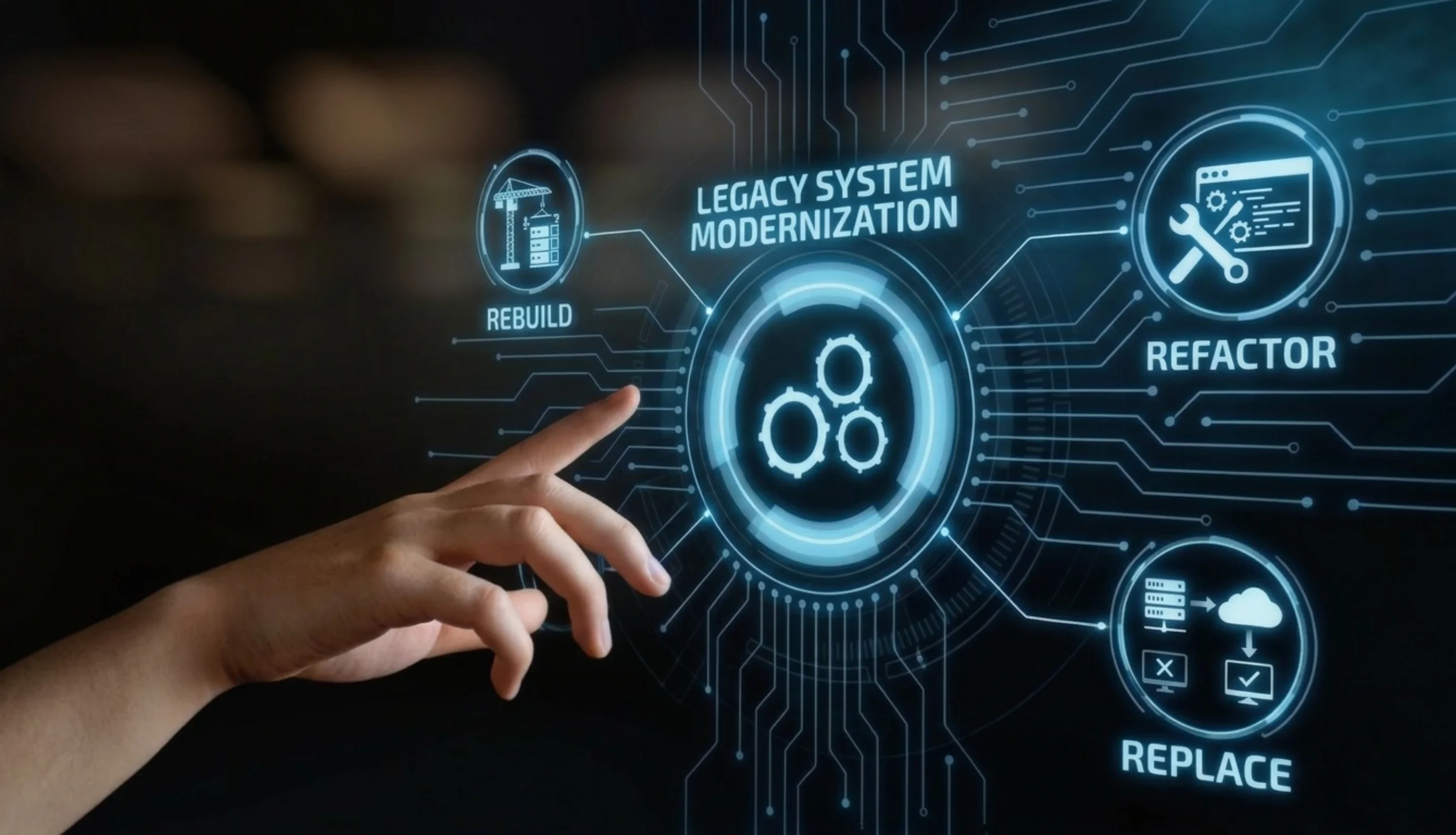
Legacy System Modernization: Rebuild vs Refactor vs Replace: How to Choose
Every legacy modernization conversation starts the same way: should we rebuild from scratch, refactor what we have, or replace it with something off-the-shelf? Here is the decision framework that makes that choice concrete.
Manish Patel
April 20, 2026India (Head Office)
203/204, Shapath-II, Near Silver Leaf Hotel, Opp. Rajpath Club, SG Highway, Ahmedabad-380054, Gujarat
USA
7838 Camino Cielo St, Highland, CA 92346
UK
The Powerhouse, 21 Woodthorpe Road, Ashford, England, TW15 2RP
New Zealand
42 Exler Place, Avondale, Auckland 0600, New Zealand
Canada
141 Skyview Bay NE , Calgary, Alberta, T3N 2K6