

Laravel Version Upgrade Cost in 2026: What to Budget When Moving From v9, v10, or v11 to v12
A Laravel upgrade that would have cost $8K three months ago can cost $26K when a security event forces it. Here is what makes upgrade cost grow and how to budget correctly before it becomes urgent.

Ahmed Ginani
A client called us in January 2026. Their Laravel 8 application had a security vulnerability flagged during a compliance review. They had known about the upgrade need for about eight months. They had put it off because the quoted cost had felt high at the time.
The upgrade that would have cost $8,000 eight months earlier cost $26,000 by the time it was forced. Not because the work changed. Because the codebase had accumulated more dependencies, the team had added integrations built on deprecated packages, and now the upgrade had to happen under time pressure rather than in a planned sprint.

- CTOs and founders who know their Laravel application is running on an older version and want to understand the real cost before getting a vendor quote
- Engineering leads evaluating whether to upgrade now or wait and what that decision actually costs
- Product teams who have received an upgrade quote and want to understand if the number is reasonable
- Businesses planning their Q2 or Q3 development budget and need to know whether a version upgrade should be in it
This article covers what drives Laravel upgrade cost, what the version gap means for your budget, the decision between upgrading versus rebuilding, and how to spot an upgrade quote that is underscoping the work. If you want to understand why staying on the official Laravel Partner network matters for upgrade quality, the Laravel Partner versus agency comparison covers the technical standards difference in detail.
Why Laravel Version Upgrades Cost What They Do

Most people think a version upgrade is a find-and-replace operation. Update the composer.json, fix a few breaking changes, run the tests, done. For a small application with minimal dependencies that is occasionally true. For a production SaaS or enterprise application, it almost never is.
The cost of a Laravel upgrade comes from four things, and only one of them is the Laravel framework itself.
1. The Laravel framework changes
Between major versions, Laravel deprecates functions, changes how service providers are structured, updates the directory layout, and modifies how routing, middleware, and configuration files work. Each of these requires code changes. The number of changes scales with how many versions you are jumping.
2. Package and dependency updates
Most Laravel applications use 20 to 50 composer packages. Each one has its own compatibility range. Some will have a compatible version available. Some will have been abandoned. Some will require a breaking change in your own code to use the updated version. This is where most upgrade projects find their unexpected hours.
3. Breaking changes in your own code
If your application has custom service providers, facades, or uses internals of the Laravel framework rather than its public API, those patterns often break between major versions. Finding and fixing these requires thorough testing rather than just reviewing the changelog.
4. Test coverage gap
An application with comprehensive test coverage can validate an upgrade much more quickly than one without. If your test suite covers 30% of your codebase, the upgrade team has to manually test the remaining 70%. That is hours, not minutes, per scenario.
Cost by Version Gap: What Each Jump Actually Requires
The version gap between where your application is now and where it needs to be is the single biggest variable in upgrade cost. Here is what each major path typically requires in 2026.
Laravel 10 to Laravel 12 Effort: Low to medium | Risk: Low |
Main work: Primarily configuration and package compatibility updates. Laravel 11 and 12 changed the application skeleton but the framework internals are relatively stable. Most well-maintained applications upgrade in 2 to 5 weeks. |
Laravel 9 to Laravel 12 Effort: Medium | Risk: Medium |
Main work: Three-version jump requires working through the cumulative breaking changes across v10, v11, and v12. PHP 8.1 minimum for v10, PHP 8.2 for v11 and v12. Package compatibility review becomes significant at this gap. |
Laravel 8 to Laravel 12 Effort: High | Risk: High |
Main work: Four-version jump. Laravel 8 was released in 2020. Applications on v8 often use packages that are now end-of-life or have had major API changes. The upgrade frequently surfaces code patterns that worked in v8 but break in v10 onward. Test coverage gaps are common. |
Laravel 6 or 7 to Laravel 12 Effort: Very high | Risk: Very high |
Main work: Five or six version gaps. Applications this old often have dependencies that have no v12-compatible equivalent. This category frequently tips into a partial rebuild rather than a pure upgrade. The decision framework in Section 4 below helps clarify when that line has been crossed. |
Upgrade Cost Ranges by Application Size and Version Gap
These are offshore rates for Laravel upgrades handled by a senior developer with Laravel specialisation. The ranges include testing, documentation updates, and a deployment to staging. They do not include database migrations for schema changes or major package replacements that require feature rewrites.
Small app, 1 to 2 version gap $2,000 to $6,000 | Under 20 routes, minimal custom packages, basic authentication. Most of the work is configuration and composer. 2 to 4 weeks. |
Medium SaaS, 1 to 2 version gap $6,000 to $14,000 | 30 to 80 routes, 20 to 40 packages, custom service providers, API layer. Package compatibility review is significant. 4 to 8 weeks. |
Medium SaaS, 3 to 4 version gap $14,000 to $30,000 | Same application size but the cumulative breaking changes and abandoned packages add significant work. Some integrations may require rewrites. 8 to 14 weeks. |
Large enterprise app, any version gap $25,000 to $70,000+ | 100+ routes, 40+ packages, multi-tenant architecture, custom framework extensions. Each version gap adds compounding complexity. Timeline 12 to 24 weeks. |
Not Sure Where Your Application Sits on This Range?
Send us your current Laravel version, a rough count of your routes and packages, and whether you have an active test suite. We will give you a realistic estimate range within 24 hours. No lengthy discovery engagement required for a ballpark. We have assessed hundreds of Laravel codebases and know where the cost drivers are before the first line of code is touched.
What Is Not in Most Upgrade Quotes
Just as API development quotes often miss large categories of work, Laravel upgrade quotes frequently exclude items that then show up as change requests. Know what to look for before you accept a quote.
PHP version upgrade | Laravel 11 and 12 require PHP 8.2+. If your server is running PHP 7.x or 8.0, the upgrade includes a server-level PHP update. This has its own compatibility implications, particularly for any packages with PHP version constraints. |
Package replacements | When a package you rely on has been abandoned or has no compatible version for your target Laravel release, the quote should include the work to replace or rewrite that functionality. Many quotes assume all packages have compatible versions. They rarely all do. |
Test coverage additions | If your application has low test coverage, a thorough upgrade requires writing tests to validate the post-upgrade behaviour. This is often scoped separately or left out entirely, which transfers the risk of regression bugs to production. |
Deployment pipeline updates | CI/CD pipelines, deployment scripts, and staging environment configurations often need to be updated alongside the application itself. These are frequently left out of upgrade quotes. |
Code review and cleanup | Good upgrade practitioners also address the technical debt that the upgrade surfaces: deprecated patterns, unused routes, outdated approaches. This is worth asking about because it determines whether the upgraded application is clean or just functional. |
Upgrade or Rebuild? The Decision Framework
At a certain point, upgrading a Laravel application is more expensive than rebuilding the relevant parts from scratch. Here is how to make that call before you commit to either path.
Upgrade is the right path when
The application's core architecture is sound and you want to preserve the existing data model and business logic
The version gap is 1 to 2 versions and the package ecosystem is mostly maintained
Your team has context on the codebase and can manage the transition carefully
The application has meaningful test coverage that validates the upgrade
You need to preserve the upgrade path for security patches going forward
Partial rebuild is worth evaluating when
The version gap is 4 or more versions and significant packages have no compatible replacements
The original architecture has accumulated technical debt that makes the upgrade more expensive than it should be
Key integrations were built on packages that are now abandoned and need replacing regardless
Test coverage is below 20% and writing tests for the upgrade would cost almost as much as rebuilding cleaner code
The application has grown significantly since it was first built and the architecture no longer fits the current product
The rule of thumb we use: if the estimated upgrade cost exceeds 60% of the estimated cost to rebuild the same functionality with a clean architecture, the rebuild conversation is worth having. The rebuild typically produces better outcomes because you get a clean codebase, updated architecture, and full test coverage rather than a patched legacy system. Our Laravel development services team can run this comparison for your specific application if you are uncertain which path makes sense.
The Cost of Waiting: How Upgrade Prices Compound
The single most common decisions that doubles Laravel upgrade cost is waiting. Not because Laravel changes faster when you wait. Because your application does.
Every month you run on an older version, your developers add dependencies. Some of those dependencies will have compatibility issues with newer Laravel versions. Some will be abandoned before you get to the upgrade. The new feature your team shipped in February uses a package that has no v12 support. The integration you added in March is built on an internal Laravel API that changed in v11.
The upgrade cost in month 1 reflects the state of the application when the upgrade decision was made. The upgrade cost in month 9 reflects nine more months of dependencies accumulated on top of a legacy version.
- Month 0 (upgrade decided but deferred): $6,000 to $10,000 estimated
- Month 3 (first deferral, backlog of new integrations): $10,000 to $16,000
- Month 6 (one abandoned package, growing test coverage gap): $16,000 to $24,000
- Month 9 or later (security event forces urgent upgrade): $24,000 to $40,000+
The increase is not the upgrade getting harder. It is the codebase getting further from a clean upgrade path.
The best time to upgrade is when the cost is lowest, which is before the complexity accumulates.
For context on what a well-maintained Laravel architecture looks like and why it matters to upgrade cost, the Laravel SaaS architecture guide covers the structural decisions that make codebases easier to upgrade over time. And for the broader question of why Laravel remains the right choice for long-term product development, the article on why businesses choose Laravel covers the ecosystem and support case.
Know Your Current Laravel Version. Not Sure What the Upgrade Would Cost?
We handle Laravel version upgrades from v6 to v12 across applications of all sizes. The assessment is straightforward: current version, package count, test coverage level, and whether you have had to work around any known breaking changes already. From that we can give you a real cost range and a recommended path before you commit to anything. Most assessments take 24 to 48 hours.
How Acquaint Softtech Handles Laravel Version Upgrades
As an Official Laravel Partner we are required to stay current with every major Laravel release. That means our upgrade team works with the latest version before client projects reach it. We know where the breaking changes land, which packages need attention, and where upgrade projects typically find their unexpected hours.
Our upgrade process follows five stages regardless of version gap.
Codebase audit | Before any code changes, we audit the current application: Laravel version, PHP version, full package list with support status, test coverage percentage, and any known deprecated patterns. This produces a scope document that is the basis for a fixed-range quote. |
Dependency resolution | We identify every package that needs updating and every package that requires a replacement. For replacements we scope the replacement work before we begin the upgrade so there are no scope surprises mid-project. |
Staged upgrade path | For multi-version gaps we upgrade one major version at a time, validating at each stage rather than jumping directly to the target. This makes problems easier to isolate and fix. |
Test suite validation | We run existing tests at each stage. For applications with low coverage, we add tests for critical paths as part of the upgrade rather than leaving coverage gaps for production to discover. |
Staging deployment and handover | The upgraded application is deployed to a staging environment identical to production. We document every change made, every package replaced, and every deprecated pattern addressed. You receive a clean handover document alongside the upgraded codebase. |
All our Laravel developers go through a 15-point technical assessment before placement. For upgrade projects specifically, we assign developers who have handled the same version path before. You can hire Laravel developers for a dedicated upgrade engagement or run the upgrade as a scoped project through our version upgrade service. Both paths are available depending on whether you want direct developer access or a managed delivery model.
FAQ's
-
How much does a Laravel version upgrade cost in 2026?
It depends primarily on the version gap, application size, and package ecosystem health. A small application upgrading one or two versions costs $2,000 to $6,000. A medium SaaS with a three to four version gap costs $14,000 to $30,000. A large enterprise application with any significant version gap runs $25,000 to $70,000 or more. The most important cost variable is usually not the application size but how many of your current packages require replacements.
-
How long does a Laravel upgrade take?
A single version gap on a small application: 2 to 4 weeks. A two-version gap on a medium SaaS: 4 to 8 weeks. A three to four version gap on the same size application: 8 to 14 weeks. Large enterprise applications with significant gaps: 12 to 24 weeks. These timelines assume a dedicated senior developer and an active staging environment. Projects without a staging environment add 1 to 2 weeks for environment setup.
-
Is it possible to upgrade Laravel without downtime?
Yes, when planned correctly. The upgrade process runs on a separate branch and is deployed to a staging environment first. Switching production over to the upgraded version is typically a deployment process that takes minutes, not hours. The preparation before that deployment is where the time goes. Blue-green deployments or feature flag approaches can also be used for applications where even brief maintenance windows are not acceptable.
-
My application is on Laravel 6 or 7. Is it worth upgrading or should we rebuild?
This depends on the state of your codebase and what you want the application to do over the next three years. Laravel 6 reached end of life in September 2022 and is no longer receiving security patches. That alone is a strong case for action. Whether to upgrade or rebuild depends on codebase quality, the extent of abandoned packages, and whether the current architecture fits your current product needs. For applications with significant technical debt, a targeted rebuild of the core application on a current Laravel version often produces better outcomes at comparable cost.
-
What Laravel version should I upgrade to?
Laravel 12, which was released in early 2025, is the current LTS-eligible release. It has support through 2027. If you are upgrading now, targeting Laravel 12 is the right call. Upgrading to an intermediate version like Laravel 10 just to bridge the gap is only worth doing if the jump to v12 in one pass would be too disruptive given your current test coverage.
-
How do I know if a vendor's upgrade quote is realistic?
Ask the vendor three specific questions. First: does the quote include PHP version updates if your current server is below PHP 8.2? Second: how are abandoned or incompatible packages handled in the quote? Are they scoped individually or excluded? Third: does the quote include test coverage additions for critical paths where existing coverage is low? A quote that answers all three specifically is a realistic quote. A quote that deflects on any of them is likely to produce change requests.
-
Can I upgrade one part of my application at a time?
A full Laravel version upgrade affects the core framework and most packages simultaneously. You cannot upgrade the framework without addressing package compatibility. What you can do is stage the work: audit the dependencies first, plan the package replacements, do the framework upgrade, then address any remaining deprecated patterns in a separate cleanup phase. This is how we structure most large upgrade projects, because it keeps the scope of each phase manageable.
I help agencies and founders scale their tech teams with the right developers at the right time. At Acquaint Softtech, I focus on building long term partnerships and making remote hiring simple, predictable, and results driven. My goal is straightforward to help businesses grow faster with reliable dedicated developers.
Table of Contents
Get Started with Acquaint Softtech
- 13+ Years Delivering Software Excellence
- 1300+ Projects Delivered With Precision
- Official Laravel & Laravel News Partner
- Official Statamic Partner
Related Reading
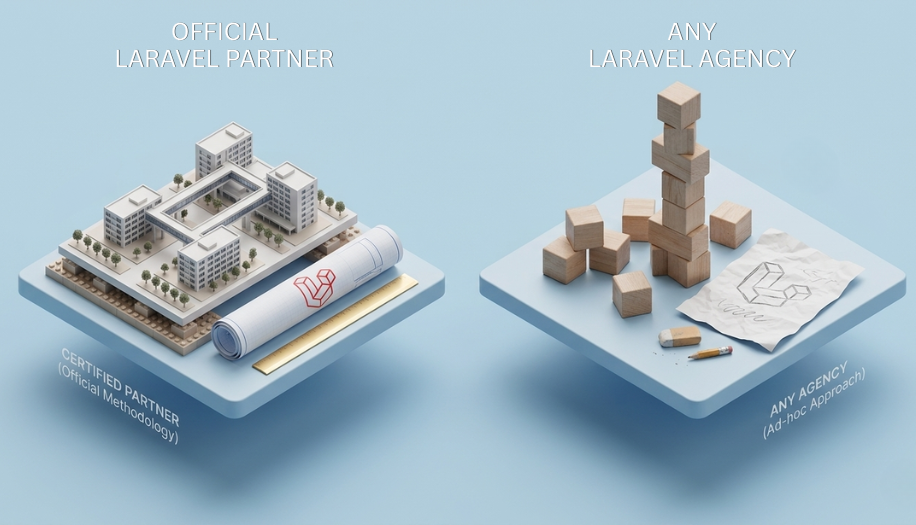
Laravel Partner vs Any Laravel Agency
Any agency can say they do Laravel. Only a handful are Official Laravel Partners. Here is what the certification actually means, what it requires, and how to verify it takes 30 seconds.

Acquaint Softtech
March 14, 2026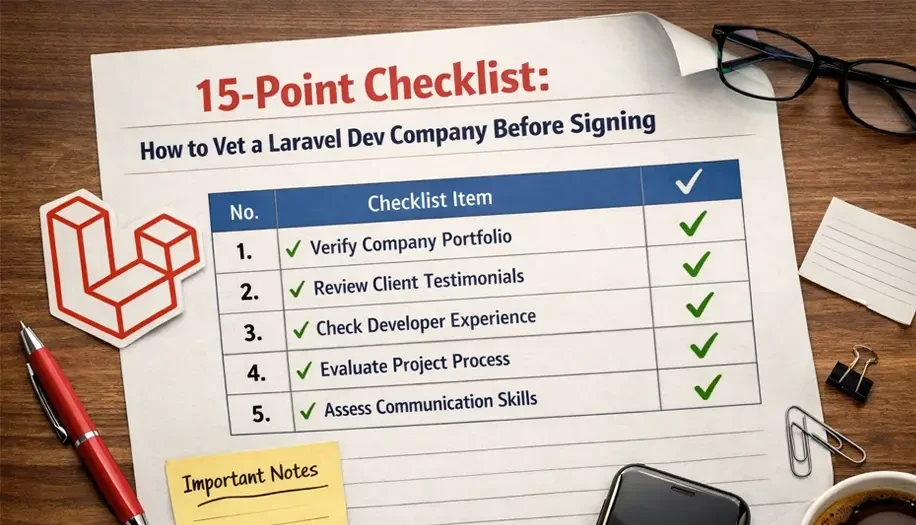
15-Point Checklist: How to Vet a Laravel Dev Company Before Signing
Before you sign with any Laravel dev company, ask these 15 questions. We built this checklist from 1,300+ projects. Most CTOs skip at least 8 of them.
Acquaint Softtech
March 8, 2026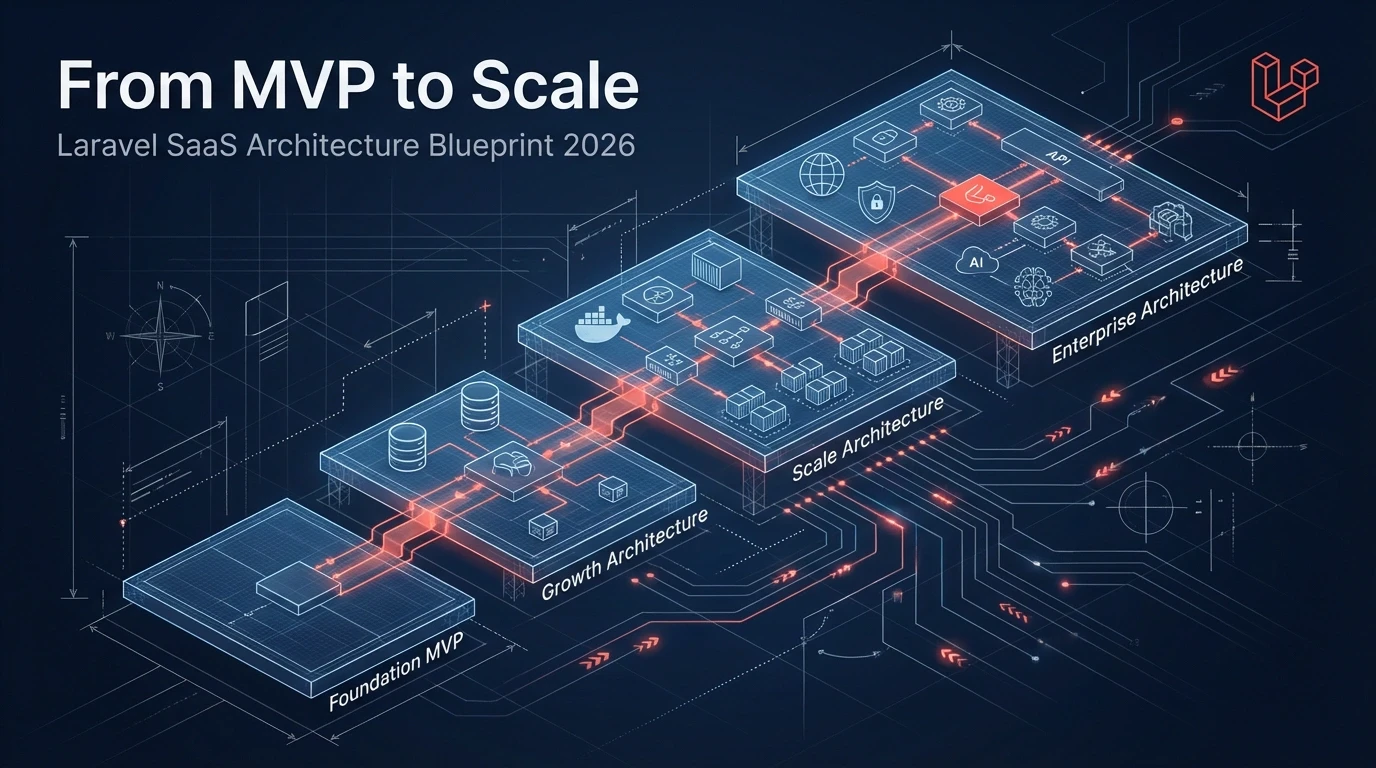
From MVP to Scale: The Laravel SaaS Architecture Blueprint for 2026
From MVP to 100K users, the architecture decisions that felt small at month one become expensive at month twelve. Here is the Laravel SaaS blueprint we use across 200+ Laravel projects.
Acquaint Softtech
March 10, 2026India (Head Office)
203/204, Shapath-II, Near Silver Leaf Hotel, Opp. Rajpath Club, SG Highway, Ahmedabad-380054, Gujarat
USA
7838 Camino Cielo St, Highland, CA 92346
UK
The Powerhouse, 21 Woodthorpe Road, Ashford, England, TW15 2RP
New Zealand
42 Exler Place, Avondale, Auckland 0600, New Zealand
Canada
141 Skyview Bay NE , Calgary, Alberta, T3N 2K6