

Auto Insurance Platform Development: Telematics, Usage-Based Insurance, Connected Car Integration
Auto insurance platform development is the building of software that prices and manages car insurance based on how a vehicle is actually driven, not just demographics. It captures driving data through a smartphone app, an OBD-II device, or a connected car, scores behaviour, and turns that score into a usage-based premium. The usage-based insurance market is projected to grow from roughly $77 billion in 2026 at a 24 per cent CAGR, with safe drivers saving 30 to 40 per cent on premiums.

Manish Patel

- You run an auto insurer and flat-rate pricing is losing your safest drivers to UBI competitors.
- You are launching a digital-first auto insurer and need a telematics platform from scratch.
- You want to turn driving data into a fair, defensible, usage-based premium.
- You need to ingest data from smartphones, OBD-II devices, and connected cars at scale.
- You are scoping a UBI build and need to know cost, timeline, and what to build first.
Introduction
Picture two drivers paying the same premium. One drives gently, 4,000 miles a year, smooth braking, calm roads. The other drives 20,000 miles, speeds through yellow lights and checks their phone behind the wheel. Yet under traditional insurance models built on age, zip code and credit score, both are priced almost the same. The careful driver ends up subsidising the risky one, until frustration builds and switching insurers becomes inevitable.
That gap is exactly why flat-rate auto insurance is breaking down. With premiums rising nearly 19% in 2024 and over half of drivers under 35 willing to switch for usage-based pricing, fairness is becoming a competitive advantage. Today, more than 21 million drivers already share telematics data, and insurers that price based on real driving behaviour are the ones earning trust and retention. The future belongs to platforms that understand how people actually drive, not how they are described on paper.
Acquaint Softtech's product development services structure auto insurance builds around the full data-to-premium flow, and the broader engineering context lives in the complete guide to InsurTech software development in 2026. For the behavioural scoring models that turn raw driving data into a risk score, the development services team builds and trains the engine.
This guide follows a single trip through the five stages that turn it into a price, then looks at where connected cars and EVs take the model next. It is written for the carrier or founder who knows flat-rate pricing is bleeding their best customers and wants the platform that keeps them.
How a Single Trip Becomes a Premium

A usage-based auto insurance platform is best understood as a flow that turns one trip into one price. The vehicle or phone captures the trip as raw signals. A data pipeline cleans and structures those signals. A scoring model converts them into a behavioural risk score. A pricing engine turns the score into a premium. And an engagement layer feeds the result back to the driver to encourage safer driving. Each stage depends on the one before it, which is why a weak pipeline or a black-box score undermines the whole model.
What is telematics insurance?
Telematics insurance is car insurance priced on data about how a vehicle is actually driven, gathered through a device or app. A telematics system measures mileage, time of day, location, speed, hard braking, rapid acceleration, and cornering, as the NAIC defines it. Usage-based insurance, or UBI, is the product built on that data: the driver's behaviour is monitored directly, and their premium reflects it. The two main flavours are pay-as-you-drive, which prices mainly on mileage, and pay-how-you-drive, which prices on driving behaviour.
Acquaint Softtech builds the full data-to-premium flow as connected but independent stages, so the capture method, the scoring model, and the pricing engine can each evolve without breaking the others. The engagement model is described in the dedicated software development teams service, where engineers with InsurTech domain experience own the platform end to end.
The pipeline must connect the capture layer to the rating engine reliably and at scale, because telematics generates far more data than a traditional policy system was built for. Acquaint Softtech's backend development services build the high-throughput data layer that moves millions of trips a day from capture to score without loss.
For teams that want to design the flow before committing budget, the discovery workshop service produces a stage-by-stage architecture, a data model, and a scoring approach in four to six weeks. That blueprint prevents the most common UBI mistake: building a beautiful driver app on top of a pipeline that cannot actually feed a defensible price.
Stage 1: Capturing Driving Data
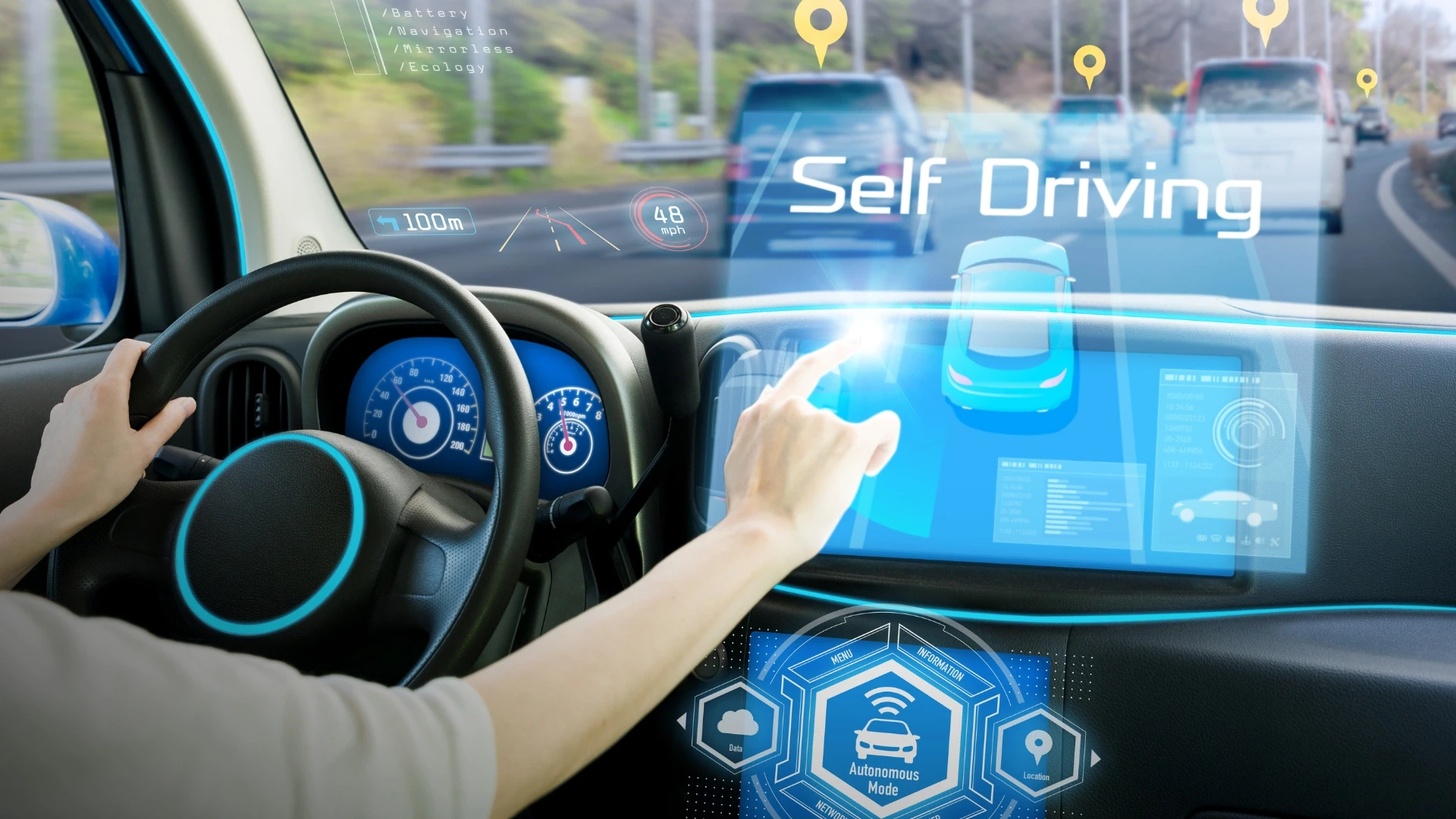
Everything in usage-based insurance starts with how the trip is captured, and the choice of capture method shapes cost, accuracy, and adoption. There are three main options: a smartphone app using the phone's sensors, a plug-in OBD-II device, and embedded connected-car telematics from the manufacturer. Each trades off differently between data richness, hardware cost, and how much friction it adds for the driver. Getting this choice right is the foundation of the whole platform.
How is driving data captured for insurance?
Through one of three channels: a smartphone app that uses accelerometer, gyroscope, and GPS data to infer driving behavior like speed, braking, cornering, and distraction without any hardware; an OBD-II device that plugs into the vehicle’s diagnostic port for more accurate telemetry but requires installation; or embedded OEM telematics that streams data directly from connected vehicles, offering the richest dataset but relying on manufacturer partnerships.
Among these, smartphone-based tracking has driven rapid adoption because it eliminates hardware cost and setup friction, and many insurers scale these solutions using modern web stacks built by teams like those offering MERN stack development services.
Capture Method | Strength | Trade-Off |
Smartphone app | No hardware, fast adoption | Must separate driver from passenger |
OBD-II plug-in device | Accurate vehicle data | Hardware cost and installation friction |
Embedded OEM telematics | Richest data, always on | Requires manufacturer partnership |
Hybrid app plus device | Balances accuracy and reach | More integration complexity |
Acquaint Softtech builds a reliable driving data capture system using a React Native mobile app for iOS and Android, which tracks trips in the background and identifies true driver behaviour. For connected vehicles, the Python team manages OBD-II integration and data processing, ensuring accurate, continuous trip data even in low or no connectivity conditions.
The machine learning that separates driver from passenger and classifies trip events draws on the same engineering approach described in the augmented vs non-augmented development guide, which explains how AI-assisted workflows accelerate data-heavy model development.
WIN BACK YOUR SAFEST DRIVERS
Over half of drivers under 35 would switch for a usage-based program. Acquaint Softtech has shipped 1,300+ projects in 13+ years and deploys a dedicated telematics team within 48 hours of a brief. Book a call, and we will map your fastest path to a UBI product.
Stage 2: The Telematics Data Pipeline
The telematics data pipeline is the unglamorous engineering that decides whether a usage-based platform actually works. It ingests a constant stream of trip data from millions of devices, cleans and validates it, structures it into trips and events, and stores it so the scoring model can use it. Telematics generates orders of magnitude more data than a traditional policy system, and a pipeline that cannot handle that volume reliably is the single most common point of failure in UBI builds.
What does a telematics data pipeline have to do?
It has to ingest high-frequency sensor data, often several readings per second per vehicle, without dropping trips. It must clean noise and GPS drift, stitch readings into discrete trips, detect and label events like hard braking and speeding, and handle connectivity gaps when a device loses signal mid-trip. It then stores both raw data for audit and model retraining, and structured trip summaries that the scoring engine consumes. All of this must scale elastically, because a marketing campaign can multiply active devices overnight. Building this kind of real-time, scalable backend often requires strong engineering execution, which is where MEAN stack developers come in to design and maintain high-throughput data pipelines.
Acquaint Softtech builds the pipeline on event-streaming infrastructure so trip data flows from capture to storage reliably at any volume, with buffering that survives connectivity gaps. The streaming and storage architecture is delivered through the development services, designed for the high-throughput reality of telematics rather than the low volume of a policy system.
Running this infrastructure cost-effectively at scale is a cloud-engineering discipline in itself. Acquaint Softtech's DevOps engineering team builds the auto-scaling, monitoring, and storage tiering that keep a telematics pipeline fast during campaign spikes and economical during quiet periods.
Budgeting a data-intensive, ML-heavy platform like this realistically is covered in the minimum budget required to start a Python development project guide, which gives a framework for estimating the engineering behind a telematics build before committing
Stage 3: Behavioural Risk Scoring

Behavioural risk scoring is where driving data becomes an insurance signal. The scoring model takes the structured trips from the pipeline and produces a driver score that predicts the likelihood and cost of a future claim. This is the analytical heart of usage-based insurance, and it has to be both predictive enough to satisfy actuaries and explainable enough to satisfy regulators and the drivers themselves, who want to know why their score is what it is.
What driving behaviours does the score use?
The most predictive driving signals include mileage, time of day, braking, acceleration, cornering, speeding, and phone distraction. These inputs are combined into a single risk score using machine learning models trained on historical driving and claims data. Since pricing impacts trust, the score must remain explainable so drivers can clearly understand how their behaviour affects their premium.
Acquaint Softtech builds the scoring model on the carrier's own historical driving and claims data, so the score reflects their actual loss experience rather than a generic benchmark. The model development and training are delivered through the AI development services, which own the feature engineering, training, and validation of the behavioural risk engine.
Explainability is a regulatory requirement, not a nice-to-have, because telematics pricing must be defensible to insurance regulators. Acquaint Softtech's AI and ML engineers service provides the engineers who build explainability into the scoring pipeline, so every score can be decomposed into the behaviours that produced it.
The discipline of building explainable, regulator-ready risk models is covered in depth in the modern insurance underwriting guide, which applies directly to the behavioural scoring that underpins usage-based auto pricing.
Stage 4: The Usage-Based Pricing Engine
The pricing engine turns the behavioural risk score into an actual premium, applying the carrier's rating rules, regulatory filings, and product structure. This is where pay-as-you-drive and pay-how-you-drive models diverge, and where the platform must respect the rate filings approved by each jurisdiction's regulator. A score is just a number until the pricing engine converts it, defensibly and compliantly, into the price the driver pays.
What is UBI and how does pricing work?
UBI, usage-based insurance, prices a policy on actual driving rather than demographic proxies. In a pay-as-you-drive model, the premium is built mainly on mileage, a base rate plus a per-mile charge, which is why low-mileage drivers under 7,500 miles a year benefit most. In a pay-how-you-drive model, the behavioural score adjusts the premium up or down.
The pricing engine applies the approved rating algorithm, enforces the filed rate caps, and produces a premium the carrier can defend to both the regulator and the driver. Pay-as-you-drive is the largest UBI segment, holding well over half the market.
UBI Model | Primary Rating Factor | Best For |
Pay-As-You-Drive (PAYD) | Miles driven | Low-mileage drivers, under 7,500 miles |
Pay-How-You-Drive (PHYD) | Driving behaviour score | Safe drivers wanting behaviour-based savings |
Test-drive then price | Behaviour over a trial period | App-first carriers underwriting upfront |
Continuous adjustment | Ongoing behaviour at renewal | Carriers rewarding sustained safe driving |
Acquaint Softtech builds the pricing engine as a configurable rating layer so actuaries can adjust the algorithm and rate caps to match each jurisdiction's filing without an engineering release. This is delivered through the software product development practice, which treats the rating engine as a business-editable, audit-logged component.
The pricing engine must connect to the core policy and billing systems so a usage-based premium flows correctly into invoicing and renewals. Acquaint Softtech's software development teams build the integration between the UBI pricing layer and the policy core, keeping behaviour-based pricing consistent across the whole policy lifecycle.
The broader principle of a unified insurance core that keeps pricing, policy, and billing in sync is covered in the InsurTech software development guide, which explains why the pricing engine must share one data model with the rest of the platform.
PRICE DRIVERS ON HOW THEY DRIVE
Stop letting flat-rate pricing chase away your best customers. Acquaint Softtech builds usage-based pricing engines at up to 40% less than Western agencies, with a 95% sprint delivery rate. Book a call and get a UBI product architecture in one session.
Stage 5: Driver Engagement and Claims
The final stage closes the loop. The platform feeds the driver's score and trip feedback back to them, encouraging safer driving, and handles claims with the same telematics data that priced the policy. This is where usage-based insurance earns loyalty rather than just selling a discount: a driver who sees their score improve and their premium fall, and who experiences a fast telematics-assisted claim, becomes an advocate. Trust, not just price, now drives the next wave of UBI adoption.
How does telematics improve claims?
Telematics data captured at the moment of a crash sudden deceleration, airbag deployment, impact location, can trigger a first notice of loss automatically and give the claims team an objective record of what happened. This speeds settlement, reduces disputes, and helps detect fraud. The same app that captures driving can let the driver file a claim with photos and a description in minutes. Drivers increasingly judge a UBI program on whether the insurer uses their data responsibly and delivers tangible benefits in return, and a fast, fair claim is the clearest proof of that.
Acquaint Softtech builds the driver engagement layer to turn scores into clear feedback and rewards, and connects crash-detection signals to an automatic first notice of loss. The driver-facing experience is built by the React Native development team, giving drivers trip scores, coaching, and in-app claims from one app.
The claims handling itself uses the same automation patterns proven across insurance lines. Acquaint Softtech draws on the architecture described in the published insurance claims automation guide, connecting telematics crash data to straight-through and AI-assisted claims processing.
Keeping the engagement and claims experience improving after launch requires ongoing engineering capacity, which Acquaint Softtech provides through support and maintenance services, covering app updates, model retraining, and new reward mechanics as the program matures.
CASE EXAMPLE
Root Insurance: Underwriting a Driver in a Two-Week Test Drive
Root built its entire auto insurance business on telematics-first underwriting. New customers complete a mandatory two-to-three-week test drive during which the Root app uses smartphone sensors to track acceleration, braking, cornering, mileage, and phone distraction. At the end, Root decides whether to offer a policy and at what price, pricing on behaviour above traditional proxies.
The model lets Root reward safe drivers with significant savings, advertising up to 52 per cent off and reporting average annual savings well over $1,000 for its target drivers. Root uses machine learning to distinguish the driver from a passenger, and runs the whole experience- quote, policy, and claims, through the app. The company has also moved to reduce reliance on credit score, focusing pricing on driving performance.
The lesson for any carrier building UBI is that the capture method and the scoring model are the product, not a feature. Root's edge is using telematics and AI to predict risk more accurately than demographic tables can. Acquaint Softtech builds exactly this stack: reliable smartphone capture, driver-passenger separation, and an explainable behavioural score feeding a defensible price.
See how Acquaint Softtech approaches InsurTech platform builds
Connected Cars, EVs, and the OEM Data Future

The next phase of usage-based insurance is the connected car, where vehicles with built-in telematics send real-time driving data directly to insurers. With EVs and 5G accelerating adoption, this always-on data flow is becoming the norm. Carriers that prepare for this shift and build scalable systems, supported by strong backend expertise like hiring Laravel developers, will be best positioned to use OEM-driven, high-volume data for faster and more accurate insurance decisions.
What is connected car data in insurance?
Connected car data is the telematics streamed directly from a vehicle's built-in systems: location, speed, acceleration, braking, and increasingly battery and component health on EVs Because it comes from the car rather than a phone, it removes the driver-passenger ambiguity and the need to ship hardware, and it is always on. The challenge is access: it requires partnerships with manufacturers or data aggregators, and it raises data-privacy questions that the platform must handle transparently. OEM-integrated insurance models are an active area of investment as carmakers and insurers form alliances.
Acquaint Softtech builds the connected-car integration layer to ingest OEM and aggregator data through clean APIs, so a carrier can add a manufacturer data source without re-architecting the pipeline.
EV-specific data and the models that use it- battery-aware risk, charging patterns- are built by the Python development team, positioning a carrier for the fast-growing connected and electric vehicle segment rather than retrofitting later. For carriers planning a multi-year connected-car strategy, Acquaint Softtech's virtual CTO services provide fractional CTO leadership to scope the OEM partnership and data architecture before committing engineering budget.
Cost, Timeline, and Build Sequencing
Auto insurance platform cost scales with the capture methods supported, the volume of trips, the depth of the scoring model, and whether the build is greenfield or a UBI layer on an existing carrier. The figures below reflect offshore delivery with senior insurance-domain engineers, the model Acquaint Softtech uses across its 1,300+ project portfolio. As with every platform, sequencing decides how fast the product reaches a defensible price.
Scope | Estimated Cost (USD) | Timeline |
Smartphone telematics app | $90,000 to $200,000 | 4 to 8 months |
Telematics data pipeline at scale | $120,000 to $280,000 | 5 to 10 months |
Behavioural risk scoring model | $100,000 to $240,000 | 4 to 8 months |
UBI pricing and rating engine | $90,000 to $200,000 | 4 to 8 months |
Connected car and OEM integration | $80,000 to $190,000 | 4 to 8 months |
Full usage-based auto platform | $450,000 to $1,200,000 | 14 to 26 months |
The right sequence usually starts with the capture app and the data pipeline, because nothing else can be built or validated without clean trip data. The scoring model comes next, trained on early data, then the pricing engine once the score is proven, and finally the engagement and connected-car layers. Building the pricing engine before the pipeline produces reliable, scored data is the most common and most expensive sequencing error, because the price has no defensible foundation underneath it.
Acquaint Softtech's offshore model reduces these figures by up to 40 per cent versus equivalent US, UK, or Australian agencies, with a project manager and QA engineer included in every engagement rather than billed separately. For founders who need senior leadership to own the sequencing and actuarial-engineering coordination, the virtual CTO services provide fractional CTO engagement.
Carriers adding UBI to an existing book rather than building greenfield use Acquaint Softtech's software product development practice to layer the telematics product onto the current platform incrementally, keeping the existing business running throughout.
The case for scaling a telematics team with senior engineers through a flexible model rather than slow permanent hiring is set out in the guide to what staff augmentation is, which describes how Acquaint Softtech staffs data-intensive platform builds.
READY TO BUILD
Join 200+ technology companies that have scaled with Acquaint Softtech. Usage-based auto platforms delivered at up to 40% less than Western agencies, with a 4.9/5 rating from 50+ verified Clutch reviews. Book a call and leave with a sequenced build plan, no obligation.
Frequently Asked Questions
-
What is telematics insurance?
Telematics insurance is auto insurance priced based on real driving behaviour like mileage, braking, speed, and time of driving. It uses data from smartphones, OBD-II devices, or connected cars. Safe drivers benefit from lower, fairer premiums.
-
What is Usage-Based Insurance (UBI)?
UBI is a model where premiums are based on how and how much you drive instead of demographics. Pay-as-you-drive focuses on mileage, while pay-how-you-drive uses driving behaviour scores. It rewards safe and low-mileage drivers with lower costs.
-
How does Root Insurance work?
Root Insurance uses a mandatory test drive where its app tracks driving behaviour like braking, speed, and phone usage. This data is used to evaluate risk and set pricing. Safe drivers can earn discounts based on performance.
-
How is driving data captured in telematics insurance?
Driving data is collected through smartphone sensors, OBD-II devices, or connected car systems. Smartphones use AI to separate drivers from passengers. This data is continuously sent to insurers for pricing and risk scoring.
-
What is a telematics risk score?
A telematics risk score combines signals like mileage, braking, acceleration, and speeding into one driver profile. Machine learning models analyse historical claims and driving data. The score helps insurers calculate fair and explainable premiums.
-
Is telematics insurance worth it?
Yes, especially for safe and low-mileage drivers. It can reduce premiums by up to 30–40% compared to traditional pricing. However, it requires sharing driving data with insurers.
-
How much does a telematics insurance platform cost?
A full usage-based insurance platform typically costs between $450,000 and $1.2 million. This includes apps, data pipelines, and scoring models. Offshore teams like Acquaint Softtech can reduce costs by up to 40%.
-
How big is the UBI market?
The UBI market is growing rapidly and is projected to reach around $567 billion by 2035. It is expanding at nearly 24% CAGR. Over 21 million drivers in the US already share telematics data.
-
What is telematics insurance in simple terms?
Telematics insurance is car insurance that tracks how you drive and charges you based on that behaviour. It rewards safe driving instead of relying on age or location. It creates fairer and more personalised pricing.
-
What are the main benefits of telematics insurance?
It offers fair pricing, lower premiums for safe drivers, and improved risk assessment for insurers. It also helps reduce fraud and encourages safer driving habits. However, it involves sharing driving data for monitoring.
I lead technology and client success at Acquaint Softtech with one goal in mind. Deliver work that feels personal, reliable, and worthy of long term trust. I stay close to both our clients and our developers to make sure every project moves with clarity, quality, and accountability.
Table of Contents
Get Started with Acquaint Softtech
- 13+ Years Delivering Software Excellence
- 1300+ Projects Delivered With Precision
- Official Laravel & Laravel News Partner
- Official Statamic Partner
Related Blog
.webp "The Complete Guide to InsurTech Software Development in 2026")
The Complete Guide to InsurTech Software Development in 2026
InsurTech software is not a fintech variant with policy fields. It is a policy-centric, regulator-accountable platform that runs quote, bind, issue, endorse, pay, and report as one system.

Acquaint Softtech
May 5, 2026
Modern Insurance Underwriting: AI-Driven Risk Assessment, Automated Decisions, and Continuous Underwriting
Modern insurance underwriting uses AI and machine learning to evaluate applicant risk, automate accept-or-decline decisions, and continuously monitor policyholder risk after policy binding. Automated systems process 500 to 1,500 data variables in seconds, reduce quote cycle time from days to under three minutes, and achieve 90-99% accuracy on low-complexity risks. Carriers deploying AI underwriting report 3-6 point loss ratio improvements within the first year.
Manish Patel
June 2, 2026
Insurance Claims Automation: FNOL, Straight-Through Processing, and AI-Driven Adjudication
AI-driven claims automation reduces claim processing costs from $15–$22 to $3–$5 and cuts turnaround time from 14 days to under 24 hours. Explore the complete 2026 claims automation architecture, from FNOL intake to AI fraud detection and adjudication.
Manish Patel
May 21, 2026India (Head Office)
203/204, Shapath-II, Near Silver Leaf Hotel, Opp. Rajpath Club, SG Highway, Ahmedabad-380054, Gujarat
USA
7838 Camino Cielo St, Highland, CA 92346
UK
The Powerhouse, 21 Woodthorpe Road, Ashford, England, TW15 2RP
New Zealand
42 Exler Place, Avondale, Auckland 0600, New Zealand
Canada
141 Skyview Bay NE , Calgary, Alberta, T3N 2K6