

DevSecOps in 2026: Why Security-Embedded DevOps Is Non-Negotiable and What It Costs to Hire
DevSecOps embeds security into every stage of development rather than adding it after deployment. Here is why it is non-negotiable in 2026 and what it costs to hire for UK, European, and US SaaS teams.

Mukesh Ram
I am Mukesh Ram, Founder and CEO of Acquaint Softtech, a software development partner. Over 13 years and 1,300+ projects across the UK, Europe, and the US, I have watched the conversation about security shift from a post-launch checkbox to a pre-deployment requirement. In 2026, a SaaS product that bolts security on after the fact is a product that fails enterprise sales cycles, SOC 2 audits, and increasingly, regulatory requirements in the UK, EU, and US. DevSecOps is the practice that prevents this by embedding security into every stage of the development and deployment pipeline. This guide explains what DevSecOps is, why it is non-negotiable for SaaS companies preparing for growth, and what it costs to hire.

- SaaS CTOs in the UK, Europe, or US preparing for SOC 2, ISO 27001, or NIS2 compliance and evaluating whether their DevOps function covers the security requirements
- Engineering leads whose CI/CD pipeline deploys code with no security scanning, no secrets management, and no vulnerability monitoring in place
- Founders who have lost an enterprise deal because the security questionnaire identified gaps in the development and deployment security posture
- Teams hiring a DevOps engineer and wanting DevSecOps practices built in from the start rather than retrofitted later
The traditional DevOps model separates development, operations, and security into three distinct phases. Development teams write code, operations teams deploy it, and the security team review it before or after deployment. The problem with this model is that security findings at the end of a sprint is expensive: fixing a vulnerability in production costs 6 to 10 times more than fixing it in development. DevSecOps integrates security into every stage of the pipeline so vulnerabilities are caught at the cheapest point to fix them.
For teams who have already built their Kubernetes security stack, DevSecOps extends that cluster-level security into the development workflow. The Kubernetes container security guide covers the 8-layer runtime security stack. This article covers the DevSecOps practices that prevent security problems from reaching the cluster in the first place.
DevSecOps vs DevOps: What Changes
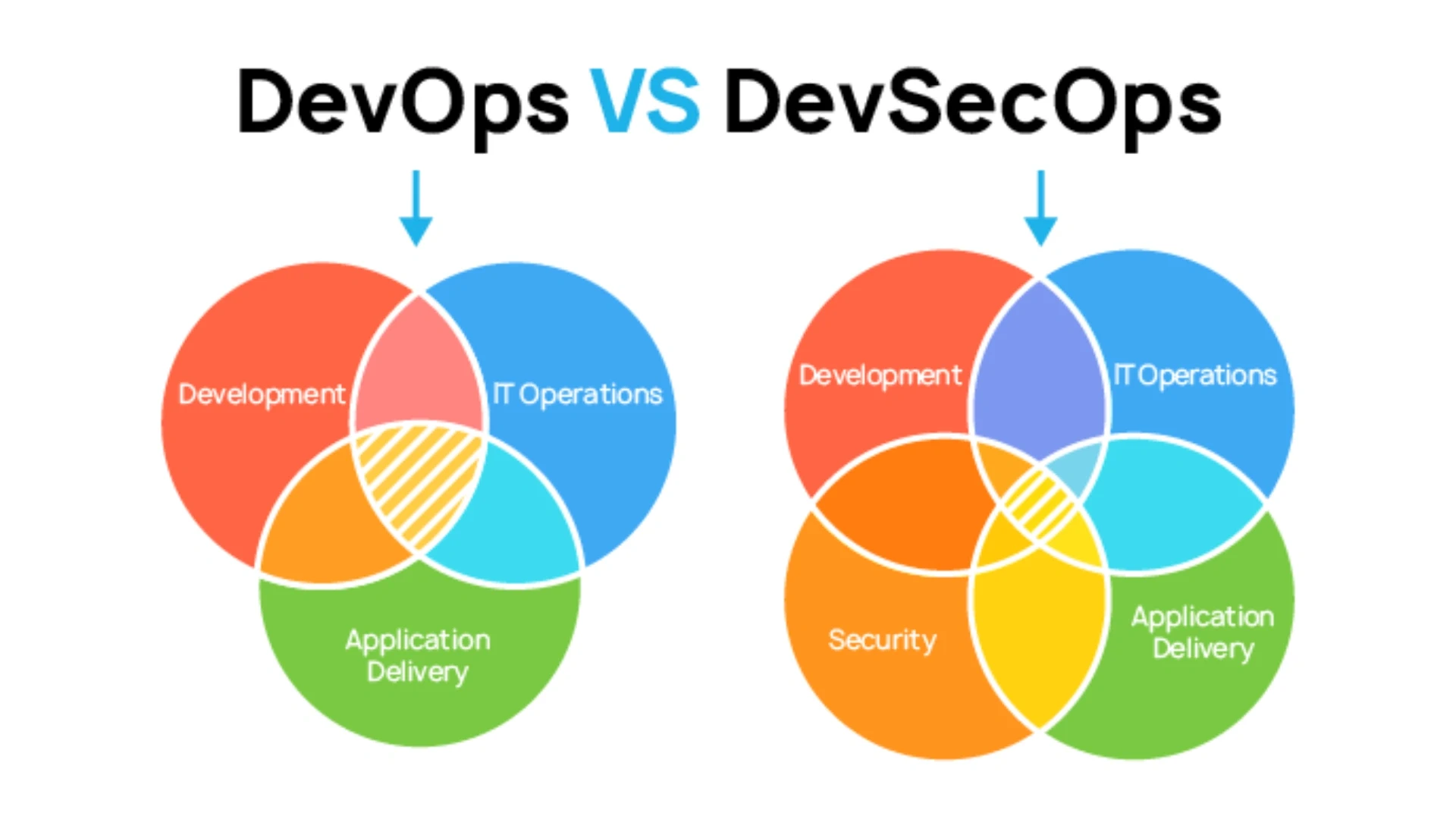
DevOps without security (what most teams have)
Code is written, tested for functionality, and deployed.
Security review (if it happens) occurs after deployment.
Vulnerabilities discovered in production cost 6 to 10x more to fix than in dev.
Secrets managed as environment variables or in .env files.
No systematic scanning for known CVEs in dependencies.
Compliance evidence gathered manually before audits.
Security incidents are reactive: discovered when something breaks.
DevSecOps (security embedded at every stage)
Static Application Security Testing (SAST) runs on every pull request.
Dependency vulnerability scanning blocks deployments with critical CVEs.
Secrets management integrated: no credentials in code or environment variables.
Container image scanning before any image is deployed to staging or production.
Infrastructure as Code (IaC) scanning catches misconfigurations before apply.
Runtime threat detection (Falco) monitors production behaviour.
Compliance evidence generated automatically from tooling.
Security incidents are proactive: caught in the pipeline, not in production.
The 7 DevSecOps Practices a DevOps Engineer Implements
DevSecOps is not a single tool. It are a collection of 7 security practices embedded across the development and deployment lifecycle. A DevOps engineer with DevSecOps experience implements all 7.
1. SAST: Static Application Security Testing |
SAST tools scan application source code for security vulnerabilities before the code is executed. A DevOps engineer integrates SAST (Semgrep, SonarQube, or Snyk Code) into the CI/CD pipeline so every pull request is automatically scanned. Findings that exceed a configured severity threshold block the PR from merging. |
SAST catches: SQL injection risks, cross-site scripting (XSS), hardcoded credentials in source code, insecure cryptographic functions, and path traversal vulnerabilities at the code review stage before they reach staging. |
2. SCA: Software Composition Analysis (Dependency Scanning) |
SCA tools scan the dependency manifest (package.json, requirements.txt, Gemfile) for known CVEs in third-party libraries. A DevOps engineer integrates SCA (Snyk, OWASP Dependency-Check, or GitHub Dependabot) into the CI/CD pipeline. Critical and high CVEs block the deployment. |
SCA catches: known vulnerabilities in npm packages, Python libraries, Ruby gems, and other dependencies. In 2026, supply chain attacks via compromised open-source libraries are a primary attack vector, making SCA non-negotiable for any production SaaS product. |
3. Secrets Management Integration |
Hard-coded secrets in source code (API keys, database passwords, private keys) are discovered by attackers through repository scans. A DevOps engineer implements secrets scanning in the CI/CD pipeline (GitGuardian, GitHub secret scanning, or TruffleHog) to detect credentials committed to code. |
For runtime secrets, a DevOps engineer integrates HashiCorp Vault or AWS Secrets Manager as the authoritative source. No application reads secrets from environment variables or .env files. Rotation is automated. Revocation takes effect immediately across all services. |
4. IaC Security Scanning (Terraform / Helm) |
Infrastructure as Code changes are a security attack surface. A misconfigured S3 bucket policy, a security group that opens all ports, or a Kubernetes pod spec that runs as root can all be introduced through Terraform or Helm chart changes. |
A DevOps engineer integrates IaC scanning (Checkov, KICS, or tfsec) into the CI/CD pipeline so Terraform plans and Helm chart changes are scanned for security misconfigurations before they are applied. Critical findings block the pipeline. |
5. Container Image Hardening and Scanning |
Every container image deployed to production is scanned for known CVEs before it can be deployed. A DevOps engineer configures Trivy or AWS ECR image scanning in the CI/CD pipeline. Base images are pinned to specific versions to prevent supply chain substitution. Images are built on minimal base images (Alpine or Distroless) to reduce the CVE attack surface. |
Critical and high CVE findings block the deployment. A clean scan result is a required gate before helm upgrade proceeds in staging or production. |
6. CI/CD Pipeline Security (Least-Privilege Pipelines) |
CI/CD pipelines execute with cloud credentials and Kubernetes API access. An over-privileged pipeline is a significant attack vector if a dependency in the build process is compromised. |
A DevOps engineer applies least-privilege to CI/CD credentials: GitHub Actions OIDC federation to AWS IAM (no long-lived AWS credentials in GitHub Secrets), Kubernetes service accounts scoped to deployment namespaces only, and separate credentials for staging and production deployments. Pipeline logs are reviewed for credential exposure. |
7. Compliance as Code (Automated Evidence Generation) |
Manual compliance evidence gathering before a SOC 2 audit takes weeks. A DevOps engineer implements Compliance as Code: policy enforcement tools (OPA Gatekeeper, Kyverno) generate audit logs of every policy enforcement decision, image scan results are archived to S3 with timestamps, RBAC review outputs are versioned in Git, and CloudWatch audit logs are retained for the required period. |
At audit time, the evidence is already collected. The auditor reviews tooling outputs rather than manually compiled spreadsheets. |
For SonarQube integration specifically, which covers SAST and code quality in CI/CD pipelines, the SonarQube CI/CD integration guide covers the full integration including quality gates, pull request decoration, and pipeline blocking on security findings.
CI/CD Pipeline With No Security Scanning? Fix That Before Your Next Enterprise Deal.
UK, European, and US SaaS companies: tell Acquaint Softtech which of the 7 DevSecOps practices your team currently has in place and which are missing. A vetted DevOps engineer will design the implementation plan and send a matched profile within 24 hours.
Why DevSecOps Is Non-Negotiable in 2026: The 4 Drivers

In 2026, the cost of not having DevSecOps practice embedded is no longer theoretical. Four concrete market forces is making it non-negotiable for SaaS companies targeting enterprise clients or regulated markets.
Enterprise sales security questionnaires | Enterprise buyers in the UK, Germany, the Netherlands, and the US routinely include detailed security questionnaires in their procurement process. Questions cover: does your CI/CD pipeline include automated security scanning, how are production secrets managed, what is your CVE remediation SLA for critical vulnerabilities, and how is privileged access to production managed. Teams without DevSecOps practices cannot credibly answer these questions and lose deals. |
SOC 2 and ISO 27001 audit requirements | SOC 2 Type II and ISO 27001 both require evidence of continuous security monitoring, vulnerability management, access control, and change management. Manual evidence gathering before an audit is no longer sufficient: auditors expect automated controls that generate continuous evidence. DevSecOps tooling (SAST, SCA, IaC scanning, image scanning, Compliance as Code) provides this evidence automatically. |
NIS2 Directive (European Union) | The EU NIS2 Directive, which came into force in October 2024, extends cybersecurity requirements to a broader set of sectors including SaaS providers serving critical infrastructure clients. UK-based companies serving EU clients are also affected. NIS2 requirements include: security in development and deployment processes, vulnerability handling procedures, and supply chain security. DevSecOps practices directly address these requirements. |
Supply chain attacks on open-source dependencies | High-profile supply chain attacks via compromised npm packages and PyPI libraries have made SCA (dependency vulnerability scanning) a baseline security expectation for any production SaaS product in 2026. Enterprise clients and security auditors expect proof that all third-party dependencies are scanned and critical CVEs remediated within a defined SLA. |
For teams whose first DevSecOps implementation includes Terraform IaC scanning, the Terraform infrastructure automation guide covers how Terraform code is structured for reproducibility and security review before the IaC scanner is added.
What DevSecOps Costs: UK, Europe, and US Comparison in 2026

The cost of implementing DevSecOps has two components: the DevOps engineer time to integrate the 7 practices, and the ongoing tooling and management cost. Here is the honest 2026 comparison for UK, European, and US teams.
Region / model | In-house senior DevOps | Eastern Europe agency | Acquaint Softtech (India) |
UK | GBP 80,000-110,000/yr fully loaded | GBP 60-80/hour | $22/hour | $3,200/month |
Germany / DACH | EUR 90,000-120,000/yr fully loaded | EUR 70-90/hour | $22/hour | $3,200/month |
Netherlands / Benelux | EUR 85,000-115,000/yr fully loaded | EUR 65-85/hour | $22/hour | $3,200/month |
France / Southern EU | EUR 70,000-100,000/yr fully loaded | EUR 55-75/hour | $22/hour | $3,200/month |
US | $130,000-180,000/yr fully loaded | $80-110/hour | $22/hour | $3,200/month |
DevSecOps engagement scope | Cost at $22/hour | What is delivered |
DevSecOps audit (what is missing) | 1 to 2 days: $176 to $352 | Written gap report across all 7 practices. Priority order. Remediation timeline. |
SAST + SCA integration (Practices 1 and 2) | 2 to 4 days: $352 to $704 | Semgrep or SonarQube in CI/CD. Snyk or Dependabot dependency scanning. PR blocking on critical findings. |
Secrets management integration (Practice 3) | 2 to 3 days: $352 to $528 | Vault or AWS Secrets Manager integration. Secrets scanning in pipeline. No .env files in production. |
IaC scanning + container hardening (Practices 4 and 5) | 3 to 5 days: $528 to $880 | Checkov in Terraform pipeline. Trivy image scanning. Minimal base images. CVE blocking gate. |
Pipeline security + Compliance as Code (Practices 6 and 7) | 3 to 5 days: $528 to $880 | OIDC federation. Least-privilege CI/CD. Automated compliance evidence generation. |
Full 7-practice DevSecOps implementation | 10 to 16 days: $1,760 to $2,816 | Complete DevSecOps pipeline. SOC 2 / ISO 27001 evidence ready. NIS2-aligned. |
Monthly retainer (DevSecOps + DevOps) | $3,200/month | Ongoing: dependency updates, CVE monitoring, quarterly reviews, new service onboarding. |
Acquaint Softtech's hire DevOps developers service provides pre-vetted engineers with DevSecOps implementation experience across SAST, SCA, secrets management, IaC scanning, and compliance as code. Starting at $22/hour or $3,200/month.
For the full DevOps rate comparison across the UK, Europe, and US, the DevOps engineer hourly rate guide covers what each price tier delivers for each market.
UK, European, or US SaaS Preparing for SOC 2, ISO 27001, or NIS2 Compliance?
Acquaint Softtech DevOps engineers have implemented DevSecOps pipelines for SaaS companies in the UK, Germany, Netherlands, and the US preparing for SOC 2 and ISO 27001. Tell us which compliance framework you are targeting and your timeline. Matched profile in 24 hours.
DevSecOps and Automated Deployment: The Connection
DevSecOps practices sit inside the CI/CD pipeline. A team that does not yet have automated deployments cannot implement most DevSecOps practices because there is no pipeline to embed them in. Here is the prerequisite order.
The DevSecOps readiness sequence
Step 1: Automated CI/CD pipeline
Code push triggers automated build, test, and deployment.
Required before any DevSecOps tools can be integrated.
If not yet in place: see the manual-to-automated deployment guide below.
Step 2: SAST + SCA in the pipeline (Practices 1 and 2)
Security scanning embedded in pull request workflow.
Critical CVEs and security findings block merges.
Step 3: Secrets management + IaC scanning (Practices 3 and 4)
No credentials in code or environment variables.
Terraform and Helm changes scanned before apply.
Step 4: Container security + pipeline least-privilege (Practices 5 and 6)
Image scanning blocks deployments with critical CVEs.
CI/CD credentials scoped to minimum required permissions.
Step 5: Compliance as Code (Practice 7)
Automated evidence generation for SOC 2 / ISO 27001 / NIS2.
Audit-ready at any point without manual evidence gathering.
For teams who have not yet automated their deployment pipeline, the manual to automated deployment guide covers the full automation sequence. Automated CI/CD is the prerequisite for DevSecOps integration.
Individual DevOps engineer on a monthly retainer through our staff augmentation model. Starting at $22/hour or $3,200/month. Available in 48 hours.
For a managed DevSecOps team covering the full implementation and ongoing management, Acquaint Softtech's dedicated development teams service covers the complete team engagement for larger organisations.
Ready to Embed Security Into Your Development Pipeline? Acquaint Softtech Has DevSecOps Engineers Available.
Pre-vetted DevOps engineers with DevSecOps implementation experience across SAST, SCA, secrets management, IaC scanning, and compliance evidence generation. UK, European, and US clients. Starting at $22/hour or $3,200/month. Matched profile in 24 hours.
Frequently Asked Questions
-
What is DevSecOps and why does it matter in 2026?
DevSecOps integrates security practices into every stage of the development and deployment pipeline rather than adding security after deployment. In 2026, DevSecOps is non-negotiable for SaaS companies because enterprise clients require it in security questionnaires, SOC 2 and ISO 27001 auditors expect automated security controls, the EU NIS2 Directive mandates secure development practices, and supply chain attacks via open-source dependencies have made dependency scanning a baseline requirement.
-
What is the difference between DevOps and DevSecOps?
DevOps integrates development and operations. DevSecOps extends that integration to include security at every stage. The practical difference is that a DevSecOps pipeline automatically scans code for vulnerabilities (SAST), scans dependencies for known CVEs (SCA), scans container images before deployment, enforces secrets management, and generates compliance evidence automatically. A DevOps pipeline without these integrations is DevOps without security.
-
How much does DevSecOps cost to implement?
A full 7-practice DevSecOps implementation takes 10 to 16 days at Acquaint Softtech's $22/hour rate, costing $1,760 to $2,816. Compared to a UK in-house senior DevOps engineer at GBP 80,000 to 110,000 per year, or a German/Dutch engineer at EUR 85,000 to 120,000 per year, Acquaint Softtech delivers the same capability at a fraction of the ongoing cost.
-
What is SAST and how does it work in a CI/CD pipeline?
SAST (Static Application Security Testing) scans source code for security vulnerabilities without executing the code. In a CI/CD pipeline, SAST runs on every pull request. Findings above a configured severity threshold block the PR from merging. SAST catches SQL injection, XSS, hardcoded credentials, and insecure function usage at the code review stage, before the code reaches staging or production.
-
What is SCA and why is it important for SaaS security?
SCA (Software Composition Analysis) scans the dependency manifest for known CVEs in third-party libraries. In 2026, supply chain attacks via compromised open-source packages are a primary attack vector. SCA identifies which dependencies have known vulnerabilities, what the severity is, and whether a patched version is available. Critical CVEs in dependencies block CI/CD deployments until remediated.
-
Does DevSecOps help with SOC 2 compliance?
Yes. DevSecOps practices directly satisfy multiple SOC 2 control requirements: SAST and SCA satisfy vulnerability management (CC7.1), secrets management satisfies access control (CC6.1), IaC scanning satisfies change management (CC8.1), and Compliance as Code generates the continuous monitoring evidence (CC7.2) that SOC 2 Type II auditors require.
-
What is the NIS2 Directive and how does it affect SaaS companies?
The EU NIS2 Directive, effective October 2024, extends cybersecurity requirements to a broader set of sectors. SaaS providers serving critical infrastructure, healthcare, or public sector clients in the EU are potentially in scope. NIS2 requires: security measures in development and operations, vulnerability handling procedures, and supply chain security. UK companies serving EU clients are also affected by NIS2 through contractual requirements with EU-based clients.
I love to make a difference. Thus, I started Acquaint Softtech with the vision of making developers easily accessible and affordable to all. Me and my beloved team have been fulfilling this vision for over 15 years now and will continue to get even bigger and better.
Table of Contents
Get Started with Acquaint Softtech
- 13+ Years Delivering Software Excellence
- 1300+ Projects Delivered With Precision
- Official Laravel & Laravel News Partner
- Official Statamic Partner
Related Reading
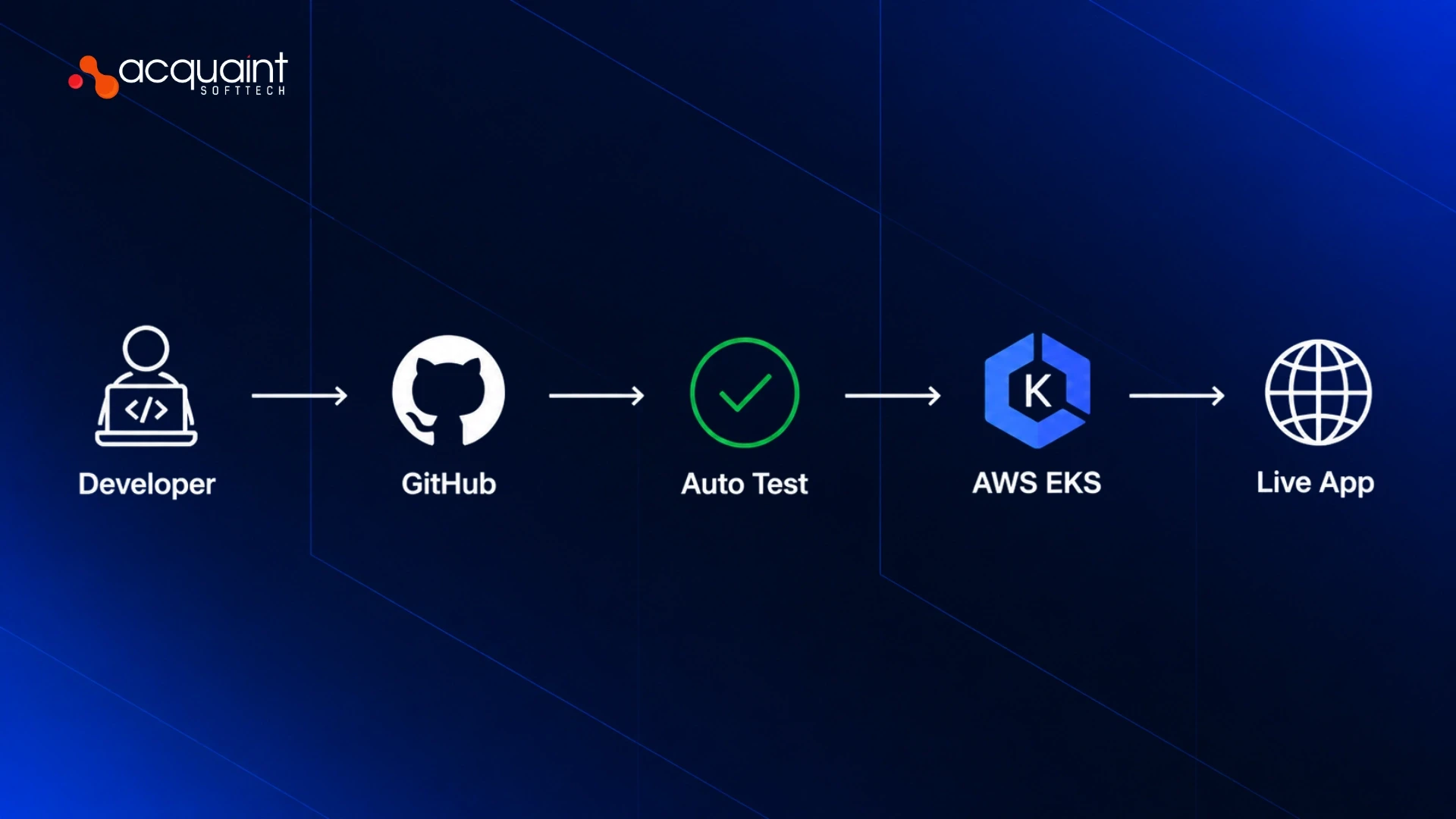
CI/CD Pipeline for Kubernetes on AWS EKS: What a DevOps Engineer Configures and What It Costs in 2026
A Kubernetes cluster without a proper CI/CD pipeline requires manual helm commands for every deployment. Here is what a DevOps engineer configures for automated EKS deployments and what it costs.

Taukir katava
June 23, 2026
DevOps Engineer for SaaS Startup: What to Budget and What to Expect in the First 90 Days
A SaaS startup's first DevOps engagement costs $3,200/month. Here is exactly what gets built in each of the first 90 days, what to budget, and what to expect from a DevOps engineer at each stage.
Mukesh Ram
June 3, 2026
AWS EKS Setup and Management: What a DevOps Engineer Delivers and What It Costs in 2026
AWS EKS is the default Kubernetes choice for most SaaS startups on AWS. Here is exactly what a DevOps engineer sets up, what the ongoing management involves, and what it costs in 2026.
Taukir katava
June 8, 2026India (Head Office)
203/204, Shapath-II, Near Silver Leaf Hotel, Opp. Rajpath Club, SG Highway, Ahmedabad-380054, Gujarat
USA
7838 Camino Cielo St, Highland, CA 92346
UK
The Powerhouse, 21 Woodthorpe Road, Ashford, England, TW15 2RP
New Zealand
42 Exler Place, Avondale, Auckland 0600, New Zealand
Canada
141 Skyview Bay NE , Calgary, Alberta, T3N 2K6