

DevOps Engineer for SaaS Startup: What to Budget and What to Expect in the First 90 Days
A SaaS startup's first DevOps engagement costs $3,200/month. Here is exactly what gets built in each of the first 90 days, what to budget, and what to expect from a DevOps engineer at each stage.

Mukesh Ram
I am Mukesh Ram, Founder and CEO of Acquaint Softtech, a software development partner. In 13 years and 1,300+ projects, one of the most common conversations I have with SaaS founders is the DevOps budget question. Not 'how much does it cost per hour' but 'what do I actually get for that money, by when, and how do I know it worked?' This guide answers all three. Here is the honest 90-day DevOps engagement plan for a SaaS startup: what gets built in each month, what the total budget looks like, and what the measurable outcomes are at each stage.

- SaaS founders preparing to hire their first DevOps engineer and wanting a realistic expectation of deliverables before committing
- CTOs at early-stage SaaS companies who have been told they need DevOps but are not sure what that means in practical terms
- Engineering leads preparing a budget proposal for a DevOps engagement and needing specific deliverables and cost numbers
- Founders who have had a bad DevOps engagement before and want to understand what a structured 90-day plan should look like
Most SaaS startups hire a DevOps engineer in one of two ways. The first is reactive: something breaks, the team cannot fix it, and a DevOps engineer is hired in a panic. The second is proactive: a founder decides to invest in DevOps before a problem forces the issue. The proactive approach produces significantly better outcomes because the DevOps engineer have time to build the foundation correctly rather than patching a burning system. This guide is written for the proactive approach.
The full pricing detail including what is included in each engagement type at Acquaint Softtech is in the DevOps engineer monthly cost guide. This guide focuses on what the 90-day delivery plan looks like, what gets built in each phase, and how to measure whether the engagement is on track.
The 90-Day DevOps Plan: Month by Month
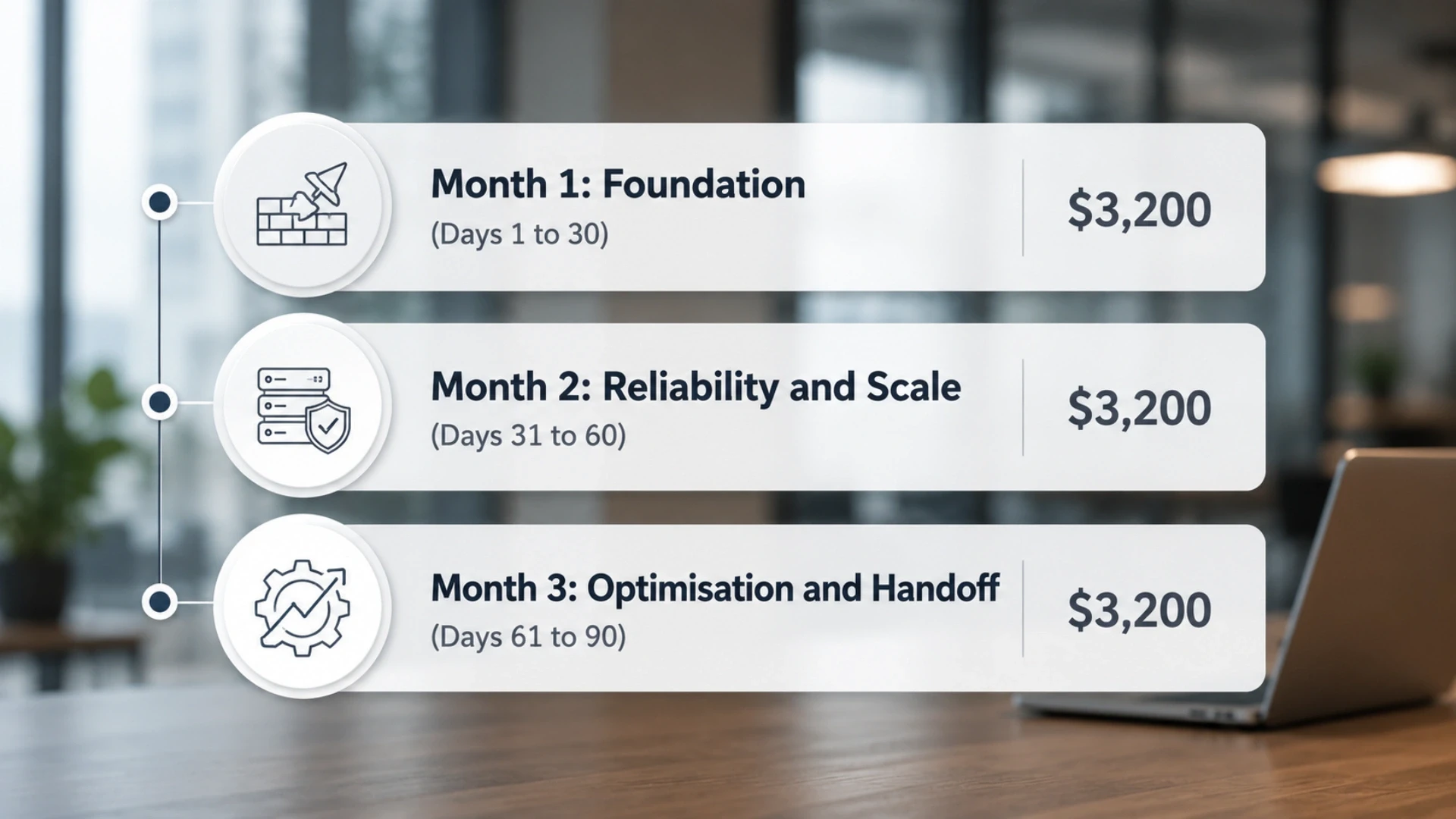
A first-time DevOps engagement for a SaaS startup should follow a structured sequence. Here is what each month delivers, what it costs, and what the measurable outcome is at the end.
Month 1: Foundation (Days 1 to 30) - $3,200 |
Focus: Infrastructure audit, cloud migration or setup, CI/CD pipeline, monitoring. |
Week 1: Infrastructure audit and environment review. The DevOps engineer maps the current state: what is running where, what the deployment process looks like, where the single points of failure are, and what the biggest immediate risks are. Audit findings delivered to the CTO by end of week 1. |
Week 2: Cloud setup or migration. If the product runs on a single VPS or shared hosting, the cloud migration begins. VPC, managed database (RDS), load balancer, and initial EC2 Auto Scaling Group. If the product is already on cloud, the DevOps engineer remediates the audit findings (missing Multi-AZ, misconfigured security groups, no monitoring). |
Week 3: CI/CD pipeline. Automated build, test, and deployment pipeline. Code pushed to main branch deploys to staging automatically. Production deployments require a manual approval gate. |
Week 4: Monitoring and alerting. CloudWatch dashboards for CPU, memory, error rate, and request latency. Alerts configured to Slack. The team discovers infrastructure problems from signals, not from user reports. |
Month 1 measurable outcome: the product deploys automatically, the team can see infrastructure health at a glance, and the biggest reliability risks from the audit have been resolved. |
Month 2: Reliability and Scale (Days 31 to 60) - $3,200 |
Focus: Zero-downtime deployments, auto-scaling, cost optimisation, SonarQube or security scanning. |
Week 5 to 6: Zero-downtime deployment strategy. Blue-Green or Rolling deployment configured so releases do not take the product offline. Every deployment from this point is zero-downtime. |
Week 7: Auto-scaling configuration. EC2 Auto Scaling Group with Target Tracking policy. Instances scale up automatically during traffic spikes and scale down during quiet periods. Idle compute cost reduces by 20 to 35%. |
Week 8: Cloud cost review. The DevOps engineer audits the cloud bill against the 8 waste categories: orphaned resources, dev/staging schedules, S3 lifecycle policies, CloudWatch log retention. Quick wins implemented immediately. |
Month 2 measurable outcome: zero downtime on every deployment, auto-scaling handling traffic variability, cloud bill measurably lower than Month 1. |
Month 3: Optimisation and Handoff (Days 61 to 90) - $3,200 |
Focus: Infrastructure as Code (Terraform), security hardening, documentation, Reserved Instances. |
Week 9 to 10: Terraform migration. Existing infrastructure is imported into Terraform code. All future infrastructure changes go through a Git PR process rather than manual console operations. The infrastructure is now version-controlled and reproducible. |
Week 11: Security hardening. IAM role review (least-privilege audit), security group tightening, Secrets Manager configuration for database credentials and API keys. Any SonarQube integration not completed in Month 2 is finished here. |
Week 12: Reserved Instances and documentation. Based on the right-sized baseline from Month 2, a 1-year Reserved Instance or Savings Plan is purchased. Onboarding documentation and infrastructure runbook delivered. Reserved Instances produce 30 to 40% compute cost reduction going forward. |
Month 3 measurable outcome: all infrastructure in Terraform code, security baseline met, Reserved Instances purchased, runbook delivered. The product has a documented, reproducible infrastructure that any future DevOps engineer can pick up. |
For startups who are also migrating to cloud for the first time in Month 1, the startup cloud migration guide covers the 8-component migration sequence and budget in detail. Month 1 of the DevOps engagement typically covers the full migration.
Want the 90-Day DevOps Plan Applied to Your Specific SaaS Product?
Tell Acquaint Softtech your current infrastructure, your deployment process, and the biggest infrastructure problem you need solved first. Mukesh Ram will review your situation and send a matched DevOps engineer profile and a customised 90-day plan within 24 hours.
The Budget: What 90 Days of DevOps Costs and What It Saves
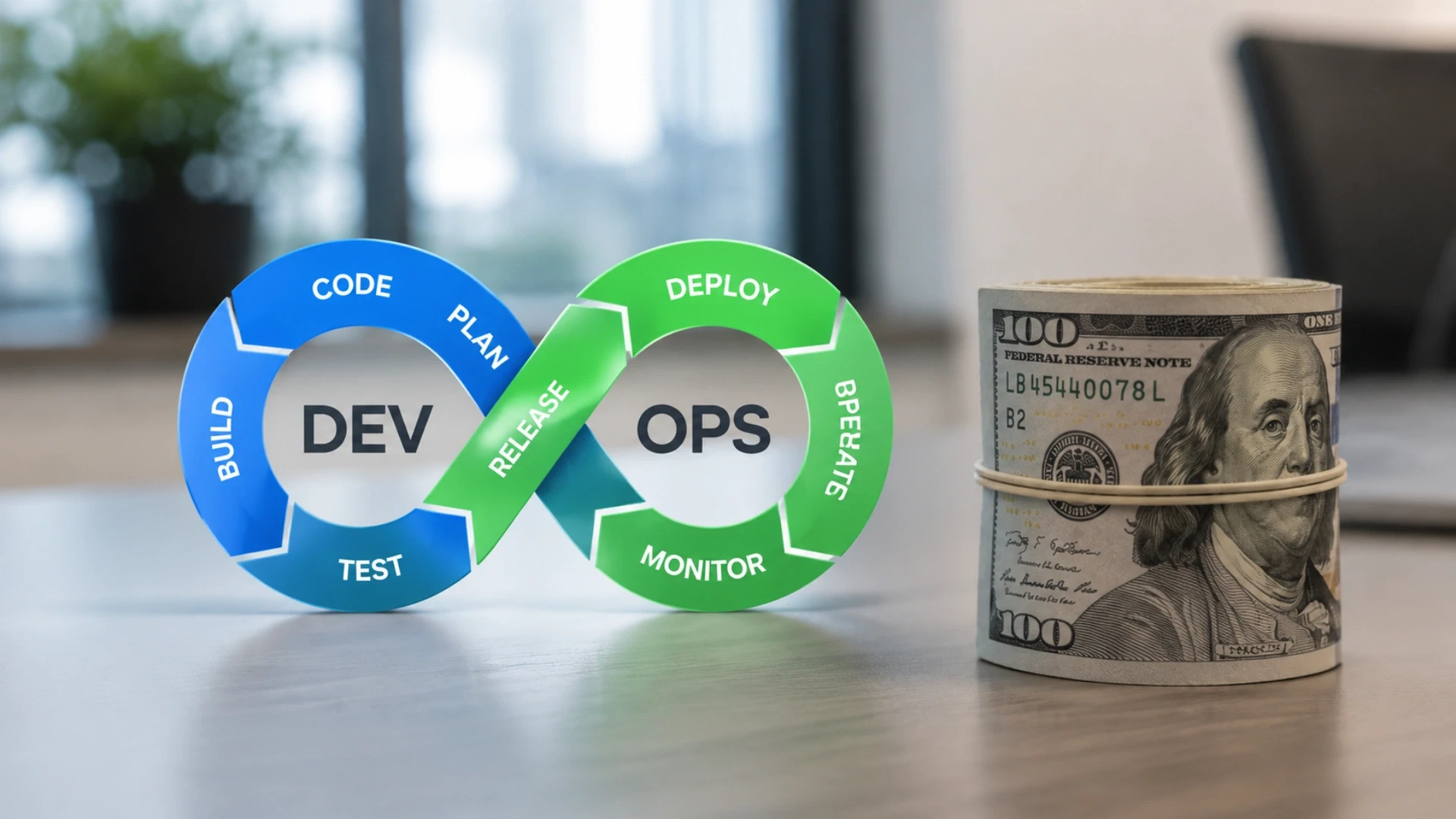
The total budget for a 90-day DevOps engagement at Acquaint Softtech is $9,600 (3 x $3,200/month). Here is what that cost buy and what the ongoing savings look like after the engagement.
Cost or saving category | 90-day figure | Ongoing (month 4+) |
DevOps engagement cost | $9,600 (3 x $3,200/month) | $3,200/month if retained |
Cloud cost saving (auto-scaling + idle resources) | $900 to $2,000 saved in month 2-3 | $900 to $2,000/month ongoing |
Reserved Instance saving (30 to 40% compute reduction) | Purchased in month 3 | $500 to $2,000/month ongoing |
Incident resolution time saving | Hours saved per month from Terraform + monitoring | 2 to 5 hours/month saved ongoing |
Deployment downtime eliminated | Zero downtime from month 2 onwards | Zero downtime every deployment |
Net 90-day cost (after cloud savings) | $9,600 minus $1,800 to $4,000 in savings = $5,600 to $7,800 net | Monthly saving exceeds engagement cost by month 4 |
The breakeven calculation for a typical SaaS startup
DevOps engagement: $9,600 over 90 days
Savings generated during the 90 days:
Cloud cost reduction (auto-scaling + waste removal): $1,800 to $4,000
Reserved Instance saving begins month 3: $500 to $1,500 in the first 30 days
Total savings in 90 days: $2,300 to $5,500
Net 90-day cost: $4,100 to $7,300
From month 4 onwards: ongoing savings of $1,400 to $3,500/month persist. If the retainer continues: total cost is covered by savings within 3 to 6 months after the initial 90 days. If the retainer ends after 90 days: the savings continue indefinitely.
Acquaint Softtech's hire DevOps engineers service provides pre-vetted DevOps engineers who deliver the 90-day plan described above. Starting at $22/hour or $3,200/month. Matched profile in 24 hours.
For the full rate comparison covering India, Eastern Europe, and US DevOps rates, the DevOps engineer hourly rate guide covers what each price tier delivers. Acquaint Softtech's starting rate is $22/hour.
Ready to Start the 90-Day DevOps Engagement? Tell Acquaint Softtech What Your Product Needs.
Describe your SaaS product, your current infrastructure, and the biggest problem you need solved in the first 30 days. Mukesh Ram will send a matched DevOps engineer profile and a customised 90-day plan for your specific situation within 24 hours.
What Changes After 90 Days: The Long-Term Model
After the 90-day foundation engagement, the DevOps need of a SaaS startup change. The infrastructure is built. The pipelines run. The ongoing work shifts from setup to operation and optimisation.
Continue the monthly retainer | The DevOps engineer transitions from build mode to operate mode. Ongoing work: monitoring and incident response, pipeline maintenance, cost optimisation reviews, infrastructure changes as the product grows, Kubernetes migration if the product scales to require it. Cost: $3,200/month. Right for: teams where ongoing infrastructure ownership is needed and the engineering team does not have DevOps depth in-house. |
Reduce to a part-time engagement | After the 90-day foundation, many SaaS products need 1 to 2 days of DevOps work per month rather than full-time. Acquaint Softtech provides part-time engagements at $22/hour for teams at the maintenance and optimisation stage. Right for: stable products with low change rate where the cost of a full-time retainer is not justified. |
Hand off to an in-house DevOps engineer | The 90-day engagement produces documentation, Terraform code, and a runbook that any new DevOps engineer can inherit. Some founders use Acquaint Softtech to build the infrastructure and then hire an in-house engineer to own it long-term. The handoff includes a structured knowledge transfer session. Right for: teams scaling to a stage where in-house DevOps ownership is a business requirement. |
For individual DevOps capacity on a monthly retainer, Acquaint Softtech's staff augmentation model provides a dedicated engineer at $3,200/month. Available in 48 hours.
For a vendor-managed DevOps team covering the full infrastructure function, our dedicated development teams service covers the full team engagement.
For the full cloud cost optimisation framework a DevOps engineer runs in Month 2, the cloud infrastructure cost optimisation guide covers all 8 waste categories and the 90-day savings timeline in detail.
SaaS Startup Ready for a DevOps Engineer? Acquaint Softtech Matches You in 24 Hours.
Pre-vetted DevOps engineers at $3,200/month. 90-day structured engagement plan. Audit findings in week 1. CI/CD pipeline live by week 3. Auto-scaling and zero-downtime by month 2. Terraform and documentation by month 3. Matched profile in 24 hours.
Frequently Asked Questions
-
How much should a SaaS startup budget for DevOps?
A SaaS startup's first 90-day DevOps engagement at Acquaint Softtech costs $9,600 (3 x $3,200/month). Cloud cost savings during the engagement typically offset $2,300 to $5,500 of that cost. From month 4 onwards, ongoing savings of $1,400 to $3,500/month persist indefinitely.
-
What does a DevOps engineer do for a SaaS startup in the first 30 days?
In the first 30 days: infrastructure audit and findings report, cloud setup or migration, CI/CD pipeline (automated build, test, deploy), and monitoring and alerting (CloudWatch dashboards and Slack alerts). The product deploys automatically and the team can see infrastructure health by end of month 1.
-
How long does it take to see results from a DevOps engagement?
Measurable results in the first billing cycle: CI/CD pipeline live by week 3, monitoring live by week 4. Significant cost savings in month 2 (auto-scaling, cloud waste removal). Reserved Instance savings begin month 3. Terraform infrastructure in month 3. Full 90-day delivery is a complete, documented, reproducible infrastructure.
-
Can a SaaS startup get DevOps value without a full-time engineer?
Yes. The 90-day engagement is full-time ($3,200/month). After 90 days, many teams reduce to a part-time engagement at $22/hour for 1 to 2 days per month. This covers ongoing maintenance and optimisation without the cost of a full-time engineer at the maintenance stage.
-
What does a DevOps engineer deliver at the end of 90 days?
At the end of the 90-day engagement: CI/CD pipeline (automated build, test, zero-downtime deploy), auto-scaling configured, cloud bill optimised, entire infrastructure in Terraform code, security baseline (IAM, Secrets Manager), monitoring dashboards, Reserved Instances purchased, and a full infrastructure runbook.
-
How does Acquaint Softtech match a DevOps engineer to my SaaS startup?
You tell us your cloud provider, tech stack, biggest infrastructure problem, and engagement duration. We match you to a pre-vetted DevOps engineer with verified production experience on your specific stack. Matched profile delivered within 24 hours. Engineer in your standup within 48 hours.
-
What is the difference between a DevOps engineer and a software developer for a SaaS startup?
A software developer builds the product. A DevOps engineer builds and manages the infrastructure the product runs on: deployment pipelines, cloud setup, auto-scaling, monitoring, cost optimisation, and security configuration. Both are needed at the growth stage. A DevOps engineer is typically the second infrastructure hire after the engineering team has a stable product.
I love to make a difference. Thus, I started Acquaint Softtech with the vision of making developers easily accessible and affordable to all. Me and my beloved team have been fulfilling this vision for over 15 years now and will continue to get even bigger and better.
Table of Contents
Get Started with Acquaint Softtech
- 13+ Years Delivering Software Excellence
- 1300+ Projects Delivered With Precision
- Official Laravel & Laravel News Partner
- Official Statamic Partner
Related Reading
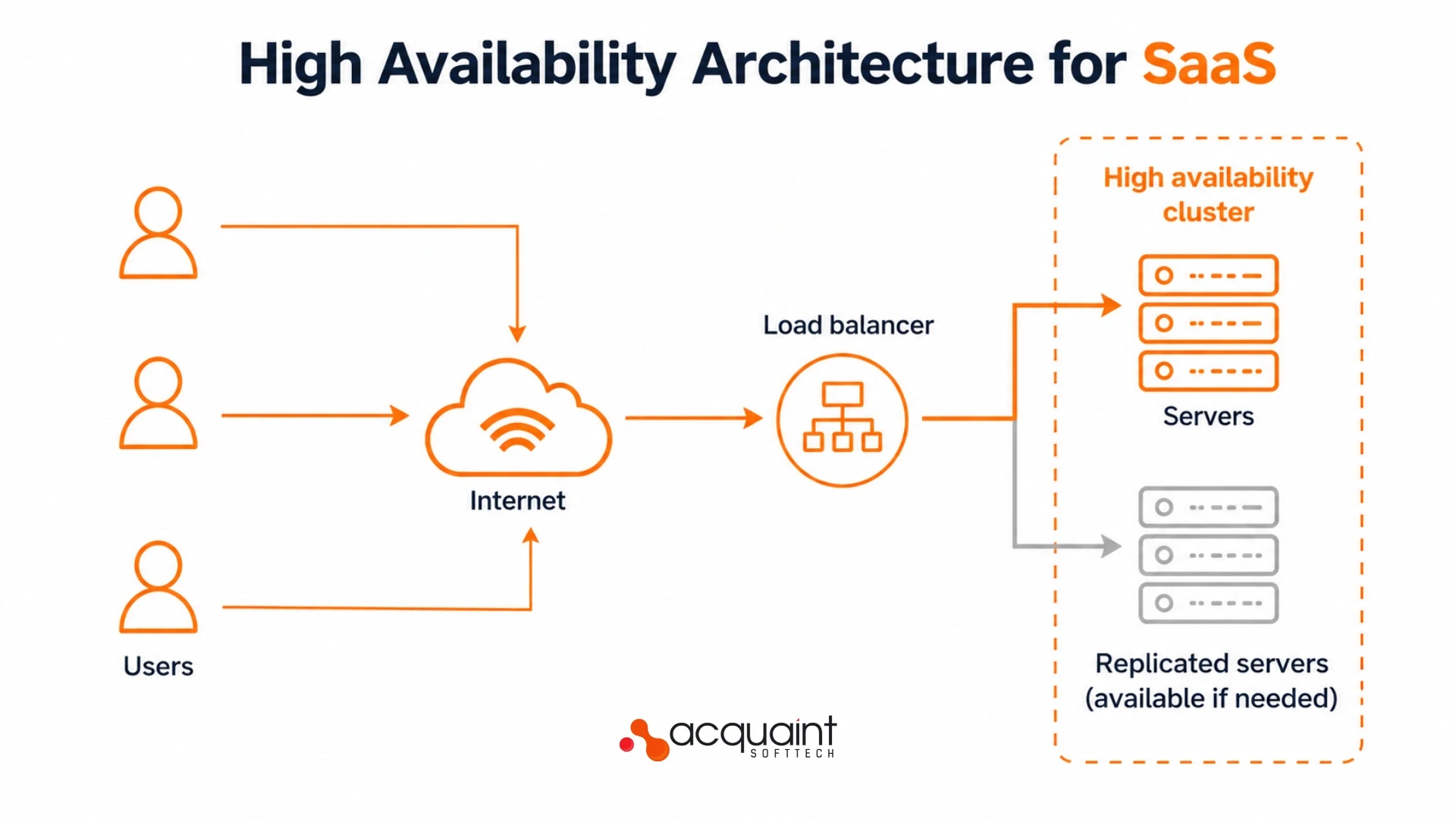
High Availability Architecture for SaaS: What a DevOps Engineer Builds and What It Costs in 2026
A single-server SaaS product is one failure away from full downtime. Here is what a DevOps engineer builds for high availability, which components matter most, and what it costs in 2026.

Taukir katava
June 2, 2026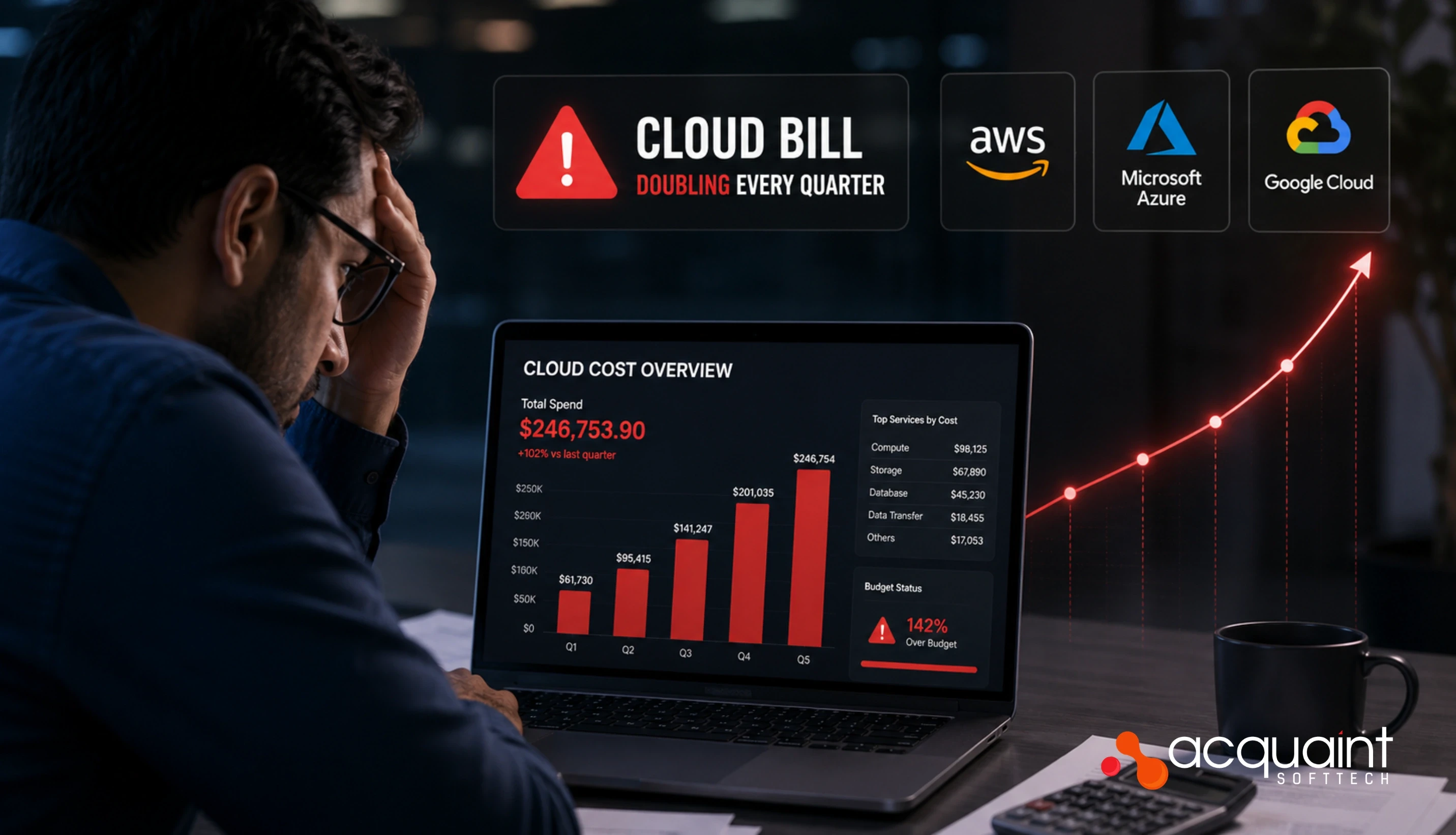
Cloud Bill Doubling Every Quarter: What a DevOps Engineer Finds and Fixes in 30 Days
AWS bill doubling every quarter without a clear reason? A DevOps engineer typically finds 20 to 40% of cloud spend as waste. Here are the 7 categories they fix first.
Taukir katava
May 8, 2026
DevOps Engineer Hourly Rate in 2026: India vs US vs Eastern Europe - The Honest Rate Comparison
DevOps engineer rates in 2026 range from $22/hour in India to $100+ in the US for the same seniority level. Here is the honest regional rate comparison and what each price tier actually delivers.

Ahmed Ginani
May 21, 2026India (Head Office)
203/204, Shapath-II, Near Silver Leaf Hotel, Opp. Rajpath Club, SG Highway, Ahmedabad-380054, Gujarat
USA
7838 Camino Cielo St, Highland, CA 92346
UK
The Powerhouse, 21 Woodthorpe Road, Ashford, England, TW15 2RP
New Zealand
42 Exler Place, Avondale, Auckland 0600, New Zealand
Canada
141 Skyview Bay NE , Calgary, Alberta, T3N 2K6