

High Availability Architecture for SaaS: What a DevOps Engineer Builds and What It Costs in 2026
A single-server SaaS product is one failure away from full downtime. Here is what a DevOps engineer builds for high availability, which components matter most, and what it costs in 2026.

Taukir katava
As a DevOps Engineer at Acquaint Softtech, a software development partner, the most common single infrastructure risk I find in early-stage SaaS products is a single point of failure somewhere in the stack. One EC2 instance. One database with no Multi-AZ. One Availability Zone. A single failure anywhere in that chain takes the entire product offline until the DevOps engineer manually intervenes. High availability architecture eliminates single points of failure so the product continues serving users even when individual components fail. This guide covers what a DevOps engineer builds for HA, what each component contributes to the overall uptime SLA, and what the implementation costs in 2026.

- SaaS CTOs whose product runs on a single server or in a single Availability Zone with no redundancy
- Engineering leads preparing for enterprise sales where uptime SLAs are a requirement for deals
- Founders whose product has experienced a downtime incident caused by a single server failure
- Teams hiring a DevOps engineer and wanting high availability as part of the infrastructure brief
High availability is not a binary state. It is a spectrum from a single server with no redundancy to a multi-region active-active architecture with automatic failover at every layer. Most SaaS startups do not need the most complex end of that spectrum. They need the specific HA components that eliminates the failure modes most likely to cause an outage at their current scale. A DevOps engineer identifies those components and build them first.
For startups whose first priority is moving to the cloud before adding HA, the startup cloud migration guide covers the 8-component first cloud setup. HA is built into that setup from day one when a DevOps engineer handles the migration.
The 6 High Availability Components: What Each One Prevents
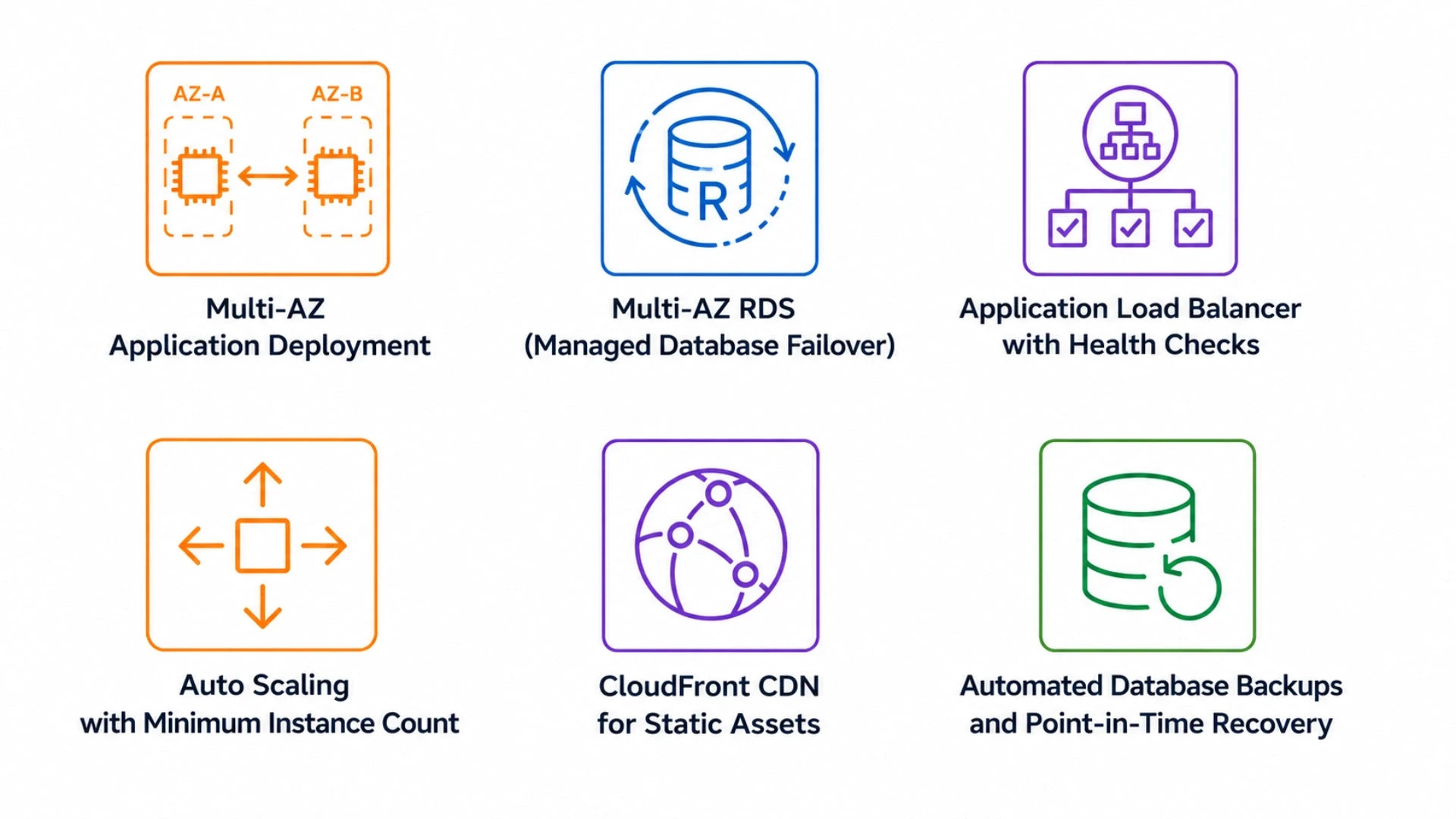
Each HA component address a specific failure mode. A DevOps engineer builds them in priority order based on which failure is most likely to cause an outage at the current stage.
Multi-AZ Application Deployment |
Single AZ risk: an AWS Availability Zone outage (hardware failure, power, connectivity) takes all your application instances offline simultaneously. |
What a DevOps engineer builds: application instances deployed across at least 2 Availability Zones behind an Application Load Balancer. If one AZ becomes unavailable, traffic routes automatically to the other. No manual intervention required. |
Contribution to uptime SLA: eliminates AZ-level outages. AWS AZ outages are rare but when they occur, single-AZ deployments experience full downtime for hours. |
Multi-AZ RDS (Managed Database Failover) |
Single-AZ database risk: the database instance fails due to hardware failure, storage issue, or AZ outage. Manual database recovery takes 30 minutes to several hours. |
What a DevOps engineer builds: Amazon RDS Multi-AZ deployment. AWS maintains a synchronous standby replica in a second AZ. Failover to the standby is automatic and typically completes in 60 to 120 seconds. The application reconnects to the new primary without intervention. |
Contribution to uptime SLA: reduces database failure recovery from hours to under 2 minutes. |
Application Load Balancer with Health Checks |
Single instance risk: one application instance crashes or becomes unresponsive. All traffic continues routing to it, causing errors for all users. |
What a DevOps engineer builds: Application Load Balancer with health check configuration. ALB continuously checks the /health endpoint of each instance. Unhealthy instances are removed from the target group automatically. Traffic routes only to healthy instances. |
Contribution to uptime SLA: isolates instance-level failures to zero user impact if a healthy alternative exists. |
Auto Scaling with Minimum Instance Count |
Fixed instance risk: an instance crashes and is not replaced. The remaining capacity is insufficient for current traffic, causing degraded performance or outage. |
What a DevOps engineer builds: Auto Scaling Group with a minimum instance count of 2 (one per AZ). When an instance is terminated (failure or replacement), a new instance launches automatically to maintain the minimum. The ASG also handles traffic-driven scaling. |
Contribution to uptime SLA: ensures failed instances are replaced automatically within 3 to 5 minutes. |
CloudFront CDN for Static Assets |
Origin dependency risk: all static asset requests (images, JavaScript, CSS) hit the origin server. If the origin is slow or unavailable, the entire frontend becomes unresponsive. |
What a DevOps engineer builds: CloudFront distribution serving static assets from S3. The origin server handles only dynamic API requests. CDN edge nodes cache static content globally. Even if the origin is temporarily unavailable, cached static content continues serving. |
Contribution to uptime SLA: decouples frontend availability from origin server availability for static content. |
Automated Database Backups and Point-in-Time Recovery |
Data loss risk: a data corruption event, accidental deletion, or failed migration destroys production data. Manual recovery from a backup (if one exists) takes hours and may lose hours of data. |
What a DevOps engineer builds: RDS automated backups with 7 to 35 day retention. Point-in-time recovery to any second within the backup window. S3 bucket versioning for critical file storage. Documented and tested restore procedure. |
Contribution to uptime SLA: reduces data loss risk from hours to seconds (PITR granularity). Tested restore procedures reduce recovery time from hours to 30 to 60 minutes. |
For the auto-scaling component specifically, the AWS Auto Scaling configuration guide covers all 7 configuration components in detail, including the recommended threshold values and cooldown periods.
Single Server or Single AZ? Find Out Which HA Components You Are Missing.
Tell Acquaint Softtech your current AWS architecture: how many instances, how many AZs, whether RDS Multi-AZ is enabled, and whether you have an ALB. A DevOps engineer will identify your HA gaps and send a prioritised fix plan within 48 hours.
What HA Architecture Costs: 2026 Budget Guide
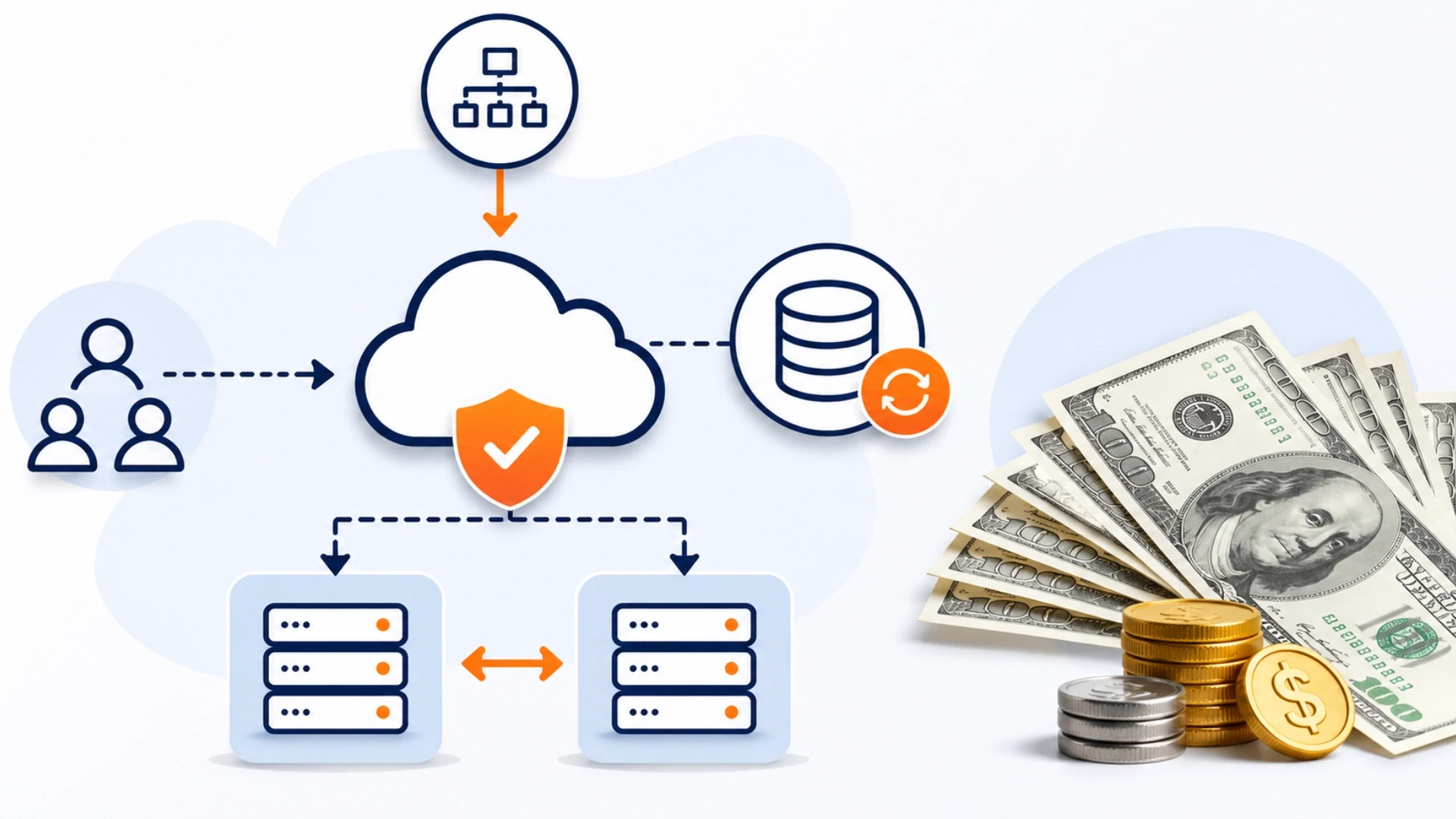
High availability has two cost components: the DevOps engineer time to build it, and the ongoing infrastructure cost of running redundant components. Here are the honest 2026 numbers at Acquaint Softtech rates.
HA Component | Setup time at $22/hr | Setup cost | Monthly ongoing cost |
Multi-AZ application deployment | 0.5 to 1 day | $88 to $176 | Included in EC2 cost |
RDS Multi-AZ | 0.5 to 1 day | $88 to $176 | Approx 2x single-AZ RDS cost |
ALB with health checks | 0.5 to 1 day | $88 to $176 | Approx $18/month + transfer |
Auto Scaling Group (min 2 instances) | 2 to 4 days | $352 to $704 | Pay per instance used |
CloudFront CDN | 0.5 to 1 day | $88 to $176 | $10 to $100/month (traffic) |
Automated backups + PITR | 0.5 days | $88 | Included in RDS pricing |
Full 6-component HA stack | 5 to 9 days total | $880 to $1,584 | $200 to $600/month additional |
What the uptime SLA looks like with and without HA
Without HA (single AZ, single instance, no Multi-AZ RDS):
AZ outage (rare, but happens): full outage for 2 to 6 hours.
EC2 instance failure: full outage until manual replacement (30 to 90 minutes).
RDS failure: full outage until manual failover (30 minutes to 2 hours).
Realistic uptime SLA: 99.5% (43 hours downtime per year) with manual operations.
With full 6-component HA stack:
AZ outage: ALB routes to other AZ in seconds. Zero user impact.
EC2 instance failure: ALB removes unhealthy instance. ASG replaces in 3 to 5 minutes.
RDS failure: Multi-AZ automatic failover in 60 to 120 seconds.
Realistic uptime SLA: 99.9% to 99.95% (4 to 9 hours downtime per year).
For enterprise clients requiring 99.9% SLA: the 6-component HA stack is the minimum.
Acquaint Softtech's hire DevOps engineers service provides pre-vetted engineers with high availability architecture experience across AWS, Azure, and GCP. Starting at $22/hour or $3,200/month.
For the full DevOps engineer rate comparison by region, the DevOps engineer cost guide covers what each price tier delivers. Acquaint Softtech's starting rate is $22/hour.
Need a 99.9% Uptime SLA for an Enterprise Deal? Build the HA Stack First.
Acquaint Softtech DevOps engineers have built high availability infrastructure for SaaS products, gaming platforms, and sports media applications. Tell us your current architecture and your uptime SLA requirement. Matched profile in 24 hours.
Beyond 99.9%: What Multi-Region HA Adds
The 6-component HA stack above achieves 99.9% uptime within a single AWS region. Multi-region HA goes further: if the entire AWS us-east-1 region becomes unavailable, traffic fails over to a second region automatically. Here is when this makes sense.
When single-region HA is sufficient (most SaaS startups)
Your enterprise SLA requirement is 99.9% or below.
A full AWS regional outage (extremely rare) is an acceptable risk.
Your user base is not globally distributed enough to require geographic redundancy.
The cost of multi-region HA (typically 2x infrastructure cost + significant DevOps complexity) is not justified by the incremental SLA improvement.
When multi-region HA becomes necessary
Enterprise SLA requirement of 99.99% or above.
Financial services, healthcare, or other regulated industries where regional outages have compliance implications.
Global user base where latency to a single region degrades user experience significantly.
Revenue impact of a full regional outage exceeds the cost of multi-region infrastructure.
For teams implementing zero-downtime deployments alongside high availability architecture, the zero-downtime deployment guide covers Blue-Green and Canary deployment strategies. HA and zero-downtime deployment are built in the same engagement.
For individual DevOps capacity on a monthly retainer, Acquaint Softtech's staff augmentation model provides a dedicated engineer at $22/hour or $3,200/month. Available in 48 hours.
For a vendor-managed DevOps team covering HA architecture and ongoing infrastructure, our dedicated development teams covers the full engagement.
Ready to Build High Availability Infrastructure? Acquaint Softtech Has DevOps Engineers Available Now.
Pre-vetted DevOps engineers with high availability architecture experience on AWS, Azure, and GCP. Starting at $22/hour or $3,200/month. HA gap audit delivered in week 1. Full 6-component HA stack implemented in the first sprint.
Frequently Asked Questions
-
What is high availability in cloud infrastructure?
High availability is an infrastructure architecture that eliminates single points of failure so the application continues serving users when individual components fail. On AWS, the 6 core HA components are: multi-AZ application deployment, RDS Multi-AZ, ALB with health checks, Auto Scaling Group, CloudFront CDN, and automated backups.
-
What uptime SLA does high availability achieve?
A properly configured 6-component HA stack on AWS achieves 99.9% to 99.95% uptime. This translates to 4 to 9 hours of potential downtime per year. Most enterprise SaaS contracts require 99.9% as a minimum. Without HA, realistic uptime on a single-server setup is 99.5% or lower.
-
What is multi-AZ deployment and why does it matter?
Multi-AZ deployment runs application instances in at least 2 AWS Availability Zones behind a load balancer. If one AZ becomes unavailable due to hardware failure, power, or connectivity issues, traffic routes automatically to instances in the other AZ. Users experience no downtime. Without multi-AZ, an AZ outage takes the entire application offline.
-
How long does RDS Multi-AZ failover take?
RDS Multi-AZ automatic failover typically completes in 60 to 120 seconds. AWS automatically promotes the standby replica to primary and updates the DNS endpoint. Applications using the RDS endpoint URL reconnect to the new primary without configuration changes. Manual single-AZ RDS recovery takes 30 minutes to 2 hours.
-
How much does high availability infrastructure cost?
The 6-component HA stack costs $880 to $1,584 in DevOps engineer time at $22/hour (5 to 9 days). Ongoing infrastructure cost adds approximately $200 to $600/month (primarily RDS Multi-AZ, which is roughly 2x single-AZ cost). Typically absorbed into the first sprint of a $3,200/month monthly retainer.
-
Do I need high availability for a startup?
A startup whose product is used exclusively by internal teams or a handful of beta users does not need HA immediately. A startup approaching enterprise sales, preparing for a public launch, or running paid SaaS with meaningful MRR should have at minimum: multi-AZ deployment, RDS Multi-AZ, and an ALB with health checks. These three provide the most HA value for the lowest additional cost.
-
What is the difference between high availability and disaster recovery?
High availability prevents downtime by eliminating single points of failure within a region. Disaster recovery is the plan for recovering from a catastrophic event (data loss, regional outage) that HA cannot prevent. HA components (Multi-AZ, ALB, Auto Scaling) provide continuous uptime. DR components (automated backups, PITR, cross-region snapshots) provide data recovery after a catastrophic failure.
Taukir Katava is a DevOps Engineer at Acquaint Softtech with 4+ years of experience across AWS, Azure, and GCP. He specialises in Kubernetes cluster administration, CI/CD pipeline automation, and cloud infrastructure design for high-traffic platforms. Taukir writes about the practical side of production DevOps: what infrastructure decisions cost and what they actually deliver.
Table of Contents
Get Started with Acquaint Softtech
- 13+ Years Delivering Software Excellence
- 1300+ Projects Delivered With Precision
- Official Laravel & Laravel News Partner
- Official Statamic Partner
Related Reading
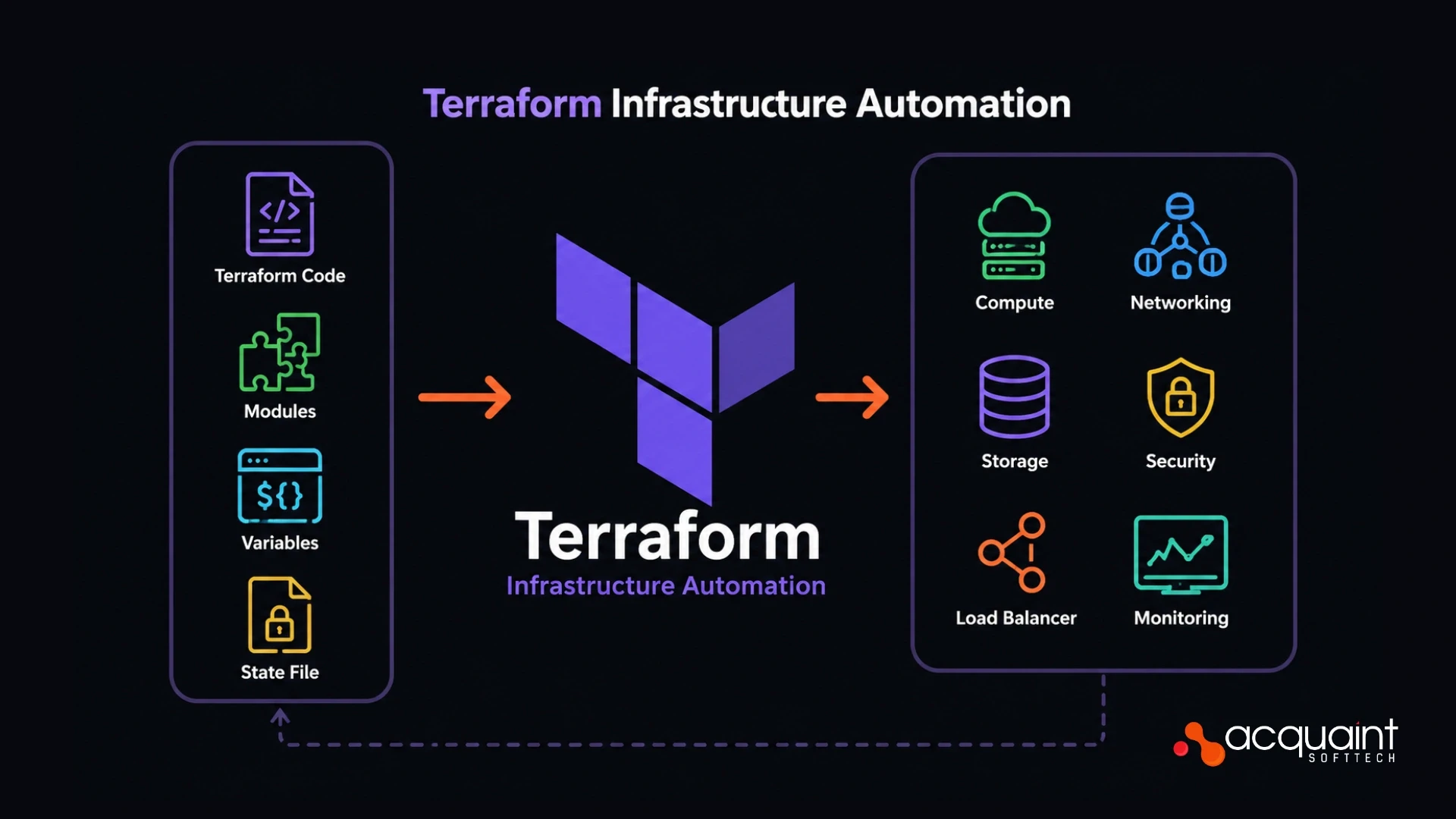
Terraform Infrastructure Automation: What a DevOps Engineer Builds and What It Saves You in 2026
Terraform turns cloud infrastructure into version-controlled, reproducible code. Here is what a DevOps engineer builds with it, what it prevents, and what the setup costs in 2026.
Taukir katava
June 1, 2026
Cloud Infrastructure Cost Optimisation: What a DevOps Engineer Saves You in the First 90 Days
Cloud infrastructure waste accumulates silently across 8 categories. Here is what a DevOps engineer audits, what they fix first, and what savings look like across a 90-day engagement in 2026.
Taukir katava
May 19, 2026
The Complete Guide to Hiring a DevOps Engineer in 2026: CI/CD, Cloud, Kubernetes, and What It All Costs
Everything you need before hiring a DevOps engineer in 2026. What the role covers, CI/CD to Kubernetes, what it costs in India vs the US, and how to start with a vetted engineer in 48 hours.

Acquaint Softtech
May 1, 2026India (Head Office)
203/204, Shapath-II, Near Silver Leaf Hotel, Opp. Rajpath Club, SG Highway, Ahmedabad-380054, Gujarat
USA
7838 Camino Cielo St, Highland, CA 92346
UK
The Powerhouse, 21 Woodthorpe Road, Ashford, England, TW15 2RP
New Zealand
42 Exler Place, Avondale, Auckland 0600, New Zealand
Canada
141 Skyview Bay NE , Calgary, Alberta, T3N 2K6