

Zero-Downtime Deployments: What a DevOps Engineer Builds and What It Costs in 2026
Every deployment that takes your app offline costs you users and trust. Here is what a DevOps engineer builds for zero-downtime deployments, which strategy they choose, and what it costs in 2026.

Taukir katava
As a DevOps Engineer at Acquaint Softtech, a software development partner, the most common deployment problem I fix after a slow pipeline is a deployment process that takes the application offline. A SaaS product that goes down for 2 to 5 minutes on every deployment makes every release a risk event rather than a routine action. Zero-downtime deployments eliminate this risk entirely. This guide covers which strategy a DevOps engineer chooses, what the full implementation involves, and what it costs in 2026.

- SaaS CTOs whose application goes offline for several minutes during every deployment
- Engineering leads whose team avoids deploying frequently because each deployment carries user-visible risk
- Founders whose product has experienced deployment-related outages and want to know what the permanent fix looks like
- Teams hiring a DevOps engineer and wanting zero-downtime deployments in the brief
A deployment that takes the application offline is not a technical inevitability. It is an infrastructure gap. The gap exists because the deployment process replaces the running application directly: the old version stops, the new version starts, and users who hit the application in that window see an error. A DevOps engineer closes this gap by building a deployment architecture where the new version is fully running and tested before a single user request is routed to it.
For teams who have a slow deployment pipeline in addition to downtime issues, fixing the pipeline speed and adding zero-downtime capability are often done in the same engagement. The deployment pipeline fix guide covers the root causes and 30-day fix sequence for slow pipelines.
The 3 Zero-Downtime Strategies: Which One a DevOps Engineer Chooses
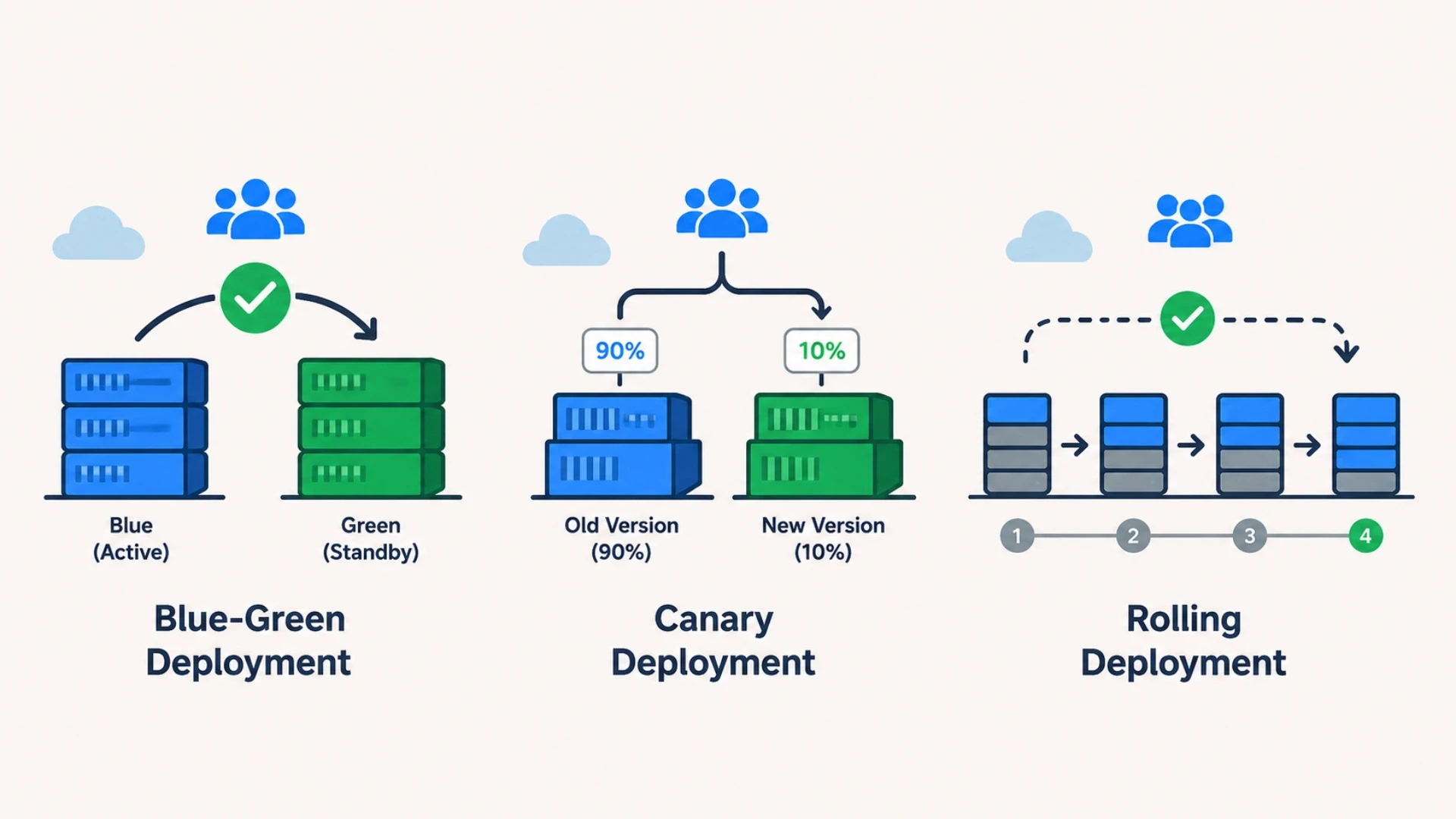
There are three production-grade zero-downtime deployment strategies. The right one depends on your platform's risk tolerance, traffic patterns, and infrastructure. A DevOps engineer selects the strategy before configuring anything.
Blue-Green Deployment |
Two identical environments run simultaneously. Traffic switches from the old version (Blue) to the new version (Green) instantly at the load balancer. Rollback takes seconds: switch traffic back to Blue. |
Best for: platforms where any downtime is unacceptable and rollback speed is the top priority. Gaming platforms, financial transactions, e-commerce during peak. |
Cost: higher infrastructure cost during deployment window (two full environments running). AWS ALB + CodeDeploy or Kubernetes Blue-Green with Helm. |
Setup time: 2 to 4 days. |
Canary Deployment |
New version receives 5% of live traffic while 95% stays on the current version. Traffic percentage increases gradually as metrics confirm health. If a problem appears, traffic routes back to the current version. Only 5% of users were ever exposed. |
Best for: platforms where limiting blast radius matters more than instant switching. SaaS products with complex user flows, mobile platforms with diverse device types. |
Cost: medium infrastructure overhead. Requires granular monitoring to detect problems in 5% of traffic. |
Setup time: 3 to 6 days. |
Rolling Deployment |
New version replaces old instances one at a time. While one instance runs the new version, the others still run the old. No downtime because the load balancer routes around instances being updated. |
Best for: platforms where some mixed-version request handling is acceptable and infrastructure cost of Blue-Green is not justified. Internal tools, dev environments, low-risk updates. |
Cost: lowest infrastructure overhead. Works with existing auto-scaling groups. |
Setup time: 1 to 2 days. |
The full comparison of Blue-Green and Canary across eight dimensions, including platform-specific implementation guides for AWS and GCP, is in the Blue-Green vs Canary deployment guide. This article focuses on what gets built for zero-downtime deployments and what the setup costs.
Not Sure Which Zero-Downtime Strategy Fits Your Platform?
Tell Acquaint Softtech your cloud provider, your current deployment process, and how often you deploy. A vetted DevOps engineer will recommend the right strategy for your risk profile and send a matched profile within 24 hours.
What a DevOps Engineer Builds: The Full Implementation
Zero-downtime deployment is not a single configuration change. It require a combination of infrastructure setup, CI/CD pipeline configuration, health check logic, and rollback automation. Here is the complete build list.
The full zero-downtime deployment stack
1. Load balancer configuration:
ALB target groups (Blue-Green) or weighted routing rules (Canary).
Health check endpoint that returns 200 only when the app is fully ready.
Deregistration delay: ALB waits for in-flight requests before removing an instance.
2. Deployment automation:
AWS CodeDeploy Blue-Green configuration, or Kubernetes rolling update with
maxUnavailable: 0 and maxSurge: 1, or Helm chart upgrade with health checks.
Canary: weighted target group configuration or Istio/App Mesh traffic splitting.
3. Health check gates in the CI/CD pipeline:
Pipeline waits for the new version to pass health checks before switching traffic.
If health checks fail within the timeout: deployment aborts automatically.
No traffic ever reaches a version that has not passed health checks.
4. Automated rollback:
Blue-Green: traffic switches back to Blue in seconds if Green fails post-deployment.
Canary: traffic routes back to current version if error rate threshold is breached.
Rolling: kubectl rollout undo or CodeDeploy rollback trigger automatically.
5. Post-deployment validation:
Smoke tests run against the new version after traffic switch.
Synthetic transaction confirms critical user flows are working.
Alert fires to Slack if validation fails post-deployment.
For teams running Kubernetes on AWS EKS, the CI/CD for Kubernetes guide covers how zero-downtime rolling and Blue-Green deployments are configured at the Helm and Kubernetes layer specifically.
What It Costs in 2026
The cost of zero-downtime deployment setup depend on the strategy chosen and the cloud platform. Here are the honest 2026 numbers at Acquaint Softtech rates of $22/hour.
Scenario | DevOps time at $22/hour | What is included |
Blue-Green on AWS (ALB + CodeDeploy) | 2 to 4 days: $352 to $704 | Two environment config, ALB target groups, CodeDeploy app, health check gate, rollback automation |
Canary on AWS (ALB weighted routing) | 3 to 6 days: $528 to $1,056 | Weighted target groups, traffic shift automation, monitoring dashboards, alert-triggered rollback |
Kubernetes rolling zero-downtime (EKS + Helm) | 2 to 3 days: $352 to $528 | Helm chart update strategy, readiness probes, preStop hook, PodDisruptionBudget |
Canary on GCP (Cloud Run + GitHub Actions) | 3 to 5 days: $528 to $880 | Cloud Run revision traffic splitting, canary metrics, automated rollback |
Full zero-downtime stack (strategy + CI/CD integration + monitoring) | 5 to 10 days: $880 to $1,760 | Complete: deployment strategy, pipeline integration, health gates, rollback, post-deploy validation |
Monthly retainer (zero-downtime + ongoing ownership) | $3,200/month | Full infrastructure ownership including deployment strategy maintenance |
The business cost of NOT having zero-downtime deployments
SaaS platform, 5,000 daily active users, 3-minute deployment window: 3 minutes x 5,000 DAUs / 1,440 minutes per day = approx 10 users disrupted per deployment
At 10 deployments per week: 100 users disrupted per week, 5,200 per year.
For a product with $50 MRR per user: $260,000 annual revenue at risk from deployment disruption.
Zero-downtime deployment setup at $22/hour: $352 to $1,760 (one-time).
The setup pays back on the first deployment that would otherwise have caused churn.
Acquaint Softtech's hire DevOps engineers service provides pre-vetted engineers with zero-downtime deployment experience on AWS, Azure, and GCP. Starting at $22/hour or $3,200/month on a monthly retainer.
For the full DevOps engineer rate comparison by region and seniority, the DevOps engineer cost guide covers what each price tier delivers.
Ready to Stop Taking Your Application Offline on Every Deployment?
Taukir and the Acquaint Softtech DevOps team have implemented Blue-Green deployments for gaming platforms and Canary deployments for SaaS products on AWS and GCP. Tell us your cloud provider and current deployment process. Matched profile in 24 hours.
Common Mistakes That Cause Downtime Despite Zero-Downtime Configuration
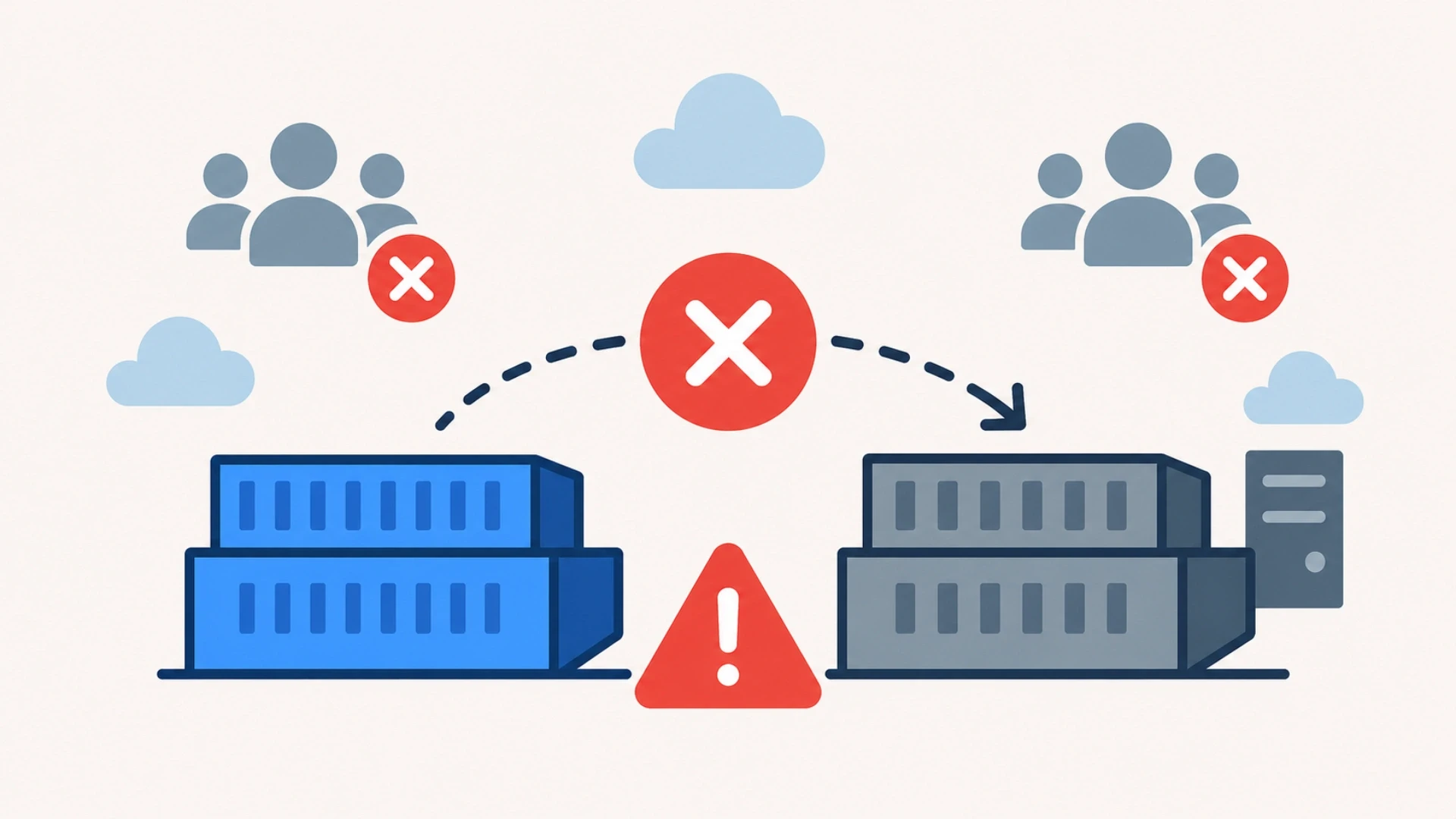
Zero-downtime deployment is correctly configured but the application still goes down. These are the specific mistakes that cause this, and what a DevOps engineer prevents from the start.
Health check returns 200 before the app is ready |
The /health endpoint returns 200 as soon as the web server starts, before the database connection pool is warm and before the application cache is populated. The load balancer sees a healthy response and routes traffic. Users hit an application that is not yet ready to handle requests. |
Fix: the health check endpoint must validate that all dependencies (database connection, cache, external API connections) are ready before returning 200. This is configured in the application code, not just the infrastructure. |
Database migrations run before the new version is ready |
A database schema change is applied to the shared database before the new version handles traffic. The old version (still handling 100% of traffic during Blue-Green switch) encounters a schema it was not written for. Both versions break simultaneously. |
Fix: database changes must be backward compatible with the previous version during the deployment window. Additive-only changes first (new columns with defaults), then remove deprecated columns in a subsequent deployment after the old version is fully retired. |
No deregistration delay on the load balancer |
The load balancer removes an instance from the target group immediately when a deployment starts. Requests already in flight to that instance receive a connection reset error. |
Fix: ALB deregistration delay (default 300 seconds, typically set to 30 to 60 seconds) allows in-flight requests to complete before the instance is removed from service. |
For platforms experiencing crashes under traffic spikes alongside deployment downtime, the traffic spike infrastructure guide covers the auto-scaling and load balancing layer that solves both problems simultaneously.
Individual DevOps engineer on a monthly retainer through our staff augmentation model. Starting at $22/hour or $3,200/month. Available in 48 hours.
For a vendor-managed DevOps team covering deployment strategy and broader infrastructure, our dedicated development teams service covers the full engagement.
Every Deployment a Risk Event? Acquaint Softtech Has DevOps Engineers Who Fix That This Sprint.
Pre-vetted DevOps engineers with zero-downtime deployment experience on AWS, Azure, and GCP. Starting at $22/hour or $3,200/month. Matched profile in 24 hours. Engineer in your standup in 48 hours.
Frequently Asked Questions
-
What is zero-downtime deployment?
Zero-downtime deployment is a deployment strategy where the new version of an application is fully running and tested before any user traffic is routed to it. Users never experience an outage or error during the deployment window. It is achieved through Blue-Green, Canary, or correctly configured Rolling deployment.
-
What is the difference between Blue-Green and zero-downtime deployment?
Blue-Green is one method of achieving zero-downtime deployment. Zero-downtime deployment is the outcome. Blue-Green deployment runs two environments simultaneously and switches traffic instantly. Canary and Rolling deployments are the other zero-downtime strategies, each with different trade-offs.
-
How much does it cost to set up zero-downtime deployments?
At Acquaint Softtech's rate of $22/hour: Blue-Green on AWS takes 2 to 4 days and costs $352 to $704. A full zero-downtime stack including pipeline integration, health gates, and monitoring takes 5 to 10 days and costs $880 to $1,760. Typically absorbed into the first sprint of a $3,200/month monthly retainer.
-
Can zero-downtime deployment be added to an existing CI/CD pipeline?
Yes. A DevOps engineer adds the deployment strategy configuration to the existing pipeline without rebuilding it. The pipeline gains a deployment strategy stage: it now builds, tests, and deploys with zero downtime instead of building, testing, and deploying with a restart.
-
What is a health check and why does it matter for zero-downtime deployment?
A health check is an HTTP endpoint (typically /health) that the load balancer calls to verify the application is ready to receive traffic. For zero-downtime deployment, the health check must return 200 only when all dependencies (database, cache, external APIs) are ready. A premature 200 routes users to an unready instance.
-
How long does it take to implement zero-downtime deployments?
Blue-Green on AWS: 2 to 4 days. Canary: 3 to 6 days. Rolling on Kubernetes: 2 to 3 days. Full stack including pipeline integration and monitoring: 5 to 10 days. Acquaint Softtech engineers start within 48 hours of engagement.
-
Do I need a DevOps engineer to set up zero-downtime deployments?
For Blue-Green and Canary: yes. The load balancer configuration, deployment automation, health check gates, and rollback logic require DevOps expertise. A developer who sets this up without DevOps experience typically makes one of the three mistakes listed above and experiences downtime anyway.
Taukir Katava is a DevOps Engineer at Acquaint Softtech with 4+ years of experience across AWS, Azure, and GCP. He specialises in Kubernetes cluster administration, CI/CD pipeline automation, and cloud infrastructure design for high-traffic platforms. Taukir writes about the practical side of production DevOps: what infrastructure decisions cost and what they actually deliver.
Table of Contents
Get Started with Acquaint Softtech
- 13+ Years Delivering Software Excellence
- 1300+ Projects Delivered With Precision
- Official Laravel & Laravel News Partner
- Official Statamic Partner

Cloud Infrastructure Cost Optimisation: What a DevOps Engineer Saves You in the First 90 Days
Cloud infrastructure waste accumulates silently across 8 categories. Here is what a DevOps engineer audits, what they fix first, and what savings look like across a 90-day engagement in 2026.
Taukir katava
May 19, 2026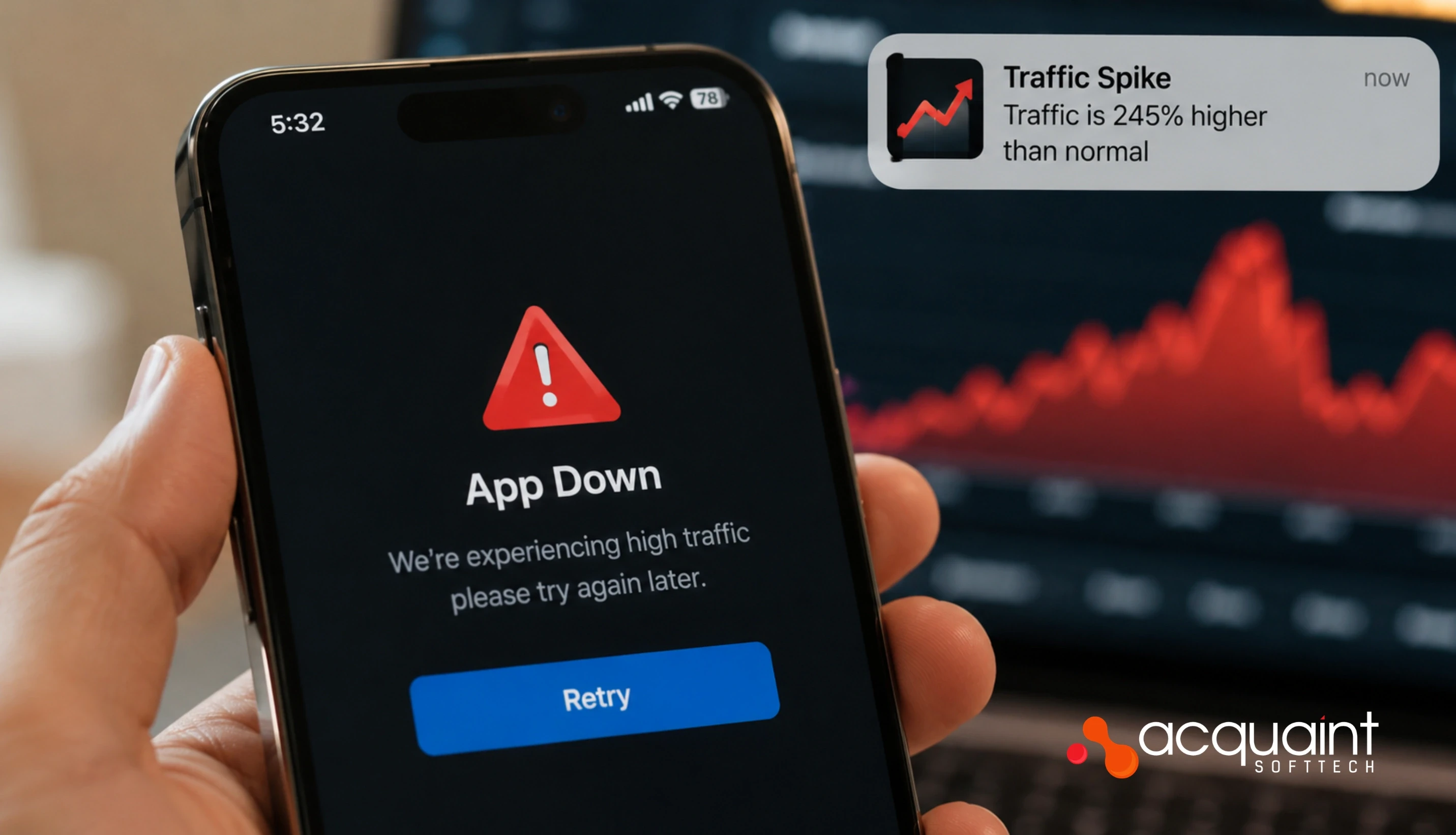
App Crashes Every Traffic Spike: The Infrastructure a DevOps Engineer Builds to Stop It
If your app crashes every time traffic spikes, the problem is infrastructure gaps, not code. Here is what a DevOps engineer diagnoses, builds, and delivers in the first 30 days.
Taukir katava
May 7, 2026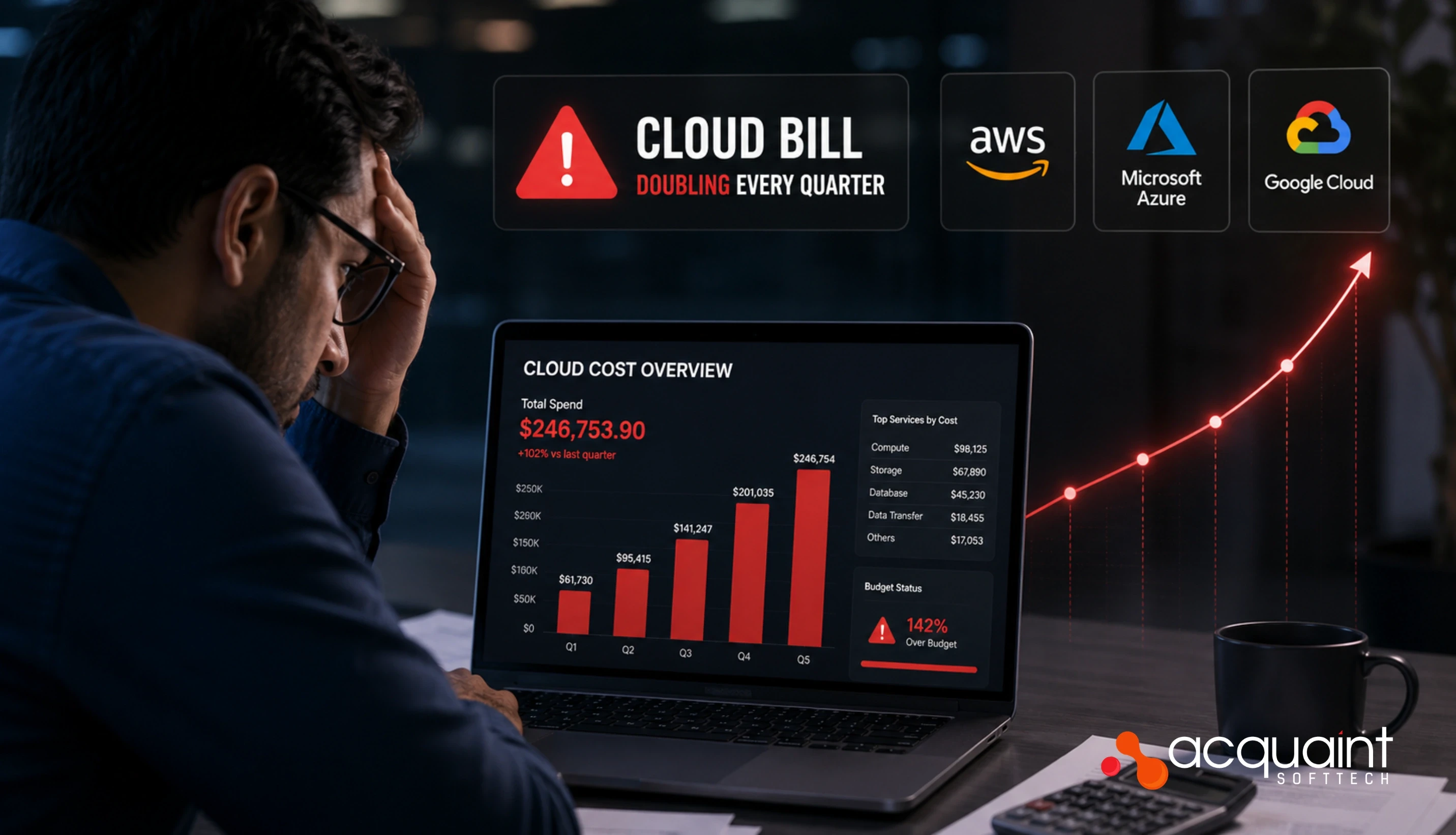
Cloud Bill Doubling Every Quarter: What a DevOps Engineer Finds and Fixes in 30 Days
AWS bill doubling every quarter without a clear reason? A DevOps engineer typically finds 20 to 40% of cloud spend as waste. Here are the 7 categories they fix first.
Taukir katava
May 8, 2026India (Head Office)
203/204, Shapath-II, Near Silver Leaf Hotel, Opp. Rajpath Club, SG Highway, Ahmedabad-380054, Gujarat
USA
7838 Camino Cielo St, Highland, CA 92346
UK
The Powerhouse, 21 Woodthorpe Road, Ashford, England, TW15 2RP
New Zealand
42 Exler Place, Avondale, Auckland 0600, New Zealand
Canada
141 Skyview Bay NE , Calgary, Alberta, T3N 2K6