

How to Build a Robo-Advisor Platform: Portfolio Allocation and Rebalancing Algorithms
To build a robo-advisor platform, combine five engines: digital onboarding with a risk questionnaire, a portfolio allocation engine using mean-variance optimization to map risk scores to model portfolios, a rebalancing engine that monitors drift and triggers trades, a brokerage integration layer for execution, and a reporting and compliance layer.

Ahmed Ginani

- You are a founder, RIA, or wealth firm planning to launch an automated investing platform.
- You want to understand the allocation and rebalancing algorithms behind a robo-advisor.
- You need to know how risk profiling maps to model portfolios and when rebalancing should trigger.
- You are scoping the feature set, tech stack, cost, and timeline before briefing a development team.
- You need to map compliance such as RIA registration and fiduciary duty before you write code.
Introduction
A founder spends six months and a six-figure budget building a beautiful investing app, then watches it stall in week fourteen. The reason is rarely the UI. It is that the portfolio allocation engine, the rebalancing logic, the brokerage integration, and the compliance layer were treated as features to add later rather than the actual product. A robo-advisor is not an app with an investing screen; it is a set of financial algorithms wearing an app.
The cost of getting this wrong compounds. A rebalancing engine that triggers on the wrong drift threshold generates needless taxable events and erodes the after-tax return that justifies the platform's fee. An allocation model that is too sensitive to its return assumptions produces wild, untradeable portfolios. And a compliance gap, such as acting as an unregistered investment adviser, is not a bug you patch but a regulatory event that can end the business. Most teams discover these problems only after launch, when fixing them means rebuilding the core. Acquaint Softtech's software product development services exist to prevent exactly this, building the allocation, rebalancing, and compliance engines as the foundation rather than the finish.
This article treats a robo-advisor as the five engines it actually is and shows how each one works, from the math of mean-variance optimization to the drift thresholds that govern rebalancing. The opportunity is real: robo-advisors charge 0% to 0.50% of assets under management versus the 1% or more charged by human advisers, and the market keeps expanding as investors move to low-cost automated management, according to industry investing data.
Acquaint Softtech has delivered 1,300+ software projects across 20+ industries in 13+ years, with 70+ in-house engineers, and clients in the USA, UK, Europe, Australia, and New Zealand deploy fintech and investment products within 48 hours of a brief.
By the end, you will know the allocation and rebalancing algorithms, the feature build order, the tech stack, the compliance surface, and the real cost and timeline before you brief a development partner. For the broader context on building and scaling investment products end to end, start with the complete guide to software product development in 2026, the master pillar this article supports.
The Five Engines Behind Every Robo-Advisor

A robo-advisor is built from five engines that must work together before a single dollar is invested: onboarding and risk profiling, portfolio allocation, rebalancing, brokerage execution, and reporting with compliance. Understanding what a robo-advisor platform is means seeing these as separate systems with separate failure modes, not one monolithic app. Teams that hire dedicated developers with investment-domain experience build them as a connected pipeline rather than discovering the missing engine mid-project.
The flow is sequential and event-driven: onboarding produces a risk score, the allocation engine maps that score to a model portfolio, the brokerage layer executes the initial trades, the rebalancing engine monitors drift against the target and triggers corrective trades, and the reporting layer documents everything for the investor and the regulator. An IT staff augmentation engagement that adds quant-aware engineers early is what keeps these engines coherent as the product scales.
The benefit for a wealth business is scale: algorithms manage thousands of portfolios at a cost structure no human-advised model can match, which is why robo-advisors democratized access to disciplined investing. For a wider view of how fintech delivery partners are evaluated on investment and trading work, this roundup of top MERN stack development companies in India, published on acquaintsoft.com, breaks down the selection criteria that matter.
Engine | Responsibility | If It Fails |
Onboarding & profiling | Produces a risk score | Wrong portfolio assigned |
Allocation engine | Maps score to weights | Untradeable or risky mix |
Rebalancing engine | Corrects drift | Tax drag, risk creep |
Brokerage layer | Executes trades | Failed or costly fills |
Reporting & compliance | Documents everything | Regulatory exposure |
What is a robo-advisor platform in simple terms?
A robo-advisor is an automated investing platform that asks a few questions about your goals and risk tolerance, assigns you a diversified portfolio of low-cost funds, and then keeps that portfolio aligned to its target by rebalancing automatically. It replaces the manual work of a human adviser with algorithms, which is why it can charge a fraction of the fee.
Onboarding and Risk Profiling: Turning Answers Into a Risk Score
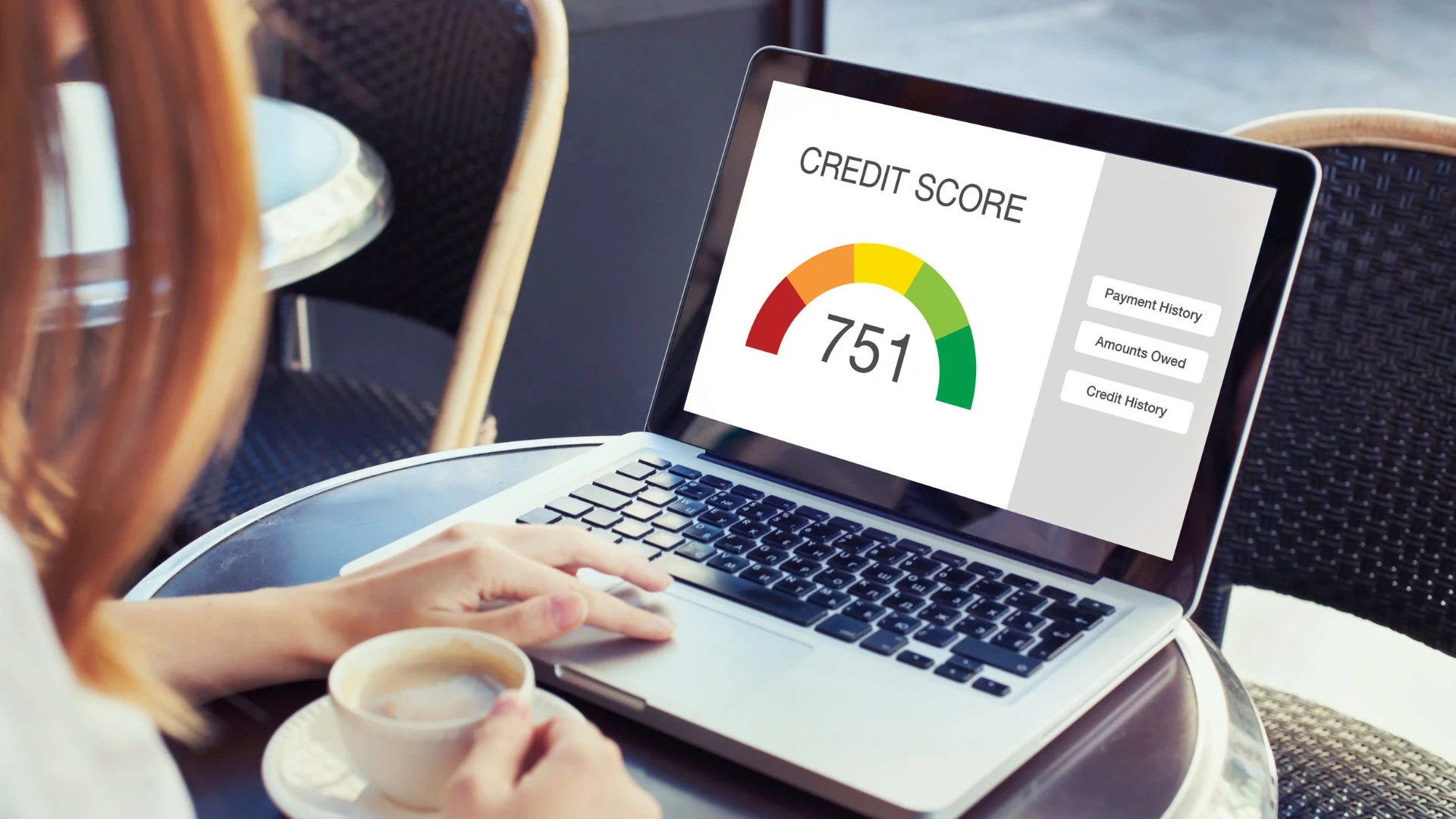
Everything downstream depends on the risk score, so onboarding is where a robo-advisor earns or loses its accuracy. The investor completes a structured questionnaire about goals, time horizon, and risk tolerance, and a scoring model converts those answers into a single risk score that maps to a model portfolio. A wrongly estimated risk profile leads to a portfolio that does not match the client's real risk-return tradeoff, which is the most damaging silent error in the whole system. Acquaint Softtech's Python developers build the scoring model and the behavioral logic that sits behind the questionnaire.
Modern onboarding combines the structured questionnaire with behavioral scoring and a KYC and AML workflow, because an investment account cannot open without identity verification. The flow must balance conversion against accuracy: too many questions and users abandon, too few and the risk score is unreliable. Designing this front end to be both fast and rigorous is delivered through ReactJS development services using patterns built for high-trust financial onboarding.
The risk score is not a one-time value; it is revisited as the investor's life and goals change, and the platform re-maps the portfolio accordingly. The front-end patterns that make these multi-step, stateful flows reliable are explained in this MERN stack development guide.
How does a robo-advisor decide which portfolio to assign?
A robo-advisor assigns a portfolio by converting the answers from a risk questionnaire into a single risk score, then mapping that score to one of several model portfolios built around different risk bands. A conservative score maps to a bond-heavy mix, an aggressive score to an equity-heavy mix, and the score is revisited as the investor's goals and circumstances change.
Portfolio Allocation: The Mean-Variance Optimization Engine
The allocation engine is the mathematical heart of a robo-advisor. Most platforms use Markowitz mean-variance optimization, the foundation of Modern Portfolio Theory, to compute the portfolio weights that maximize expected return for a given level of risk, or equivalently maximize the Sharpe ratio. The engine takes a risk score, an investment universe of low-cost ETFs, and a covariance matrix estimated from historical data, and returns the optimal weights. Acquaint Softtech's Python developers implement this layer using libraries such as PyPortfolioOpt and cvxpy that are built for exactly this optimization.
Naive mean-variance optimization has two well-known problems: the optimal weights are extremely sensitive to the return assumptions, and unconstrained optimization tends to produce extreme corner solutions with large or zero positions. Production engines fix this with shrinkage estimators, short-selling constraints, and frameworks such as Black-Litterman that blend market equilibrium with the platform's own views. Building these refinements correctly is an AI and ML development services task as much as a software one, because the model governance and back-testing matter as much as the code.
In 2026, the leading edge layers machine learning on top of the classical model, using reinforcement learning for multi-period planning and ML to forecast expected returns and volatilities. The data-engineering patterns behind a retrainable optimization pipeline are covered in this MERN stack complete guide (part 2).
Algorithm insight: The classic mistake is trusting raw mean-variance output. Because the optimizer is hypersensitive to return estimates, a tiny change in assumptions can swing the portfolio dramatically. Production robo-advisors constrain the optimizer, apply shrinkage to the covariance matrix, and back-test against stress periods such as the COVID-19 crash before any model goes live.
What algorithm do robo-advisors use for portfolio allocation?
Most robo-advisors use Markowitz mean-variance optimization, the core of Modern Portfolio Theory, to compute portfolio weights that maximize expected return for a given risk level. Because raw optimization is sensitive to inputs, production engines add constraints, shrinkage estimators, and frameworks like Black-Litterman, and increasingly layer machine learning to forecast returns and volatility.
Rebalancing Algorithms: Threshold vs. Time, and Why Drift Matters
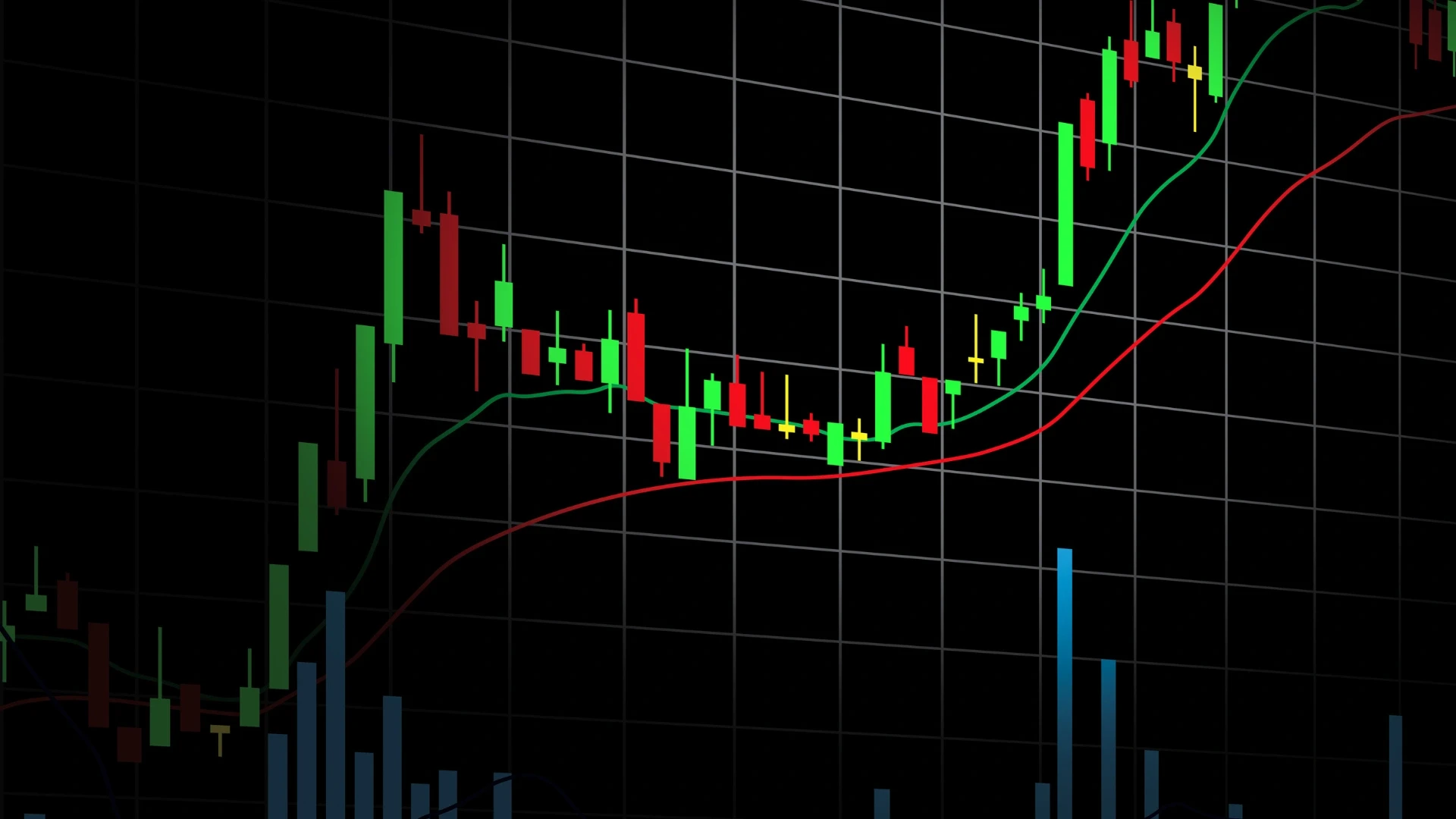
Once a portfolio is invested, market movements push it away from its target allocation, a process called drift. The rebalancing engine continuously monitors drift against the target and triggers corrective trades to restore the intended risk profile. There are two main strategies: time-based rebalancing on a fixed schedule, and threshold-based rebalancing that triggers only when an asset class drifts outside a set band. Acquaint Softtech's Python developers build the drift-monitoring and trigger logic that decides when a portfolio is rebalanced.
Robo-advisors generally favor threshold-based rebalancing over pure time-based rebalancing because it trades only when the portfolio actually needs it, reducing unnecessary transaction costs and taxable events. The most effective production strategy combines threshold triggers with cash-flow rebalancing, using new deposits to buy underweight assets so the portfolio is corrected without selling. Order-routing logic must account for transaction costs, liquidity, and tax impact before execution, a discipline best delivered through software development outsourcing with a team that has built real brokerage integrations.
Rebalancing is where disciplined investing beats emotion: it forces the platform to sell high and buy low mechanically, removing the timing errors that hurt manual investors. The deployment and scaling patterns that keep a real-time rebalancing engine reliable under market-open load are detailed in this MERN stack app deployment guide.
Strategy | Trigger | Best Use |
Time-based | Fixed schedule | Simplicity, predictability |
Threshold-based | Drift outside band | Cost and tax efficiency |
Cash-flow | New deposits | Correct without selling |
Hybrid | Threshold + cash-flow | Production standard |
How often do robo-advisors rebalance portfolios?
Most robo-advisors use threshold-based rebalancing rather than a fixed schedule, meaning they rebalance only when an asset class drifts outside a predefined band rather than on a set calendar. This trades less often than time-based rebalancing, which lowers transaction costs and taxable events while still keeping the portfolio aligned to its target risk profile.
Get a Robo-Advisor Cost and Timeline Estimate
Acquaint Softtech delivers robo-advisor and wealth platform builds at up to 40% lower cost than Western agencies, at $25 to $49 per hour, with 95% on-time sprint delivery and a 4.9/5 rating from 50+ verified Clutch reviews. Deploy your first fintech engineer within 48 hours of brief.
Tax-Loss Harvesting and the Edge That Justifies the Fee
Tax-loss harvesting is the feature that turns a commodity robo-advisor into one investors will pay for. The engine sells positions trading at a loss to realize a capital loss that offsets gains elsewhere, then buys a similar but not identical asset to keep the allocation intact while respecting wash-sale rules. Done well, it can add meaningful after-tax return for higher-income investors. Acquaint Softtech's Python developers build the harvesting logic, including the wash-sale guardrails that keep it compliant.
Harvesting is algorithmically demanding because it must coordinate with rebalancing and respect tax rules: it cannot trigger a wash sale, it must track cost basis precisely, and it must weigh the tax benefit against transaction costs before trading. This is where a generic development team struggles and a fintech-experienced one earns its keep, which is why founders choose software product engineering services with quant-aware delivery for this layer.
Goal-based planning is the natural companion feature, letting investors create separate buckets for retirement, a home, or education, each with its own allocation and projection. The framework decision that shapes how maintainable these compounding features stay over time is compared in this guide on Laravel vs MERN stack for startups, published on acquaintsoft.com.
What is tax-loss harvesting in a robo-advisor?
Tax-loss harvesting is an automated strategy where the robo-advisor sells an investment at a loss to offset capital gains tax, then buys a similar asset to keep the portfolio's allocation intact while avoiding a wash sale. It can boost after-tax returns for higher-income investors and is one of the main features that justifies a robo-advisor's management fee.
Compliance, Fiduciary Duty, and the Regulatory Surface
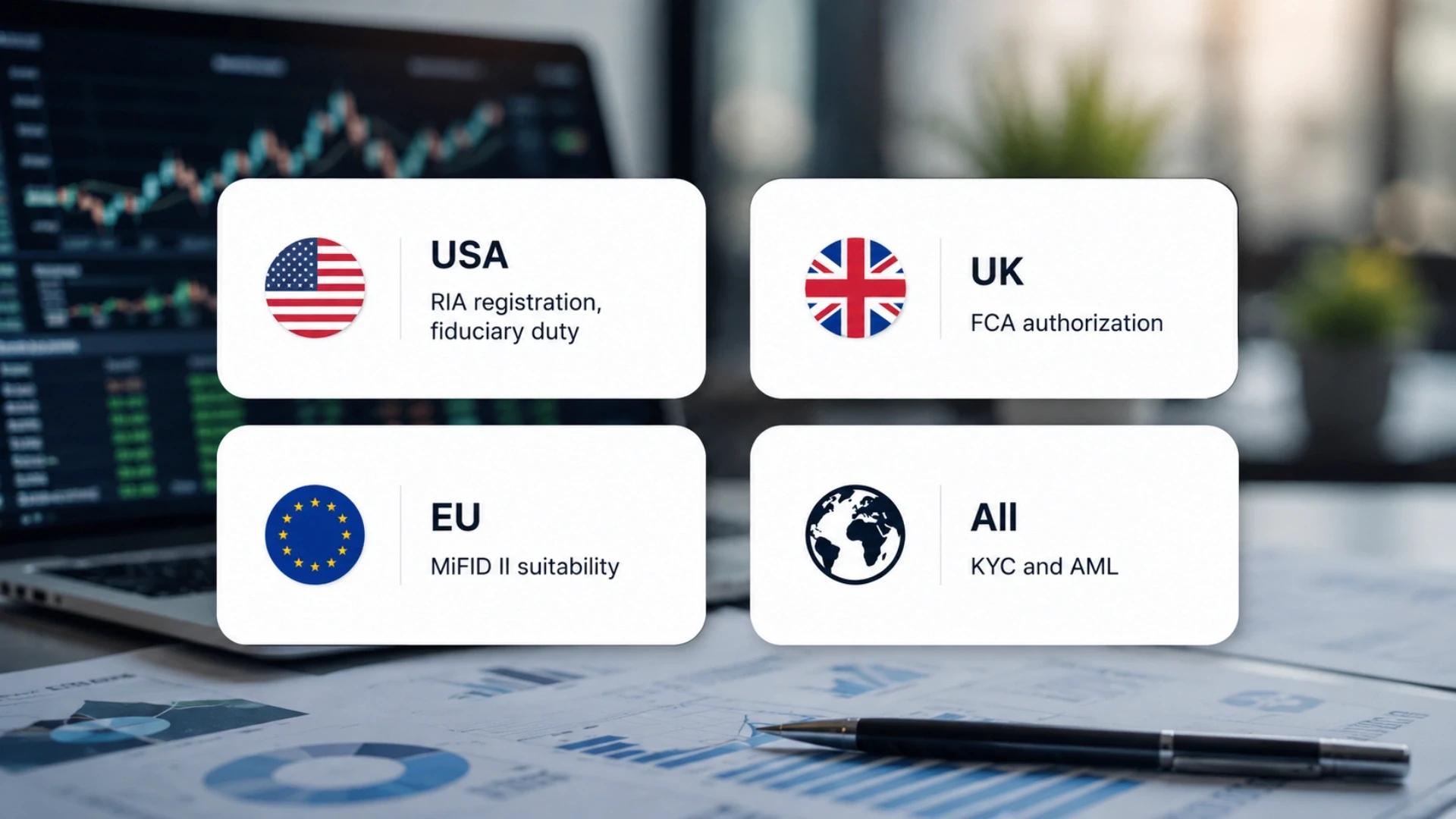
A robo-advisor is a regulated investment adviser, not just software, and the compliance surface must be designed into the platform from day one. In the US, operating a robo-advisor generally requires registration as a Registered Investment Adviser with the SEC or state regulators, which brings a fiduciary duty to act in the client's best interest. KYC and AML checks are mandatory before an account opens, and every recommendation and trade must be documented. Acquaint Softtech's DevOps engineers build the audit logging and reporting infrastructure that makes these obligations continuous.
The fiduciary standard shapes the algorithms themselves: the allocation engine must be able to justify why a portfolio suits a client's stated risk profile, and the platform must disclose fees, conflicts, and methodology. A model that cannot explain its recommendation is a regulatory liability, so explainability and record-keeping are engineering requirements, not afterthoughts. Mapping these obligations before development begins is best handled through software development outsourcing with a team experienced in regulated investment products.
This kind of audit-ready discipline is exactly what verified clients highlight about Acquaint Softtech, including its work across banking, card, and crypto operations, as covered in this overview of the company's Clutch recognition and verified results, published on acquaintsoft.com.
Region | Key Requirement | Where It Lives |
USA | RIA registration, fiduciary duty | Allocation, disclosure |
UK | FCA authorization | Onboarding, advice rules |
EU | MiFID II suitability | Risk profiling, reporting |
All | KYC and AML | Onboarding |
Do you need a license to run a robo-advisor?
In most jurisdictions, yes. In the US, a robo-advisor generally must register as a Registered Investment Adviser with the SEC or a state regulator and carries a fiduciary duty to act in the client's best interest. The UK requires FCA authorization, and the EU applies MiFID II suitability rules, and all jurisdictions require KYC and AML checks before accounts open.
Robo-Advisor Features and the Best Tech Stack
The robo-advisor MVP must contain everything required to onboard an investor, build and fund a portfolio, and keep it aligned: risk profiling, the allocation engine, brokerage integration, drift-based rebalancing, a portfolio dashboard, and reporting. Tax-loss harvesting, goal-based planning, and AI insights are phase-two features added after the core is validated. This build order is defined for every engagement by Acquaint Softtech's dedicated development teams, who often leverage white label software development solutions to accelerate delivery while scoping the MVP around one investor segment and one portfolio family first.
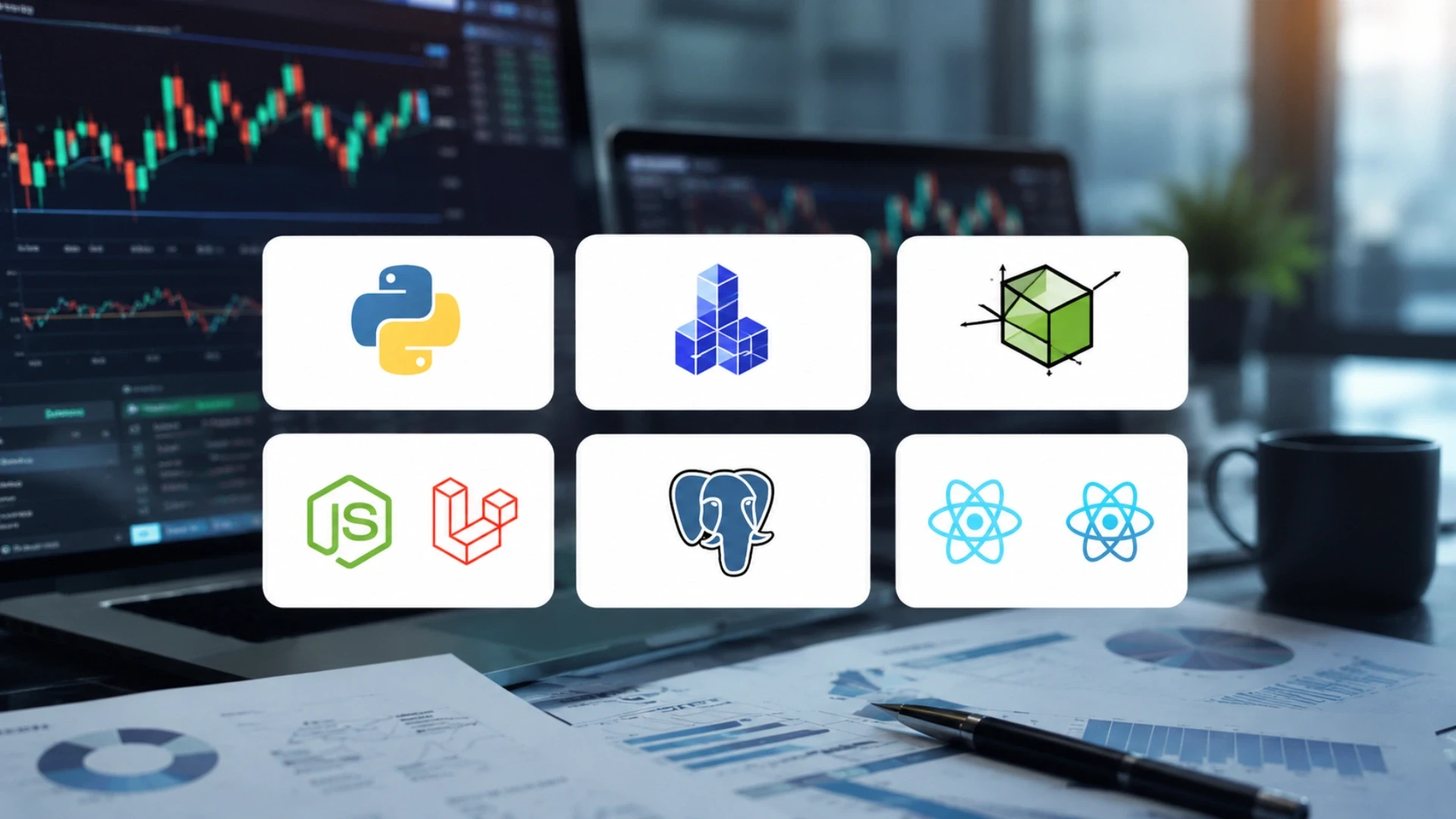
The tech stack is driven by three needs: a numerically capable language for the optimization and rebalancing math, ACID-compliant storage for holdings and transaction history, and reliable real-time market data and brokerage integration. Python is the standard for the algorithm layer, paired with Node.js or Laravel for the application and PostgreSQL for the ledger. Founders choose software product development services with this stack because the algorithm and application layers are built to talk to each other from the start.
Backend and algorithms: Python with PyPortfolioOpt and cvxpy for optimization, Node.js or Laravel for the application layer.
Data and ledger: PostgreSQL for holdings and transactions, plus a time-series store for market data.
Integration: real-time market-data feeds and brokerage or custody APIs for execution, secured with OAuth 2.0.
Apps: React and React Native for the investor dashboard and onboarding, with biometric authentication.
The full-stack patterns for connecting a JavaScript application layer to a Python algorithm service are explained step by step in this complete MERN stack development guide, published on acquaintsoft.com.
Layer | Recommended Tech | Why |
Algorithms | Python, PyPortfolioOpt, cvxpy | Optimization and rebalancing |
Application | Node.js or Laravel | Workflow, auth, accounts |
Ledger database | PostgreSQL | ACID holdings integrity |
Apps | React, React Native | Dashboard and onboarding |
What is the best tech stack for a robo-advisor platform?
The best robo-advisor tech stack in 2026 uses Python with PyPortfolioOpt and cvxpy for the optimization and rebalancing algorithms, Node.js or Laravel for the application layer, PostgreSQL for the holdings ledger, a time-series store for market data, and React or React Native for the apps. Brokerage and market-data APIs are integrated with OAuth 2.0, and the architecture is API-first so the algorithm layer scales independently.
Development Cost, Timeline, and Build-vs-Buy
Build Type | Cost | Timeline |
Lean MVP, one portfolio family | $20K to $80K | 12 to 20 weeks |
Full robo-advisor, web + mobile | $80K to $200K | 20 to 32 weeks |
AI-heavy, tax-loss harvesting | $200K to $300K+ | 8 to 14 months |
White-label platform | Lower upfront | Weeks |
Robo-advisor development cost in 2026 ranges from $20,000 to $300,000+, depending on the sophistication of the AI and optimization layer, the number of user interfaces, and compliance requirements. A lean MVP with a single portfolio family and basic rebalancing sits at the lower end, while a platform with custom AI scoring, tax-loss harvesting, and both web and mobile applications sits at the top. India-based teams can deliver the same quality at up to 40% lower total cost, which is why many founders choose software product engineering services and hire MEAN stack developers to build scalable robo-advisor platforms efficiently.
The biggest cost drivers are the number of user interfaces, the compliance depth, and the sophistication of the allocation and harvesting algorithms. Building both web and mobile with secure onboarding and biometric authentication raises cost, as does adding advanced optimization beyond basic mean-variance. The most underestimated category is brokerage and market-data integration, which is best scoped through software development outsourcing with a team that has built real execution layers before.
The biggest cost lever is starting narrow: launch one portfolio family for one investor segment with an offshore team, then expand after validation. The case for this offshore, MVP-first approach, with a real example of the savings, is documented in this story on how a startup saved $60K a year on remote hiring.
How much does a robo-advisor platform cost to build?
A lean robo-advisor MVP with one portfolio family costs $20,000 to $80,000, a full platform with web and mobile apps costs $80,000 to $200,000, and an AI-heavy build with tax-loss harvesting costs $200,000 to $300,000 or more. India-based teams at $25 to $49 per hour cut total cost by up to 40% versus US agencies, with timelines from 12 weeks for an MVP.
How Acquaint Softtech Builds Robo-Advisor Platforms
Acquaint Softtech has delivered 1,300+ software projects across 20+ industries in 13+ years, with 70+ in-house engineers across Python, Node.js, React, Laravel, and DevOps. Wealth and investment platform engineering is a core capability, spanning portfolio optimization, automated rebalancing, brokerage integration, and compliance for clients in the USA, UK, Europe, Australia, and UAE. Engagements begin with a discovery and scoping phase that maps the five engines and the regulatory surface before development starts.
Real case study: SuperFi, a UK fintech money-management app
SuperFi Finance, a UK client, came to Acquaint Softtech with a concept to help users manage credit card debt, calculate a time-to-debt-free figure, and earn rewards for timely payments, a money-management product adjacent to wealth and investing. The team built an MVP first, designing a minimalist single-page interface for the core workflow, then a full website and mobile app around it, including financial calculators, expert guidance, and an administrator panel, delivered from the ground up within a tight deadline. The full project is documented in the SuperFi fintech app case study, and the MVP-first, niche-focused approach is exactly the model a robo-advisor founder should follow.
Verified client review (Clutch): On a fintech modernization engagement, a verified Clutch reviewer noted that Acquaint Softtech added security and auditing depth without slowing the system, applying framework knowledge to instill discipline in access, traceability, and maintainability across banking, card, and crypto operations, and adjusted quickly when priorities shifted, as they often do in fintech and wealth tech.
Read all 50+ verified client reviews, where Acquaint Softtech holds a 4.9/5 rating with Premier Verified status, and for context on how the company ranks among engineering partners, see this list of the best software product engineering companies in 2026.
The Acquaint Softtech 4-Phase Robo-Advisor Framework
1. Discovery and engine mapping (weeks 1 to 2): fix the portfolio family, the five-engine scope, and the regulatory map before any code is written.
2. Profiling and allocation (sprints 1 to 3): build the risk questionnaire, scoring model, and the mean-variance allocation engine with constraints.
3. Rebalancing and execution (sprints 3 to 6): build the drift-monitoring engine, brokerage integration, and the holdings ledger and reporting.
4. Testing, launch, and iteration (sprints 6 onward): back-test the algorithms against stress periods, run penetration and load tests, launch, and iterate.
Start Your Robo-Advisor Build with Acquaint Softtech
From the allocation and rebalancing algorithms to compliance and brokerage integration, this is the foundation every robo-advisor needs. Join 200+ tech companies who scaled with Acquaint Softtech: 4.9/5 on Clutch from 50+ verified reviews, 95% on-time delivery, and fintech engineers deployed within 48 hours of brief.
Frequently Asked Questions
-
How much does a robo-advisor platform cost to build?
Platform Type
Estimated Cost
Robo Advisor MVP
$20,000 – $80,000
Full Platform (Web + Mobile)
$80,000 – $200,000
Advanced AI Powered Platform
$200,000 – $300,000+
-
What features does a robo-advisor platform need?
A robo-advisor needs risk profiling, a portfolio allocation engine, brokerage integration, automated rebalancing, a portfolio dashboard, and reporting as the phase-one core. Tax-loss harvesting, goal-based planning, dividend reinvestment, and AI insights are phase-two features added after the core allocation and rebalancing engines are validated with real portfolios.
-
How long does robo-advisor platform development take?
A lean robo-advisor MVP with one portfolio family typically takes 12 to 20 weeks, a full platform with web and mobile apps takes 20 to 32 weeks, and an AI-heavy build with tax-loss harvesting takes 8 to 14 months. Mapping the five engines and the compliance surface before development begins is the biggest predictor of an on-time launch.
-
What is the best tech stack for a robo-advisor platform?
The best robo-advisor tech stack uses Python with PyPortfolioOpt and cvxpy for the optimization and rebalancing algorithms, Node.js or Laravel for the application layer, PostgreSQL for the holdings ledger, a time-series store for market data, and React or React Native for the apps. Brokerage and market-data APIs are integrated with OAuth 2.0, and the architecture is API-first.
-
What algorithm do robo-advisors use for portfolio allocation?
Most robo-advisors use Markowitz mean-variance optimization, the foundation of Modern Portfolio Theory, to compute weights that maximize expected return for a given risk level. Because raw optimization is sensitive to its inputs, production engines add constraints, shrinkage estimators, and frameworks like Black-Litterman, and increasingly layer machine learning to forecast returns and volatility.
I help agencies and founders scale their tech teams with the right developers at the right time. At Acquaint Softtech, I focus on building long term partnerships and making remote hiring simple, predictable, and results driven. My goal is straightforward to help businesses grow faster with reliable dedicated developers.
Table of Contents
Get Started with Acquaint Softtech
- 13+ Years Delivering Software Excellence
- 1300+ Projects Delivered With Precision
- Official Laravel & Laravel News Partner
- Official Statamic Partner
Related Blog
How Payment Gateways Work: Transaction Flow, APIs, and Settlement Explained
A payment gateway is not a checkout button. It is a 7-step transaction pipeline that authenticates, routes, scores, and settles every card payment in under 2 seconds. Here is exactly how it works.
Ahmed Ginani
May 11, 2026.webp "The Complete Guide to FinTech Software Development in 2026")
The Complete Guide to FinTech Software Development in 2026
Complete guide to fintech software development 2026: all five verticals, compliance architecture, real build sequences, AI capabilities, and fintech development cost, from 1,300+ delivered projects.

Acquaint Softtech
May 6, 2026
Laravel 12 for SaaS & Fintech: Scalable, Secure, Compliant
Explore how Laravel 12 powers SaaS, fintech, and regulated industry apps with compliance, modularity, and secure architecture.
Acquaint Softtech
July 1, 2025India (Head Office)
203/204, Shapath-II, Near Silver Leaf Hotel, Opp. Rajpath Club, SG Highway, Ahmedabad-380054, Gujarat
USA
7838 Camino Cielo St, Highland, CA 92346
UK
The Powerhouse, 21 Woodthorpe Road, Ashford, England, TW15 2RP
New Zealand
42 Exler Place, Avondale, Auckland 0600, New Zealand
Canada
141 Skyview Bay NE , Calgary, Alberta, T3N 2K6