

How to Build a Travel Tech Startup: From Idea to MVP to Scale
To build a travel tech startup, validate your idea, build a lean MVP, and launch based on real user feedback. Most travel MVPs take 2–4 months and start at $20,000 with an offshore team.

Chirag Daxini
What if you could validate your travel startup before investing months into building the wrong product? As a Project Manager at Acquaint Softtech, I have seen founders use our software product development services to launch lean travel MVPs that reach product-market fit faster and with less risk. The challenge is not building a travel platform. It is validating the right features, launching with a focused MVP, and scaling based on real customer demand. This guide is part of our complete master blog on travel and hospitality software development.

- You have a travel startup idea and do not know the first technical step.
- You are a non-technical founder who needs to build a travel platform.
- You want to validate your idea before spending heavily on development.
- You need to know which features belong in a travel MVP and which to cut.
- You are choosing a tech stack and an engagement model for your build.
- You need a clear travel startup cost and timeline for 2026.
This article walks the full journey: idea, MVP, stack, and scale, the way the founders who make it actually do it. It is part of the Complete Guide to Travel and Hospitality Software Development, and pairs with our guide on how to build an online travel agency for founders building a booking marketplace.
What Is a Travel Tech Startup?
A travel tech startup is a company that uses software to solve a travel problem at scale: booking, planning, operations, experiences, or payments. It is not a travel agency with a website. It is a technology business whose product happens to serve travel.
That distinction matters because it shapes everything. A travel agency competes on service and relationships, while a travel tech startup competes on product, data, and scalable engineering. If you are building or scaling the platform, working with an experienced team like Hire MEAN Stack Developers can help accelerate development without scaling headcount.
Why the Idea Alone Is Worth Almost Nothing
Every founder believes their idea is the hard part. It is not. Execution is. The same idea handed to ten teams produces ten different outcomes, and the difference is always how well they validate, build, and iterate, not how clever the original concept was.
Picking the right business model is part of defining the startup. Commission, subscription, and hybrid each shape the build, covered in our guide Travel Marketplace Revenue Models.
Founders who want a structured way to pressure-test the concept start with a Discovery Workshop before committing to a build. For the wider engagement context, see what staff augmentation is and how it works.
The Idea-to-Scale Journey: 4 Stages
Every successful travel startup moves through the same four stages in the same order. Skipping a stage, especially validation, is the most expensive mistake a founder can make.
Stage | Goal | Key Risk if Skipped |
1. Validate | Prove travellers want it | Build something nobody needs |
2. MVP | Test demand with the least build | Burn runway on extra features |
3. Stack & Team | Build fast without future lock-in | Costly rebuild when you scale |
4. Scale | Grow on real usage data | Crash under peak-season load |
Each stage feeds the next. Validation tells you what to build. The MVP tells you what to scale. The stack decides how far you can scale before a rebuild. Get the order right and every dollar works harder.
The architecture you choose in stage three decides your scaling ceiling. Monolith, microservices, and event-driven each fit different stages, covered in our guide Travel Platform Architecture.
Most founders underestimate validation and overbuild the MVP. For why an experienced product partner prevents that, read why Acquaint Softtech is the right travel and hospitality partner. Teams building the first version often hire MERN stack developers for speed.
Stage 1: Validate the Idea Before You Build

Validation is proving that real travellers want your product and will pay for it, before you write a line of production code. It is the cheapest insurance a founder can buy against the number one cause of startup death.
Why Validation Beats Building
A landing page, a few interviews, and a pre-order form can test demand in two weeks for almost no money. Building the full product to test the same demand takes nine months and a fortune. The founders who win choose the two-week test first.
Good validation answers three questions: is the problem real, will travellers pay to solve it, and can you reach them affordably? If any answer is no, you just saved yourself a failed build. If all three are yes, you build with confidence.
A structured discovery process turns a vague idea into a validated, scoped plan. That process is exactly what a Discovery Workshop delivers, and it is especially valuable for the non-technical founder, covered in our guide How Non-Technical Founders Can
Build Travel Platforms.
Founders without a technical co-founder often bring in fractional leadership through Virtual CTO services to make the early architecture calls. For how distributed teams support early-stage builds, see why remote developers are the right choice for startups.
Have a Travel Idea But No Technical Plan?
An Acquaint Softtech Discovery Workshop turns your idea into a validated feature list, tech stack, and costed MVP roadmap, before you commit a development budget.
We send a workshop outline and team profiles within 48 hours. You talk to the product lead before anything starts.
Stage 2: Build the Right MVP (and Cut the Rest)
An MVP (minimum viable product) is the smallest version of your product that can test your core assumption with real users. In travel, that usually means one booking flow done well, not ten features done halfway.
Why Less Is More at MVP Stage
Every extra feature is more time, more cost, and more to maintain before you have proven anyone wants the product. The discipline is brutal: if a feature does not help test the core assumption, it does not belong in the MVP.
A travel MVP typically needs search, a single booking flow, secure payment, and a confirmation. That is enough to learn whether travellers will book and pay. Loyalty, reviews, multi-currency, and a mobile app come after the data says to build them.
Knowing exactly which features make the cut is the hardest call. Our guide Travel MVP Checklist: 15 Features You Actually Need lists the launch-ready set, and budgeting them is covered in Travel Software Development Cost Estimation.
Building a lean MVP fast is exactly what MVP development services are designed for. To compare engagement models for an early build, see staff augmentation vs dedicated team vs outsourcing.
"The founders who fail almost always overbuild the first version. They arrive with a 40-feature spec and a fixed launch date, and they will not cut anything. We push hard to ship the smallest thing that tests the core assumption, usually one booking flow and payment. The ones who listen reach real users in two to three months and learn what to build next. The ones who do not run out of money building features nobody asked for." |
Chirag Daxini, Solutions and Delivery Lead, Acquaint Softtech | Travel and SaaS founders guided from idea to launch |
Stage 3: Choose the Tech Stack and Team
The tech stack is the set of languages and frameworks your platform runs on. At the MVP stage, the right stack is not the trendiest one; it is the one that ships fast, hires easily, and does not lock you into an expensive rebuild later.
Why the Stack Decision Outlives the MVP
A stack chosen for speed today can become a scaling wall tomorrow. The practical answer for most travel startups is a modular monolith: build fast as one codebase now, with clean boundaries so you can split into microservices when traffic demands it.
Stack | Best For | In Travel |
Laravel (PHP) | Fast booking and admin builds | Booking engines, back office |
MERN (JS) | Real-time, single-language teams | Marketplaces, dashboards |
Python | Data, ML, pricing, forecasting | AI and analytics features |
Choosing between these is a per-project decision. Our Tech Stack Guide for Travel: Laravel, MERN, Python, and When to Use Each breaks it down, and API-First Travel Platforms covers building for future integrations.
The team you build with matters as much as the stack. Travel startups often hire dedicated Laravel developers for the booking layer and Python engineers for data features. For the framework reference, see Laravel with React, Vue, and Angular.
Stage 4: Launch, Measure, and Scale

Launch is the start, not the finish. After the MVP ships, the work becomes a loop: measure how real travellers use it, learn what they want, and build only what the data justifies. This is where a startup earns its growth.
Why You Scale on Data, Not Opinions
Before launch, every feature decision is a guess. After launch, your analytics replace guessing with evidence. Search-to-book funnels, drop-off points, and repeat-booking rates tell you exactly what to fix and what to build next.
Scaling is also a technical event. A travel platform that runs fine for 100 users can crash under a peak-season surge if the database, caching, and infrastructure are not ready. Planning for scale before the surge is what keeps a growing startup online when it matters most.
Handling peak-season load is its own engineering discipline, covered in our guide Scaling a Travel Platform: Database Optimization, CDN, and Auto-Scaling. Reliable releases at scale tie into DevOps for Travel Platforms.
As you scale, ongoing engineering capacity matters. Many startups hire dedicated developers to grow the team without long recruitment cycles. To browse the full library of published engineering guides, the Acquaint Softtech blog is a useful starting point.
Build Team Options: In-House, Outsource, or Augment
How you build is as important as what you build. Most travel founders choose between three models, and the right one depends on your budget, timeline, and whether you have technical leadership in-house.
Model | Best For | Trade-Off |
In-House | Funded startups, long-term core | Slow to hire, high cost |
Outsource | Full MVP build, fixed scope | Less day-to-day control |
Staff Augmentation | Extending a small team fast | Needs some in-house direction |
For most first-time travel founders, outsourcing the MVP to an experienced product team is fastest and cheapest to launch. As the startup grows and raises funding, augmenting an in-house core team with offshore engineers balances control and cost.
Choosing between these models for a travel build is covered in our guides Staff Augmentation vs Outsourcing for Travel Development and How to Write an RFP for Travel Software Development.
Many travel startups use staff augmentation services to scale the team without long hiring cycles. For a fuller view of engagement options, the Acquaint Softtech services range shows where each model fits.
Real Example: A Travel Startup Platform Built From Scratch
Theory is useful. A real launch is more convincing. Here is a verified travel engagement from Acquaint Softtech's portfolio, showing the idea-to-launch journey in practice.
Client | Hiran Holidays | Travel & Tourism |
The Problem | A travel business with no online platform, taking bookings manually and dependent on third-party listings. |
What We Built | A booking platform with online reservations, payment integration, explore-nearby module, and central reservation system |
The Result | 40-50% growth in website traffic, with measurable gains in conversion, rankings, and revenue. 5.0/5.0 Clutch scores. |
The before-and-after is the lesson. Before: an idea trapped in manual operations, with revenue leaking to third parties. After: a launched platform where travellers book and pay directly, with traffic up nearly half and the business owning its data and customers.
This is the journey every travel founder is on, in miniature: take the idea, build the right first version, launch, and grow on the results. The win comes from shipping a focused product and iterating, not from building everything at once.
You can review this and other verified engagements on the Acquaint Softtech case studies page and the full Clutch profile, which holds a 4.9/5 rating across 50+ verified reviews with Premier Verified status.
Travel Startup Cost and Timeline (2026)
.webp "Travel Startup Cost and Timeline (2026)")
The honest answer to "how much does a travel startup cost" depends on scope and team model. Here are real 2026 ranges for taking a travel platform from idea to launch with a dedicated team.
Stage | India-Based Team | Timeline |
Discovery + validation | $3,000 - $10,000 | 2 - 4 weeks |
MVP: search, booking, payment | $20,000 - $50,000 | 2 - 4 months |
Scale: full platform + integrations | $60,000 - $200,000+ | 6 - 12 months |
A Western agency in the USA, UK, or Europe typically charges 40% to 60% more for the same scope. The smartest spend is the smallest one first: invest in validation and a lean MVP, then fund the scale build from the evidence and traction the MVP produces.
For founders starting lean, MVP development services deliver a launch-ready first version in 2 to 4 months. As you grow, support and maintenance services keep the platform stable through scaling and integration changes.
Get a Costed Idea-to-MVP Roadmap in 48 Hours
Share your travel idea, target market, and budget. Acquaint Softtech sends a validated feature list, a recommended stack, team profiles, and a fixed-scope MVP estimate within 48 hours.
You interview the product lead before any engagement starts. Up to 40% cost savings vs. Western agencies. 1,300+ projects delivered. 4.9/5 on Clutch.
Frequently Asked Questions
-
How do you start a travel tech startup?
Start by validating the idea with real travellers before building, then ship a lean MVP with only the features needed to test demand, choose a tech stack and team that fit your budget, and scale on real usage data. Validation first is the single biggest factor in avoiding the most common cause of startup failure.
-
What features does a travel MVP need?
A travel MVP needs only the core: search, one booking flow, secure payment, and a confirmation. That is enough to test whether travellers will book and pay. Loyalty, reviews, multi-currency, and a mobile app come later, once usage data shows they are worth building.
-
How much does it cost to build a travel startup?
Stage
Cost
Timeline
Discovery
$3K–$10K
—
Travel MVP
$20K–$50K
2–4 months
Full Platform
$60K–$200K+
Varies
Note: Western agencies typically cost 40%–60% more.
-
What is the best tech stack for a travel platform?
There is no single best stack. Laravel suits booking engines and admin tools, MERN suits real-time marketplaces and dashboards, and Python suits AI, pricing, and analytics. Most travel startups start with a modular monolith for speed, with clean boundaries so they can move to microservices when scale demands it.
-
How long does it take to build a travel MVP?
A travel MVP typically takes 2 to 4 months to build and launch with a dedicated team. If your timeline is much longer, your scope is probably not minimal enough. Validation and discovery before the build add 2 to 4 weeks but save far more time later.
-
Can a non-technical founder build a travel startup?
Yes. Non-technical founders succeed by partnering with an experienced product team, using a Discovery Workshop to scope the build and a Virtual CTO for architecture decisions. The founder focuses on the market and customers while the technical partner handles the build and scaling.
-
Should I outsource my travel MVP or build in-house?
For most first-time founders, outsourcing the MVP to an experienced product team is fastest and cheapest to launch. Building in-house suits funded startups planning a long-term core team. Staff augmentation fits founders who have some technical leadership and want to extend the team quickly.
With over 11 years of experience in web application development and project management, I excel in leading cross-functional teams to deliver innovative digital solutions. My expertise spans eCommerce platforms, ERP systems, and JS & PHP-based frameworks, including WordPress, React JS, and Laravel. As a Technical Project Manager, I specialize in strategic planning, system design, and end-to-end project execution, transforming complex ideas into scalable, high-impact applications.
Table of Contents
Get Started with Acquaint Softtech
- 13+ Years Delivering Software Excellence
- 1300+ Projects Delivered With Precision
- Official Laravel & Laravel News Partner
- Official Statamic Partner
The Complete Guide to Travel & Hospitality Software Development in 2026
Most travel and hospitality platforms fail not because the idea was wrong, but because the technology architecture was underplanned. This guide explains every platform type, cost tier, and technology decision your team needs to make before writing the first line of code.

Acquaint Softtech
May 6, 2026
How to Build an OTA: Online Travel Agency Architecture for Flight, Hotel & Package Booking
Most OTA builds fail not on the booking logic but on the integration layer. Here is the complete architecture map, GDS, hotel aggregation, package bundling, payments, and what each module actually costs to build in 2026.

Manish Patel
May 27, 2026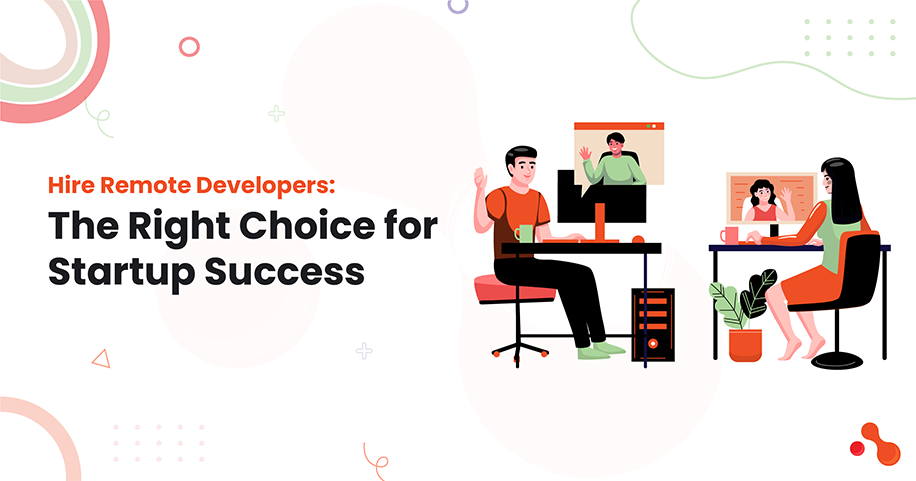
Hire Remote Developers: The Right Choice for Startup Success
Discover why hiring remote developers or a dedicated remote team is the smartest decision for startups. Learn how to scale quickly, save costs, and access top talent globally.
Acquaint Softtech
September 16, 2025India (Head Office)
203/204, Shapath-II, Near Silver Leaf Hotel, Opp. Rajpath Club, SG Highway, Ahmedabad-380054, Gujarat
USA
7838 Camino Cielo St, Highland, CA 92346
UK
The Powerhouse, 21 Woodthorpe Road, Ashford, England, TW15 2RP
New Zealand
42 Exler Place, Avondale, Auckland 0600, New Zealand
Canada
141 Skyview Bay NE , Calgary, Alberta, T3N 2K6