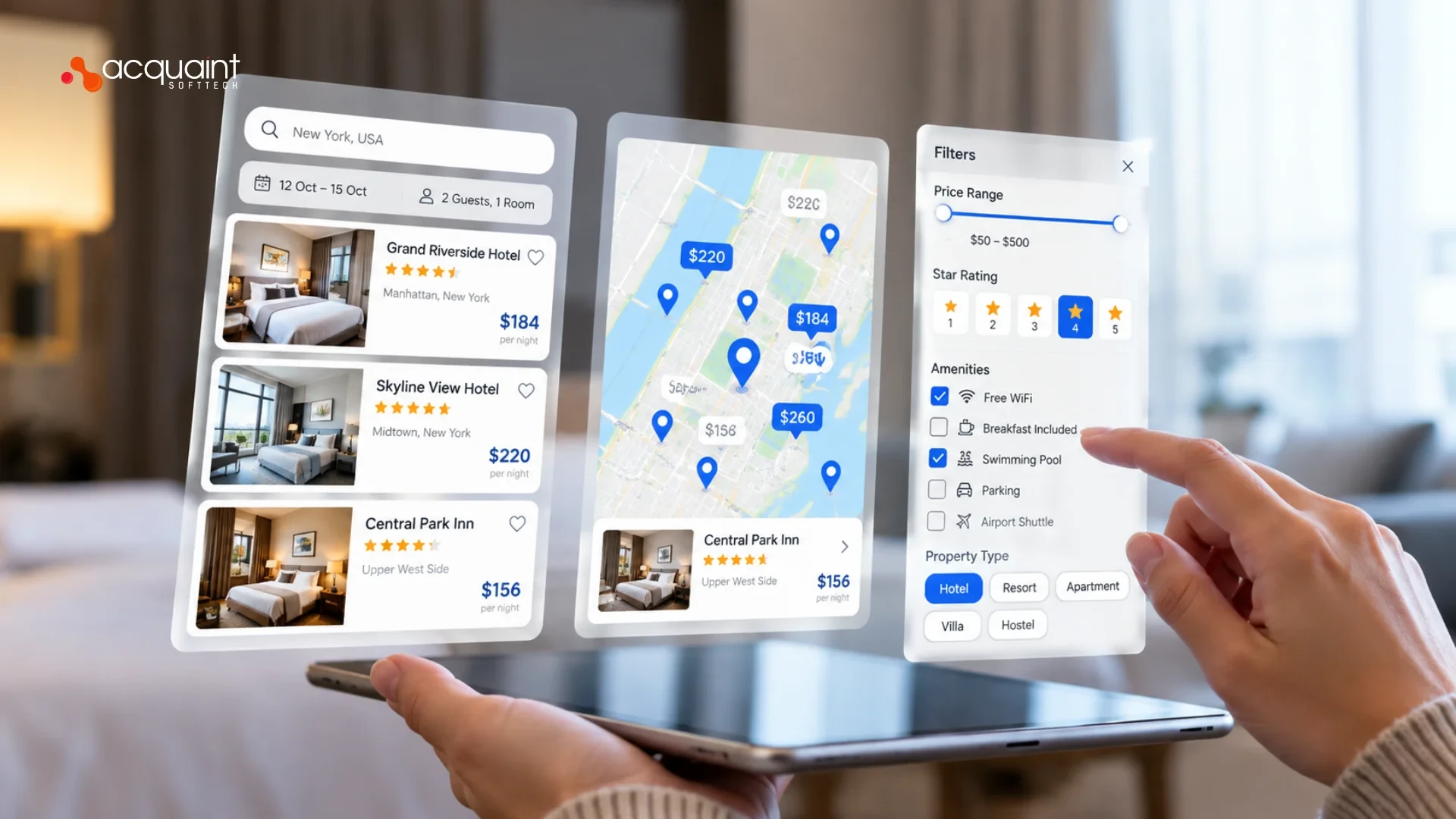
You can filter hotels by map view, amenities, and price range using popular travel platforms like Google Hotels. To build your own, faceted hotel search combines a search index that returns results in milliseconds, filters for price ranges and amenities, and an interactive map with clustered markers that updates results as the user pans and zooms.

A hotel dynamic pricing revenue management system (RMS) is an automated software tool that adjusts room rates in real time based on current demand, competitor pricing, and market trends. It ingests booking history, live occupancy, events, and weather, uses machine learning to forecast demand, then pushes the ideal rate to every channel through the property management system, all without manual spreadsheets.

The future of travel technology is driven by AI, automation, biometrics, IoT, and embedded fintech. Clean, connected data will power smarter and more seamless travel experiences.

To build a travel tech startup, validate your idea, build a lean MVP, and launch based on real user feedback. Most travel MVPs take 2–4 months and start at $20,000 with an offshore team.

Travel operations technology automates supplier management, payments, commissions, invoicing, and reporting. It reduces manual work, improves efficiency, and helps prevent revenue loss.

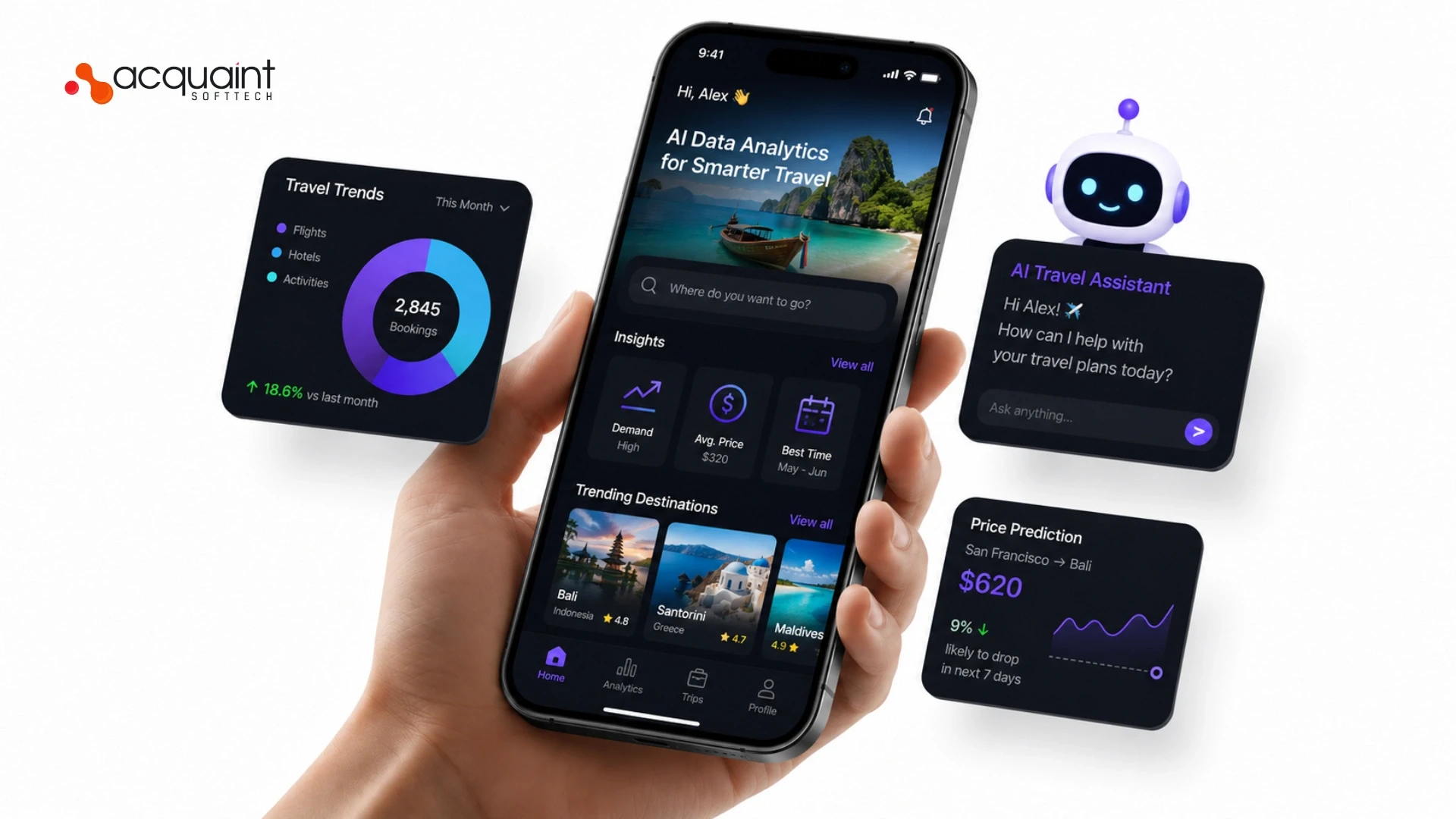
AI and data analytics in travel use machine learning to turn booking, search, and customer data into revenue. The three core engines are demand forecasting, which predicts future occupancy and bookings; price optimization, which sets the best price in real time based on demand; and customer intelligence, which identifies high-value travellers and predicts who will book or cancel. Hotels using AI-driven pricing report revenue gains of 5 to 14%.
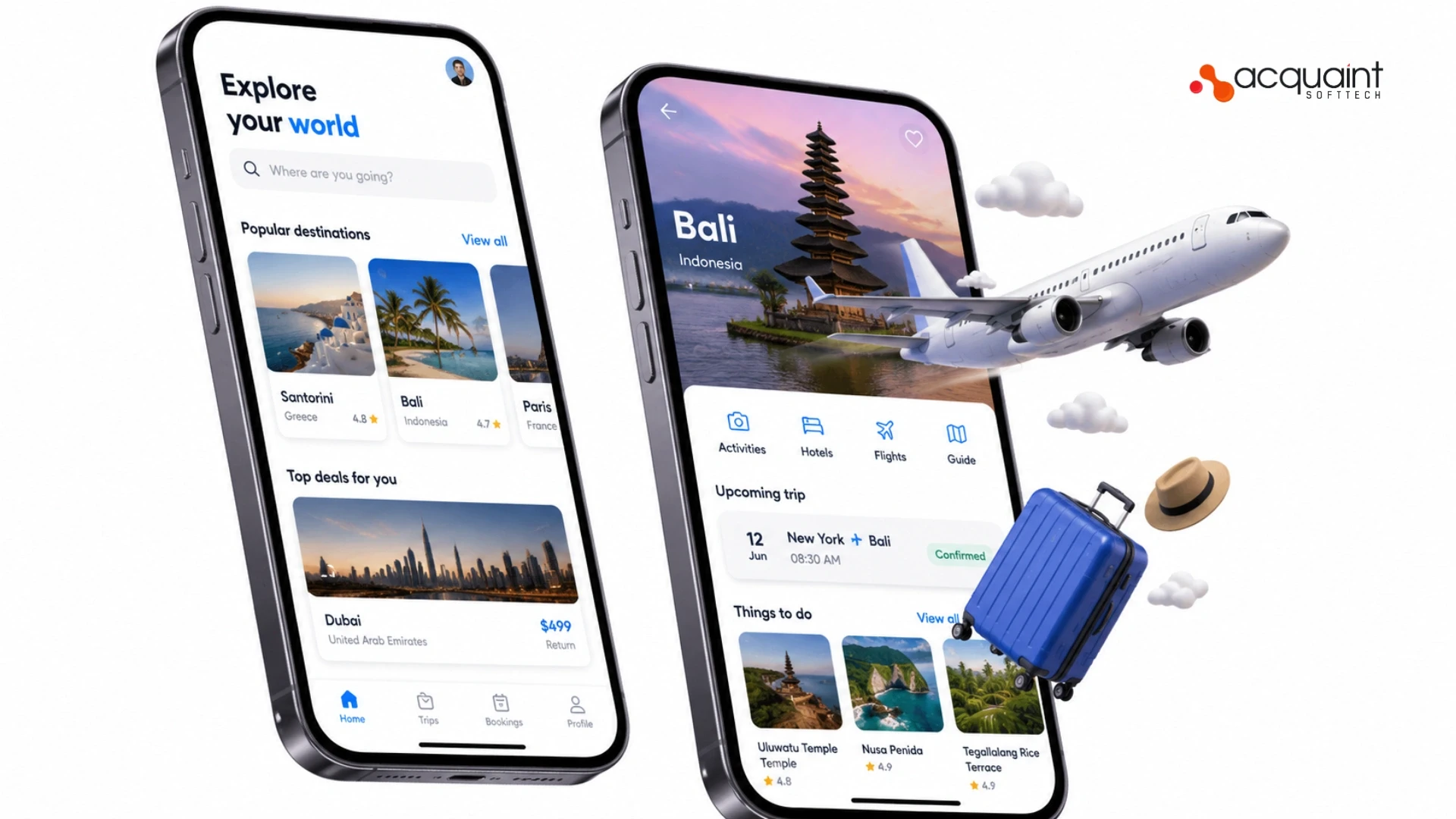
Travel app development is the process of building a mobile-first application that lets travellers search, book, plan, and navigate trips from their phone. A strong travel app rests on four pillars: a frictionless booking flow, a live itinerary that organises the trip, offline-first navigation that works without signal, and smart notifications. Cross-platform frameworks like React Native cut build cost by 30 to 40% versus separate native apps.
A tours and activities booking platform lets travellers search, schedule, and pay for experiences while operators manage inventory in real time. It is built on four pillars: a scheduling engine for time slots and departures, a real-time availability module to prevent overbooking, a supplier management portal for operators to control their own inventory, and a booking and payment flow. The hard part is capacity, not the booking button.
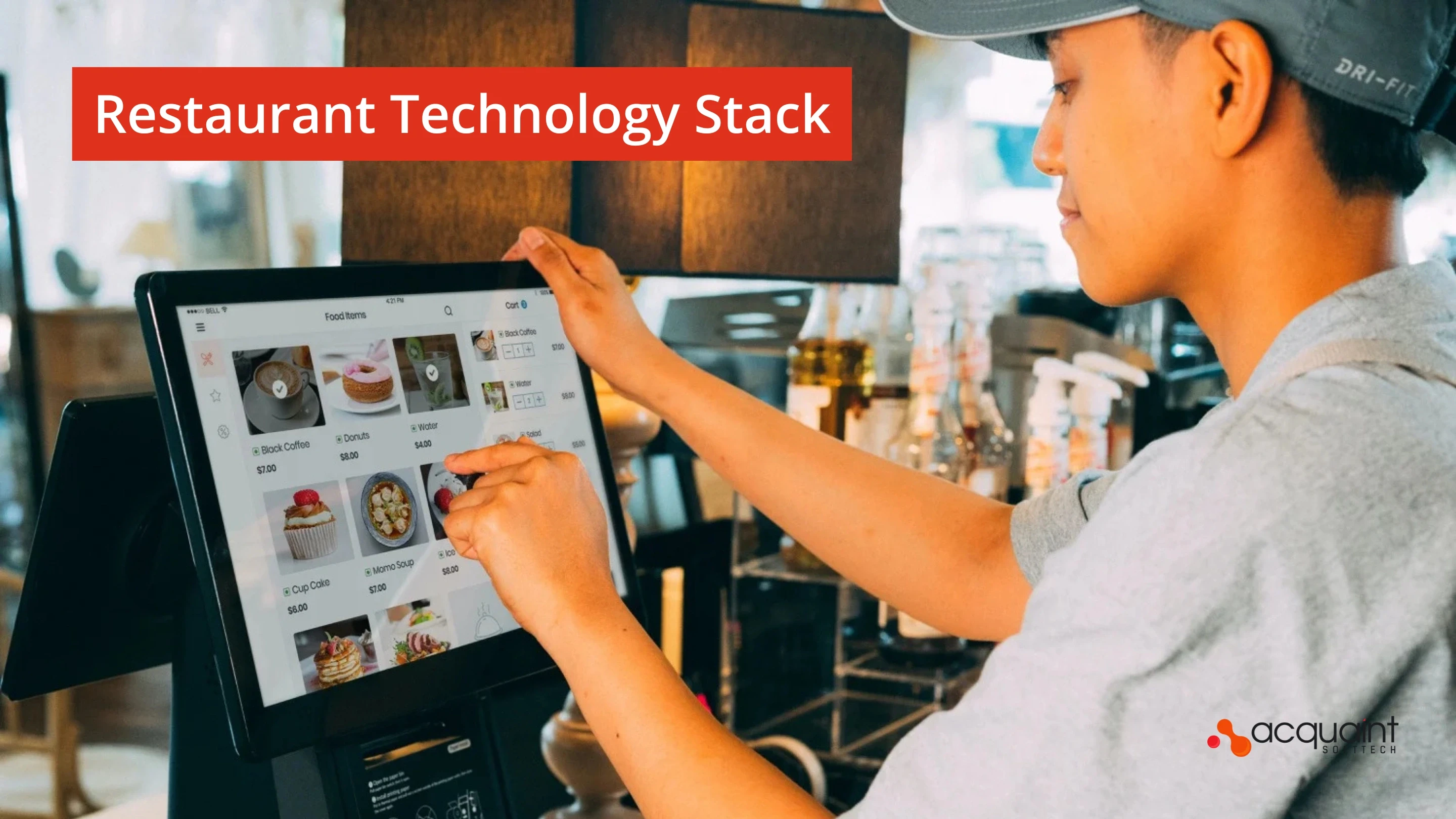
A restaurant technology stack is the connected set of software that runs a restaurant: a POS system to take orders and payments, an online ordering platform for direct digital sales, a kitchen display system (KDS) to route orders to cooks, and delivery integration to sync with apps like UberEats, Zomato, and Deliveroo. The value is in making these systems talk to each other from one source of data.



.webp "How to Build a Travel Tech Startup: From Idea to MVP to Scale")

.webp)