

Kubernetes for Growing Startups: What a DevOps Engineer Manages and What It Costs to Hire in 2026
Most startups move to Kubernetes too early or too late. Here is when the move makes sense, what a DevOps engineer manages in a cluster, and what it costs to hire one in 2026.

Taukir katava
As a DevOps Engineer at Acquaint Softtech, a software development partner, one of the most common conversations I have with growing startup CTOs is the Kubernetes question. 'Should we move to Kubernetes now? Is it too early? What does it actually buy us?' The honest answer is that Kubernetes is the right infrastructure for some startups at some stages and serious over-engineering for others. Getting this decision right saves 3 to 6 months of unnecessary complexity. This guide covers the signals that indicate you are ready for Kubernetes, what a DevOps engineer manages in a cluster once you are there, and what it costs to hire one in 2026.

- SaaS CTOs who have heard they should be running Kubernetes but are not sure whether their product is at the right stage yet
- Engineering leads managing 5 to 15 microservices who are evaluating whether Kubernetes is the right container orchestration choice
- Founders who are about to hire a DevOps engineer and want to understand the Kubernetes-specific skills to ask for
- Teams currently on AWS ECS or standalone Docker who are evaluating whether a Kubernetes migration is justified
The Kubernetes adoption pattern in startups follows two failure modes. The first is moving to Kubernetes too early: a team with 3 services and 2 developers spends 3 months configuring cluster networking, RBAC policies, and Helm charts before they have enough traffic to justify any of it. The second is moving too late: a team with 40 microservices and no container orchestration has pods running on EC2 instances with manual deployment scripts that nobody fully understands. Both failure mode are avoidable with the right timing signal.
For teams evaluating the CI/CD pipeline configuration for a Kubernetes cluster specifically, the CI/CD for Kubernetes on AWS EKS guide covers the full pipeline setup including GitHub Actions, Helm chart deployment, and the cost and timeline for EKS-specific CI/CD.
When to Move to Kubernetes: The 5 Readiness Signals
Kubernetes is not a starting point. It is a scaling solution. These are the five signals that indicate a startup is genuinely ready for Kubernetes rather than reaching for complexity prematurely.
Signal 1: You have 5 or more independently deployable services |
Below 5 services, deploying each service to its own EC2 instance or ECS service is manageable. Kubernetes begins to deliver its core value - consistent deployment, resource scheduling, and service discovery - when the number of services exceeds what a team can manually reason about. At 5 to 8 services, Kubernetes starts to pay its operational overhead. Below 5, it typically does not. |
Signal 2: Your deployment frequency is high enough to justify the tooling |
If your team deploys twice a week, the overhead of Helm chart management and kubectl commands is not justified by the deployment frequency. If your team deploys 10 to 20 times per day across multiple services, Kubernetes-native deployments (rolling updates, Helm upgrades with version pinning) produce meaningful consistency and audit trail benefits. |
Signal 3: Your team has container experience but no orchestration |
Teams who are already containerising their services with Docker and deploying manually or through basic ECS tasks are a good fit for Kubernetes. The mental model shift from 'containers we run manually' to 'containers the cluster manages' is the natural next step. Teams who are not yet containerising should containerise first before evaluating Kubernetes. |
Signal 4: You have resource utilisation inefficiency at the service level |
Running one EC2 instance per microservice with each instance at 15 to 20% average CPU utilisation is expensive and wasteful. Kubernetes bin-packs multiple containers onto fewer nodes based on resource requests and limits. A 10-service platform running one t3.medium per service ($200/month) can often run on 3 to 4 nodes with Kubernetes bin-packing ($60 to $80/month in node cost). |
Signal 5: You are preparing for a compliance or enterprise audit that requires infrastructure standardisation |
Enterprise clients and SOC 2 audits increasingly expect container orchestration as evidence of infrastructure maturity. Kubernetes provides RBAC, audit logging, network policies, and pod security standards that are directly relevant to compliance frameworks. This signal alone does not justify Kubernetes, but in combination with others it accelerates the decision. |
For teams not yet on Kubernetes who still need auto-scaling, the AWS Auto Scaling configuration guide covers EC2-native auto-scaling as the appropriate alternative at earlier stages.
Not Sure Whether Your Startup Is Ready for Kubernetes?
Tell Acquaint Softtech the number of services you run, your deployment frequency, and your current container setup. A vetted DevOps engineer will assess whether Kubernetes is the right move for your current stage and send a recommendation within 48 hours.
What a DevOps Engineer Manages in a Kubernetes Cluster
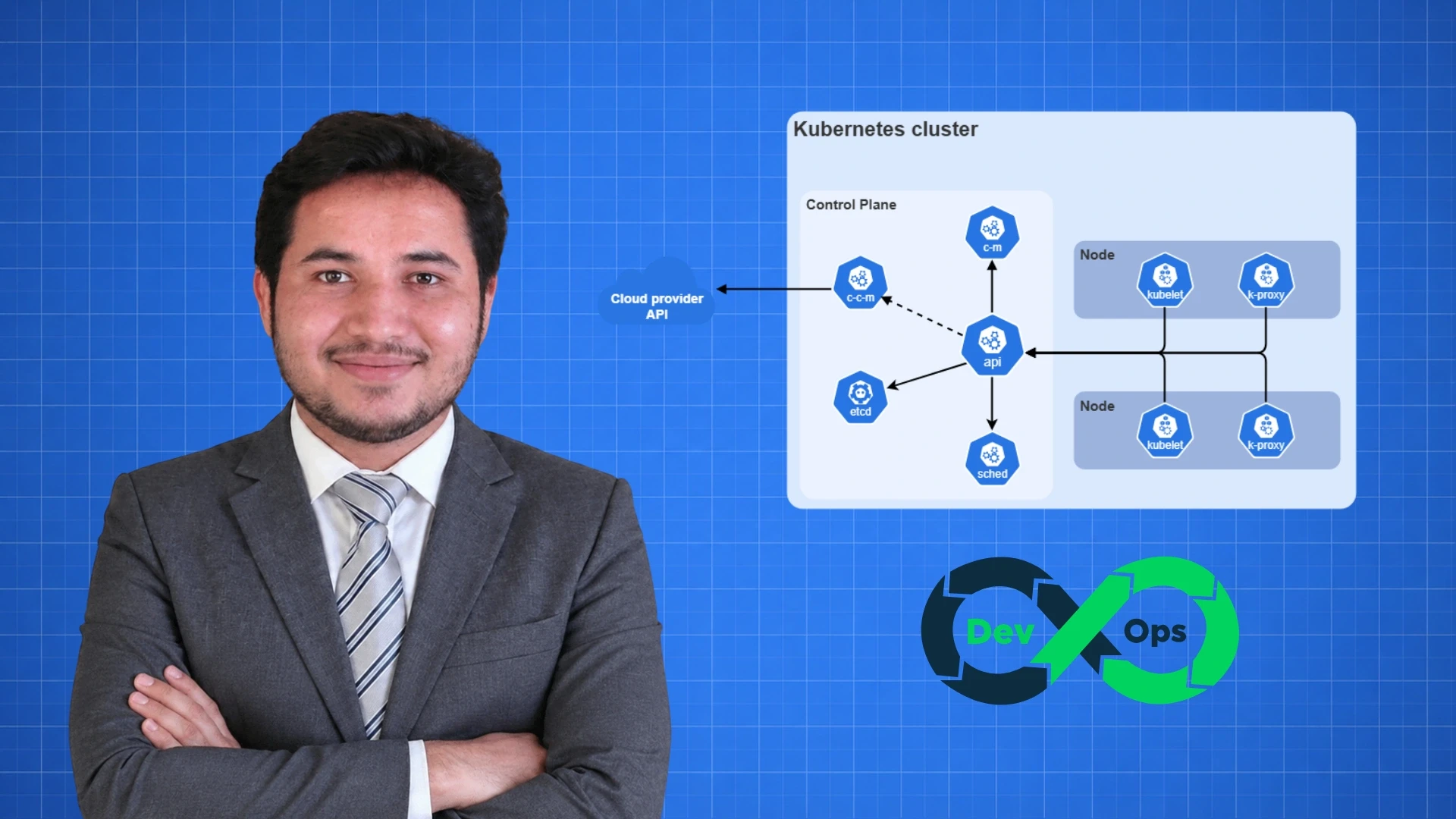
Running Kubernetes is not a one-time setup. It require ongoing management across 8 operational domains. Here is what a DevOps engineer owns in a production Kubernetes cluster for a growing startup.
Core | Cluster provisioning and upgradesThe Kubernetes control plane and node groups are provisioned using Terraform (or eksctl for AWS EKS). Kubernetes releases a new version approximately every 4 months. Each version is supported for approximately 14 months before it goes end-of-life. A DevOps engineer plans and executes cluster version upgrades before the current version reaches end-of-life, testing the upgrade in staging before applying to production. |
Helm chart management and deploymentsApplication services are deployed using Helm charts. A DevOps engineer maintains the Helm chart repository, manages chart versions, configures values files for each environment (dev, staging, production), and executes Helm upgrade commands or configures ArgoCD to handle GitOps-style deployments. Rollbacks are helm rollback with a version number. | |
Resource requests and limits tuningEvery pod in Kubernetes requires resource requests (minimum CPU and memory) and limits (maximum). Incorrectly set requests and limits cause either resource waste (oversized requests) or pod evictions and OOMKilled errors (undersized limits). A DevOps engineer monitors actual resource usage with kubectl top and tunes requests and limits to match real usage patterns. | |
HorizontalPodAutoscaler (HPA) configurationKubernetes HPA scales the number of pod replicas based on CPU, memory, or custom metrics. A DevOps engineer configures HPA for each service that experiences variable load, sets appropriate min/max replica counts, and configures the metrics source. HPA configuration prevents both over-provisioning and crash-under-load scenarios. |
Advanced | Cluster Autoscaler or Karpenter configurationNode-level autoscaling adds or removes EC2 nodes from the cluster based on pending pod demand. A DevOps engineer configures the Cluster Autoscaler (or the newer Karpenter) with appropriate node group settings, scale-down thresholds, and Spot Instance integration for non-production workloads. |
Network policies and RBACKubernetes network policies define which pods can communicate with which other pods. RBAC policies define which users and service accounts can perform which actions in the cluster. A DevOps engineer configures both as part of the initial cluster setup and maintains them as the service count grows. | |
Monitoring stack (Prometheus and Grafana)A DevOps engineer deploys Prometheus for metrics collection and Grafana for dashboards within the cluster. kube-state-metrics provides cluster-level metrics. Application pods expose /metrics endpoints. Alerts are configured for pod crash loops, node resource pressure, and deployment failures. | |
Cost optimisation (Spot Instances and bin-packing)EC2 Spot Instances for non-critical workloads reduce node costs by 60 to 80% compared to on-demand. A DevOps engineer configures separate node groups for Spot and on-demand nodes, configures pod tolerations and affinities to route non-critical pods to Spot nodes, and sets up disruption budgets to protect critical services from Spot interruptions. |
For teams evaluating Terraform for Kubernetes infrastructure code, the Terraform infrastructure automation guide covers how Terraform manages EKS cluster configuration alongside the rest of the cloud infrastructure stack.
Running Kubernetes but No DevOps Engineer Managing It? Here Is What That Costs You.
Unmanaged Kubernetes clusters accumulate technical debt in resource requests, node sizing, and security policies that compounds as the cluster grows. Tell Acquaint Softtech your current cluster size and services count. A DevOps engineer will audit your cluster and send findings within 48 hours.
What It Costs: 2026 Budget Guide
The cost of a Kubernetes engagement has two components: the one-time cluster setup cost and the ongoing management cost. Here are the honest 2026 numbers at Acquaint Softtech rates of $22/hour.
Kubernetes engagement scenario | DevOps cost at $22/hour | What is delivered |
EKS cluster setup from scratch (Terraform, node groups, networking) | 5 to 8 days: $880 to $1,408 | VPC, EKS cluster, managed node groups, IRSA, cluster autoscaler, initial namespace setup |
CI/CD pipeline for Kubernetes (GitHub Actions + Helm + ArgoCD) | 3 to 5 days: $528 to $880 | Full GitOps deployment pipeline with rolling updates, health gates, and rollback |
Monitoring stack (Prometheus, Grafana, alerting) | 2 to 4 days: $352 to $704 | kube-state-metrics, Prometheus, Grafana dashboards, PagerDuty or Slack alerting |
HPA + Cluster Autoscaler + Spot Instance integration | 3 to 5 days: $528 to $880 | Pod-level and node-level autoscaling, Spot node groups, Karpenter or Cluster Autoscaler |
Full Kubernetes setup (all above combined) | 12 to 20 days: $2,112 to $3,520 | Complete production-grade Kubernetes platform |
Monthly retainer (Kubernetes management + cluster maintenance) | $3,200/month | Ongoing: upgrades, HPA tuning, cost optimisation, incident response, new service onboarding |
The cost saving from Kubernetes Spot Instance node pools
10-service platform, current: 10x t3.medium on-demand = $200/month
After Kubernetes with bin-packing and Spot Instances:
3x m5.large on-demand (critical): $150/month
4x m5.large Spot (non-critical, 70% discount): $60/month
Total node cost: $210/month for MORE capacity
With proper bin-packing, 10 services often fit on 4 to 5 nodes instead of 10. Spot Instance node pools reduce non-critical workload cost by 60 to 80%. The infrastructure saving typically offsets the DevOps management cost within 2 to 3 months on a platform with 8 or more services.
Acquaint Softtech's hire DevOps engineers service provides pre-vetted engineers with Kubernetes production experience on AWS EKS, Azure AKS, and GCP GKE. Starting at $22/hour or $3,200/month.
For the full DevOps engineer rate comparison by region, the DevOps engineer cost guide covers what each price tier delivers. Acquaint Softtech's starting rate is $22/hour.
Ready to Move to Kubernetes or Manage an Existing Cluster? Acquaint Softtech Has Engineers Available Now.
Pre-vetted DevOps engineers with Kubernetes production experience on AWS EKS, Azure AKS, and GCP GKE. Starting at $22/hour or $3,200/month. Matched profile in 24 hours. Engineer in your standup in 48 hours.
Frequently Asked Questions
-
When should a startup move to Kubernetes?
A startup is ready for Kubernetes when: it runs 5 or more independently deployable services, deploys frequently enough to benefit from consistent orchestration, has containerised services ready to migrate, and has resource utilisation inefficiency at the service level. Below this threshold, AWS ECS or standalone Docker with EC2 Auto Scaling is simpler and sufficient.
-
What does a DevOps engineer manage in a Kubernetes cluster?
A DevOps engineer manages: cluster version upgrades, Helm chart deployments, resource requests and limits tuning, HorizontalPodAutoscaler configuration, node-level autoscaling (Cluster Autoscaler or Karpenter), network policies and RBAC, monitoring stack (Prometheus and Grafana), and Spot Instance node pool cost optimisation.
-
How much does Kubernetes setup cost at Acquaint Softtech?
A full production-grade Kubernetes setup (EKS cluster, CI/CD pipeline, monitoring, autoscaling, Spot Instance integration) takes 12 to 20 days at $22/hour, costing $2,112 to $3,520. Ongoing management is $3,200/month on a monthly retainer.
-
What is AWS EKS and why do startups use it?
AWS EKS (Elastic Kubernetes Service) is a managed Kubernetes control plane. AWS manages the Kubernetes master nodes, control plane components, and etcd. The startup manages the worker node groups and applications. EKS eliminates the operational overhead of running a self-managed Kubernetes control plane, which requires significant expertise to maintain safely.
-
What is the difference between Kubernetes and ECS for startups?
ECS is simpler to configure and manage for teams already on AWS. It has less operational overhead and is sufficient for up to 10 to 15 services. Kubernetes is more powerful, more portable across cloud providers, and better suited for 15+ services or teams with complex scheduling requirements. ECS is the right choice for most early-stage startups. Kubernetes is the right choice at scale.
-
How long does it take to migrate from ECS to Kubernetes?
A migration from AWS ECS to EKS for a 10-service platform takes 10 to 20 days depending on service complexity, CI/CD pipeline changes required, and whether the services use persistent storage. A DevOps engineer runs both ECS and EKS in parallel during the migration and cuts over service by service with zero downtime.
-
What Kubernetes skills should I ask for when hiring a DevOps engineer?
Ask for: EKS, AKS, or GKE production experience (specify your cloud provider), Helm chart authoring and management, HPA and Cluster Autoscaler configuration, Prometheus and Grafana monitoring stack, network policies and RBAC configuration, and experience with either Karpenter or Cluster Autoscaler for node management.
Taukir Katava is a DevOps Engineer at Acquaint Softtech with 4+ years of experience across AWS, Azure, and GCP. He specialises in Kubernetes cluster administration, CI/CD pipeline automation, and cloud infrastructure design for high-traffic platforms. Taukir writes about the practical side of production DevOps: what infrastructure decisions cost and what they actually deliver.
Table of Contents
Get Started with Acquaint Softtech
- 13+ Years Delivering Software Excellence
- 1300+ Projects Delivered With Precision
- Official Laravel & Laravel News Partner
- Official Statamic Partner
Related Reading
DevOps Engineer for SaaS Startup: What to Budget and What to Expect in the First 90 Days
A SaaS startup's first DevOps engagement costs $3,200/month. Here is exactly what gets built in each of the first 90 days, what to budget, and what to expect from a DevOps engineer at each stage.

Mukesh Ram
June 3, 2026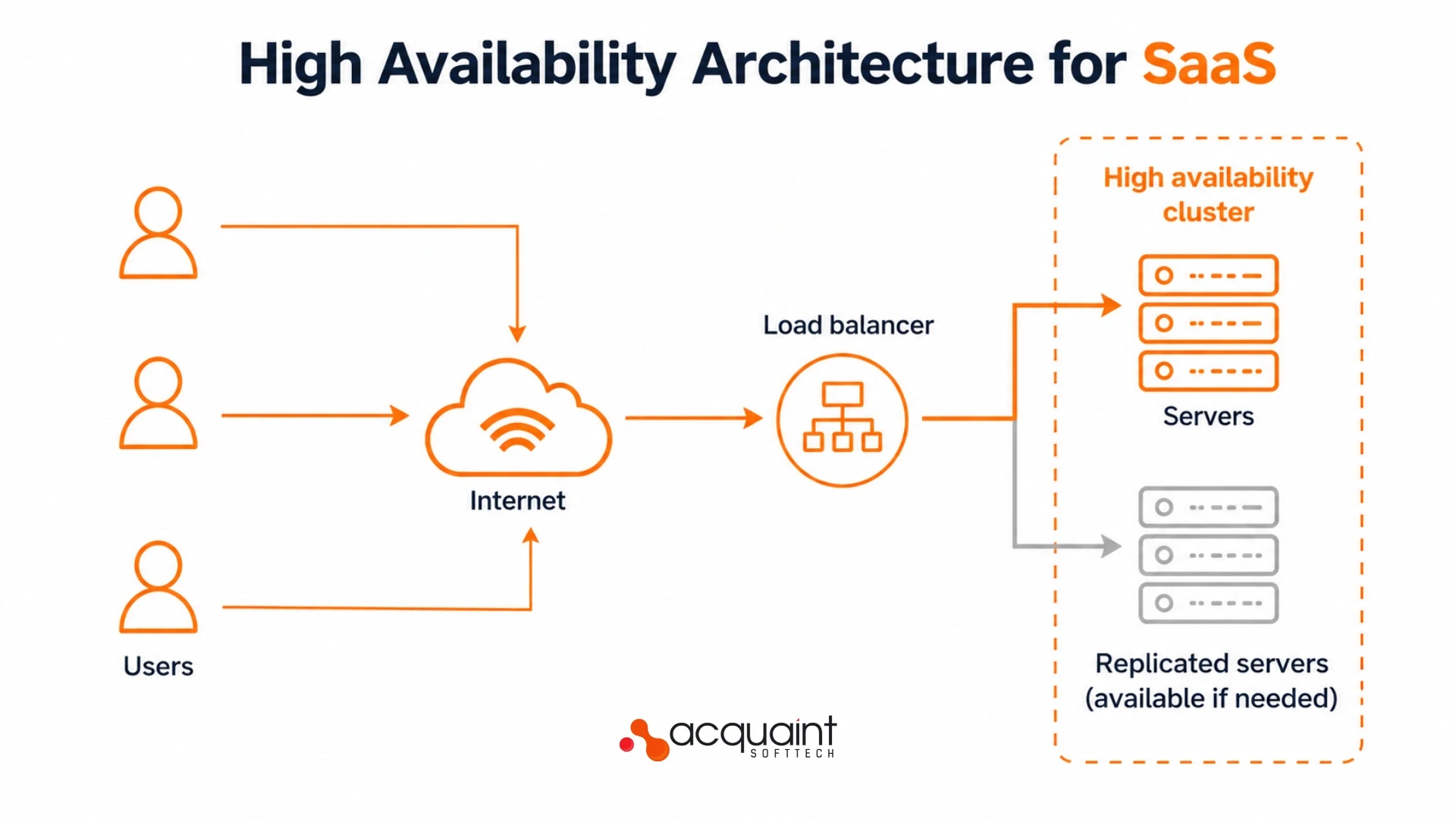
High Availability Architecture for SaaS: What a DevOps Engineer Builds and What It Costs in 2026
A single-server SaaS product is one failure away from full downtime. Here is what a DevOps engineer builds for high availability, which components matter most, and what it costs in 2026.
Taukir katava
June 2, 2026
DevOps Engineer Hourly Rate in 2026: India vs US vs Eastern Europe - The Honest Rate Comparison
DevOps engineer rates in 2026 range from $22/hour in India to $100+ in the US for the same seniority level. Here is the honest regional rate comparison and what each price tier actually delivers.

Ahmed Ginani
May 21, 2026India (Head Office)
203/204, Shapath-II, Near Silver Leaf Hotel, Opp. Rajpath Club, SG Highway, Ahmedabad-380054, Gujarat
USA
7838 Camino Cielo St, Highland, CA 92346
UK
The Powerhouse, 21 Woodthorpe Road, Ashford, England, TW15 2RP
New Zealand
42 Exler Place, Avondale, Auckland 0600, New Zealand
Canada
141 Skyview Bay NE , Calgary, Alberta, T3N 2K6