

Onboarding a Remote Python Developer What to Set Up in Week One
How to onboard a remote Python developer in 2026. The pre-boarding checklist, day-by-day Week One plan, and the mistakes that break remote engagements.

Acquaint Softtech
Introduction: Week One Either Builds Trust or Quietly Kills It
Every remote Python developer engagement is decided in the first week, far more than anyone realizes at the time. The new engineer joins a Slack workspace, gets bombarded with links to a wiki nobody has updated since 2023, fails to clone the repository because their SSH key was never added, sits through three meetings where they understand maybe 20% of what is being discussed, and goes to bed on Friday wondering if they made a career mistake. Meanwhile the hiring manager spends Friday wondering why the new developer has not shipped anything yet. Both sides are right to be concerned. Both are reacting to a Week One that was set up to fail before the new developer even logged in. The frustrating part is that fixing this is not hard, expensive, or unique to any one team. It just requires understanding that Week One is engineering work, not HR work, and treating it as such.
The data on what good onboarding actually looks like is increasingly specific. According to a 2026 developer onboarding process guide by Cycloid, the industry average time-to-productivity for a new developer sits at 2 to 4 weeks, but teams with automated self-service onboarding compress that to under a day, and the best processes share four traits: self-service environment provisioning, automated access management, a software catalog that answers "where is everything?" without a human guide, and first-commit targets measured in hours rather than weeks. The same guide identifies five stages every good onboarding moves through (access provisioning, environment setup, codebase orientation, first task completion, team integration), with clear owners and time targets at each step. The teams that get this right do not have better developers; they have better engineering around the onboarding process itself.
This guide covers exactly what to set up for a remote Python developer's Week One. It walks through why the stakes are higher than most managers appreciate, the pre-Day-1 work that determines whether Day 1 goes well, the day-by-day Week One plan that consistently produces a productive developer by Day 5, the mistakes that break remote onboarding, and how to staff and structure the work so onboarding actually compounds into long-term productivity rather than three months of negative value. It is written for engineering leaders, CTOs, and senior Python developers about to onboard a remote engineer who want to make Week One the foundation of a long, productive engagement rather than the first warning sign that something is wrong.
If you are still in the hiring phase and have not yet selected the developer, the complete guide to hiring Python developers in 2026 sets the wider context on engagement models, rates, and the vetting framework that produces developers who are ready to onboard quickly rather than spending the first month catching up on fundamentals.
The Stakes: Why Week One Defines the Engagement
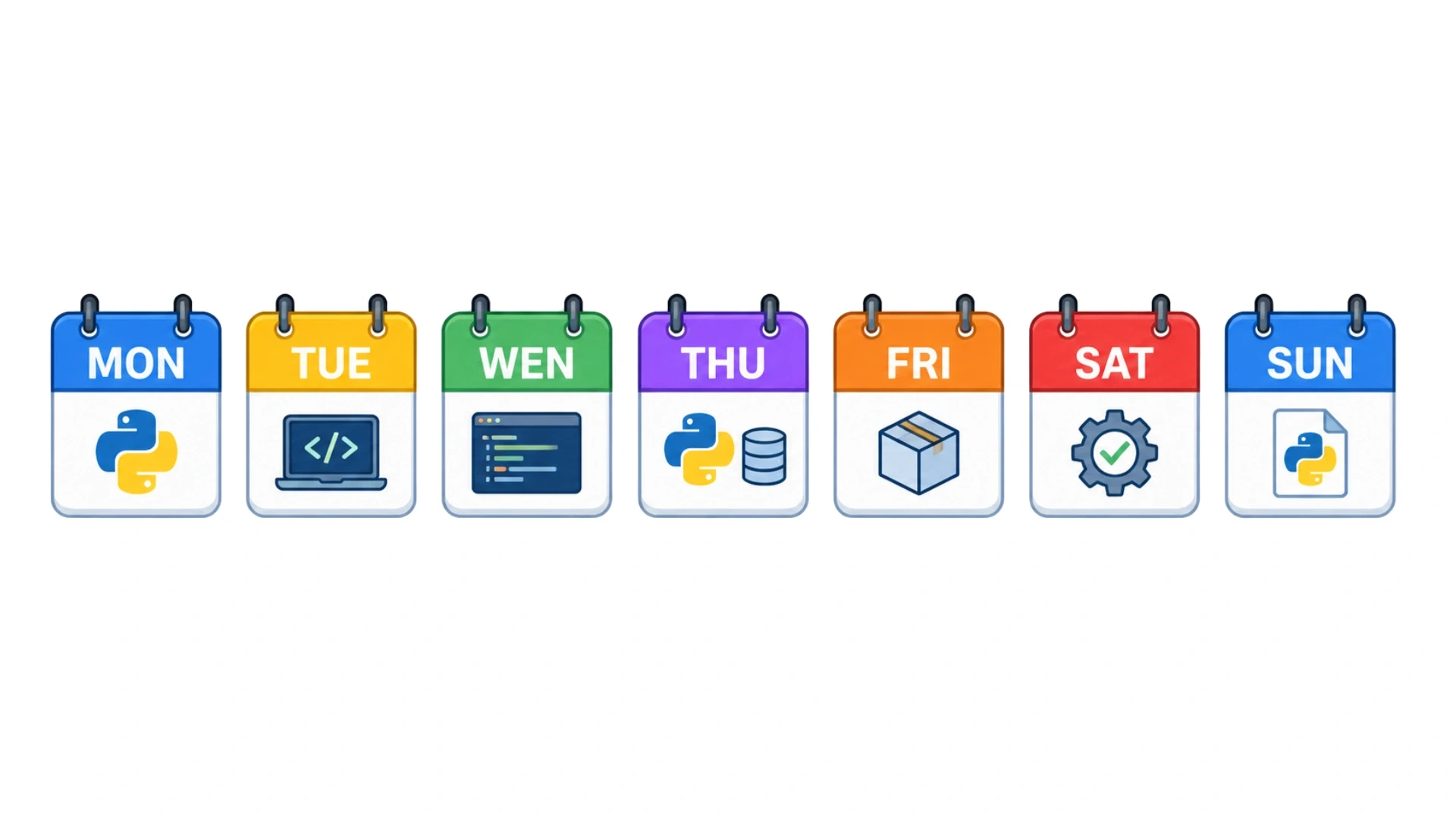
Most managers underestimate how much of the engagement's eventual outcome is locked in during the first five days. The data on this is consistent and brutal: developers without structured onboarding produce negative value for their first three months, senior developers lose 30% productivity mentoring new hires without clear protocols, and sprint velocity drops 25 to 40% when integrating a new team member without preparation. The cost compounds because the new developer's slow start consumes senior-developer time that would otherwise be shipping features. Get Week One right and the engagement starts paying back by Day 10. Get it wrong and the engagement spends its first quarter recovering from a bad start that was entirely preventable.
What Actually Happens When Week One Goes Wrong
The new developer asks senior engineers questions that documentation should have answered. Every question costs 5 to 15 minutes of a senior developer's focused time, which is the most expensive time in any engineering organization. A team that takes 50 of these questions per week (a reasonable rate without proper onboarding) burns roughly 8 to 12 senior hours weekly on onboarding overhead.
The new developer makes assumptions because they cannot find authoritative documentation. Wrong assumptions encoded into early commits become technical debt that compounds for months. The code that the new developer writes in their first month is the code that defines how they understand the system; if that understanding is wrong, everything they build on top of it will be too.
Trust between developer and team takes a quarter to recover. First impressions are persistent. A developer whose Week One was disorganized assumes the team is disorganized, holds back ideas, and underinvests in relationships that would otherwise compound. By the time the developer realizes the team is actually quite good, the developer has built a self-protective working style that does not serve anyone.
The hiring manager loses confidence in the developer. Slow Week One ship rates look like a developer problem to the manager. The manager starts micromanaging, the developer starts second-guessing, and the relationship spirals. By month two, the manager is considering replacement when the actual problem was an onboarding process that set the developer up to fail.
What Week One Done Well Actually Looks Like
On Day 1, the new developer has access to every tool they need, has cloned the repository successfully, has run the test suite locally, and has met their onboarding buddy. By Day 3, they have shipped their first small commit (a documentation fix or a minor cleanup) to production. By Day 5, they are participating in standups confidently, have an assigned first feature ticket sized appropriately, and understand who to ask which kinds of questions. By Day 10, they are shipping real features through the normal sprint cadence. This is not exceptional. It is what good onboarding produces consistently, and it is the result of structural decisions made before Day 1, not heroics by the developer or the team in Week One.
The compounding effect of well-onboarded developers is significant and measurable. Every time a developer works on your Python codebase, they build context, and the gap between a developer with three months of accumulated context and one perpetually re-orienting becomes visible in sprint velocity by month three and dominant by month six. The full analysis of how this context compounding plays out across engagement models is covered in why in-house Python teams outperform marketplace developers, which shows why investing in Week One pays back dramatically over the engagement lifetime.
Pre-Day-1: What You Need to Set Up Before They Start
The single highest-leverage onboarding work happens before the new developer's first day. According to a 2026 developer onboarding best practices guide by daily.dev, the benchmarks that distinguish strong onboarding are concrete: time to first commit ideally occurs within 3 days, time to first pull request merged in under a week, and Google's structured onboarding makes new hires effective 25% faster than industry baseline. The same analysis is blunt about the cost of skipping pre-boarding work: 81% of new hires feel overwhelmed by too much information, and the recommended fix is sending a detailed Day 1 itinerary, work schedule, and Week 1 roadmap at least 48 hours before the start date, with hardware shipped 3 to 5 days in advance. Every hour spent in pre-boarding saves several hours of confusion in Week One.
The Pre-Day-1 Onboarding Checklist (Complete 7 Days Before Start)
Category | Item | Owner |
|---|---|---|
Hardware/access | Laptop shipped 3-5 days before start (if applicable) | IT or hiring manager |
Accounts | GitHub, Slack, email, Jira/Linear, calendar created | IT/admin |
Repo access | All relevant repos granted, SSH key pre-collected | Tech lead |
Environment | Setup script tested on a fresh machine, documented | Tech lead or buddy |
Documentation | Architecture overview, runbook, on-call doc updated | Tech lead |
Buddy assigned | Senior developer assigned, told to expect questions | Engineering manager |
Day 1 itinerary | Detailed schedule sent 48 hours before start | Hiring manager |
First ticket | A documentation or cleanup ticket sized appropriately | Tech lead |
The Pre-Boarding Items That Matter Most
A development environment setup script that actually works. Test it on a fresh machine the week before the developer starts. The most common Day 1 disaster is the new developer spending six hours trying to install dependencies because the setup instructions were last verified in 2022. Pin versions, document gotchas, and run the script end-to-end before the developer ever needs it.
An architecture overview document that explains the why. A page or two covering what the system does, how the major components fit together, what major decisions were made (and why), and which parts are stable versus actively changing. New developers should be able to read this in 30 minutes and have a working mental model of the codebase, before they have read a single line of code.
A first ticket that is genuinely small. A documentation fix, a typo correction, an obvious test case to add, or a small dependency upgrade. The goal of the first ticket is for the developer to experience the full development cycle (branch, code, test, PR, review, merge, deploy) in their first 2 to 3 days. Real feature work comes in Week 2; Week 1 is about exercising the pipeline.
A buddy who has explicitly agreed to be available. Not just a name on an organizational chart. A senior developer who knows they are the onboarding buddy, has scheduled time to answer questions in Week 1, and will not be deep in a sprint commitment that prevents them from being responsive. The buddy relationship is the single highest-leverage onboarding investment.
Onboarding Remote Python Developers? Skip the Setup Pain.
Acquaint Softtech delivers pre-vetted Python developers who integrate into your sprint and tools within 48 hours, with the engineering discipline and pre-onboarding briefing that makes Week One productive rather than chaotic. Senior engineers, transparent pricing from $20/hour, full IP assignment and NDA from day one.
The Day-by-Day Week One Plan That Actually Works
Week One is best treated as a planned engineering event, not a passive period during which the new developer figures things out. The day-by-day structure below is what consistently produces a developer who has shipped their first commit by Day 3, participates in standups confidently by Day 5, and is ready for real feature work in Week Two. The structure is opinionated on purpose; remote developers especially benefit from explicit structure because they cannot read the room or absorb context by osmosis the way co-located developers can.
The Day-by-Day Week One Plan for a Remote Python Developer
Day | Focus | Outcome by End of Day |
|---|---|---|
Day 1 | Access, environment, intros | Tests passing locally, all tools accessible |
Day 2 | Codebase orientation, architecture walkthrough | Mental model of system, first ticket assigned |
Day 3 | First commit shipped (docs/cleanup) | PR opened, reviewed, merged to production |
Day 4 | First small feature ticket started | Branch created, tests written, work in progress |
Day 5 | Feature merged, retrospective on Week 1 | First feature shipped, buddy 1:1, feedback loop |
What Each Day Looks Like in Practice
Day 1: Access and environment. The new developer follows the pre-tested setup script and gets the test suite running locally. They meet the team in standup. They have a 60-minute 1:1 with their hiring manager covering expectations, communication norms, and how the team measures success. They have a 60-minute 1:1 with their buddy covering the codebase walkthrough plan for Day 2. They do not write code today, and that is correct.
Day 2: Codebase orientation. A 90-minute architecture walkthrough with the buddy, covering the major components, data flow, and design decisions. The developer reads the architecture document, browses the codebase, and asks questions. By end of day, the developer has been assigned their first ticket (documentation or cleanup), understands the development workflow, and knows what "done" looks like in this codebase.
Day 3: First commit shipped. The developer completes the first small ticket, opens a PR, gets it reviewed (by the buddy as a first reviewer to model the team's review style), and merges to production. The goal is to exercise the full pipeline at low stakes, not to deliver business value. The first PR teaches the developer how the team works more effectively than any document could.
Day 4: First real ticket started. With Week 1 confidence built from shipping Day 3, the developer takes a small feature ticket from the next sprint. They write tests, implement the change, and open a PR. The buddy reviews, suggests improvements, and walks through team conventions in the review comments. This is where team norms become operational reality.
Day 5: Feature merged + Week 1 retrospective. The feature ticket merges. The developer has a 30-minute Week 1 retrospective with their hiring manager covering what went well, what was confusing, what is missing from documentation, and what they need for Week 2. This retrospective is non-negotiable. It surfaces process issues before they ossify into permanent friction.
The Daily Check-ins That Prevent Silent Blockers
Daily 15 to 30 minute check-ins with the hiring manager in Week 1, dropping to every other day in Week 2 and weekly by Week 4, are the single most reliable way to catch onboarding friction before it becomes a problem. Remote developers especially do not surface blockers proactively in their first week; they assume they are supposed to figure it out themselves and are reluctant to seem incompetent by asking. The daily check-in creates a structured space where the developer can flag friction without it feeling like a complaint, and where the manager can correct course early before small frustrations compound into engagement-killing issues.
The Mistakes That Break Remote Onboarding
Onboarding mistakes follow predictable patterns, and most of them are visible in the first three days if you know what to look for. The mistakes below appear consistently in onboarding engagements that fail to deliver the productive developer the engagement was supposed to produce, and recognizing them early is the most cost-effective form of risk management available.
Treating remote onboarding like in-office onboarding. In-office developers can absorb context by sitting near the team, overhearing conversations, and asking quick informal questions. Remote developers have none of these advantages and require explicit structure to compensate. Skipping daily 1:1s in Week 1 is the costliest mistake, because it leads to silent blockers and delayed ramp-up that compounds invisibly.
Skipping pre-boarding because the developer "starts Monday". Pre-boarding work needs to happen the week before, not on the morning the developer logs in. The Slack invite that goes out at 9:01 AM on Day 1 is already late. Set up everything the week before, send the Day 1 itinerary 48 hours in advance, and let the developer experience their first day as a smooth onboarding rather than an access-provisioning scavenger hunt.
Information overload on Day 1. 81% of new hires feel overwhelmed by too much information in the first week. Resist the urge to share every wiki page, every architecture diagram, and every meeting recording on Day 1. Sequence information across the week, with each day adding context to what the developer learned the day before, rather than dumping everything at once and hoping they figure out what is important.
Assigning the first ticket as a real feature. Real feature work in Week 1 means the developer is learning the codebase, the workflow, and the team's conventions all at the same time as they are trying to deliver business value. Three different things to figure out simultaneously produces poor outcomes on all three. Start with a small documentation or cleanup ticket so the developer can focus on learning the workflow, then move to feature work in Week 2.
No assigned buddy or a buddy who is too busy. A buddy who is in the middle of a sprint commitment and cannot be responsive in Week 1 is worse than no buddy. The buddy needs explicit time allocated to the onboarding, with their own sprint scope reduced to reflect that allocation. The buddy who answers questions promptly in Week 1 saves significantly more senior-engineer time over the engagement lifetime than they spend on the onboarding itself.
Treating cultural and communication norms as obvious. Time zones, escalation paths, how to disagree with a senior engineer, when to ask for help versus when to push through, when to interrupt versus when to use async channels: these are all team-specific norms that remote developers cannot infer from observation. Make them explicit on Day 1. The 15 minutes spent explaining team norms saves hours of friction across the engagement.
The warning signs that distinguish development partners who onboard well from those who treat it as an afterthought are well documented and visible during the vendor selection process. The analysis on red flags when outsourcing Python development walks through the operational signals to look for in a partner's onboarding process before you commit, with the patterns that distinguish vendors running real onboarding from those treating it as a checkbox.
How Acquaint Softtech Onboards Remote Python Developers

Acquaint Softtech is a Python development and IT staff augmentation company based in Ahmedabad, India, with 1,300+ Python projects delivered globally and an onboarding model built around the framework in the complete guide to hiring Python developers, which compresses the industry-average 2 to 4 week time-to-productivity into the 48-hour onboarding window that distinguishes strong staff augmentation from generic outsourcing.
48-hour onboarding into your tools, sprint, and channels. Profiles shared in 24 hours, onboarding completed in 48. Our engineers integrate directly into your Slack workspace, your Jira or Linear board, your GitHub repositories, and your sprint cadence, without an account-management layer or translation overhead.
Pre-vetted senior engineers ready to ship in Week 1. Every Python developer we present has passed a multi-stage internal assessment covering system design, database literacy, error handling, code review judgment, and security awareness. They arrive ready to engage with a codebase, not still learning Python.
Direct developer access with no agency intermediary. You communicate directly with your engineers. No translation games, no account managers filtering signal. Real engineers who know your codebase and answer your questions, with the kind of direct communication that compresses onboarding friction.
Transparent pricing from $20/hour. Dedicated Python engineering teams from $3,200/month per engineer, roughly 40% less than equivalent US in-house hiring, with full IP assignment and NDA from day one and a free replacement guarantee on dedicated engagements.
The engagement model determines the structure of the onboarding itself. The analysis on Python staff augmentation vs dedicated team vs outsourcing walks through how each engagement model affects the onboarding window, the integration process, and the long-term context compounding that determines whether the engagement pays back.
To get pre-vetted senior Python engineers onto your onboarding plan quickly, with profiles shared in 24 hours and onboarding into your tools within 48, you can hire Python developers without the procurement delays, agency middlemen, or vetting overhead that slow traditional remote hiring.
The Bottom Line
Week One is not HR work. It is engineering work, and treating it that way is the difference between a remote Python developer who ships their first commit on Day 3 and one who is still figuring out access on Day 5. The pre-Day-1 setup work (tested environment script, architecture overview, repo access, assigned buddy, prepared first ticket, Day 1 itinerary sent 48 hours in advance) is the highest-leverage investment available in any engagement. Skip it, and the engagement spends its first quarter recovering from a bad start that was entirely preventable. Do it well, and the developer is operating at full team velocity by Week 4, with the institutional knowledge already accumulating that will compound the engagement's value for months and years.
The day-by-day Week One plan is opinionated for a reason. Remote developers benefit from explicit structure because they cannot absorb context by osmosis. Day 1 for access and intros, Day 2 for codebase orientation, Day 3 for the first commit shipped to production at low stakes, Day 4 for the first real feature, Day 5 for the feature merged and the Week 1 retrospective. Daily 15 to 30 minute check-ins surface silent blockers before they compound. The buddy relationship answers the questions documentation cannot. The Week 1 retrospective catches process
Want Remote Python Engineers Productive in Week One?
Book a free 30-minute consultation. Tell us about your sprint, your codebase, and your timeline, and we will give you an honest answer: how we would structure the first week, who would be the right fit for your stack, and what the realistic time-to-first-commit looks like for your specific engagement. No sales pitch. Just senior engineers who have onboarded hundreds of Python developers into remote teams.
Frequently Asked Questions
-
How long should remote Python developer onboarding take?
Industry average time-to-productivity sits at 2 to 4 weeks, but teams with structured onboarding compress this to days rather than weeks. The benchmark to target is time-to-first-commit within 3 days (a documentation or cleanup ticket shipped to production), first pull request merged in under a week, and first feature ticket shipped in Week 2. By Week 4, the developer should be operating at full team velocity. If they are not, the onboarding process needs adjustment, not the developer.
-
What is the single biggest mistake in remote developer onboarding?
Treating remote onboarding like in-office onboarding. In-office developers absorb context by sitting near the team, overhearing conversations, and asking quick informal questions. Remote developers have none of these advantages and require explicit structure to compensate. The costliest specific mistake is skipping daily 1:1s in Week 1, which leads to silent blockers and delayed ramp-up that compounds invisibly. The fix is structured daily check-ins of 15 to 30 minutes in Week 1, every other day in Week 2, and weekly by Week 4.
-
What should I set up before the new developer's first day?
Eight items, all complete at least 7 days before the start date. Hardware shipped (if applicable). All accounts created (GitHub, Slack, email, Jira/Linear, calendar). All relevant repo access granted with SSH key pre-collected. Environment setup script tested on a fresh machine. Architecture overview, runbook, and on-call doc updated. Buddy assigned and explicitly available. Day 1 itinerary sent to the developer 48 hours before start. First ticket prepared and sized appropriately as a documentation or cleanup task, not a real feature.
-
Should the new developer ship code on Day 1?
No, and that is correct. Day 1 is for access, environment setup, team introductions, and a 60-minute 1:1 each with the hiring manager and the buddy. Day 2 is for codebase orientation, architecture walkthrough, and getting the first ticket assigned. The first commit ships on Day 3, ideally a small documentation fix or cleanup task that exercises the full development pipeline (branch, code, test, PR, review, merge, deploy) at low stakes. Real feature work starts in Week 2 once the developer has experienced the workflow end-to-end.
-
How important is assigning an onboarding buddy?
It is the single highest-leverage onboarding investment. A senior developer explicitly assigned as the new developer's buddy, with time allocated in their sprint scope to be responsive in Week 1, saves significantly more senior-engineer time across the engagement than they spend on the onboarding itself. The buddy answers questions promptly, models the team's code review style as the first PR reviewer, walks through architecture decisions in 1:1s, and shortcuts the gap between abstract documentation and operational reality. A buddy in name only who is too busy to be responsive is worse than no buddy at all.
-
What metrics should I track during remote developer onboarding?
Four metrics matter most in Week 1. Time to first commit (target: under 3 days). Time to first pull request merged (target: under 1 week). Time to first feature ticket shipped (target: Week 2). And subjective developer confidence from the Week 1 retrospective (asked directly: "on a 1-5 scale, how confident do you feel about Week 2?"). Beyond Week 1, track sprint participation rate, PR review turnaround time for the developer's own reviews, and time spent on senior-developer questions, which should drop significantly between Week 1 and Week 4.
-
How does Acquaint Softtech compress remote Python developer onboarding to 48 hours?
Three structural choices. Developers are pre-vetted on system design, database literacy, error handling, code review, and security before they ever join your engagement, so they arrive ready to engage with a codebase rather than still learning fundamentals. Engineers integrate directly into your tools (Slack, Jira, GitHub) with no agency intermediary or translation layer, removing the friction that slows traditional outsourcing onboarding.
We’re Acquaint Softtech, your technology growth partner. Whether you're building a SaaS product, modernizing enterprise software, or hiring vetted remote developers, we’re built for flexibility and speed. Our official partnerships with Laravel, Statamic, and Bagisto reflect our commitment to excellence, not limitation. We work across stacks, time zones, and industries to bring your tech vision to life.
Table of Contents
Get Started with Acquaint Softtech
- 13+ Years Delivering Software Excellence
- 1300+ Projects Delivered With Precision
- Official Laravel & Laravel News Partner
- Official Statamic Partner
Related Blog

How to Hire Python Developers Without Getting Burned: A Practical Checklist
Avoid costly hiring mistakes with this practical checklist on how to hire Python developers in 2026. Compare rates, vetting steps, engagement models, red flags, and more.
Acquaint Softtech
March 30, 2026
Total Cost of Ownership in Python Development Projects: The Full Financial Picture
The build cost is just the beginning. This guide breaks down the complete TCO of Python development projects across every lifecycle phase, with real benchmarks, a calculation framework, and 2026 data.
Acquaint Softtech
March 23, 2026
Python Developer Hourly Rate: What You're Actually Paying For
Python developer rates range $20-$150+/hr in 2026. See what experience, specialisation & hidden costs actually determine the price. Save 40% with vetted offshore talent.
Acquaint Softtech
March 9, 2026India (Head Office)
203/204, Shapath-II, Near Silver Leaf Hotel, Opp. Rajpath Club, SG Highway, Ahmedabad-380054, Gujarat
USA
7838 Camino Cielo St, Highland, CA 92346
UK
The Powerhouse, 21 Woodthorpe Road, Ashford, England, TW15 2RP
New Zealand
42 Exler Place, Avondale, Auckland 0600, New Zealand
Canada
141 Skyview Bay NE , Calgary, Alberta, T3N 2K6
Your Project. Our Expertise. Let’s Connect.
Get in touch with our team to discuss your goals and start your journey with vetted developers in 48 hours.