

Cost vs Value: Why Cheap Python Development Fails
Cost vs value in Python development: why cheap hires fail, real 2026 TCO math, hidden rework and technical debt costs, and how vetted engagements save more.

Mukesh Ram
Introduction: The Invoice Is Never the Bill
Every Python hiring decision starts with the same mental shortcut. Someone sees a $25/hour freelancer next to a $60/hour agency engineer, calculates "25 × 160 hours = $4,000/month vs 60 × 160 = $9,600/month," and concludes the freelancer saves 58%. Six months later, that $4,000/month engagement has produced a codebase that requires $80,000 of rework, three months of delayed features, and a mid-project developer disappearance. The invoice was $24,000. The bill was $180,000. As Warren Buffett has observed, "Price is what you pay. Value is what you get." In Python development, cheap engagements consistently produce the highest total cost because rework, delay, and rehiring compound in ways the initial rate comparison never captures. The framework below aligns with the broader hiring discipline detailed in the complete guide to hiring Python developers.
The macro-scale evidence is documented and staggering. According to the CISQ 2022 Cost of Poor Software Quality report, poor software quality cost the US economy $2.41 trillion in 2022, with $1.52 trillion in accumulated technical debt. IBM's Systems Sciences Institute established the Rule of 100: a bug fixed during design costs 100 times less than the same bug found in production. McKinsey research consistently shows a poorly matched developer costs 3 to 5 times annual salary in rework and productivity loss. This guide walks through the 8 failure modes cheap Python development produces, the $2.41 trillion bad code tax that quantifies the industry-wide impact, quality-adjusted rate math that reveals what you actually pay per line of working code, the value framework of vetted engagements, and real 12-month numbers comparing cheap freelancer to vetted agency outcomes.
The Real Cost of Cheap: 8 Failure Modes Documented

Cheap Python engagements fail through documented, repeatable patterns. Understanding these 8 failure modes upfront is what separates informed cost decisions from the expensive learning experiences that generate anti-outsourcing sentiment.
The 8 Failure Modes of Cheap Python Development
Failure Mode | Typical Cost | Prevention |
|---|---|---|
Rework from poor code quality | 3-5x annual salary (McKinsey) | Vetted engineering discipline |
Undocumented architectural decisions | 6 months in rework (DEV 2026) | Contractual documentation deliverables |
Mid-project developer disappearance | 6-10 weeks disruption | Named resource + replacement guarantee |
Scope creep and abandonment | 20-40% budget overrun | Structured discovery + fixed scope |
Security vulnerabilities in shipped code | $4.88M avg breach cost (IBM) | OWASP-aligned + automated scanning |
Missing test coverage regression | 30-50% dev time on bugs (CloudQA) | TDD discipline + CI quality gates |
Communication and timezone friction | 20-30% velocity loss | Overlap hours + async discipline |
IP disputes post-engagement | 3-10x engagement value in litigation | Day 1 IP assignment + jurisdiction NDA |
Why These Failure Modes Compound Faster Than Expected
Rework is the single largest cost multiplier. Poorly written Python code (undocumented APIs, unoptimized database queries, missing test coverage) gets rewritten later at costs equal to or exceeding the original build. McKinsey research consistently shows 3-5x annual salary equivalent in rework when developer quality is inadequate.
Bug cost follows IBM's Rule of 100. A bug caught during design costs $100 to fix. The same bug in production costs $10,000. Cheap Python engagements skip design-phase rigor, pushing bug discovery downstream where fix costs multiply exponentially. This math holds across every serious study of software cost economics.
Continuity failures cost 6-10 weeks per departure. Cheap freelancer engagements have 31.4% sub-6-month attrition per Stealth Agents 2026 data. When developers disappear, the client absorbs sourcing, vetting, onboarding, and velocity recovery costs. Free replacement guarantees from vetted agencies eliminate this.
Bad hires cost $30,000-$150,000 per Toggl Hire 2025. Toggl Hire's 2025 report based on 100+ HR professionals: indirect costs of a bad hire (training waste, reduced productivity, delayed projects, team ripple effects) reach $30,000-$150,000 per incident. 23% of companies report up to five bad hires per year.
The complete freelancer vs vetted agency cost comparison with the 6 hidden cost categories that make freelancer economics deceptive, including the specific patterns that push freelance hire true costs 3-5x above the advertised rate, is covered in hidden costs of hiring a Python freelancer vs a dedicated agency, which walks through the specific failure mechanics.
The $2.41 Trillion Bad Code Tax
The macro-scale cost of bad code is the argument nobody making individual hiring decisions considers. According to the 2026 technical debt statistics analysis by Rockstar Developer University, engineers spend 25-33% of their working week on technical debt per Stripe's research, GitClear data shows code churn increased from 3.3% in 2020 to 7.1% in 2024 (more than doubled in 4 years), and 83% of developers report burnout due to legacy code. A 50-person engineering team spends approximately $1.65 million annually managing technical debt that could have been prevented with better hiring discipline upfront. The macro number is $2.41 trillion; the micro impact on each team is measured in months of lost velocity and dollars of unrealized productivity.
What the Macro Numbers Reveal About Individual Hiring Decisions
Technical debt is a $1.52 trillion problem in the US alone (CISQ 2022). The accumulated cost of past decisions to ship code before it was ready. Every cheap Python engagement contributes to this pool. Every vetted engagement reduces it. The macro-scale math validates what individual founders and CTOs experience: cheap engagements produce debt that compounds.
25-33% of engineering time lost to technical debt per Stripe research. On a 50-person team, that is 12-16 developers-worth of capacity absorbed by debt management instead of shipping features. On a 5-person team, it is 1-2 developers-worth. Either way, it is capacity that could have been avoided by hiring quality upfront.
83% of developers report burnout from legacy code. Lasting Dynamics research on developer psychology. Bad code produced by cheap engagements does not just cost engineering time; it costs engineering retention. Burnout-driven turnover compounds the original hiring mistake with additional replacement costs.
Code churn doubled from 3.3% to 7.1% (2020-2024) per GitClear. More code being written and then quickly rewritten. Indicates rising rework rates industry-wide. Companies that hire cheap and iterate fast produce this pattern; companies that hire vetted and iterate deliberately produce durable code.
As Charlie Munger observed: "Show me the incentive and I'll show you the outcome." Applied to cheap Python development, the incentive structure of $25/hour freelancer engagements is misaligned with client outcomes. The freelancer earns on hours logged, not code shipped. They have no incentive to invest in test coverage, documentation, or refactoring that reduces future rework. Vetted agencies with reputational stakes and multi-year client relationships have structural incentive to prevent the failure modes above. The incentive structure predicts the outcome; the outcome predicts the total cost.
The specific pricing red flags that signal cheap Python engagements will produce the failure modes documented above, including the specific quote patterns that predict quality collapse, are covered in Python development expensive red flags, which walks through the pricing signals to reject on the spot.
Stop Optimizing for Cheap: Optimize for Quality-Adjusted Cost
Every Acquaint Softtech Python engagement is quality-adjusted from Day 1: multi-stage vetted senior engineers at $3,200/month per developer with production track records, structured documentation as contractual deliverable, OWASP-aligned code discipline, and free replacement guarantee. Verified 40% TCO savings vs US in-house across 1,300+ Python engagements without the rework tax.
Quality-Adjusted Rate: What You Actually Pay Per Line of Working Code

Nominal hourly rate is the input. Quality-adjusted rate is the outcome. The specific math below reveals why a $25/hour freelancer often costs more per line of working, shippable, maintainable Python code than a $50/hour vetted engineer.
Quality-Adjusted Rate Comparison (What You Actually Pay Per Line of Working Code)
Engagement Type | Nominal Rate | Rework Multiplier | Quality-Adjusted Rate |
|---|---|---|---|
Cheap freelancer ($15-$25/hr) | $20/hour | 3-5x (McKinsey) | $60-$100/hour effective |
Marketplace freelancer ($40-$60/hr) | $50/hour | 1.8-2.5x | $90-$125/hour effective |
Vetted offshore agency ($25-$45/hr) | $35/hour | 1.1-1.2x | $38-$42/hour effective |
US mid-level in-house ($60-$80/hr) | $70/hour | 1.2-1.4x | $84-$98/hour effective |
US senior in-house ($100-$150/hr) | $125/hour | 1.05-1.15x | $131-$144/hour effective |
Reading the Quality-Adjusted Numbers Honestly
Cheap freelancer effective rate ($60-$100) approaches US in-house ($84-$98). The apparent 75% savings ($20/hr vs $70/hr nominal) collapses to zero once rework multiplier is applied. This is the math that explains why cheap engagements consistently disappoint on total cost.
Vetted offshore agency ($38-$42 effective) is the actual cost optimizer. Multi-stage vetting reduces rework multiplier to 1.1-1.2x, keeping effective rate close to nominal rate. This produces the 40-60% TCO savings the industry data documents when engagement is properly structured.
US senior in-house has the tightest gap between nominal and effective. Rework multiplier is 1.05-1.15x because senior engineers with production experience produce code that rarely requires major rewrite. This is why US in-house wins on quality even when it loses on nominal cost.
The rework multiplier is the entire game. Nominal rate matters less than the multiplier applied to it. Choosing based on nominal rate ignores the 3-5x McKinsey multiplier that determines actual cost outcomes. Vetting quality determines the multiplier.
The complete analysis of what you are actually paying for at each hourly rate tier including the specific quality signals that determine the rework multiplier is covered in Python developer hourly rate, which walks through the specific rate-to-quality mapping.
The Value Framework: What Vetted Python Engagements Deliver
Cost is easy to measure; value requires a framework. The 8 dimensions below are what serious 2026 Python teams actually get from vetted engagements versus what cheap engagements structurally cannot deliver.
Table 3: The 8-Dimension Value Framework for Python Engagements
Value Dimension | Cheap Engagement | Vetted Engagement |
|---|---|---|
Code quality baseline | Variable, often poor | Consistent, senior-level |
Documentation as deliverable | Rare or missing | Contractual requirement |
Test coverage discipline | Skipped or minimal | Standard practice |
Architecture decision records | Not maintained | Ongoing artifact |
Security and compliance rigor | Reactive | OWASP-aligned Day 1 |
Continuity guarantee | None (developer vanishes) | Free replacement + 30-day handover |
IP protection framework | Ambiguous | Day 1 IP assignment + NDA |
Post-engagement code ownership | Uncertain | Complete + audit-defensible |
Why Value Compounds Over Time
Documentation as contractual deliverable prevents institutional knowledge loss. When engineers leave (and they do), documented decisions preserve context. Cheap engagements skip this; vetted agencies bake it into engagement contracts. The value shows up 6-12 months in, when the next engineer inherits the codebase without inheriting the confusion.
Test coverage discipline reduces every subsequent change cost. Well-tested code enables confident refactoring. Poorly-tested code produces the 30-50% developer time on bug fixing that CloudQA documents. Test coverage investment upfront pays back across every future feature.
Security and compliance rigor prevents catastrophic downside. IBM 2026: $4.88M average data breach cost. OWASP-aligned engagement from Day 1 costs 5-15% premium. Retrofit costs 30-60% of original build plus breach exposure. The value framework accounts for asymmetric downside.
IP protection framework preserves company valuation. Ambiguous IP ownership from cheap engagements surfaces during investor due diligence, acquisition diligence, and regulatory inspections. Day 1 IP assignment with jurisdiction NDA prevents the discovery-phase surprises that reduce valuations.
Real Numbers: Cheap Freelancer vs Vetted Agency Over 12 Months

Abstract failure modes become concrete when applied to real 12-month engagement math. The comparison below uses realistic assumptions about a mid-complexity Python engagement (feature engineering + API development + database work).
12-Month Real Cost Comparison for a Single Python Engagement
Cost Category | Cheap Freelancer ($25/hr) | Vetted Agency ($3,200/mo) |
|---|---|---|
Nominal engagement cost | $52,000 (2080 hrs) | $38,400 (12 months) |
Rework and quality remediation | $45,000-$75,000 | $3,000-$5,000 |
Management overhead (25% vs 10% senior time) | $35,000 | $14,000 |
Documentation and knowledge recovery | $15,000 | $0 (included) |
Mid-project developer replacement | $25,000-$40,000 (1-2 events) | $0 (free replacement) |
Delayed features / market timing cost | Variable ($50K-$200K) | Minimal |
Total 12-month cost (typical) | $222,000-$367,000 | $55,400-$57,400 |
Effective savings from vetted engagement | Baseline | $167K-$310K saved (75-85%) |
What the 12-Month Math Actually Reveals
Cheap freelancer engagement costs 4-6x the nominal rate. Started at $52K nominal, ended at $222K-$367K actual. This aligns with McKinsey's 3-5x annual salary rework multiplier applied to real engagement conditions.
Vetted agency saves $167K-$310K on a single 12-month engagement. Not marginal savings. Structural savings driven by rework prevention, management overhead reduction, continuity guarantees, and documentation discipline. This is why serious 2026 Python teams have moved toward vetted engagements as standard practice.
Market timing costs are the wildcard. Delayed features cost variable amounts depending on competitive dynamics. In fast-moving markets, 3-6 month feature delays from cheap engagement disruption can exceed the entire engineering cost. This variable frequently exceeds all other categories combined.
The 75-85% savings ratio is not aspirational. It is what documented Acquaint Softtech engagements have consistently produced across 1,300+ Python projects. Cheap-hire alternative engagements produced the cost patterns that generated the 4-6x nominal multiplier documented above.
As Peter Drucker observed: "Doing the right thing is more important than doing the thing right." Applied to Python hiring, doing the right thing (choosing a vetted engagement with quality discipline) matters more than doing the thing right (executing perfectly within a cheap engagement structure). No amount of process discipline within a $25/hour freelancer engagement produces vetted-agency outcomes because the structural incentives, vetting depth, and continuity guarantees do not exist. The right thing is the hiring decision; the thing right is the execution. Both matter, but the sequence determines the outcome.
The complete regional comparison of offshore Python developer rates showing how vetting quality (not geographic location) determines rework risk is covered in offshore Python developer rates, which walks through why vetting quality trumps geography in cost outcomes.
Turn Cheap Hiring Regret Into Value-Optimized Engineering
Book a free 30-minute cost-vs-value consultation with Acquaint Softtech. Share your current engagement scope, quoted rates from other vendors, and specific quality concerns, and we will model your quality-adjusted TCO comparing cheap alternatives against a vetted engagement. Get real 12-month projections including rework, continuity, and management overhead across all approaches.
I love to make a difference. Thus, I started Acquaint Softtech with the vision of making developers easily accessible and affordable to all. Me and my beloved team have been fulfilling this vision for over 15 years now and will continue to get even bigger and better.
Table of Contents
Get Started with Acquaint Softtech
- 13+ Years Delivering Software Excellence
- 1300+ Projects Delivered With Precision
- Official Laravel & Laravel News Partner
- Official Statamic Partner
Related Blog
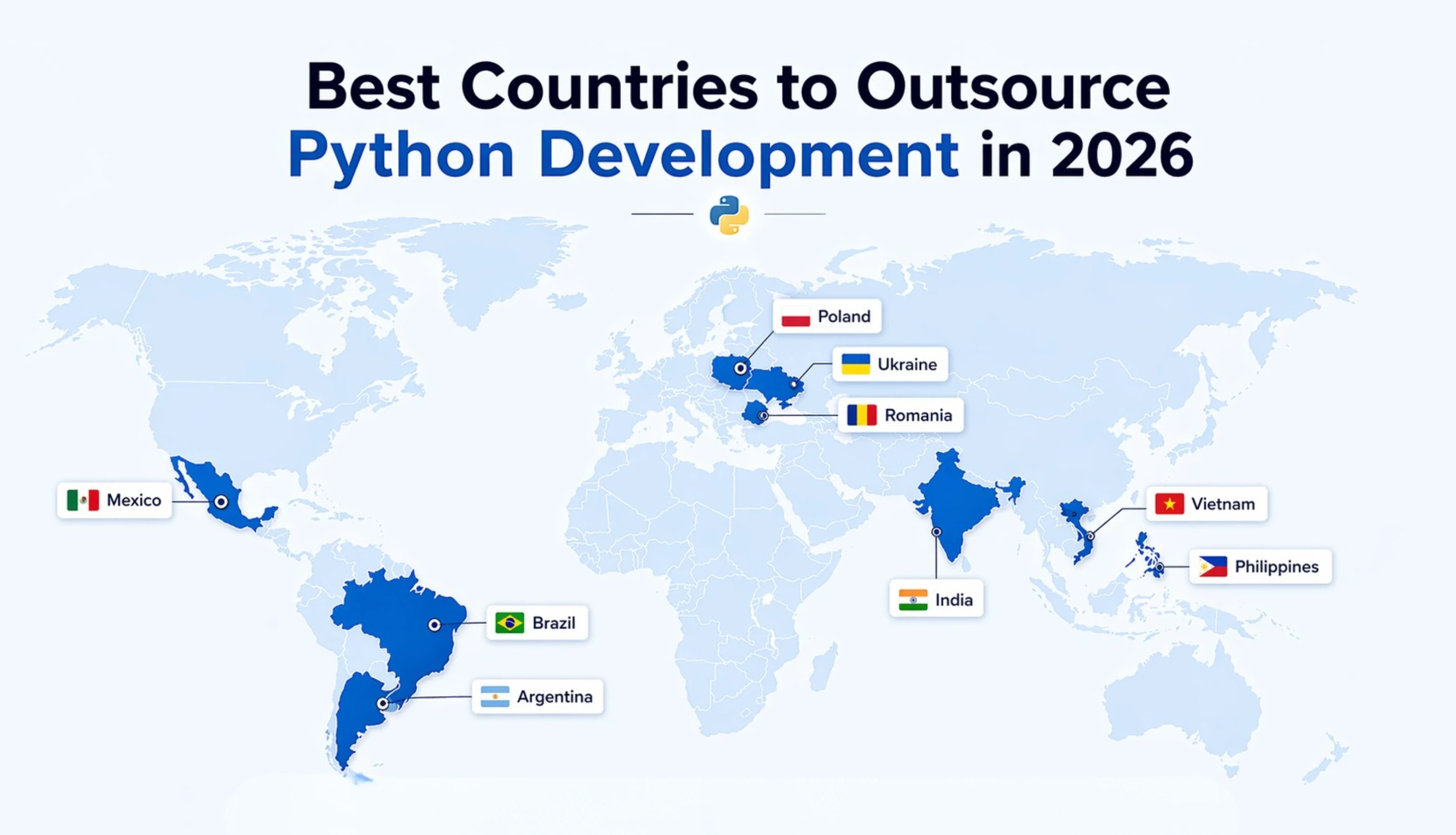
Best Countries to Outsource Python Development in 2026
Compare the best countries to outsource Python development in 2026. Real hourly rates, talent quality rankings, risk factors, and timezone trade-offs across India, Poland, Ukraine, Mexico, Vietnam, and more

Acquaint Softtech
April 22, 2026
Hidden Costs of Hiring a Python Freelancer vs a Dedicated Agency
That $50/hr Python freelancer may cost you more than a $3,200/month dedicated agency. We break down every hidden cost category with real 2026 data before you make your next hire.
Acquaint Softtech
March 14, 2026
Change Management During Python Development Adoption
How to get teams to actually use the Python software you built. ADKAR framework, champion networks, and the adoption anti-patterns that kill good software.
Acquaint Softtech
June 25, 2026India (Head Office)
203/204, Shapath-II, Near Silver Leaf Hotel, Opp. Rajpath Club, SG Highway, Ahmedabad-380054, Gujarat
USA
7838 Camino Cielo St, Highland, CA 92346
UK
The Powerhouse, 21 Woodthorpe Road, Ashford, England, TW15 2RP
New Zealand
42 Exler Place, Avondale, Auckland 0600, New Zealand
Canada
141 Skyview Bay NE , Calgary, Alberta, T3N 2K6