

Table of Contents
Why Choose Laravel?
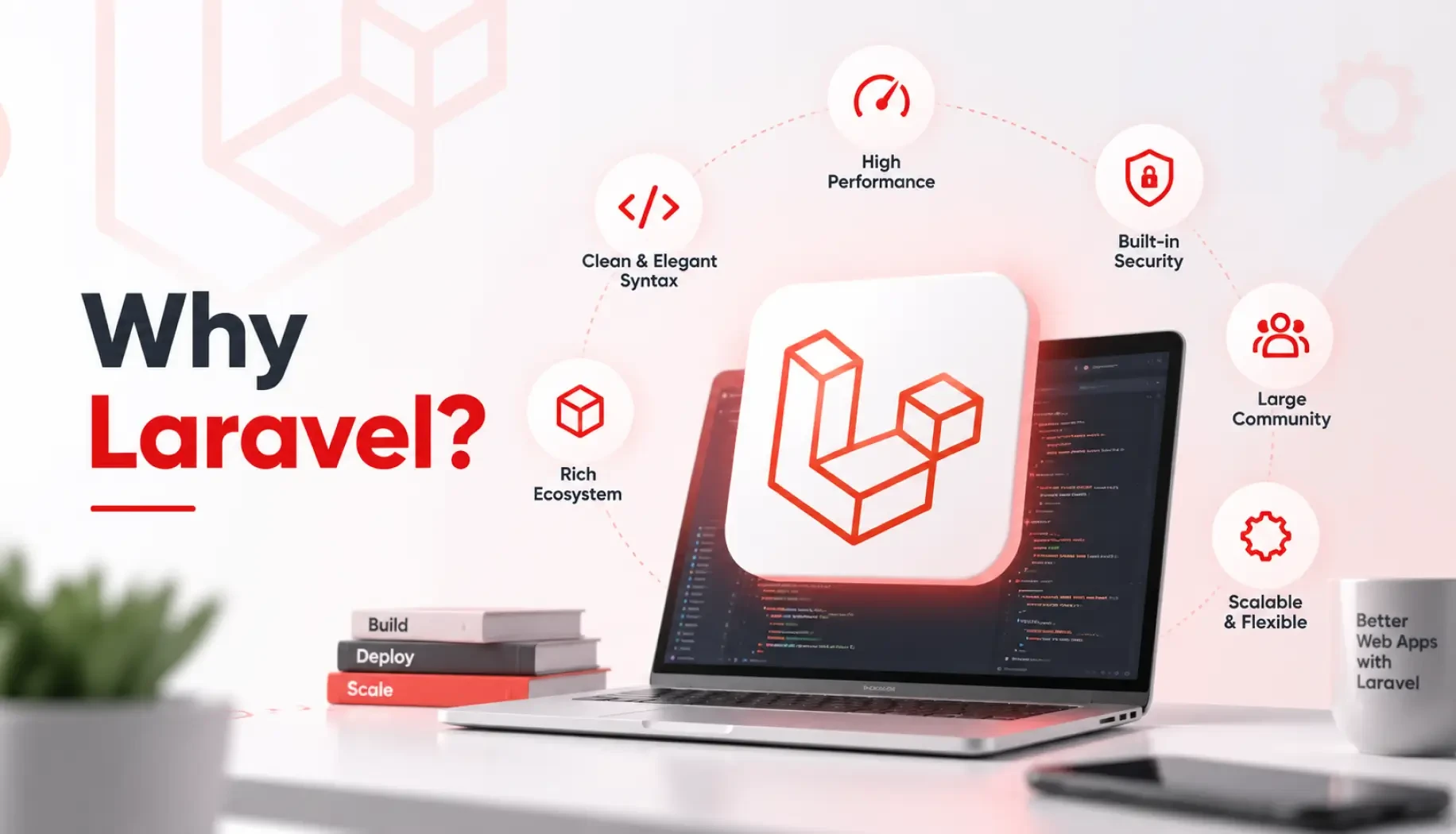
Introduction
Laravel has grown in popularity with its ability to provide you with fast, secure, and stable websites and web apps. It enjoys a huge community with active members who contribute to its development and help others who are stuck anywhere in development.
Over the years, Laravel has become better and better with each update. Thus, Laravel ensures you a complete web development solution that meets the modern standard. The proof of Laravel's capabilities is stated by the fact that it has been used to develop over 1.6 million websites. The current major version, Laravel 13, was released in March 2026 and runs on PHP 8.3, as set out in the official Laravel documentation.
Put simply, Laravel is a backend framework written in PHP. It handles the server side of an application, such as routing, business logic, databases, authentication, and APIs, while the interface is built with Blade or a JavaScript layer like Vue, React, Livewire, or Inertia.
Acquaint Softtech, an Official Laravel Partner, works with the framework every day and offers Laravel Development Services, so the points below reflect how Laravel behaves on real projects rather than only in theory.
Laravel quick facts | |
Type | Backend web framework, written in PHP |
Created by | Taylor Otwell, first released in 2011 |
Current version | Laravel 13, released March 2026 |
Requirement | PHP 8.3 or newer |
Frontend pairing | Blade, Vue, React, Livewire, or Inertia |
Common uses | SaaS, APIs, eCommerce, enterprise apps, and portals |
What are the key benefits of Laravel?
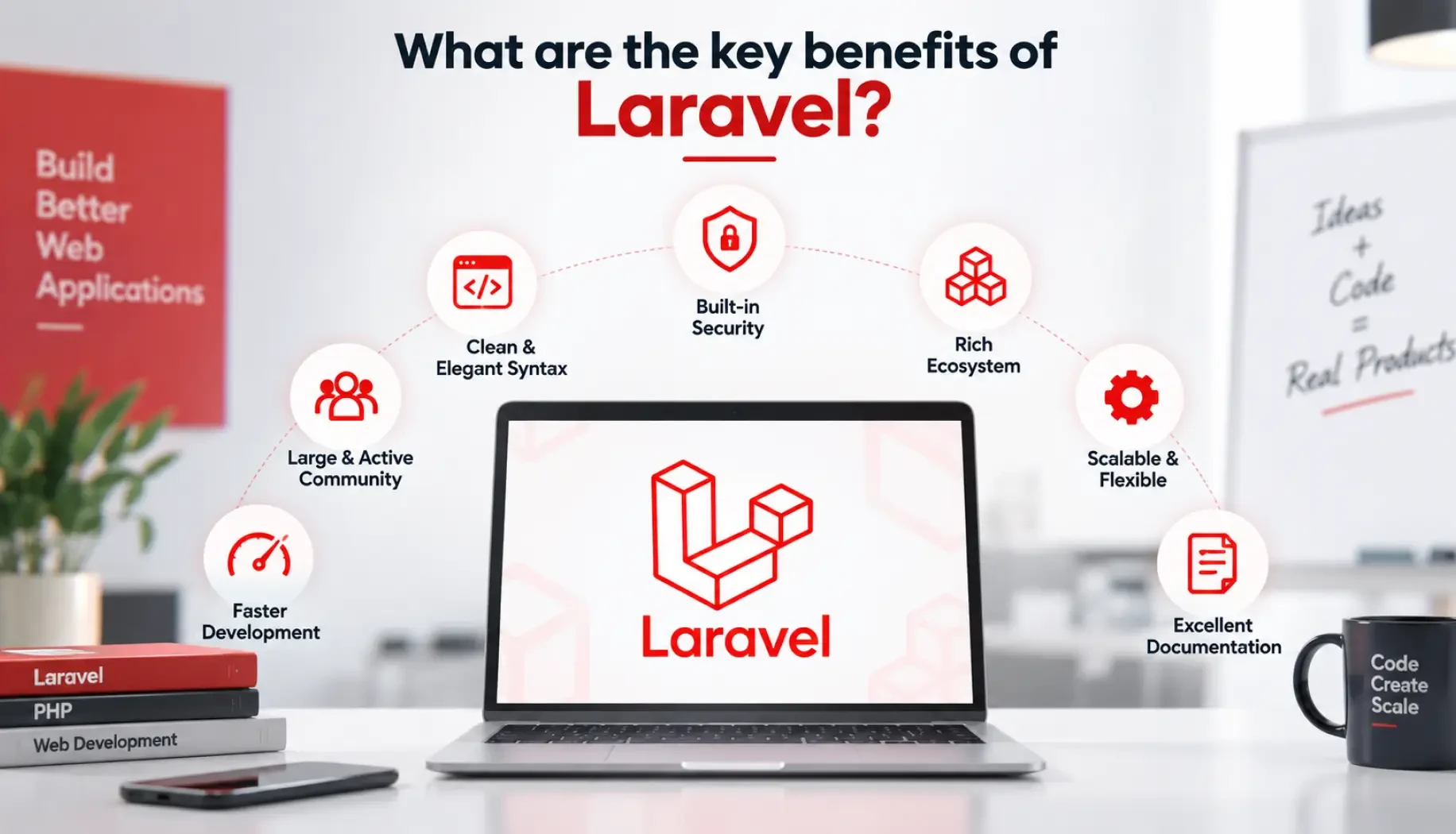
Here are the benefits of Laravel that make it a great choice for web development. For the wider business case, see Why Businesses Choose Laravel for Scalable Applications.
Stability
A stable website that keeps its behavior intact even in high demand is trusted more by visitors. Thankfully, websites built with Laravel are highly stable.
Queues move heavy work into the background and caching reduces repeated database load, so the app stays responsive under pressure. This reliability matters most for production apps that must stay online during peak demand.
Security
Tight security ensures that your website stays strong against ever-growing cybercrime. Laravel has pre-built security features that you can integrate to make your website secure. These include:
CSRF protection on forms
Automatic output escaping in Blade to stop cross-site scripting
Safeguards against SQL injection through the Eloquent ORM
Hashed passwords and encrypted sessions
First-party authentication with Sanctum, Passport, and Fortify
Acquaint Softtech builds on these defaults with ISO 27001-certified processes when handling sensitive client data.
Great community
Laravel enjoys a huge community that is ready to help you out anytime. Embrace this support you get from Laravel and make your project a success.
The community also maintains thousands of packages you can install through Composer, so most common features rarely need to be built from scratch. Regular events like Laracon and resources such as Laracasts keep that knowledge current.
Scalability
If you are looking to grow your website over time, Laravel has you covered. Laravel supports small as well as big websites, so you can scale easily.
Queues, caching, and Laravel Octane let a lean MVP grow into a full Laravel SaaS Development project without a rewrite.
Trust
Laravel has grown to become an ecosystem over the years. Thus, the completeness of the web development solutions you get from Laravel is hard to match by any other PHP framework.
Forge, Vapor, Cloud, Cashier, Reverb, and Nova cover deployment, hosting, billing, real-time events, and admin panels. Because these tools are first-party, they stay compatible as Laravel evolves.
Clean MVC architecture
Laravel follows the model-view-controller pattern, keeping data, logic, and presentation in separate layers.
That structure makes an application easier to read, test, and extend as the team and codebase grow. It also makes onboarding new developers simpler, because the layout is familiar across Laravel projects.
Eloquent ORM
Eloquent, Laravel's object-relational mapper, lets you work with the database using expressive PHP instead of raw SQL. Each table maps to a model, and relationships and queries stay readable and quick to write. Migrations version your database schema in code, so changes are easy to track and roll back.
Blade templating engine
Blade is Laravel's templating engine for dynamic pages. It keeps views clean with layouts, components, and reusable partials, and it escapes output automatically, which also helps on the security side.
Rapid development with Artisan
Artisan, the built-in command-line tool, scaffolds controllers, models, migrations, and tests in seconds. Paired with starter kits like Breeze and Jetstream, it helps teams move from idea to working feature faster and shortens time to market. You can also write your own Artisan commands to automate repetitive tasks.
Planning a Laravel project?
Acquaint Softtech's Laravel team can help you scope the architecture, integrations, and delivery plan.
What you can build with Laravel
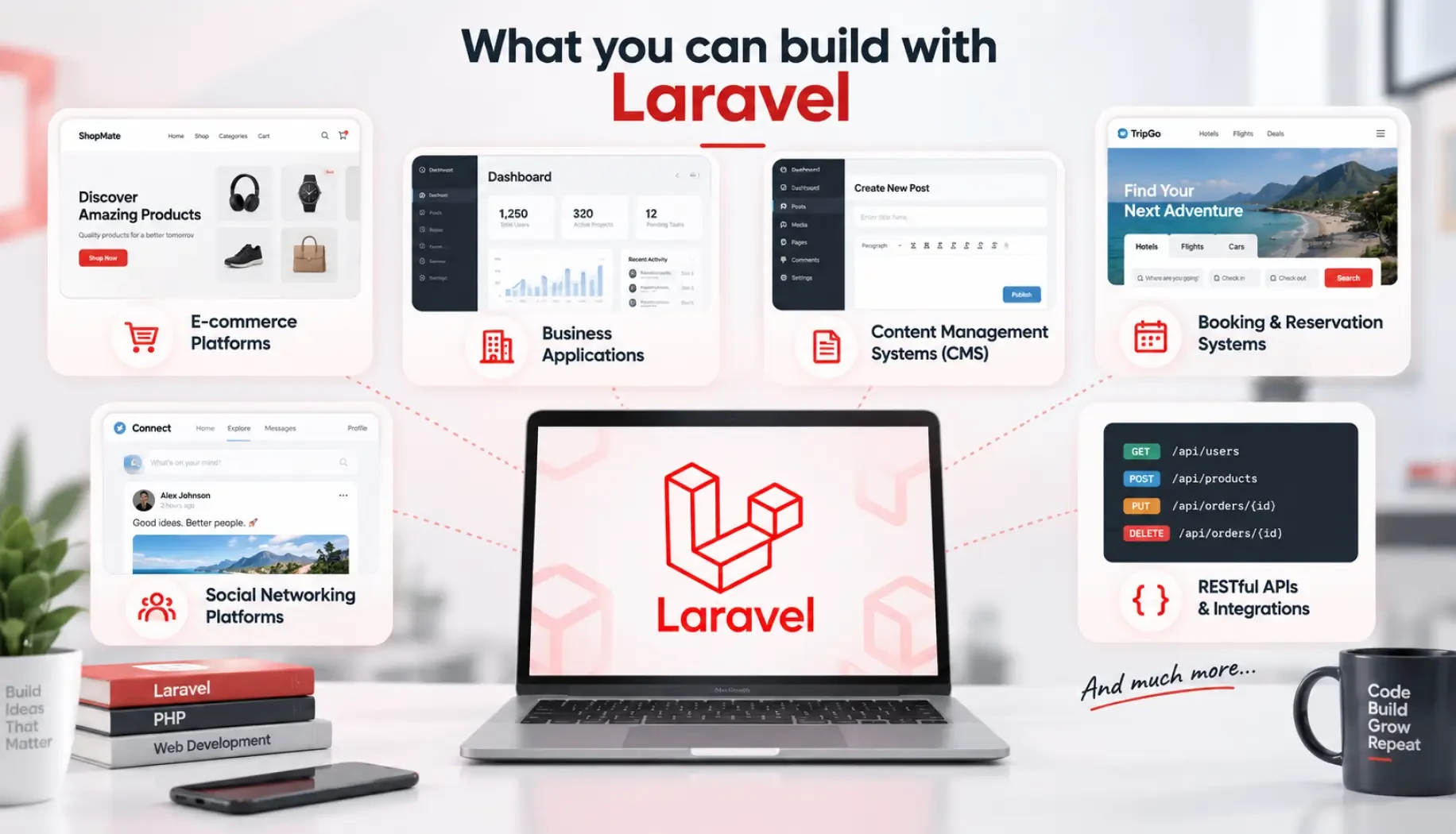
Because it is a general-purpose backend framework, the range of Laravel projects is wide, from Laravel API Development to full web platforms. Teams commonly use it for:
SaaS products with subscription billing
REST and GraphQL APIs and mobile app backends
eCommerce stores and marketplaces
Enterprise dashboards with role-based access control
Content-driven sites and customer portals
For worked examples, see Types of Web Applications You Can Get Built with Laravel. The same framework can carry a product from its first release to a large platform, so you rarely need to switch stacks as the business grows.
Acquaint Softtech has delivered 1,300+ projects across more than 20 industries, so this range of Laravel work is familiar territory.
Is Laravel still a strong choice in 2026?
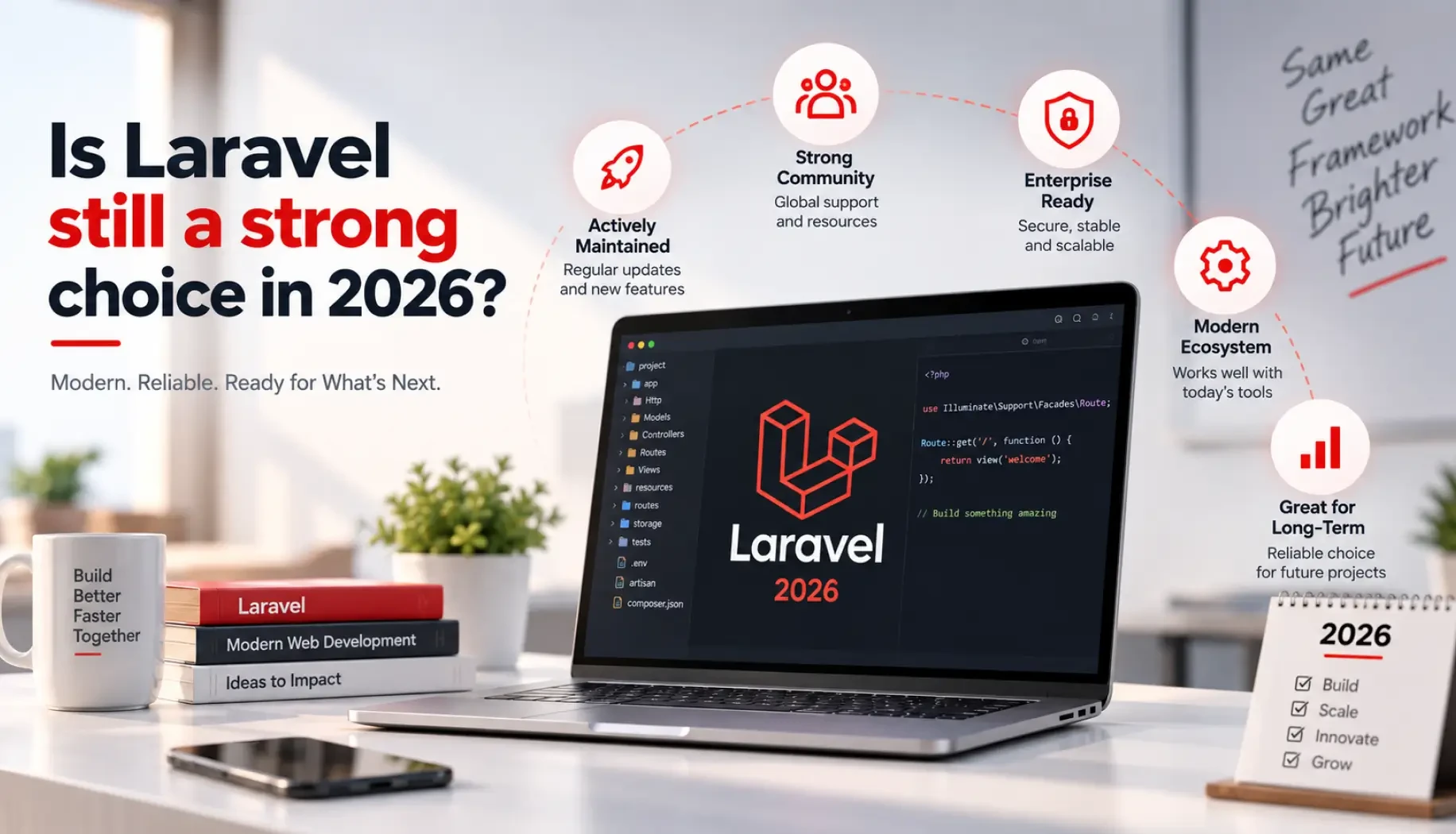
A fair question today is whether Laravel is still relevant, and the short answer is yes. It is actively maintained on a yearly release cycle, and recent versions have added first-class support for modern needs such as real-time features and AI-ready tooling. Its adoption across startups and enterprises remains strong, which is one of the clearest signals of long-term health.
Staying current does mean planning for upgrades, since each major version has a limited support window. The Laravel 11 line reached end of life during 2026, while Laravel 13 now leads the current release.
Treating upgrades as routine maintenance, often through Laravel Upgrade Services, keeps a codebase secure and current without disruptive rewrites.
Where Laravel may not be the best fit
No framework suits every job, so it helps to weigh Laravel's drawbacks alongside its advantages. The main trade-offs are:
It runs on PHP (see the official PHP website), so it is not ideal for hard real-time or heavily CPU-bound work, where Go or Node can be faster.
It does a little more per request than a bare micro-framework, though caching, queues, and Octane close most of that gap.
Its breadth takes time to learn well.
Managed platforms such as Laravel Cloud and Vapor take much of the operational load off smaller teams. For the vast majority of web and API projects, these trade-offs are small next to the speed, security, and structure Laravel provides.
Getting started with Laravel
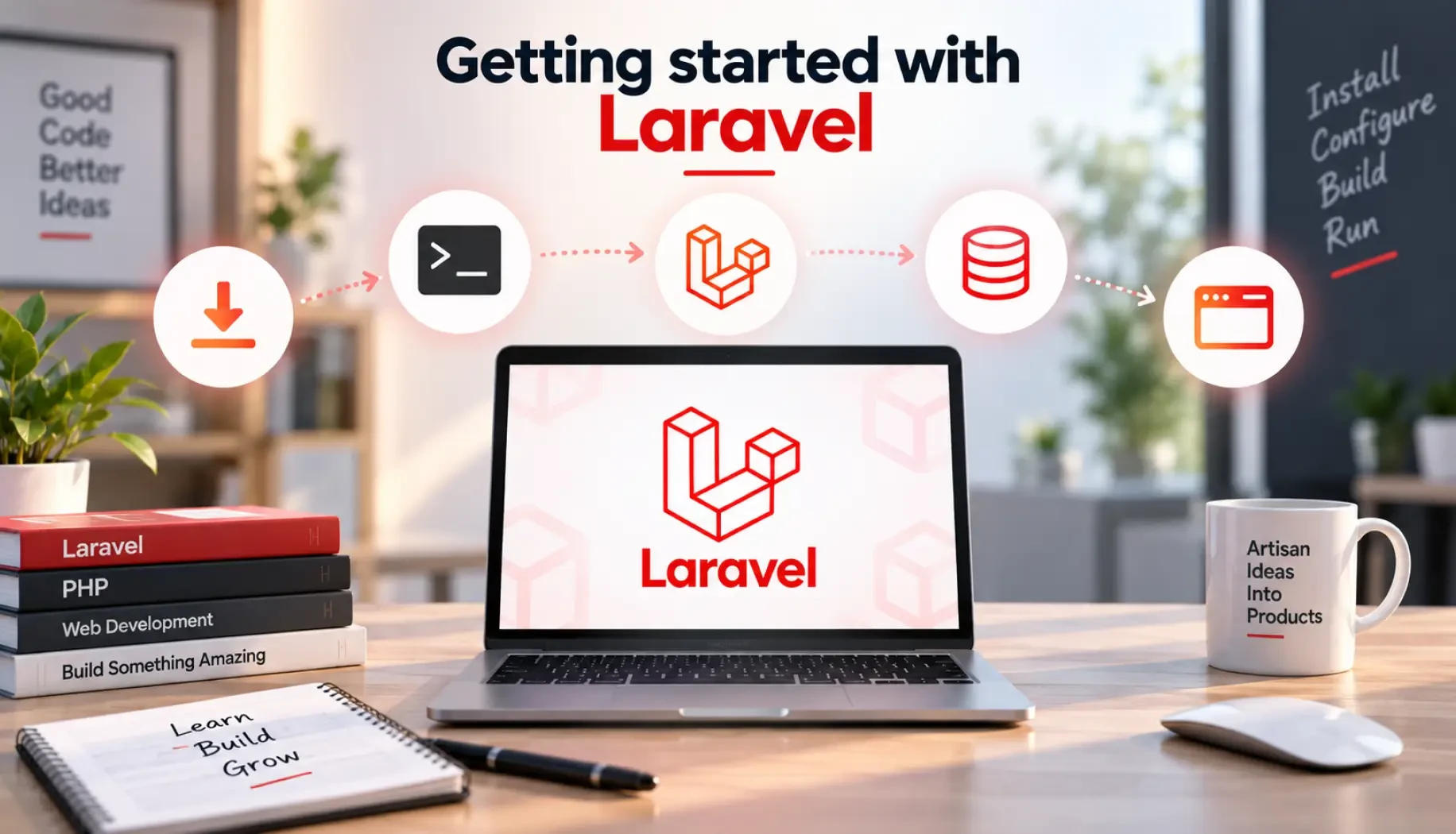
Laravel is approachable to pick up. It uses Composer, the dependency manager for PHP, to install the framework and packages, and everyday tasks run through Artisan. It also has strong editor support in IDEs such as PhpStorm and VS Code. The official documentation is thorough and kept up to date, which lowers the barrier for new teams.
If you prefer to learn by doing, the official Laravel Bootcamp guides you through building a small app called Chirper, and Laravel Sail gives you a ready-made Docker environment for local work. When a team needs to move faster than its current skills allow, another option is to hire Laravel Developers from a partner such as Acquaint Softtech, an Official Laravel Partner and Laravel News Partner, adding experienced engineers alongside your in-house team through staff augmentation.
To wrap up
Laravel is popular for good reason: it is fast, secure, and stable, backed by a large community and a funded team that keeps it current, with Laravel 13 leading the way in 2026. It scales from a small MVP to a large platform, ships strong security and productivity features out of the box, and has only a few narrow trade-offs.
For most web and API projects it is a safe, productive choice, and if you want to build on it, Acquaint Softtech, as an Official Laravel Partner, can help you design, build, and maintain the product.
India (Head Office)
203/204, Shapath-II, Near Silver Leaf Hotel, Opp. Rajpath Club, SG Highway, Ahmedabad-380054, Gujarat
USA
7838 Camino Cielo St, Highland, CA 92346
UK
The Powerhouse, 21 Woodthorpe Road, Ashford, England, TW15 2RP
New Zealand
42 Exler Place, Avondale, Auckland 0600, New Zealand
Canada
141 Skyview Bay NE , Calgary, Alberta, T3N 2K6