

AI-Powered Learning: Adaptive Tutoring, Content Generation, and Intelligent Assessment
AI-powered learning is the engineering layer that turns a static LMS into a platform that teaches. It combines three systems: an adaptive tutoring engine that tracks individual learner knowledge state in real time, an AI content generation pipeline that produces practice materials from verified curriculum, and an intelligent assessment system that evaluates open-ended responses and calibrates difficulty automatically. Together, these layers personalize education at a scale no human instructor can match.

Manish Patel

- You are building or upgrading an LMS and want adaptive tutoring or AI learning features.
- You are a CTO evaluating intelligent assessment or auto-grading at scale.
- You run an EdTech startup in the USA, UK, Europe, or Australia scoping AI content generation.
- You want to understand what separates a real adaptive engine from an AI chatbot on an LMS.
- You need a development partner who has shipped AI-powered learning systems in production.
Most online learning platforms in 2026 claim to be AI-powered, but few truly are. Real AI-driven education systems understand each learner’s knowledge gaps and adapt in real time, which requires a learner model, domain graph, and content generation pipeline working together. This level of system integration is typically built through end-to-end software product development such as software product development.
The U.S. Department of Education Office of Educational Technology published a clear standard for AI in education: AI-powered learning systems must be transparent, auditable, and grounded in verified content. That standard is an engineering requirement. It means a RAG architecture that anchors generation to curriculum, a learner model that produces an explainable knowledge state, and an assessment layer that produces a grade a teacher can defend. These three components form the foundation of every genuine AI-powered learning platform.
This guide is the companion article to the Complete Guide to EdTech Software Development. It covers the three AI layers in depth: adaptive tutoring, AI content generation, and intelligent assessment. The patterns come from Acquaint Softtech's 40+ EdTech engagements over 13+ years. If you are scoping any of these capabilities for a platform, this guide tells you what to build, in what order, at what cost, and with which architecture decisions.
Acquaint Softtech delivers end-to-end AI development services for EdTech platforms, from discovery through production deployment. The team of 70+ engineers has shipped adaptive learning modules, RAG-based tutoring engines, and intelligent assessment pipelines for clients across Singapore, the USA, the UK, Europe, and Australia. Every engagement starts with the same question: does your platform know what each learner does not understand yet?
What Is AI-Powered Learning? A Clear Definition for 2026
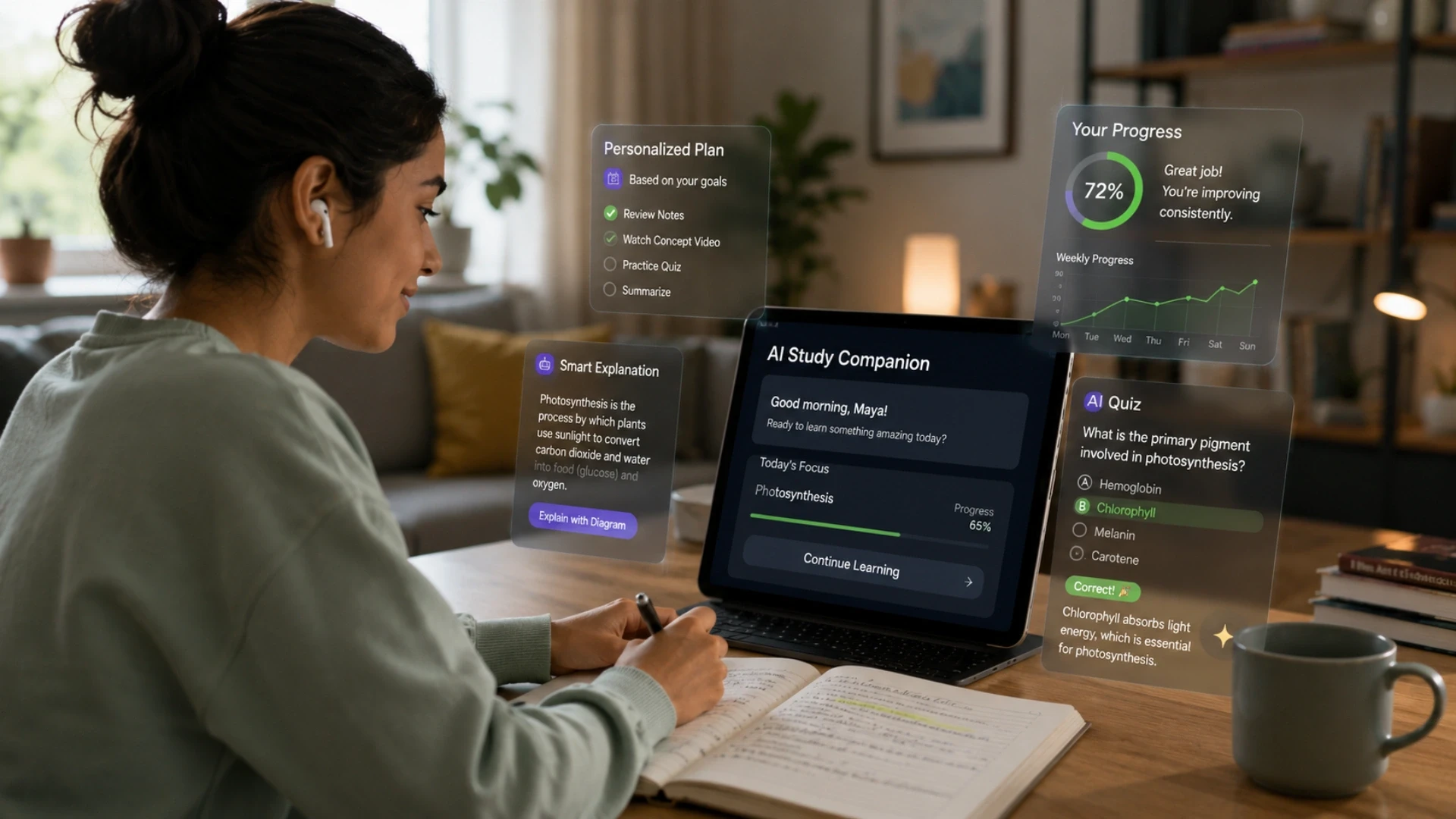
AI-powered learning is the application of machine learning, natural language processing, and generative AI to three specific problems in digital education: personalizing the learning path to each individual based on real-time knowledge state data, generating practice content at a speed and scale no human instructor can match, and evaluating learner responses with a depth that multiple-choice auto-grading cannot achieve. Each of these maps directly to a separate engineering system that must be built with care and integrated deliberately.
Capability | What It Solves | What It Is Not |
Adaptive Tutoring Engine | Personalizes learning by adjusting difficulty and content based on real-time learner performance | Not rule-based branching quizzes; it infers knowledge dynamically |
AI Content Generation | Creates new practice questions, examples, and explanations at scale | Not simple content conversion or formatting of existing material |
Intelligent Assessment | Evaluates essays, code, and open-ended answers using AI-based understanding | Not basic MCQ auto-grading systems |
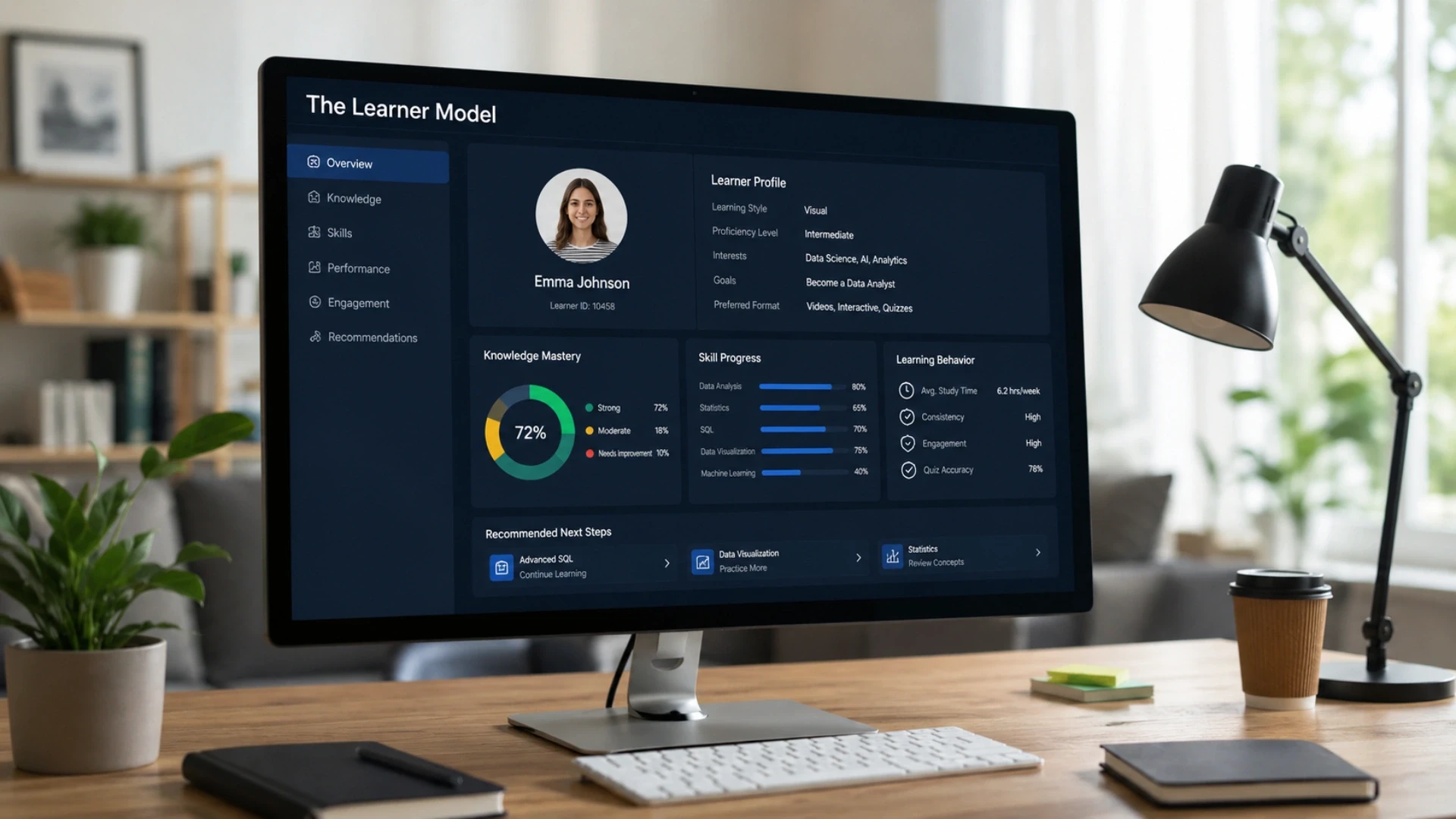
All three systems depend on a shared data foundation called the learner model: a probabilistic record of what each learner currently knows. Without a learner model, the adaptive engine has nothing to adapt to, the content generator has no context to generate from, and the assessment engine cannot calibrate its difficulty to the right level. The learner model is the infrastructure that makes all three capabilities coherent. Building it correctly in phase one is what separates genuine AI-powered learning from a chatbot layered on top of a standard LMS.
Our software product development team begins every AI-powered learning engagement with a two-week data audit: mapping what learner event data the client's current platform produces, identifying gaps in question bank tagging, and designing the schema changes needed to support a real learner model before any AI component is built.
For teams that want to understand the full LMS and EdTech platform context before scoping the AI layer, our virtual CTO services provide a named senior architect who audits the existing platform, defines the AI integration plan, and owns the technical specification before any development sprint begins.
The EdTech AI Market: Why Demand Is Accelerating
The global AI in education market was valued at approximately $5.9 billion in 2024 and is projected to exceed $32 billion by 2030, growing at a compound annual growth rate of over 31 percent. That growth is not coming from K-12 gamification apps. It is being driven by corporate learning platforms that need to deliver compliance training to tens of thousands of employees across multiple languages, by higher education institutions building learner analytics infrastructure, and by professional certification platforms that need adaptive testing calibrated to each candidate's ability in real time.
The European Commission's Digital Education Action Plan 2021-2027 sets a target of 70 percent of EU educational institutions using AI-based assessment tools by 2027. This regulatory commitment is creating a procurement requirement across the UK, Germany, France, the Netherlands, and the wider European market: EdTech platforms that want to compete in Europe must demonstrate AI-powered assessment capability, not just claim it.
Segment | AI Focus | Priority |
Corporate L&D | Compliance + skill gaps | Adaptive learning + content AI |
Higher Education | Student performance tracking | Smart assessment + risk scoring |
Certification | Adaptive testing | CAT + difficulty calibration |
K-12 | Personalized learning | Tutoring + reading support |
Language Learning | Speech + grammar | NLP practice + feedback |
Acquaint Softtech's internal data across 40+ EdTech engagements shows that 78 percent of clients initially underestimate the complexity of the assessment layer and 62 percent underestimate the infrastructure cost of concurrent AI generation requests. Both gaps are addressed directly in the product discovery workshop, which produces a technical specification that maps AI component requirements to budget, timeline, and infrastructure decisions before development begins.
Adaptive Tutoring Engines: How They Actually Work

An adaptive tutoring engine adjusts what a learner sees next based on what that learner currently knows, a concept that aligns well with skills taught in a mit agentic ai course. The adjustment happens at three levels: which concept to practice, which difficulty level to apply, and which content format to use. Each level requires a different data input and a different inference algorithm. Understanding all three before scoping is what prevents the most common and most expensive error in adaptive learning builds: treating the recommendation layer as the core system when the learner model is.
The Three Components Every Adaptive Engine Requires
1. Domain Model: A knowledge graph of the subject domain mapping concepts, prerequisites, and learning objectives. Every content item is tagged to one or more nodes in this graph. Without the graph, the system cannot determine what a learner should practice next after mastering a given concept. The domain model is a three to four-week investment that pays for itself in every subsequent sprint.
2. Learner Model: A probabilistic estimate of mastery for each concept in the domain graph, updated after every assessment response. The standard algorithm is Bayesian Knowledge Tracing (BKT). More sophisticated implementations use Item Response Theory (IRT) or deep knowledge tracing with LSTM networks. The learner model is the core of the adaptive engine. Everything else depends on it.
3. Recommendation Engine: The component that selects the next content item, practice problem, or explanation based on the learner model state and the domain graph. It balances challenge and support: items that are too easy produce disengagement, items that are too hard produce frustration. The target is each learner's proximal development zone.
Acquaint Softtech's adaptive tutoring engagements use Python and Django for the learner model and recommendation engine backend. Our Python developers implement BKT and IRT models from scratch when the client needs full interpretability, or integrate open-source libraries such as pyBKT when speed to market is the priority. The domain graph is built in Neo4j for large subject domains or as a PostgreSQL adjacency table for simpler corporate skills ontologies.
For corporate learning platforms where the subject domain is a workforce skills ontology rather than an academic curriculum, our AI/ML engineers design the domain model aligned to industry frameworks such as SFIA, O*NET, or the client's internal skills taxonomy. The adaptive engine then recommends learning content that closes specific workforce competency gaps, not just academic knowledge gaps.
Teams that need to add adaptive learning to an existing LMS without rebuilding from scratch can use our staff augmentation services to embed a dedicated AI engineer into their product team. The engineer handles domain model design, BKT implementation, and integration with the existing question bank and content delivery layer, working inside the client's sprint process from day one.
Start with a Domain Model Audit
Before building any adaptive tutoring feature, Acquaint Softtech maps your existing content structure, identifies domain model gaps, and designs the knowledge graph schema. This three-week audit prevents the single most common error in adaptive learning builds.
1,300+ projects delivered. 95% sprint delivery rate. Team deployed within 48 hours of brief.
AI Content Generation for Education: What to Build and What to Avoid

AI content generation in EdTech applies large language models to produce educational content at scale: practice questions, worked examples, hints, alternative explanations, and curriculum summaries. The production argument is direct. A human instructional designer takes hours to create five well-calibrated practice problems on a concept. An LLM with a well-designed prompt and a domain-restricted retrieval layer takes seconds.
The engineering risk is equally direct: without domain constraints and a quality validation layer, the LLM produces plausible content that is sometimes wrong. Teams assessing AI content workflows often use a plagiarism detector to evaluate content quality and reliability. A detailed StealthWriter AI review offers insights into AI-generated content readability, originality, and overall performance. In educational contexts, wrong content that sounds confident is worse than no content at all.
What AI Content Generation Can Reliably Produce
Practice question variants: Multiple-choice and short-answer questions generated from a seed concept with controlled difficulty variation. Reliable when the concept is tagged in the domain model and the prompt includes difficulty parameters.
Worked example explanations: Step-by-step solutions with reasoning between steps generated from a verified solution template. Reliable when anchored to a known correct answer. Unreliable when the LLM generates the solution independently.
Multilingual content adaptation: Translating existing course content into additional languages while preserving pedagogical structure. GPT-4o and Claude 3.5 Sonnet both perform reliably for major European and Asian languages when the source content is well-structured.
Curriculum review materials: Module summaries, concept glossaries, and review checklists generated from structured course content passed through RAG. Low hallucination risk when the source material is retrieved from the client's own content store.
The RAG Architecture That Makes Content Generation Safe
Retrieval-Augmented Generation (RAG) is the architecture that makes AI content generation safe enough to deploy in an educational context. Instead of asking the LLM to generate from its general training data, RAG retrieves the relevant verified course material from a vector store and passes it as context before generation. The LLM produces explanations and practice questions from the retrieved content, not from open internet knowledge.
Component | Technology | Purpose |
Vector Store | Pinecone / Qdrant / pgvector | Stores embeddings for semantic content retrieval |
Embedding Model | OpenAI / fine-tuned models | Converts content into vector representations |
Generation Model | GPT-4o / Claude / fine-tuned LLMs | Generates learning content from context |
Quality Gate | Scoring + human review | Ensures accuracy before delivery to learners |
Our AI development services team implements RAG pipelines using Pinecone or pgvector depending on deployment constraints. For clients on AWS, pgvector running on RDS PostgreSQL avoids a third-party dependency and keeps all learner data within the client's own infrastructure. This is important for FERPA compliance in the USA and GDPR compliance across Europe and the UK.
The content generation pipeline integrates directly with the adaptive engine. When the recommendation engine selects a concept for practice, the generation pipeline produces three to five question variants at the target difficulty level. The AI-powered question bank generation system means the learner never sees the same question twice, and the variety of formulations helps identify whether understanding is genuine or a phrasing artifact.
For platforms that need to scale content generation across languages for Europe and the Asia-Pacific region, our MERN stack developers build the content management interface that lets instructors review, approve, and publish AI-generated content before it enters the live question bank.
Intelligent Assessment: Auto-Grading, Rubrics, and Anti-Cheat
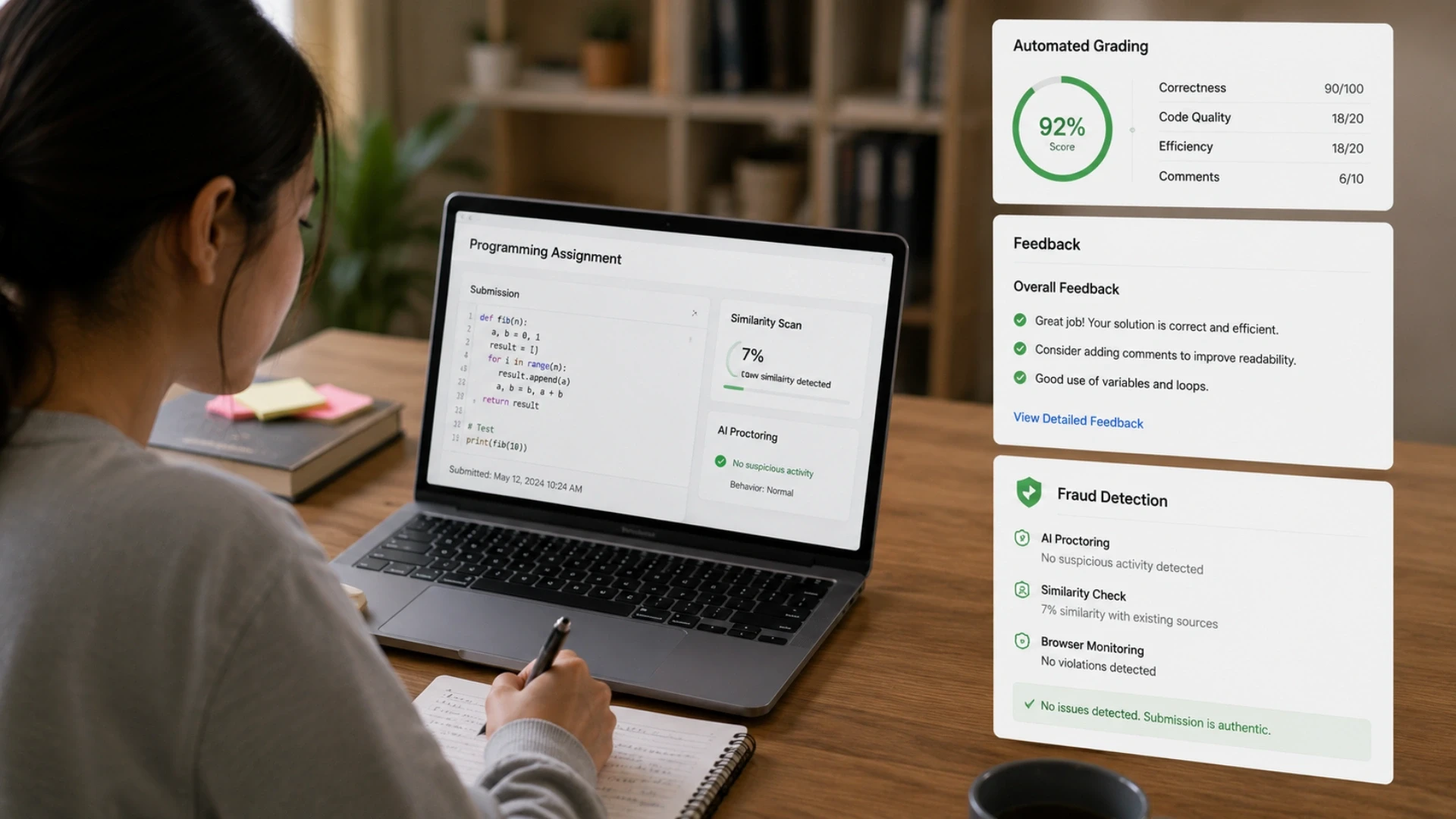
Intelligent assessment is the AI component with the most direct impact on instructor workload. A typical online course with 1,000 enrolled learners generates hundreds of open-ended responses per week. As AI-generated submissions become more common, educators may also rely on an AI detector to help identify content that requires additional review. Without automated grading, instructors either grade everything manually, which is unsustainable, or replace open-ended questions with multiple-choice, which reduces learning quality. Intelligent assessment makes open-ended questions viable at learner volumes that would otherwise require a full grading team.
Three Types of Intelligent Assessment
Automated Essay Scoring (AES): NLP models that evaluate written responses against a rubric with dimensions such as argument structure, evidence use, and coherence. Modern AES systems using fine-tuned BERT models achieve inter-rater reliability within 0.1 of trained human graders on standardized rubrics. The automated essay scoring system at Acquaint Softtech is fine-tuned on client rubric data, not a generic model.
Code Assessment with AI Feedback: Automated testing of code submissions combined with AI-generated natural-language feedback. The system runs test cases, identifies which cases failed, and explains why the code failed and which concept the learner needs to revisit. This closes the feedback loop that most intelligent code assessment platforms leave open: learners see a failing test but not the reasoning behind it.
Computerized Adaptive Testing (CAT): Item selection during a test adapts in real time based on the learner's response pattern. Correct answers unlock harder items. Incorrect answers unlock easier items. The test converges on an accurate ability estimate in fewer items than a fixed-length test. CAT is the standard for GMAT, GRE, and most nursing licensure exams. The adaptive assessment engine development requires an IRT-calibrated item bank and a real-time item selection algorithm.
Expert Insight: Sanjay Prajapati, Senior AI Engineer, Acquaint Softtech
"The anti-cheat problem in AI-era assessment is fundamentally different from plagiarism detection. Plagiarism checks whether submitted text matches a known source. Anti-cheat checks whether the submitted response is consistent with the learner's prior performance profile. A learner who scored 40 percent on every prior assessment does not suddenly produce a flawless essay without an explanation. We build edtech anti-cheat behavioral consistency model systems that flag this pattern for instructor review without accusing anyone. The flag goes to a human, not to an automated rejection."
For the assessment frontend, our React Native developers build the timed exam interface, the code editor with integrated test runner, and the essay submission form with real-time word count and readability feedback. The frontend communicates with the assessment API via WebSocket for real-time CAT item delivery and via REST for batch essay grading workflows.
For platforms that need to deploy CAT for professional certification, our team builds the IRT parameter calibration pipeline and the real-time item selection engine. Existing question banks typically require 500 to 1,000 calibration responses before IRT parameters are reliable enough to use in live adaptive testing. The dedicated software development team handles both the calibration run and the live item selection engine, keeping the same engineers across both phases.
Get a Custom AI Assessment Scope in 48 Hours
Whether you need auto-grading for essays, CAT for certification, or code assessment with AI feedback, Acquaint Softtech delivers production-ready intelligent assessment systems. Share your learner volume and question bank size and receive a team structure and fixed cost within 48 hours.
Tech Stack for AI-Powered Learning Platforms in 2026
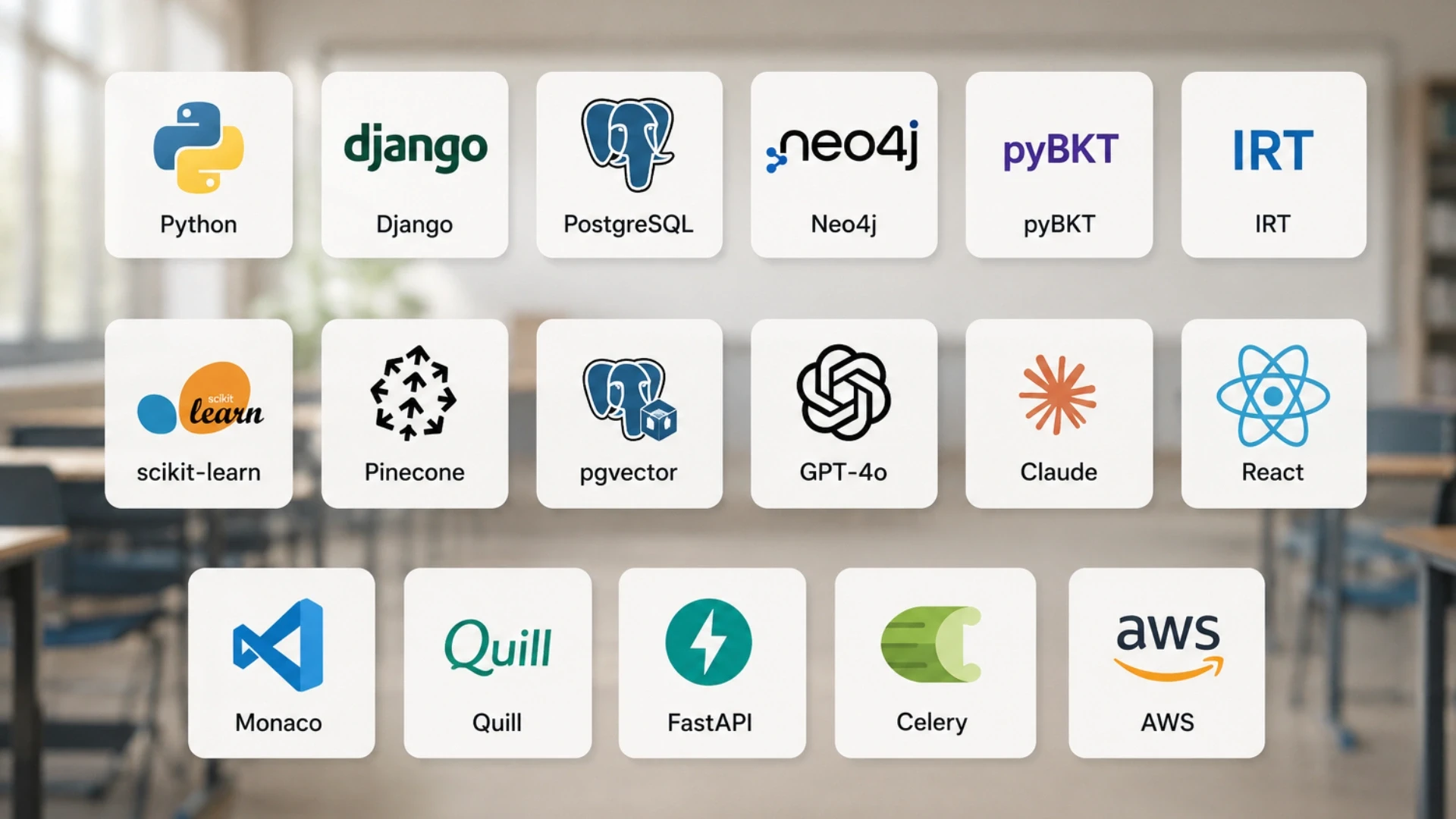
The technology choices below reflect what Acquaint Softtech has validated across adaptive tutoring, content generation, and intelligent assessment engagements. These are not theoretical recommendations. They are the combinations that have produced the most reliable results across the most diverse set of EdTech clients.
Layer | Recommended Stack | Rationale |
Learner Model Backend | Python, Django, PostgreSQL | Manages learner data and scalable RAG storage |
Domain Graph | Neo4j / PostgreSQL | Handles complex skill relationships and prerequisites |
Adaptive Engine | pyBKT, IRT, scikit-learn | Powers personalization and adaptive testing |
RAG Pipeline | Pinecone / pgvector + GPT-4o/Claude | Retrieves context and generates responses |
Assessment Frontend | React, Monaco, Quill | Interactive coding and essay evaluation UI |
Grading API | FastAPI + Celery | Real-time scoring and async grading jobs |
Anti-Cheat Layer | Behavioral models + proctoring APIs | Detects cheating in high-stakes exams |
Infrastructure | AWS (ECS, RDS, S3, Redis) | Scalable cloud deployment and storage |
Infrastructure auto-scaling for peak assessment load is handled by our DevOps engineers. AI assessment workloads spike sharply during scheduled certification events and end-of-module tests. An infrastructure that scales from baseline to 10x concurrent users in under two minutes is a production requirement, not a stretch goal.
For platforms building a mobile-first adaptive learning experience, our React Native developers build the offline-capable adaptive practice interface. Learner responses captured offline sync to the learner model when connectivity is restored, with conflict resolution that preserves the most recent response and requeues incomplete CAT sessions.
Backend API layers connecting the adaptive engine, content generation pipeline, and assessment grading service are built by our Laravel developers when the primary platform is PHP-based, or by our Django developers when the platform is Python-native. Both teams have production experience with the learner model schema, xAPI statement logging, and LRS integration.
Cost and Timeline: What It Takes to Build AI Learning Features
The cost of building AI-powered learning features depends on three variables: the sophistication of the learner model required, the size and quality of the existing question bank, and whether the client is adding AI to an existing LMS or building from scratch. The figures below come from Acquaint Softtech's internal project data across 40+ EdTech engagements.
AI Component | Build Duration | Cost Range (India-Based Team) |
Domain model and knowledge graph | 3 to 4 weeks | $6,000 to $12,000 |
Learner model (BKT implementation) | 4 to 6 weeks | $9,750 to $18,000 |
Adaptive recommendation engine | 3 to 5 weeks | $7,300 to $15,000 |
RAG content generation pipeline | 4 to 6 weeks | $9,750 to $18,000 |
Automated essay scoring (AES) | 6 to 8 weeks | $14,600 to $24,000 |
Computerized adaptive testing (CAT) | 6 to 10 weeks | $14,600 to $30,000 |
Full AI-powered learning layer (all above) | 5 to 8 months | $60,000 to $110,000 |
Clients who build with Acquaint Softtech achieve up to 40% cost savings compared to equivalent Western agency rates. The structured phased approach means each component is validated before the next is started: domain model in phase one, learner model in phase two, recommendation and generation layer in phase three. The client can adjust scope between phases based on real validation data, not original assumptions.
For teams that need AI features integrated into an existing LMS rather than built from scratch, our software support and maintenance services handle the integration work, including API design, data migration from legacy question banks, and performance testing under realistic learner loads before go-live.
For teams considering full outsourcing of the AI layer, our software development outsourcing model provides a named team with an assigned architect, senior engineer, and QA lead. The same people build from phase one through production deployment. No rotating contractors, no knowledge loss at handoff.
Why Choose Acquaint Softtech for AI-Powered EdTech
Many AI development companies will take an EdTech brief. Very few have built adaptive tutoring engines, intelligent assessment systems, and RAG-based content generation pipelines in production, at the learner volumes where these systems need to perform. Acquaint Softtech has. The record is verifiable on Clutch, in case studies, and in the architecture of platforms currently serving learners across four continents.
The Track Record
1,300+ software projects delivered across 13+ years and 20+ industries
70+ in-house engineers across AI/ML, backend, frontend, and DevOps
4.9/5 rating across 50+ verified Clutch reviews as a Clutch Premier Verified company
95% sprint delivery rate across all AI and EdTech engagements
24-month average team tenure, the same engineers who build it are the ones who maintain it
48-hour team deployment from brief to first committed developer on the client's codebase
What Clients Say About AI Engagements
Verified Clutch Review
"What stood out was their ability to translate complex AI and ML concepts into practical business tools. Our non-technical managers could understand trends, test scenarios, and make informed decisions without needing to dive into code. Their iterative approach — building prototypes, gathering feedback, and refining models — ensured the final system was highly usable, not just technically impressive."
George Chasiotis, Founder, Minuttia AEO Agency, Greece | 4.5/5 Overall | 5.0 Quality | 5.0 Schedule
Verified Clutch Review
"They adapted quickly without creating friction. The system helped our team reduce internal back-and-forth and enabled mid-level staff to handle tasks that previously required escalation. Responses were now aligned with our official documentation rather than varying by who answered."
Denis VP, CEO, DDD Invoices, Slovenia | 5.0 Overall | 5.0 Quality | 5.0 Schedule | 5.0 Cost
Explore all verified client outcomes on the Acquaint Softtech Clutch profile and review EdTech-specific work in the Acquaint Softtech case studies. Every engagement listed includes the client name, project scope, tech stack, and measured outcome.
For teams that want to understand the architectural thinking behind AI-powered learning builds before committing budget, our published guide on types of eLearning solutions and how to develop them covers the full EdTech platform taxonomy, and AI and machine learning integration with Laravel covers the backend patterns used in AI-enhanced LMS builds.
For white-label EdTech deployments serving multiple institutions from a single codebase, our white-label software development services cover the multi-tenancy architecture that AI-powered learning systems require: per-tenant domain models, isolated learner databases, and configurable content generation prompts per deployment.
Ready to Build AI-Powered Learning Into Your Platform?
Acquaint Softtech builds adaptive tutoring engines, RAG content generation pipelines, and intelligent assessment systems for EdTech platforms across the USA, UK, Europe, and Australia. Join 200+ tech companies who have scaled their engineering with Acquaint Softtech.
Frequently Asked Questions
-
What is an adaptive learning platform?
An adaptive learning platform adjusts content, difficulty, and pacing to each learner in real time based on their performance data. It uses a learner model to track what each person knows, a domain graph to map what they should learn next, and a recommendation engine to select the right content. Unlike a standard LMS that delivers the same course to everyone, an adaptive platform gives each learner a unique, responsive path.
-
How does AI tutoring work?
AI tutoring works by combining a knowledge graph of the subject domain, a learner model that tracks what the student currently knows, and a generative AI layer that produces explanations and practice questions targeted at the learner's current gap. The AI identifies what the learner does not understand and generates targeted practice to close that specific gap, rather than simply answering questions.
-
What is intelligent assessment in education?
Intelligent assessment uses AI to evaluate open-ended responses such as essays, code submissions, and short answers at scale. It includes automated essay scoring using NLP rubric models, code assessment with AI-generated feedback on failed test cases, and computerized adaptive testing that adjusts question difficulty in real time. The goal is to make complex assessment viable at learner volumes where manual grading is not sustainable.
-
What is the difference between adaptive learning and personalized learning?
Personalized learning is any approach that tailors education to the individual, including instructor-led differentiation. Adaptive learning is a specific technical implementation: a software system that automatically adjusts content selection and difficulty based on real-time learner performance data. All adaptive learning is personalized, but not all personalized learning uses adaptive technology.
-
Can AI replace human teachers?
No. AI-powered learning handles the repetitive, data-intensive parts of teaching: practice generation, difficulty calibration, grading at scale, and early-warning intervention. It frees instructors to focus on discussion facilitation, mentoring, and complex project evaluation. Berkeley School of Education research confirms that AI tutoring and human instruction are complementary, not substitutes.
-
How much does it cost to build an adaptive learning platform?
AI Learning Platform Component
Estimated Cost
Timeline
Core AI Layer, Learner Model & Recommendation Engine
$23,000 to $45,000
10 to 15 weeks
RAG Content Generation & Intelligent Assessment Layer
$24,000 to $48,000
Additional scope
Complete AI Powered Learning Platform
$60,000 to $110,000
Depends on scope and complexity
-
What is Bayesian Knowledge Tracing?
Bayesian Knowledge Tracing (BKT) is a probabilistic algorithm that estimates the probability that a learner has mastered a specific knowledge component based on their response history. After each correct response, the mastery probability increases. After each incorrect response, it is updated downward, accounting for guessing. BKT is the standard algorithm for knowledge component tracking in adaptive tutoring systems.
-
What is RAG and how is it used in EdTech?
RAG stands for Retrieval-Augmented Generation. In EdTech, it retrieves verified course material from a vector store and passes it as context to an LLM before content generation. The LLM generates from your verified curriculum, not from its general training data. This removes most hallucination risk in educational contexts and ensures that AI-generated practice materials are grounded in what the course actually teaches.
I lead technology and client success at Acquaint Softtech with one goal in mind. Deliver work that feels personal, reliable, and worthy of long term trust. I stay close to both our clients and our developers to make sure every project moves with clarity, quality, and accountability.
Table of Contents
Get Started with Acquaint Softtech
- 13+ Years Delivering Software Excellence
- 1300+ Projects Delivered With Precision
- Official Laravel & Laravel News Partner
- Official Statamic Partner
Related Blog
The Complete Guide to EdTech Software Development in 2026
Complete guide to EdTech software development in 2026. LMS architecture, virtual classroom tech stack, AI tutoring system design, MVP timeline, and cost.

Acquaint Softtech
May 4, 2026
How Learning Management Systems Work
An LMS is not a video library with a login screen. It is a structured system that owns enrollment, progress, assessment, and certification in one traceable architecture. Teams that treat it as a file folder spend 12 months rebuilding what should have been designed correctly in week one. This guide shows exactly how each layer works, and what it actually costs to build.
Manish Patel
May 13, 2026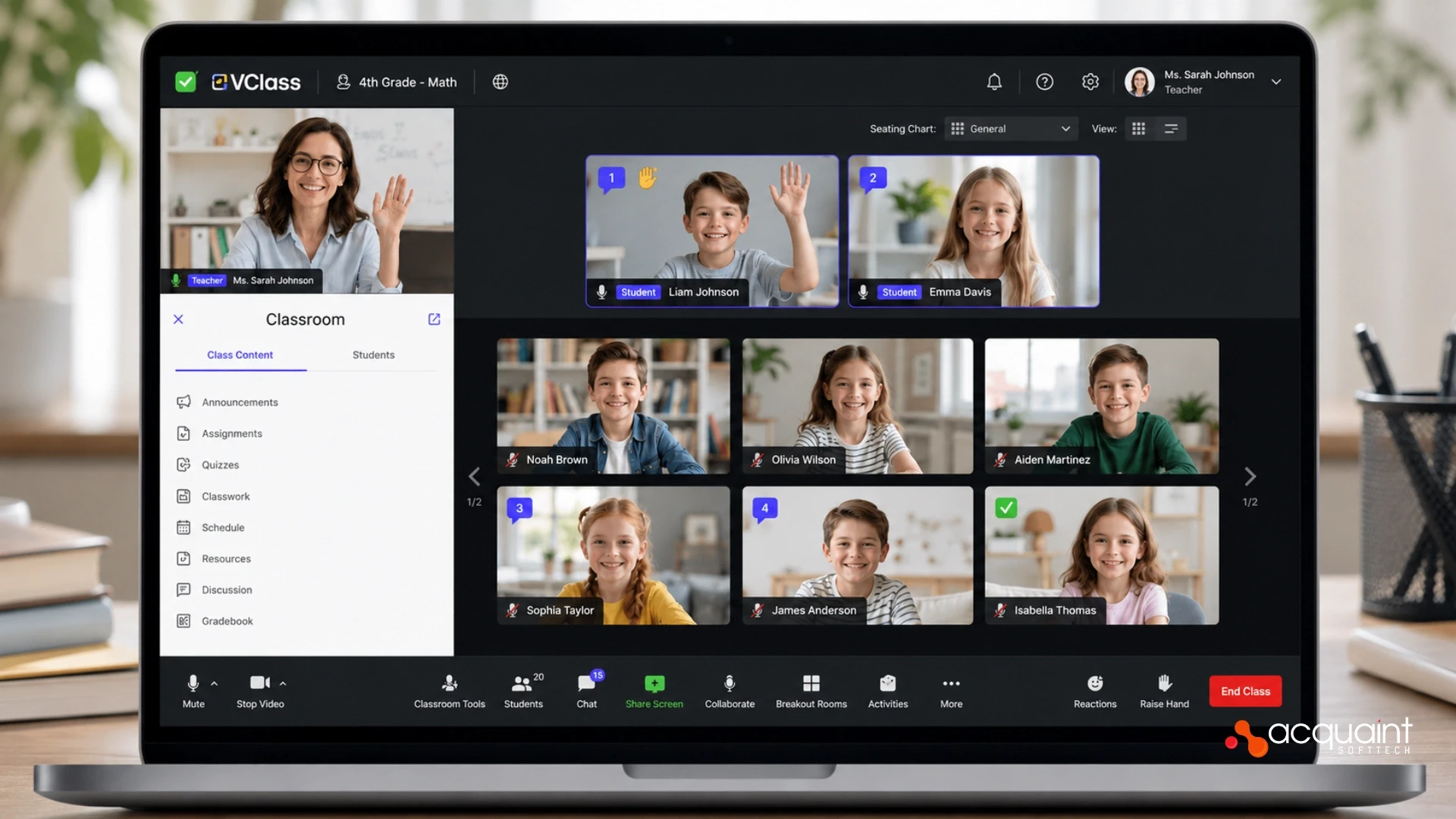
Building a Virtual Classroom Platform: Video, Whiteboard, Breakout Rooms, and Attendance Tracking
A virtual classroom is not a Zoom call with a class roster. It is a purpose-built live learning environment where video, whiteboard, breakout rooms, session recording, and attendance verification are engineered to work together as a single platform. Teams that build each feature independently spend 8 to 14 months in integration loops. Teams that design the architecture correctly from the start ship in 4 to 6 months. This guide shows you how.
Manish Patel
May 20, 2026India (Head Office)
203/204, Shapath-II, Near Silver Leaf Hotel, Opp. Rajpath Club, SG Highway, Ahmedabad-380054, Gujarat
USA
7838 Camino Cielo St, Highland, CA 92346
UK
The Powerhouse, 21 Woodthorpe Road, Ashford, England, TW15 2RP
New Zealand
42 Exler Place, Avondale, Auckland 0600, New Zealand
Canada
141 Skyview Bay NE , Calgary, Alberta, T3N 2K6