To optimize video for a low-bandwidth virtual classroom on a slow internet connection, prioritize audio clarity by lowering video resolution, reducing frame rate, or turning off video feeds entirely. The practical strategies are: disable video feeds when connections lag, use adaptive bitrate streaming that scales resolution in real time, pre-record and compress heavy lectures rather than streaming them live, and switch to a wired connection where possible to reduce packet loss.

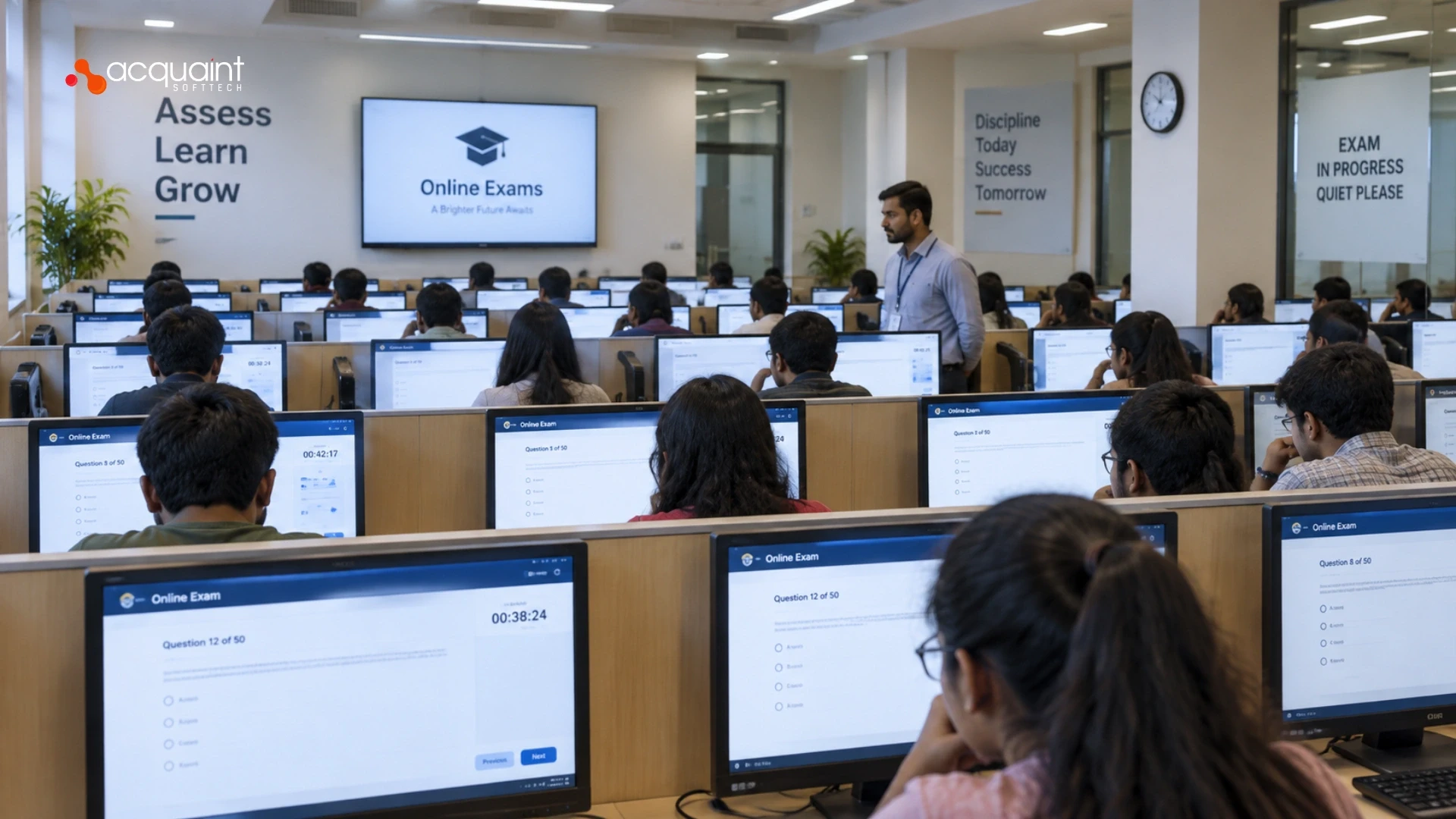
Managing a live exam with high concurrent learners is the ultimate stress test for any Learning Management System. Unlike normal course navigation where users pull static pages, a live exam forces heavy, write-intensive database traffic at the same millisecond, such as saving quiz answers, autosaving progress, and validating timers.
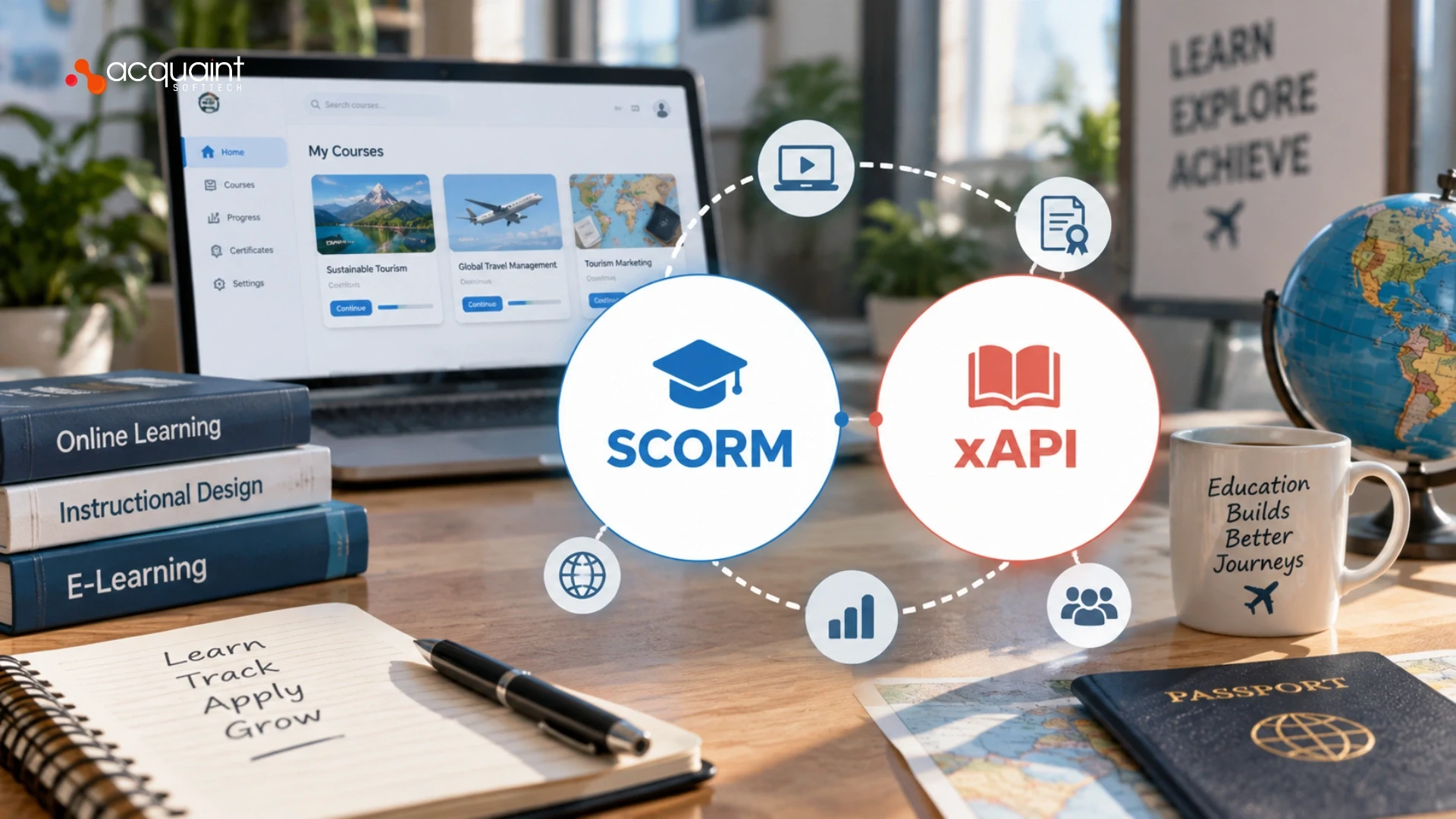
SCORM and xAPI are complementary e-learning technical standards that define how digital learning content and Learning Management Systems (LMS) interoperate, communicate, and track learner data. SCORM packages and launches a course inside an LMS and tracks basic completion and scores. xAPI records any learning experience anywhere and stores it in a Learning Record Store. cmi5 bridges the two. A modern compliant LMS supports all three.
Employee onboarding automation uses software to guide a new hire through a structured Day-1 to Day-90 learning journey without manual chasing. It triggers the right training, tasks, and check-ins at each stage, tracks completion, and alerts managers when someone falls behind. Instead of a chaotic first week, every hire follows a consistent path from orientation to full productivity.

Acquaint Softtech is an EdTech development company with 13+ years of experience and 1,300+ projects delivered. It builds scalable learning platforms using Laravel, MERN, React Native, and AI.

To build an EdTech startup, validate the learning problem, build a focused MVP, and scale after achieving product-market fit. Successful startups test demand before investing in full development.

To build an EdTech startup, validate the learning problem, build a focused MVP, and scale after achieving product-market fit. Successful startups test demand before investing in full development.
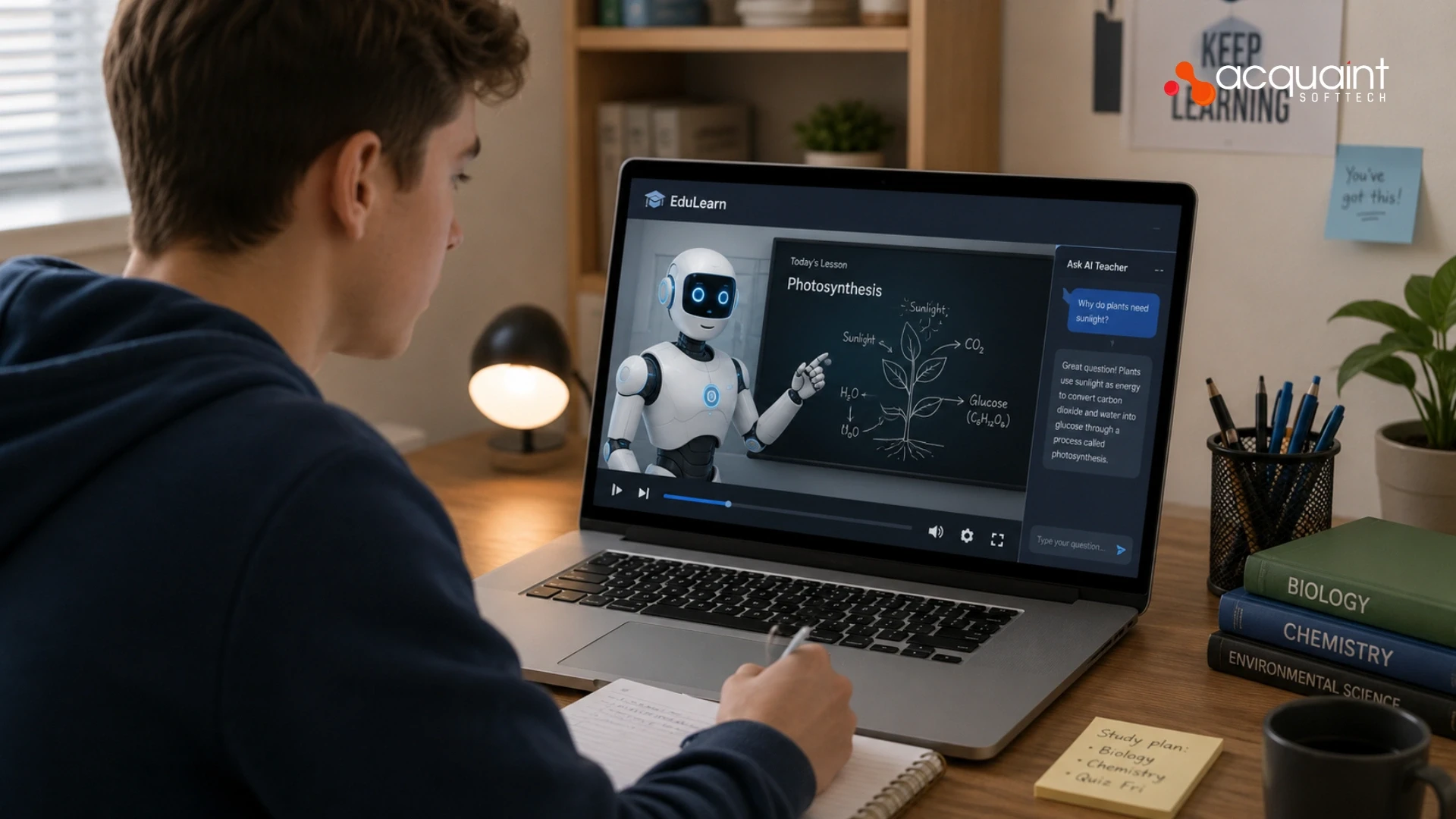
EdTech app development builds mobile learning apps for students, teachers, and professionals. Modern apps support offline learning, personalized experiences, and secure user data.

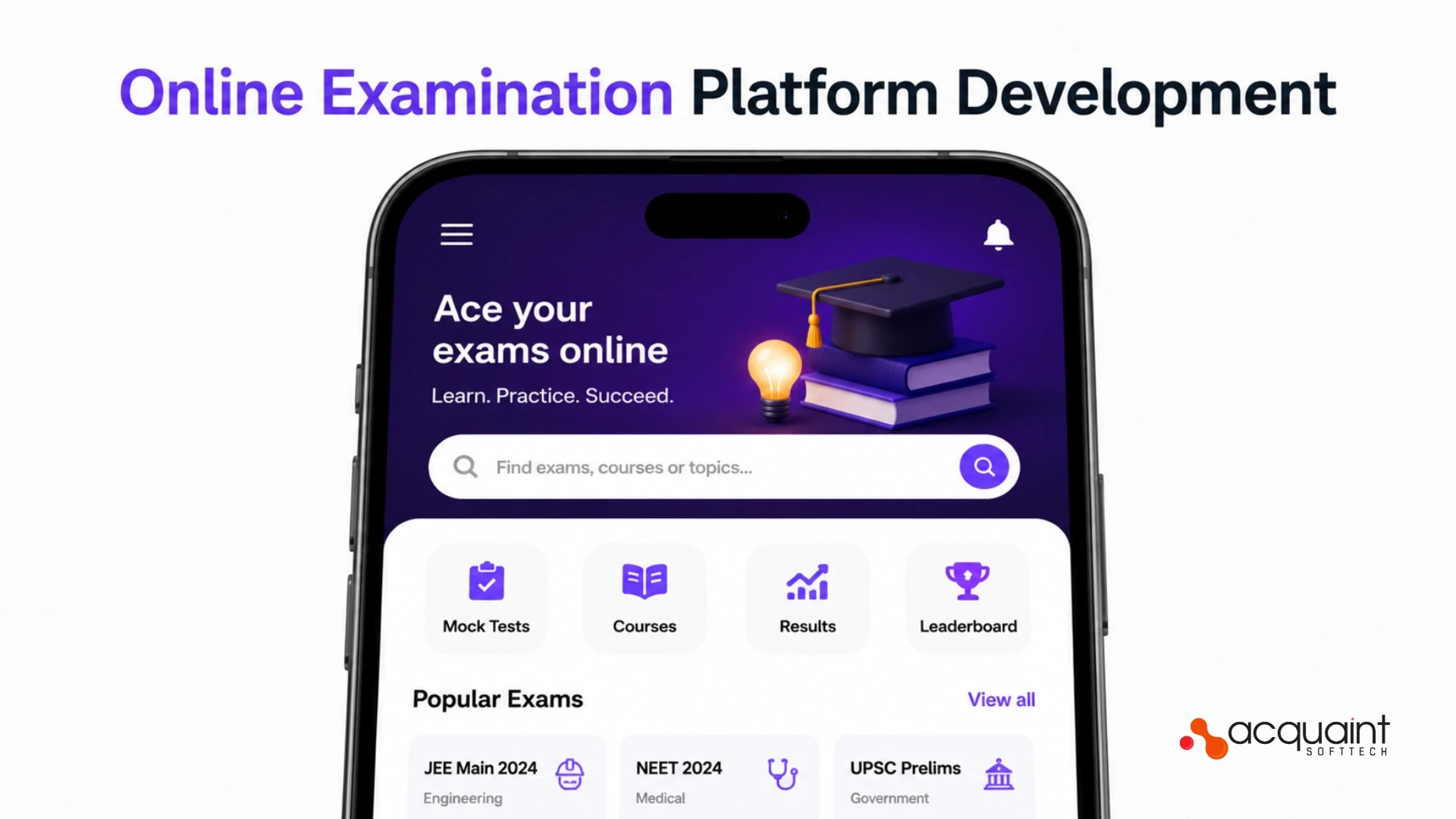
An online examination platform is software that creates, delivers, monitors, and grades tests over the internet at scale. Building one means solving four hard problems together: a question bank that assembles fair, randomized exams, delivery that stays stable when thousands sit at once, remote proctoring that deters cheating without false accusations, and automated grading that scores objective and written answers accurately.



.webp "How to Build an EdTech Startup: From Idea Validation to MVP and Scale")
.webp "EdTech App Development for Students, Teachers & Enterprises")