

Building an On-Demand Logistics Platform: Courier, Parcel, and Last-Mile Delivery Apps
An on-demand logistics platform is software that lets customers book a courier, parcel, or last-mile delivery on demand and tracks it from pickup to drop-off. It connects senders, delivery partners, and an operations team through a routing engine, live GPS tracking, proof of delivery, and automated billing based on distance, weight, and zone.

Manish Patel

- You want to know how Dunzo and Porter work before you build.
- You are scoping a courier, parcel, or last-mile delivery platform.
- Your pilot handles single drops, but you doubt it scales to multi-stop routes.
- You need a real cost and timeline before pitching investors.
- You are choosing a development partner for a logistics build.
Introduction
A customer taps a button and expects a pickup in minutes and delivery across the city within the hour, fully tracked end to end. It feels like magic on the surface, but for builders, it’s one of the hardest systems in software. What looks like a simple app is actually a constantly changing logistics network of riders, routes, time windows, and live traffic decisions. Most systems don’t fail at booking; they fail after the booking is made.
It works perfectly in early demos: a few riders, a few parcels, clean handoffs. Then scale hits. Riders multiply, multi-stop routes appear, assignments go wrong, ETAs drift, and teams start relying on manual calls because the system can’t keep up. The real gap is always the same: the missing routing intelligence, real-time visibility layer, and control system that actually runs the network. And once you launch without it, rebuilding costs far more than building it right from day one.
This article opens up that machinery. It explains how on-demand logistics platforms work, lays out the last-mile delivery architecture, and walks through the routing, tracking, and operations decisions that separate a platform that scales from one that stalls. Last-mile delivery is the most expensive leg of the supply chain, often cited as 40% or more of total shipping cost by industry analysts such as McKinsey, which is exactly why software that optimises it carries real commercial value.
The detail here is grounded in first-hand experience. As CIO of Acquaint Softtech, I have led the architecture of logistics, courier, and multi-hub coordination platforms, the routing engines, tracking pipelines, and control towers described in this guide, across a company that has delivered 1,300+ projects over 13+ years through full-cycle software product development for clients across the USA, UK, Europe, Australia, and New Zealand. The patterns below come from systems my teams ran in production, moving real parcels under real time pressure. If you want the wider category context first, this complete guide to on-demand app development in 2026, which frames logistics alongside ride-hailing, food delivery, and marketplace apps. Read on to see exactly how a parcel moves through the system.
What an On-Demand Logistics Platform Really Is
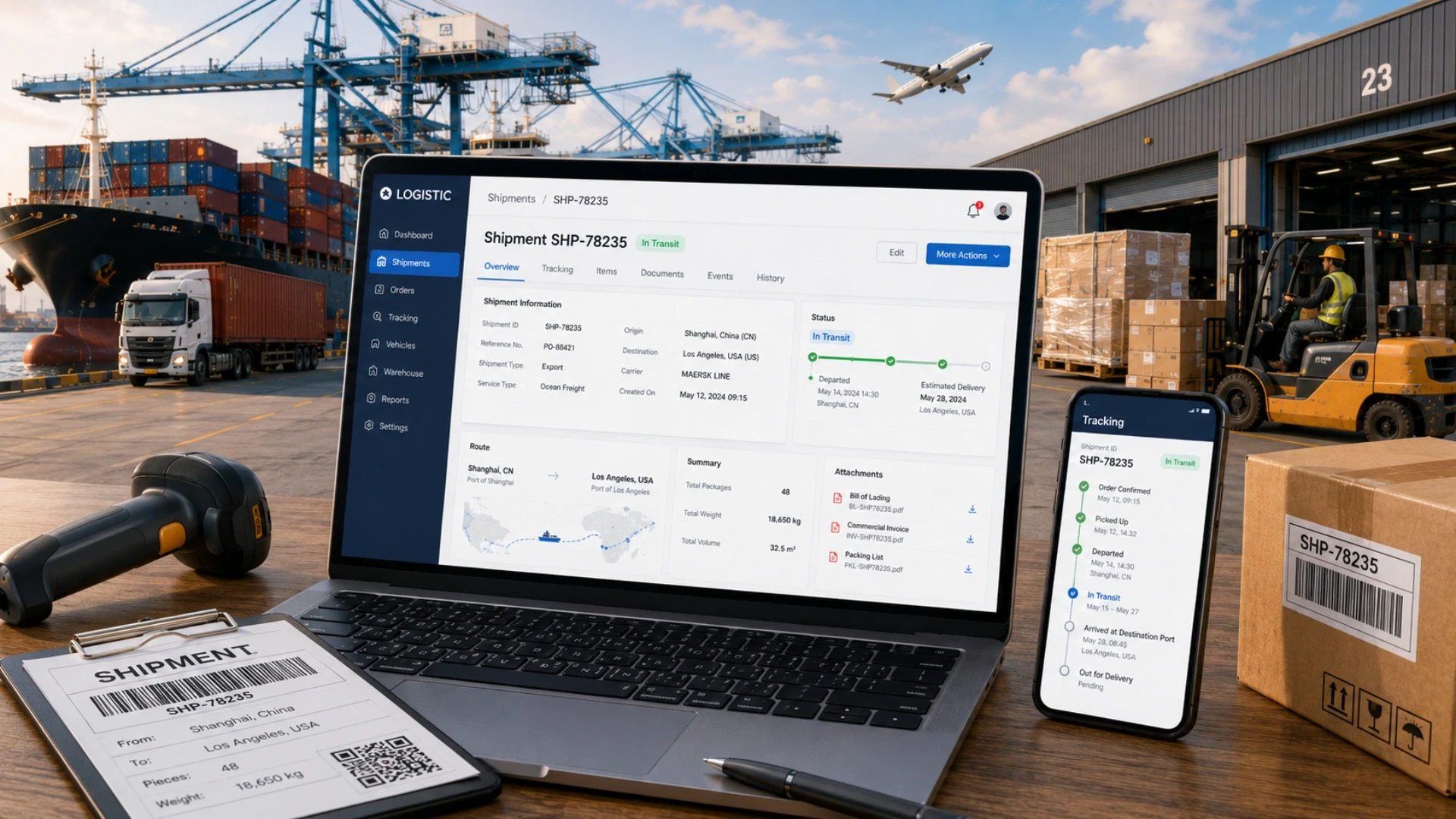
People use courier, parcel, and last-mile interchangeably, but they describe different jobs. A courier app moves small, urgent items point to point, often within a city. A parcel platform handles higher volumes of e-commerce shipments through hubs. A last-mile app focuses on the final, most expensive leg from a local hub to the customer's door. Understanding which one you are building first is the decision that shapes everything else, and it is the kind of scoping that Acquaint Softtech runs with Laravel developers who have built each model in production.
What unites all three is a shared technical core: a way to book a delivery, a routing engine that assigns it to the right vehicle, a live tracking layer that shows where the parcel is, proof of delivery to close the loop, and a billing system that prices the job correctly. Build that core well, and you can extend into any of the three models. Build it as a single rigid flow, and you will rewrite it the first time the business pivots, which is why a dedicated software development team that designs for extensibility from the start matters so much.
The opportunity is large and growing as e-commerce keeps pushing parcel volumes up and customer patience down. That pressure is what makes a well-engineered platform valuable: it turns a chaotic, phone-driven operation into a system that scales.
The Three Delivery Models You Must Choose Between
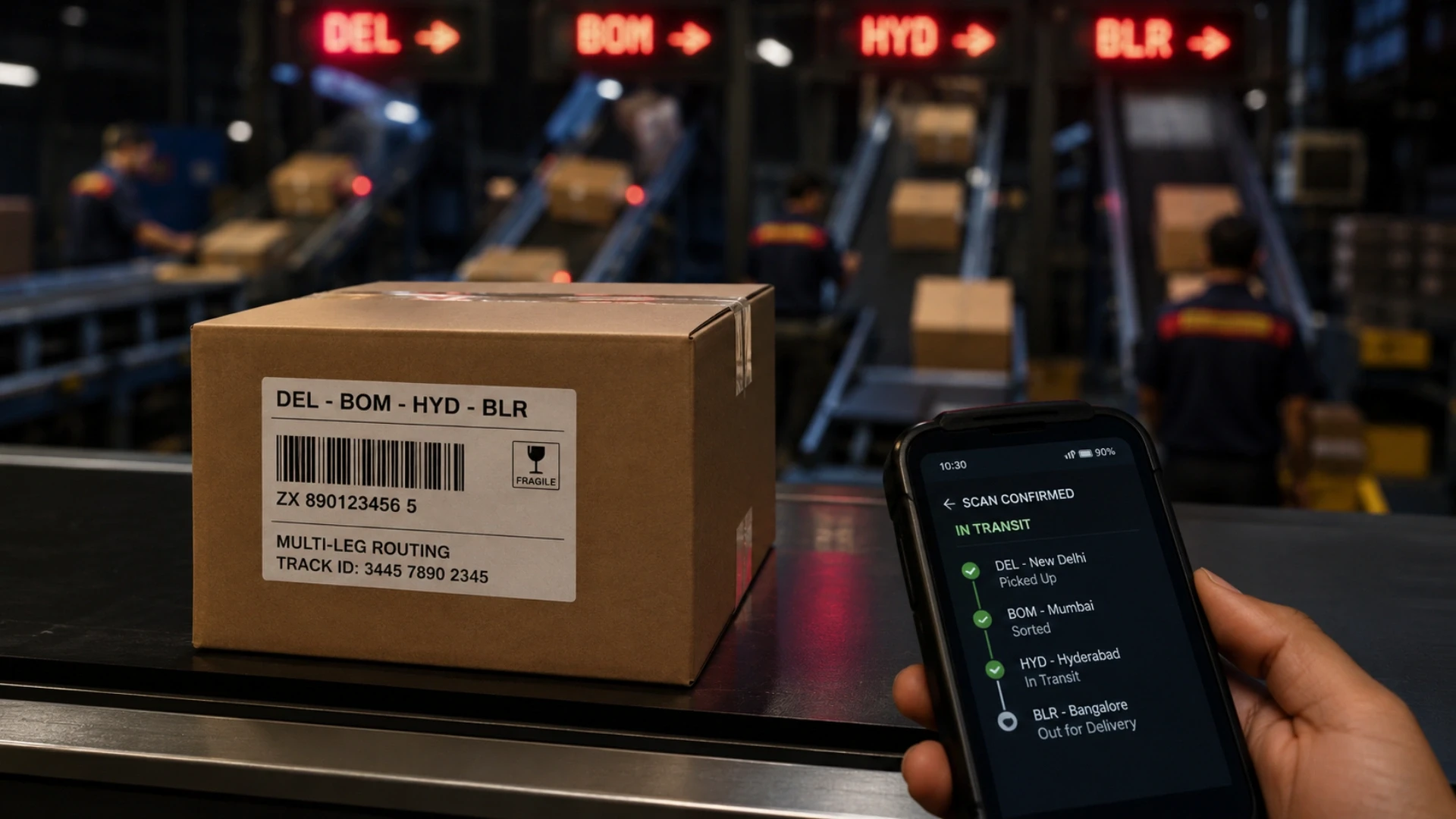
Before any architecture decision, you must choose a delivery model, because each one demands a different routing engine, fleet strategy, and pricing logic. Understanding how Dunzo and Porter work helps here: they sit at different points on this spectrum, and copying the wrong one wastes months. The discovery stage at Acquaint Softtech always starts by matching the business goal to the right model through discovery workshop services before a line of code is written.
Model | Example | Defining Trait |
Hyperlocal Same-Day | Dunzo, Lalamove | Instant, point-to-point within a city |
Intercity Parcel | Porter, Delhivery | Hub-based, scheduled, multi-leg |
Enterprise Last-Mile | Shipsy, Locus | Fleet routing for 3PLs and retailers |
Hyperlocal platforms optimise for speed and immediacy: a single rider, a single pickup, a fast drop, with pricing driven mainly by distance. Intercity and parcel platforms optimise for throughput: parcels flow through sorting hubs, get batched onto routes, and move in legs, so the software must model hubs, manifests, and handoffs. Enterprise last-mile platforms optimise fleets for large retailers and third-party logistics providers, where route optimisation across dozens of stops per vehicle is the whole game. Businesses evaluating enterprise platforms such as Shipsy often compare Shipsy alternatives based on routing capabilities, scalability, integrations, and pricing before making a decision Founders who want a branded launch without rebuilding this core often start from a configurable base through white label software development.
The mistake that sinks budgets is building one model and discovering the business actually needs another. A hyperlocal engine cannot simply be stretched into hub-based parcel routing; the data model and the routing logic are different from the ground up. Choosing deliberately, and building a core that can extend, is the difference between scaling and rewriting. For a phased view of taking such a platform from idea to launch, the complete process of on-demand delivery app development lays out the stages in order.
Anatomy of a Delivery: The Parcel Lifecycle
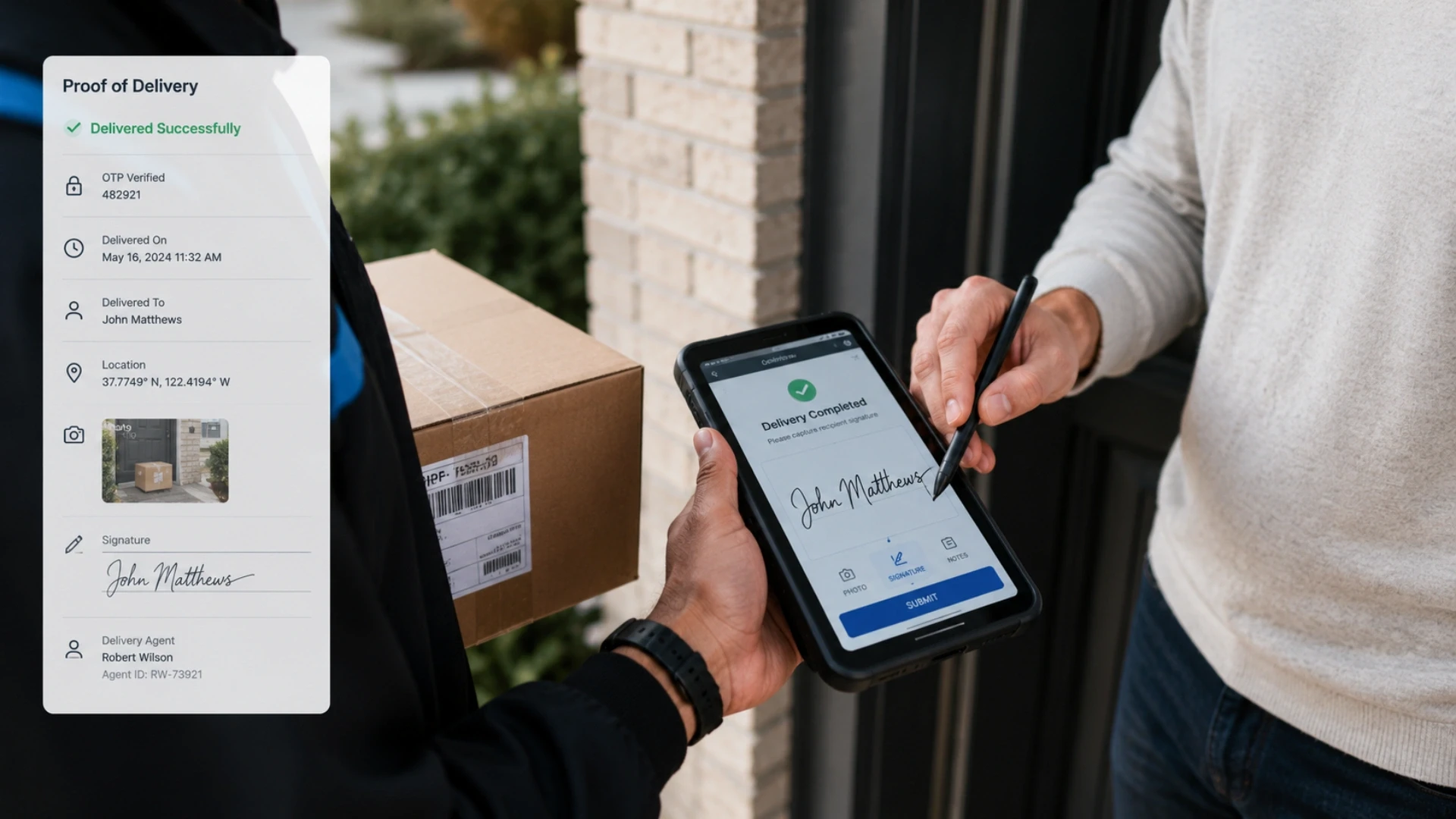
A delivery moves through six stages: the sender books and the parcel is priced, a delivery partner is assigned, the parcel is picked up and its details confirmed, it travels to the drop-off or hub, it is tracked live with an ETA, and it is delivered with proof of delivery captured. Each stage updates a shared parcel state that every app reads in real time.
Following one parcel through the system shows where the real engineering lives, and the parcel booking workflow is more involved than a single booking screen suggests. The sender enters pickup and drop-off, parcel size and weight, and any time window, and the platform prices the job instantly before confirming.
That first step alone touches pricing, serviceability checks, and address validation, and the mobile experience that carries it is built by Acquaint Softtech with React Native developers so the sender and rider apps stay in sync.
Booked and priced: The sender submits parcel details, and a quote is generated from distance, weight, and zone before payment or confirmation.
Assigned: The routing engine selects a delivery partner based on location, capacity, and direction of travel.
Picked up: The partner collects the parcel, scans or confirms it, and the parcel state moves to in-transit.
In transit: For hub models, the parcel may pass through a sorting facility and onto a route; for hyperlocal, it goes straight to the drop.
Tracked: The sender and recipient follow the parcel on a live map with a continuously updated ETA.
Delivered: The partner captures proof of delivery, a signature, photo, or one-time code, and billing is finalised.
The parcel state machine is the backbone of the whole platform, and it must stay consistent across the sender app, the rider app, and the operations dashboard at the same instant. That real-time consistency is the hard part, and it rewards a backend tuned for event-driven updates, which is why MEAN stack developers are a common fit for the live parcel pipeline.
Proof of delivery deserves special attention because it is what closes the financial loop and resolves disputes. A captured signature, photo, or one-time code is the evidence that the job was completed, and it must be stored against the parcel record reliably. This same event-driven lifecycle generalises across on-demand categories, and the master guide on on-demand app development maps the pattern onto rides, meals, and services alike.
Want a Routing Engine That Holds Up at Real Volume?
Acquaint Softtech designs the parcel-state, routing, and tracking layers in the architecture phase, before production code is written. 1,300+ projects delivered. Teams deployable within 48 hours of brief. Build the hard part correctly the first time.
The Routing Brain: Matching and Multi-Stop Optimisation
The routing brain assigns parcels to vehicles and orders the stops on each route. For single pickups it works like a courier matching algorithm, choosing the nearest suitable partner. For multi-stop routes it solves a vehicle-routing problem, sequencing many stops per vehicle to cut distance, time, and cost while respecting delivery windows.
Routing is where logistics becomes a genuine computer-science problem rather than a booking form. A simple courier matching algorithm picks the nearest available rider for a single job, which is fine for hyperlocal point-to-point work. The moment a vehicle carries multiple parcels, the platform must solve a version of the vehicle-routing problem: in what order should the stops be visited to minimise distance and time while honouring each delivery window? Acquaint Softtech builds this optimisation layer with Python developers who are comfortable with routing and constraint solving.
Good routing weighs several factors at once: distance, traffic, vehicle capacity, parcel priority, and promised time windows. The best platforms also re-optimise mid-route when a new pickup comes in, or a road closes, recalculating the sequence on the fly. This is the single biggest lever on delivery cost, because every kilometre and minute saved across thousands of routes compounds. The most advanced systems add a machine-learning layer for demand and travel-time prediction, which Acquaint Softtech builds with AI and ML engineers who have tuned these models in production.
Getting routing right is also what makes the unit economics work. A platform that batches and sequences well delivers more parcels per vehicle hour, which is the metric that decides whether the business is profitable. Done badly, routes overlap, vehicles run half-empty, and costs spiral.
Live Visibility: Tracking, ETAs, and Proof of Delivery
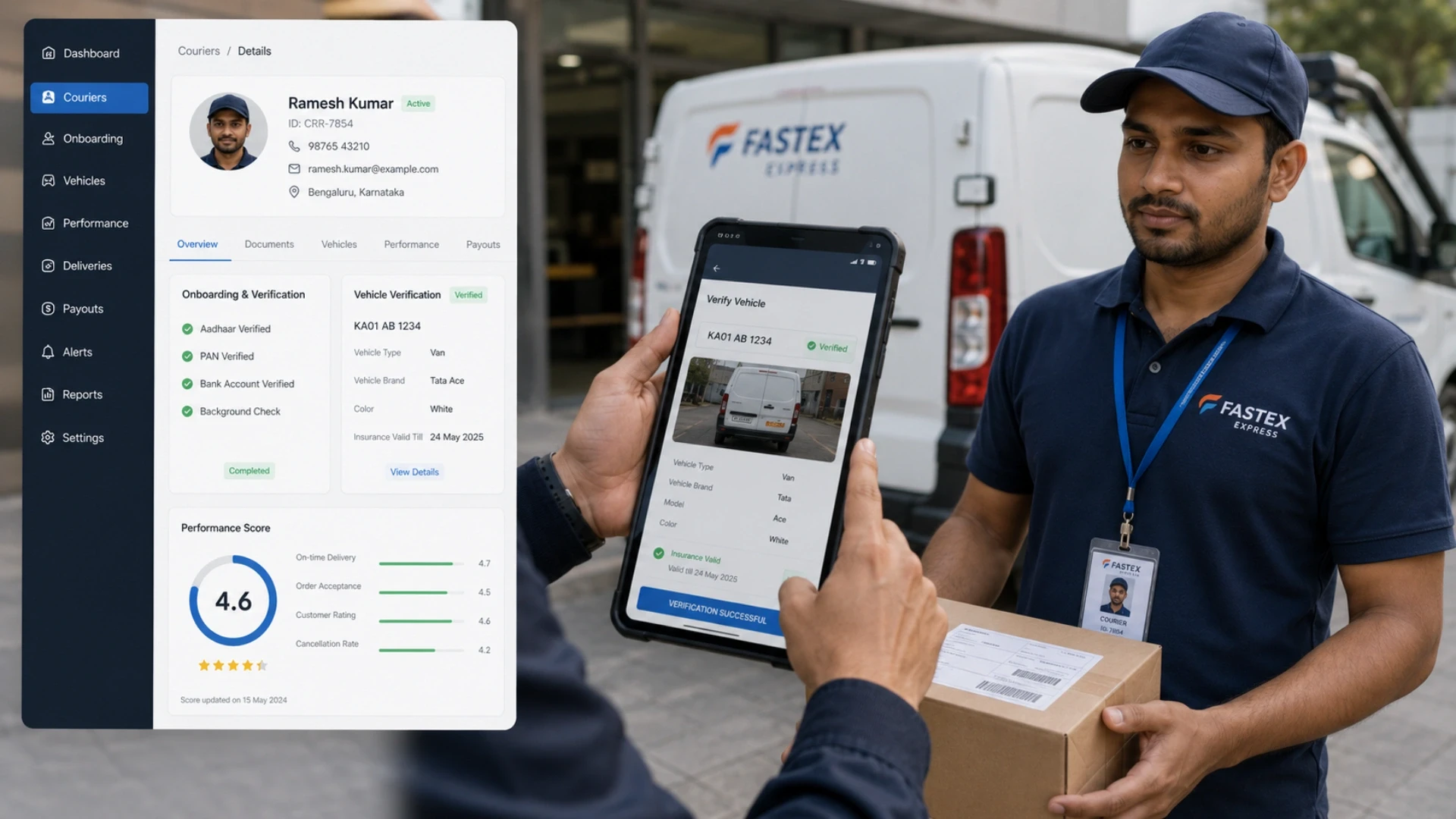
Live visibility means the sender, recipient, and operations team can all see where a parcel is in real time. The delivery partner app streams GPS coordinates to the backend, which updates the parcel location, recalculates the ETA, and pushes it to every watcher. Proof of delivery at the end captures a signature, photo, or code to confirm completion.
Visibility is what turns anxiety into trust. A sender who can watch the parcel move and see an accurate ETA stops calling support, and a recipient who gets a reliable arrival window is far more likely to be home to receive it. The delivery partner app streams location every few seconds over a persistent connection, and the customer apps animate that movement smoothly on a map. Acquaint Softtech builds these real-time apps with React Native developers so the live map feels premium rather than jumpy.
Accurate ETAs are harder than they look because they must account for live traffic, the remaining stops on the route, and the time each stop takes. A naive straight-line estimate erodes trust the moment it is wrong, so the system snaps positions to roads and recalculates continuously. This streaming load is also the most cost-sensitive part of the platform, since mapping and location APIs charge per request, which is why Acquaint Softtech's DevOps engineering team tunes update frequency, caching, and provider mix to keep costs predictable at scale.
Proof of delivery closes the loop. Capturing a signature, a photo of the parcel at the door, or a one-time code confirms completion, triggers billing, and provides evidence if a delivery is disputed. The same live-tracking and confirmation pipeline powers food and grocery delivery too, and the guide on creating an on-demand food delivery app like Uber Eats details the tracking layer applied to a related use case.
Get a Visibility and Tracking Blueprint for Your Network
Acquaint Softtech clients save up to 40% versus Western agency rates, with a 95% on-time sprint delivery record and a 4.9/5 Clutch rating from 50+ verified reviews. Book a scoping call and receive a detailed architecture and cost blueprint within 48 hours.
The Control Tower: Dispatch and Fleet Operations
Behind every smooth delivery network is a control tower: the operations dashboard where dispatchers see every vehicle, every parcel, and every exception in real time. This is the surface founders most often under-build, and it is where a growing network either stays manageable or descends into phone calls and spreadsheets.
What the control tower must do?
• Live fleet map: Every active vehicle and its current parcels visible on one screen, colour-coded by status.
• Exception alerts: Delays, failed deliveries, and idle vehicles surfaced automatically so dispatchers act before customers complain.
• Manual override: The ability to reassign a parcel, reorder a route, or dispatch a backup rider when reality diverges from the plan.
• Hub and manifest management: For parcel models, tools to manage sorting, manifests, and handoffs between legs.
• Performance analytics: On-time rate, cost per delivery, parcels per vehicle hour, and failed-delivery reasons.
The control tower is also where exceptions get resolved, and exceptions are the norm in logistics, not the edge case. A rider breaks down, an address is wrong, a recipient is absent. A dashboard that surfaces these instantly and lets a dispatcher act keeps the network flowing. Acquaint Softtech delivers this through flexible software development outsourcing so founders can add operations-tooling specialists exactly when the network grows.
Crucially, the control tower must scale from one city to many without becoming unusable, which means role-based views, filtering by zone, and aggregated metrics for leadership alongside live detail for dispatchers. Many of these operations patterns, especially provider tracking and role-based dashboards, also appear in the published on-demand home services app development guide, a useful cross-reference for any field-operations build.
Pricing, Billing, and Settlement Logic
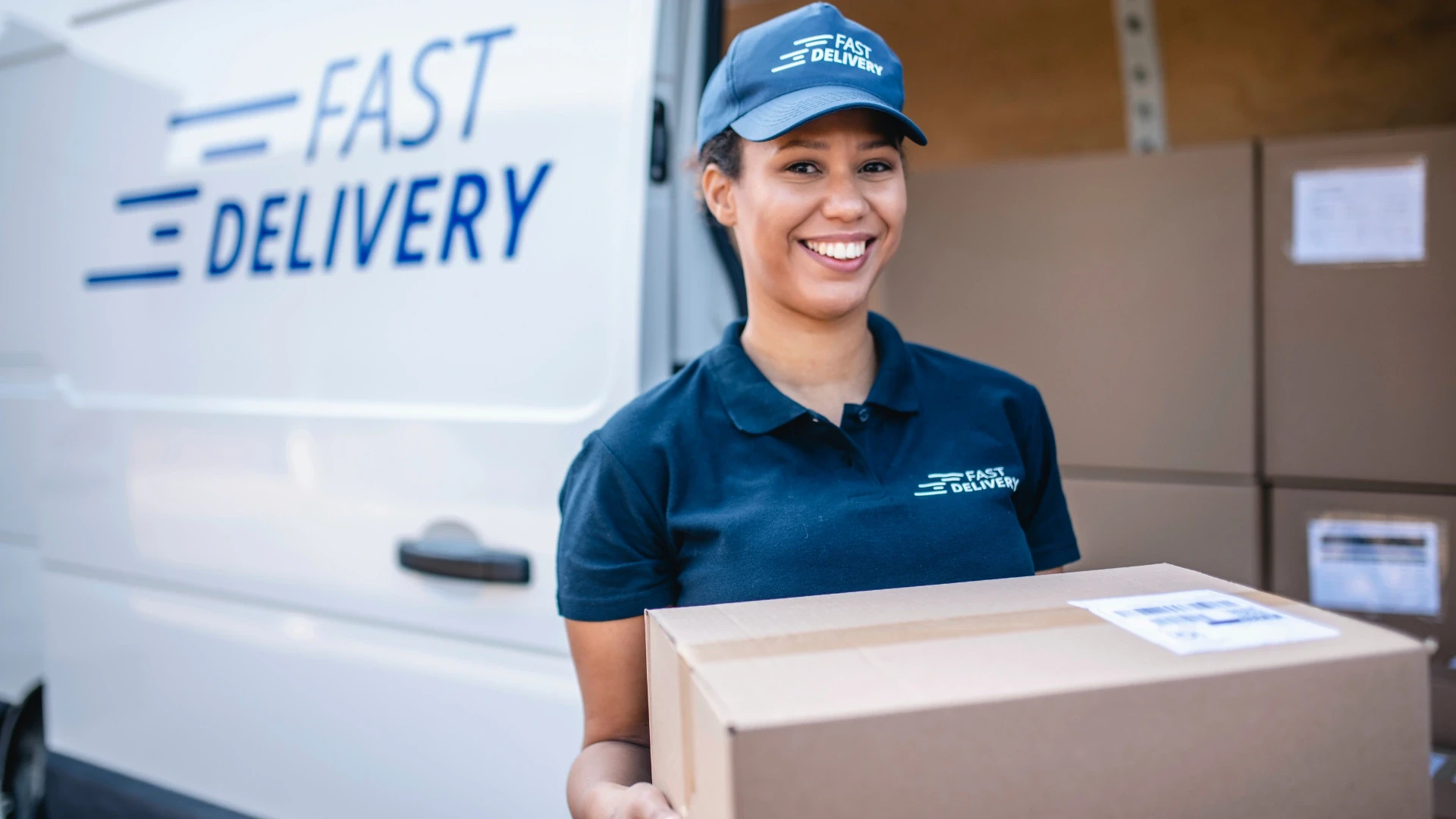
Pricing is where a logistics platform makes or loses money, and it is more intricate than a flat fee. A quote is usually built from distance, parcel weight or volume, the service zone, the speed tier, and any surcharges for waiting or oversized items. Getting this engine right, and transparent, is essential, and Acquaint Softtech often builds it with Django developers whose framework suits complex rule-based pricing and billing.
Pricing Factor | What It Reflects | Typical Basis |
Distance | Length of the trip | Per kilometre or mile |
Weight or volume | Size of the parcel | Banded tiers |
Zone and speed | Area and urgency | Zone map plus tier |
On the settlement side, the platform must split each payment correctly: the sender is charged, the platform retains its margin, and the delivery partner is credited, often with incentives for peak hours or long routes. A clear earnings ledger that partners trust is essential for retention, just as transparent invoicing is essential for enterprise clients. Keeping this billing layer accurate and auditable over time is exactly what Acquaint Softtech's support and maintenance services are built to handle after launch.
Enterprise and B2B logistics adds another layer: contracted rates, monthly invoicing, and volume discounts that differ per client. Designing the pricing engine to support both pay-per-delivery consumers and contract-based business clients from the start avoids a painful rebuild later. The same billing and settlement patterns appear across on-demand categories, and the published cost to develop an on-demand taxi booking application shows how the split-payment layer is scoped in a related build.
Tech Stack and Scaling for Logistics in 2026
Technology choices for a logistics platform are well settled in 2026. The combinations below balance real-time performance, routing capability, and cost for networks aiming at city-scale and national growth. The single biggest infrastructure concern is that location data streams constantly from every active vehicle, so the platform must ingest and serve high volumes of geospatial updates cheaply, which is why Acquaint Softtech's DevOps engineering team tunes ingestion, caching, and auto-scaling from the start.
Layer | Recommended Technology | Why It Fits Logistics |
Mobile Apps | React Native | One codebase for sender and rider apps |
Backend Services | Node.js plus Python | Node for real-time, Python for routing |
Database | PostgreSQL plus PostGIS | Geospatial queries for location and zones |
Cache and Queue | Redis plus message queue | Fast lookups and event flow |
Live Tracking | WebSockets plus Firebase | Real-time location and push alerts |
Maps and Routing | Google Maps or Mapbox | ETAs, directions, and route optimisation |
Payments | Stripe or Razorpay | Split settlements and invoicing |
Cloud | AWS or GCP | Auto-scaling for volume peaks |
A logistics backend is a set of cooperating services rather than one program: a booking service, a routing service, a location service, a billing service, and a notification service, each scaled to its own load. Keeping all surfaces synchronised in real time is the central challenge, and it rewards a team that has built multi-sided systems before, which is why Acquaint Softtech assembles these builds with MERN stack developers who keep the shared parcel state consistent across web and mobile.
Scaling is mostly about handling spikes and growth gracefully: more vehicles, more cities, more concurrent location streams. A clean service split, database read replicas for high-read tracking queries, and a CDN for static assets make that affordable. The same scaling decisions, framed around budget, appear in the published breakdown of the cost to develop an on-demand courier services app, a close reference because it shares the routing and tracking layers.
Cost to Build a Logistics Platform in 2026
Logistics app development cost in India and other offshore hubs varies widely because a hyperlocal MVP and a multi-city parcel network are different products. The ranges below reflect Acquaint Softtech project economics for dedicated teams, and the right starting point is usually a focused MVP delivered through flexible software development outsourcing that proves the model in one city before scaling.
Scope | Estimated Cost (India Team) | Timeline |
MVP: booking + single-drop dispatch | $28,000 to $50,000 | 12 to 18 weeks |
Standard: routing, tracking, control tower | $55,000 to $100,000 | 20 to 30 weeks |
Advanced: multi-stop, ML routing, billing | $100,000 to $170,000 | 30 to 42 weeks |
Enterprise multi-hub network | $170,000 to $300,000+ | 42 to 56+ weeks |
Western agency rates for the same scope run 40 to 60% higher, driven by overhead rather than engineering quality. A team comparing where to hire developers for a Dunzo clone should weigh delivered outcomes over hourly rate, because a cheap team that builds routing and the control tower poorly creates a far larger rebuild cost later. The dependable route is a dedicated software development team that grows with the platform.
The factors that push logistics cost up are specific: multi-stop route optimisation is real algorithmic work, the control tower is a substantial build in its own right, proof-of-delivery and exception handling add workflows, and weight-distance-zone billing with enterprise contracts adds a pricing engine. Planning for these from the start avoids surprises, and the published complete process of on-demand delivery app development breaks down where the budget goes phase by phase.
Case Study: Multi-Hub Logistics Coordination
Theory matters less than a working system. The engagement below is a real, published Acquaint Softtech project that solves the same core problems a logistics platform faces: real-time coordination across multiple hubs, shipment routing between locations, and a single source of truth for every order and movement. You can read the full story at From Craftsmanship to Code: Digitizing Custom Radiator Manufacturing.
Case Study: Castrads, Multi-Hub Production and Logistics Platform
Client: Castrads, a manufacturer serving the UK and North America, operating across a UK factory, a Poland finishing facility, and a New York warehouse.
Challenge: Cross-border logistics coordination was breaking down. Shipping between the UK factory, the Poland facility, and the New York warehouse required precise timing, but fragmented systems and manual coordination caused misalignment between production readiness and logistics planning, with no shared real-time view.
Approach: Acquaint Softtech delivered a centralised, web-based platform unifying orders, logistics, and workflow across all locations. It added global inventory sync with a central hub, automated routing of orders through each stage including shipment preparation, and real-time collaboration that eliminated email-driven coordination between warehouse, factory, and logistics teams.
Results: Teams across regions worked from one accurate, up-to-date system. Shipment planning aligned with production readiness, role-based dashboards gave each team the view it needed, and cross-border coordination shifted from manual chasing to real-time, system-level visibility.
Why It Matters for Logistics: The parallels are direct. Global inventory sync maps to multi-hub parcel tracking, automated workflow routing maps to dispatch and route assignment, and real-time collaboration maps to the control tower. The same engineering that coordinated Castrads' hubs coordinates a courier or last-mile network.
The real-time, multi-hub coordination layer at the heart of this project is exactly what a logistics platform needs to track parcels across a network. Acquaint Softtech builds that capability through end-to-end software product development, pairing product engineering with infrastructure that holds up across locations and time zones.
Founders should judge a partner by delivered outcomes rather than promises. A full library of verified engagements across logistics, marketplace, and mobility work is available at acquaintsoft.com/case-studies, and independent client ratings can be checked on the Acquaint Softtech Clutch profile, where the company holds a 4.9/5 score with Premier Verified status.
Why Acquaint Softtech for Logistics Development
The architecture choices made in the first sprints of a logistics build, the parcel state machine, the routing engine, and the control tower, set the platform's ceiling for growth. The partner who builds the MVP effectively owns that ceiling, so choosing a team with real logistics and multi-hub experience is a long-term decision. Acquaint Softtech delivers that depth through Laravel developers and routing specialists who have shipped these systems before.
Three things matter most for this category. The first is direct delivery experience: over 13+ years and 1,300+ projects across 20+ industries, the team has built logistics, courier, and multi-hub coordination platforms for clients in the USA, UK, Europe, Australia, and New Zealand. The second is team stability, with an average engagement tenure of 24+ months, so the engineers who design your routing engine are the ones who refine it as you scale. That continuity is delivered through full-cycle software product development rather than rotating contractors.
The third is speed: a dedicated team deploys within 48 hours of a signed brief, and the first sprint review happens in two weeks, materially faster than the four to eight week onboarding cycle common at Western agencies.
Ready to Build a Logistics Platform That Scales?
Join 200+ technology companies that scaled with Acquaint Softtech. 1,300+ projects delivered. 4.9/5 Clutch rating. 50+ verified reviews. Teams deployable in 48 hours. The fastest path from idea to a production-ready logistics platform.
Frequently Asked Questions
-
What is Dunzo?
Dunzo is a hyperlocal logistics platform that connects users with delivery partners to pick up and drop items within a city using a mobile app-based marketplace model. It acts as an on-demand “anything delivery” service within urban areas.
-
How does Dunzo work?
A user selects a service → the app matches the nearest delivery partner → the partner picks up or purchases the item → real-time tracking shows live movement → payment is completed digitally. This entire flow is managed through a centralized backend system.
-
How does Dunzo assign delivery partners?
Dunzo’s algorithm matches the closest available delivery partner based on location, delivery type, urgency, and estimated travel time to optimize fast pickup and drop. It continuously recalculates availability in real time.
-
How does real-time tracking work in Dunzo?
The app continuously streams GPS data from the delivery partner, updates location on the backend, and shows live movement on the customer’s map using real-time sync systems. This ensures full visibility from pickup to delivery.
-
What is Dunzo’s business model?
Dunzo operates as a two-sided marketplace earning through delivery fees, commissions from merchants, and surge pricing during high-demand periods. Its revenue depends on transaction volume and delivery density.
-
Is Dunzo still active?
Dunzo has faced major financial and operational challenges and has shut down or reduced many consumer delivery services in several regions after restructuring. Its model highlights the difficulty of scaling hyperlocal logistics.
-
How does a hyperlocal delivery app work?
It connects customers and nearby delivery agents through a platform that manages booking, routing, pickup, live tracking, and payment in a single system. The goal is to complete deliveries within a short city radius efficiently.
-
What is the architecture of logistics platforms like Dunzo?
They use a service-based architecture separating booking, routing, location tracking, billing, and notifications to ensure scalability and real-time performance. Each service can scale independently under high load.
-
How much does it cost to build a Dunzo-like app?
Platform Type
Estimated Cost
Hyperlocal MVP
$28,000 – $50,000
Standard Platform
$55,000 – $100,000
Advanced Multi-Stop System
$100,000+
-
What tech stack is used in logistics apps?
Most apps use React Native for mobile, Node.js and Python for backend, PostgreSQL with PostGIS for geolocation, Redis, WebSockets, message queues, and AWS or GCP for scaling. This stack supports real-time logistics operations at scale.
I lead technology and client success at Acquaint Softtech with one goal in mind. Deliver work that feels personal, reliable, and worthy of long term trust. I stay close to both our clients and our developers to make sure every project moves with clarity, quality, and accountability.
Table of Contents
Get Started with Acquaint Softtech
- 13+ Years Delivering Software Excellence
- 1300+ Projects Delivered With Precision
- Official Laravel & Laravel News Partner
- Official Statamic Partner
Related Blog
The Complete Guide to On-Demand App Development in 2026
Not every on-demand app is Uber. Not every marketplace is Amazon. This 2026 guide maps every platform type, its architecture, real cost, and the cold-start sequence that separates launches that work from those that fail.

Acquaint Softtech
May 7, 2026
How Ride-Hailing Apps Work: Driver Matching, Tracking, and App Architecture
Ride-hailing apps are not simple taxi dispatchers. They are real-time logistics engines built on matching algorithms, GPS infrastructure, and dynamic pricing. Here is exactly how they work.
Manish Patel
May 14, 2026
Food Delivery App Like Zomato & DoorDash: Architecture, Features, and Scale
Zomato and DoorDash are not apps. They are data platforms. Every feature you see in the consumer interface is the output of a precisely designed data model, a set of platform entities with defined relationships, and a state machine with explicit transition rules. This guide walks through the data architecture, the platform design decisions, and the six scaling triggers that tell you when the platform needs to grow.
Manish Patel
May 21, 2026India (Head Office)
203/204, Shapath-II, Near Silver Leaf Hotel, Opp. Rajpath Club, SG Highway, Ahmedabad-380054, Gujarat
USA
7838 Camino Cielo St, Highland, CA 92346
UK
The Powerhouse, 21 Woodthorpe Road, Ashford, England, TW15 2RP
New Zealand
42 Exler Place, Avondale, Auckland 0600, New Zealand
Canada
141 Skyview Bay NE , Calgary, Alberta, T3N 2K6