

Building a Tenant Provisioning System: Automated Account Setup Flows
Automated tenant provisioning is the foundational process of programmatically setting up databases, user roles, infrastructure, and configurations for new customers in a multi-tenant Software-as-a-Service (SaaS) application. Done well, it replaces manual account setup that once took days with a repeatable pipeline that brings a new tenant live in minutes, with strict data isolation and zero human touch.

Chirag Daxini
As a Technical Project Manager at Acquaint Softtech, I sit in on the same scaling conversation almost every week: a SaaS product is selling, but an engineer still hand-builds every new customer account. The teams that break through that ceiling treat account setup as core product infrastructure, and they usually lean on experienced hire Laravel engineering teams who have automated this exact flow before. The honest truth is that manual onboarding is a business risk, not just an engineering chore.
Here is the fast version. Tenant provisioning is the automated setup of everything a new customer needs to use your platform: their data space, users, permissions and configuration. That is tenant provisioning explained in one line. Because tenants share infrastructure, isolation carries real obligations, which is why standards bodies such as the NIST definition of cloud computing set the multi-tenancy rules any serious SaaS has to respect from day one.

- You are scaling a SaaS platform past manual, one-off customer onboarding.
- You want a clear rule for choosing pooled, siloed or hybrid tenant isolation.
- You need honest 2026 cost and timeline ranges, not vague estimates.
- You are a CEO, CTO, COO, founder or agency owner shipping a multi-tenant product.
This guide walks the full account setup flow: what a provisioning pipeline contains, how to build it step by step, what it costs, and how long it takes. It sits inside our wider SaaS product development guide, so you can zoom out to the full architecture once you have picked a direction.
Everything here reflects real work. Acquaint Softtech has rebuilt single-tenant backends into multi-tenant platforms, automated enterprise onboarding, and migrated live users without downtime. We have no reason to oversell automation, and this article shows exactly where it pays off and where a simpler path is smarter.
Tenant provisioning explained: what it is and why it matters

Tenant provisioning is the automated creation of an isolated environment for each new customer in a multi-tenant SaaS product. In multi-tenancy, many customers share one application, so provisioning is what carves out and locks each customer's private slice: their database space, user accounts, roles and defaults. Teams building this properly often start with a custom software product development engagement so the foundation is right before the first paying tenant.
Where the word tenant comes from
The term borrows from real estate: tenants share a building but live behind locked doors. In cloud computing, a tenant is one customer organisation whose data and settings stay walled off from every other customer on shared infrastructure. Provisioning builds and locks that door automatically at signup, rather than leaving an engineer to do it by hand.
Without automation, provisioning is a checklist someone runs manually, one mistyped value away from a broken account. With automation, a single signup event triggers a pipeline that creates everything in one consistent pass. That shift is the whole game, and it is why dedicated software development teams treat provisioning as a first-class product surface, not a scripting afterthought.
Why it matters more as you grow
At ten customers, manual setup is annoying. At a few hundred, it caps growth: onboarding slows, config drifts, and support tickets pile up. The platforms that scale to thousands of accounts are the ones that removed the human from account creation early, often bringing in software development outsourcing to build the pipeline in parallel with feature work rather than after the bottleneck bites.
Why automate tenant provisioning: benefits and 2026 trends
Automating provisioning removes the three things that quietly cap SaaS growth: human error, slow onboarding and operational drag. The tenant provisioning benefits compound as your customer count climbs, which is why IT staff augmentation is a common first move when an in-house team is too stretched to build automation while shipping features.
Why automate tenant provisioning
Eliminates configuration drift: scripts and orchestration tools ensure every customer environment is built identically, preventing manual setup mistakes.
Accelerates time-to-value: reduces customer onboarding times from days or hours down to a matter of minutes.
Enables infinite scale: removes human bottlenecks, allowing your platform to scale smoothly from 10 to thousands of active accounts.
There is a hard cost to getting this wrong. A misconfigured tenant can leak data across customer boundaries, and a single cross-tenant exposure can end enterprise deals overnight. Provisioning is a security decision as much as a speed one, so teams often pair automation work with a proven backend group such as hire Django developers to harden the pipeline and its rollback paths from the start.
Tenant provisioning trends 2026
The 2026 direction is clear: provisioning is moving from bespoke scripts to declarative, self-healing pipelines with full audit trails. Tenant provisioning trends 2026 point toward idempotent workflows, infrastructure defined as code, and observability baked in so every account creation is traceable. Data-side setup increasingly leans on AI development services as seeded models and per-tenant configuration become normal parts of onboarding.
Core components of a tenant provisioning pipeline
A working pipeline has four moving parts that fire in sequence for every new account. Knowing these tenant provisioning features tells you what to budget for and what to test hardest. The table below is the honest, component-by-component version.
Component | What it does in the pipeline |
Central orchestrator | A state machine or workflow engine (such as Temporal or platform APIs) that triggers and sequences every step of the setup process. |
Infrastructure as code | Tools like Terraform or Pulumi that programmatically spin up cloud resources, Kubernetes namespaces, or dedicated databases. |
Tenant identity and access | Automated creation of user pools, authentication tokens, and role-based permissions (RBAC). |
Data initialization | Injecting initial seed data, configuring storage partitions, and setting up database schemas depending on your pooled or siloed tier model. |
The orchestrator is the brain
The orchestrator decides the order, waits for each step to confirm, and knows how to unwind cleanly if one fails. Teams that skip a real orchestrator end up with brittle scripts nobody trusts, which is exactly the mess that pushes companies toward automation engineers to rebuild the flow as a resilient, testable workflow.
Two properties that separate toy from production
Idempotency means running a step twice produces the same result as running it once, so a retry never doubles a resource. Rollback, often built as a saga pattern, undoes completed steps when a later one fails. Getting both right is where seasoned engineering partners earn their keep, and where a virtual CTO service helps you set the standard before code is written, because these edge cases are painful to learn in production.
How to build tenant provisioning, step by step
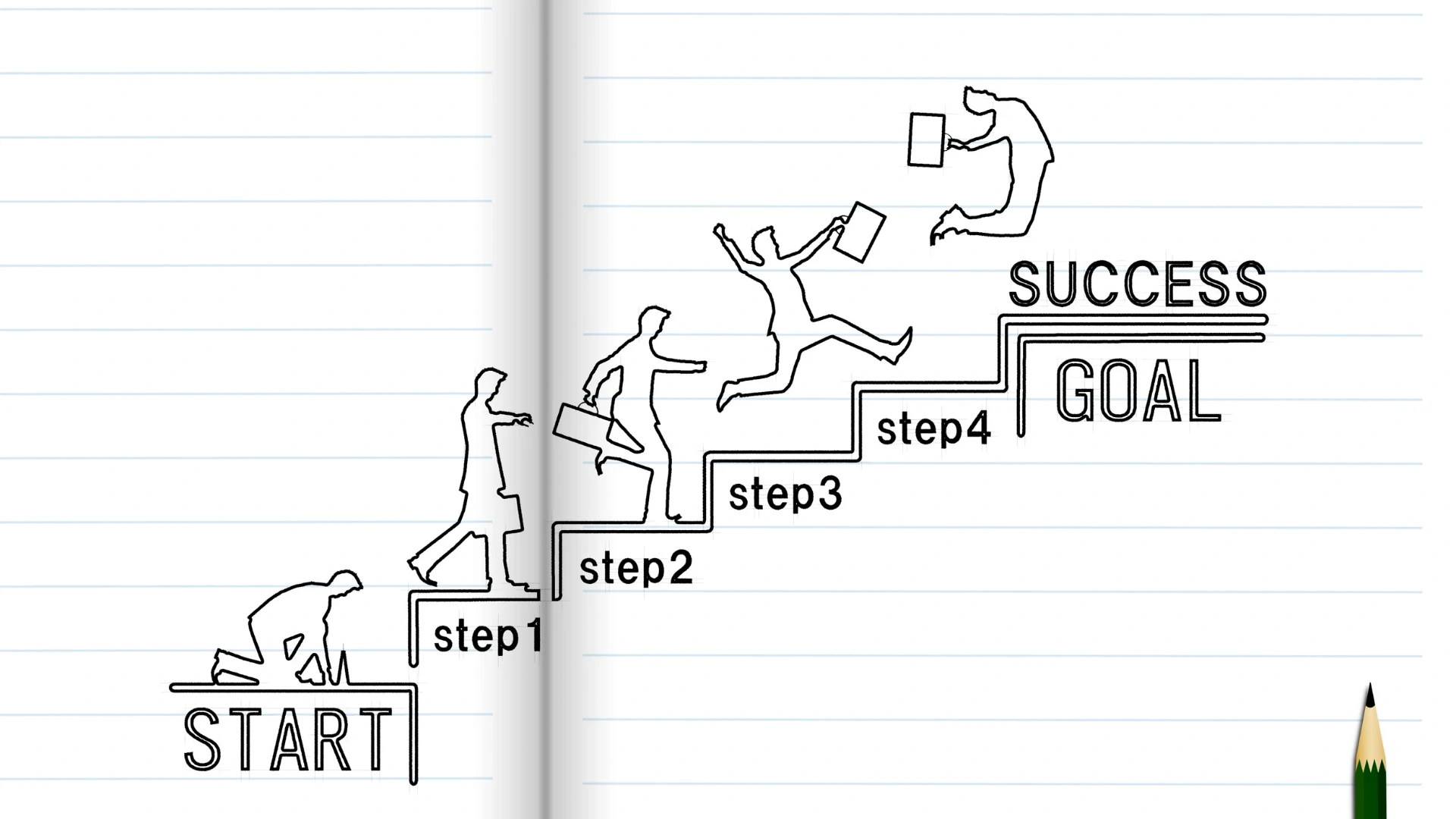
The safe way to build tenant provisioning is to model the full account lifecycle first, then automate one stage at a time behind a single trigger. Below is the sequence we use on real platforms, and it answers how to build tenant provisioning without breaking the customers you already have.
A production-grade provisioning sequence
Trigger on signup: a subscription or signup event fires the orchestrator, with no engineer in the loop.
Generate the tenant identity: mint a unique tenant identifier that anchors all downstream data and resources.
Provision resources by tier: pooled customers join a shared database; premium tiers get a dedicated schema or database.
Set up identity and roles: create the user pool, first admin account, tokens and RBAC policies for the tenant.
Initialize data and config: seed defaults, branding and feature flags, and assign a custom subdomain such as customer.yourapp.com.
Confirm, log and welcome: write every resource identifier to the database, emit an audit record, and send the welcome email.
Each step must be independently retryable and reversible. If storage setup fails at step five, the orchestrator should retry or roll back the earlier steps rather than leave a half-built tenant. This is the tenant provisioning architecture that survives real traffic, and it maps closely to the microservice security patterns in the NIST guidance on microservices security.
Ship one path before you ship them all
Do not try to boil the ocean on day one. Ship the pooled path first, prove it end to end, then add siloed and hybrid paths for enterprise tenants. A short product discovery workshop is the cleanest way to sequence that roadmap so you automate the highest-pain stage before anything else.
Tenant provisioning architecture and the right tech stack
There is no single right stack, only the right fit for your team. The strongest tenant provisioning architecture pairs a durable orchestrator with declarative infrastructure and tenant-aware application code. The table maps each layer to a proven choice and why it fits provisioning.
Layer | Strong choice | Why it fits provisioning |
Application backend | Laravel or Django | Mature tenancy patterns, policies and gates, plus queue-based background jobs. |
Orchestration | Temporal or a workflow engine | Durable state machines that retry, wait and roll back cleanly. |
Infrastructure | Terraform or Pulumi | Declarative code for reproducible, version-controlled tenant environments. |
Identity and access | Managed user pools plus RBAC | Per-tenant authentication and fine-grained role enforcement. |
Laravel or Python: choosing the backend
A Laravel backend gives you tenant-aware models, policies and gates out of the box, which is why it is a frequent choice for account setup logic. Python suits data-heavy provisioning and seeding, so bringing in hire Python developers pays off when your setup flow does heavy data initialization. The best stack is the one your team can maintain for years, not the trendiest one.
Keeping the pipeline healthy over time
A provisioning pipeline is living infrastructure. Frameworks move on, cloud services change, and a pipeline nobody upgrades quietly rots until an onboarding breaks. Planned version upgrade services keep the engine current, and our published multi-tenant architecture guide covers the data-layer decisions that sit underneath every provisioning choice.
Struggling to make provisioning reliable under load?
Idempotency, rollback and tenant isolation are easy to get subtly wrong and expensive to fix later. Our engineers can audit your pipeline design before you scale it to the next tier of customers.
Cost, timeline and tenant provisioning best practices

Read tenant provisioning development cost as a function of isolation models and compliance, not the signup trigger. A basic pooled pipeline is modest; a hybrid system with siloed enterprise tiers, rollback and observability costs materially more. The table gives honest 2026 ranges.
Scope | Pooled pipeline | Hybrid / siloed pipeline |
Build cost (year 1) | $8,000 to $20,000 | $25,000 to $70,000+ |
Typical timeline | 2 to 4 weeks | 8 to 12 weeks |
What you get | One shared-database path, RBAC, audit log | Multiple isolation tiers, saga rollback, admin dashboard |
How long tenant provisioning development takes
A single pooled path can be production-ready in a few weeks. A full pipeline with siloed tiers, saga-based rollback and an admin dashboard is more often a two to three month build. Cost also depends heavily on where you build: a tenant provisioning development company in India, and the wider option to hire developers for tenant provisioning offshore, can cut build spend without cutting quality. Our SaaS onboarding best practices break down where the weeks actually go.
Tenant provisioning best practices that hold up
The best practices that survive scale are boring on purpose: automate everything, make every step idempotent, isolate tenants by default, and log every action. For products that ship machine learning per tenant, provisioning must seed models and isolate training data too, which is why hire AI and ML engineers who have built tenant-aware inference before save real weeks. A custom tenant provisioning solution is worth it precisely when these details are non-negotiable.
How Acquaint Softtech builds tenant provisioning systems

Here is a real example rather than a hypothetical one. Juna AI, a Berlin company whose co-pilots optimise energy-intensive industrial processes, hired Acquaint Softtech to restructure a single-tenant backend into a secure multi-tenant architecture, all while live users kept working.
The engagement was rated 5.0 out of 5 across quality, schedule and cost on Clutch. It is a clean illustration of the exact provisioning problem this guide describes.
Case study | Juna AI multi-tenant rebuild, Berlin (Clutch online review, 5.0 / 5) |
Client | Juna AI, whose AI co-pilots optimise energy use across industrial plants. |
Issue faced | New enterprise customers needed manual backend work to onboard, and the system was single-tenant. |
Challenge | Rebuild for true multi-tenancy and migrate live users with zero downtime or service disruption. |
How we solved it | Tenant-aware Laravel models on every query, Laravel Policies and Gates for RBAC, and queue-based background jobs for async provisioning tasks. |
How it helps | New organisations and production sites are added without manual intervention or custom fixes. |
Result | Permission issues that once needed support became rare, subscription handling became predictable, and tenant data, predictions and AI insights stayed isolated and secure. |
Why Acquaint Softtech | Restructured a production backend without interrupting live users, showing deep understanding of real SaaS constraints, not just clean code in isolation. |
The pattern behind that work is the pattern in this guide: tenant-aware code, isolation by default, and automation that removes the engineer from account creation. Long-term support and maintenance services keep the pipeline healthy after launch, so onboarding stays fast as the tenant count climbs.
Delivery discipline is the difference between a build that ships and one that drifts. Assigning a dedicated hire project manager for your platform keeps sprints predictable, which is how Acquaint Softtech sustains a strong on-time record across 1,300-plus projects. If you want the numbers behind a build like this, our SaaS database design guide maps the data-layer choices that shape provisioning cost.
Ready to make onboarding automatic instead of manual?
Guessing at scope is where provisioning projects go wrong. A short discovery turns this playbook into a stack, a budget range and a delivery plan you can act on.
Frequently asked questions
-
What is a tenant SaaS?
A tenant SaaS is a Software-as-a-Service application where each customer organisation is a separate tenant on shared infrastructure. Every tenant has its own isolated data, users and configuration, while all tenants run on one codebase. This model lets a provider serve many customers efficiently without deploying a separate system for each one.
-
What does automated provisioning mean?
Automated provisioning means a new customer's environment is created programmatically at signup, with no manual engineering steps. A single event triggers a pipeline that sets up the database, user roles, permissions and default configuration in one consistent pass, cutting onboarding from days to minutes and removing human error.
-
What does tenant mean in cloud computing?
In cloud computing, a tenant is a single customer organisation whose data and settings are logically separated from every other customer on shared infrastructure. The name comes from tenants in a building: they share the structure but each has a private, locked space. Provisioning creates and secures that private space automatically.
-
What is a multi-tenant SaaS product?
A multi-tenant SaaS product serves many customers from one shared application and infrastructure while keeping each customer's data isolated. It is the dominant model for cloud software because it is cost-efficient and scalable. Isolation can be pooled in a shared database, siloed in dedicated databases, or a hybrid of both.
-
How much does tenant provisioning cost to build?
Tenant provisioning development cost usually ranges from about $8,000 for a basic pooled pipeline to $70,000 or more for a hybrid system with siloed tiers, rollback and monitoring. Cost scales with the number of isolation models and your compliance requirements, not with the signup trigger itself.
-
What features does tenant provisioning need?
A tenant provisioning system needs a central orchestrator, infrastructure as code, tenant identity and access with RBAC, and data initialization. Production pipelines add idempotency so retries are safe, saga-based rollback for failed steps, and audit logging so every account creation is traceable end to end.
-
How long does tenant provisioning development take?
A single pooled provisioning path can be production-ready in two to four weeks. A full pipeline with siloed enterprise tiers, saga-based rollback and an admin dashboard is typically an eight to twelve week build. Timeline depends on how many isolation models and compliance controls you need, since data separation cannot be rushed safely.
-
What tech stack is best for tenant provisioning?
There is no single best stack, only the right fit. Laravel and Django give mature tenancy patterns and background jobs; Temporal or a workflow engine handles durable orchestration; Terraform or Pulumi manage infrastructure as code; and managed user pools plus RBAC handle identity. Choose the stack your team can maintain long term.
With over 11 years of experience in web application development and project management, I excel in leading cross-functional teams to deliver innovative digital solutions. My expertise spans eCommerce platforms, ERP systems, and JS & PHP-based frameworks, including WordPress, React JS, and Laravel. As a Technical Project Manager, I specialize in strategic planning, system design, and end-to-end project execution, transforming complex ideas into scalable, high-impact applications.
Table of Contents
Get Started with Acquaint Softtech
- 13+ Years Delivering Software Excellence
- 1300+ Projects Delivered With Precision
- Official Laravel & Laravel News Partner
- Official Statamic Partner
Related Blog
Building a ChatGPT Wrapper SaaS: Beyond the Basic Use Cases
A ChatGPT wrapper SaaS is a product built on top of a large language model API that adds real value around it: your own data, workflows, interface, and accounts. The ones that last go beyond a thin prompt box by layering retrieval, guardrails, evaluation, multi-tenant billing, and integrations the base model cannot offer.

Acquaint Softtech
August 19, 2026
Building a Public API for Your SaaS: REST vs GraphQL Design Decisions
A SaaS public API is the interface that lets external developers and partner systems integrate with your product programmatically. The core design decision is REST versus GraphQL. REST exposes resources at multiple URL endpoints using standard HTTP methods and is the safest default for public APIs because it is cacheable, predictable, and familiar to every developer.

Sanjay Prajapati
June 17, 2026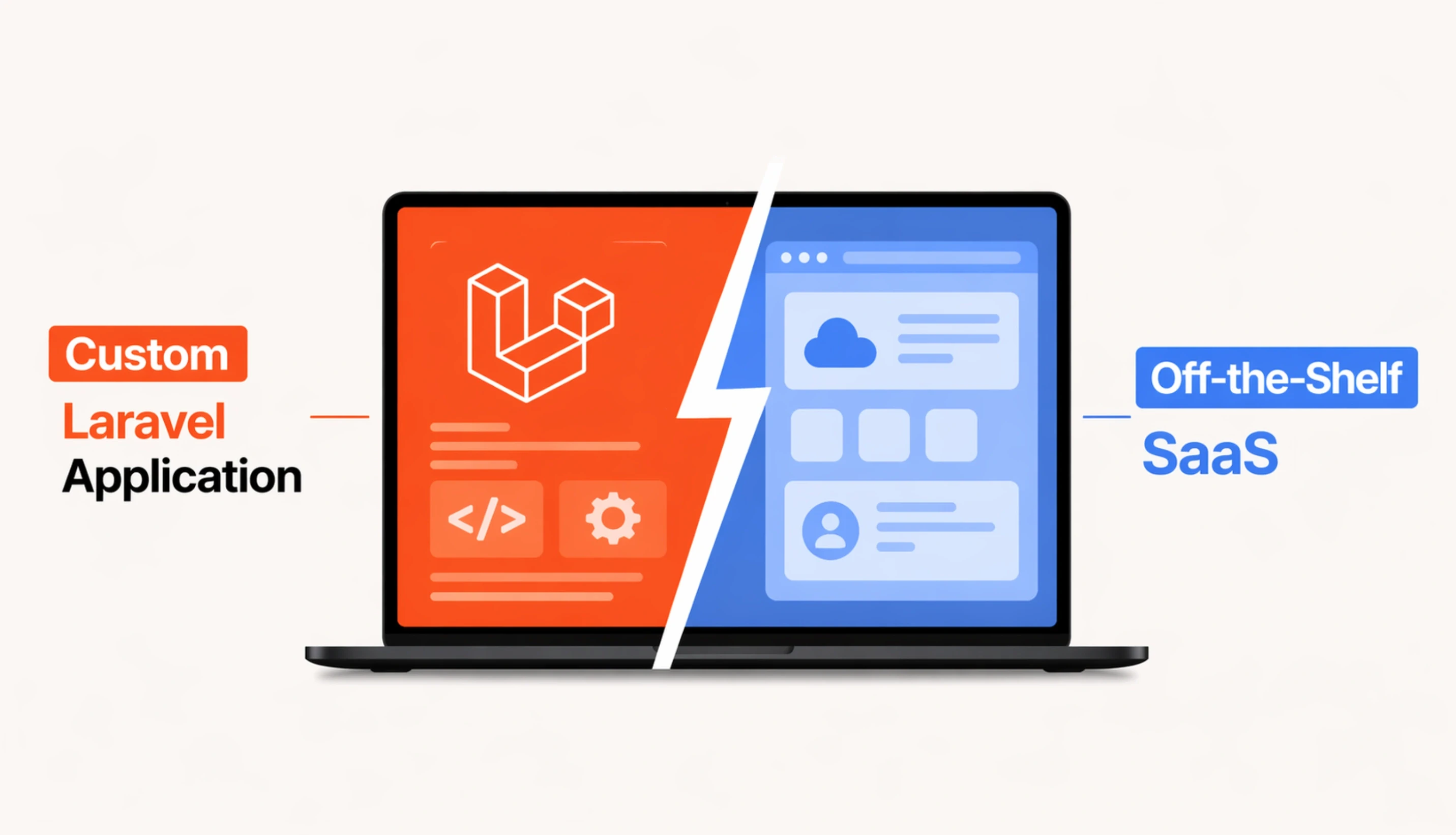
Custom Laravel Application vs Off-the-Shelf SaaS: Build vs Buy 2026
The build vs buy decision costs companies more when they get it wrong than almost any other technical choice. Here are the 7 questions that map your situation to the right answer with real 2026 numbers.

Manish Patel
April 28, 2026India (Head Office)
203/204, Shapath-II, Near Silver Leaf Hotel, Opp. Rajpath Club, SG Highway, Ahmedabad-380054, Gujarat
USA
7838 Camino Cielo St, Highland, CA 92346
UK
The Powerhouse, 21 Woodthorpe Road, Ashford, England, TW15 2RP
New Zealand
42 Exler Place, Avondale, Auckland 0600, New Zealand
Canada
141 Skyview Bay NE , Calgary, Alberta, T3N 2K6