

How to Build an E-Commerce Startup: From Idea Validation to MVP and Scale
Building an e-commerce startup means validating the idea before writing code, launching a focused MVP with only the core features, then scaling based on real customer data. The proven path is: validate with 50-plus potential buyers, build an MVP in under 90 days, and iterate from feedback. Startups that launch an MVP in under 90 days see roughly 3 times higher survival rates, and building an MVP first can cut the failure rate in half.

Chirag Daxini
The startups that win are the ones that learn fastest, not build the most. Every e-commerce founder believes their idea is the exception. Then most discover the hard truth: the product nobody wanted was built beautifully, on time, and on budget, and it still failed because no one validated demand first.
This is the central trap. Founders spend months and their seed capital building features customers never asked for, launch to silence, and only then start learning what the market actually wanted, when the money is already gone. The way out is to validate first and build lean. Acquaint Softtech helps founders do exactly this through its software product development partner practice, turning a raw idea into a focused, testable MVP rather than an expensive guess.

- You have an e-commerce idea and want to know how to start the right way.
- You want to validate demand before spending money on a full build.
- You need to know which features belong in a first MVP and which to cut.
- You want a realistic picture of startup cost, timeline, and funding.
- You are a founder in the USA, UK, Europe, UAE, or India ready to build.
The data is blunt about why this matters. Roughly 90 percent of startups fail, most often from poor product-market fit, but founders who build an MVP first can cut that failure rate in half by testing the idea cheaply and early.
Speed of validation is now the survival metric. According to Y Combinator's startup library on building MVPs, the founders who reach customers fastest and iterate on real feedback consistently outperform those who polish in private, which is why a sub-90-day MVP correlates with far higher survival.
I'm Chirag Daxini, COO at Acquaint Softtech. In this guide, I share a practical roadmap for taking an e-commerce or D2C idea from validation to MVP and eventually to scale. It expands on our guide to e-commerce and D2C software development. It draws on Acquaint Softtech's record of 1,300+ projects across 20+ industries, including a startup MVP taken from concept to a validated product detailed later, backed by a 4.9/5 rating from 50+ verified Clutch reviews and a first engineer deployed within 48 hours.
Why most e-commerce startups fail, and how to avoid it

Most e-commerce startups fail not because the idea was bad or the code was weak, but because the founder built before validating, ran out of money proving the wrong assumptions, and never reached product-market fit in time.
The pattern is consistent: over-featuring the first version, skipping user testing, and treating the build as the goal rather than learning as the goal. Research shows 73 percent of launch delays come from poor planning, not technology. Avoiding this starts before development, in a structured discovery process. Acquaint Softtech's discovery workshop services help founders pressure-test the idea, scope, and assumptions before a line of code is written.
The lean startup loop
The proven antidote is the build-measure-learn loop: build the smallest thing that tests your riskiest assumption, measure how real users respond, and learn fast enough to change direction before the budget is gone. The lean MVP that powers this loop is built by Acquaint Softtech's product development team, who scope ruthlessly so the first version tests the idea rather than gold-plating it.
Step 1: Validate the idea before building anything

Idea validation means confirming that real people will pay for your solution before you build it, and it is the single highest-leverage step a founder takes. Cutting a feature at this stage costs zero dollars; cutting it after development costs thousands.
Validation is practical, not theoretical: talk to at least 50 potential buyers, run competitor analysis, test demand with a landing page or pre-orders, and confirm people feel the pain you are solving strongly enough to pay for relief. A structured discovery workshop turns this into a clear go or no-go decision. Acquaint Softtech's discovery workshop services run market research, feature prioritization, and feasibility assessment before any build commitment, while access to experienced teams through their hire MEAN stack developers service can help validate technical feasibility and accelerate MVP planning. Before any of this validation work begins, most founders still need something to show a landing page, a mock ad, a sample product shot. Higgsfield lets founders craft their ad through AI Ad Generator from a single prompt instead of commissioning a shot of an AI creative suite that's become common at this pre-launch stage. It won't replace real product photography once the MVP validates, but it's often enough to test whether the offer resonates at all.
Validate the niche, not the world
The strongest e-commerce startups solve one painful problem for one specific audience, because the narrower the focus, the faster they reach product-market fit. Trying to serve everyone at launch is the surest way to resonate with no one. Once the niche is validated, the technical scope follows naturally.
Acquaint Softtech's development team translates a validated idea into a focused build plan with a clear feature priority order. How framework choices support a fast first build is covered in our Best Frameworks for E-Commerce Website Development guide.
Step 2: Define the MVP and cut features ruthlessly
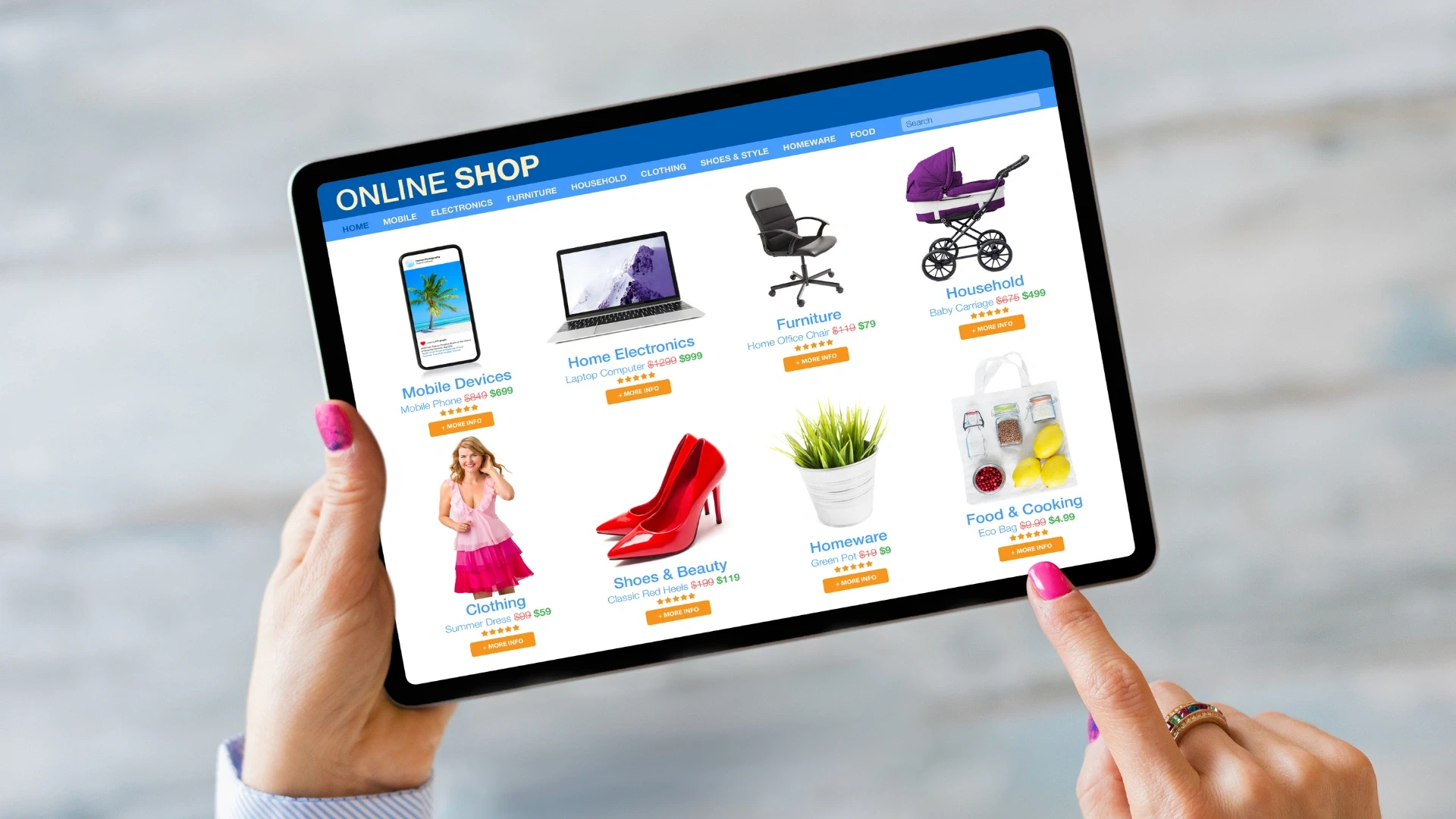
An MVP, or minimum viable product, is the smallest version of your store that delivers real value and tests your core assumption. For e-commerce, that usually means browse, a simple catalog, cart, checkout, and payment, and very little else.
The discipline is in what you leave out. Loyalty programs, subscriptions, AI recommendations, and a mobile app are all valuable later, but in version one they are scope creep that delays launch and burns budget before you have learned anything. Defining the right MVP scope is where experienced product teams earn their keep. Acquaint Softtech's discovery workshop helps founders separate the must-have core from the nice-to-have features that can wait.
Three core functions, no more
A useful rule is to limit the MVP to three core functions that prove the model. Over-featuring is the most common founder mistake, inflating scope, delaying launch, and spending money testing assumptions that one core feature would have validated.
Building that lean, well-architected first version is the job of Acquaint Softtech's software product development team, who build it cloud-ready so it does not need a rewrite the moment it gains traction. How a focused store connects catalog and checkout is covered in our article, Why Develop Your E-Commerce Store With Laravel Bagisto guide.
Have an idea but not sure where to start?
Acquaint Softtech helps founders validate, scope, and build e-commerce MVPs for clients across the USA, UK, Europe, UAE, and India. Your first engineer deploys within 48 hours of brief.
Step 3: Choose a tech stack that fits a startup, not an enterprise
The right startup tech stack balances speed to launch, low cost, and the ability to scale later without a rewrite. The mistake founders make is either over-engineering for scale they do not have yet, or building so cheaply the stack fails at a thousand users.
For most e-commerce MVPs in 2026, a pragmatic stack is a Next.js or React frontend, a Laravel or Node.js backend, PostgreSQL, Stripe or a regional gateway, and cloud hosting on AWS that scales automatically as traffic grows from launch. Choosing a stack that is fast now and scalable later is an architecture decision. Startups that need a modern JavaScript ecosystem often prefer to hire MERN stack developers to accelerate development and maintain flexibility as they scale. Acquaint Softtech's development team picks the stack around the startup's stage, budget, and realistic growth path.
Build cloud-ready from day one
A basic stack that fails at a thousand users forces an expensive rebuild right when the startup is gaining momentum. Choosing cloud-ready infrastructure from the start costs little extra and avoids the worst-timed technical crisis a young company can face.
The scalable cloud infrastructure behind a launch-ready MVP is built and engineered together, so architecture decisions are made before they become expensive. Common stack and architecture questions are answered directly on our technical answers hub, which covers startup build decisions in plain language.
Step 4: Build, launch, and measure in under 90 days

The goal of the build phase is a launchable MVP in under 90 days, because speed of validation is the survival metric. Startups that launch an MVP in under 90 days see roughly 3 times higher survival rates than those that build slowly.
The build should run in short sprints with working software at the end of each, so the founder sees progress, can adjust scope, and reaches a real launch instead of an endless polishing phase that never quite feels ready. This sprint-based, launch-focused delivery is how Acquaint Softtech's team works, deploying the first engineer within 48 hours and shipping demo-ready output every two weeks.
Beware the pre-launch panic
The most dangerous moment is just before launch, when founders feel the product is not good enough and add three more features. Resist it. Launch, measure real behavior, and let customer data, not founder intuition, drive what comes next.
Teams that need to add engineering muscle to hit a launch window can scale through Acquaint Softtech's staff augmentation, which deploys vetted engineers into the sprint within 48 hours of a brief. How a launched store fits the broader build picture is covered in our E-Commerce Development Company Services page.
E-commerce startup cost and funding in 2026

A disciplined e-commerce MVP in 2026 typically costs between 10,000 and 50,000 dollars when scope is controlled, while a more feature-rich startup build runs 40,000 to 80,000 dollars. With Acquaint Softtech, these come in up to 40 percent below Western rates.
The biggest cost lever is not the developers; it is scope discipline. Validation cuts cost dramatically by ensuring you build only what the market confirmed it wants, which is why the discovery phase pays for itself many times over. Getting scope and budget right before building is the purpose of Acquaint Softtech's white label software development and workshop services, which produce a costed feature roadmap rather than an open-ended bill.
Funding follows traction now
Investors in 2026 expect traction before a seed round, often paying customers or thousands of engaged users, so founders who bootstrap a lean MVP to early revenue command meaningfully better terms than those raising at the idea stage. Building at startup-friendly rates without sacrificing quality is the core of Acquaint Softtech's development model, which gives founders senior engineers at 25 to 49 dollars per hour.
Step 5: Scale on data, not instinct
Scaling begins after the MVP proves people want the product. The shift is from validation to retention-led growth, where you double down on the features customers use most and build the roadmap from real usage data, not founder assumptions. As the business grows, creative branding strategies can help establish a recognizable brand, strengthen customer trust, and support long-term growth alongside product improvements.
This is the stage to layer in what the MVP deliberately left out: subscriptions, loyalty, AI personalization, a mobile app, and deeper operations automation, each added because the data shows it will move retention or revenue. Scaling a validated MVP into a mature platform is where Acquaint Softtech's software product development team adds the advanced modules, always built on the foundation laid during the MVP.
Keep the team that built it
The fastest scaling happens when the engineers who built the MVP stay through growth, because they carry the institutional knowledge of every decision and trade-off, which a fresh team would take months to relearn at a critical moment. That continuity is exactly what Acquaint Softtech's dedicated development team model provides, keeping the same engineers with the startup from MVP through scale.
Case study: an MVP built and validated, on schedule
The clearest proof of disciplined MVP building is a founder who got a working, validated product on time and on budget. This engagement, verified on Clutch with a 5.0 rating, shows a startup MVP taken from concept to a functioning product.
Case Study: An AI Startup MVP, Built and Validated
A fintech startup's document-intelligence MVP taken from concept to a working, validated product on schedule. | Verified on Clutch (5.0/5)
What the Founder Needed
• A scalable MVP to replace manual data entry with automated extraction
• A working product to validate the model before heavy investment
• A team that could move fast without sacrificing quality
What Acquaint Delivered
→ A focused MVP with a custom AI extraction model at its core
→ An internal web console for exception handling and review
→ A secure API connecting the pipeline to live scoring systems
→ Every milestone delivered on time, from concept to working product
The result: documents that once sat unverified for hours were parsed and validated within moments, manual entry errors effectively disappeared, and the founder had a working, validated product to take forward. The CEO rated the engagement 5.0 across quality, schedule, and cost.
What makes this strong proof is the founder outcome, not the feature list. The team built a focused MVP around the single riskiest assumption, automated data extraction, and delivered every milestone on schedule, giving the founder a validated product to take to investors and customers.
This is the standard that Acquaint Softtech's product development team holds across every startup engagement, where the goal is a validated product, not a pile of unproven features.
Founders who want the same engineers to stay through scale choose Acquaint Softtech's dedicated development team model, keeping MVP knowledge with the platform as it grows. A second custom build is documented in our B2B E-Commerce Marketplace case study, showing custom architecture taken to production.
Ready to turn your idea into a validated MVP?
Acquaint Softtech validates, scopes, and builds e-commerce startups for founders across the USA, UK, Europe, UAE, and India at $25 to $49 per hour, up to 40 percent below Western agency rates, with 95 percent on-time delivery.
How to get started and what the first 48 hours look like
Getting started with Acquaint Softtech is built for founders: a free consultation, a discovery workshop that validates and scopes the idea, then your first engineer deployed within 48 hours of the brief, with no long procurement cycle.
Everything is covered by an NDA from the first conversation, so your idea and business plan are protected from the very start, which matters enormously for a founder whose competitive edge is the concept itself. The discovery phase is where an idea becomes a plan. Acquaint Softtech's discovery workshop services produce a validated scope, a costed feature roadmap, and a launch timeline before any code is written.
Launch lean, then grow
From there, the build runs in two-week sprints aimed at a sub-90-day launch, so you reach real customers fast, gather genuine validation, and scale only what the data proves works rather than what you hoped would. You can start with a lean MVP and add capacity through Acquaint Softtech's staff augmentation services as the startup grows and the roadmap expands.
Join 200+ companies that chose Acquaint Softtech as their development partner.
1,300+ projects. 70+ engineers. 4.9/5 Clutch rating from 50+ verified clients. Official Laravel Partner. Your first engineer deploys within 48 hours of the brief and stays from MVP through scale.
Frequently asked questions
-
How do you start an e-commerce startup?
Start by validating the idea before building: talk to 50-plus potential buyers, analyze competitors, and test demand with a landing page or pre-orders. Then build a focused MVP with only core features in under 90 days, launch, and iterate from real customer data. Building an MVP first can halve the failure rate.
-
What features should an e-commerce MVP have?
An e-commerce MVP needs only the core: a simple catalog, browse and search, cart, checkout, and payment. Leave out loyalty, subscriptions, AI recommendations, and mobile apps until after launch. Limit the MVP to three core functions that prove the business model, since over-featuring is the most common founder mistake.
-
How much does an e-commerce startup cost?
Region
MVP Cost Range
Feature-Rich Platform
India
$10K–$25K
$25K–$50K
UK
$25K–$50K
$50K–$80K+
EU
$20K–$45K
$45K–$75K+
US
$30K–$50K+
$60K–$80K+
-
What is the best tech stack for an e-commerce startup?
A pragmatic 2026 startup stack is a Next.js or React frontend, a Laravel or Node.js backend, PostgreSQL, Stripe or a regional gateway, and cloud hosting on AWS that scales automatically. Build cloud-ready from day one so the stack does not fail at a thousand users and force an expensive rewrite.
-
How long does it take to build an e-commerce MVP?
A focused e-commerce MVP can launch in under 90 days, and disciplined teams build basic versions in 5 to 12 weeks. Speed matters: startups that launch an MVP in under 90 days see roughly 3 times higher survival rates. Acquaint Softtech deploys the first engineer within 48 hours of the brief.
-
How do you validate an e-commerce idea?
Validate by confirming real people will pay before you build: interview at least 50 potential buyers, study competitors, and test demand with a landing page, waitlist, or pre-orders. A structured discovery workshop turns this into a clear go or no-go decision, and cutting a feature here costs nothing.
-
How do e-commerce startups get funding in 2026?
Most 2026 seed rounds expect traction first, often paying customers or thousands of engaged users, so pure idea-stage raises are rare. Founders who bootstrap a lean MVP to early revenue command 2 to 3 times higher valuations than those raising at the idea stage, making a validated MVP the price of entry.
-
How fast can Acquaint start my startup project?
Your first engineer deploys within 48 hours of the brief. The path is a free consultation, a discovery workshop that validates and scopes your idea, then kickoff in two-week sprints aimed at a sub-90-day launch so you reach real customers and validation fast.
With over 11 years of experience in web application development and project management, I excel in leading cross-functional teams to deliver innovative digital solutions. My expertise spans eCommerce platforms, ERP systems, and JS & PHP-based frameworks, including WordPress, React JS, and Laravel. As a Technical Project Manager, I specialize in strategic planning, system design, and end-to-end project execution, transforming complex ideas into scalable, high-impact applications.
Table of Contents
Get Started with Acquaint Softtech
- 13+ Years Delivering Software Excellence
- 1300+ Projects Delivered With Precision
- Official Laravel & Laravel News Partner
- Official Statamic Partner
Related Blog
.webp "The Complete Guide to E-Commerce & D2C Software Development in 2026")
The Complete Guide to E-Commerce & D2C Software Development in 2026
Custom e-commerce software is not a more expensive version of Shopify. It is an entirely different accountability and ownership structure, with different economics and a different ceiling on what your platform can do. This guide explains every architecture type, every cost variable, and every decision checkpoint so you build the right thing in 2026.

Acquaint Softtech
May 6, 2026
How Custom E-Commerce Platforms Work: Architecture, Modules, and When to Build One
A custom e-commerce platform is not a bigger Shopify plan. It is a purpose-built commerce engine where every module answers to your business logic, not a vendor's roadmap. This article explains exactly how one is architected, what it contains, and the 5 operational signals that tell you when building your own beats, staying on SaaS.

Manish Patel
May 12, 2026.webp "Headless Commerce Explained: Decoupled Architecture for Modern E-Commerce Development")
Headless Commerce Explained: Decoupled Architecture for Modern E-Commerce Development
Headless commerce is not a technology upgrade. It is a structural decision that separates the commerce engine from the storefront entirely. Done right, it gives you deployment freedom, channel flexibility, and a performance ceiling that no monolithic SaaS platform can match. Done wrong, it creates distributed systems complexity that your team is not ready for. This article tells you exactly which situation you are in.
Manish Patel
May 19, 2026India (Head Office)
203/204, Shapath-II, Near Silver Leaf Hotel, Opp. Rajpath Club, SG Highway, Ahmedabad-380054, Gujarat
USA
7838 Camino Cielo St, Highland, CA 92346
UK
The Powerhouse, 21 Woodthorpe Road, Ashford, England, TW15 2RP
New Zealand
42 Exler Place, Avondale, Auckland 0600, New Zealand
Canada
141 Skyview Bay NE , Calgary, Alberta, T3N 2K6