

How to Build an On-Demand Startup: From Idea to MVP to Scale
Building an on-demand startup means moving through clear stages: validate the idea, define a lean MVP, choose the right stack and team, build and launch, reach liquidity, then scale. The fastest path is a focused MVP that proves real demand in one niche before adding features or expanding to new markets.

Chirag Daxini
Every on-demand success story starts with a simple idea: connect a customer who needs something with a provider who can deliver it. The concept sounds straightforward until reality arrives. Suddenly, every decision carries weight. What should the MVP include? How much should you invest? How quickly can you launch? And most importantly, will anyone actually use it?
The biggest threat is rarely the technology. It is building too much before proving demand or building too little to create a reliable experience. Some startups burn through budgets chasing every feature imaginable, while others launch fragile products that collapse under their first wave of users. The winning approach is far simpler: validate the market, build lean, launch fast, learn from real users, and scale only when the data proves you should. Growth is not something you code into an app. It is something you earn, one stage at a time.

- You have an on-demand idea and do not know where to start.
- You want a clear stage-by-stage roadmap from idea to scale.
- You are unsure what belongs in your first MVP.
- You need a realistic cost and timeline before you commit.
- You are choosing a team to build and scale your startup.
This article is that roadmap. It lays out how to start an on-demand startup as a sequence of stages, the on-demand startup roadmap from ideation to scale, so each phase reduces risk before the next dollar is spent. The hard truth from research is motivating: analyses of startup failures, such as the widely cited CB Insights study of why startups fail, repeatedly find that the top reason is building something with no real market need, exactly the trap a staged approach avoids.
The roadmap here comes from hands-on delivery. As a Technical Project Manager at Acquaint Softtech with 11+ years architecting and shipping scalable web applications, I have taken products from a first brief to a launched MVP and on to scale, through structured software product development for founders across the USA, UK, Europe, Australia, and New Zealand. The stages below are the ones my teams actually run, not theory.
If you want the wider category context first, this Complete Guide to On-Demand App Development in 2026 covers the architecture, features, and verticals a startup will grow into. Read on for the path from idea to a platform that scales.
The On-Demand Startup Opportunity, and Why Most Fail

On-demand startups connect customers with services or providers instantly through an app. The opportunity is large because convenience scales across categories, but most fail by building too much too soon, ignoring the supply side, or launching without proving demand. A staged roadmap from idea to MVP to scale is what separates survivors from casualties. |
The on-demand model keeps spreading because it solves a universal want: get what you need, now, with a few taps. That breadth is the opportunity, since the same playbook applies to rides, food, home services, healthcare, and dozens of niches still underserved. Acquaint Softtech helps founders turn that opportunity into a concrete plan with MERN stack developers who have built across these categories and know what each demands.
Yet most on-demand startups fail, and the reasons rhyme: they build a long feature list before validating demand, they neglect the harder supply side and launch to an empty marketplace, or they over-engineer for a scale they have not reached. Each is a failure of sequencing, not ambition, and each is avoidable with discipline and a team that has seen the pattern, which is why a dedicated software development team that pushes back on scope is worth more than one that simply builds what it is told.
The startups that survive treat the journey as stages, proving each before funding the next, and they study the verticals that already work. Seeing how an established on-demand category is structured shortens the learning curve, and the on-demand home services app development guide shows the moving parts a new startup will need to plan for from day one.
Stage 1: Validate the Idea Before You Build
.webp "Stage 1: Validate the Idea Before You Build")
Validation means proving people want your on-demand service before you build it. Talk to real customers and providers, test demand with a landing page or concierge version, and confirm the unit economics work. The goal is evidence, not opinion, so you build only after the market has shown it will use and pay for the service. |
The first stage costs the least and saves the most, because validation is how you avoid building something nobody wants. Before any code, talk to real prospective customers and providers, test interest with a simple landing page or a manual concierge version of the service, and check whether the numbers can ever work. Acquaint Softtech runs this structured validation through discovery workshop services that turn a raw idea into a tested, prioritized plan.
Validation also means confronting the supply side early, since an on-demand marketplace has two audiences and the providers are usually harder to win. Proving you can attract and retain providers in one niche, one city, is often the real test, not whether customers will tap a button. Setting this strategy well benefits from senior product judgement, available through a virtual CTO service that helps a founder pressure-test the model before committing a budget.
The output of this stage is evidence: a defined problem, a target niche, early proof of demand, and a rough business model, enough to justify building. The discipline of validating before building, then moving deliberately to launch, is the same one that shapes a successful delivery, and the complete process of on-demand delivery app development lays out how validated ideas move into structured build phases.
Stage 2: Define the Right MVP Scope
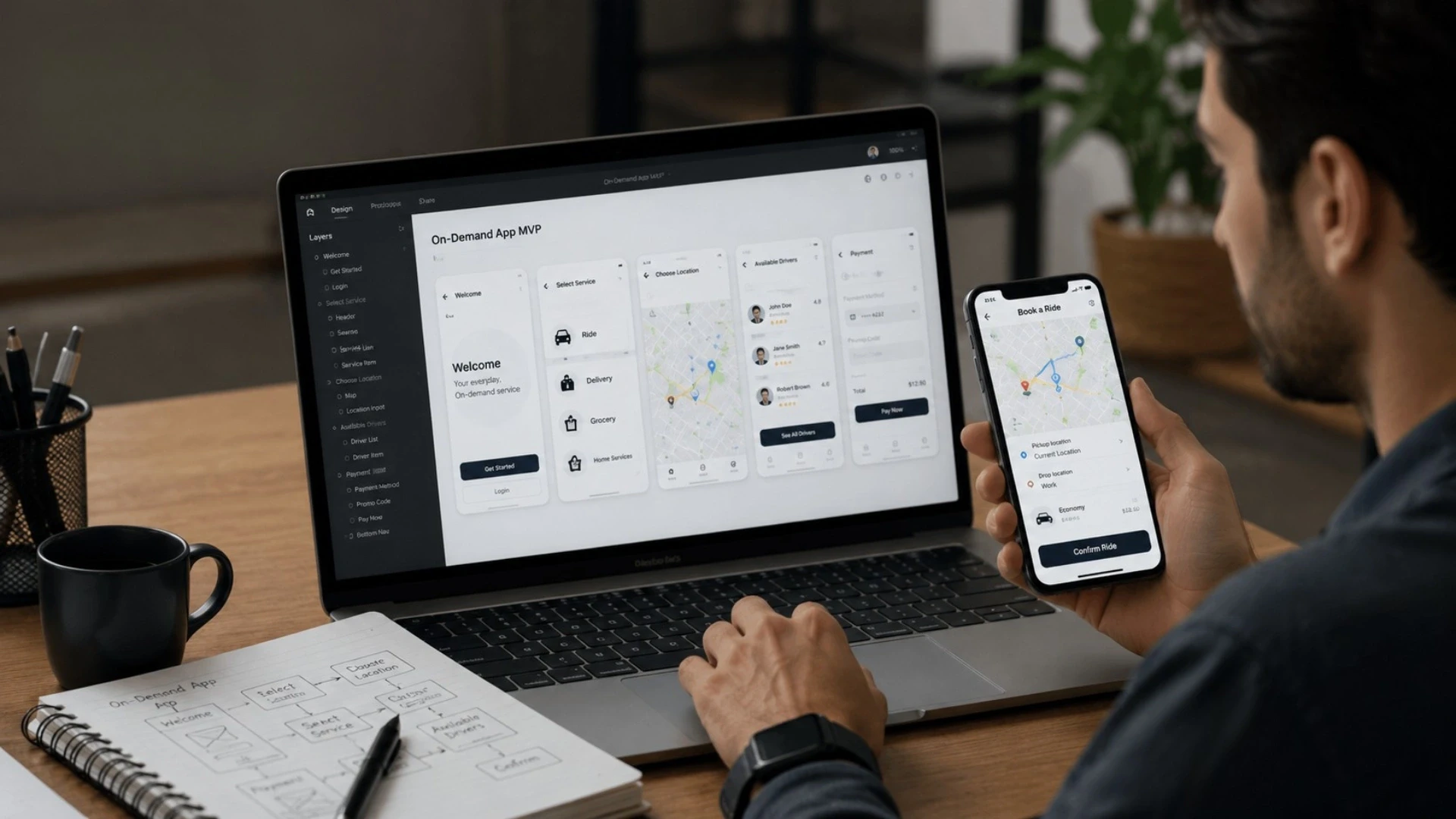
An on-demand MVP should include only the features needed to complete one core transaction end to end: sign-up, a customer request, provider matching, booking, payment, and basic tracking and reviews. Everything else waits. The goal is to launch fast, prove demand, and learn from real users before investing in advanced features. |
Knowing what features an on-demand MVP should have is really about knowing what to leave out. The MVP exists to prove one thing: that the core transaction works and people will use it. So it needs only the essentials to complete that loop: sign-up, request, matching, booking, payment, and basic tracking and reviews, and nothing that does not serve it. Acquaint Softtech scopes this lean first version with React Native developers who build one codebase across customer and provider apps to save time and cost.
Include in MVP | Defer to Later | Why |
Core booking and payment | Loyalty and subscriptions | Prove the transaction first |
Basic matching | AI-driven matching | Rules work at small scale |
Ratings and reviews | Advanced analytics | Trust matters from day one |
One city or niche | Multi-region expansion | Density beats breadth early |
The discipline is to resist the feature list, because every extra feature delays launch, raises cost, and dilutes the learning. A tight MVP reaches real users in weeks rather than quarters, and real usage teaches more than any plan. When scope pressure is high, adding experienced capacity through staff augmentation services keeps the lean build moving without bloating it.
It helps to study the MVP shape of an app you admire, then strip it to its core. The published guide on how to create an on-demand food delivery app like Uber Eats breaks down which features are truly core to that model, a useful exercise for deciding what your own first version must and must not include.
Want Your MVP Scoped by People Who Have Shipped Dozens?
Acquaint Softtech turns an idea into a lean, launch-ready MVP plan, with scope, stack, timeline, and cost, before a line of production code. 1,300+ projects delivered. Teams deployable within 48 hours of brief.
Stage 3: Choose the Tech Stack and Team

Tech stack selection for a marketplace should favour speed to launch and room to scale, not novelty. A pragmatic, widely supported stack means faster hiring, more libraries, and fewer surprises. Acquaint Softtech builds the data-heavy backend of on-demand startups with Python developers when analytics and future AI matter, and with proven web frameworks where speed of delivery leads.
The team decision is as important as the stack, because a small, senior team that has built on-demand products before will out-deliver a larger, inexperienced one. For most startups, a dedicated offshore team offers the best balance of cost, speed, and skill, far cheaper than Western hires without sacrificing quality. Acquaint Softtech provides this through experienced Laravel developers and full-stack teams that have shipped marketplaces end to end.
Choosing technology with a deep talent pool keeps you from being trapped by a niche stack later, which is why mainstream choices win for startups. Industry data such as the Stack Overflow Developer Survey shows which languages and frameworks have the largest, most active communities, a practical guide to picking a stack you can keep hiring for as you grow.
Stage 4: Build and Launch the MVP
Building an on-demand MVP runs in short sprints: design, then build the core transaction loop, test it, and launch to a small, real audience. A typical lean MVP ships in 12 to 20 weeks. Launch narrow, one city or niche, so you can support early users well and learn fast before widening. |
With scope and team set, the build itself should run in short, visible sprints, each ending in something you can see and test. This rhythm keeps the project honest, surfaces problems early, and lets the plan adapt as real screens replace assumptions. Acquaint Softtech runs these sprints with MEAN stack developers who deliver the connected customer, provider, and admin pieces in coordinated increments.
Design: Turn the scoped MVP into clean, simple flows for customer and provider.
Build the core loop: Sign-up, request, matching, booking, payment, and tracking, in priority order.
Test continuously: Each sprint is tested so quality is built in, not bolted on at the end.
Soft launch: Release to a small, real audience in one niche or city to learn before scaling.
Launching narrow is the move most first-time founders get wrong, because a wide launch spreads thin supply and weak support across too many users. A focused launch lets you delight a small group, fix what breaks, and build the density a marketplace needs. Keeping this delivery predictable on a startup budget is the strength of flexible software development outsourcing that scales the team to the sprint plan.
Budget and timeline expectations for this stage are easier to set against a real example. The breakdown of the cost to develop an on-demand taxi booking application shows how an MVP build is phased and costed, a useful reference for planning your own launch.
Get a Stage-by-Stage Plan to Launch Your Startup
Acquaint Softtech clients save up to 40% versus Western agency rates, with a 95% on-time sprint delivery record and a 4.9/5 Clutch rating from 50+ verified reviews. Book a call and receive an MVP roadmap, timeline, and cost within 48 hours.
Stage 5: Reach Liquidity, Then Scale
After launch, the goal is liquidity: enough supply and demand in one market that transactions happen reliably. Only after a market works should you scale, by adding features, entering new cities, and hardening the platform for load. Scaling an on-demand startup means growing on a proven model, not chasing growth before the model is proven. |
A launched MVP is the start of the hardest stage, not the end, because now the marketplace must reach liquidity: enough providers and customers in one market that requests get filled fast and reliably. Chasing new cities before the first one works is the classic way to die at scale. Acquaint Softtech engineers the platform to grow on demand with DevOps engineers who build the auto-scaling, monitored infrastructure that growth requires.
Once a market clearly works, scaling an on-demand startup means doing three things in parallel: adding the features customers now ask for, expanding to new niches or cities, and hardening the backend for higher load. Each should be funded by the proof the first market gave you. Re-architecting for scale is specialist work, delivered by Django developers who strengthen the data and service layers as volume climbs.
Knowing which numbers prove a market is working keeps scaling disciplined rather than hopeful. Investor-grade frameworks such as the a16z guide to startup metrics define the growth, retention, and unit-economic measures that signal a model is ready to scale, the same signals a founder should watch before pouring fuel on the fire.
The Cost and Timeline of an On-Demand MVP

On-demand startup development cost in India and other offshore hubs depends mostly on MVP scope and team size, and a lean first version is far cheaper than founders fear. The ranges below reflect Acquaint Softtech project economics, and the smart move is to fund the smallest version that proves the model, often beginning with remote developers who deliver the core loop fast.
Scope | Estimated Cost (India Team) | Timeline |
Lean MVP: one niche, core loop | $25,000 to $45,000 | 12 to 18 weeks |
Standard MVP: matching, reviews, admin | $45,000 to $80,000 | 18 to 26 weeks |
Growth build: scale, analytics | $80,000 to $150,000 | 26 to 40 weeks |
Multi-city scaled platform | $150,000 to $280,000+ | 40 to 56+ weeks |
Western agency rates for the same MVP run 40 to 60% higher, which can mean the difference between one runway and two for an early startup. The goal is not the cheapest build but the most learning per dollar, reaching real users quickly so the next round of spend is informed. Future-proofing the build so it does not need a rewrite is supported by AI and ML engineers who can layer intelligence in later without re-architecting.
Timeline matters as much as cost for a startup racing competitors and runway, and a focused MVP that launches in three to four months beats a sprawling one that launches in a year. Setting realistic expectations against comparable builds helps, and the breakdown of the cost to develop an on-demand courier services app shows how scope maps to budget and schedule in a real on-demand project.
Common Mistakes That Kill On-Demand Startups
Most on-demand startups fail for a short list of avoidable reasons, and knowing them in advance is half the defence. The biggest is building before validating, but neglecting supply, over-engineering, and launching too wide are close behind. Acquaint Softtech helps founders sidestep these with the ongoing guidance of support and maintenance services that keep a lean platform healthy while the founder focuses on growth.
The mistakes to avoid
Building before validating: Writing code before proving anyone wants the service, the single most common killer.
Ignoring the supply side: Winning customers while having no providers to serve them, so the marketplace stalls.
Over-engineering the MVP: Building for a million users before having a hundred, burning time and money.
Launching too wide: Spreading thin supply across many cities instead of winning one.
Skipping quality basics: Shipping an unstable app that crashes under the first real traffic.
The common thread is sequence: doing things in the wrong order, or all at once, instead of proving each stage before the next. Building quality in from the start, rather than racing past it, avoids the crash that ends many launches, which is why automated testing built in early by automation engineers protects an MVP when real users arrive.
These lessons are not new; they are the core of modern startup methodology. The build-measure-learn loop at the heart of the Lean Startup methodology exists precisely to stop founders building elaborate products before validating them, and it maps directly onto the staged on-demand roadmap in this guide.
Case Study: From Idea to a Live Marketplace
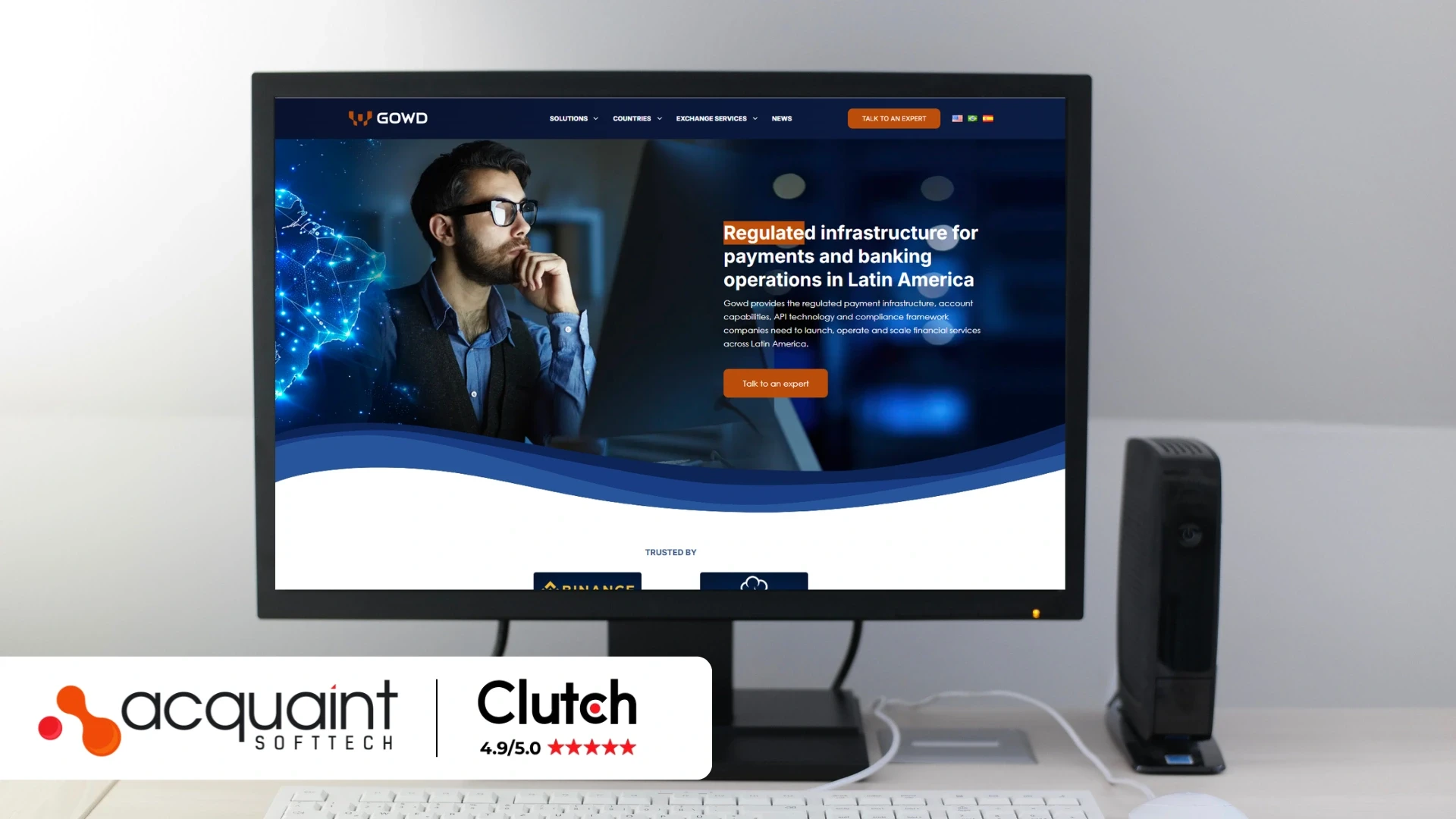
Theory matters less than a startup that launched. The engagement below is a real, published Acquaint Softtech project that followed exactly this path, taking a founder's idea and turning it into a working two-sided marketplace with a clean MVP and a growing team. You can read the full story at One-Stop and Secure Subscription Sharing Platform.
Case Study: Gowd, Subscription-Sharing Marketplace |
Client: Gowd, a US-market startup (Founder Vivek Shah). |
Challenge: Gowd came to Acquaint Softtech as an idea: a two-sided marketplace where users could buy shared subscriptions or earn by sharing their own. The founder needed that concept turned into a simple, secure, easy-to-navigate product that customers would actually use. |
Approach: Acquaint Softtech ran early brainstorming and discovery to shape the concept, then built a focused MVP: a clean buying flow, a powerful search and filtering system, a seller flow with up to 70% commission, and social-media login to cut onboarding friction and lift conversion, all validated through usability testing. |
Results: The idea became a live, practical marketplace with a smooth two-sided experience, and the engagement grew into a dedicated seven-member team, reflecting a product that moved from concept to an expanding, supported platform. |
Why It Matters for Your Startup: The parallels are direct. Gowd validated and scoped before building, launched a lean two-sided MVP focused on the core transaction, and scaled the team as the product proved itself- the exact idea-to-MVP-to-scale path this guide lays out. |
"My team at Acquaint has grown to seven members because of the dedication they have shown." -- Vivek Shah, Founder, Gowd |
Taking a raw idea and turning it into a launched, scalable marketplace is exactly the path this guide describes, and exactly what Acquaint Softtech delivers through end-to-end white label software development and full product engineering that grows with the founder.
Founders should judge a partner by launched products rather than promises. A full library of verified engagements across marketplace, on-demand, and startup work is available, and independent client ratings can be checked on the Acquaint Softtech Clutch profile, where the company holds a 4.9/5 score with Premier Verified status.
Why Acquaint Softtech for Your On-Demand Startup
The choices made in the first stages, what to validate, what to scope, what to build, and what to defer decide whether a startup reaches a working product or burns its runway first. The partner who guides those choices shapes the outcome, so a founder should choose a team that has walked the full path from idea to scale, not just one that writes code. Acquaint Softtech brings that judgement to every engagement through structured project management that keeps a startup build focused and on schedule.
Three things matter most for a founder. The first is end-to-end startup experience: over 13+ years and 1,300+ projects across 20+ industries, the team has taken ideas to launch MVPs and on to scale for clients in the USA, UK, Europe, Australia, and New Zealand, applying the staged roadmap in this guide. The second is team stability, with an average engagement tenure of 24+ months, so the engineers who build your MVP are the ones who scale it, with the ability to grow the platform through version upgrade services as you mature.
The third is speed without compromise: a dedicated team deploys within 48 hours of a signed brief, and the first sprint review happens in two weeks, materially faster than the four to eight-week onboarding common at Western agencies, which for a startup can mean a whole extra month of runway saved.
"Founders do not fail because they cannot build; they fail because they build the wrong thing too soon. The job of a good delivery team is to protect the runway: validate before building, ship a lean MVP that proves demand, and scale only once the market has answered. I have seen that discipline turn small budgets into real products again and again." -- Chirag Daxini, Technical Project Manager, Acquaint Softtech |
Ready to Turn Your Idea Into a Launched Startup?
Join 200+ technology companies that scaled with Acquaint Softtech. 1,300+ projects delivered. 4.9/5 Clutch rating. 50+ verified reviews. Teams deployable in 48 hours. The fastest path from idea to a launched, scalable on-demand platform.
Frequently Asked Questions
-
How do I start an on-demand startup?
Start by validating demand before building. Test your idea with a landing page or simple service model, then launch a lean MVP focused on one core transaction. Scale only after proving market demand. This approach reduces risk and saves development costs.
-
What features should an on-demand MVP include?
An MVP should include user sign-up, booking, provider matching, payments, tracking, reviews, and a basic admin panel. Focus only on features needed to complete one transaction. Add advanced features later. The goal is to launch quickly and collect real user feedback.
-
How much does an on-demand MVP cost?
MVP Type
Cost (USA / EU)
Cost (India)
Lean MVP
$25,000–$45,000 (€22,000–€40,000)
₹21L–₹38L
Standard MVP
$45,000–$80,000 (€40,000–€70,000)
₹38L–₹68L
Advanced MVP
$80,000+ (€70,000+)
₹68L+
-
How long does it take to build an on-demand app?
A basic MVP usually takes 12 to 18 weeks to launch. More feature-rich platforms often require 18 to 26 weeks. Keeping the initial scope small helps reduce development time. Faster launches help validate the market sooner.
-
Should I build an MVP or a full product first?
Start with an MVP. It helps validate demand quickly while reducing risk and development costs. Most successful on-demand platforms began with a focused MVP before expanding. Building a full product too early can waste time and resources.
-
How do I solve the supply side of a marketplace?
Recruit providers first in a specific niche or city. Make onboarding simple and ensure providers receive real work quickly. Strong supply is essential for marketplace success. Without providers, customer demand cannot be fulfilled.
-
Is outsourcing better than hiring in-house for an MVP?
For most startups, outsourcing is faster and more cost-effective. It provides access to experienced developers without lengthy hiring processes. In-house teams become valuable once the business model is proven. Many founders use outsourcing to accelerate time-to-market.
-
When should I scale my on-demand startup?
Scale when customers return, providers stay active, and requests are consistently fulfilled. Positive unit economics are a strong signal for expansion. Let data drive growth decisions. Expanding too early often creates operational challenges.
-
What are the hidden costs of an on-demand platform?
Common hidden costs include provider acquisition, customer support, infrastructure, and marketing. Building supply and demand simultaneously also requires investment. Planning for these costs early reduces surprises. Operational expenses often grow as the platform scales.
-
How do I validate an on-demand app idea before development?
Talk directly to potential customers and providers to understand their needs. Test demand with a landing page, waitlist, or concierge MVP before writing code. Validation reduces risk and helps build the right product. Real customer feedback is more valuable than assumptions.
With over 11 years of experience in web application development and project management, I excel in leading cross-functional teams to deliver innovative digital solutions. My expertise spans eCommerce platforms, ERP systems, and JS & PHP-based frameworks, including WordPress, React JS, and Laravel. As a Technical Project Manager, I specialize in strategic planning, system design, and end-to-end project execution, transforming complex ideas into scalable, high-impact applications.
Table of Contents
Get Started with Acquaint Softtech
- 13+ Years Delivering Software Excellence
- 1300+ Projects Delivered With Precision
- Official Laravel & Laravel News Partner
- Official Statamic Partner
Related Blog
.jpg "On-demand home service apps: A Complete Development Guide")
On-demand home service apps: A Complete Development Guide
Unveil the top features and trends driving the popularity of home service apps in today’s fast-paced world.

Mukesh Ram
August 22, 2024
From Concept to Launch - On-Demand Delivery App Development
Transform an idea into a successful on-demand delivery app with a well-defined process. Conceptualizing features, designing, developing, & launching the app, are all crucial.
Mukesh Ram
October 24, 2024.webp "How To Create an On-Demand Food Delivery App Like Uber Eats (2026 USA Guide)")
How To Create an On-Demand Food Delivery App Like Uber Eats (2026 USA Guide)
Building an app like Uber Eats means creating a multi-sided ecosystem of four interfaces: a customer app, a delivery driver app, a restaurant dashboard, and a central admin panel. A custom-coded MVP typically costs $75,000 to $120,000 (much less with no-code tools), and success depends on smart market positioning, core feature implementation, and US legal compliance. The proven path is to pick a niche, handle legal requirements, choose your build approach, ship a focused MVP, then test rigorously.
Mukesh Ram
October 16, 2019India (Head Office)
203/204, Shapath-II, Near Silver Leaf Hotel, Opp. Rajpath Club, SG Highway, Ahmedabad-380054, Gujarat
USA
7838 Camino Cielo St, Highland, CA 92346
UK
The Powerhouse, 21 Woodthorpe Road, Ashford, England, TW15 2RP
New Zealand
42 Exler Place, Avondale, Auckland 0600, New Zealand
Canada
141 Skyview Bay NE , Calgary, Alberta, T3N 2K6