

IT Outsourcing vs Software Outsourcing vs Staff Augmentation
IT outsourcing, software outsourcing, and staff augmentation are used interchangeably. They are not the same thing. This plain-English guide explains the difference in under 10 minutes.

Ahmed Ginani
As Business Development Lead at Acquaint Softtech, a software development partner with 1,300+ projects across 13 years, I see these three terms used interchangeably in client briefs, procurement documents, and vendor proposals every week. They are not the same thing. Using the wrong term when briefing a vendor produces proposals that address the wrong problem. This guide gives you the plain-English definition of each, the cost structure behind it, and the situation where it is the right choice.

- Procurement and operations leads comparing vendor proposals that use different terminology for similar services
- Founders and CTOs who have heard all three terms and are not confident in the distinction
- HR and talent teams building a policy for external development capacity and not sure which category applies
- Businesses that have used one model and are evaluating whether a different one would produce better results
The terminology problem in outsourcing is genuine. Vendors use these three terms loosely because the boundaries between them has blurred in marketing language. 'IT outsourcing' has come to mean almost any use of external technology providers. 'Software outsourcing' is sometimes used for project-based delivery and sometimes for team-based delivery. 'Staff augmentation' is the clearest of the three but is still sometimes mislabelled. The definitions below cut through the marketing language to the functional distinction that actually matters for your decision.
For the specific cost and quality comparison across hiring models, the Toptal vs Upwork vs staff augmentation comparison covers how the major platform and vendor models compare on cost, quality, and accountability. This article focuses on the structural distinction between the three broader categories that sit above those specific platforms.
Plain-English Definitions IT Outsourcing, Software Outsourcing and Staff Augmentation
Each term describes a different relationship between the client and the external technology provider. The relationship structure determines the accountability, the cost, and the right situation to use each model.
IT Outsourcing
Definition: The transfer of a defined IT function, service, or process to an external provider who manages it on the client's behalf. The client defines what they need the function to do. The provider manages the people, technology, and process to deliver it. |
Typical examples: Infrastructure management (cloud, servers, networks). Helpdesk and support services. Security monitoring. Business process automation. |
Used by: Mid-size and enterprise organisations that have IT functions that are not part of the core business model. Companies looking to reduce the overhead of managing non-core technology. |
Not right when: When the function to be outsourced is your core technical product or competitive advantage. Outsourcing your product development as an IT function treats your competitive asset as infrastructure. |
Software Outsourcing
Definition: Engaging an external vendor to build a defined software deliverable. The client specifies what needs to be built. The vendor takes responsibility for building it to specification. The engagement ends when the deliverable is accepted. |
Typical examples: Building a mobile application to a defined specification. Developing a specific feature set for an existing product. Creating a standalone web application. |
Used by: Companies with a well-defined software project that needs external execution capacity. Clients who have specified what they need and want a vendor to deliver it. |
Not right when: Ongoing product development where requirements evolve sprint by sprint. Situations where the client needs to direct the work continuously rather than define it up front. |
Staff Augmentation
Definition: Adding individual developers, engineers, or technical specialists from an external provider to the client's existing team, working directly within the client's processes, tools, and sprint cycles. |
Typical examples: Adding a senior Laravel developer to an in-house team for 6 months. Engaging a QA engineer to support a product team during a release cycle. Bringing in a data engineer to work alongside an existing data team. |
Used by: Companies with strong internal technical leadership who need to expand team capacity without the overhead of permanent hiring. Product teams with a clear sprint process who need execution capacity. |
Not right when: Companies without internal technical leadership to direct the developer daily. Situations where the accountability for delivery needs to rest with the vendor rather than the client. |
The Accountability Structure Is the Core Difference

The most useful way to distinguish the three models is by asking: who is accountable for what?
Accountability question | IT Outsourcing | Software Outsourcing | Staff Augmentation |
Who defines what is built? | Client defines the function outcome. Provider defines implementation. |
Who manages the people doing the work? | Provider manages their own team. |
Who owns the delivery outcome? | Provider owns the functional outcome. |
What happens when requirements change? | Service level agreement covers changes to the function. |
Who holds quality risk? | Provider: the function must perform to SLA. |
The accountability difference is what makes the choice matter. A company that needs delivery ownership should not choose IT staff augmentation. A company that needs daily direction over the developer and wants to own the code trajectory should not choose software outsourcing and expect the vendor to take quality accountability. Matching the accountability structure to what you actually want is the core of a good model decision.
For the specific cost structures behind each model and when each pricing approach favours the client, the staff augmentation pricing models guide covers the monthly retainer, time-and-materials, and fixed-price structures in detail. For the in-house versus staff augmentation cost comparison, the in-house vs staff augmentation analysis provides the 2026 numbers side by side.
Not Sure Which Model You Actually Need? Let Acquaint Softtech Map It.
Tell me what you are trying to accomplish: the deliverable, the team structure you have, and how much you want to direct versus delegate. I will tell you which of the three models matches your accountability preferences and what the engagement structure looks like for each. This takes 15 minutes.
The 5-Question Test: Which Model Is Right for Your Situation?
Answer these 5 questions to map your situation to the right model.
Q1: Is the work you need done a defined function or service (infrastructure, support, monitoring) rather than product development?
Yes: IT outsourcing is probably the right model. No: move to Q2.
Q2: Is the scope of work fully defined before any work begins?
Yes: software outsourcing (project-based) is viable. No: staff augmentation or a dedicated team structure is more appropriate.
Q3: Do you have strong internal technical leadership to direct a developer daily?
Yes: staff augmentation works. No: consider a dedicated team model where the vendor manages the team structure.
Q4: Do you need ongoing development over 3 or more months?
Yes: staff augmentation on a monthly retainer or a dedicated team. No: a fixed-scope software outsourcing project.
Q5: Do you want to own the code and the development direction sprint by sprint?
Yes: staff augmentation. No: software outsourcing gives the vendor more delivery latitude.
Before selecting any offshore vendor in any of these three categories, the offshore due diligence checklist covers the 10 verification steps that apply regardless of which model you are using. Vendor quality matters as much as model selection.
Answered These 5 Questions and Know Which Model You Need? Here Is What Engaging Acquaint Softtech Looks Like.
Acquaint Softtech operates in two of the three models: software outsourcing (project-based delivery against defined specifications) and staff augmentation (dedicated developers integrated into your team). We do not offer IT outsourcing of infrastructure functions. If your situation fits either of these two models, tell me your brief and I will send an engagement structure within 48 hours.
The Most Common Mislabelling and What It Costs
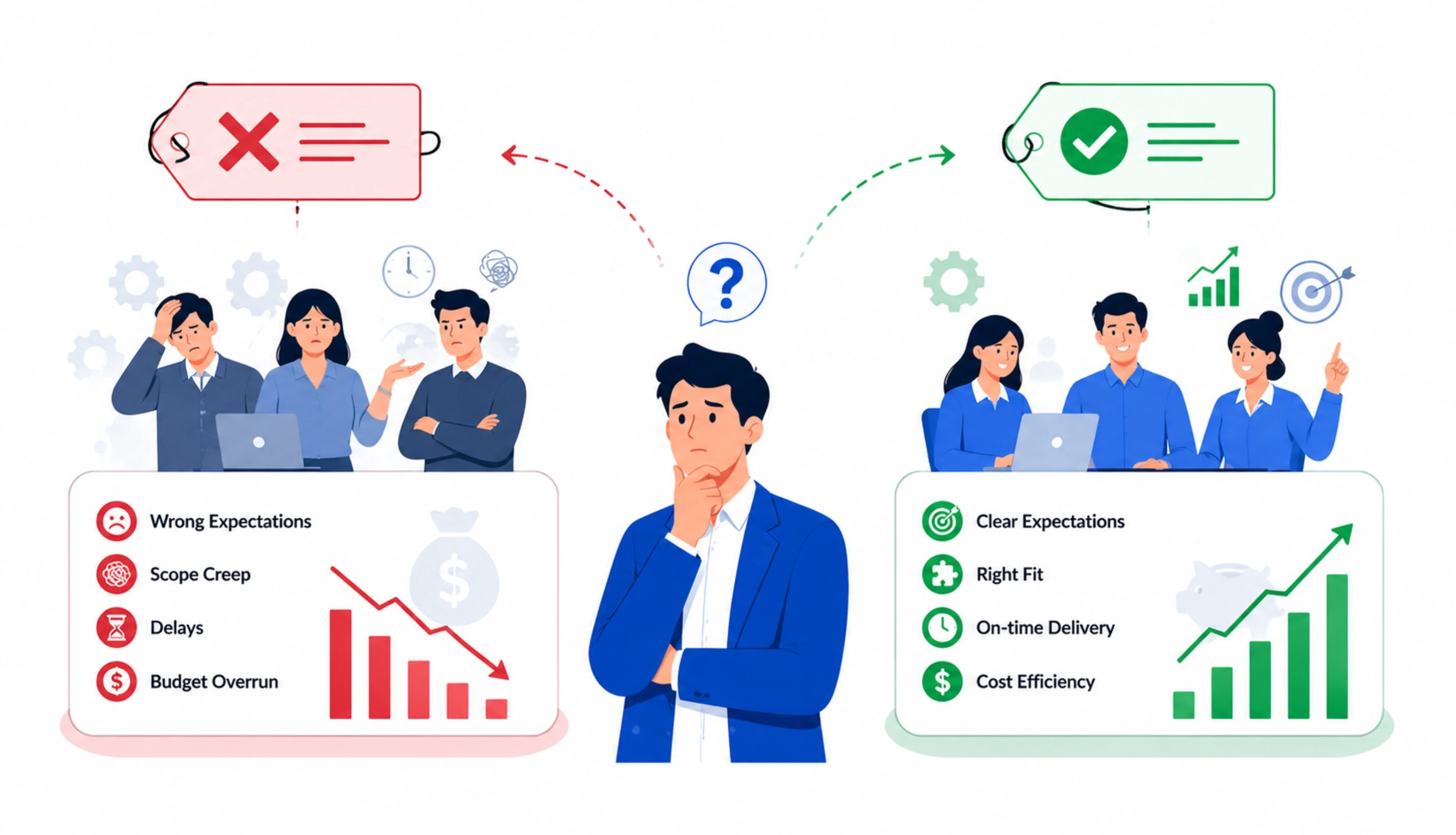
The most expensive mislabelling pattern is companies who describe what they want as 'IT outsourcing' when what they actually need is staff augmentation. The terminology shapes the vendor conversation, which shapes the proposal structure, which shapes the engagement terms. When the wrong model is in the brief, the right vendor cannot respond accurately.
Describing staff augmentation as 'IT outsourcing' |
What happens: The vendor structures a proposal around function ownership and SLA management rather than a developer integrated into the client's sprint. The client expects a developer who follows sprint direction. The vendor delivers a managed service that reports on outcomes rather than taking daily direction. The mismatch creates friction from Day 1. |
Fix: Use 'staff augmentation' when you want a developer embedded in your team, working in your sprint process, and taking daily direction from your technical lead. |
Describing project-based software outsourcing as 'staff augmentation' |
What happens: The vendor structures a proposal around providing a developer. The client expects that developer to own the delivery outcome. The developer expects to take direction. When the scope changes, the client treats it as a staff augmentation redirect; the vendor treats it as a change request. Both sides are responding to a different contract. |
Fix: Use 'software outsourcing' when you have a defined deliverable and want the vendor to own the delivery outcome. Use 'staff augmentation' when you want to direct the developer yourself. |
Conflating 'managed service' with 'staff augmentation' |
What happens: A managed service is a form of IT outsourcing where the vendor owns the ongoing operation of a function. A staff augmented developer works under the client's technical direction. The client's management overhead is very different in each case: negligible in a managed service, 2 to 3 hours per week in staff augmentation. |
Fix: If you want minimal management overhead, the dedicated team model or a managed service is more appropriate than individual staff augmentation. |
For teams evaluating which model fits their specific stage, the dedicated development teams model covers the vendor-managed team structure that sits between software outsourcing and staff augmentation. It is the right answer when clients want delivery ownership managed by the vendor but with direct visibility into sprint direction.
Still Not Sure Which Category Applies? Acquaint Softtech Operates in Software Outsourcing and Staff Augmentation.
Share a brief description of what you are building, how defined your requirements are, and how much you want to direct versus delegate. Acquaint Softtech will tell you which model fits and what the engagement looks like. No commitment required before seeing the structure.
Frequently Asked Questions
-
What is the difference between IT outsourcing and staff augmentation?
IT outsourcing transfers a defined IT function to a vendor who manages it on the client's behalf. Staff augmentation adds individual developers to the client's existing team who work under the client's direct technical direction. The key difference is accountability: in IT outsourcing the vendor owns the functional outcome, in staff augmentation the client owns the outcome and the vendor supplies the capacity.
-
What is software outsourcing?
Software outsourcing is engaging an external vendor to build a defined software deliverable to specification. The vendor takes responsibility for delivering the agreed scope to the agreed standard. It ends when the deliverable is accepted. It is appropriate when requirements are fully defined before work begins and the client wants the vendor to own delivery.
-
How do I know if I need staff augmentation or software outsourcing?
If you have strong internal technical leadership and a clear sprint process, and you want to direct the developer daily, staff augmentation is the right choice. If you have a fully defined scope and want the vendor to own delivery without daily direction from your team, software outsourcing is more appropriate. The accountability preference is the clearest signal: do you want to direct or delegate?
-
How do I brief a vendor correctly when I need staff augmentation?
Use the term 'staff augmentation' explicitly, not 'outsourcing'. Specify: the developer seniority level and stack required, the expected sprint integration process (standup, PR review, planning cadence), and that the developer will work under your technical direction. A brief that uses 'IT outsourcing' framing will produce proposals structured around managed service delivery, not embedded developer capacity.
-
How much does staff augmentation cost compared to software outsourcing?
Staff augmentation through a vetted offshore partner such as Acquaint Softtech runs $3,200 to $6,000 per month per developer depending on seniority. Software outsourcing is priced against a defined scope and typically runs $15,000 to $150,000 for a complete deliverable. For ongoing development over 6 months, staff augmentation on a monthly retainer is almost always cheaper than a sequence of fixed-price project contracts.
-
Which model gives me more control over the development process?
Staff augmentation gives the most control: the client directs the developer daily, sets sprint priorities, and owns every code decision. Software outsourcing gives moderate control: the client defines the scope and acceptance criteria, but the vendor manages execution. IT outsourcing gives the least control: the vendor manages the function to SLA with minimal client involvement in execution.
-
Is staff augmentation the same as a dedicated development team?
Not quite. Individual staff augmentation adds one developer at a time under client management. A dedicated development team is a vendor-managed team structure where the vendor manages the team composition, performance, and continuity, while the client directs the product through sprint priorities. Staff augmentation requires internal technical leadership; a dedicated team includes it as part of the engagement.
I help agencies and founders scale their tech teams with the right developers at the right time. At Acquaint Softtech, I focus on building long term partnerships and making remote hiring simple, predictable, and results driven. My goal is straightforward to help businesses grow faster with reliable dedicated developers.
Table of Contents
Get Started with Acquaint Softtech
- 13+ Years Delivering Software Excellence
- 1300+ Projects Delivered With Precision
- Official Laravel & Laravel News Partner
- Official Statamic Partner
Related Reading

Still Thinking About Staff Augmentation? Take This 5-Minute Self-Assessment
Most CTOs who are still thinking about staff augmentation after 3 months are not missing information. They are missing one decision. This 10-question self-assessment identifies exactly which one.

Acquaint Softtech
March 30, 2026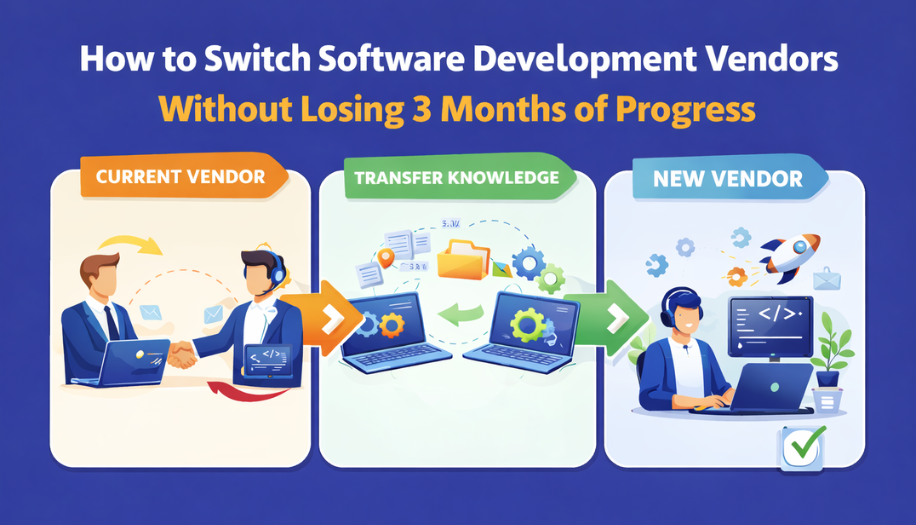
How to Switch Software Development Vendors Without Losing 3 Months of Progress
By the time you decide to switch dev vendors, you have 4 months of budget invested and no appetite for another 3 months of disruption. The structured handover below cuts the transition from 10 weeks to 3.
Ahmed Ginani
April 10, 2026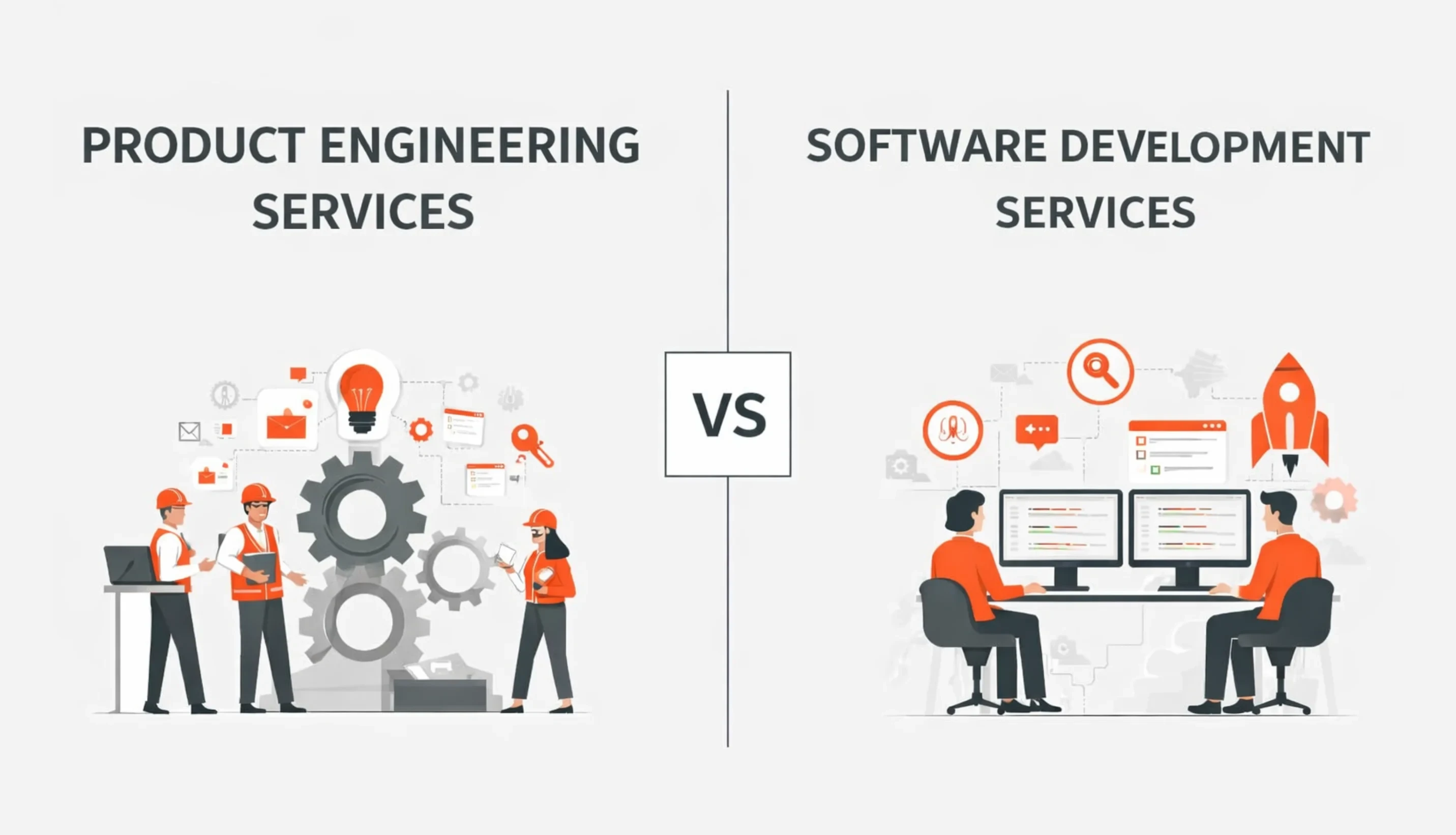
Product Engineering Services vs Software Development Services: What Is the Actual Difference?
Product engineering services and software development services appear on the same vendor websites. They are not the same thing. Here is the plain-language difference and which one your situation actually requires.
Ahmed Ginani
April 20, 2026India (Head Office)
203/204, Shapath-II, Near Silver Leaf Hotel, Opp. Rajpath Club, SG Highway, Ahmedabad-380054, Gujarat
USA
7838 Camino Cielo St, Highland, CA 92346
UK
The Powerhouse, 21 Woodthorpe Road, Ashford, England, TW15 2RP
New Zealand
42 Exler Place, Avondale, Auckland 0600, New Zealand
Canada
141 Skyview Bay NE , Calgary, Alberta, T3N 2K6