

Product Engineering Services vs Software Development Services: What Is the Actual Difference?
Product engineering services and software development services appear on the same vendor websites. They are not the same thing. Here is the plain-language difference and which one your situation actually requires.

Ahmed Ginani
I work in business development at Acquaint Softtech, a software development partner with 1,300+ projects across 13 years. Both terms appear on our website and on hundreds of competitor websites. In almost every initial client conversation, the question comes up: what is the difference? It is a fair question because the labels are used inconsistently across the industry. This article gives you the plain-language answer and the test that tells you which one your situation requires.

- Founders and CTOs evaluating vendor proposals that use these terms interchangeably
- Product managers trying to scope an engagement and not sure which service type fits
- Technical leads who need to articulate the difference to a non-technical leadership team
- Anyone who has received two vendor proposals at very different prices for what seemed like the same scope
The short version: software development services describes the execution of defined tasks. You bring the requirements, the vendor build to them. Product engineering services describes a broader engagement where the vendor contributes to shaping what is built, not just how it is built. The distinction matters because it changes the accountability structure, the team composition, and the contract terms that make sense.
Before engaging any vendor for either type of service, the quality of the brief you send determines the quality of the proposals you receive. The software development brief framework covers the 7 sections that produce comparable, accurate proposals from any vendor. Knowing which type of service to request starts with having a clear picture of what you are building.
What Software Development Services Actually Means
Software development services means: you define what needs to be built, the vendor builds it. The accountability structure is execution-focused. The vendor is responsible for delivering working code that meets defined requirements. They are not responsible for whether those requirements are the right ones.
What software development services includes
- Feature development against defined specifications
- Bug fixing and maintenance of existing code
- Version upgrades and framework migrations
- API development to a defined contract
- Integration of third-party services to a defined data model
- QA and testing against acceptance criteria
The vendor's job is to build what is specified, correctly and on time.
Scope, architecture decisions, and product strategy remain with the client.
Software development services is the right engagement type when your requirements are well-defined, your product direction is clear, and you need execution capacity. Most staff augmentation and project outsourcing engagements fall into this category. The vendor is a highly capable execution partner, not a strategic one.
What Product Engineering Services Actually Means
Product engineering is a broader engagement where the vendor contributes at the level of product thinking, not just code writing. A product engineering partner works with you to understand the problem you are solving, not just the features you have specified. They bring architecture expertise, product judgement, and often delivery ownership. Our product engineering services model is built on this structure: the vendor is a product-level partner, not a feature-level contractor.
What product engineering services adds beyond software development
- Architecture design: the vendor recommends and owns the technical structure of the product
- Product discovery: the vendor helps clarify what should be built before development starts
- Technology selection: the vendor advises on stack, tools, and infrastructure choices
- Build vs buy decisions: the vendor contributes to make-or-integrate trade-offs
- Roadmap sequencing: the vendor advises on which features to build in which order
- Long-term ownership: the vendor has accountability for the health of the product over time
The vendor's job extends beyond execution to shaping the product itself.
This requires deeper engagement, longer timelines, and a different contract structure.
Product engineering is the right engagement type when your requirements are not fully defined, when the architecture decisions are complex enough that you want a senior technical opinion before committing to a direction, or when you want the vendor to own delivery accountability rather than just execution. It is typically a longer engagement and an more expensive one. It should also produce a more architecturally sound and maintainable product.
Side-by-Side Comparison
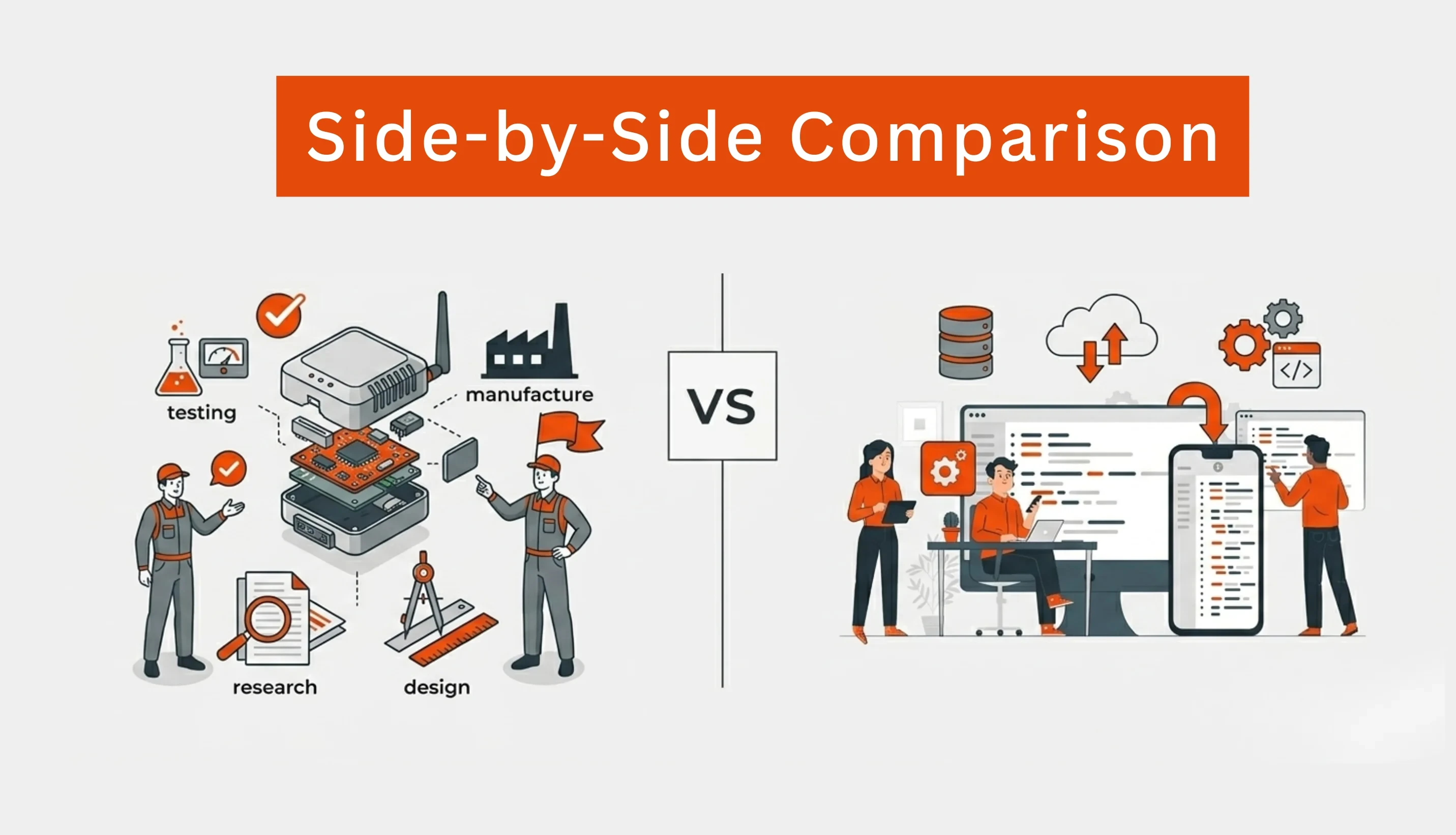
The differences are clearest when placed directly next to each other.
Dimension | Software Development | Product Engineering |
Who defines requirements | Client defines, vendor builds | Client and vendor define together |
Architecture ownership | Client owns architecture decisions | Vendor contributes to or owns architecture |
Vendor accountability | Execution: working code on time | Outcome: a product that achieves the goal |
Engagement depth | Task-level: vendor understands the feature | Product-level: vendor understands the business |
Team composition | Developers, sometimes QA | Developers, tech lead, often a product function |
Engagement length | Sprint-level to 6 months | 6 months to multi-year |
Contract structure | Statement of work or time and materials | Partnership retainer or product-ownership model |
Right when | Requirements are clear, execution is the gap | Requirements are evolving, expertise is the gap |
Cost | Lower: defined scope, predictable cost | Higher: broader scope and accountability |
For product engineering engagements at the SaaS product level, the architecture decisions that matter most are covered in the Laravel SaaS architecture guide. It covers the structural decisions from MVP to scale that a good product engineering partner should be contributing to, not just executing against.
Not Sure Which Service Type Your Situation Requires?
Tell me what you are building, how defined your requirements are, and what your timeline looks like. I will tell you whether software development or product engineering fits your situation and what the engagement structure looks like for each. This is a 15-minute conversation.
The Signals That Tell You Which Type You Need
In practice the line between these two service types is not always obvious from the inside. Here are the signals that consistently indicate which engagement type fits.
You need software development services when:
Your feature specifications are written and acceptance criteria defined before work starts.
You have a technical lead internally who owns architecture decisions and code review.
The scope is well-bounded: you know what to build and the primary gap is execution capacity.
You are extending an existing product with new features rather than building from scratch.
Your timeline is driven by a specific feature delivery target, not a product outcome.
You need product engineering services when:
You are building a new product from scratch and architecture decisions are still open.
Your requirements are evolving and you need a partner who can help shape them, not just execute them.
You do not have internal senior technical leadership to make architecture decisions.
You want the vendor to have accountability for delivery outcomes, not just task completion.
You are building something with significant technical complexity where expert input at the design level reduces risk.
The software product development service covers the full engagement model for companies building new products where the vendor contributes at both the product and execution level. If your requirements are still forming, this is the engagement structure worth exploring before committing to a standard development contract.
The Most Common Mismatch and What It Costs
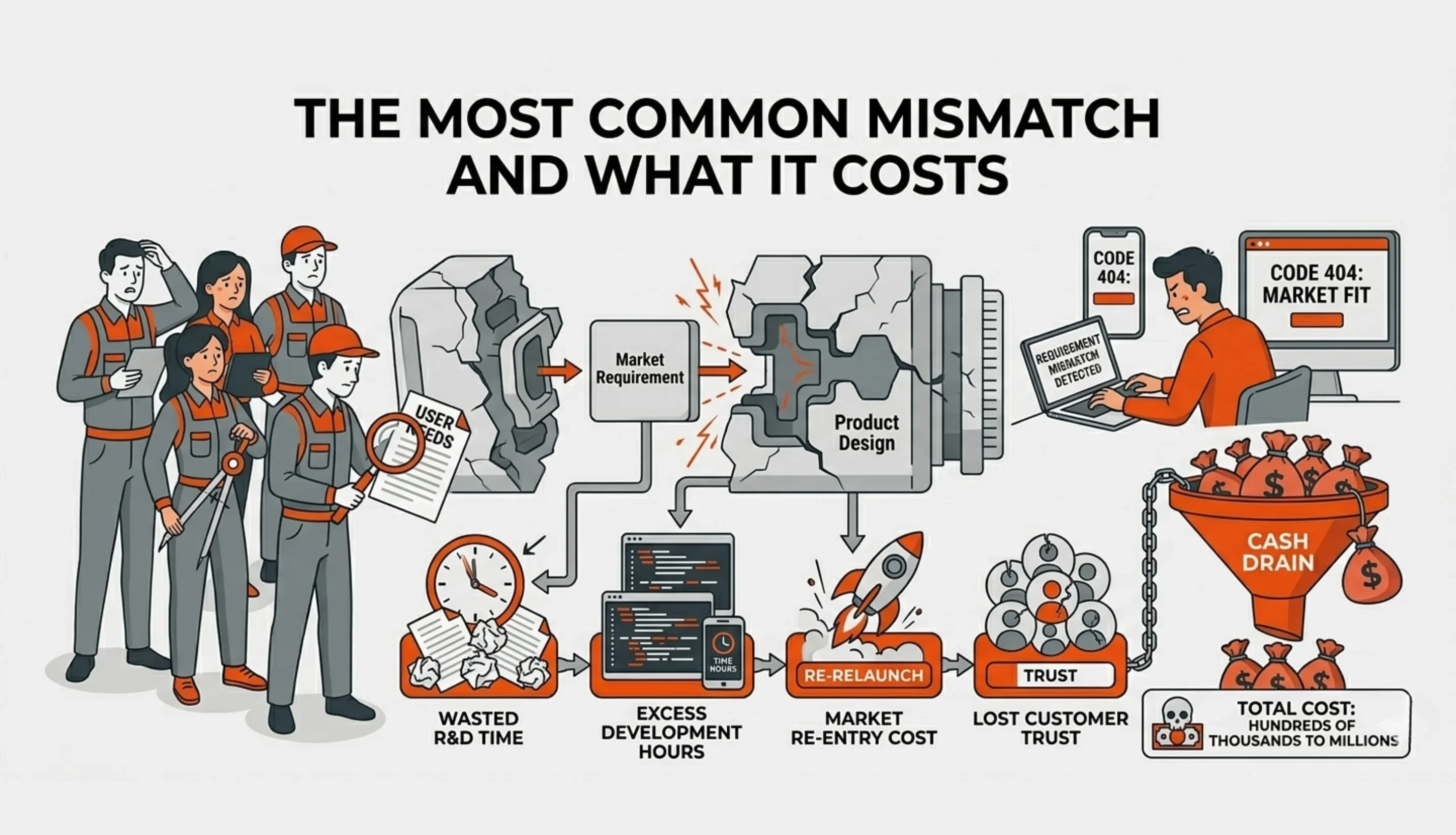
The most expensive mismatch is requesting software development services when you need product engineering. Here is how it typically plays out.
The founder sends a brief with evolving requirements |
The software development vendor quotes against what is in the brief. The brief changes. Change requests begin. The vendor builds what is asked but not what is needed. At engagement end, the product works but does not solve the problem it was built to solve. |
The CTO expects the vendor to advise on architecture |
A software development vendor executes against specifications. If the CTO expects proactive architecture advice, that expectation is not matched by a standard development contract. The vendor builds what is asked. The architectural problem is discovered at launch. |
The engagement ends and the product needs significant rework |
A software development engagement that produced technically correct code against wrong or incomplete requirements leaves the client with a product requiring significant additional investment. A product engineering engagement would have caught the misalignment before the code was written. |
For choosing the team structure that fits each engagement type, the dedicated development team model is typically right for product engineering engagements. Sustained delivery with vendor-owned team continuity and product-level context. For software development services, individual augmentation or project-based structures are often more appropriate.
How to Ask for the Right Service Type When Briefing Vendors
Most vendor briefing conversations go directly to scope and rate without establishing which type of engagement is right. These four questions establish the right engagement type before any scoping begins.
Questions | Answers |
Ask: Are my requirements well-defined enough for you to quote a fixed scope? | A vendor quoting a fixed price on evolving requirements is a red flag. A vendor who asks clarifying questions before answering is engaging at the right level. |
Ask: What role will you play in architecture decisions? | Software development vendor: they build to the architecture you define. Product engineering vendor: they recommend and own the architecture. If you need architecture input, you need the second answer. |
Ask: What is your accountability if the product does not achieve its intended outcome? | Software development: accountable for building what was specified. Product engineering: shares accountability for the product outcome. Both answers are legitimate; the question is which accountability structure you need. |
Ask: How do you handle requirements that change after the engagement starts? | Software development: change requests as additional scope. Product engineering: requirements evolution is part of the engagement model. If your requirements are still forming, the second answer is what you need. |
For the hiring model question that runs parallel to this decision, the developer hiring decision framework covers which engagement structure fits which product stage. And if your product requires technical leadership input before development begins, our virtual CTO services provide the architecture and strategy layer without the full-time hire.
Tell Us What You Are Building and We Will Tell You Which Service Type Fits.
Share your product description, how defined your requirements are, and what you need the vendor to own versus what your team will own. We will tell you whether software development or product engineering fits and what the engagement structure looks like. Fifteen minutes. No ambiguity before any proposal is written.
What Acquaint Softtech Offers Under Each Label
Both service types has a legitimate place in our engagement model. Here is what each one looks like in practice at Acquaint Softteech.
Software Development Services at Acquaint Softtech |
Staff augmentation where vetted developers join your team under your technical direction. Project-based feature delivery against defined specifications. Version upgrades and migrations with a defined scope. The client owns product direction and architecture. We own execution quality and timeline. |
Product Engineering Services at Acquaint Softtech |
Full product builds from discovery through launch. Architecture design and technology selection as part of the engagement scope. Dedicated team structures where we own delivery continuity and quality over a sustained engagement. Virtual CTO services where technical strategy and architecture are part of what the engagement delivers. The client owns the business problem. We own the technical solution. |
The honest answer on which type of engagement you need is the one that matches your actual situation, not the one with the higher price point. The staff augmentation vs agency vs Upwork comparison covers the cost structure differences between these models in detail. And if you are deciding between in-house and outsourced development, the in-house vs staff augmentation comparison covers that decision with actual numbers.
Know Which Service Type You Need? Here Is What Engaging Acquaint Looks Like.
For software development services: share your brief and we have a developer profile and rate in front of you within 48 hours. For product engineering: a 30-minute discovery call, then a proposed team structure and engagement model within 72 hours. No commitment before you have seen exactly what the engagement covers.
Frequently Asked Questions
-
Is product engineering the same as product management?
No. Product management defines what to build and why, based on user research and business strategy. Product engineering designs and builds the technical product to deliver those outcomes. In a product engineering engagement the vendor contributes to the technical how and advises on feasibility and sequencing of the what, but they do not replace the client's product management function.
-
Can the same vendor offer both software development and product engineering?
Yes. Most established firms offer both, with the distinction being the level of engagement depth and accountability. The four questions in this article help you establish which type of engagement you are actually getting before you sign, regardless of the label the vendor applies.
-
How do I know if my requirements are defined well enough for software development services?
A useful test: could you hand your brief to a developer who has never spoken to you and expect them to build the right thing? If yes, your requirements are defined enough. If no, you need either a discovery phase to sharpen the requirements or a product engineering engagement where requirements refinement is part of what the vendor delivers.
-
Is product engineering more expensive than software development?
Typically yes for the same volume of development work. The higher cost reflects broader accountability: architecture ownership, product input, and delivery outcomes rather than just execution. Whether the premium is worth it depends on whether the product would benefit from that additional input. For early-stage products with evolving requirements, the cost of not having product engineering input frequently exceeds the premium of engaging it.
-
What is the typical duration of a product engineering engagement?
Product engineering engagements run 6 months minimum and often 12 to 24 months for SaaS products in active development. The value compounds over time as the vendor accumulates product context, which makes architecture decisions faster and more accurate.
-
How do I evaluate whether a vendor genuinely offers product engineering or just relabels standard development?
Ask the four questions in this article. A genuine product engineering vendor will say they contribute to architecture decisions, share accountability for product outcomes, and handle requirements evolution as part of their model, not as change requests. A vendor relabelling standard development services will reveal execution-only accountability when pressed on these questions.
-
Can product engineering services replace a CTO?
Partially. A product engineering partner can fill the architecture, technology selection, and technical strategy functions a CTO provides. They cannot replace a CTO's organisational leadership, team management, or long-term institutional presence. For pre-Series A companies, product engineering combined with virtual CTO services often covers the technical leadership gap without the full-time hire.
I help agencies and founders scale their tech teams with the right developers at the right time. At Acquaint Softtech, I focus on building long term partnerships and making remote hiring simple, predictable, and results driven. My goal is straightforward to help businesses grow faster with reliable dedicated developers.
Table of Contents
Get Started with Acquaint Softtech
- 13+ Years Delivering Software Excellence
- 1300+ Projects Delivered With Precision
- Official Laravel & Laravel News Partner
- Official Statamic Partner
Related Reading
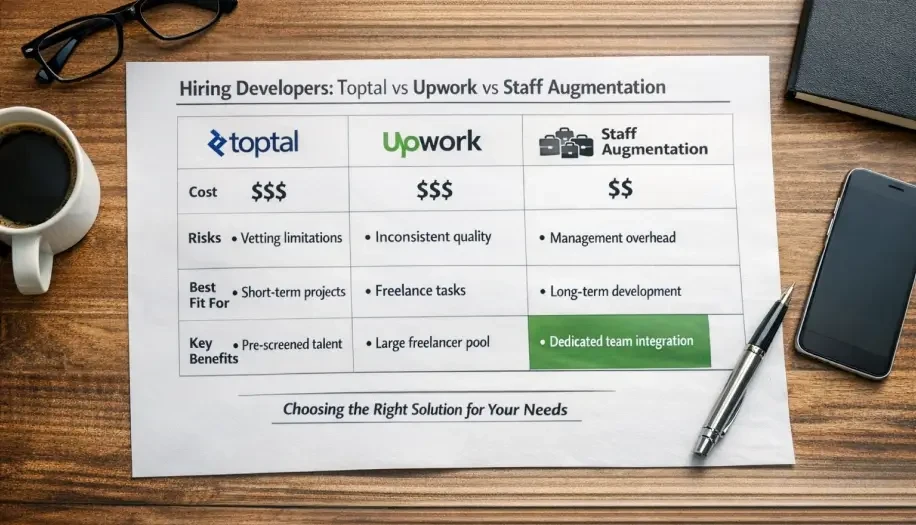
Toptal vs Upwork vs Staff Augmentation: An Honest CTO's Guide for 2026
Toptal, Upwork, and staff augmentation each solve a different problem. This honest vendor-side guide covers what each model actually costs, where each one breaks down, and which fits your situation.

Acquaint Softtech
March 16, 2026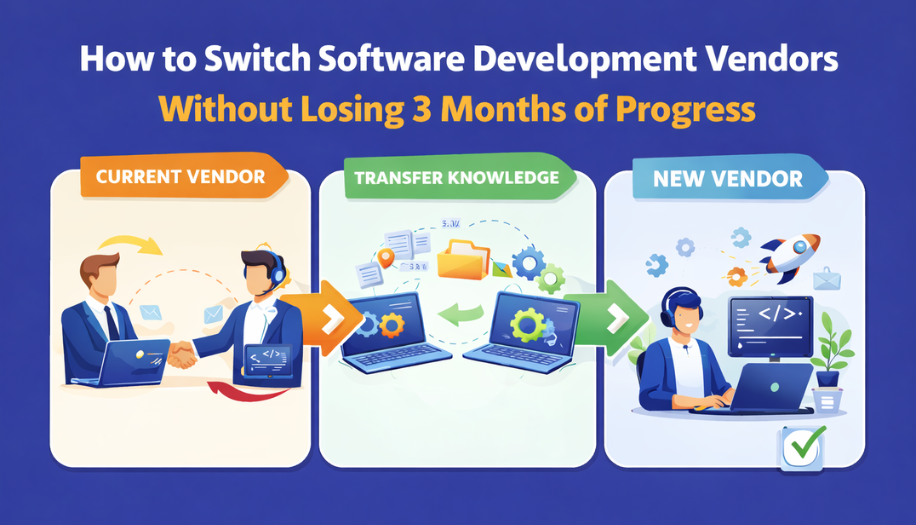
How to Switch Software Development Vendors Without Losing 3 Months of Progress
By the time you decide to switch dev vendors, you have 4 months of budget invested and no appetite for another 3 months of disruption. The structured handover below cuts the transition from 10 weeks to 3.
Ahmed Ginani
April 10, 2026
How to Choose a Software Development Company in 2026
Every software development company proposal looks good on page one. The rate is reasonable. The timeline sounds achievable. The case studies are polished. Here is the framework that tells you what is actually behind it.
Ahmed Ginani
April 6, 2026India (Head Office)
203/204, Shapath-II, Near Silver Leaf Hotel, Opp. Rajpath Club, SG Highway, Ahmedabad-380054, Gujarat
USA
7838 Camino Cielo St, Highland, CA 92346
UK
The Powerhouse, 21 Woodthorpe Road, Ashford, England, TW15 2RP
New Zealand
42 Exler Place, Avondale, Auckland 0600, New Zealand
Canada
141 Skyview Bay NE , Calgary, Alberta, T3N 2K6