

Does Your Business Need a Mobile App? 3 Clear Signs in 2026
Your business likely needs a mobile app if customers use you often and repeatedly, if you need device features a website cannot reach, or if a smoother mobile experience would directly lift sales or loyalty. If none of those apply, a fast mobile website or a Progressive Web App is usually the better spend. The honest test is whether an app would earn back its build and yearly upkeep, not whether competitors have one.

Mukesh Ram
As the Founder and CEO at Acquaint Softtech, I turn away more app projects than I take on, and I think that is the most useful thing I can tell you at the start of an article about whether you need one. A mobile app is expensive to build and, more importantly, expensive to keep alive, because it commits you to the yearly platform-update cycle for as long as it exists. So the real question is never whether an app would be nice to have, since almost anything would be nice to have.
It is whether an app would earn back that cost, and for a large share of the businesses that ask us, the honest answer is that a fast mobile website or a Progressive Web App would serve them better for a fraction of the money. When the answer is genuinely yes, though, an app is transformative, and this article is about telling the two situations apart before anyone spends a currency unit on mobile app development.

- You are wondering whether your business actually needs a mobile app.
- Competitors have apps, and you feel pressure to match them.
- You are not sure whether an app or a good mobile site is the right spend.
- You want to know what an app really costs before committing.
- You want an honest answer, including the possibility that you do not need one.
The version of this piece argued for an app in every case, which is the instinct of a company that builds them and the wrong way to help you decide. This rewrite keeps its three signs, because they are the right signals, and adds what it left out: the honest counter-cases, the cheaper alternatives, and a straight account of when the answer should be no.
The Real Question Behind This One
The question is not whether an app would help, but whether it would earn back what it costs to build and maintain. That reframing is what separates a good decision from a fashionable one.
Mobile now dominates how people use the internet. Industry figures compiled by sources such as DataReportal show the majority of web activity happening on phones, and mobile's share of overall traffic is tracked by services like StatCounter.
But that fact argues for a great mobile experience, which is not the same thing as a native app. The mistake the original made, and that many businesses make, is treating strong mobile usage as automatic proof that they need an app, when often it is proof they need a better mobile site. The three signs below are how you tell the difference.
Sign 1: Customers Use You Often and Repeatedly

An app earns its place when customers interact with you frequently enough that a home-screen icon and instant access genuinely save them effort. Frequency is the strongest single signal.
A bank, a food-delivery service, a fitness tracker, a loyalty-driven retailer: these are used often, and the friction an app removes, no typing a web address, instant load, a saved session, adds up across hundreds of visits. The original was right that repeat engagement matters.
The counter-case it missed is just as important: if customers deal with you once a year, or a handful of times ever, an app icon they never open is wasted money and they will likely delete it. Book a hotel twice a year, and you use the website; check your steps daily, and you want the app. Ask honestly how often a real customer would open yours.
Sign 2: You Need What Only a Device Can Do

An app is justified when your service depends on hardware or capabilities a website cannot reliably reach. This is the sign with the clearest yes-or-no answer.
Deep camera integration, precise background location, Bluetooth to physical devices, reliable offline operation, heavy on-device processing, tight integration with the phone's own features: where these are central to what you do, a native app is not a preference but a requirement. The nuance for 2026 is that the line has moved.
Modern mobile browsers and Progressive Web Apps can now do far more than they once could, including push notifications and offline use, so some things that used to demand a native app no longer do.
The question is not whether you touch a device feature at all, but whether you depend on one a web app still cannot reach well, and if you are unsure which side of that line you are on, it is exactly the kind of thing we settle early in a discovery workshop.
Not sure whether your idea actually needs a native app?
Tell me what you are trying to build, and I will tell you honestly whether it needs an app, a PWA, or just a better mobile site, and what each would cost.
Sign 3: A Better Mobile Experience Would Lift Sales

An app makes sense when a smoother, faster mobile experience would measurably increase sales, retention, or loyalty. This is the sign that has to be argued with numbers, not hope.
For a store with loyal repeat buyers, an app can lift conversion through saved payment, one-tap reorder, personalised offers, and push reminders that a website cannot send. The original was right that experience drives revenue. What it did not say is that you should estimate the lift before you build, not after.
If an app would plausibly raise repeat purchase or average order value enough to cover its cost within a sensible period, it is a sound investment; if the gain is speculative, a cheaper mobile improvement is the wiser first step. Our guide to mobile commerce development covers how to think about that lift for a store specifically.
App, PWA, or Mobile Site?
Before building a native app, weigh it honestly against a Progressive Web App and a plain fast mobile site, because one of those is often the right answer. These are three options, not two.
Option | Best when | Rough cost |
Fast mobile website | Occasional use, information, reach | Lowest |
Progressive Web App | Frequent use, offline, push, budget | Low to medium |
Native app | Device features, peak performance | Highest |
Native plus web | Broad reach and deep features | Highest, staged |
A Progressive Web App deserves a serious look before any native build, because it delivers a home-screen icon, offline access and push notifications from your website, at a fraction of native cost, as web.dev's PWA material sets out.
For many businesses that reach Sign 1 but not Sign 2, a PWA is the correct answer, and only genuine device-feature dependence justifies the jump to native. Choosing well here is the single biggest cost decision in the whole project.
When You Do Not Need an App
If none of the three signs clearly applies, you probably do not need a native app, and building one anyway is a common and expensive mistake. This is the section the original left out, and it is the one that protects you.
You do not need an app if customers use you rarely, if a website does everything your service requires, if you are building one only because a competitor has one, or if the budget would leave nothing for keeping it maintained afterwards. That last point matters most. An unmaintained app decays quickly, falls foul of the app stores' rules within a couple of years, and ends up worse than no app at all.
Building an app you cannot afford to maintain is not a smaller version of the right decision; it is the wrong decision. When the signs point to no, the right move is usually a fast, well-built mobile site, and honestly, a company that tells you that is more useful to you than one that sells you an app regardless.
How to Know If It Worked
If you do build an app, decide in advance how you will judge whether it was worth it, because an app nobody measures is an app nobody can justify keeping. Three numbers tell you most of it.
Metric | What it tells you | A healthy sign |
Retention after 30 days | Whether people keep using it | Users return, not just install |
Repeat engagement | Whether it earned its icon | Regular, unprompted opens |
Revenue or cost effect | Whether it pays for itself | Lift above build and upkeep |
Installs are a vanity number; retention and repeat use are the truth. An app that is downloaded once and abandoned has cost you money and delivered nothing, whereas one that people open weekly without a reminder is doing its job.
Set these targets before launch, watch them after, and be willing to conclude honestly if the answer is that the app was not the right call, because that conclusion is cheaper to reach through data than through years of quiet upkeep on something nobody uses.
Proof: Apps Built Because They Were Needed

The apps worth building are the ones a business genuinely needed, and the mark of a good partner is a record of building those and maintaining them. Ours is verifiable.
Acquaint Softtech, verifiable delivery record 1,300+ delivered projects across 13+ years. 95% on-time sprint delivery. Average engineer tenure beyond 24 months. 4.9 out of 5 across verified Clutch reviews. NDA before work begins and 100% client ownership of everything produced. The relevant commitment here is honesty of scope: we will tell you when a PWA or a better website beats an app, because a project that should not have been built helps nobody. |
That posture is not charity; it is how long relationships are built. A business we steer away from an unnecessary app is a business that trusts our advice on the next decision, and over thirteen years that trust is worth far more than one oversold project.
When an app is genuinely the right call, the same record shows we deliver and maintain it properly across the platform changes that catch neglected apps out. Our case studies and client testimonials cover the engagements where an app was the right answer and earned its place.
Want a straight answer on whether to build an app?
Book a free 30-minute call, and I will assess your case against the three signs and tell you honestly which route fits, with the cost of each.
What a Mobile App Costs
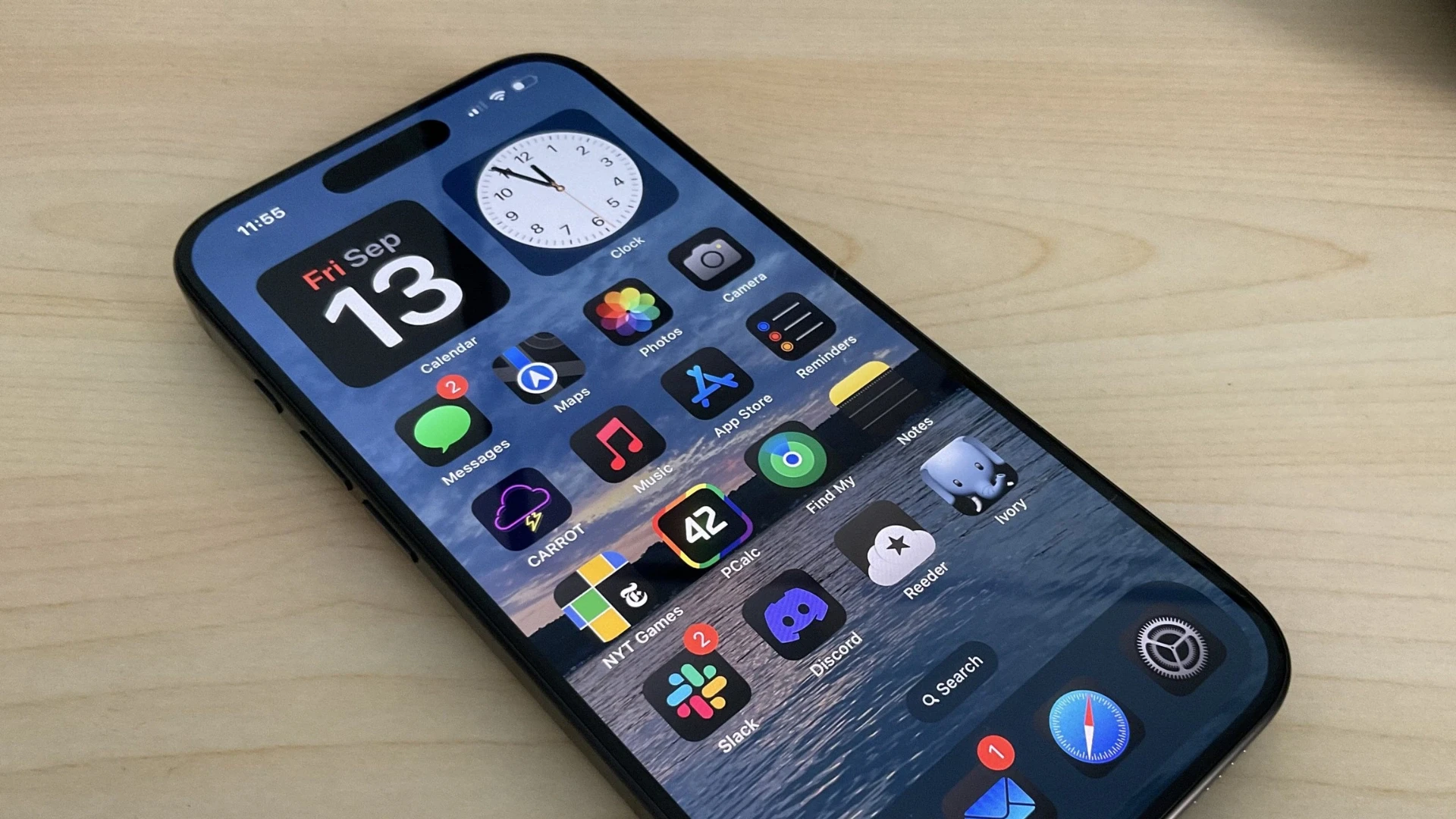
An app's true cost is the build plus the yearly upkeep, and forgetting the second number is how most app budgets go wrong. These are prevailing ranges rather than fixed quotes.
Route | What it suits | Estimated cost (USD) |
Fast mobile website | Reach and occasional use | 3,000 to 15,000 |
Progressive Web App | Frequent use without native needs | 5,000 to 30,000 |
Simple native app | One platform, few features | 20,000 to 60,000 |
Standard app with backend | Real product, both platforms | 60,000 to 150,000 |
Yearly maintenance | Keeping any app alive | 15 to 20% of build, per year |
The maintenance row is the one that changes decisions. An app is not a purchase; it is a commitment to the platform's yearly release cycle, and a business that can fund the build but not the upkeep should not build the app.
That single honest calculation prevents more waste than any feature decision, and it is why a PWA, with lower build and upkeep alike, is so often the right first step. For the full sequence of an app project, our 10 steps of the mobile app development process walk through it.
Where the work is done | Senior rate | Relative cost |
New York, USA | USD 110 to 200 / hour | Highest |
United States (national) | USD 90 to 170 / hour | Very high |
Australia | AUD 110 to 200 / hour | High |
United Kingdom | GBP 65 to 130 / hour | High |
Europe (EU) | EUR 70 to 140 / hour | High |
India (Acquaint Softtech) | USD 25 to 49 / hour | Up to 40% lower |
Offshore delivery changes what is affordable, which sometimes tips a marginal case from no to yes, and just as often lets a business build the right thing and still fund its upkeep. Where you want to test demand before committing to a full build, working with an MVP development company helps you validate your idea with real users instead of assumptions.
An MVP answers the need-an-app question with real feedback rather than a guess, and adding capacity through IT staff augmentation is often the quickest way to do it.
Test whether people want your app before you build it all
Book a free 30-minute call, and I will scope an MVP that proves demand first, with a fixed cost and timeline in your own currency.
Frequently Asked Questions
-
How do I know if my business needs a mobile app?
You likely need one if customers use you often and repeatedly, if you depend on device features a website cannot reach, or if a better mobile experience would measurably lift sales. If none apply, a website or PWA is usually better.
-
Do I need an app if my competitors have one?
Not on its own. Matching a competitor is not a business reason. Build an app when the three signs apply to your customers, not because someone else built one.
-
Is a mobile website enough instead of an app?
Often yes. For occasional use or information, a fast mobile website serves better and costs far less. An app earns its place with frequent use or device-feature needs.
-
What is the difference between an app and a PWA?
A native app is installed from an app store and can use deep device features. A PWA installs from your website and offers home-screen access, offline use, and push at a fraction of the cost.
-
How much does a mobile app cost?
A simple native app runs about USD 20,000 to 60,000, and a standard app with a backend USD 60,000 to 150,000. Budget another 15 to 20 percent of the build cost per year for maintenance.
-
When should I not build a mobile app?
When customers use you rarely, a website does the job, you are only matching a competitor, or you cannot fund the yearly upkeep. An unmaintained app is worse than none.
-
What ongoing cost does a mobile app have?
Around 15 to 20 percent of the build cost per year, covering platform updates, store compliance, device testing, and fixes. An app not maintained falls off the stores within a couple of years.
-
How do I measure whether my app was worth building?
Track retention after 30 days, repeat engagement, and the revenue or cost effect. Installs are a vanity number; people returning unprompted is the real sign it earned its place.
-
Should I build a native app or cross-platform?
Native when the app leans heavily on device features or peak performance. Cross-platform when you need both platforms on one budget and the app is mostly screens and data.
-
What is the cheapest way to test if I need an app?
An MVP or a PWA. Both let real users tell you whether the app idea has demand before you commit to a full native build across two platforms.
I love to make a difference. Thus, I started Acquaint Softtech with the vision of making developers easily accessible and affordable to all. Me and my beloved team have been fulfilling this vision for over 15 years now and will continue to get even bigger and better.
Table of Contents
Get Started with Acquaint Softtech
- 13+ Years Delivering Software Excellence
- 1300+ Projects Delivered With Precision
- Official Laravel & Laravel News Partner
- Official Statamic Partner
Related Blog
.webp "Building a Native Mobile App for Your SaaS: Strategic and Technical Trade-Offs")
Building a Native Mobile App for Your SaaS: Strategic and Technical Trade-Offs
A SaaS mobile app lets users access your platform on iOS and Android with push notifications, offline access, and a native-like experience. For most SaaS businesses, React Native is the most cost-effective choice, using one codebase for both platforms.

Zubair Pateljiwala
July 15, 2026
Rome Was Not Built in a Day: The Journey to Developing a Unicorn SaaS
Building a unicorn SaaS company is a marathon, not a sprint. Just like Rome, great products aren’t built overnight. From refining your MVP to scaling for growth.
Mukesh Ram
September 26, 2024-(1).webp "How much will your web app development cost?")
How much will your web app development cost?
Web application development cost typically ranges from $15,000 to $200,000+ globally (roughly £15,000 to £150,000+ in the UK), depending on scope, features, and team location. A simple MVP runs $10,000 to $50,000, a mid-scale business web app $50,000 to $150,000, and a complex or enterprise platform $150,000 to $300,000+. Hiring a remote team can cut labor costs sharply, and at Acquaint Softtech, an MVP can reduce your project cost by up to 60%.
Mukesh Ram
November 11, 2022India (Head Office)
203/204, Shapath-II, Near Silver Leaf Hotel, Opp. Rajpath Club, SG Highway, Ahmedabad-380054, Gujarat
USA
7838 Camino Cielo St, Highland, CA 92346
UK
The Powerhouse, 21 Woodthorpe Road, Ashford, England, TW15 2RP
New Zealand
42 Exler Place, Avondale, Auckland 0600, New Zealand
Canada
141 Skyview Bay NE , Calgary, Alberta, T3N 2K6