

Mobile Commerce Development: Native Apps, React Native, and PWAs for E-Commerce
Mobile commerce development is the practice of building shopping experiences for mobile devices through native apps, cross-platform React Native apps, or Progressive Web Apps. Native apps offer the highest performance and retention, React Native delivers both platforms from one codebase at 40 to 60 percent lower cost, and PWAs give app-like speed in the browser with zero install friction.

Manish Patel

- You know mobile drives most of your traffic and want to capture more of it.
- You are deciding between a native app, React Native, and a PWA.
- You want app-like speed without forcing customers through an app store.
- You need to know what each approach costs and how long it takes to build.
- You operate in the USA, UK, Europe, UAE, or India and sell to mobile shoppers.
Introduction
Most e-commerce brands already get the majority of their traffic from phones, yet many still treat mobile as a shrunken version of the desktop site. That mismatch is expensive, because mobile shoppers behave differently and abandon faster when the experience is not built for them. The performance gap is stark. Apps convert at around 3.5 percent against roughly 2 percent for mobile web, and apps see far lower cart abandonment, which is why the build decision, native, React Native, or PWA, directly shapes revenue. Acquaint Softtech builds all three approaches, with dedicated React Native developers who ship cross-platform shopping apps from a single codebase at a fraction of native cost and timeline.
The market backs the investment. Global mobile app revenue is expected to exceed 935 billion dollars by 2026, and digital wallets now process around 10 trillion dollars globally as payments shift from cards to mobile-first methods.
According to Statista's mobile app revenue forecast, app downloads and spending continue climbing year over year, confirming that a strong mobile experience is now a baseline expectation rather than a competitive edge. The strategic nuance is that this is no longer purely a technical choice. Native apps prioritize depth and retention, PWAs prioritize reach and frictionless first purchase, and React Native balances both, so the decision follows business goals, not engineering fashion.
As a CIO at Acquaint Softtech, breaks down each approach and when to use it. It expands on our guide to E-commerce and D2C software development. It draws on Acquaint Softtech's record of 1,300+ projects across 20+ industries, including a mobile-first PWA storefront detailed later, backed by a 4.9/5 rating from 50+ verified Clutch reviews and a first engineer deployed within 48 hours.
Why mobile commerce decides your revenue, not just your traffic

Mobile commerce app development e-commerce, or m-commerce, is buying and selling through mobile devices, and it now accounts for the majority of e-commerce traffic and a fast-growing share of sales. Getting the mobile experience right is no longer optional for any serious brand.
The reason it drives revenue is conversion. A mobile experience built for small screens, touch, and speed converts far better than a desktop site squeezed onto a phone, and the difference compounds across every visitor a brand pays to acquire. Acquaint Softtech's software product development team treats mobile as the primary surface, designing the commerce experience for the phone first and scaling up to desktop, rather than the reverse.
Apps win on retention, web wins on reach
Native and cross-platform apps drive higher engagement and repeat purchases, while mobile web and PWAs win on reach and first-time acquisition. The strongest strategies use both: web to acquire, apps to retain high-value customers. The React-based frontends behind fast mobile web and PWA experiences are built by Acquaint Softtech's MERN stack developers, optimized specifically for mobile conversion flows.
Native apps, explained
A native app is software built specifically for one operating system, iOS in Swift or Android in Kotlin, giving it the deepest access to device hardware, the smoothest performance, and full alignment with each platform's design guidelines.
Native is the right choice when performance, animation, offline depth, and device features like camera, biometrics, and rich push notifications are central to the experience, and when retention of high-value customers justifies the higher build cost. Acquaint Softtech's software product development team builds native apps when a brand needs maximum performance and platform-perfect UX, typically for high-engagement, design-intensive shopping experiences. You can also scale your engineering capacity with hire mean stack developers when you need additional full-stack expertise to accelerate delivery without compromising quality.
The native tradeoff
The cost of native is two separate codebases, iOS and Android, which means higher build cost, longer timelines of 6 to 12 months for an MVP, and 15 to 20 percent of development cost annually to maintain each platform. For brands that want native-grade quality on a tighter budget, Acquaint Softtech's Native developers deliver near-native performance from one shared codebase, which the next section explains.
React Native and cross-platform development
React Native lets a team build one codebase that runs as a real app on both iOS and Android, sharing most of the code while still accessing native device features. It is the most popular cross-platform choice for e-commerce in 2026.
The economics are the headline. React Native cuts development cost by 40 to 60 percent versus building separate native apps, ships an MVP in 3 to 6 months instead of 6 to 12, and reduces maintenance by 30 to 50 percent with one codebase. Acquaint Softtech's React Native developers build production shopping apps with this approach, the same framework behind apps from Shopify, Walmart, and Instagram, balancing cost, speed, and near-native quality.
React Native or Flutter?
React Native suits teams already invested in React and JavaScript, while Flutter offers highly consistent UI across platforms. Both are strong; the choice usually follows your existing stack and talent rather than raw capability.
For brands that prefer the Flutter route, Acquaint Softtech's Flutter developers deliver the same cross-platform cost advantage with Dart and a single, pixel-consistent codebase.
Building a mobile shopping experience?
Acquaint Softtech builds native, React Native, and PWA commerce apps for clients across the USA, UK, Europe, UAE, and India. Your first mobile engineer deploys within 48 hours.
Progressive Web Apps for e-commerce
A Progressive Web App is a website that behaves like an app: it loads instantly, works offline, sends push notifications on most platforms, and can be installed to the home screen, all delivered through the browser with no app-store download. For e-commerce, the PWA advantage is reach and frictionless acquisition. Every page has a URL, is crawlable for SEO, and can even be cited by AI search, while load times drop dramatically, Forbes saw a 12 percent readership lift after going PWA.
PWAs shine in low-bandwidth markets
PWAs are especially powerful in emerging markets and across the UAE and India, where data costs and network speed matter. Konga in Nigeria cut first-load data use by 92 percent after migrating to a PWA, expanding its reach dramatically.
The React frontend and service-worker architecture behind these PWAs is built by Acquaint Softtech's MERN stack developers, tuned for instant loads even on slower connections. How a PWA connects to a headless commerce backend is covered in our E-Commerce Development Company Services page.
PWA vs native vs React Native, compared
The honest answer is that there is no universal winner, only the right fit for your goals. Native maximizes performance and retention, PWAs maximize reach and minimize cost, and React Native sits between them, delivering both platforms affordably. A practical pattern many brands use: launch a PWA first for frictionless acquisition and SEO reach, then add a React Native or native app later for retention once a base of repeat, high-value customers justifies the investment.
Acquaint Softtech's software product development team runs a short discovery to match the approach to your goals, budget, and customers, rather than defaulting to whichever technology is trendy. You can also strengthen execution by scaling your talent base through Hire AI ML Engineers when advanced AI and machine learning capabilities are needed.
A simple decision rule
Choose PWA for reach, speed, and budget; choose native for performance-heavy, retention-focused experiences; choose React Native when you want both platforms with near-native quality at a fraction of native cost and timeline.
Mobile commerce development cost and timeline
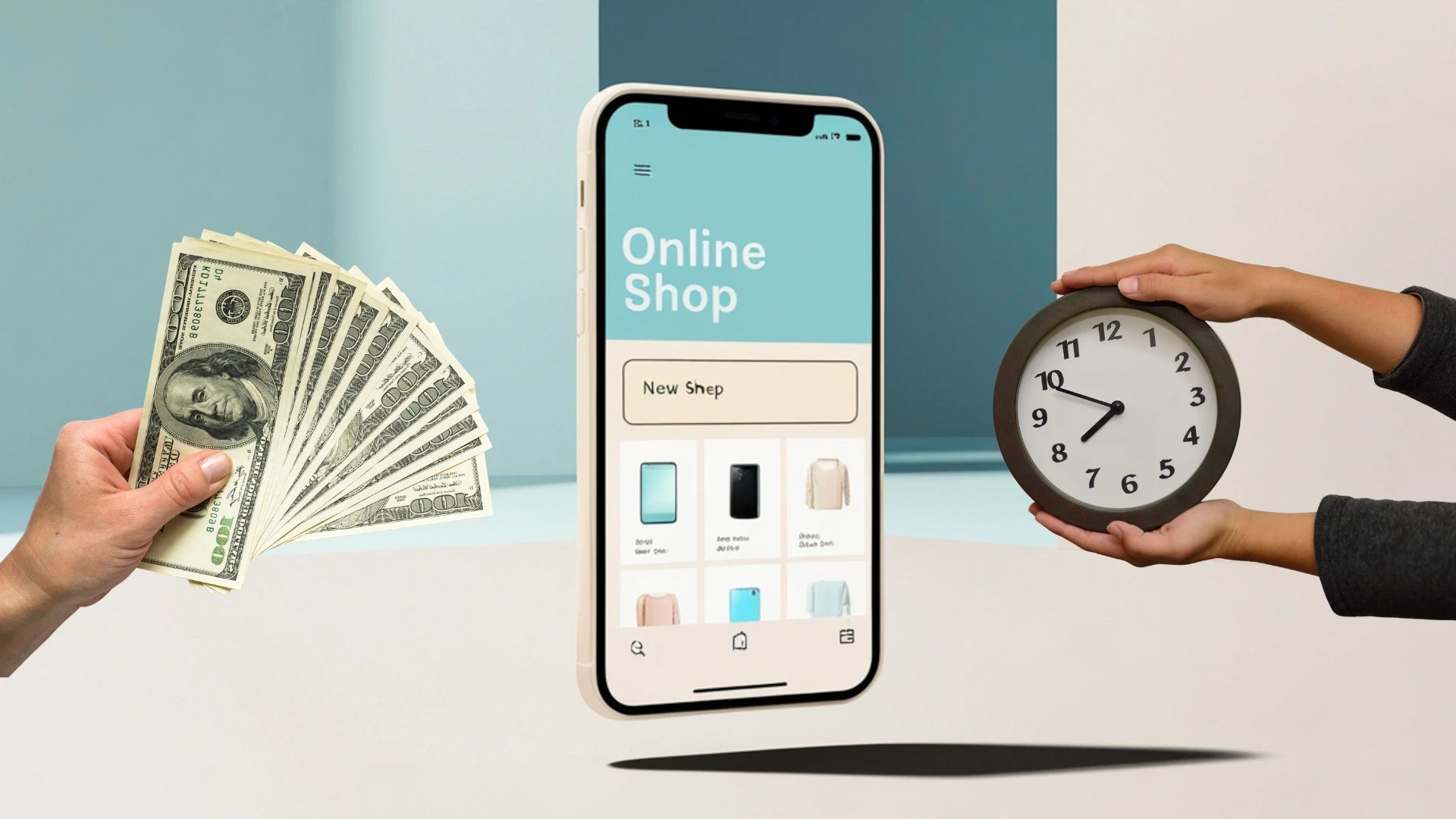
Cost tracks directly to the approach. A PWA is the most affordable because it is one web codebase; native is the most expensive because it is two separate builds, and React Native sits in between with a single cross-platform codebase supported through strategic guidance like Acquaint Softtech virtual CTO services. With Acquaint Softtech, a PWA storefront starts around 15,000 to 40,000 dollars, a React Native shopping app runs 30,000 to 80,000 dollars by scope, and native builds cost more, all at up to 40 percent below Western-agency rates. Acquaint Softtech delivers these through its React developers at 25 to 49 dollars per hour, with a 95 percent on-time sprint delivery record and phased budgets that prove value early.
Timeline by approach
A PWA typically launches in 2 to 4 months, a React Native app in 3 to 6 months, and a native iOS-plus-Android build in 6 to 12 months. Cross-platform is the fastest route to both app stores at once. Teams that need mobile engineers quickly can scale through Acquaint Softtech's staff augmentation services, which deploy vetted React Native and Flutter developers into the build within 48 hours.
Mobile-first design and performance that converts
Mobile-first design means building the experience for the smallest screen first, then scaling up, because a layout designed for desktop and shrunk down almost always frustrates the thumb-driven, on-the-go mobile shopper who makes most purchases.
Performance is the other half. Over half of mobile visitors leave a page that takes more than three seconds to load, so speed, achieved through caching, image optimization, and lazy loading, is a direct conversion lever, not a technical nicety. Acquaint Softtech's product development team engineers mobile speed and touch-optimized UX into every build, treating sub-three-second loads as a hard acceptance criterion.
Checkout is where mobile loses sales
Mobile checkout abandonment runs higher than desktop, so one-tap payments like Apple Pay and Google Pay, address auto-fill, and guest checkout are essential to close the gap and turn mobile intent into completed orders. The fast, reliable mobile checkout and payment flows behind this are built by Acquaint Softtech's Laravel developers, with PCI-aligned integration and one-tap wallet support. How mobile checkout connects to the full payment layer is covered in the Why Develop Your E-Commerce Store With Laravel Bagisto guide.
Case study: a mobile-first PWA storefront, delivered
The clearest way to understand mobile commerce engineering is a real build that shipped. This engagement from Acquaint Softtech's portfolio shows a slow, mobile-unfriendly store rebuilt as a fast Progressive Web App that performs like an app.
Case Study: A Mobile-First PWA Storefront, Delivered
A lighting retailer's slow, mobile-unfriendly store rebuilt as a fast Progressive Web App in React. | From the Acquaint Softtech portfolio
What the Client Needed
• A fast, mobile-first storefront for a large product catalog
• An app-like experience without forcing an app-store download
• Consistent performance across phones, tablets, and desktop
What Acquaint Delivered
A Progressive Web App storefront built in React for instant page loads
A decoupled, API-driven backend feeding the PWA and external systems
Offline-capable browsing and home-screen installation without app stores
An SEO-preserving URL migration so search rankings carried over
What makes this strong proof is the outcome the approach made possible: app-like speed and offline browsing delivered straight from the browser, with no app-store friction, so the brand reached and converted mobile shoppers it was previously losing to slow load times. That balance of reach and performance is exactly what a well-built PWA delivers, which Acquaint Softtech's software product development team engineers around each brand's catalog and customer base from the ground up. Clients who later add a native or cross-platform app for retention choose Acquaint Softtech's dedicated development team model, keeping the same engineers across web and mobile. A second custom build is documented in our B2B E-Commerce Marketplace case study.
Want a mobile experience that converts as well as it looks?
Acquaint Softtech builds and scales native, React Native, and PWA commerce experiences for clients across the USA, UK, Europe, UAE, and India at $25 to $49 per hour, up to 40 percent below Western agency rates.
How to get started and what the first 48 hours look like
Getting started with Acquaint Softtech on a mobile build is deliberately simple: a free consultation, a discovery workshop that matches the right approach to your goals and budget, then your first mobile engineer deployed within 48 hours of brief.
The discovery step settles the most important question early: native, React Native, or PWA, based on whether reach or retention matters more, what device features you need, and what budget and timeline you are working with, along with whether you are leveraging white label software development services to accelerate delivery and scale development capacity efficiently.
Sprints keep you in control
From there, the build runs in two-week agile sprints with regular demos on real devices, so you see and test working software early and stay in control of scope, budget, and direction throughout the project. You can start with a PWA or MVP and add capacity through Acquaint Softtech's IT staff augmentation services as the mobile program grows toward native or cross-platform apps.
Acquaint Softtech e-commerce team
Mobile is where your customers already are, so the question is never whether to invest, only how. We do not push native, React Native, or PWA as a default; we match the approach to whether you need reach or retention, what your budget allows, and how your customers actually shop. Often the smartest path is a PWA to acquire, then a cross-platform app to retain. Build mobile around how people really use their phones, and the conversion follows.
Join 200+ companies that chose Acquaint Softtech as their development partner.
1,300+ projects. 70+ engineers. 4.9/5 Clutch rating from 50+ verified clients. Official Laravel Partner. Your first engineer deploys within 48 hours of the brief and stays for the full build.
Frequently asked questions
-
When should you build an e-commerce app?
Build an app when mobile drives most of your traffic and you want higher conversion and retention than mobile web delivers, since apps convert at around 3.5 percent versus 2 percent for mobile web. Start with a PWA for reach and acquisition, then add a native or React Native app for retention as your repeat customer base grows.
-
React Native or Flutter for e-commerce?
Both are strong cross-platform choices. React Native suits teams invested in React and JavaScript and powers apps like Shopify and Walmart. Flutter offers highly consistent UI across platforms using Dart. The choice usually follows your existing stack and developer talent rather than raw capability, since both cut cost and timeline significantly.
-
PWA vs native app: which is better?
Neither is universally better. PWAs win on reach, speed, SEO, and cost, with no app-store friction, while native apps win on performance, device features, and retention. PWAs cost roughly 3 to 4 times less to build. Many brands launch a PWA first for acquisition, then add a native app for high-value repeat customers.
-
How much does mobile commerce development cost?
Region
Typical App Dev Cost (PWA–Native)
Insight
US
$40,000 – $120,000+
Highest development rates
UK
$35,000 – $100,000
Slightly lower than the US
EU
$30,000 – $90,000
Varies by country
India
$15,000 – $60,000
40–70% more cost-efficient
-
What is a PWA in e-commerce?
A Progressive Web App is a website that behaves like an app: it loads instantly, works offline, supports push notifications on most platforms, and installs to the home screen, all through the browser with no app-store download. For e-commerce, PWAs deliver app-like speed with full SEO reach and frictionless first purchases.
-
Does React Native save money for e-commerce apps?
Yes. React Native builds one codebase for both iOS and Android, cutting development cost by 40 to 60 percent versus separate native apps, shipping an MVP in 3 to 6 months instead of 6 to 12, and reducing maintenance by 30 to 50 percent. It delivers near-native performance for most shopping experiences.
-
Is mobile web or an app better for conversion?
Apps convert better, at around 3.5 percent versus roughly 2 percent for mobile web, with far lower cart abandonment and higher retention. However, mobile web and PWAs win on reach and first-time acquisition. The strongest strategy uses mobile web or a PWA to acquire customers and an app to retain the most valuable ones.
-
How fast can Acquaint start my mobile project?
Your first mobile engineer deploys within 48 hours of the brief. The path is a free consultation, a discovery workshop that matches the right approach native, React Native, or PWA to your goals and budget, then kickoff in two-week agile sprints with demos on real devices so you stay in control.
I lead technology and client success at Acquaint Softtech with one goal in mind. Deliver work that feels personal, reliable, and worthy of long term trust. I stay close to both our clients and our developers to make sure every project moves with clarity, quality, and accountability.
Table of Contents
Get Started with Acquaint Softtech
- 13+ Years Delivering Software Excellence
- 1300+ Projects Delivered With Precision
- Official Laravel & Laravel News Partner
- Official Statamic Partner
Related Blog
.webp "The Complete Guide to E-Commerce & D2C Software Development in 2026")
The Complete Guide to E-Commerce & D2C Software Development in 2026
Custom e-commerce software is not a more expensive version of Shopify. It is an entirely different accountability and ownership structure, with different economics and a different ceiling on what your platform can do. This guide explains every architecture type, every cost variable, and every decision checkpoint so you build the right thing in 2026.

Acquaint Softtech
May 6, 2026
How Custom E-Commerce Platforms Work: Architecture, Modules, and When to Build One
A custom e-commerce platform is not a bigger Shopify plan. It is a purpose-built commerce engine where every module answers to your business logic, not a vendor's roadmap. This article explains exactly how one is architected, what it contains, and the 5 operational signals that tell you when building your own beats, staying on SaaS.
Manish Patel
May 12, 2026.webp "Headless Commerce Explained: Decoupled Architecture for Modern E-Commerce Development")
Headless Commerce Explained: Decoupled Architecture for Modern E-Commerce Development
Headless commerce is not a technology upgrade. It is a structural decision that separates the commerce engine from the storefront entirely. Done right, it gives you deployment freedom, channel flexibility, and a performance ceiling that no monolithic SaaS platform can match. Done wrong, it creates distributed systems complexity that your team is not ready for. This article tells you exactly which situation you are in.
Manish Patel
May 19, 2026India (Head Office)
203/204, Shapath-II, Near Silver Leaf Hotel, Opp. Rajpath Club, SG Highway, Ahmedabad-380054, Gujarat
USA
7838 Camino Cielo St, Highland, CA 92346
UK
The Powerhouse, 21 Woodthorpe Road, Ashford, England, TW15 2RP
New Zealand
42 Exler Place, Avondale, Auckland 0600, New Zealand
Canada
141 Skyview Bay NE , Calgary, Alberta, T3N 2K6