

A Comprehensive Guide to Music Streaming App Development
Music streaming app development is the process of building a platform that lets users stream music online. Key features include audio playback, music search, playlists, user accounts, and personalized recommendations. Common technologies include Flutter, React Native, Node.js, AWS, and Google Cloud. Development costs typically range from $30,000 to $120,000+, depending on features, licensing, and complexity.

Mukesh Ram
As the Founder and CEO at Acquaint Softtech, I have seen music streaming app development grow from a bold idea into one of the most exciting kinds of mobile app development we do. The industry is still dominated by Apple Music and Spotify, but there is real room for smaller, sharper apps that turn users into loyal subscribers.
This article explains what makes an app successful and how to build one, from the key steps before development to the features, tech stack, monetization, and licensing. Whether you searched music streaming app development services, music streaming app development guide, custom music streaming app development, or on-demand music streaming app development, this is your map.

- You are planning a music or audio streaming app.
- You want the features, stack, and cost explained simply.
- You want to understand licensing and monetization.
- You are weighing iOS, Android, or cross-platform.
- You are building across the USA, UK, Europe, or Australia.
Below, we cover why an app beats a website, the market, a clear build process, the key pre-development steps, the top features, the tech stack, monetization, licensing, cost, and a real project.
Why Choose a Music Streaming Platform?
An app gives your music service an edge: people spend more time in apps than in mobile browsers.
A music streaming platform is a website or app that lets users listen to music online, popular because it offers a wide variety of music on any device. Music streaming apps are more popular than websites: if you want your service to succeed online, an app gives it an edge, since surveys show people spend more time in apps on mobile than browsing the web.
Music Streaming Apps in the Market
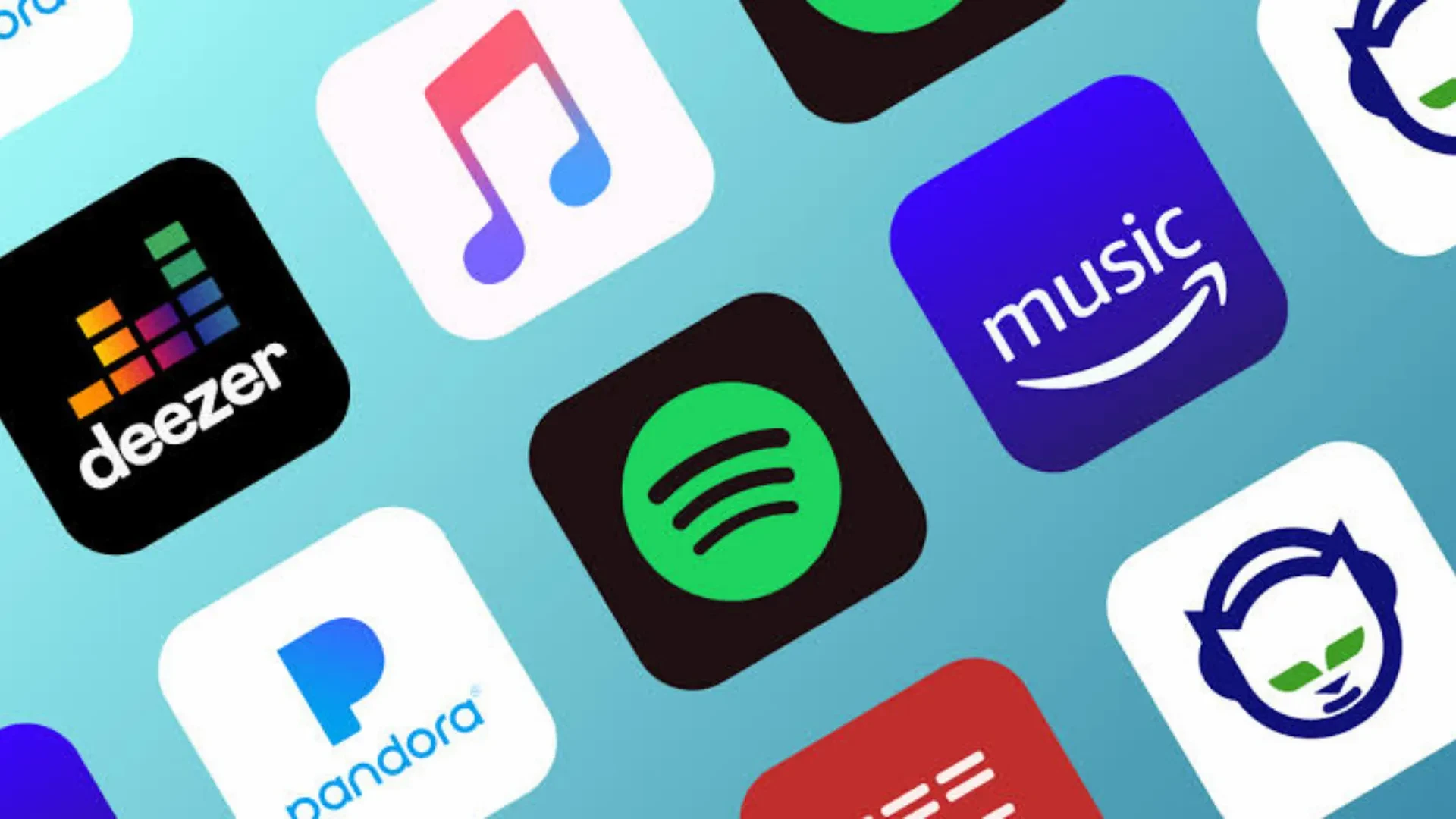
The market is competitive but growing fast, with room for niche and on-demand streaming apps.
The music streaming industry is one of the most competitive in tech. Spotify and Apple Music are the best known, alongside Amazon Music and niche apps like Tidal and Pandora, each with its own pricing and business strategy.
Spotify has existed since 2008, and Apple Music since 2015, and streaming online is hugely popular, so there is plenty of opportunity for new brands. Do you know according to Statista, global streaming revenues hit a record 17.5 billion US dollars in 2022, over six times the 2015 figure, and have kept climbing since.
How to Build a Music Streaming App: Step-by-Step
Building a music streaming app runs from research and licensing to design, backend, streaming, testing, and launch.
Here is how to create your own music streaming app, as a clear process. It works whether you build in-house or hire a team.
Research and plan: study the market, define your audience, niche, and monetization model.
Secure licensing: obtain public performance rights and clearances from labels or collectives before launch.
Design the UX: an intuitive, appealing player and discovery experience.
Build the backend and streaming: cloud storage, low-latency streaming protocols, and a CDN for smooth playback.
Add core features: audio player, search and discovery, playlists, accounts, and payments.
Test and launch: check playback latency, security, and scale, then release and iterate.
Ready to build a music streaming app users love?
Tell me your vision and audience, and within 48 hours I will map the features, stack, licensing, and a build plan tailored to you. No cost, no obligation.
Key Steps Before Development

Before building, understand the market, your audience, your budget, your feature list, and who will build it.
Understanding the market
Analyze market size and value to gauge your potential user base and revenue, and study competitors' strengths and weaknesses so you can differentiate and offer unique value.
Targeted audience
Know who will use the app and their demographics, which shapes your feature design. Research the market, run surveys, and consider an MVP development to validate with real users before building everything.
How much you can invest
Your budget depends on the features you want. A large budget supports many features; a small one suits a lean first release to get your brand known. Decide what kind of app fits your goals before setting the budget.
List the app features
Decide which features to add. The goal is to provide the most useful features that add real value, not to copy every feature a competitor offers.
Hire a remote developer
When you hire remote developers, look for experience building music streaming apps, a strong portfolio, good communication, and quality work at a fair price. Remote teams make revisions and updates faster and easier.
Top Features to Add
The core features are a great UI, secure accounts, payments, smart search, playlists and offline listening.
Design and user experience
An intuitive, visually appealing UI creates a strong first impression, boosts engagement, and encourages users to explore further.
User registration and authentication
Let users create accounts via email, social media, or phone, with secure authentication for a personalized, protected experience.
Secure payment integration
Integrate secure payment gateways for premium features and subscriptions, balancing free and premium content so users get basic access without barriers. Technologies like Laravel development give you a robust, secure back end; new to it? Read us why to use Laravel guide.
Music search and discovery
Efficient search and smart discovery algorithms let users explore a vast catalogue and find songs, artists, or albums quickly.
Creating playlists
Let users create and manage playlists to curate collections for different moods and occasions, with easy access to favorites.
Offline music and downloads
Offline playback and downloads let users enjoy music without internet and while saving data, anytime and anywhere.
Tech Stack for a Music Streaming App
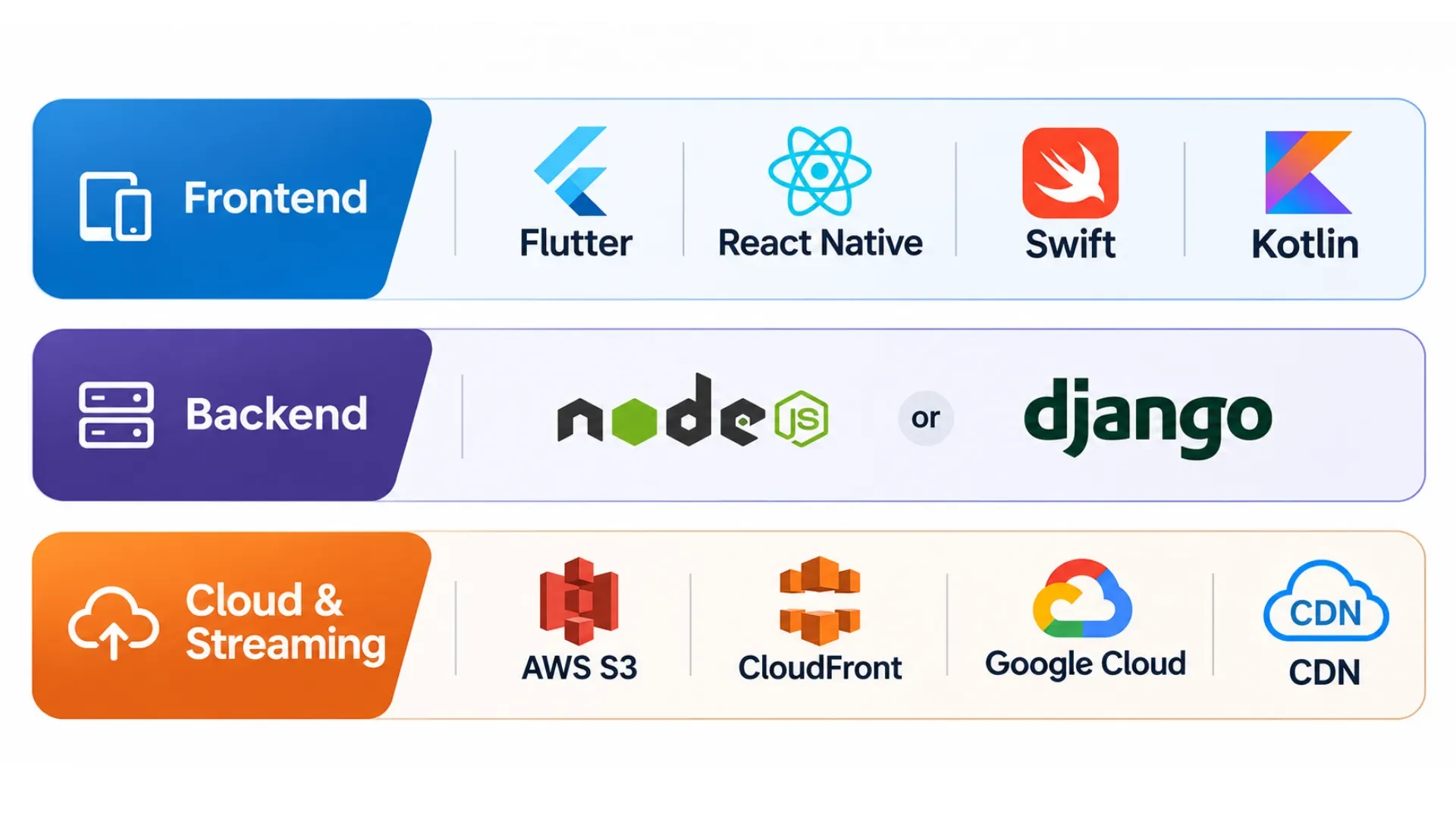
A typical stack pairs a cross-platform or native frontend with a Node.js or Django backend and cloud streaming.
Your stack shapes performance and cost. For the frontend, choose native for the smoothest hardware access or cross-platform for a faster MVP; for music streaming app development on Android and iOS together, Flutter app development and React Native app development are strong choices, backed by a scalable Node.js development backend.
Layer | Options | Role |
Frontend | Flutter, React Native, Swift, Kotlin | App UI and playback |
Backend | Node.js or Django | Logic, accounts, APIs |
Cloud & streaming | AWS S3, CloudFront, Google Cloud, CDN | Storage and low-latency delivery |
Choosing between native and cross-platform?
Tell me your target platforms and budget, and I will recommend the right stack and an honest cost, free, within 48 hours.
Monetization Models
The main models are freemium with ads, tiered subscriptions, and partner or exclusive content.
Choosing the right monetization model is as important as the features. The three most common:
Freemium: free access with periodic audio or visual ads, upgrading to remove them.
Subscriptions: tiered monthly fees for ad-free, high-definition listening and offline downloads.
Partner content: exclusive artist drops, early releases, or merchandise integration.
Many successful apps combine models, a free ad-supported tier that funnels users toward paid subscriptions, which answers whether you can make money streaming your own music: yes, with the right model and licensing.
There is no truly free path to music streaming app development once licensing is involved, but an MVP and open-source tools keep early costs low.
Music App Licensing Requirements
You must secure public performance rights and clearances from labels, artists, and copyright collectives before streaming.
Legal considerations are critical. To stream content legally, obtain licenses and permissions from record labels, artists, and music publishers, and acquire public performance rights from copyright collectives such as PPL or PRS for Music in the UK, or their equivalents elsewhere. Failure to secure proper licensing can lead to copyright infringement and legal consequences.
Comply with copyright laws by respecting intellectual property rights, following fair-use principles, and attributing creators, and implement content monitoring and takedown mechanisms to address claims quickly. Engaging legal experts and consulting copyright agencies is invaluable for navigating this complex landscape and protecting your app's longevity.
Cost of Music Streaming App Development

A music streaming app costs 30,000 to 120,000 USD or more, depending on features, platforms, and licensing.
Music streaming app development cost depends on complexity, features, platforms, design, and team rates. The table shows directional 2027 ranges, excluding content-licensing fees.
App type | Timeline | Cost (USD) |
MVP / basic | 3 – 5 months | 30,000 – 50,000 |
Standard app | 5 – 9 months | 50,000 – 90,000 |
Advanced / Spotify-like | 9 – 14 months | 90,000 – 120,000+ |
To build cost-effectively, add specialists through IT staff augmentation services, and plan ongoing support and maintenance for new OS versions, catalogue growth, and streaming reliability.
Client Case Study
Acquaint Softtech built a secure, real-time native app across iOS and Android with in-app purchases, the core of any streaming app.
Project at a glance • Client: A client needing a high-performance, real-time native mobile application. • Sector: Real-time native app with secure in-app purchases (directly comparable to a streaming app's core stack). • Challenge: Deliver a secure, responsive app on both iOS and Android, on a tight deadline. What Acquaint Softtech delivered • Native iOS and Android apps built for speed and reliability. • Real-time data handling and messaging, with the same demands as live audio. • Secure in-app purchases and a robust admin panel for subscriptions. Outcome A secure, real-time, cross-platform app delivered before the deadline, proving the exact engineering a music streaming app relies on. Proof: Verified 5-star reviews on Clutch. |
This reflects a standard seen across a 5-star Clutch rating over 60+ reviews, 1,293+ clients on Upwork with a 98% success rate, and 1,300+ projects delivered by 70+ in-house engineers over 13+ years, as an Official Laravel Partner.
We have also built a music streaming app (Music INXITE, on Swift and Laravel); if you would prefer to feature that, Acquaint Softtech can swap it in. Explore more in our case studies.
Why Work With Acquaint Softtech

Acquaint Softtech is an experienced music streaming app development company that builds secure, scalable, cross-platform apps.
Choosing the best music streaming app development company matters, and Acquaint Softtech brings deep mobile and real-time experience, a dedicated QA team, and Official Laravel Partner credentials.
We build for iOS and Android, and you can hire dedicated Laravel developers, tap iOS app development, or use software development outsourcing to build with Acquaint Softtech across the USA, UK, Europe, and Australia.
To Sum Up
Music is one of the world's most popular forms of entertainment, and streaming apps have surged in recent years. If you are thinking about building one, this guide will help you start, from features and stack to monetization and licensing.
If you want expert help, Acquaint Softtech can design and build it across the USA, UK, Europe, and Australia. For more, read our guide to website development for the music industry.
Let's turn your music-app idea into reality.
Book a free 30-minute call with our experts. We will scope the features, stack, licensing, timeline, and an honest cost, and you leave with a plan you can act on, even if you build it elsewhere.
Frequently Asked Questions
-
Frequently Asked Questions
Essential features include a user-friendly interface, powerful search and discovery, personalized playlists, offline listening and downloads, social sharing, secure accounts and payments, and high-quality, low-latency audio streaming. Smart recommendations and cross-platform support add real value and keep listeners engaged over time.
-
How can I create my own music streaming app?
To create your own music streaming app, research the market and audience, secure music licensing, choose a tech stack (such as Flutter or React Native with a Node.js backend and cloud streaming), and build core features: player, search, playlists, accounts, and payments. Test playback and scale, then launch and iterate. Many founders start with an MVP.
-
How do I start my own music streaming platform, and can I create my own streaming app?
Yes, you can create your own streaming app. Start by validating your niche and audience, securing licensing, and picking a monetization model. Then build an MVP with the core player and discovery features on a scalable stack, test it with real users, and expand. Partnering with an experienced team speeds up licensing, engineering, and launch.
-
Can I make money streaming my own music?
Yes. Music streaming apps make money through freemium ads, tiered subscriptions, and partner or exclusive content, and independent artists can also earn through their own branded app or distribution.
Profitability depends on your catalogue, licensing costs, audience size, and retention. A strong subscription experience is usually the biggest revenue driver.
-
How much does it cost to make an app like Spotify?
It varies with complexity, features, platform, and team rates. A basic music streaming app ranges from about 30,000 to 50,000 USD, while a feature-rich, Spotify-like app can cost 90,000 to 120,000 USD or more, excluding content-licensing fees. Acquaint Softtech offers competitive rates to build cost-effectively.
I love to make a difference. Thus, I started Acquaint Softtech with the vision of making developers easily accessible and affordable to all. Me and my beloved team have been fulfilling this vision for over 15 years now and will continue to get even bigger and better.
Table of Contents
Get Started with Acquaint Softtech
- 13+ Years Delivering Software Excellence
- 1300+ Projects Delivered With Precision
- Official Laravel & Laravel News Partner
- Official Statamic Partner
Related Reading
Mobile App Development: A Step-by-Step Guide for 2026
To develop a mobile app, you turn an idea into a working product through research, strategy, UI/UX design, development, testing and launch, then maintain it. Choose an app type (native, cross-platform or web), define your features and monetisation model, and build an MVP first to reach the market fast and reduce risk.
Mukesh Ram
February 13, 2023
Rome Was Not Built in a Day: The Journey to Developing a Unicorn SaaS
Building a unicorn SaaS company is a marathon, not a sprint. Just like Rome, great products aren’t built overnight. From refining your MVP to scaling for growth.
Mukesh Ram
September 26, 2024
What Is Kotlin and Why Use It for App Development?
Kotlin is an open-source, statically typed programming language used for Android, cross-platform, web and backend development. It is a safer, more concise, fully Java-interoperable language, and Google's preferred language for Android. Use Kotlin because it offers null safety, about 40% less code than Java, lower cost, faster development, cross-platform support (Android and iOS) and a strong community. Brands like Netflix, Uber, Pinterest and Airbnb use it, which is why it is a top choice for app development.
Mukesh Ram
April 17, 2023India (Head Office)
203/204, Shapath-II, Near Silver Leaf Hotel, Opp. Rajpath Club, SG Highway, Ahmedabad-380054, Gujarat
USA
7838 Camino Cielo St, Highland, CA 92346
UK
The Powerhouse, 21 Woodthorpe Road, Ashford, England, TW15 2RP
New Zealand
42 Exler Place, Avondale, Auckland 0600, New Zealand
Canada
141 Skyview Bay NE , Calgary, Alberta, T3N 2K6