

Online Examination Platform: Proctoring & Automated Grading
An online examination platform is software that creates, delivers, monitors, and grades tests over the internet at scale. Building one means solving four hard problems together: a question bank that assembles fair, randomized exams, delivery that stays stable when thousands sit at once, remote proctoring that deters cheating without false accusations, and automated grading that scores objective and written answers accurately.

Manish Patel
What if your exam platform had to prove its reliability during the most critical minute of an assessment? As Head of Technology and Client Success at Acquaint Softtech, I have seen how expert software product development services help organizations build secure, scalable online examination platforms that perform under peak demand. The challenge is not creating an online test. It is delivering a platform that remains reliable, fair, and secure when thousands of candidates depend on it simultaneously.

- You are building an online examination or assessment platform.
- You need exams that stay fair, secure, and stable at scale.
- You are evaluating remote proctoring and want it done right.
- You want grading automated without losing accuracy or trust.
- You need a clear cost and timeline before you build.
It is also a platform that must be usable by everyone. Online tests delivered by or for institutions must meet accessibility law, and the federal Section 508 accessibility requirements obligate covered information technology to work for people with disabilities, which shapes how every screen of the exam is built.
This article breaks down question banks, delivery at scale, proctoring, grading, security, and real cost figures. It sits under our complete EdTech software development guide, which frames the wider learning technology landscape. Acquaint Softtech has delivered 1,300+ software projects across 20+ industries in 13+ years, with a team of 70+ in-house engineers. Clients across the USA, UK, Europe, Australia, New Zealand, and India deploy their first dedicated engineer within 48 hours of the brief.
EXPERT INSIGHT “Everyone obsesses over proctoring, but the platform that fails on exam day usually fails on scale, not cheating. Ten thousand students hitting submit in the same minute will break a system that was only ever tested with ten. Build for the worst sixty seconds first, make the question bank and grading provably correct, and proctoring becomes one feature instead of the whole product.” Manish Patel, Solutions Architect and Director of Engineering, Acquaint Softtech |
What an online examination platform must guarantee

An online examination platform must guarantee four things before it adds a single nice-to-have feature: integrity, so results are trustworthy; availability, so the exam does not crash under load; fairness, so every candidate gets an equivalent test; and accuracy, so grading is correct and defensible. Every design decision should trace back to one of these four guarantees.
How do you build an online exam platform?
You build it guarantee-first, not feature-first. Start with the question bank and the delivery engine that keep exams fair and stable, add proctoring and grading on top, and treat reporting as the final layer, because a beautiful dashboard means nothing if the exam itself was not secure and reliable.
Ordering the build around these guarantees is also what prevents expensive rework. Teams that start with a slick candidate interface and add integrity later almost always rebuild it, because security and concurrency are architectural decisions that are painful to retrofit. Deciding early what the platform must never do, such as lose an answer or expose a question paper, is cheaper than discovering those limits during a live exam.
Because these guarantees touch every layer, the architecture has to be coherent from the start. That's why businesses rely on Acquaint Softtech's hire MERN stack development services to design a solid foundation before any feature work begins.
Pinning down the guarantees against your specific exam types and stakes is the job of a structured discovery workshop, since a low-stakes quiz tool and a national certification exam are not the same build.
How the underlying learning and delivery engine works, and where an exam platform extends it, is covered in our guide on how learning management systems work.
The exam lifecycle: from authoring to analytics
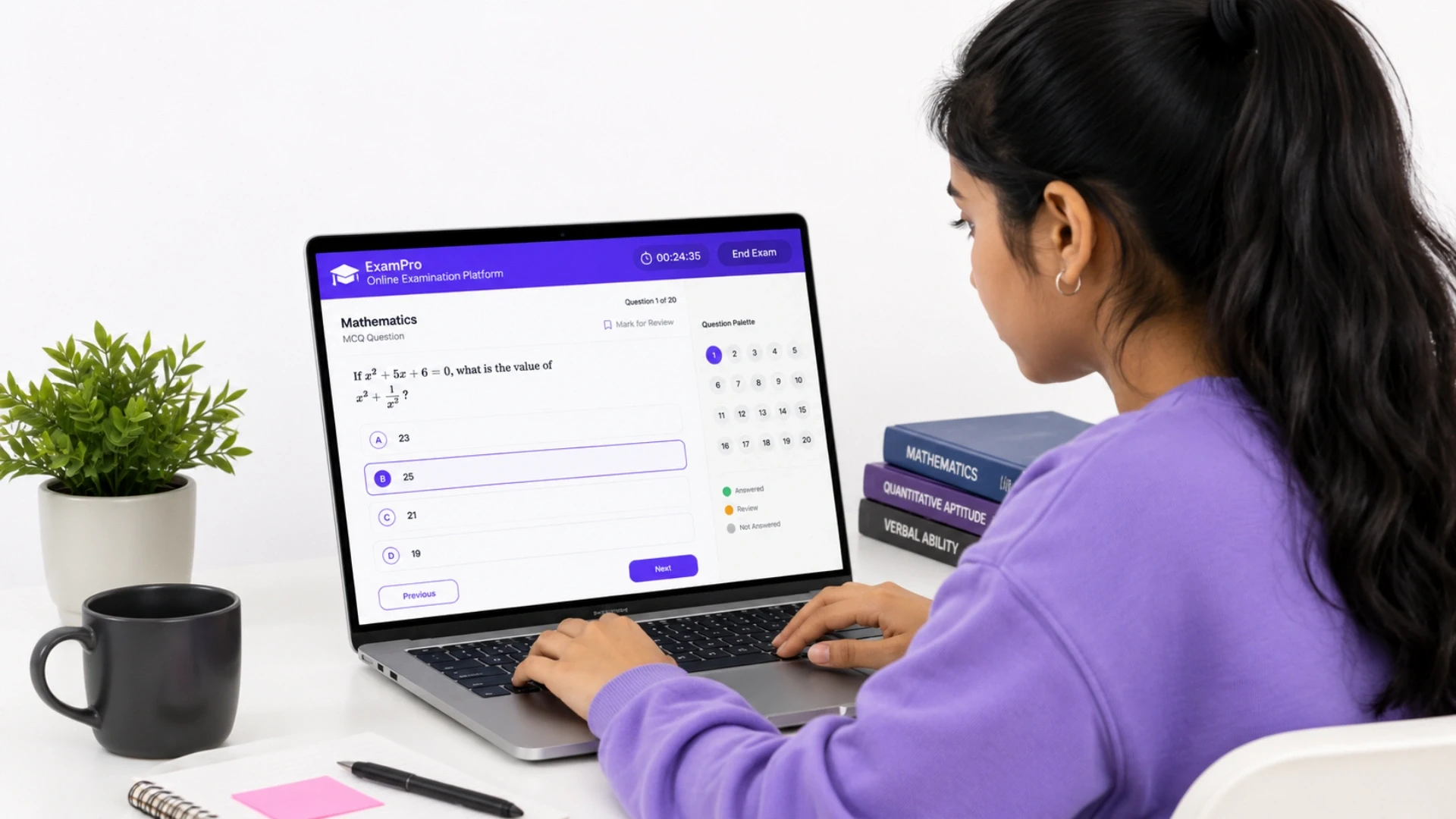
Every exam moves through a lifecycle: authoring items, assembling a test, delivering it, proctoring it, grading it, and analyzing the results. Mapping the platform to this lifecycle, rather than to a flat feature list, makes it clear what depends on what and where the real risk sits at each stage.
Framing the build this way also keeps scope honest, and resourcing each stage without a permanent team is why many teams add capacity through IT staff augmentation during the heavy build phases.
Stage | The job | The main risk |
Authoring | Create and tag items | Weak, biased items |
Assembly | Build fair test forms | Unequal difficulty |
Delivery | Serve at scale | Crash under load |
Proctoring | Deter cheating | False accusations |
Grading | Score answers | Wrong results |
Analytics | Measure quality | Misread data |
Phasing the build along this lifecycle keeps spend aligned with priorities, which many institutions manage through structured software development outsourcing rather than hiring ahead of need. The delivery-side mechanics overlap with the live-session patterns in our guide to developing virtual classroom and e-learning software, useful background for the delivery stage.
Building the question bank: items, randomization, and analysis
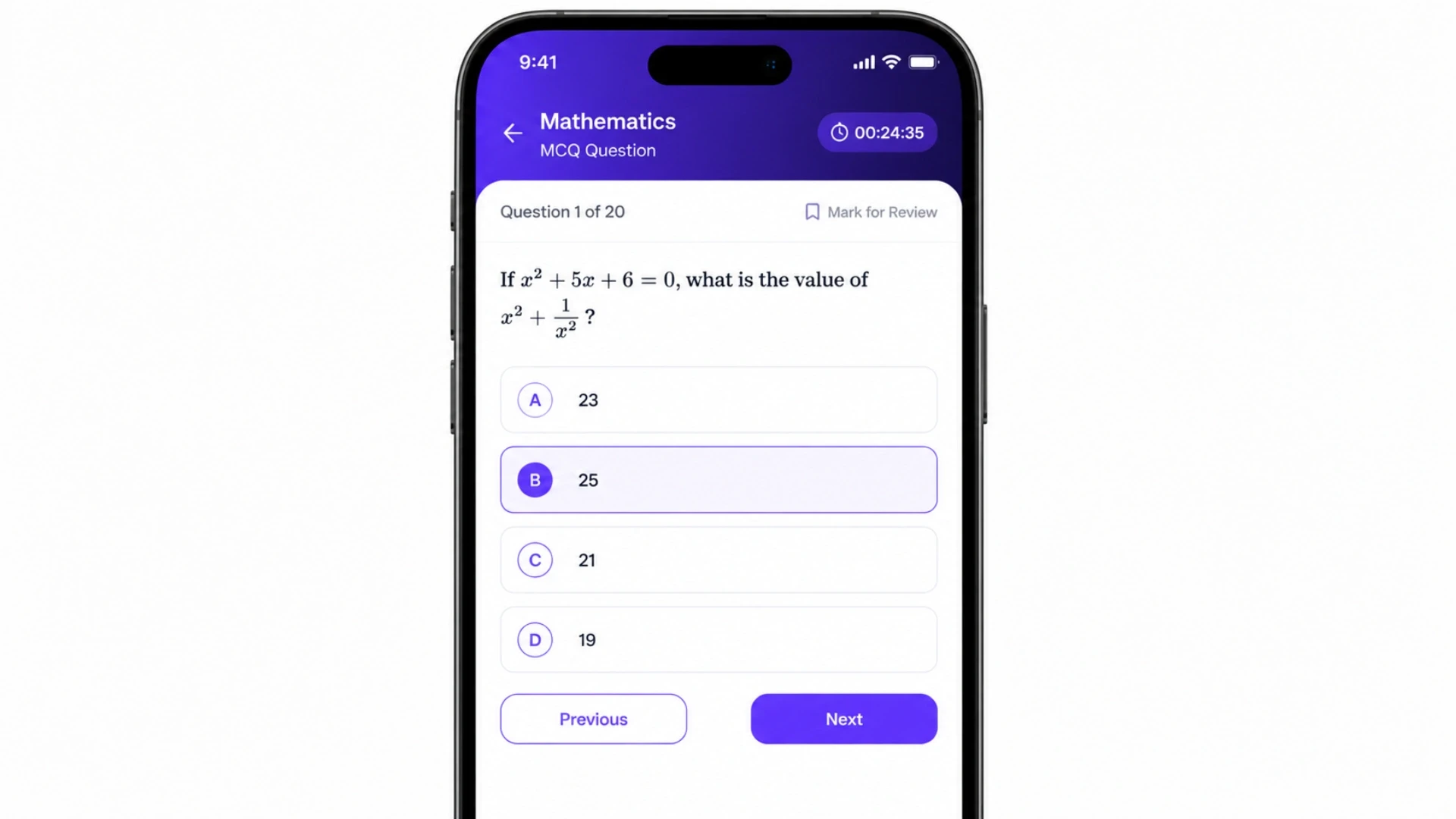
The question bank system is the foundation of the platform: a structured repository of tagged, reusable questions that the system draws on to assemble exams. A strong question bank supports many item types, tags every question by topic, difficulty, and learning objective, and tracks how each item performs over time.
How should a question bank be structured?
A question bank should be structured around items, not exams, so any question can be reused, randomized, and analyzed independently. Good question bank architecture stores each item with metadata, version history, and performance statistics, which lets the platform build fair, varied test forms automatically instead of hand-assembling every paper.
Randomization and fair form assembly are logic-heavy problems, which is why many organizations choose Acquaint Softtech's hire Python development services to build a question bank engine that can model item selection rules without producing uneven tests.
The grading and analytics that sit on top of the question bank depend on clean business logic. That's where Acquaint Softtech's hire Laravel development services help ensure scores, weights, and item statistics always reconcile accurately.
Building an online examination platform?
Acquaint Softtech designs and builds exam platforms, from question banks and remote proctoring to automated grading at scale, for education and certification clients across the USA, UK, Europe, Australia, New Zealand, and India. Your first engineer deploys within 48 hours of the brief.
1,300+ projects • 70+ engineers • 48-hr deployment • 4.9/5 Clutch (50+ reviews)
Test assembly and delivery at scale
Delivery is where exam platforms most often fail, because thousands of candidates start and submit in the same narrow windows. The platform must assemble each candidate's test, serve it without lag, autosave answers continuously, and accept every submission even under peak load, all without losing a single response.
The hard part is concurrency. Autosave, timers, and submission have to be transaction-safe so a dropped connection never costs a candidate their answers, and the system has to degrade gracefully rather than collapse when load spikes at the start and end of a session.
Resume behavior is the feature candidates judge you on. If a laptop dies or the wifi drops, the exam should reopen exactly where it stopped, with the timer and answers intact, because a lost session on a high-stakes test is the failure people remember and complain about loudest. Designing that recovery path is as important as the happy path.
This is high-traffic, stateful engineering, the kind of scalable architecture experienced MERN stack engineers design for systems that must stay up during predictable surges.
Keeping the same engineers across releases matters here, because delivery logic accumulates hard-won fixes, which is why high-stakes platforms keep a dedicated development team rather than rotating contractors.
Remote proctoring: deterring cheating without false flags
Remote proctoring monitors candidates during an online exam to deter and detect cheating, using identity verification, webcam and screen monitoring, and behavior analysis. The real design goal is balance: catch genuine misconduct while avoiding false accusations that punish honest candidates for looking away or having a noisy room.
What features does remote proctoring need?
Remote proctoring needs identity verification, live or recorded monitoring, browser lockdown, and flagging that a human can review rather than an automatic verdict. The strongest proctoring system design treats AI as an assistant that surfaces moments for review, not a judge that fails candidates on its own.
It also helps to match the proctoring mode to the stakes. Live proctoring has a real person watch in real time and suits the highest-stakes exams; record-and-review captures the session for later inspection and balances cost with rigor; and fully automated proctoring scales cheapest but needs the most careful tuning. Many platforms offer all three and let the exam owner choose per assessment.
Behavior detection at scale is a machine learning problem, which is why credible proctoring is built by an AI development team that can tune sensitivity to reduce false positives.
Automated grading: objective scoring and AI evaluation
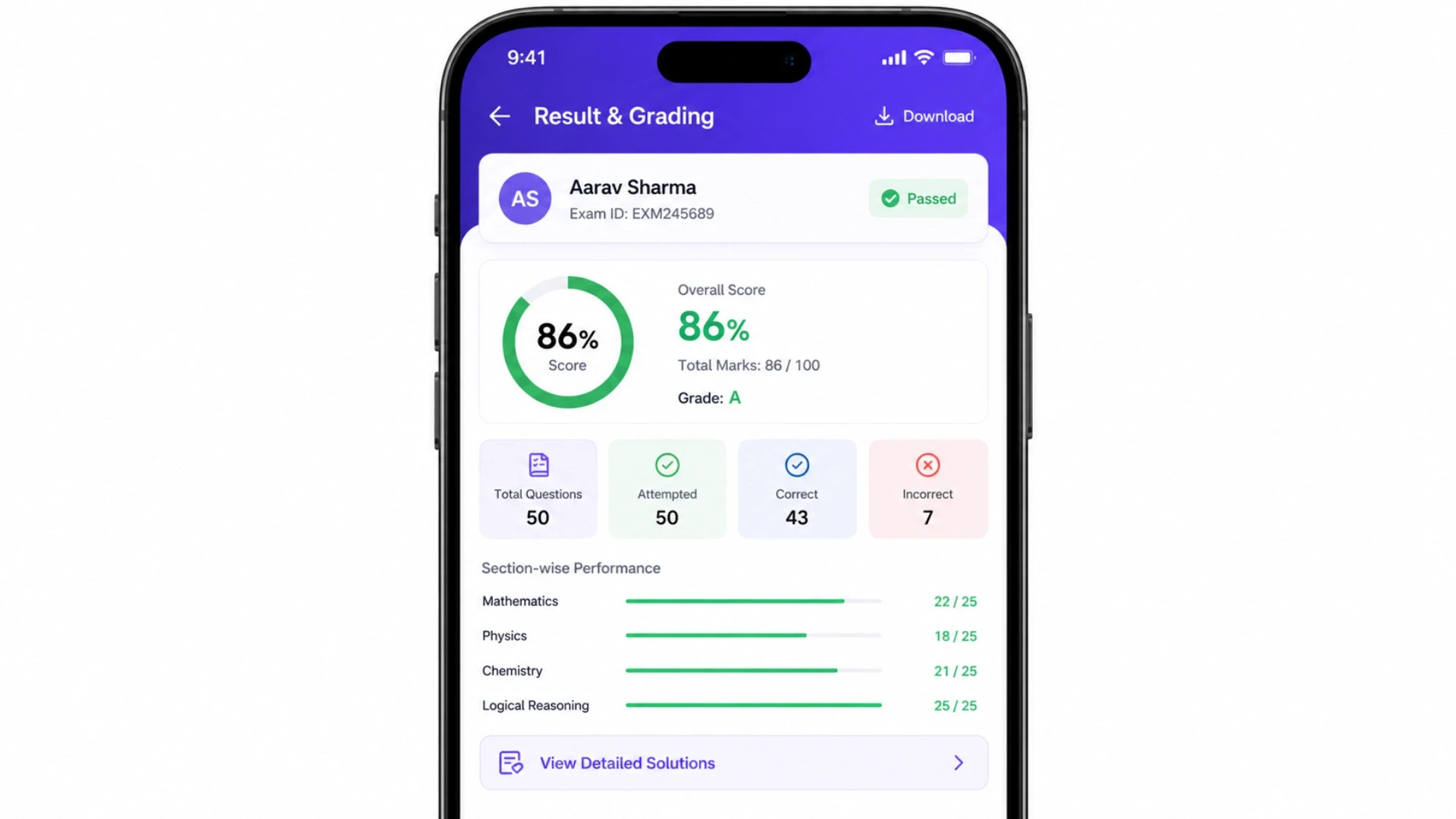
Automated grading software scores objective questions instantly and uses AI to assess written responses more consistently. Teams building these systems often choose to hire MEAN stack developers from Acquaint Softtech to build scalable grading engines with strong human-in-the-loop controls. While objective questions can be graded automatically with high confidence, subjective answers should always allow examiner review and overrides to ensure accuracy and fairness.
Rubric quality decides whether AI grading is fair. A vague rubric produces inconsistent scores from both humans and models, while a clear one with defined criteria and examples lets the system score reliably and explain why. The best platforms surface the model's reasoning and confidence so an examiner can audit a grade rather than trust it blindly. Building an essay-scoring model that is fair across writing styles is specialist work, squarely the domain of an AI development team experienced with natural language processing.
The scoring pipeline that ties models, rubrics, and rules together is heavy backend logic, often delivered by a Python development team that can keep results reproducible and auditable. How cost and stack tradeoffs play out for compute-heavy features like AI grading connects to our Laravel developer hiring and cost guide, a useful reference when you scope the grading layer.
Exam security, data privacy, and accessibility
Exam security, data privacy, and accessibility are not separate concerns; they are three faces of fairness. The platform must stop leaks and cheating, protect sensitive candidate data, and remain usable by every test-taker, and all three have to be designed in from the first sprint, not bolted on before launch.
Privacy carries legal weight. Exam scores and records held by educational institutions are education records under FERPA, so how the platform stores, shares, and exposes them is a compliance question, not just a product one.
Accessibility is the other non-negotiable. Timers, navigation, and question types must work with screen readers and assistive technology, and proctoring must not penalize candidates whose disabilities affect how they sit an exam. Building this in is cheaper and fairer than retrofitting it after a complaint.
Migrating years of historical exam and item data into a secure new system without losing integrity is delicate work, often handled through structured legacy version upgrade and migration services. Scaling secure delivery across many concurrent exams is why platforms hire dedicated developers for the security and reliability layer specifically.
A note from the Acquaint Softtech education team We have watched exam platforms pass every demo and then fall over the moment a real cohort logged in at the same second. An online examination platform is not a quiz tool with a timer; it is a high-stakes system where integrity, availability, fairness, and accuracy decide whether a result can be trusted. Build for the worst minute, get the question bank and grading provably correct, treat security and accessibility as architecture, and add proctoring and analytics on a foundation that already holds. Get that right, and the platform earns the one thing an exam cannot buy back once it is lost, which is trust. Manish Patel and the Acquaint Softtech Education Team | Serving education, certification, and EdTech teams across the USA, UK, Europe, Australia, New Zealand, and India |
Results, analytics, and psychometrics
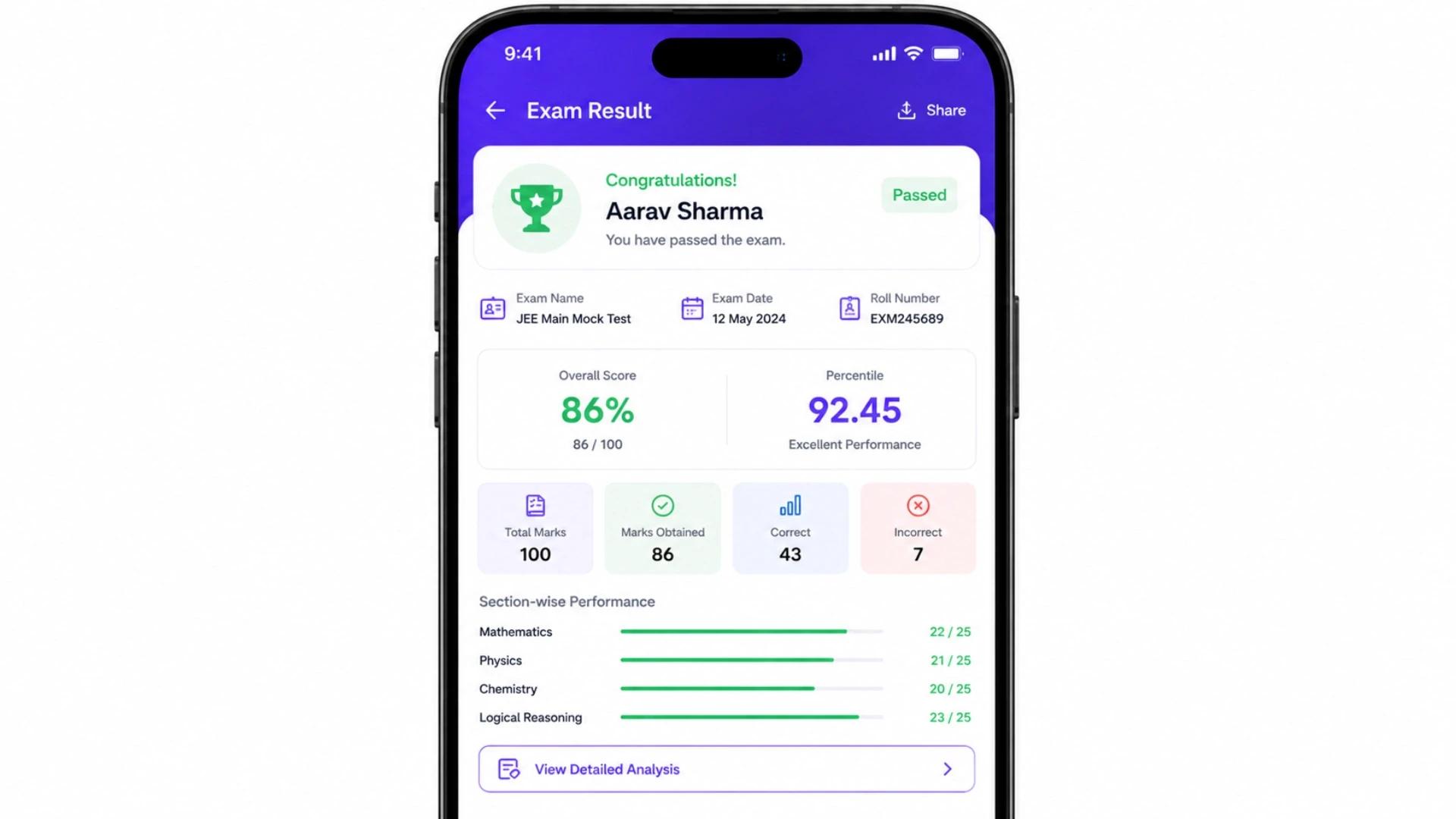
The analytics layer turns raw scores into insight: how candidates performed, whether questions were fair, and how to improve the exam next time. This is where psychometrics matters: the statistics that reveal whether an item was too easy, too hard, ambiguous, or actually measuring what it claims to.
Item analysis is the quiet engine of exam quality. Metrics like difficulty, discrimination, and distractor performance help improve the question bank after every exam. When analytics feed directly back into the system, weak or misleading questions can be fixed or retired, making future exams fairer and more accurate. Handling this process at scale requires strong data infrastructure, often supported by AI development and modern white label software development solutions that help organizations build advanced assessment platforms faster.
Building dashboards that stay accurate and fast as results accumulate is often delivered through structured software development so leadership can trust the numbers. How analytics connect to the wider learning experience is framed in our guide to building a virtual classroom platform, which maps reporting across the stack.
Tech stack and architecture for high-stakes scale
A high-stakes exam platform needs an architecture built for predictable surges: stateless services that scale out during exam windows, a database that handles concurrent writes safely, queues for grading and proctoring processing, and autosave that never loses an answer. The stack should let delivery, grading, and proctoring scale independently.
A JavaScript-based stack scales well across candidate apps, authoring tools, and APIs, while Python often powers AI grading and proctoring. For strategic technology planning and scalable architecture, Virtual CTO services can help ensure long-term platform success. A dedicated development team is usually the best choice for maintaining reliability in high-stakes exam environments.
Cost and timeline to build an exam platform
A custom online examination platform typically costs between USD 50,000 and USD 350,000 to build, driven by how much proctoring, AI grading, and high-concurrency delivery you include in the first release. Proctoring and AI evaluation are the features that push an exam platform above a simple quiz tool on cost.
How much does an online exam platform cost?
It scales with scope and stakes. A question bank with objective auto-grading and basic delivery is far cheaper than a platform with AI proctoring, essay scoring, and thousands of concurrent candidates, and phasing the build lets you launch lean and add the harder layers as demand grows.
The market context explains the investment. The online exam software market was valued at USD 9.37 billion in 2025 and is projected to reach USD 10.56 billion in 2026 and USD 15.86 billion by 2030, a 12.6% compound annual growth rate, according to The Business Research Company. Remote proctoring is the fastest-growing slice, expanding at roughly 17% a year toward USD 3.58 billion by 2035, per Market Reports World, with universities now running over 200 million online assessments annually.
Release scope | Typical timeline | Indicative cost |
MVP: question bank + auto-grading | 4 to 6 months | $50k to $110k |
Growth: proctoring + analytics | 7 to 10 months | $110k to $220k |
Scale: AI grading + high concurrency | 11+ months | $220k to $350k+ |
Location is the major cost lever. Building with a verified team in India runs at roughly USD 25 to 49 per hour, against USD 120 or more for comparable Western agencies, the source of the up to 40% cost savings, and a common reason institutions hire dedicated developers for a proctoring and exam build.
Keeping continuity across phases is cheaper than rebuilding context each time, which is why exam projects often phase the work through structured software development outsourcing rather than piecemeal contracting.
Want a realistic cost and timeline for your build?
Acquaint Softtech scopes your exam platform against your actual question bank, proctoring, grading, and scale needs, then deploys engineers at USD 25 to 49 per hour, up to 40% below comparable Western agency rates. Book a call for a phased cost and timeline.
Up to 40% cost savings • 95% on-time sprint delivery • 48-hr deployment • 4.9/5 Clutch
Case Study: An Education Portal, Built and Validated
An online education company's learning and administration portal taken from concept to a live, validated product. | Verified on Clutch (5.0/5) |
What the Client Needed • A platform where learners could explore and enroll in courses • An admin system to manage content, courses, and student records • Integrations for live learning, payments, and certificate issuance What Acquaint Delivered → Built a custom learning platform with Django, Python, and PostgreSQL → Developed enrollment, course management, and payment functionality → Integrated Zoom for live sessions, Stripe for payments, and Accredible for certifications → Delivered a fully tested solution ready for launch |
"They delivered a high-quality project and provided top-notch support." This project highlights the essential components of a successful EdTech platform: learner onboarding, course management, content delivery, payment processing, and third party integrations. Built on a scalable foundation, it demonstrates how a custom solution can support growth while maintaining a seamless experience for both learners and administrators. Read all verified reviews and case studies: acquaintsoft.com/case-studies |
Going live: load testing and exam-day readiness
Launching an exam platform is not flipping a switch; it is proving the system survives its worst minute before real candidates ever log in. The safest path is to load test at several times the expected peak, run full dry runs with real exam conditions, and rehearse the failure plan, so exam day holds no surprises.
A typical sequence runs in four steps: a discovery workshop to map exam types and peak loads, an MVP covering the question bank and delivery, hard load testing and a seeded pilot exam, then a staged rollout as each exam type proves stable.
Pacing the build to readiness keeps cost aligned with confidence, which institutions often manage by scaling the team through staff augmentation during the test-and-harden phase, with engineers deployed within 48 hours of a brief and work running in two-week sprints at a 95% on-time delivery rate.
Phasing also keeps the budget honest, because you fund the next layer, proctoring, AI grading, or higher concurrency- only after the last one has held up under a real exam load.
Build your exam platform with a verified team
From question banks to proctoring and automated grading at scale, Acquaint Softtech builds exam platforms institutions trust on test day. Join the teams who built with a Clutch Premier Verified partner and deploy your first engineer within 48 hours.
1,300+ projects • 13+ years • Official Laravel Partner • 4.9/5 Clutch (50+ reviews)
Frequently Asked Questions
-
How do you build an online exam platform?
You build it guarantee-first: a question bank and delivery engine that keep exams fair and stable, with proctoring and grading layered on top. The hard problems are scale and integrity, not the quiz screen itself.
-
What features does remote proctoring need?
It needs identity verification, webcam and screen monitoring, browser lockdown, and AI flagging that a human reviews rather than an automatic verdict. The goal is to deter cheating without falsely accusing honest candidates.
-
How should a question bank be structured?
Structure it around reusable items, not whole exams, with each question tagged by topic, difficulty, and objective and tracked for performance. This lets the platform assemble fair, randomized test forms automatically.
-
How much does an online exam platform cost?
A custom platform typically costs USD 50,000 to USD 350,000, depending on how much proctoring, AI grading, and high-concurrency delivery you include. Building with a verified team in India can cut that by up to 40% against Western agency rates.
-
How does automated grading work?
Objective questions are scored instantly by rules, while essays and short answers use AI models that score against a rubric and flag uncertain cases for a human. Keeping a human in the loop is what keeps grading trustworthy.
-
How do you prevent cheating in online exams?
Through layered defenses: randomized question sets, browser lockdown, identity checks, and proctoring that flags suspicious behavior for review. No single measure is enough, so a fair platform combines several.
-
How does an exam platform handle thousands of candidates at once?
With a scalable architecture: stateless services that scale out during exam windows, transaction-safe autosave and submission, and heavy work isolated in queues. The system must degrade gracefully, never lose answers, and stay stable at peak.
-
How does Acquaint Softtech build exam platforms?
Acquaint Softtech starts with a discovery workshop, deploys a dedicated engineer within 48 hours, and ships in two-week sprints at a 95% on-time rate, with hard load testing before launch. The company is Clutch Premier Verified with a 4.9/5 rating from 50+ verified reviews.
I lead technology and client success at Acquaint Softtech with one goal in mind. Deliver work that feels personal, reliable, and worthy of long term trust. I stay close to both our clients and our developers to make sure every project moves with clarity, quality, and accountability.
Table of Contents
Get Started with Acquaint Softtech
- 13+ Years Delivering Software Excellence
- 1300+ Projects Delivered With Precision
- Official Laravel & Laravel News Partner
- Official Statamic Partner
Related Blog

The Complete Guide to EdTech Software Development in 2026
Complete guide to EdTech software development in 2026. LMS architecture, virtual classroom tech stack, AI tutoring system design, MVP timeline, and cost.

Acquaint Softtech
May 4, 2026
How Learning Management Systems Work
An LMS is not a video library with a login screen. It is a structured system that owns enrollment, progress, assessment, and certification in one traceable architecture. Teams that treat it as a file folder spend 12 months rebuilding what should have been designed correctly in week one. This guide shows exactly how each layer works, and what it actually costs to build.
Manish Patel
May 13, 2026
How to Develop Virtual Classroom Software for Online Teaching?
To develop virtual classroom software, you build an online learning platform where teachers run live sessions, and students join by smartphone, laptop, or PC. The core build needs video conferencing, courses, study materials, notifications, file storage, performance evaluation, screen sharing, digital certificates, and an admin panel. Start by defining course requirements and goals, set a budget, plan the modules, and build a lean MVP first to test the market.

Mukesh Ram
January 26, 2023India (Head Office)
203/204, Shapath-II, Near Silver Leaf Hotel, Opp. Rajpath Club, SG Highway, Ahmedabad-380054, Gujarat
USA
7838 Camino Cielo St, Highland, CA 92346
UK
The Powerhouse, 21 Woodthorpe Road, Ashford, England, TW15 2RP
New Zealand
42 Exler Place, Avondale, Auckland 0600, New Zealand
Canada
141 Skyview Bay NE , Calgary, Alberta, T3N 2K6