

Python Development Implementation Roadmap From Kickoff to Production
Step-by-step Python development implementation roadmap from kickoff to production in 2026. Pre-kickoff checklist, sprint cadence, and launch readiness.

Acquaint Softtech
Introduction: The First Week Decides the Next Six Months
The unsuccessful ones started with vague enthusiasm, an optimistic timeline, undefined responsibilities, technical decisions deferred to the team that does not yet exist, and a kickoff meeting that produced a slide deck nobody opened again. The difference between these two outcomes is not effort or talent. It is whether the team treated Week One as a project management discipline that earns its place in the timeline, or as overhead to skip on the way to writing code.
The structural elements that distinguish kickoffs that produce shipped projects from those that produce stalled ones are well documented. According to a 2026 project kickoff meeting guide by Plane.so, an Agile project kickoff focuses on aligning teams around the product vision, delivery roadmap, and collaboration model, with the meeting reviewing high-level backlog items, expected release goals, and the team practices that will guide delivery.
This guide walks through the step-by-step Python development implementation roadmap from kickoff to production as it actually operates in 2026 across mature engineering organizations. It covers the pre-kickoff work that determines whether the kickoff succeeds, the week-one steps that set the project up to win, the implementation engine of sprint cadence that consistently ships, the pre-production readiness checklist that distinguishes safe launches from disaster launches, and how to staff and structure the work so the roadmap actually delivers within its committed timeline. It is written for founders, CTOs, technical product managers, and engineering leaders who are about to start a Python project or are running one that is not quite tracking to plan.
If you are still building the team that will execute the roadmap, the complete guide to hiring Python developers in 2026 sets the wider context on engagement models, rates, and the team composition that determines whether the roadmap is realistic or aspirational.
Pre-Kickoff: What You Must Have Locked Before Day 1

The single highest-leverage work on any Python project happens before the kickoff meeting. Teams that walk into the kickoff with the items below already locked spend the meeting aligning on execution; teams that walk in without them spend the meeting discovering the project's actual scope, which leaves no time for execution alignment. The week of work invested in pre-kickoff preparation routinely saves four to six weeks of mid-project rework, which is the highest ROI activity available in software project management.
The Pre-Kickoff Checklist (Complete 5 to 7 Days Before Kickoff)
Category | Item | Owner |
|---|---|---|
Scope | Documented product requirements (PRD) | Product owner |
Scope | Acceptance criteria for every major feature | Product owner + tech lead |
Architecture | Framework decisions (Django/FastAPI/Flask) | Tech lead + architect |
Architecture | Database choice and initial data model | Tech lead + architect |
Team | Named developers with availability confirmed | Engineering manager |
Team | Single decision-maker on client side identified | Project sponsor |
Process | Sprint cadence decided (typically 2 weeks) | Engineering manager |
Process | Tool stack agreed (Jira/Linear, Slack, GitHub) | Engineering manager |
Timeline | Milestone-level plan with 20-30% buffer | Project manager |
Risks | RAID log v0 (Risks, Assumptions, Issues, Dependencies) | Project manager |
What Each Pre-Kickoff Item Actually Produces
Documented product requirements (PRD). Not a one-page brief. A document covering user personas, journeys, features, acceptance criteria, success metrics, constraints, and out-of-scope items. The team reads it before kickoff and arrives with informed questions rather than blank slates.
Named developers with confirmed availability. Not 'we'll have three engineers'. The specific senior engineer, the mid-level developer, and the front-end specialist. By name. With confirmed start dates. With percentage allocation if not full-time. This single artefact prevents the bait-and-switch where senior engineers handle the sales discussion and junior engineers execute the work.
Single decision-maker on the client side. One name. One email. One Slack handle. The person empowered to resolve open product questions within 24 to 48 hours. Slow decisions cause roughly 25% of all project delays in industry post-mortems, and the cure is naming the decision-maker before kickoff rather than discovering they are missing in Sprint 3.
Milestone-level plan with buffer time built in. A schedule that requires 100% efficiency to hit its dates is a schedule that will not hit its dates. Build in 20 to 30% buffer for unknowns, scope adjustments, and unexpected delays. The buffer is the project's shock absorber, and the schedules that ignore it produce the missed-deadline pattern that catches teams who plan optimistically.
RAID log v0 (Risks, Assumptions, Issues, Dependencies). Every non-trivial Python project has third-party API risks, data migration complexity, authentication edge cases, performance unknowns, and compliance requirements. Surfacing them in writing before kickoff is significantly cheaper than discovering them in Sprint 4 and writing emergency mitigation plans.
The cost economics of proper pre-kickoff investment are well documented. Discovery itself costs 5 to 10% of total project budget but reduces project overspending by 40 to 60% by eliminating the rework that consumes 30 to 50% of unscoped projects. The detailed budget breakdown by project phase is covered in the analysis on the minimum budget required to start a Python development project, which walks through the real numbers behind why proper pre-kickoff investment delivers the highest ROI of any project management activity.
The Kickoff: Week One Steps That Set the Project Up to Win
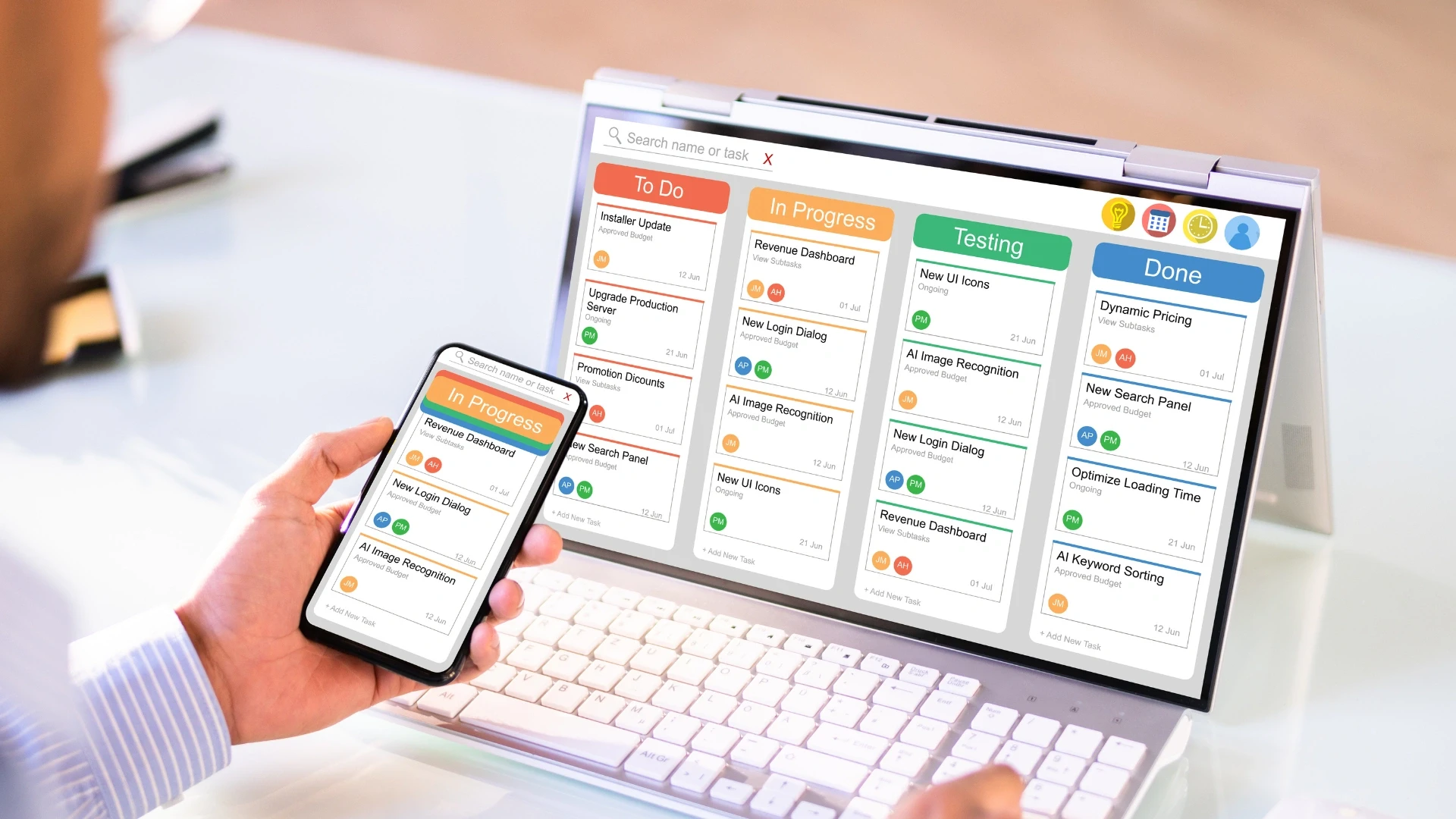
With pre-kickoff items locked, the actual kickoff week is structured around producing the operational artefacts the project will run on. The goal of Week One is not to start coding; it is to put in place the system that produces working software predictably for the next 8 to 24 weeks. Teams that rush past kickoff to start coding consistently produce the situation where Sprint 1 is consumed by figuring out what should have been decided in Week One, and the schedule slips before the first feature ships.
Day 1 to 2: Kickoff Meeting and Artefact Production
Run the kickoff meeting with a structured agenda. Welcome and introductions confirm roles. Project overview restates purpose, objectives, and success measures. Roles and responsibilities clarify accountability with a RACI reference. Timeline and milestones show key phases and dependencies. Communication plan defines reporting cadence and channels. Risks and assumptions surface early red flags. Action items and next steps confirm who does what by when.
Produce the kickoff artefact kit within 24 hours. The minimum durable artefacts are a project charter, a decision-focused meeting summary, a milestone-level plan, the RACI matrix, the RAID log v0, and the communication plan that defines channels and rituals. Publish them in one place (Notion, Confluence, your project management tool) within 24 hours and reference them in every status update going forward.
Day 3 to 5: Environment Setup and Foundation Sprint
Set up the development environment scripts. Test the setup script on a fresh machine. Pin dependency versions. Document gotchas. The most common Sprint 1 disaster is engineers spending three days trying to install dependencies because the setup instructions were last verified in 2022.
Provision all accounts and access. GitHub repository, Slack workspace, Jira or Linear project, Sentry, Datadog or equivalent observability, cloud accounts (AWS, GCP), database access. Every engineer has all access by end of Day 5. The first sprint cannot run if Sprint 1 starts with provisioning rather than building.
Establish the CI/CD foundation. GitHub Actions or GitLab CI pipeline running tests on every PR. Linting and code formatting (Black, Ruff) configured. Pre-commit hooks running locally before push. This foundation costs an afternoon to set up and saves significant rework downstream.
Decide deployment target architecture. Railway, Render, Heroku, or AWS Elastic Beanstalk for MVPs. Kubernetes is almost always premature at Week One. Document the deployment architecture decision in an Architecture Decision Record (ADR) so future contributors understand why this choice was made.
The operational discipline that distinguishes sprint-based delivery that ships from sprint theatre is covered in detail in the analysis on how to run a Python development sprint that actually ships, which walks through the structural difference between sprints that ship customer-visible work every two weeks and sprints that produce ceremony without delivery.
Need a Python Implementation Roadmap That Actually Ships?
Acquaint Softtech runs structured kickoff-to-production roadmaps with pre-kickoff discipline, sprint-based delivery, and production readiness checklists. 48-hour onboarding, transparent pricing from $20/hour, senior Python engineers with multi-year production experience across SaaS, FinTech, healthcare, and enterprise platforms.
The Implementation Engine: Sprint Cadence That Ships
The implementation phase of any Python project runs on a sprint cadence, and the discipline of that cadence determines whether the project delivers predictably or drifts. According to a 2026 project kickoff meeting agenda guide by WeekBlast, high-performing teams adopt practices documented from organizations like Apple (formal stage-gate reviews at each milestone before a project proceeds), Spotify (bi-weekly retrospectives that drive continuous improvement), and Google (blameless post-mortems that focus on systemic causes rather than individual fault). The same analysis emphasises that the ultimate goal of a kickoff meeting agenda is not just to start the project, but to define the system by which the project will run, with every decision documented as an artefact, every risk identified, and every milestone agreed upon making the first entries in the project's changelog. Async-first by default is essential for modern distributed teams, with the communication plan being the most critical output of kickoff.
Month-by-Month Python Implementation Roadmap
Month | Focus | Production-Visible Outcome |
|---|---|---|
Month 1 | Foundation: auth, base middleware, CI/CD, first endpoint | Working auth in staging, CI green on every PR |
Month 2 | Core flows: primary user journeys, data models locked | Primary user feature demoable end-to-end |
Month 3 | Supporting features: secondary flows, admin interface | Full feature set in staging, ready for beta users |
Month 4 | Integrations: third-party APIs, webhooks, payments | External integrations working, edge cases handled |
Month 5 | Hardening: load testing, security review, observability | Production-ready application, p99 latency tracked |
Month 6 | Launch and stabilization | Production deployment, monitoring active, post-launch ops |
The Sprint Cadence That Holds the Roadmap Together
Two-week sprints with scope locked at sprint boundaries. Sprint planning produces a committed, sized backlog with acceptance criteria. Scope changes mid-sprint create rework that compounds; save change requests for sprint planning so they get prioritized into future sprints rather than disrupting current work.
Daily standups that surface blockers, not status reports. 15 minutes maximum, sacred discipline. Each person answers what they are working on today and whether they need anything from anyone. Detailed problem-solving conversations happen after the standup, with only the people who need to be there.
Sprint review with working software demoed to actual stakeholders. Not a slide deck about what was built. Working software demonstrated by the engineer who built it, in front of the product owner or customers. Real software in front of real stakeholders is what builds trust between the team and the business every sprint.
Sprint retrospective that produces one or two concrete process changes. The output is committed action items implemented in the next sprint and reviewed in the following retrospective. Retrospectives that produce observations and no changes are theatre.
Decisions documented as artefacts in real time. Every architecture decision goes into an ADR. Every product decision goes into a decision log. Every breaking change goes into a changelog. This creates the searchable history that provides context for future decisions and new team members.
The realistic timeline ranges by project type that inform this roadmap are documented in the analysis on how long Python web application development actually takes, which walks through realistic ranges for MVPs (8 to 12 weeks), mid-complexity SaaS (4 to 6 months), enterprise applications with compliance (6 to 12 months), and the factors that compress or expand each.
Pre-Production and Production Readiness Checklist
The final 1 to 2 weeks before production launch are where projects either prepare safely or rush into production-grade failures. The launch readiness checklist below distinguishes launches that go smoothly from launches that produce the all-hands incident response on Day 1. Each item costs significantly more to address post-launch than to address in pre-production, which is why mature teams hold the launch date until the checklist is complete rather than launching against the calendar regardless of readiness.
Load Testing and Performance Validation
Run load tests at 2x projected peak load. Locust, k6, or wrk to simulate at least 2x your projected peak before going live. Discovering bottlenecks at 100,000 active users is the most expensive way to find them, both in engineering hours and in user trust. A two-day load test before launch saves two months of incident response after.
Profile database queries under load. EXPLAIN ANALYZE on the slowest queries. Indexes added where the production traffic justifies them. PgBouncer or equivalent connection pooling configured. Database is where most Python performance bottlenecks live; profiling under load surfaces them before users do.
Verify p95 and p99 latency targets. Define acceptable thresholds before testing. p99 latency for primary endpoints under 500ms for most B2B SaaS, under 200ms for consumer-facing applications. Anything failing the threshold gets optimized before launch, not after.
Security and Compliance Review
Penetration test or security review by qualified third party. OWASP Top 10 vulnerabilities scanned and addressed. Authentication and authorization tested under adversarial conditions. Secrets management verified (no hardcoded API keys, proper environment variable handling).
Compliance attestation where required. HIPAA, PCI-DSS, GDPR, SOC 2 requirements verified through actual audit or attestation, not just self-assessment. Compliance discovered partially complete at launch is the worst possible time to discover it.
Data backup and disaster recovery tested. Automated backups configured and tested by actually restoring from one. RTO (recovery time objective) and RPO (recovery point objective) documented. The first time you test the backup procedure should not be during an actual incident.
Observability and Operations Readiness
Production observability operating before traffic. Sentry capturing errors with full context. Datadog or New Relic tracking latency percentiles, request volumes, and error rates. Custom business metrics (signups, completions, revenue) instrumented. All alerts configured and tested before launch, not after the first incident.
On-call rotation defined and acknowledged. Named primary and secondary on-call engineers. Escalation paths documented. PagerDuty or equivalent alerting configured. The team knows who to call at 3 AM when production is down, before the situation that requires them to know.
Rollback procedure documented and rehearsed. Blue-green or canary deployment with documented rollback steps. Automated rollback configured when error rates spike. At least one rehearsed rollback in staging so the team has muscle memory before they need it under pressure.
The full scalability and observability patterns that distinguish Python applications that hold up under production load from those that struggle are covered in detail in the analysis on how to build a scalable Python backend, which walks through the load testing protocols, observability stack, and architectural patterns that support production readiness from week one rather than retrofitted later.
How Acquaint Softtech Runs the Kickoff-to-Production Roadmap
Acquaint Softtech is a Python development and IT staff augmentation company based in Ahmedabad, India, with 1,300+ Python projects delivered globally across SaaS, FinTech, healthcare, EdTech, and enterprise platforms. Our engagement model follows the kickoff-to-production roadmap described above and the team-composition framework in the complete guide to hiring Python developers, with senior engineers, structured kickoff, sprint-based delivery, and production readiness discipline.
48-hour kickoff after engagement signed. Onboarding discovery, team assignment, and project kickoff begin within two business days of engagement. Profiles shared in 24 hours, full pre-kickoff artefact preparation complete before Day 1 of the project.
Pre-kickoff artefact production by Acquaint engineers. Documented scope, named developers with confirmed availability, framework and database architecture decisions, sprint cadence, tool stack, milestone-level plan with buffer, and RAID log v0 produced as deliverables of the discovery phase before kickoff begins.
Sprint-based implementation with weekly demos. Two-week sprints with scope locked at sprint boundaries, sprint reviews where working software is demonstrated to stakeholders, retrospectives that produce committed action items. Direct communication with engineers through your tools (Slack, Jira, Linear, GitHub) on your schedule, no agency translation layer.
Production readiness checklist before every launch. Load testing at 2x projected peak with Locust or k6. Security review and compliance attestation where required. Observability operating before traffic with Sentry, Datadog, or Prometheus plus Grafana. Rollback procedure documented and rehearsed. The launch happens when the checklist is complete, not when the calendar arbitrarily demands it.
Transparent pricing from $20/hour. Lean Python MVPs from $15,000 in 8 to 12 weeks. Dedicated Python engineering teams from $3,200/month per engineer, roughly 40% less than equivalent US in-house hiring. Full IP assignment and NDA from day one with a free replacement guarantee on dedicated engagements.
The engagement model that fits a particular kickoff-to-production roadmap depends on whether the work is bounded (fixed-price), ongoing (dedicated team), or capacity-supplementing (staff augmentation). The detailed analysis on Python staff augmentation vs dedicated team vs outsourcing walks through which model fits which project type and explains why dedicated teams typically outperform other models for multi-quarter Python builds.
To get senior Python engineers onto your kickoff-to-production roadmap quickly, with profiles shared in 24 hours and project kickoff within two business days of engagement, you can hire Python developers without the procurement delays that slow traditional engineering hires.
Want a Python Project Delivered Through a Step-by-Step Roadmap?
Book a free 30-minute roadmap consultation. Tell us your product requirements, target launch, and constraints, and we will give you an honest answer: what the realistic kickoff-to-production roadmap looks like for your specific project, where the pre-kickoff investment should focus, what realistic timeline and budget look like, and how Acquaint Softtech engineers integrate into your team to ship without the surprises that catch most projects. No sales pitch. Just senior engineers who have delivered Python projects from kickoff to production across hundreds of engagements.
The Bottom Line
The first week of a Python project decides the next six months. The teams that ship on time were set up to ship on time in pre-kickoff and Week One, with documented scope, named developers, agreed decision-makers, realistic timelines with buffer built in, technical foundations decided before the first commit, and a kickoff meeting that produced concrete operational artefacts. The teams that miss their deadlines were set up to miss them in the same week, with vague enthusiasm, optimistic timelines, undefined responsibilities, deferred technical decisions, and a kickoff meeting that produced a slide deck nobody opened again.
Once the foundation is in place, the implementation engine runs on a sprint cadence that ships month over month: foundation in Month 1, core flows in Month 2, supporting features in Month 3, integrations in Month 4, hardening in Month 5, launch in Month 6 for a typical 6-month build. The production readiness checklist (load testing at 2x peak, security review, observability operating before traffic, on-call defined, rollback rehearsed) determines whether launch day is a celebration or a 3 AM incident response.
Frequently Asked Questions
-
What does the step-by-step Python implementation roadmap look like from kickoff to production?
Four phases. Pre-kickoff (5 to 7 days locking scope, architecture, team, tools, milestone plan, RAID log). Week One kickoff (Days 1 to 2 kickoff meeting and artefact production, Days 3 to 5 environment setup and CI/CD foundation). Implementation engine (4 to 24 weeks of two-week sprints depending on project complexity, with month-by-month milestones).
-
What must I lock before the Python project kickoff?
Ten items, all complete 5 to 7 days before kickoff. Documented product requirements (PRD) and acceptance criteria. Framework decision (Django, FastAPI, or Flask). Database choice and initial data model. Named developers with confirmed availability and percentage allocation. Single decision-maker on the client side. Sprint cadence (typically 2 weeks). Tool stack (Jira or Linear, Slack, GitHub). Milestone-level plan with 20 to 30% buffer time.
-
Why does buffer time matter in a Python project schedule?
Because a schedule that requires 100% efficiency to hit its dates is a schedule that will not hit its dates. Best practice is to build in 20 to 30% buffer for unknowns, scope adjustments, and unexpected delays. The buffer is the project's shock absorber. Schedules that ignore it produce the missed-deadline pattern that catches teams who plan optimistically, because the inevitable surprises (a third-party API outage, an integration that turned out to be more complex than expected, a stakeholder decision that took a week longer than planned) have no slack to absorb them.
-
What should happen in the first week of a Python project?
Five concrete deliverables across Days 1 to 5. Kickoff meeting with structured agenda and the artefact kit (project charter, RACI matrix, RAID log, communication plan) published within 24 hours. Development environment setup script tested on a fresh machine. All accounts and access provisioned (GitHub, Slack, Jira, observability, cloud).
-
What does the month-by-month Python implementation roadmap look like?
For a typical 6-month build: Month 1 builds the foundation (auth, middleware, CI/CD, first endpoint). Month 2 ships core flows and primary user journeys. Month 3 adds supporting features and the admin interface. Month 4 handles integrations (third-party APIs, webhooks, payments). Month 5 is hardening (load testing, security review, observability tuning). Month 6 launches and stabilizes.
-
What is the production readiness checklist for a Python launch?
Nine items across three categories. Load testing at 2x projected peak with Locust, k6, or wrk. Database query profiling under load with EXPLAIN ANALYZE and indexes added where needed. p95 and p99 latency targets verified against thresholds. Security review or penetration test by qualified third party with OWASP Top 10 addressed. Compliance attestation where required (HIPAA, PCI-DSS, GDPR, SOC 2).
-
How do I avoid the Sprint 1 disaster pattern in Python projects?
By doing the pre-kickoff work properly. Sprint 1 disasters consistently come from items that should have been locked before Day 1: undefined scope causing endless discovery, missing technical decisions causing architecture debates during implementation, unavailable developers causing capacity gaps, undefined decision-makers causing blockers without resolution paths, missing tool access causing time spent on provisioning.
We’re Acquaint Softtech, your technology growth partner. Whether you're building a SaaS product, modernizing enterprise software, or hiring vetted remote developers, we’re built for flexibility and speed. Our official partnerships with Laravel, Statamic, and Bagisto reflect our commitment to excellence, not limitation. We work across stacks, time zones, and industries to bring your tech vision to life.
Table of Contents
Get Started with Acquaint Softtech
- 13+ Years Delivering Software Excellence
- 1300+ Projects Delivered With Precision
- Official Laravel & Laravel News Partner
- Official Statamic Partner
Related Blog
How to Hire Python Developers Without Getting Burned: A Practical Checklist
Avoid costly hiring mistakes with this practical checklist on how to hire Python developers in 2026. Compare rates, vetting steps, engagement models, red flags, and more.
Acquaint Softtech
March 30, 2026
Total Cost of Ownership in Python Development Projects: The Full Financial Picture
The build cost is just the beginning. This guide breaks down the complete TCO of Python development projects across every lifecycle phase, with real benchmarks, a calculation framework, and 2026 data.
Acquaint Softtech
March 23, 2026
Python Developer Hourly Rate: What You're Actually Paying For
Python developer rates range $20-$150+/hr in 2026. See what experience, specialisation & hidden costs actually determine the price. Save 40% with vetted offshore talent.
Acquaint Softtech
March 9, 2026India (Head Office)
203/204, Shapath-II, Near Silver Leaf Hotel, Opp. Rajpath Club, SG Highway, Ahmedabad-380054, Gujarat
USA
7838 Camino Cielo St, Highland, CA 92346
UK
The Powerhouse, 21 Woodthorpe Road, Ashford, England, TW15 2RP
New Zealand
42 Exler Place, Avondale, Auckland 0600, New Zealand
Canada
141 Skyview Bay NE , Calgary, Alberta, T3N 2K6
Your Project. Our Expertise. Let’s Connect.
Get in touch with our team to discuss your goals and start your journey with vetted developers in 48 hours.