

Python for Healthcare How We Built Predictive Diagnostics Analytics for BIANALISI (Italy)
How we built a GDPR-compliant predictive diagnostics analytics platform for BIANALISI, Italy's largest diagnostic group, using Python and a team of 6 to 10.

Acquaint Softtech
Introduction: A Real Case Study, Not a Theoretical Pitch
They mention compliance once. They show a screenshot that could be from any industry. The actual engineering decisions, the constraints that mattered, and the trade-offs the team navigated are nowhere on the page. This case study is different. It walks through how Acquaint Softtech built a GDPR-compliant predictive diagnostics analytics platform for BIANALISI, Italy's largest diagnostic group, with a team of 6 to 10 Python developers, the architectural decisions that mattered, and the outcome the client measured.
The broader context for this engagement is straightforward. According to a 2026 review of AI in healthcare published by Medical Daily citing National Institutes of Health research, AI systems have demonstrated higher sensitivity in detecting diseases like lung cancer and diabetic retinopathy, significantly improving early detection rates compared with traditional diagnostic methods. Predictive analytics in diagnostics is no longer experimental. It is moving into operational use across diagnostic groups, hospitals, and clinical labs. BIANALISI's challenge was not whether to adopt predictive analytics. It was how to operate it at scale, under GDPR, across patient data flowing through multiple Italian laboratories.
This case study is written for CTOs, healthcare innovation leads, and engineering decision makers who are evaluating Python for clinical analytics, regulated diagnostics, or compliance-grade healthcare platforms. The architecture, decisions, and outcomes below are real. The lessons are transferable to any similar healthcare engagement.
If you are still building the team that will execute a healthcare analytics platform, the complete guide to hiring Python developers in 2026 sets the wider hiring context. The architecture below assumes you have engineers with the depth to apply healthcare-grade discipline.
The Client: BIANALISI, Italy's Largest Diagnostic Group
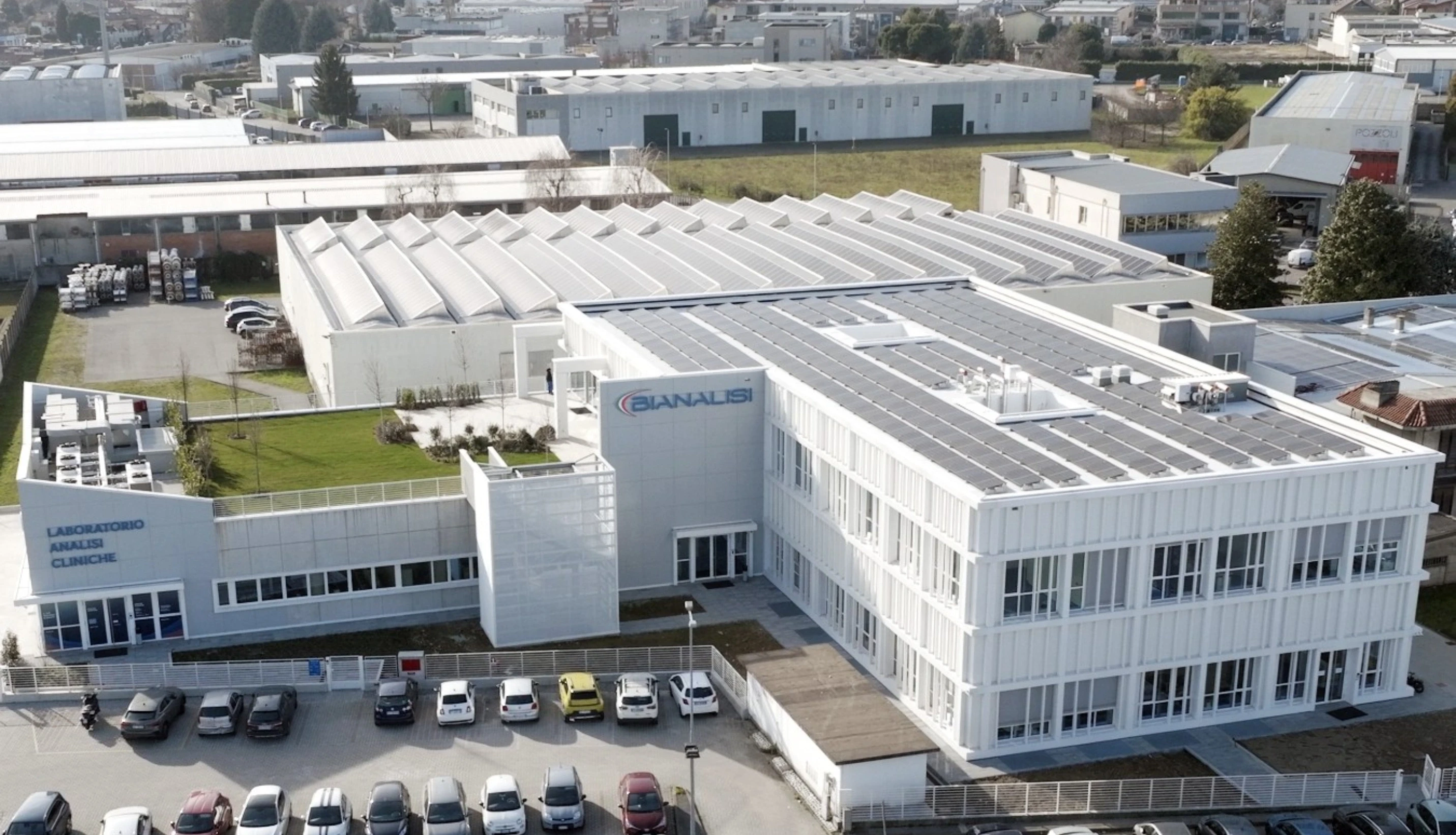
BIANALISI is one of Europe's leading diagnostic services providers and Italy's largest diagnostic group, operating across multiple regions through a network of clinical laboratories. The group processes patient diagnostic data at scale, with every test, result, and follow-up creating data that flows through their analytical pipeline. By 2024, BIANALISI's leadership had identified a clear constraint: their manual monthly reporting cycles were too slow to surface emerging patterns in time to act on them.
The Problem in Plain Terms
Manual reporting cycles were monthly. By the time a pattern surfaced in a report, the clinical relevance had often diminished. Trend clusters that should have triggered investigation went unnoticed for weeks.
Data was distributed across multiple laboratories. Each laboratory generated diagnostic data in different schemas and at different cadences. Stitching it into a coherent analytical view required engineering effort that no laboratory had on its own.
GDPR compliance was non-negotiable. Every patient record carries personal health data. Every analytical query must respect access rights, audit obligations, and anonymisation requirements. Compliance is the floor, not a feature.
Generic dashboards would not solve the actual question. The clinical question was specific: detect clusters of abnormal diagnostic trends as they emerge, with enough lead time for clinical investigation. A 'BI tool for everything' approach would have surfaced nothing useful fast.
The Engineering Brief
Acquaint Softtech was engaged on a dedicated team model with 6 to 10 Python developers embedded in BIANALISI's workflow. The brief was specific. Replace monthly manual reporting with automated data pipelines. Surface diagnostic trend clusters earlier than the existing cadence allowed. Maintain full GDPR compliance throughout. Build the analytics layer around the actual clinical question, not around generic reporting use cases.
Key Constraints
GDPR-compliant data handling at every layer. Row-level access controls, audit logging on every data access (not just mutations), anonymisation pipelines that preserved analytical utility.
Multi-laboratory data integration. Source systems were heterogeneous. The pipeline needed to ingest, normalise, and unify data from multiple labs without coupling to any single lab's schema.
Outcome-aligned analytics, not feature-aligned. The clinical team's actual question (early cluster detection) drove the data model, not generic dashboard requirements.
Operational stability for clinical timelines. The platform replaces a monthly cycle. The replacement cannot fail silently. Audit-grade logging plus alerting plus health checks were architectural, not optional.
The Architecture We Built
The platform was built around Python's strengths for healthcare analytics: a mature ecosystem for data engineering, machine learning, and regulated-environment compliance patterns. The architecture had to satisfy three competing requirements at once: clinical accuracy, GDPR compliance, and operational reliability across multi-quarter horizons.
Table: BIANALISI Predictive Diagnostics Platform Architecture Layers
Layer | Purpose | Compliance Notes |
|---|---|---|
Data ingestion | Multi-lab schema normalisation, validation | Audit logging on every read |
Data transformation | ETL pipelines, anonymisation, feature engineering | Anonymisation preserving analytical utility |
Storage tier | PostgreSQL primary, separate audit log store | Row-level access controls, encryption at rest |
Analytics layer | Cluster detection models, trend analysis | Reproducible runs, signed artifact storage |
Reporting layer | Automated cluster surfacing, alerting | Access controls per clinician role |
Operational layer | Health checks, observability, SLA monitoring | Full audit trail, immutable access logs |
Why Each Layer Mattered
Ingestion abstracted source heterogeneity. Each laboratory's data was funneled through validators that produced a canonical internal schema. Downstream layers never knew which laboratory the data came from. This made adding new labs an ingestion-layer change, not a system-wide change.
Transformation handled anonymisation upfront. Patient identifiers were stripped or hashed at the earliest possible point, before data reached the analytical layer. The result was an analytical store that could be queried freely without GDPR risk on every query.
Storage separated operational and audit data. The audit log was its own store with append-only semantics. Operational queries could not pollute the audit trail. Compliance reviews could read the audit trail without depending on operational system uptime.
Analytics aligned with the clinical question. Cluster detection models were tuned to surface emerging patterns in diagnostic trend data, not to populate a generic dashboard. The reporting layer presented clusters with confidence intervals, lead time estimates, and the clinical context required for investigation.
For the broader Python architectural patterns that support compliance-grade analytics platforms across healthcare, FinTech, and enterprise data engineering, the guide on Python development architecture and frameworks walks through how data pipelines, audit logging, and modular boundaries fit into a complete Python design.
GDPR Compliance Was Architectural, Not a Feature
Most healthcare analytics platforms treat compliance as a layer added late: access controls bolted onto an existing system, audit logging attached after the fact, anonymisation handled in batch. This approach fails GDPR audits and creates ongoing operational risk. BIANALISI's platform was built compliance-first from week one. Every architectural decision was tested against three questions: can we prove access was authorised, can we prove access was logged, and can we prove identifiable data was handled correctly at every step.
Three Compliance Patterns That Worked
Row-level access controls at the database, not just the API. API-level controls can be bypassed by a misconfigured query path. Row-level controls in PostgreSQL enforce access regardless of how the data is reached. A query that should not return a row simply does not return it, at the database layer.
Audit logging on every read, not just every mutation. Most systems log writes. GDPR requires the ability to demonstrate who accessed which data and when, including reads. Every analytical query against patient data wrote an entry to the audit log, with the queried user identity, time, and result set scope.
Anonymisation that preserved analytical utility. Naive anonymisation strips identifiers and destroys analytical value. The anonymisation pipeline kept enough structure (anonymised IDs, hashed groups, retained statistical features) to support cluster
Need GDPR-Compliant Python Healthcare Analytics?
Acquaint Softtech has delivered GDPR-compliant predictive analytics platforms for European healthcare clients including BIANALISI, Italy's largest diagnostic group. Senior Python engineers with hands-on experience in row-level data access controls, audit logging at scale, and anonymisation pipelines that preserve analytical value. Profiles in 24 hours. Onboarding in 48.
The Python Stack Behind the Platform
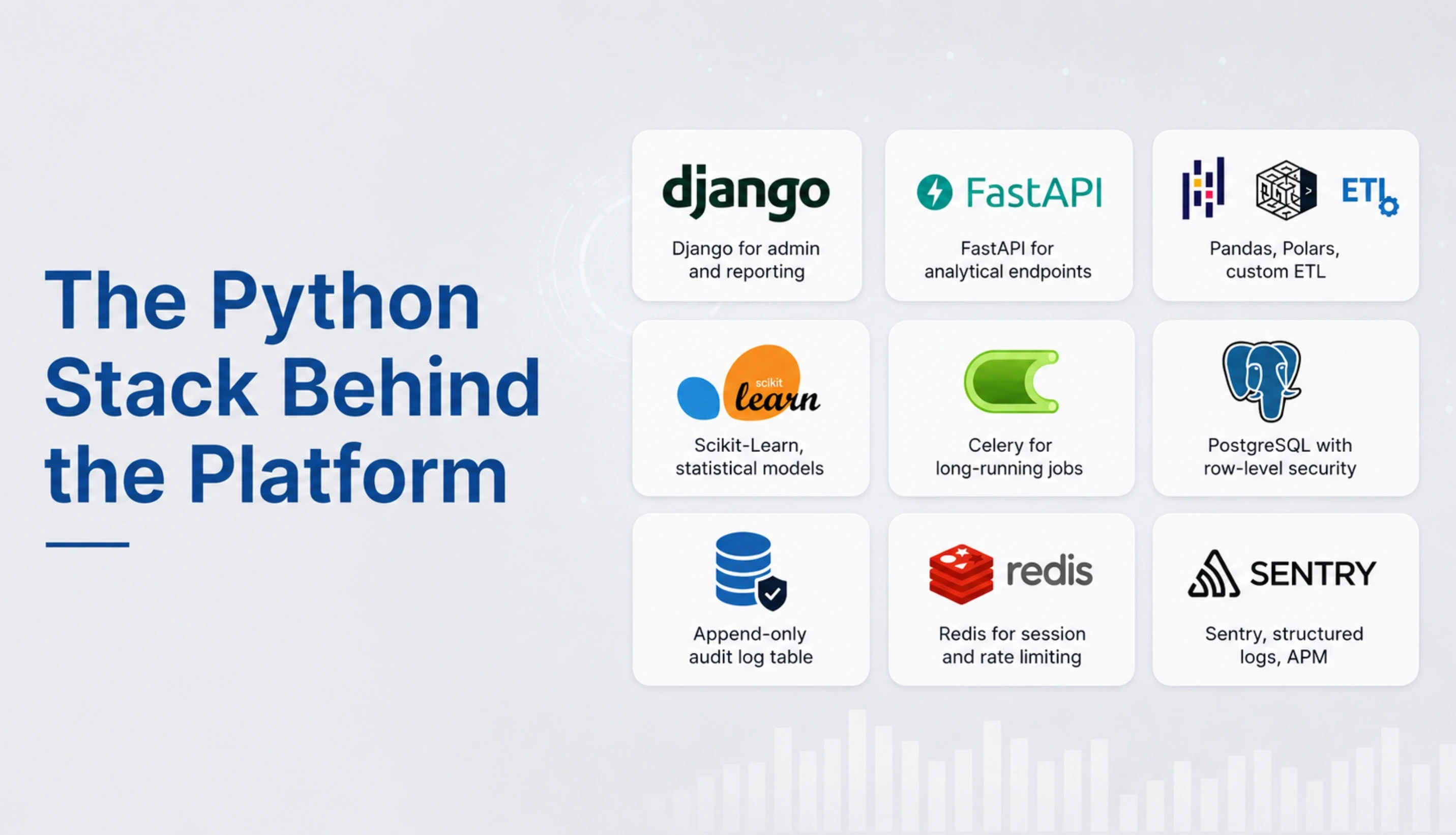
Python is the dominant language for healthcare data science and predictive analytics, and the BIANALISI engagement reflects why. According to DataCamp's analysis of Python in healthcare citing industry forecasts, AI applications in healthcare have the potential to save the US economy roughly $150 billion annually by 2026, with Python's ML ecosystem (Scikit-Learn, Keras, TensorFlow, PyTorch) powering most of the production work. The library ecosystem combined with healthcare-friendly compliance patterns makes Python the natural choice for a platform like BIANALISI's.
Table 2: Python Technology Stack for the BIANALISI Platform
Component | Technology | Why It Was Chosen |
|---|---|---|
Web framework | Django for admin and reporting | Mature, batteries-included, audit-friendly |
Async API | FastAPI for analytical endpoints | Async-native, type-safe contracts |
Data pipelines | Pandas, Polars, custom ETL | Mature data tooling, strong ecosystem |
ML and analytics | Scikit-Learn, statistical models | Production-stable, explainable |
Background work | Celery for long-running jobs | Reliable, retryable, observable |
Storage | PostgreSQL with row-level security | GDPR-friendly access patterns |
Audit store | Append-only audit log table | Immutable, separate from operational data |
Caching | Redis for session and rate limiting | Stateless application workers |
Observability | Sentry, structured logs, APM | Audit-grade traceability |
The choices here were deliberately boring. Django for admin and reporting because batteries-included frameworks reduce per-feature engineering time and have a stable audit story. FastAPI for analytical endpoints because async-native I/O suits queries that touch many records. Pandas plus Polars for ETL because their ecosystem reach is unmatched in 2026. Scikit-Learn for analytics because explainable models matter more than novel ones in regulated environments where every clinical decision must be defensible.
The Outcome: What Actually Changed for BIANALISI
The platform replaced manual monthly reporting cycles with automated data pipelines that surfaced patient diagnostic trend clusters earlier than the previous cadence allowed. The clinical team gained the ability to investigate emerging patterns while they were still actionable, not after the next monthly cycle had passed.
Measurable Outcomes
Earlier detection of abnormal diagnostic trend clusters. The platform consistently surfaced clusters within days of pattern emergence, where the manual cycle previously took weeks. The clinical lead time gained was the primary measured value.
Automated replacement of manual monthly reporting. Reporting cycles previously consumed clinical analyst time on data wrangling. The replacement freed that capacity for actual analytical investigation.
Audit-grade compliance posture maintained. Every analytical query left a row in the audit log. GDPR review responses became a query against the audit log, not a manual investigation across multiple systems.
Multi-laboratory data integration normalised. Adding a new laboratory's data became an ingestion-layer task rather than a system-wide change. The platform scaled with the diagnostic group's growth without re-architecture.
Lessons from the BIANALISI Engagement That Apply Broadly
Some lessons from this engagement are specific to healthcare. Others apply to any compliance-heavy, multi-source analytics project. The valuable lessons are the latter: they translate to FinTech audit trails, regulated SaaS platforms, and any domain where data flows must be traceable end to end.
Outcome-aligned design beats feature-aligned design. The platform was built around 'detect abnormal diagnostic trend clusters early', not 'a dashboard for everything'. Outcome-aligned design surfaces what matters fast. Feature-aligned design surfaces nothing fast.
Compliance is architectural, not a feature. Row-level access controls, audit logging on reads, and anonymisation pipelines all sit at the architectural layer. Retrofitting them later costs roughly 10x more than designing them in.
Domain context is part of the engineering. Engineers who learned diagnostic data semantics produced better data models than engineers who only understood Python patterns. The dedicated team model worked because the team accumulated this context, not because of any specific framework choice.
Boring technology choices win at compliance scale. PostgreSQL, Django, FastAPI, Celery, Pandas, Scikit-Learn. Every choice was mature and well understood. Compliance reviews favour boring technology because the failure modes are documented.
Separate operational and audit storage. Mixing the two means an operational outage takes down compliance reviews. Separating them means each can evolve and scale on its own constraints.
For more architectural lessons drawn from Python case studies across multiple production systems, including how Instagram, Spotify, and Netflix approached similar discipline questions, the analysis on backend architecture lessons from real Python case studies walks through the patterns that show up in every successful Python backend at meaningful scale.
Why the Dedicated Team Model Was the Right Choice
The engagement was structured as a dedicated team model with 6 to 10 Python developers embedded in BIANALISI's workflow. This was not an accident. Healthcare analytics platforms with compliance constraints rarely succeed on staff augmentation or fixed-price models. They need a team that accumulates domain context over months, makes architectural decisions with full understanding of clinical implications, and operates with the continuity that compliance audits require.
Three Reasons the Dedicated Model Worked
Continuity preserved compliance context. Healthcare compliance is not a checklist. It is a series of judgments about data flow, retention, access, and audit. A rotating team loses this context. A dedicated team accumulates it.
Outcome alignment, not scope alignment. The clinical outcome (earlier cluster detection) drove the work, not a fixed feature list. Fixed-price contracts would have anchored the team to a static scope that the clinical team was still refining.
Team size matched the actual complexity. 6 to 10 engineers across ingestion, transformation, analytics, reporting, and operational layers. Smaller teams would have created bottlenecks. Larger teams would have created coordination overhead.
For the budget reality of running a dedicated Python team on a compliance-heavy healthcare project, particularly for mid-sized diagnostic groups balancing scale and operational cost, the analysis on Python development cost for mid-sized businesses walks through engagement model economics in detail.
What Other Healthcare Teams Often Ask About This Engagement
Across follow-up conversations with healthcare innovation leads and clinical analytics teams, the same questions come up repeatedly about how an engagement like BIANALISI's gets structured. The answers are clearer when grounded in what actually worked.
How do you keep the team focused across multi-quarter horizons? Sprint goals are set against clinical outcomes (cluster detection lead time, anonymisation throughput, audit query latency), not feature lists. Engineers track progress against the actual question, which keeps engineering aligned with clinical value.
How is the audit trail kept performant under analytical load? Audit storage is separated from operational storage. Analytical queries write to the audit log asynchronously through a queue. The audit log is an append-only store optimised for compliance review, not for OLAP workloads.
What stops the team from drifting into 'dashboard for everything'? The outcome-aligned design discipline. Every proposed feature is tested against the clinical question. Features that do not directly support early cluster detection are deferred or rejected. The platform stays focused.
How Acquaint Softtech Approaches Healthcare Python Engagements
Acquaint Softtech is a Python development and IT staff augmentation company based in Ahmedabad, India, with 1,300+ software projects delivered globally across healthcare, FinTech, SaaS, EdTech, and enterprise platforms. Our healthcare engagements follow the architectural framework described in the complete guide to hiring Python developers, with senior Python engineers experienced in HIPAA, GDPR, and audit-grade compliance built into the engineering discipline rather than retrofitted at delivery.
Senior Python engineers with healthcare compliance depth. Hands-on with GDPR, HIPAA, row-level access controls, audit logging at scale, anonymisation pipelines, and reproducible analytics for regulated environments.
Predictive analytics and ML engineering experience. Scikit-Learn, TensorFlow, PyTorch, Pandas, Polars, Celery, and FastAPI used in production healthcare pipelines, including the BIANALISI predictive diagnostics platform.
Dedicated team engagement model expertise. Multi-quarter healthcare engagements with continuity, domain context accumulation, and outcome-aligned sprint goals tied to clinical or business value, not feature counts.
Transparent pricing from $20/hour. Dedicated Python engineering teams from $3,200/month per engineer. Architecture audits and healthcare-grade compliance reviews from $5,000.
For a broader view of cross-industry delivery patterns and the trade-offs that determined real client outcomes across healthcare, FinTech, SaaS, and enterprise systems, see the Acquaint Softtech case studies portfolio, which catalogues engagements across regulated and non-regulated domains.
Planning a Python Healthcare Analytics Engagement?
Book a free 30-minute consultation. We will look at your compliance requirements, your data sources, and your clinical outcome targets, and tell you straight whether a Python analytics platform of this kind fits your situation. No sales pitch. Just senior engineers who have built compliance-grade healthcare platforms before.
The Bottom Line
Python is not the differentiator in a healthcare predictive diagnostics platform. The differentiator is the engineering discipline that surrounds it. Row-level access controls. Audit logging on every read. Anonymisation pipelines that preserve analytical utility. Outcome-aligned analytics that answer the actual clinical question. Boring technology choices that pass compliance reviews because their failure modes are documented. A dedicated team that accumulates domain context over multi-quarter horizons.
BIANALISI's platform replaced monthly manual reporting with automated cluster detection that surfaced diagnostic patterns earlier than the clinical team had previously experienced. The technology choices supported that outcome. The discipline applied around them produced it. For any healthcare organisation evaluating Python for clinical analytics, the lesson is the same: choose a partner who treats compliance as architecture, domain context as engineering, and the clinical outcome as the only metric that matters.
Frequently Asked Questions
-
Why was Python the right choice for the BIANALISI predictive diagnostics platform?
Python has the deepest ecosystem for healthcare data analytics and machine learning, with mature libraries for ETL (Pandas, Polars), modelling (Scikit-Learn, TensorFlow, PyTorch), and audit-grade compliance patterns. Combined with frameworks like Django and FastAPI for the application layer, Python lets a single language span data engineering, ML, and the analytical API surface. For a multi-laboratory diagnostic group operating under GDPR, this language-level cohesion reduces operational complexity and hiring friction.
-
How was GDPR compliance built into the architecture rather than added later?
Three architectural decisions made compliance native, not bolted on. Row-level access controls were enforced at the PostgreSQL layer, so a misconfigured query path could not return unauthorised data. Audit logging was triggered on every read, not just on writes, satisfying GDPR's right-to-information traceability. Anonymisation was a pipeline stage that ran early, so patient identifiers were stripped or hashed before the analytical layer ever saw the data.
-
What does 'detecting diagnostic trend clusters earlier than expected' actually mean in practice?
BIANALISI's previous monthly reporting cycle meant emerging patterns in diagnostic data often surfaced 3 to 5 weeks after they had begun. The new platform's automated pipelines surfaced cluster patterns within days of emergence, giving the clinical team enough lead time to investigate while the pattern was still clinically relevant. The exact lead time gain varied by cluster type, but the consistent direction was toward earlier detection at higher confidence intervals.
-
Why was the dedicated team model chosen instead of staff augmentation or fixed-price?
Healthcare analytics platforms with compliance constraints rarely succeed on transient engagement models. The dedicated team accumulated domain context over months, made architectural decisions with full clinical understanding, and operated with the continuity that GDPR audits require. Staff augmentation rotates context too frequently. Fixed-price anchors the team to a static scope that clinical teams are still refining as they learn what the platform can support.
-
Could this architecture work for non-Italian healthcare or non-GDPR contexts?
Yes, the same architecture translates directly to HIPAA in US healthcare, similar national frameworks in the UK and Canada, and emerging healthcare data regulations elsewhere. The architectural pattern (row-level access, audit logging on reads, anonymisation as a pipeline stage, separate operational and audit storage) is jurisdiction-agnostic. The specific compliance certifications change, but the underlying engineering discipline is the same.
-
What was the team size and why 6 to 10 developers specifically?
The team scaled between 6 and 10 Python engineers across the engagement lifecycle, with composition shifting between data engineering, ML, application backend, and DevOps capacity as the platform matured. This size matched the actual complexity: smaller teams created bottlenecks at integration boundaries, larger teams would have introduced coordination overhead that healthcare context-building cannot absorb cleanly.
-
How long does an engagement like this typically take to deliver?
Multi-quarter is the realistic timeline for a compliance-grade healthcare analytics platform of this scope. The first useful clinical surfacing usually arrives within the first 4 to 6 months, with subsequent quarters refining model accuracy, expanding data source coverage, and tightening compliance posture. Treating it as a multi-quarter program with phased outcomes is the engagement model that works. Compressed timelines reliably produce platforms that pass technical review and fail compliance audit.
We’re Acquaint Softtech, your technology growth partner. Whether you're building a SaaS product, modernizing enterprise software, or hiring vetted remote developers, we’re built for flexibility and speed. Our official partnerships with Laravel, Statamic, and Bagisto reflect our commitment to excellence, not limitation. We work across stacks, time zones, and industries to bring your tech vision to life.
Table of Contents
Get Started with Acquaint Softtech
- 13+ Years Delivering Software Excellence
- 1300+ Projects Delivered With Precision
- Official Laravel & Laravel News Partner
- Official Statamic Partner
Related Blog

How to Hire Python Developers Without Getting Burned: A Practical Checklist
Avoid costly hiring mistakes with this practical checklist on how to hire Python developers in 2026. Compare rates, vetting steps, engagement models, red flags, and more.
Acquaint Softtech
March 30, 2026
Total Cost of Ownership in Python Development Projects: The Full Financial Picture
The build cost is just the beginning. This guide breaks down the complete TCO of Python development projects across every lifecycle phase, with real benchmarks, a calculation framework, and 2026 data.
Acquaint Softtech
March 23, 2026
Python Developer Hourly Rate: What You're Actually Paying For
Python developer rates range $20-$150+/hr in 2026. See what experience, specialisation & hidden costs actually determine the price. Save 40% with vetted offshore talent.
Acquaint Softtech
March 9, 2026India (Head Office)
203/204, Shapath-II, Near Silver Leaf Hotel, Opp. Rajpath Club, SG Highway, Ahmedabad-380054, Gujarat
USA
7838 Camino Cielo St, Highland, CA 92346
UK
The Powerhouse, 21 Woodthorpe Road, Ashford, England, TW15 2RP
New Zealand
42 Exler Place, Avondale, Auckland 0600, New Zealand
Canada
141 Skyview Bay NE , Calgary, Alberta, T3N 2K6
Your Project. Our Expertise. Let’s Connect.
Get in touch with our team to discuss your goals and start your journey with vetted developers in 48 hours.