

Remote Patient Monitoring App Development: From Wearable to Dashboard
Remote patient monitoring (RPM) app development connects wearable and medical devices to a clinical dashboard using IoT data pipelines, real-time alerting, and HIPAA-compliant cloud infrastructure. A production RPM system collects biometric data via Bluetooth or cellular, transmits it through an encrypted MQTT or HTTPS pipeline, stores it in a time-series database, and surfaces it in a clinical dashboard with threshold-based alerts, trend visualisation, and EHR write-back via HL7 FHIR.

Ahmed Ginani

- You are building an RPM product and need the full technical architecture.
- Your clinical dashboard confuses doctors instead of helping them act faster.
- You need to know which wearable protocols actually work at production scale.
- You want verified cost data before scoping your RPM development budget.
- You are evaluating offshore RPM development teams and need a trust framework.
Introduction
Clinicians managing chronic disease patients are effectively flying blind between appointments. A hypertensive patient seen monthly generates 12 data points per year. An RPM platform equipped with a connected blood pressure cuff generates 1,440 readings in the same period. That difference is the gap between reactive care and proactive care, and it is the precise problem that remote patient monitoring app development solves. But most teams building RPM products discover too late that the hardest part is not the wearable integration. It is what comes after: a real-time data pipeline that does not drop readings under load, a clinical dashboard that reduces cognitive burden instead of adding to it, and a HIPAA-compliant infrastructure that survives an OCR audit.
Teams that build the wearable connection first and the compliance architecture last consistently face expensive rebuilds. This guide closes that gap. For the complete healthcare software context across all eight product types, start with the complete guide to healthcare software development.
Acquaint Softtech has delivered 1,300+ or more software projects over 13+ or more years, including telemedicine platforms, EHR systems, and clinical analytics tools for clients in the USA, UK, Europe, Australia, and New Zealand. The team's remote patient monitoring solutions and healthcare software development services are specifically designed for teams building wearable-to-dashboard clinical systems.
The global RPM market reached $67.3 billion in 2026, projected to grow to $117.9 billion by 2033 at 8.3 per cent CAGR (May 2026). CMS has expanded RPM reimbursement with new 2026 CPT codes including 99445 and 99470, making RPM financially viable for practices of all sizes. For cost context before you start development, the cost of Developing Custom Healthcare Software guide (published on acquaintsoft.com) includes RPM-specific cost ranges and what drives them.
What Is Remote Patient Monitoring App Development

Remote patient monitoring app development is the engineering of software systems that collect biometric and health data from patients outside clinical settings, transmit that data securely to a care team, and surface it in a clinical dashboard with alerts, trends, and EHR integration. Understanding the importance of healthcare data visualisation starts here: the system is only valuable if clinicians can interpret the data in the time they have between patient interactions.
RPM systems serve three clinical use cases. Chronic disease management uses continuous monitoring of conditions like hypertension, diabetes, COPD, and heart failure to detect deterioration before it becomes a hospitalisation. Post-surgical recovery monitoring uses wearables to track patient vitals and activity data at home, reducing 90-day readmission rates.
Research in post-surgical RPM shows liver transplant patients using connected monitoring had 25 per cent fewer 90-day readmissions (April 2026). Population health management uses aggregate RPM data across patient cohorts to identify risk patterns, trigger proactive outreach, and document quality metrics for value-based care contracts.
What makes RPM development different from standard health app development is the continuous data stream. A standard health app might handle 50 to 100 user events per day per user. A cardiac monitoring RPM platform may handle 864 ECG readings per patient per day (one every 100 seconds). A platform with 500 enrolled patients generates 432,000 readings daily. The data pipeline architecture must handle this at rest and in motion without data loss, latency spikes, or compliance gaps. Acquaint Softtech's virtual CTO services include an RPM architecture review as the first deliverable for all new RPM engagements, mapping the data volume requirements and HIPAA constraints before any engineering begins.
The RPM Market in 2026: Why This Is the Right Moment to Build
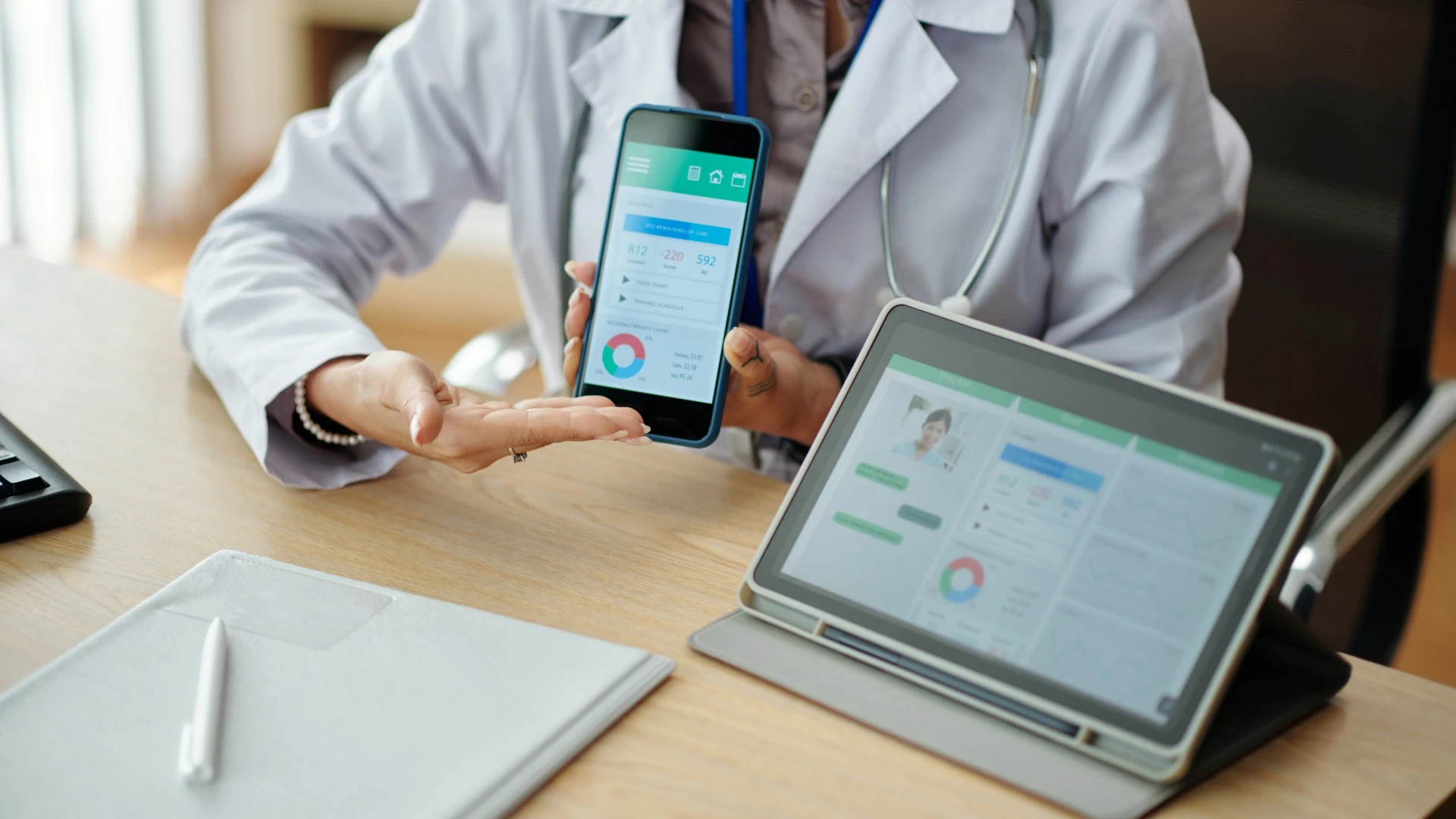
Three converging forces make 2026 the correct moment to build a remote patient monitoring product: a global chronic disease burden that has outpaced traditional care capacity, a mature CMS reimbursement framework that makes RPM financially viable for practices, and the coming of age of wearable accuracy to the point where clinical-grade decisions can be made from consumer-adjacent devices.
Market Metric | Figure |
Global RPM market (2026) | $67.3 billion |
Global RPM market projected (2033) | $117.9 billion, 8.3% CAGR |
US RPM market growth rate (2026 to 2033) | 16.3% CAGR |
RPM hospital visit reduction | Up to 60% |
Elder care cost reduction via RPM | Up to 25% |
New 2026 CMS CPT codes | 99445 and 99470 (new billing pathways) |
CPT 99457 reimbursement rate (2026) | Approximately $47.87 per month |
Wearable RPM device market (projected 2027) | $30 billion |
CMS finalised two new 2026 CPT codes that directly address constraints limiting RPM adoption: CPT 99445 creates a billing pathway for device supply when patients transmit data for only 2 to 15 days in 30 days, and CPT 99470 covers 10 to 19 minutes of treatment management services reimbursed at approximately $26. This means RPM is now billable even when patients have lower data transmission rates, significantly expanding the addressable patient population.
For practices evaluating a custom vs off-the-shelf build, the custom healthcare software development guide covers the decision framework in detail, including when vendor billing integration is more cost-effective than building a custom RPM billing engine. Teams planning scalable healthcare platforms can also explore Hire Laravel Developers for secure and compliant backend development support.
Core Components of an RPM System: From Wearable to Dashboard
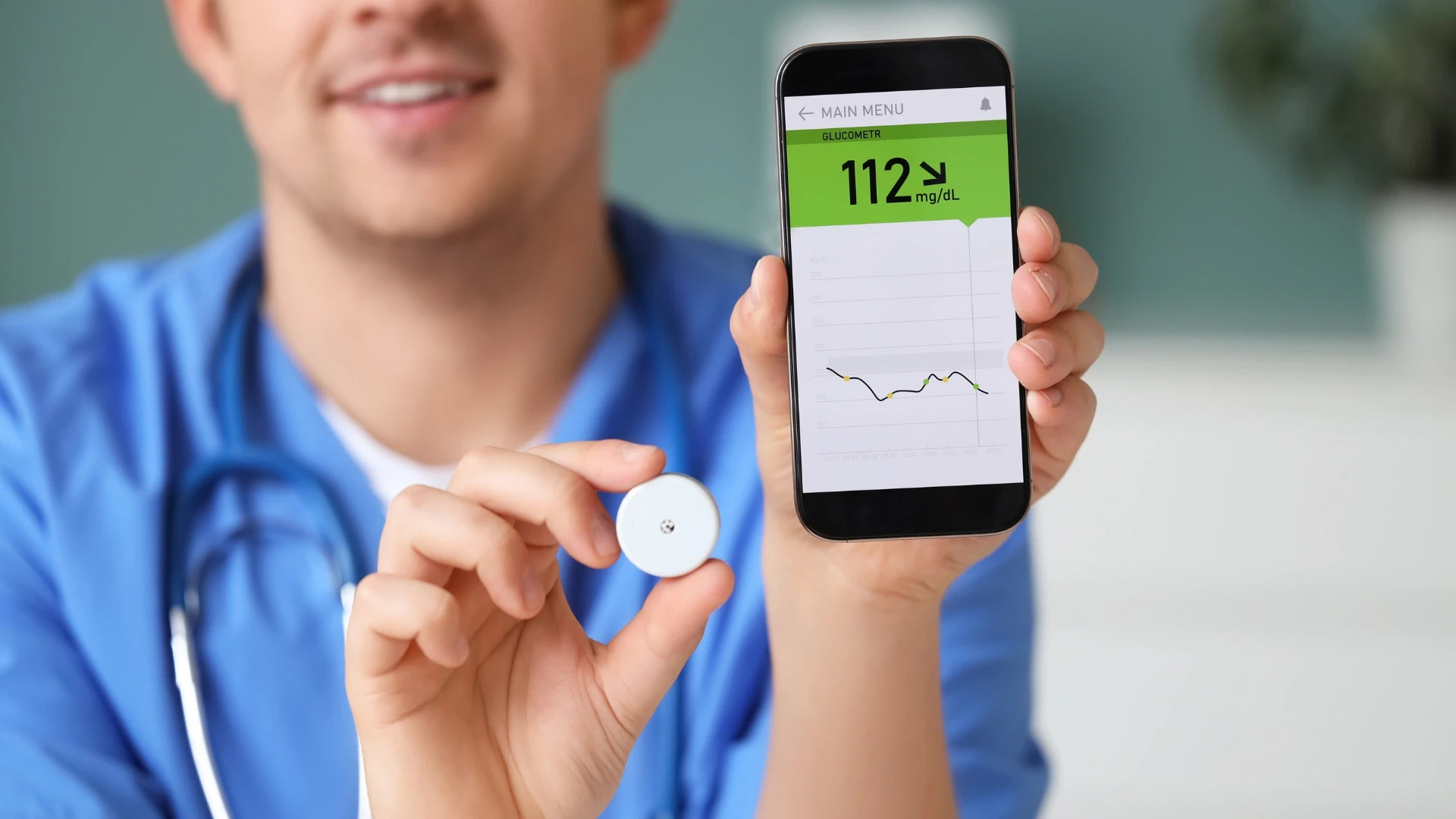
A production RPM system is not a single application. It is a connected system of six components that must each work reliably and securely at the same time. Understanding what KPIs remote patient monitoring should track begins with understanding which component generates that data.
Component 1: Connected Device Layer
The device layer is the data origin. It includes FDA-cleared wearables and medical devices (Bluetooth-enabled blood pressure cuffs, pulse oximeters, continuous glucose monitors, ECG patches, smart scales, and activity trackers) and the mobile or tablet application that pairs with them. The pairing and data collection application must handle device discovery, connection management, reading normalisation across different device models, and offline buffering when cellular or WiFi connectivity is unavailable.
Component 2: Secure Data Transmission Layer
Biometric readings collected at the device layer must be transmitted to the cloud with PHI-appropriate security. The choice of transmission protocol, MQTT or HTTPS, depends on data frequency and device constraints. MQTT is preferred for high-frequency sensor data (10 or more readings per minute) because of its lower overhead. HTTPS is preferred for periodic readings where simplicity and compatibility with standard web infrastructure are prioritised. All transmissions must use TLS 1.3 encryption, and all transmitted data is PHI under HIPAA.
Acquaint Softtech's MERN stack developers build the real-time data reception APIs that handle device data ingestion, while the team's DevOps engineers configure the MQTT broker infrastructure (AWS IoT Core or Eclipse Mosquitto) with HIPAA-eligible transport security from project day one.
Component 3: Data Processing and Storage Layer
Raw biometric readings from wearables are not immediately usable. They require normalisation (converting device-specific units to standardised clinical values), validation (detecting readings outside plausible clinical ranges), and enrichment (associating readings with patient context such as medication timing, activity level, and recent clinical notes). Time-series databases such as InfluxDB or TimescaleDB are preferred for biometric data storage because of their performance on time-range queries.
PostgreSQL with time-series extensions is an alternative for teams requiring a unified relational and time-series data store, especially when working with scalable backend architectures supported by highly skilled Python developers experienced in healthcare and data engineering systems.
Component 4: Alert and Escalation Engine
The alert engine is where RPM data becomes clinical action. It evaluates incoming readings against per-patient threshold profiles (e.g. systolic BP over 160 for a specific patient triggers a Level 2 alert), generates structured alerts with severity levels, and routes them through the correct escalation pathway: in-app notification, SMS, email, or direct integration with the care coordinator's workflow system. The threshold logic must be clinically configurable by care teams, not hardcoded by developers.
Component 5: Clinical Dashboard
The clinical dashboard is where the full value of the RPM system is delivered or wasted. More data can hurt a care team if the dashboard is noisy (2026). Clinical data reporting trends 2026 confirm that dashboards providing patient-prioritised worklists based on alert severity, not raw data feeds, are adopted at substantially higher rates than data-dense displays.
Building these intelligent workflows often requires experienced teams that can hire AI/ML engineers with healthcare and predictive analytics expertise. A doctor opening the dashboard needs to know in 30 seconds which patients need attention today and which do not.
Component 6: Patient-Facing Mobile Application
The patient mobile app handles device pairing, reading submission, symptom logging, medication adherence tracking, care plan display, and communication with the care team. Clinical data reporting trends 2026 show that patient-facing RPM apps with simplified onboarding (under 5 minutes from download to first reading) achieve significantly higher enrollment and adherence rates.
Acquaint Softtech's React Native developers build patient-facing RPM mobile apps as cross-platform iOS and Android products from a single shared codebase. This approach reduces build cost by 30 to 40 per cent compared to separate native builds and ensures consistent HIPAA compliance logic across both platforms.
Wearable and Device Integration: BLE, MQTT, and the Data Layer
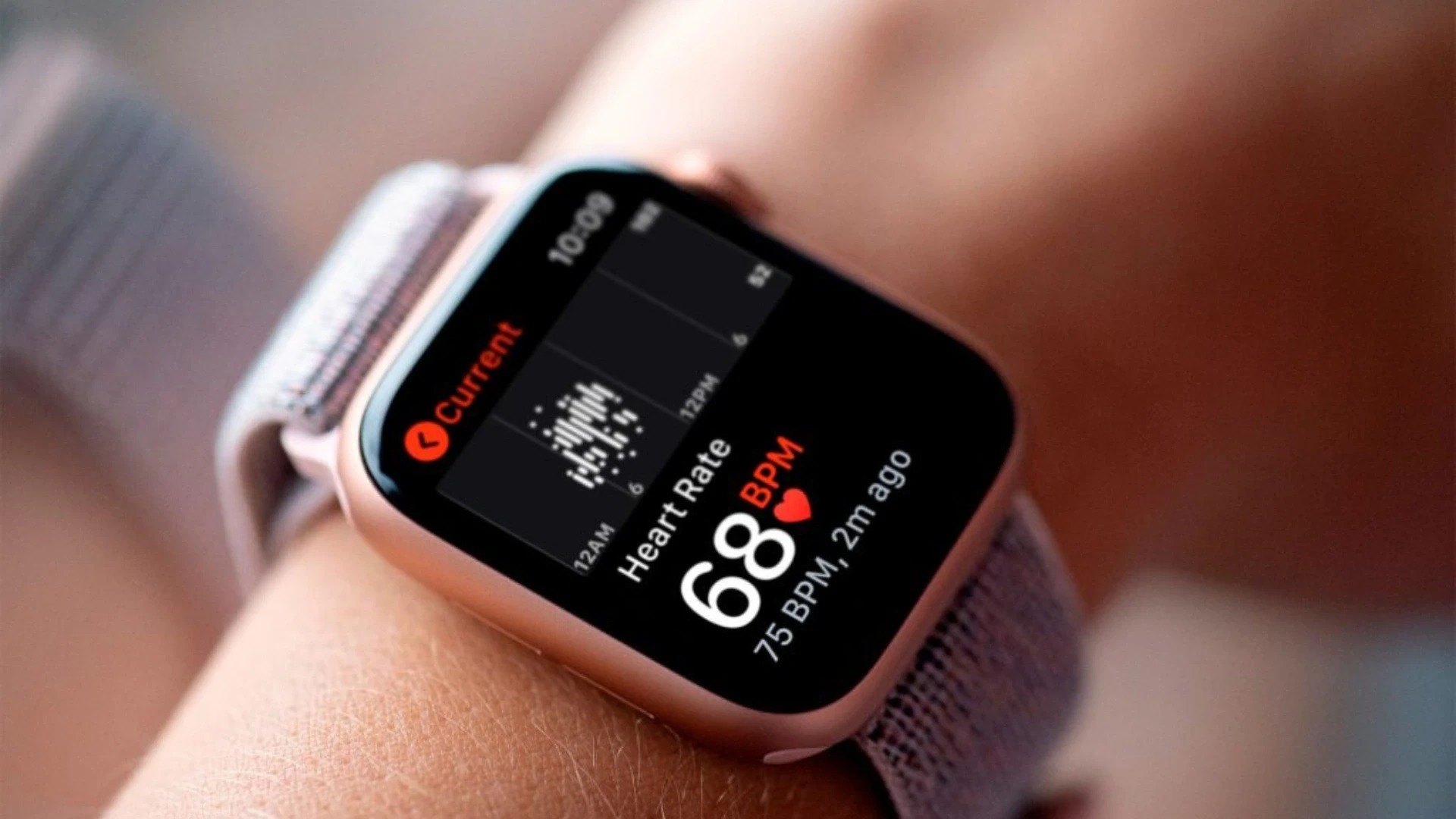
Wearable and device integration is the most underestimated technical challenge in remote patient monitoring app development. The challenge is not connecting a single device. It is building a device abstraction layer that can reliably handle multiple device manufacturers, different firmware versions, intermittent Bluetooth connections, offline buffering, and data normalisation across devices that report the same vital sign in different formats.
Bluetooth Low Energy (BLE) integration
BLE is the dominant protocol for short-range medical device communication. The mobile app acts as the BLE central device, scanning for and connecting to the wearable peripheral. A production-grade BLE integration must handle device discovery and pairing for multiple device profiles (GATT profiles for heart rate, blood pressure, glucose, SpO2), connection state management with automatic reconnection on disconnect, background data collection on iOS and Android with platform-specific background execution constraints, and offline buffering of readings when the phone has no internet connection. Many healthcare companies also use white label software development services to accelerate wearable app deployment while maintaining HIPAA-compliant infrastructure and scalable device integrations.
Apple HealthKit and Google Health Connect provide standardised APIs for accessing health data from native device sensors and third-party apps. For RPM platforms targeting the consumer wearables market (Apple Watch, Fitbit, Garmin), HealthKit and Health Connect integration allows data ingestion without a custom BLE implementation per device. The cluster article Apple HealthKit and Google Health Connect Integration for Healthcare Apps covers this integration in depth.
MQTT vs HTTPS: choosing the right transmission protocol
Factor | MQTT | HTTPS |
Best for | High-frequency continuous monitoring (ECG, glucose) | Periodic readings (daily weight, twice-daily BP) |
Connection model | Persistent publish-subscribe | Request-response |
Message overhead | Very low (2-byte header) | Higher (full HTTP headers per request) |
HIPAA transport security | TLS 1.3 on MQTT broker | TLS 1.3 on HTTPS endpoint |
Cloud infrastructure | AWS IoT Core, Azure IoT Hub, Eclipse Mosquitto | Standard API Gateway or REST server |
Offline message queuing | Native (QoS levels 0, 1, 2) | Requires application-layer buffering |
For most RPM platforms building in 2026, HTTPS is the correct default unless the device generates more than 6 readings per minute. The operational complexity of managing an MQTT broker, including broker clustering, message persistence, and QoS guarantees, is not justified for periodic vital sign monitoring. Cardiac monitoring and continuous glucose monitoring are the primary cases where MQTT is architecturally necessary.
Real-Time RPM Dashboard Architecture: What Clinicians Need
Clinical data reporting trends 2026 confirm a clear pattern: dashboards that show everything get used by no one. Dashboards that show the right things, at the right time, in the right format, become indispensable workflow tools. The best charts and graphs for clinical data in an RPM context are not the most information-dense. They are the most decision-enabling, which is why many healthcare companies now rely on virtual CTO services to design scalable, clinician-friendly healthcare analytics platforms.
How to make remote patient monitoring useful for doctors
Patient-prioritised worklist as the default view. The dashboard opens to a ranked list of patients ordered by alert severity, not alphabetically or by enrollment date. A clinician scanning 50 patients in a morning review needs to identify the 3 who need action within 30 seconds.
Sparkline trend visualisations in the worklist. Each patient row in the worklist shows a 7-day sparkline for their primary monitored metric. The clinician sees trend direction (improving, stable, deteriorating) without clicking into the patient record.
Patient detail view with layered time-range controls. The individual patient view shows readings on a timeline with selectable ranges (24 hours, 7 days, 30 days, 90 days). Threshold bands are displayed as coloured regions on the chart so deviations are immediately visible.
Alert history and resolution workflow. Each alert is time-stamped, linked to the triggering readings, and includes a resolution workflow (acknowledge, escalate, add note) that creates an audit trail for billing and clinical documentation.
EHR context panel. The dashboard surfaces the patient's most recent clinical notes, active medications, and upcoming appointments from the EHR in a side panel, without requiring the clinician to switch applications.
What metrics should a remote patient monitoring dashboard display?
Clinical Use Case | Core Metrics | Alert Threshold |
Hypertension | BP, heart rate | BP over 160/100, missed readings |
Diabetes | Glucose, time-in-range | Below 70 or above 250 mg/dL |
Cardiac Monitoring | Weight, HR, SpO2 | Weight gain, low SpO2, abnormal HR |
COPD | SpO2, peak flow | SpO2 below 88%, low peak flow |
Post-Surgical Recovery | Pain, temperature, activity | High fever, missed meds, low activity |
Key Insight
The most frequently cited reason RPM dashboards fail clinical adoption: alert fatigue. A dashboard generating 20 alerts per clinician per day where 18 are not actionable will be ignored within two weeks. Build clinician-configurable threshold controls from the start, not as a post-launch feature.
Acquaint Softtech's MERN stack developers build RPM dashboards using React.js with Recharts or D3.js for clinical data visualisation. Businesses looking to scale healthcare platforms can also hire MEAN stack developers for secure, real-time healthcare application development. The front-end team follows a clinical UX design principle: every visual element must reduce a clinical decision-making step, not add information for its own sake.
HIPAA Compliance in RPM: What the Architecture Must Include
Every biometric reading transmitted from a patient's wearable to the clinical dashboard is Protected Health Information under HIPAA. RPM systems face a larger HIPAA attack surface than standard healthcare apps because PHI is continuously in motion across device, mobile, cloud, and dashboard layers.
RPM-specific HIPAA technical requirements
All biometric readings encrypted in transit via TLS 1.3 at every transmission point: device to mobile app, mobile app to cloud API, cloud API to dashboard
All stored biometric data encrypted at rest using AES-256 in the time-series database, the relational database, and all backup storage
MQTT broker (if used) configured with TLS 1.3 mutual authentication — client certificates required for device connections
Unique patient identifier used throughout the RPM data pipeline — no use of name, date of birth, or other direct identifiers in device payloads
HIPAA-compliant BAAs executed with all infrastructure providers: cloud platform (AWS, Azure, or GCP), push notification service, time-series database vendor, and the RPM development firm
Audit log capturing every PHI access event in the clinical dashboard: user ID, timestamp, patient record accessed, action taken
Role-based access controls separating care coordinator access (can view and acknowledge alerts) from physician access (can view, acknowledge, and modify threshold profiles)
Patient consent captured and logged before any device pairing or data collection begins
Acquaint Softtech's DevOps engineers configure HIPAA-eligible cloud infrastructure on AWS IoT Core, Azure IoT Hub, or GCP Healthcare API for all RPM engagements. Infrastructure is defined as code (Terraform) so every compliance configuration is version-controlled and auditable.
CMS Reimbursement and CPT Codes: Building Billing Into Your Platform
Building RPM billing capability into the platform from the start is one of the highest-value features for commercial success. Practices that cannot efficiently document and bill for RPM services do not sustain RPM programmes regardless of clinical outcomes. The CPT codes below are from the 2026 CMS reimbursement framework.
CPT Code | Service | 2026 Rate + Europe Context |
99453 | Patient setup & education | ~$19, similar reimbursement pilots in Europe |
99454 | 30-day device data transmission | ~$64/month, EU RPM adoption growing |
99445 | 2–15 days data transmission | ~$47, supports flexible RPM billing |
99457 | First 20 mins RPM management | ~$47–$50/month, common telehealth model |
99470 | 10–19 mins treatment management | ~$26/month, emerging EU reimbursement trend |
99458 | Extra 20 mins RPM management | ~$39/additional period, used in chronic care programs |
Source: CMS 2026 Physician Fee Schedule. Rates are national average non-facility rates and vary by geography. The new 2026 CPT codes 99445 and 99470 expand billable RPM to patients with lower data transmission rates and shorter clinical engagement times, materially expanding the addressable patient population.
An RPM platform that automatically tracks the minutes of clinical staff time spent reviewing data, documents the required interactive communication events, and generates CPT-code-specific reports reduces billing overhead by 60 to 70 per cent versus manual documentation. For the specific technical requirements of building billing documentation into RPM software, the cluster article RPM Reimbursement and CPT Codes: Building Software That Tracks Billable Events covers the implementation in detail.
EHR Integration: Writing RPM Data Back to the Patient Record
RPM data that lives only in the RPM platform creates a documentation burden that ends clinical adoption. Physicians who must manually transfer readings, alerts, and care notes from the RPM dashboard into the patient's EHR will stop using the RPM platform within months. FHIR R4 integration that writes RPM data directly into the patient record removes this friction entirely.
FHIR resources for RPM data
RPM Data Type | FHIR Resource | EHR Destination |
Biometric reading (BP, glucose, weight, SpO2) | Observation (with LOINC code for the specific vital) | Vitals section in patient record |
Alert event | Flag (with linked Observation) | Care management alerts section |
Care plan | CarePlan | Care plans section |
Device pairing record | Device (linked to Patient) | Device history section |
Patient consent | Consent | Patient consent section |
Clinical review note | DocumentReference | Notes section |
LOINC codes for vital signs are mandatory for FHIR-compliant EHR integration. Key LOINC codes for RPM: 55284-4 (blood pressure panel), 2339-0 (glucose in blood), 29463-7 (body weight), 2708-6 (oxygen saturation), 8867-4 (heart rate), and 9279-1 (respiratory rate). Using non-standard codes results in data appearing in the wrong EHR sections or being rejected by the receiving system.
Acquaint Softtech's dedicated software development teams include a FHIR specialist who maps the target EHR's implementation guide requirements in Phase 2 of every RPM engagement, before the data model is designed. This work begins in the discovery workshop services that open every healthcare project.
Case Study: Clinical Predictive Analytics for BIANALISI SPA, Italy (2025)
.webp "Case Study: Clinical Predictive Analytics for BIANALISI SPA, Italy (2025)")
The following is drawn from a verified Clutch client review published February 22, 2026. All outcomes are client-reported and publicly verifiable on the Acquaint Softtech Clutch profile.
Client: BIANALISI SPA, Italy's largest integrated diagnostics group (1,001 to 5,000 employees), owned by Charme Capital Partners, Columna Capital, and entrepreneur Giuliano Caslini
Reviewer: Giovanni Gianolli, CEO, BIANALISI SPA
Project: Clinical Data Analysis and Predictive Health Intelligence Platform
Technology: Python (pandas, scikit-learn, FastAPI), PostgreSQL, React.js dashboard, European-compliant cloud infrastructure
Duration: April to November 2025 — delivered on schedule despite mid-project regulatory scope changes
Clutch Rating: 5.0 out of 5.0 across Overall, Quality, Schedule, and Cost | Verified: February 22, 2026
The clinical challenge
BIANALISI needed to transform laboratory and clinical data from multiple regional facilities into predictive health intelligence capable of identifying patient risk patterns before those patterns became clinical emergencies. The system had to align with strict European data protection regulations while enabling meaningful statistical modelling on partially anonymised datasets. The core challenge mirrors what every RPM team faces: raw data is not clinical intelligence. The data pipeline must produce outputs that clinical users will act on, not merely look at.
What Acquaint Softtech built
A secure, European-compliant data ingestion layer processing laboratory test records, diagnostic imaging metadata, and outpatient service documentation across regional facilities
Partially anonymised clinical datasets cleaned and structured for statistical modelling, with data privacy safeguards integrated into the model training workflow rather than applied post-hoc. Modern healthcare platforms also rely on secure infrastructure modernisation and version upgrade services to maintain compliance, performance, and long-term scalability.
Predictive risk models identifying early indicators in diagnostic results, validated by BIANALISI's own laboratory directors before deployment to ensure clinical interpretability, not just statistical accuracy
Executive dashboards for regional medical directors and operational dashboards for clinical supervisors, each displaying data in role-specific formats rather than a single undifferentiated data view
Access-controlled APIs and tamper-evident audit trails aligned with European compliance standards across all data retrieval workflows
Verified clinical outcomes
Clinical directors identified clusters of abnormal diagnostic trends within the same reporting cycle, previously only visible after monthly manual audits
A regional medical supervisor identified an unusual spike in related laboratory indicators within a specific patient cohort and initiated immediate review, rather than waiting for periodic analysis
Cross-regional trend analysis consolidated from multiple manual extraction processes into a single operational dashboard, materially reducing report preparation time
Every project milestone delivered on schedule despite mid-project regulatory clarifications that required scope adjustments
RPM Development Cost and Timeline in 2026

Remote patient monitoring development cost is determined by three variables: the number of device integrations required, the complexity of the alert and clinical dashboard layer, and whether the platform requires EHR integration. The following data is drawn from Acquaint Softtech's project portfolio and verified market sources.
Platform Scope | Timeline | Cost + Europe Context |
Single-device RPM MVP | 3–5 months | $60k–$120k, HIPAA + GDPR compliance |
Multi-device RPM platform | 5–9 months | $120k–$280k, EU data interoperability needs |
Full RPM with EHR/FHIR billing | 8–14 months | $200k–$450k, FHIR + EU healthcare integration |
Enterprise AI-driven RPM | 10–18 months | $350k–$700k+, EU AI Act + multi-tenant compliance |
What RPM projects consistently underestimate
Device integration cost per additional device type: each new wearable manufacturer requires a separate BLE profile implementation and data normalisation layer — add $5,000 to $15,000 per additional device family.
HIPAA IoT infrastructure cost: configuring AWS IoT Core or Azure IoT Hub with HIPAA-eligible security adds $8,000 to $20,000 versus a standard cloud setup.
EHR FHIR integration: each EHR vendor integration (Epic, Cerner, AthenaHealth) adds $50,000 to $120,000 and 2 to 4 months independently of the core platform timeline.
Clinical validation of threshold logic: clinicians must configure and validate alert thresholds before launch; this is not engineering work but adds 3 to 6 weeks of clinical engagement time.
For custom remote patient monitoring development services, Acquaint Softtech delivers at $25 to $49 per hour (Clutch-verified), representing 40 per cent average cost savings versus equivalent Western agency rates. Hire developers for remote patient monitoring through the staff augmentation model for flexible team scaling across intensive integration phases.
Frequently Asked Questions
-
What should a remote patient monitoring dashboard display?
An RPM dashboard should show prioritised patient alerts, vital trends, abnormal readings, medication context, and quick patient summaries so clinicians can make decisions within seconds. The goal is faster clinical action without overwhelming doctors with unnecessary data.
-
How do you make RPM useful for doctors?
RPM becomes useful when it reduces alert fatigue, highlights only actionable issues, shows clear health trends, and integrates directly with EHR systems without extra app switching. Clinicians need simplified workflows, not more administrative complexity.
-
What are the best tools for RPM data visualisation?
React.js, Recharts, D3.js, Grafana, InfluxDB, and TimescaleDB are commonly used for RPM dashboards because they support real-time clinical data visualisation and trend monitoring. These tools help healthcare teams quickly identify patient deterioration patterns.
-
How much does a remote patient monitoring app cost in 2026?
An RPM MVP costs around $60K–$120K, while enterprise RPM platforms with AI, EHR integration, and billing systems can exceed $700K depending on complexity and compliance needs. Regulatory compliance and device integrations are major cost drivers.
-
What is the difference between MQTT and HTTP in RPM apps?
MQTT is best for continuous real-time sensor streaming like ECG monitoring, while HTTPS works better for periodic health readings such as blood pressure or glucose updates. Most RPM systems use both protocols depending on device behaviour.
-
What CPT codes are used for RPM in 2026?
The main RPM CPT codes include 99453, 99454, 99457, 99458, and new 2026 codes 99445 and 99470 for setup, monitoring, device transmission, and care management reimbursement. These codes help healthcare providers monetise RPM services effectively.
-
Does a remote patient monitoring app need FDA clearance?
RPM apps that only display device data usually do not require FDA clearance. However, AI-driven diagnostic or autonomous clinical decision features may require FDA SaMD approval. Regulatory classification depends on how the software influences medical decisions.
-
How do you integrate an RPM app with an EHR?
RPM apps integrate with EHR systems using HL7 FHIR APIs, SMART on FHIR authentication, and FHIR resources such as Observation, Consent, and Flag for clinical interoperability. Proper EHR integration improves clinician adoption and workflow efficiency.
I help agencies and founders scale their tech teams with the right developers at the right time. At Acquaint Softtech, I focus on building long term partnerships and making remote hiring simple, predictable, and results driven. My goal is straightforward to help businesses grow faster with reliable dedicated developers.
Table of Contents
Get Started with Acquaint Softtech
- 13+ Years Delivering Software Excellence
- 1300+ Projects Delivered With Precision
- Official Laravel & Laravel News Partner
- Official Statamic Partner
Related Blog
The Complete Guide to Healthcare Software Development in 2026
Healthcare software development in 2026 is not a single discipline. It is six distinct product categories, each with its own compliance perimeter, integration burden, and cost curve.

Acquaint Softtech
May 1, 2026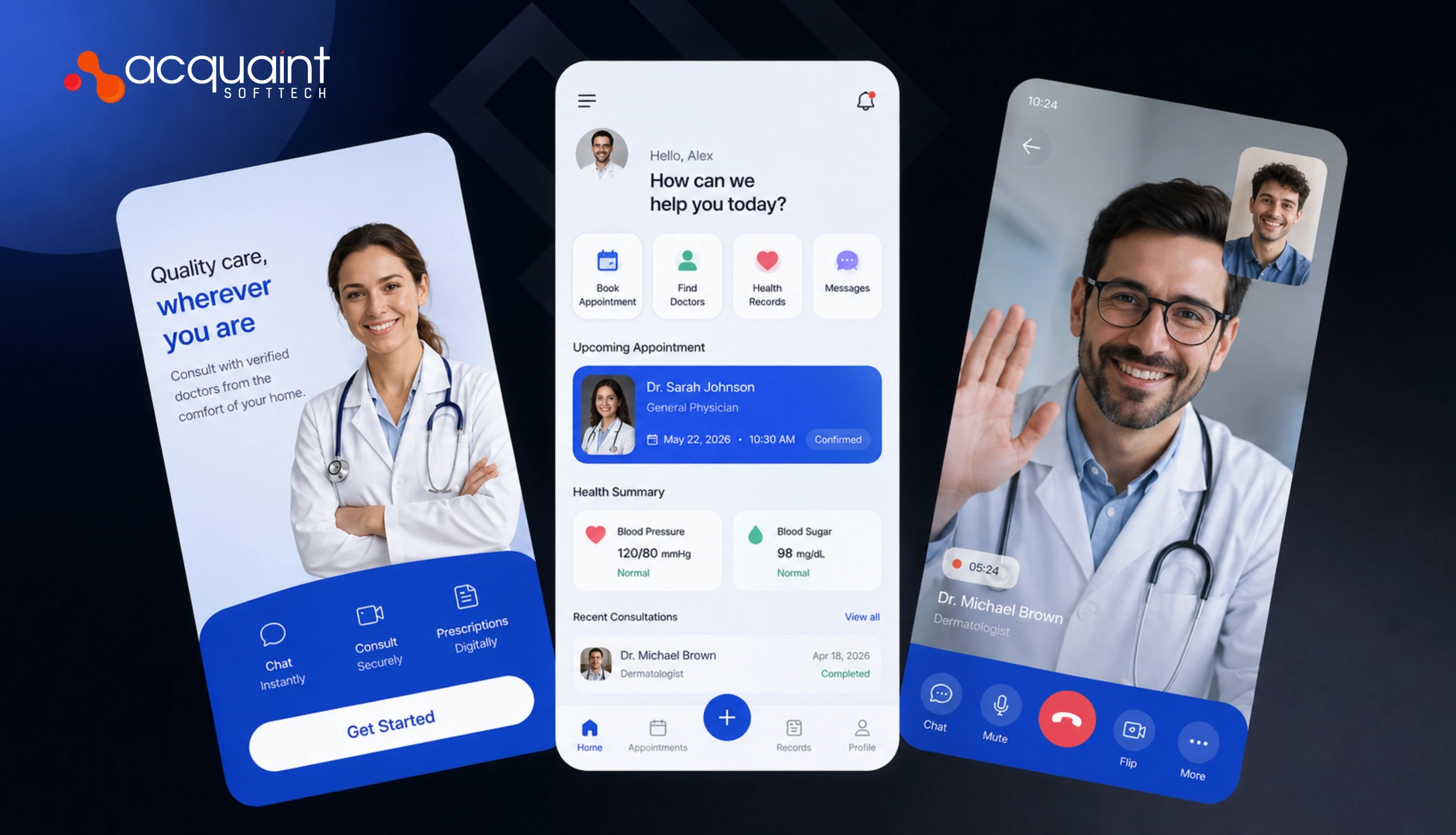
How Telemedicine Apps Work: Architecture, Data Flow, and System Design Explained
A telemedicine app is not a video call with a medical logo. It is a distributed system that moves protected health information between four environments in under 200 milliseconds while staying inside HIPAA boundaries. Here is exactly how it works, layer by layer, with the tech stack, the data flow, and the numbers that matter.

Manish Patel
May 8, 2026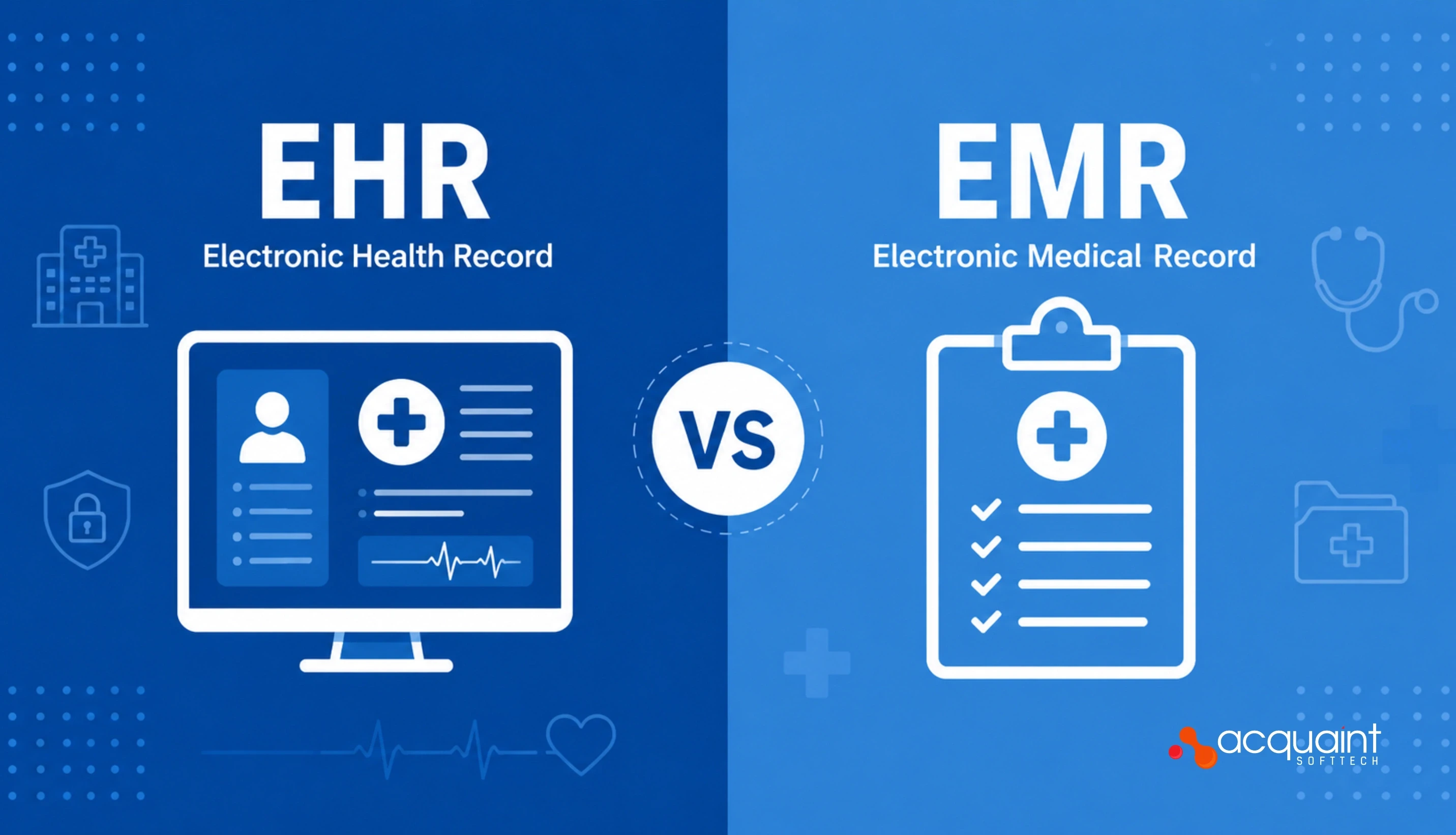
EHR vs EMR: What's the Actual Difference and Which Should You Build
Most people use EHR and EMR interchangeably. They are not the same system. One is a digital filing cabinet for a single practice. The other is a longitudinal health record that follows the patient across their entire care journey. Picking the wrong one costs founders 9 to 14 months of rework. Here is how to choose correctly the first time.
Ahmed Ginani
May 15, 2026India (Head Office)
203/204, Shapath-II, Near Silver Leaf Hotel, Opp. Rajpath Club, SG Highway, Ahmedabad-380054, Gujarat
USA
7838 Camino Cielo St, Highland, CA 92346
UK
The Powerhouse, 21 Woodthorpe Road, Ashford, England, TW15 2RP
New Zealand
42 Exler Place, Avondale, Auckland 0600, New Zealand
Canada
141 Skyview Bay NE , Calgary, Alberta, T3N 2K6