

Restaurant Technology Stack: POS Systems, Online Ordering, Kitchen Display, and Delivery Integration
A restaurant technology stack is the connected set of software that runs a restaurant: a POS system to take orders and payments, an online ordering platform for direct digital sales, a kitchen display system (KDS) to route orders to cooks, and delivery integration to sync with apps like UberEats, Zomato, and Deliveroo. The value is in making these systems talk to each other from one source of data.

Manish Patel

- You run a restaurant juggling separate POS, ordering, and kitchen tools that do not talk.
- You are a founder or CTO planning to build a custom restaurant platform.
- You want to know which systems a modern restaurant tech stack actually needs.
- You are comparing an all-in-one POS against a custom-built stack.
- You run a cloud kitchen or multi-location chain needing centralized control.
- You need a clear restaurant tech build cost and timeline for 2026.
Introduction
The Hidden Cost of a Disconnected Kitchen
It is 8 PM on a Friday. A dine-in order, two UberEats orders, and a phone order all hit the kitchen at once. The POS prints one ticket, the delivery app pings a tablet, and the phone order is on a sticky note. The line cook misses the sticky note. That guest waits 40 minutes, leaves a one-star review, and never comes back. This is the problem with a disconnected restaurant. Every channel- dine-in, online, and delivery- runs on a separate tool. Orders get lost between systems. Staff rekeys the same order multiple times. And the busier you get, the more everything starts to break.
This is exactly where modern restaurant technology POS online ordering, and kitchen delivery systems should work together as one connected flow instead of isolated tools. The numbers are brutal. Order errors, missed tickets, and delivery app commissions of 20% to 30% quietly drain margin in a business where net profit is often under 10%. A disconnected stack is not just annoying; it is expensive. The fix is a connected technology stack where POS, online ordering, kitchen display systems, and delivery integrations all share one unified data source.
This guide breaks down every layer, with real 2026 build costs and a framework refined across hundreds of projects. It is part of the complete guide to Travel and Hospitality Software Development, and pairs with our breakdown of hotel PMS development for hospitality operators.
Acquaint Softtech has built restaurant and food-tech platforms across five markets through its software product development services. With 1,300+ projects delivered, 70+ in-house engineers, and a 4.9/5 rating from 50+ verified Clutch reviews, the architecture here reflects production systems, not theory.
What Is a Restaurant Technology Stack?
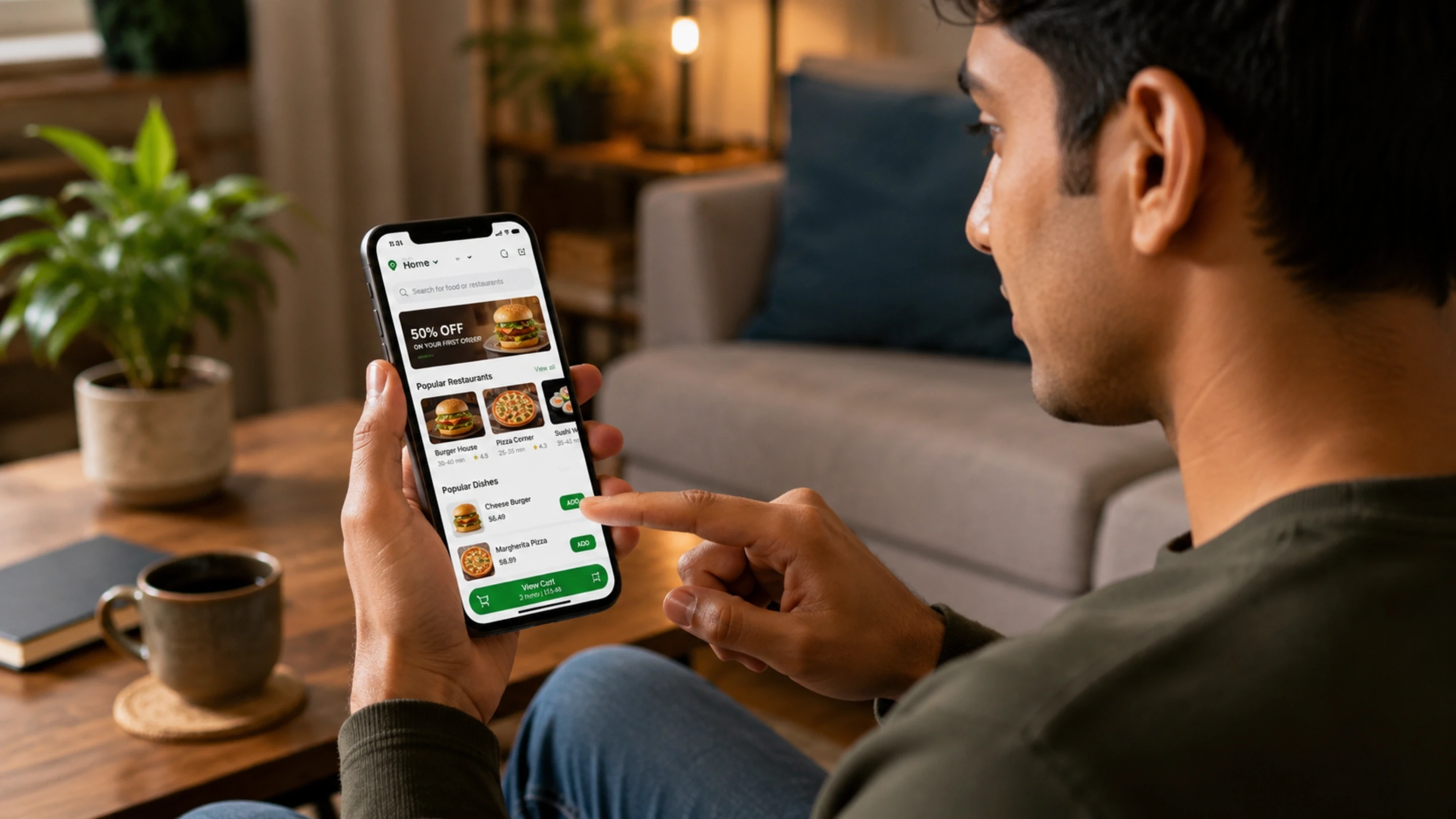
A restaurant technology stack combines POS, online ordering, KDS, payments, table management, and delivery systems to run daily operations smoothly. It works like a kitchen brigade where every station must sync perfectly: orders in, food out, no delays. Behind the scenes, MEAN stack developers Hire MEAN Stack Developers build and maintain these connected systems to keep everything running at scale.
The "why" is simple. A restaurant runs on speed and accuracy. Every tool in the stack exists to move an order from guest to kitchen to table faster, with fewer errors, and to capture the data that tells you what is actually selling.
The biggest mistake operators make is buying tools that do not integrate, then paying staff to bridge the gaps manually. Choosing the right software product development partner with food-tech domain experience avoids that trap from the start.
Teams that need engineers who have built ordering and POS systems before usually hire dedicated Laravel developers rather than training a general team mid-project. For the wider engagement context, what staff augmentation is and how it works.
The 5 Layers of a Modern Restaurant Stack

Every restaurant tech stack, from a single food truck to a 50-outlet chain, is built from the same five layers. The difference is depth, not the list.
Layer | What It Does | Why It Matters |
POS | Takes orders, payments, runs the floor | The command center for all data |
Online Ordering | Direct web and app orders | Commission-free digital sales |
Kitchen Display (KDS) | Routes orders to kitchen stations | Faster tickets, fewer errors |
Delivery Integration | Syncs third-party delivery apps | One screen, no missed orders |
Analytics & CRM | Tracks sales, dishes, customers | Decisions based on live data |
The magic is not any single layer. It is the integration. When an online order drops straight onto the KDS and the inventory updates automatically, that is a connected stack. When someone re-types it, that is a broken one.
Two layers that often get added are inventory and table management. Each is its own build, covered in our guides Restaurant Inventory and Recipe Management and Building a Table Reservation System.
Most stack failures come from poor integration between separately built tools, not missing features. For why domain experience prevents that, why Acquaint Softtech is the right travel and hospitality partner. Teams scaling the build often hire MERN stack developers for the dashboard and ordering layer.
POS: The Command Center of Your Restaurant

The POS (point of sale) is the heart of the stack. It is where orders are taken, payments processed, and every transaction recorded. A modern POS company can provide far more than basic transaction processing, with platforms that manage menus, track inventory, and feed data to every other system.
Why a Modern POS Beats a Cash Register
A basic register only takes money, but a real POS tracks what sells, when, to whom, and at what margin—turning guesswork into profit insight. With early-stage discovery workshops like the Acquaint Softtech Discovery Workshop, businesses align the system with real operations instead of assumptions. Handheld POS speeds up table orders, improves kitchen flow, and increases average check size, driving real revenue growth without adding extra tables.
Basic Register | Modern Restaurant POS |
Takes payment only | Orders, payments, menu, inventory |
No sales insight | Live sales-by-dish analytics |
Orders walked to kitchen | Orders sent straight to KDS |
The full build, order taking, billing, and real-time kitchen communication is covered in our guide Building a Restaurant POS System. For mobile operators, our topic Building a Food Truck and Pop-Up Restaurant POS covers offline-ready, payment-integrated builds. Building a reliable POS needs strong backend engineering. Many teams hire dedicated developers with POS experience for this. For how distributed teams deliver it reliably, how to build a successful remote development team.
Orders Getting Lost Between Your Systems?
Acquaint Softtech reviews how your POS, ordering, and kitchen tools connect, and shows you exactly where orders and revenue leak, before your next Friday rush.
We send a stack architecture and developer profiles within 48 hours. You interview the lead engineer before any work begins.
Online Ordering: Owning Your Digital Channel

Online ordering is how a restaurant sells directly through its own website and app, without paying a delivery aggregator 20% to 30% commission on every order. It is the single highest-margin channel a restaurant can build.
Why Direct Ordering Beats Aggregators
Every order on UberEats or Deliveroo costs you a commission and hands the customer relationship to the app. A direct ordering platform keeps the margin and the customer data, the two things that let you market to repeat guests.
Done well, direct ordering also moves faster. The order drops straight onto the kitchen display with no middle layer, and the customer gets real-time status updates from your own brand, not a third party.
Building a multi-restaurant ordering marketplace with real-time tracking is its own architecture, covered in our guide Online Food Ordering Platform. For dine-in, contactless ordering is covered in Building a QR Code Digital Menu. A direct ordering platform needs a fast, mobile-first frontend. Teams often hire React Native developers for the customer app. For framework reasoning, see the technical reference on Laravel with React, Vue, and Angular.
Kitchen Display System (KDS): Killing the Paper Ticket
-killing-the-paper-ticket.webp "Killing the Paper Ticket")
A kitchen display system (KDS) replaces printed paper tickets with digital screens at each kitchen station. Orders from every channel dine-in, online, delivery- appear on the right screen, in the right order, with prep timers running.
Why the Paper Ticket Is Costing You
Paper tickets get lost, smudged, and printed out of order. A KDS routes each order to the correct station; the fry station sees fry items, the grill sees grill items, and flags anything running late before the guest notices.
The result is tighter ticket times, fewer wrong orders, and less food waste from remakes. In a busy kitchen, that is the difference between a smooth Friday and a meltdown.
Paper Tickets | Kitchen Display System |
Lost or smudged tickets | Digital, always visible |
No prep timing | Live timers, late-order alerts |
One queue for all stations | Orders routed by station |
The full build, order queues, prep timers, and station routing are covered in our guide Kitchen Display System (KDS) Development. For multi-brand kitchens, Cloud Kitchen and Dark Kitchen Management Software. A KDS is real-time software where milliseconds matter. Teams usually hire Python developers for the real-time order routing layer. For how AI and data-driven features fit modern kitchens, why remote developers are the right choice for startups.
Delivery Integration: Zomato, Swiggy, UberEats, and More
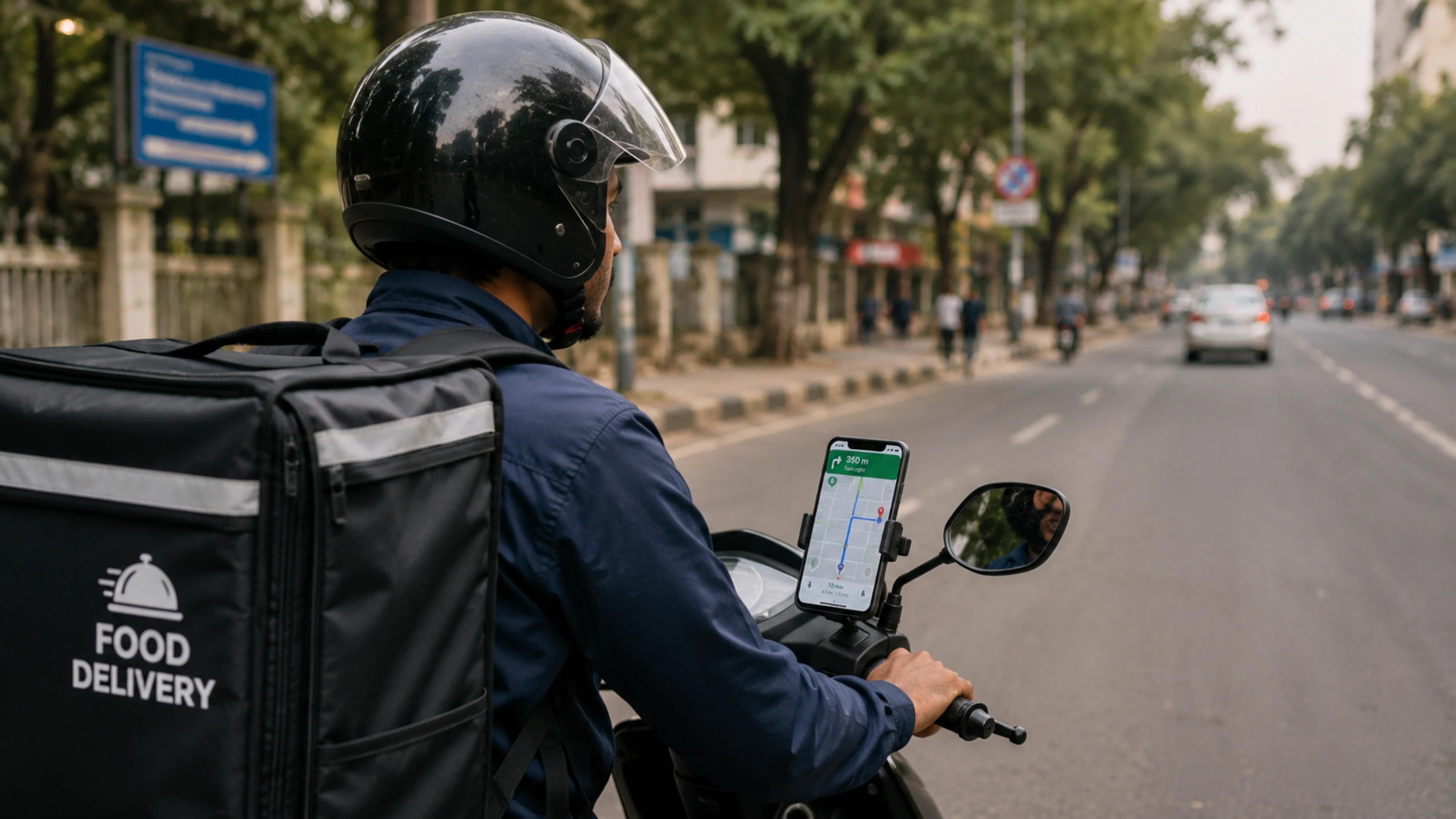
Delivery integration connects third-party apps like UberEats, Deliveroo, Zomato, Swiggy, and Talabat directly to your POS and kitchen display. Instead of a separate tablet per app, every delivery order lands in one unified queue.
Why Tablet Chaos Kills Margin
A restaurant on four delivery apps without integration has four tablets, four logins, and four chances to miss an order during a rush. Staff manually re-key orders into the POS, which means errors and slow service exactly when speed matters most.
Integration solves this. Orders from every app flow straight into the POS and onto the KDS, menus and prices stay in sync across platforms, and you get one combined view of all delivery revenue. For operators across the USA, UK, Europe, UAE, and India, the specific apps differ- UberEats and Deliveroo in the UK and Europe, Zomato and Swiggy in India, Talabat and Careem in the UAE, but the integration challenge is identical.
The full build, connecting your restaurant to Zomato, Swiggy, and UberEats APIs, is covered in our guide Food Delivery Integration. For chains, syncing menus and pricing across outlets is covered in Multi-Location Restaurant Management.
Delivery API integration is detailed, error-prone work that rewards experience. Teams often hire Laravel developers for the integration layer. To compare engagement models for this build: staff augmentation vs dedicated team vs outsourcing.
Build vs Buy: When a Custom Restaurant Stack Pays Off
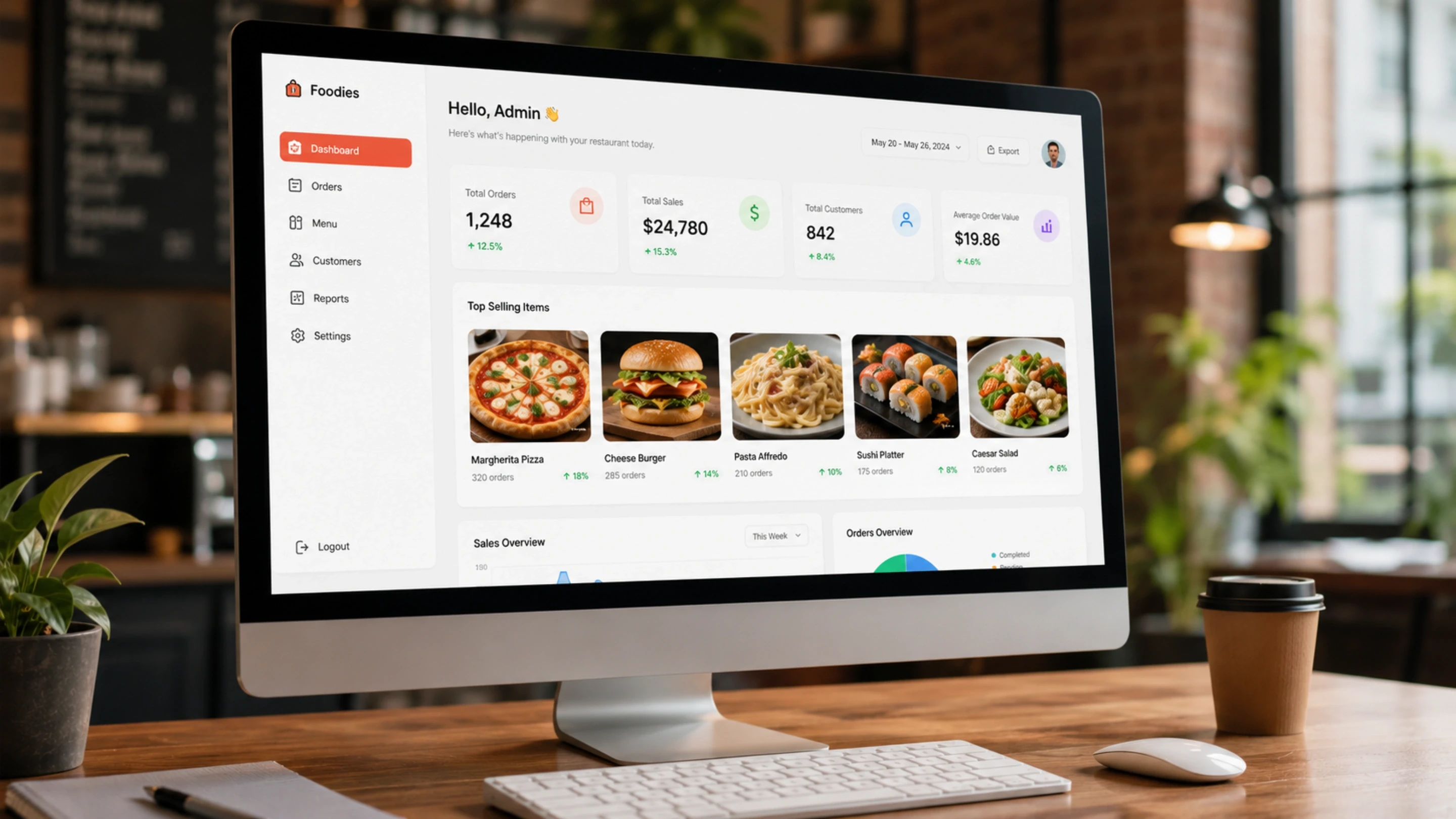
Not every restaurant needs a custom stack. An all-in-one platform like Toast, Square, or Petpooja works well for single locations. The question is when those platforms hit their ceiling.
Use these signals. If two or more apply, a custom build starts to pay off.
Signal | Off-Shelf | Custom |
You run multiple locations or brands | Strains | Built for it |
You need unique workflows or menus | Workarounds | Native fit |
You are building a food-tech product | No | Required |
You want commission-free ordering | Limited | Full control |
You want to own the data and code | No | Yes |
All-in-one platforms charge monthly fees plus a cut of online orders, which scales against you as you grow. For chains, cloud kitchens, or food-tech startups, a custom stack typically pays back within 18 to 24 months and removes the per-order tax entirely.
Centralised control across many outlets, with franchise standardisation, is its own architecture, covered in our guides Multi-Location Restaurant Management and Building a Franchise Restaurant Management System. Food-tech startups often use staff augmentation services to embed pre-vetted POS and ordering engineers at pace.
Real Example: A Direct Booking and Ordering Platform Build
Theory is useful. A real build is more convincing. Here is a verified hospitality and food-service engagement from Acquaint Softtech's portfolio, relevant to any operator moving from manual orders to a connected platform.
Client | Hiran Holidays | Hospitality, Leisure & Food Service |
The Problem | Manual orders and reservations, no integrated digital ordering, fully dependent on third-party listings. |
What We Built | Custom platform with online ordering, secure payment integration, central reservation system, and review module |
The Result | 40-50% growth in website traffic. 5.0/5.0 Clutch scores for Quality, Schedule, and Cost. |
The before-and-after is the story. Before: orders taken by phone, no digital channel, revenue handed to third parties. After: a connected platform where customers order and pay directly, with traffic up nearly half and the business owning its data.
The bridge between the two was integration, the same connected-stack principle this guide is built on. You can review this and other verified engagements on the Acquaint Softtech case studies page and the full Clutch profile, which holds a 4.9/5 rating across 50+ verified reviews with Premier Verified status.
Restaurant Tech Development Cost and Timeline (2026)
The honest answer to "how much does a restaurant tech stack cost" depends on how many layers you build and how deep the integrations go. Here are real 2026 ranges for a dedicated team build.
Build Scope | India-Based Team | Timeline |
POS + online ordering MVP | $20,000 - $45,000 | 8 - 12 weeks |
Full stack: + KDS, delivery integration | $45,000 - $95,000 | 4 - 6 months |
Multi-location / cloud kitchen platform | $95,000 - $200,000 | 6 - 9 months |
A Western agency in the USA, UK, or Europe typically charges 40% to 60% more for the same scope, especially when compared with restaurant tech cost in India. The biggest cost driver is never the order screen. It is the integrations: each delivery app API and payment gateway adds engineering weeks.
For teams validating before full commitment, MVP development services deliver a working POS and online ordering core in 8 to 12 weeks. For ongoing work after launch, support and maintenance services keep delivery integrations and menus current as third-party APIs change.
Get a Fixed-Scope Restaurant Tech Quote in 48 Hours
Share your service style, channels, and which delivery apps you use. Acquaint Softtech sends a stack architecture, developer profiles, and a fixed-scope cost estimate within 48 hours.
You interview the lead developer before any engagement starts. Up to 40% cost savings vs. Western agencies. 1,300+ projects delivered. 4.9/5 on Clutch.
Frequently Asked Questions
-
What technology does a restaurant need?
A modern restaurant needs five core layers: a POS system for orders and payments, an online ordering platform for direct digital sales, a kitchen display system (KDS) for the kitchen, delivery integration for apps like UberEats and Zomato, and analytics or CRM for sales and customer data. The key is making them work as one connected system.
-
What is the difference between a POS and online ordering?
A POS takes orders and payments at the restaurant, in person or by phone, and runs floor operations. Online ordering is the customer-facing channel where guests order directly through your website or app. In a connected stack, online orders flow straight into the POS and onto the kitchen display with no manual re-entry.
-
What is a kitchen display system (KDS)?
A kitchen display system (KDS) replaces paper tickets with digital screens at kitchen stations. It shows incoming orders from every channel, routes each item to the right station, runs prep timers, and flags late orders. A KDS speeds up tickets, reduces errors, and cuts food waste from remakes.
-
How much does restaurant technology cost to build?
Region
POS + Online Ordering MVP
Full Stack (POS + KDS + Delivery Integration)
India
$20,000–$45,000
$45,000–$95,000
UK
$32,000–$72,000
$72,000–$150,000
EU
$30,000–$70,000
$70,000–$145,000
US/USA
$35,000–$80,000
$80,000–$190,000
Development Time: 8–16 weeks (MVP), up to 4–6 months for full stack builds with integrations.
-
Do restaurants need all four systems at once?
No. Start with the technology that solves your most urgent problem, usually POS and online ordering, then add KDS and delivery integration as you grow. A well-built POS makes it easy to add new layers later without rebuilding from scratch.
-
How does delivery app integration work?
Delivery integration connects apps like UberEats, Deliveroo, Zomato, and Swiggy directly to your POS and kitchen display. Orders from every app land in one unified queue instead of separate tablets; menus and prices stay synced across platforms, and all delivery revenue appears in one combined view.
-
Can a small restaurant benefit from a custom tech stack?
Most single locations are well served by an affordable all-in-one platform. A custom stack pays off when you run multiple outlets, operate a cloud kitchen, need commission-free ordering at scale, or are building a food-tech product. Two or more of these signals usually justify a custom build.
I lead technology and client success at Acquaint Softtech with one goal in mind. Deliver work that feels personal, reliable, and worthy of long term trust. I stay close to both our clients and our developers to make sure every project moves with clarity, quality, and accountability.
Table of Contents
Get Started with Acquaint Softtech
- 13+ Years Delivering Software Excellence
- 1300+ Projects Delivered With Precision
- Official Laravel & Laravel News Partner
- Official Statamic Partner
Related Blog
The Complete Guide to Travel & Hospitality Software Development in 2026
Most travel and hospitality platforms fail not because the idea was wrong, but because the technology architecture was underplanned. This guide explains every platform type, cost tier, and technology decision your team needs to make before writing the first line of code.

Acquaint Softtech
May 6, 2026
How Hotel Booking Engines Work: Search, Availability, Pricing, and Reservation Architecture
A hotel booking engine is not a search bar. It is an availability engine, a pricing decision system, a payment pre-authorisation layer, and a channel inventory synchroniser, all running simultaneously. This guide explains every architectural layer and how each one connects in a production system.
Manish Patel
May 12, 2026
Hotel PMS Development: Front Desk, Housekeeping, and Guest Management in One System
A hotel PMS is not a booking system. It is the operational backbone connecting every department in real time. Here is what it includes, how each module is built, and what it costs in 2026.
Manish Patel
May 20, 2026India (Head Office)
203/204, Shapath-II, Near Silver Leaf Hotel, Opp. Rajpath Club, SG Highway, Ahmedabad-380054, Gujarat
USA
7838 Camino Cielo St, Highland, CA 92346
UK
The Powerhouse, 21 Woodthorpe Road, Ashford, England, TW15 2RP
New Zealand
42 Exler Place, Avondale, Auckland 0600, New Zealand
Canada
141 Skyview Bay NE , Calgary, Alberta, T3N 2K6