

Telematics-Based Claims Verification: Using Crash Data From Connected Cars to Validate Auto Claims
Telematics data validates auto insurance claims by instantly providing an objective, tamper-resistant digital record of speed, impact force, and GPS location at the exact moment of an incident. Connected-car sensors trigger a crash alert within seconds, reconstruct the accident from pre-impact and post-impact data, and give adjusters facts instead of statements.

Manish Patel
As the Director of Engineering at Acquaint Softtech, a software development partner that ships production data and machine learning systems, I hear one question from auto insurers again and again: can we trust what the driver tells us. Telematics answers it with data instead of statements, and modern AI Development Services now make a crash-data verification platform realistic for carriers, MGAs and InsurTechs, not only the giants.
Across 1,300+ projects in 20+ industries over 13+ years, our teams have learned that telematics claim verification is a data-engineering problem before it is a modeling one. The sensors are easy; ingesting high-frequency streams reliably and turning them into evidence is the hard part.
Because that evidence can decide fault, it also has to satisfy road-safety and data authorities such as the U.S. National Highway Traffic Safety Administration, which sets how crash and event-data recorder information is treated.

- You want to use connected-car crash data to verify auto claims and cut fraud.
- You are a CTO, COO, founder or agency owner weighing a CMT-style platform against a custom build.
- You need crash evidence accurate and defensible enough to influence a fault decision.
This guide covers how telematics helps in claims, how it validates a claim step by step, how accident reconstruction works, whether crash data can prove fault, what a build costs, and how to keep it defensible. It sits inside our wider InsurTech software development guide, so you can go deeper on any claims module once you pick a direction.
Everything here reflects delivered work, not theory. Acquaint Softtech holds a 4.9 out of 5 rating across 50+ verified Clutch reviews, runs 70+ in-house engineers, and has built real-time scoring pipelines where a wrong signal blocks a good customer or lets a bad one through. We will show where telematics wins and where a human still has to judge.
How does telematics help in claims?
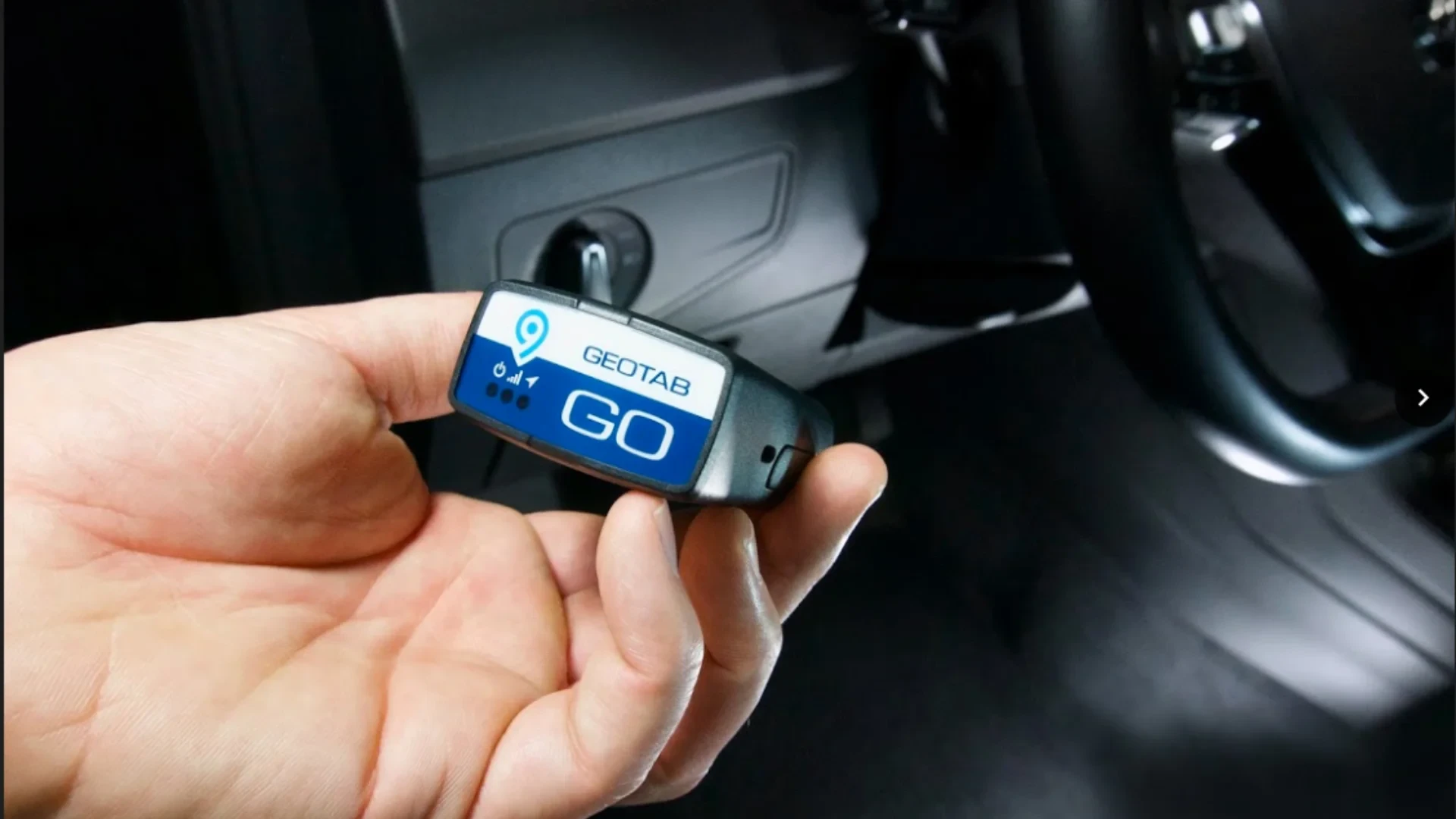
Telematics helps in claims by giving insurers objective crash data, speed, impact force, direction and GPS location, at the exact moment of an incident, so a claim is validated against facts rather than recollection. It speeds up first notice of loss, reconstructs the accident, flags fraud and gauges severity. Building that capability is a core Hire AI/ML Engineers and data-engineering project, which is where telematics in claims verification really begins.
The shift is from reactive to real-time. Traditional claims start hours or days later when the driver reports the loss, by which point the exact dynamics are gone. A connected car detects the impact and starts the claim within seconds, while the evidence is still intact.
Two facts anchor the value. First, automated crash alerts compress first notice of loss from days to seconds. Second, objective sensor data lets an insurer confirm whether a vehicle was actually at the reported scene and traveling at the claimed speed, which is exactly what exposes staged or exaggerated accidents.
How telematics validates a claim, step by step
Telematics validates a claim through four linked capabilities: automated first notice of loss, accident reconstruction, fraud prevention and severity assessment. Each depends on a reliable Software Product Development effort behind it, because the value lives in the pipeline, not the sensor.
Automated first notice of loss (eFNOL)
The system triggers an alert within seconds of a collision, bypassing delayed manual reports. That early signal captures time, location, speed and impact intensity while they are still accurate, and it can dispatch help before the driver even calls.
Accident reconstruction
High-frequency sensor data tracks pre-impact braking, steering inputs and post-crash movement. Instead of a driver describing what happened, the insurer sees the sequence of events, which is the heart of accident reconstruction from OBD-II and connected-car feeds.
Fraud prevention
Objective metrics verify whether a vehicle was actually at the reported scene or traveling at the claimed speed, exposing staged or exaggerated accidents. A claim that says one thing while the data says another moves straight to investigation.
Severity assessment
G-force and impact-direction metrics let insurers gauge damage severity immediately, so they can dispatch emergency services or a tow truck and fast-track or route the claim. Severity scoring at the scene is what turns raw data into an operational decision.
Because these run on live streams that must not drop events, teams usually build them with Hire DevOps Engineers who keep ingestion, scoring and alerting healthy under real traffic rather than only in a test harness.
Not sure your data can support crash verification at scale?
The blocker is rarely the algorithm; it is unreliable device feeds and gaps in the stream. A short technical assessment tells you what your telematics data can prove today and what needs hardening first.
Accident reconstruction from OBD-II and connected-car data

Accident reconstruction uses high-frequency data from an OBD-II port, an embedded connected-car unit or a phone sensor to rebuild the seconds around impact: speed, braking, steering, acceleration and heading. It converts a chaotic event into a timeline an adjuster can read. Wiring this up Hire Python Developers work is where connected car crash data becomes usable evidence.
OBD-II is the standardized diagnostic port in modern vehicles, and OBD-II integration for claims lets a device read speed and fault codes directly. Embedded OEM telematics and smartphone sensors add GPS, accelerometer and gyroscope streams, so the reconstruction does not depend on a single source.
Machine learning turns those streams into an event. Accident reconstruction ML classifies a hard-braking spike plus a G-force event as a genuine collision rather than a pothole or a dropped phone, which is the difference between a useful alert and a false alarm.
This is a real-time, high-throughput data problem, so a well-built crash data ingestion pipeline matters more than any single model. That is why teams often Hire Automation Engineers to harden the stream processing before tuning the detection logic.
Can crash data prove fault? What it shows and its limits

Not covered well by the top-ranking competitors: whether crash data actually proves fault. The honest answer is that it provides strong objective evidence, speed, braking, position and impact direction, but it supports a fault decision rather than settling it alone. A Software Dedicated Teams build has to present that evidence in a way an adjuster and a court will accept.
What crash data shows well: that a vehicle was at a location, its speed, whether the driver braked, and the direction and force of impact. Those facts can confirm or contradict a statement with far more authority than a witness account.
Where it stops short: intent, right of way, signal state and the other party's behavior often sit outside the data. Data gaps, device tampering and sensor error also have to be accounted for, which is why chain-of-custody and explainability are engineering requirements, not extras.
The practical takeaway is to treat telematics as decisive evidence inside a human decision, not a verdict machine. Building it to that standard is where an experienced Software Development Outsourcing partner earns its place, because the defensibility is the product.
What does CMT do? Named platforms and where a build wins
Cambridge Mobile Telematics, or CMT, provides a mobile and sensor platform that measures driving behavior and detects crashes, then feeds insurers scoring, crash alerts and claims support. It is the best known reference point in the space, and a useful benchmark whether you buy or hire Django Developers to build CMT-style verification of your own.
The lesson from named platforms is architectural. Each pairs reliable data capture with crash detection, scoring and an insurer-facing workflow, and each treats data quality as the headline. Buying one is faster to deploy; building gives you control over the data, the models and the claims integration.
Approach | What you get | Best when |
CMT-style platform | Capture, crash detection and scoring, packaged | Fast deployment, standard motor lines |
OEM connected-car data | Embedded vehicle feeds via partnerships | Newer fleets with built-in telematics |
Device or OBD-II plus app | Your own capture and detection | Control over hardware and data |
Custom telematics platform | End-to-end system you own | Verification is a competitive edge |
Cambridge Mobile Telematics claims workflows are a strong starting point, but a custom telematics claims platform wins when your book, geography, or data need something a vendor will not tailor. That is often the point at which insurers use IT staff Augmentation is used to add build capacity without a permanent hiring wave.
Telematics claims development cost in 2026

A focused telematics claim verification MVP, one data source, an ingestion pipeline, a crash-detection model, a reconstruction view, and one claims-system integration, typically runs from about $70,000 to $150,000 in year one, plus cloud, streaming-infrastructure and data-labeling costs. Buying a packaged platform is faster to start; building pays back when verification becomes a product you own. Read the table as a trajectory, not a single number.
Cost line | Buy a packaged platform | Build a custom platform |
Year 1 setup | Integration and licensing | $70,000 to $150,000 (focused MVP) |
Data and labeling | Included by vendor | $10,000 to $40,000 for a quality set |
Year 1 run cost | Per-vehicle or per-trip fee | $4,000 to $10,000 per month cloud and streaming |
Customisation | Limited to vendor roadmap | Unlimited, by design |
Best when | Standard motor, speed to value | Complex data or a product play |
Where you build matters as much as what you build. Beyond region, ongoing modernization keeps costs down over time, and our version upgrade services keep an aging telematics stack current without a full rebuild. Offshore delivery can also cut build spend by up to 40 percent versus Western agencies without cutting quality.
Region | Blended engineer rate | Relative build cost |
United States | $120 to $180 per hour | Highest |
United Kingdom | $90 to $150 per hour | High |
Europe (Western) | $85 to $140 per hour | High |
India / offshore | $25 to $55 per hour | Up to 40% lower |
To hold quality while lowering cost, many insurers keep product ownership in-house and add capacity to hire engineers for telematics integration. Our Virtual CTO Services keep the architecture and evidence-handling decisions senior and consistent.
Want a real number for your telematics build, not a range?
Send us your data sources, vehicle volume and target claims workflow. We will map a build-or-buy plan with a costed scope and a timeline you can take to your board.
The 5-Pillar Telematics Verification Framework
When we scope a telematics verification platform, we work through five pillars in order. Skipping any one is where projects quietly stall. This is the same discipline behind our White Label Development Services for regulated, data-heavy systems.
Data capture and reliability. Support OBD-II, OEM and phone sources, and treat dropped or partial streams as first-class cases, because missing data must never look like a clean crash.
Ingestion and streaming. Build a pipeline that handles high-frequency events at scale without losing them, since a lost event is a lost claim.
Crash detection and reconstruction. Use ML to separate real collisions from noise and rebuild the pre-impact and post-impact timeline with calibrated confidence.
Fraud and severity scoring. Compare the claim against the data to flag inconsistencies, and score severity to route and prioritize the claim.
Evidence, privacy and governance. Build chain-of-custody, explainability, consent and audit trails from day one to meet privacy law and frameworks such as the EU AI Act.
These pillars need mixed skills, from streaming-data engineers to a product lead who owns the roadmap. Acquaint Softtech assembles that squad as one team, and you can hire Project Managers to keep the build predictable rather than a string of disconnected experiments.
Myth vs reality, and why telematics projects stall
The gap between a clean crash demo and a live verification platform is where budgets disappear. The table separates common myths from what production telematics actually demands.
Myth | Reality |
The sensor is the hard part | Reliable ingestion and detection at scale are the hard part |
Crash data proves fault by itself | It is strong evidence in a human fault decision |
More alerts means better detection | False alerts erode trust faster than missed ones build it |
Any stream will do | Dropped and tampered data must be handled explicitly |
Ship the model once, and it is done | Vehicles, devices and fraud shift; models need retraining |
Why do capable teams still stall? Usually the model works on clean data, but the pipeline drops events under load, or the evidence is not defensible enough to act on. Ongoing Support and Maintenance keeps both the streaming pipeline and the detection models healthy as devices and vehicles change.
How Acquaint Softtech builds telematics claim platforms
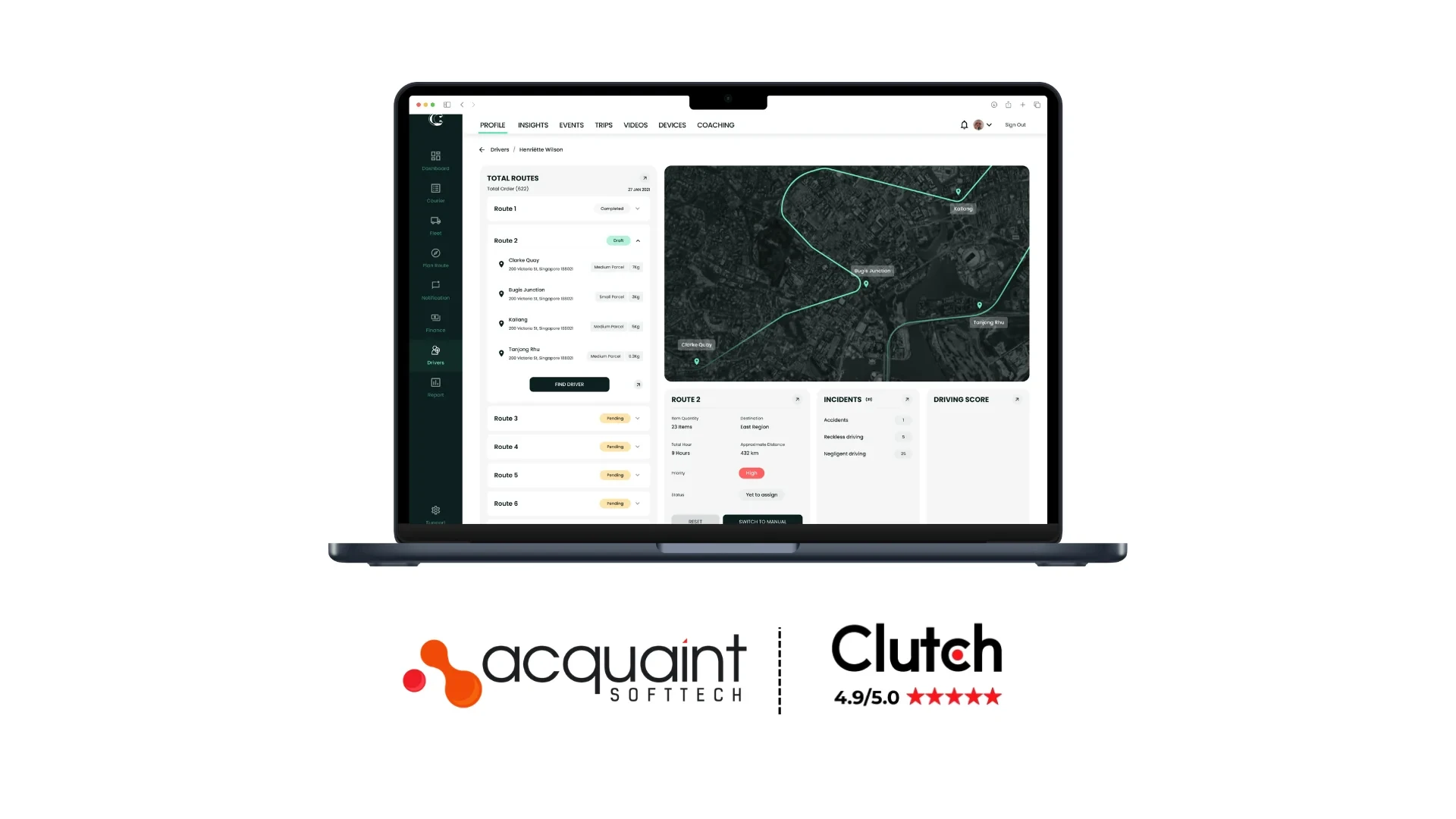
Here is a real example rather than a hypothetical. A European fintech investment platform engaged Acquaint Softtech to strengthen fraud detection, which relied on static rules that missed evolving patterns. Our team built a Python-based risk-scoring engine that analyzed behavior in near real time, with anomaly models, analyst dashboards, and automated retraining pipelines- the same real-time ingest-score-review architecture a crash-data platform needs. The case is documented on Clutch as a client-submitted review.
The architecture maps almost one-to-one onto telematics. Here is how the same pattern plays out in the seconds and minutes around a crash.
Second 0 Impact detected. High-frequency sensor data streams into the ingestion pipeline, the same near-real-time ingest our fraud engine used for transactions. |
Second 5 A model classifies the event as a genuine crash, not noise, and scores severity, exactly as the fraud engine scored anomalies against learned behavior. |
Minute 1 Automated first notice of loss fires with location, speed and impact data attached, so the claim opens with evidence instead of a phone call. |
Minute 10 Low-confidence or suspicious events surface in an investigation dashboard, the same human-in-the-loop review our engine gave compliance analysts. |
The measurable pattern from the delivered engagement:
Before | After |
Static rules missed evolving fraud patterns | Adaptive, learning-based scoring in near real time |
Too many legitimate cases blocked | Fewer false blocks, richer context per alert |
Analysts rebuilt cases by hand | Investigations faster and more focused, with a review console |
The transfer to telematics is direct: ingest the stream, score the event, and hand only uncertain or suspicious cases to a person. If you are validating the idea first, our note on a proof of concept in software development shows how to test feasibility before a full build.
The same embedded-squad model works across regulated, data-sensitive fields. Our write-up on staff augmentation success in healthcare IT shows how a team ships fast without cutting corners on compliance.
Ready to turn connected-car data into claim evidence?
You have seen the pipeline, the reconstruction, the cost, and the defensibility traps. The next step is a costed scope with the right data and ML engineers mapped to your sources and claims workflow.
Frequently Asked Questions
-
How does telematics help in claims?
Telematics helps in claims by capturing objective crash data, speed, impact force, direction and GPS location at the moment of an incident. It triggers automated first notice of loss within seconds, reconstructs the accident from sensor streams, flags staged or exaggerated claims by comparing data against statements, and scores severity so insurers can dispatch help and route the claim. The result is faster, fairer, evidence-based decisions.
-
What does CMT do?
CMT, Cambridge Mobile Telematics, provides a mobile and sensor platform that measures driving behavior and detects crashes, then feeds insurers risk scoring, crash alerts, and claims support. It captures data from smartphones and connected devices, distinguishes real collisions from noise, and delivers insurer-facing workflows. It is a common benchmark for what a production telematics claims platform should do, whether an insurer buys it or builds a comparable system.
-
Can crash data prove fault?
Crash data provides strong objective evidence toward fault, but rarely settles it alone. It shows a vehicle's location, speed, braking, and the direction and force of impact, which can confirm or contradict a driver's statement with real authority. However, intent, right of way, and the other party's behavior often sit outside the data, so telematics supports a human fault decision rather than replacing it.
-
How much does telematics integration cost?
A focused custom telematics claim verification MVP typically costs $70,000 to $150,000 in year one, plus $10,000 to $40,000 for a quality labeled dataset and $4,000 to $10,000 per month to run, including streaming infrastructure. Buying a packaged platform is cheaper to start but limits customisation. Offshore delivery can reduce build spend by up to 40 percent while keeping quality.
-
What is accident reconstruction from telematics?
Accident reconstruction uses high-frequency data from OBD-II, embedded connected-car units or phone sensors to rebuild the seconds around impact: speed, braking, steering, acceleration and heading. Machine learning classifies the event as a genuine collision rather than a pothole or dropped phone, then assembles a timeline of pre-impact and post-crash movement. It replaces a driver's recollection with an objective sequence an adjuster can review.
-
How does telematics detect insurance fraud?
Telematics detects fraud by comparing objective sensor data against what a claim states. If a vehicle was not at the reported location, was traveling at a different speed, or shows an impact inconsistent with the described accident, the mismatch flags the claim for investigation. Because the data is captured at the moment of impact and is hard to alter, it exposes staged accidents and exaggerated damage that statements alone cannot.
-
Is telematics claim data secure and compliant?
It can be, if privacy and governance are designed in from the start. Telematics captures location and behavior data, so a platform needs consent management, encryption, access controls, chain-of-custody, and audit trails, aligned to GDPR and frameworks such as the EU AI Act. Because the data can influence fault and payout, explainability and traceability of every automated decision are what make it defensible to regulators and courts.
-
Should we build our own telematics platform or buy CMT?
Buy when your lines are standard motor and speed to value matters, since packaged platforms deploy quickly. Build when verification is a competitive edge, your data sources or geography are unusual, or you want to own the models and claims integration. Many insurers start by buying, then build the ingestion, detection, and evidence components that become their differentiator, keeping ownership of the parts that matter most.
I lead technology and client success at Acquaint Softtech with one goal in mind. Deliver work that feels personal, reliable, and worthy of long term trust. I stay close to both our clients and our developers to make sure every project moves with clarity, quality, and accountability.
Table of Contents
Get Started with Acquaint Softtech
- 13+ Years Delivering Software Excellence
- 1300+ Projects Delivered With Precision
- Official Laravel & Laravel News Partner
- Official Statamic Partner
Related Blog

The Complete Guide to InsurTech Software Development in 2026
InsurTech software is not a fintech variant with policy fields. It is a policy-centric, regulator-accountable platform that runs quote, bind, issue, endorse, pay, and report as one system.

Acquaint Softtech
May 5, 2026
Proof of Concept: Why is it important in software development?
Discover how a Proof of Concept (PoC) can validate your project's feasibility, enhance stakeholder trust, and streamline development processes effectively.
Acquaint Softtech
April 28, 2025
Healthcare & IT Staff augmentation - A success partnership
Healthcare IT staff augmentation bridges skill gaps and reduces workloads by hiring remote developers. This strategy enhances IT capabilities, ensuring smooth implementation and management of advanced technologies in healthcare organizations.

Mukesh Ram
August 6, 2024India (Head Office)
203/204, Shapath-II, Near Silver Leaf Hotel, Opp. Rajpath Club, SG Highway, Ahmedabad-380054, Gujarat
USA
7838 Camino Cielo St, Highland, CA 92346
UK
The Powerhouse, 21 Woodthorpe Road, Ashford, England, TW15 2RP
New Zealand
42 Exler Place, Avondale, Auckland 0600, New Zealand
Canada
141 Skyview Bay NE , Calgary, Alberta, T3N 2K6