

Building a Tours and Activities Booking Platform: Scheduling, Availability, and Supplier Management
A tours and activities booking platform lets travellers search, schedule, and pay for experiences while operators manage inventory in real time. It is built on four pillars: a scheduling engine for time slots and departures, a real-time availability module to prevent overbooking, a supplier management portal for operators to control their own inventory, and a booking and payment flow. The hard part is capacity, not the booking button.

Manish Patel

- You run tours or activities and juggle bookings across calendars, email, and WhatsApp.
- You are a founder building an experiences marketplace to rival Viator or GetYourGuide.
- You want to understand scheduling, availability, and supplier management before you build.
- You are comparing an off-the-shelf booking tool against a custom platform.
- You manage many activity suppliers and need one portal to control inventory.
- You need a clear tours and activities platform build cost and timeline for 2026.
Introduction
Why Activity Operators Lose Bookings Every Single Day
A traveller finds your activity, picks a time, and clicks book on your tours and activities booking platform scheduling availability system. The slot shows available, but it was already filled by another channel that didn’t sync. The traveller arrives expecting confirmation, only to find no availability, and your rating takes a hit.
This is the daily reality for activity operators running on calendars, spreadsheets, and WhatsApp. Bookings come from multiple sources, but none of them talks to each other, causing double bookings, missed updates, and lost revenue.
The fix is a platform where scheduling, availability, and every supplier live in one synced system. This guide breaks down all four pillars, with real 2026 build costs and a framework refined across hundreds of projects. It is part of the guide to travel and hospitality software development, and pairs with our guide on how to build an online travel agency, since activities are a core OTA product.
Acquaint Softtech has built activity marketplaces and tour platforms across five markets through its software product development services. With 1,300+ projects delivered, 70+ in-house engineers, and a 4.9/5 rating from 50+ verified Clutch reviews, the architecture here reflects production systems, not theory.
What Is a Tours and Activities Booking Platform?
A tours and activities booking platform is software that lets travellers search, schedule, and pay for experiences, while operators manage availability, capacity, and pricing from one back office. GetYourGuide, Viator, and Klook are global examples.
It is not the same as a hotel or flight booking engine. An activity is a time-bound, capacity-limited product. A 10 AM kayak tour with 12 spots is a completely different inventory problem from a hotel room or an airline seat. Building this kind of system often requires strong backend engineering, such as working with a skilled hire MERN stack developers team to handle real-time scheduling and availability logic efficiently.
Why Activities Are a Unique Inventory Challenge
A hotel room resets every night. An activity slot expires the moment it departs and cannot be resold. That makes real-time capacity management the single most important part of the build, far more than the search page.
Most platforms serve both direct travellers and a network of local providers. Connecting travellers with those providers is its own architecture, covered in our guide Destination Activities Marketplace.
Teams that need engineers who have built capacity-based booking before usually hire MERN stack developers rather than training a general team on activity inventory logic. For the wider engagement context, what staff augmentation is and how it works.
The 4 Pillars of an Activities Platform
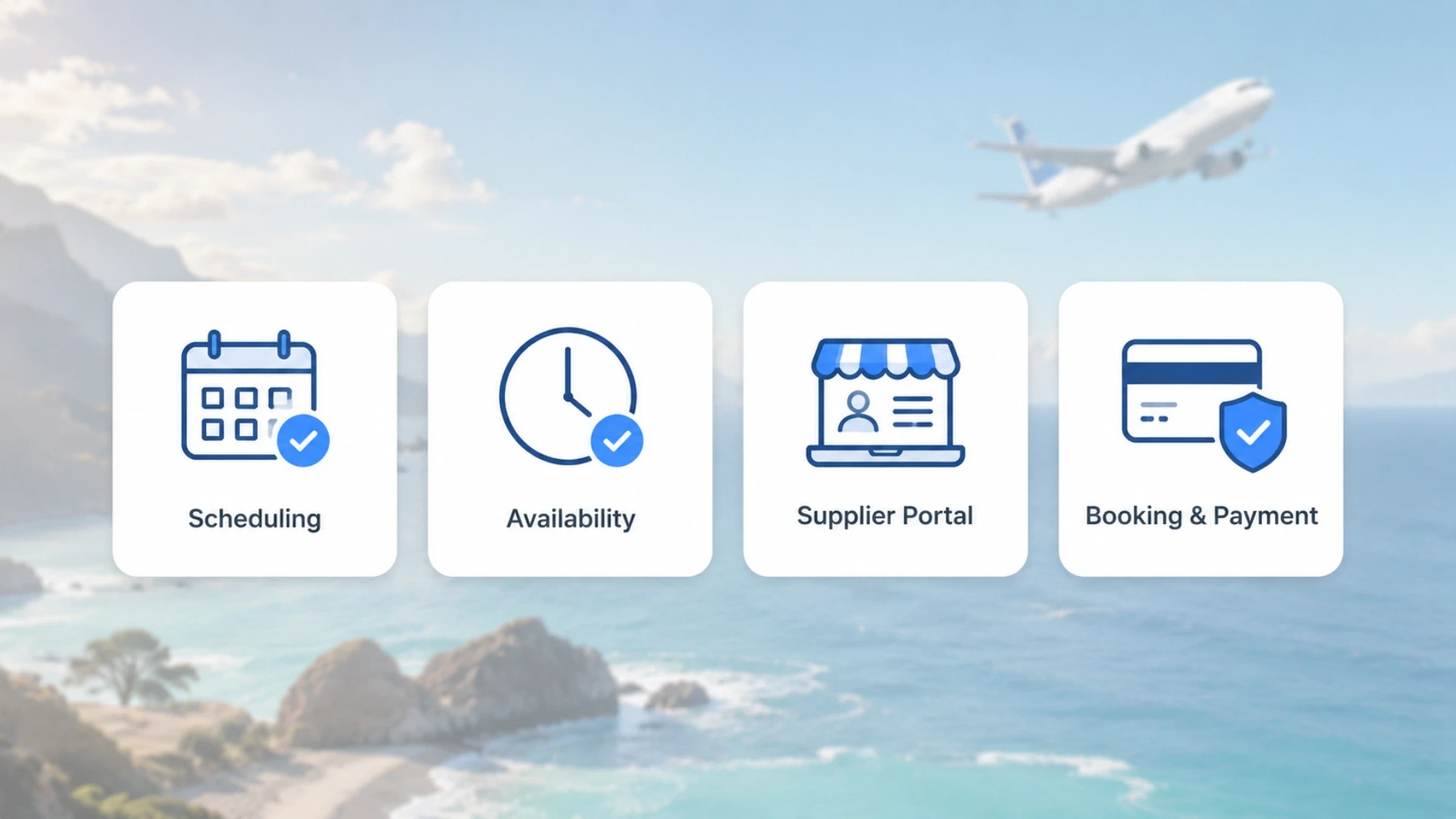
Every tours and activities platform, from a single kayak operator to a global marketplace, stands on the same four pillars. Get all four right and the platform runs itself. Miss one and operators churn.
Pillar | What It Does | Why It Matters |
Scheduling | Time slots, departures, recurring tours | Defines what can be sold and when |
Availability | Real-time capacity across channels | Stops overbooking and lost slots |
Supplier Portal | Operators manage their own inventory | Scales the platform without your staff |
Booking & Payment | Checkout, confirmation, payout | Captures revenue and trust |
The value is the sync between them. When a supplier updates capacity in their portal and it instantly reflects across the website and every OTA channel, that is a working platform. When it does not, you get the double-booking nightmare.
A fast, filtered search sits on top of these pillars and drives conversion. Building activity search by location, date, price, and category with live availability is its own build, covered in our guide Travel Activity Search.
Most activity platform failures come from weak capacity logic, not a weak UI. For why travel domain experience prevents that, read why Acquaint Softtech is the right travel and hospitality partner. Teams scaling the platform often hire dedicated developers with booking-system experience.
Scheduling: Time Slots, Departures, and Capacity
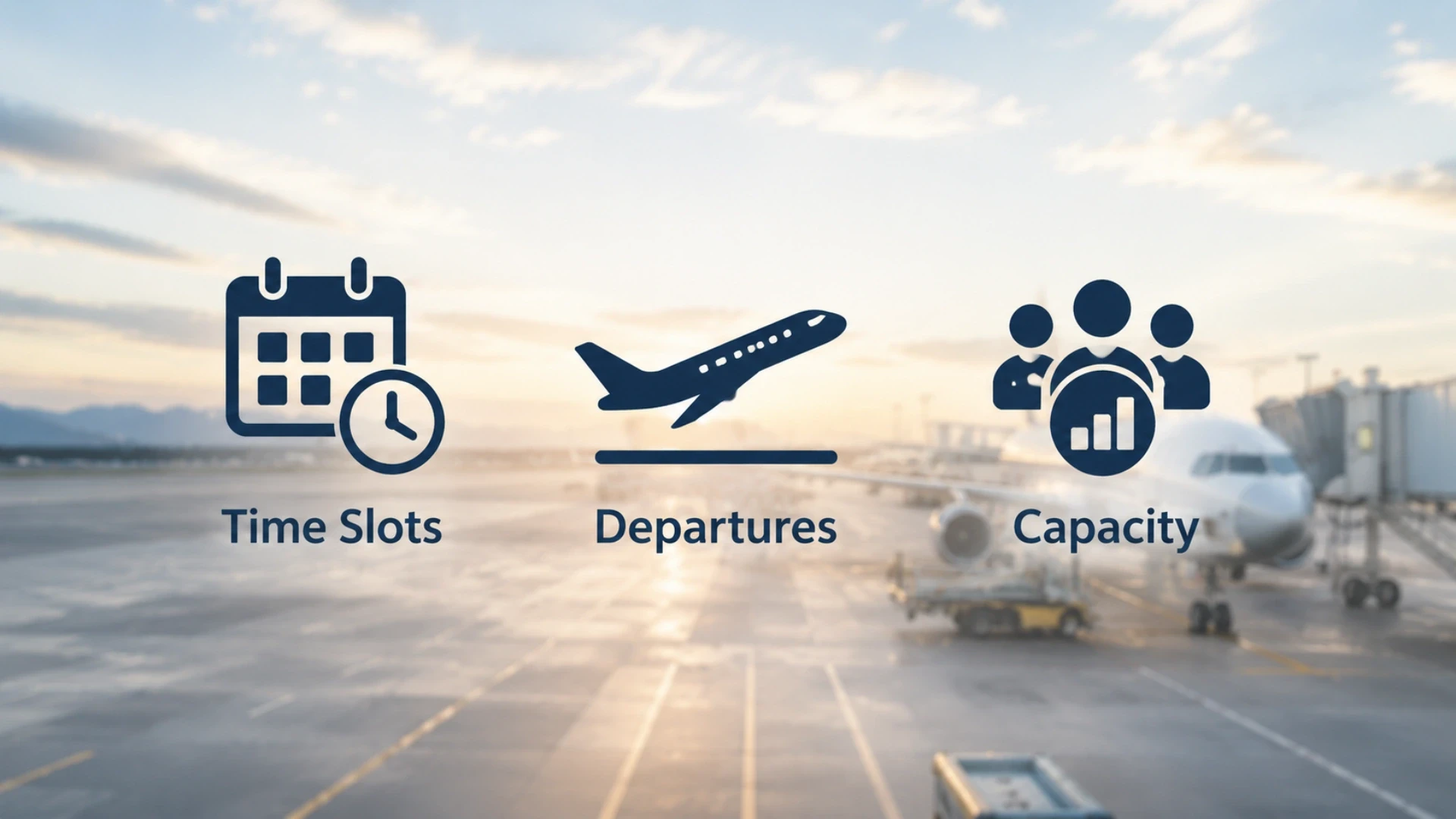
Scheduling is the foundation of any tours and activities booking platform. It defines what an operator can sell and when: fixed departures, recurring daily slots, private bookings, and seasonal tours. Get the scheduling model wrong, and every other feature inherits the problem. For teams looking to build or scale this efficiently, hiring experienced developers like Hire Django Developers can help ensure a solid and scalable system from the start.
Why Scheduling Is Harder Than a Calendar
A tour is not one event. It is a 9 AM slot for 15 people, a 2 PM slot for 8, a private evening option, and a weather-dependent winter variant. The scheduling engine has to model all of these as separate, capacity-limited products tied to shared resources like guides and equipment.
Resource allocation is the hidden layer. If two tours need the same guide or the same kayaks at the same time, the system must block the conflict before a customer can book it. This is what separates a real platform from a glorified calendar.
Basic Calendar | Scheduling Engine |
One event per time block | Multiple slot types, capacities |
No resource awareness | Guides and equipment allocated |
Manual conflict checks | Auto-blocks double-booked resources |
For operators running guided trips, scheduling ties directly into itinerary and guide assignment, covered in our guide Building a Tour Operator Management System. For trips spanning several days, see Building a Multi-Day Tour Booking System.
A scheduling engine is detailed backend work. Teams often hire Python developers for the capacity and resource logic. For how distributed teams deliver it reliably, see how to build a successful remote development team.
Struggling With Double Bookings and Lost Slots?
Acquaint Softtech maps your scheduling and capacity model, time slots, resources, and channels, and shows you exactly where overbooking and empty-slot revenue leaks hide.
We send an architecture map and developer profiles within 48 hours. You interview the lead engineer before any work begins.
Real-Time Availability: The Overbooking Killer
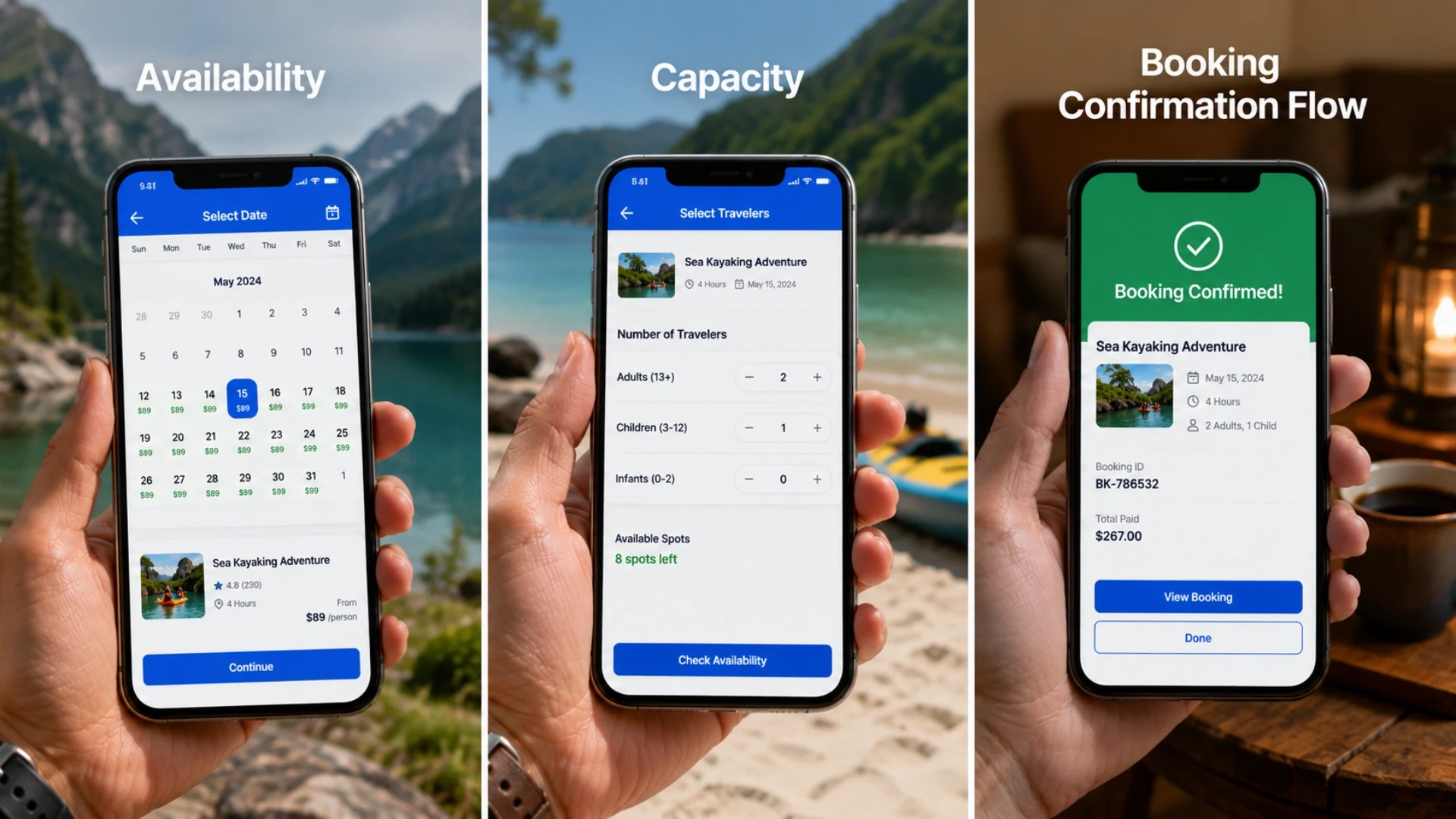
Real-time availability means the slots a traveller sees are the slots that are actually open at that exact second across every channel in a tour booking system. If you’re learning how to build a tour booking platform, this real-time sync is not a feature; it is the core of the whole system. For activities, this is not a nice-to-have. It is what keeps availability accurate and bookings reliable.
Why Activity Availability Is So Hard
An activity sells across your website, OTAs like Viator and GetYourGuide, phone, and front desk. Without real-time sync, two channels can sell the last spot at the same moment. One customer shows up to nothing.
The fix is a single source of capacity truth. Every channel reads from and writes to one inventory store, and the moment a booking lands, every other channel updates. A short hold during checkout stops two travellers grabbing the same final spot.
Connecting to the big global resellers without losing sync is a build of its own, covered in our guide Viator and GetYourGuide Integration. Smart, demand-aware suggestions tie into Seasonal and Weather-Based Activity Recommendations.
Real-time sync across channels is exactly where inexperienced teams ship bugs. Many teams hire MERN stack developers for the real-time layer. For framework reasoning, see the technical reference on Laravel with React, Vue, and Angular.
Supplier Management: One Portal for Every Operator
If you are building a marketplace, supplier management is what lets you scale without hiring an army. A supplier portal gives each operator a self-service dashboard to manage their own listings, schedules, capacity, pricing, and payouts.
Why Self-Service Suppliers Scale the Platform
Without a portal, your team manually updates every operator's inventory. That caps growth at how many listings your staff can handle. With a portal, 500 operators manage themselves, and your platform scales while your headcount stays flat.
The portal also handles the money side: commission rules, markup controls, and automated payouts per supplier. For a marketplace operating across the USA, UK, Europe, UAE, and India, that means multi-currency payouts and local tax handling built in from day one.
A guide marketplace is a specialised version of this, with freelance profiles, booking, and ratings, covered in our guide Building a Tour Guide Marketplace. Letting travellers compare operators side by side ties into Building a Tour Package Comparison Tool.
A multi-supplier portal with payouts is complex platform work. Teams usually hire developers with marketplace experience for this. To compare engagement models for this kind of build, see staff augmentation vs dedicated team vs outsourcing.
Search, Booking, and Flexible Cancellation
The customer-facing layer is where capacity becomes a sale. It needs fast search, a frictionless booking flow, and cancellation rules flexible enough to win bookings without exposing operators to loss. You can also strengthen this layer by working with specialists like hiring DevOps developers to ensure the system stays fast, scalable, and always available.
Why Cancellation Policy Drives Conversion
Travellers book experiences far in advance and want freedom to change plans. A flexible cancellation policy, free cancellation up to 24 hours before, measurably lifts conversion. But it has to be configurable per operator and per activity, so a non-refundable adventure tour and a flexible museum ticket can coexist.
The booking flow itself must be fast and mobile-first. Most activity bookings happen on a phone, often in-destination, so a checkout that takes more than a few taps loses the sale. Flexible policy engines are a build of their own, covered in our guide Activity Cancellation and Rescheduling. For attraction tickets with timed entry, see Building a Ticket Booking Platform for Attractions. A mobile-first booking flow needs strong app engineering. Teams often hire React Native developers for the customer app.
Build vs Buy: When a Custom Platform Pays Off

Not every operator needs a custom platform. Off-the-shelf tools like Bokun, FareHarbor, or Rezgo work well for single operators. The question is when those tools start holding you back.
Use these signals. If two or more apply, a custom build starts to pay off.
Signal | Off-Shelf | Custom |
You are building a multi-supplier marketplace | Strains | Built for it |
You need unique scheduling or pricing | Workarounds | Native fit |
Your tech is your differentiation | No | Required |
You want commission-free direct sales | Capped | Full control |
You want to own the data and code | No | Yes |
Off-the-shelf tools charge monthly fees plus booking commissions that scale against you. For a marketplace or a fast-growing operator, a custom platform pays back within 18 to 24 months and removes the per-booking tax entirely.
Niche experiences often outgrow generic tools fastest. Specialised builds like adventure sports and corporate events are covered in our guides Building an Adventure Sports Booking Platform and Building a Corporate Event and Team Building Booking Platform.
Travel tech startups often use staff augmentation services to embed pre-vetted booking engineers at pace. For a fuller view of engagement options, the Acquaint Softtech services range shows where each model fits.
Real Example: A Travel Experience Platform Built From Scratch
Theory is useful. A real build is more convincing. Here is a verified travel engagement from Acquaint Softtech's portfolio, relevant to any operator moving from manual bookings to a connected platform.
Client | Hiran Holidays | Travel, Tourism & Experiences |
The Problem | Manual bookings, no online scheduling, no way to showcase nearby experiences, dependence on third-party listings. |
What We Built | Custom platform with online booking, payment integration, an explore-nearby-experiences module, and central reservation system |
The Result | 40-50% growth in website traffic and measurable gains in conversion and revenue. 5.0/5.0 Clutch scores. |
The before-and-after is the story. Before: a travel business booking experiences by phone, with no live scheduling and revenue handed to third parties. After: an owned platform where travellers discover and book experiences directly, with traffic up nearly half.
The principle scales straight to a full activities marketplace. Whether you schedule one daily tour or a thousand experiences across hundreds of suppliers, the win comes from owning real-time scheduling and the customer relationship instead of renting it.
You can review this and other verified engagements on the Acquaint Softtech case studies page and the full Clutch profile, which holds a 4.9/5 rating across 50+ verified reviews with Premier Verified status.
Verified client feedback: "What's most impressive was their technology expertise, communication, and timely delivery." Rated 5.0/5.0 overall on Clutch.
Tours and Activities Platform Cost and Timeline (2026)
The honest answer to "how much does a tours and activities platform cost" depends on whether you build for one operator or a full marketplace. Here are real 2026 ranges for a dedicated team build.
Build Scope | India-Based Team | Timeline |
Single-operator booking platform (MVP) | $20,000 - $45,000 | 8 - 12 weeks |
Multi-supplier marketplace + portal | $50,000 - $120,000 | 4 - 7 months |
Full marketplace + OTA integrations + app | $120,000 - $250,000 | 7 - 11 months |
A Western agency in the USA, UK, or Europe typically charges 40% to 60% more for the same scope. The biggest cost driver is never the search page. It is the real-time availability engine and the supplier portal with payouts.
For teams validating before full commitment, MVP development services deliver a single-operator booking core that proves the scheduling model first. For ongoing work after launch, support and maintenance services keep OTA integrations and payout rules current as supplier APIs change.
Get a Fixed-Scope Activities Platform Quote in 48 Hours
Share your activity types, supplier model, and target markets. Acquaint Softtech sends an architecture map, developer profiles, and a fixed-scope cost estimate within 48 hours.
You interview the lead developer before any engagement starts. Up to 40% cost savings vs. Western agencies. 1,300+ projects delivered. 4.9/5 on Clutch.
Frequently Asked Questions
-
How do you build a tours and activities booking platform?
You build it on four pillars: a scheduling engine for time slots and departures, a real-time availability module that prevents overbooking, a supplier portal for operators to manage their own inventory, and a booking and payment flow. Start with scheduling and availability, because capacity management is the hardest and most important part.
-
What is an activity scheduling engine?
An activity scheduling engine models tours as time-bound, capacity-limited products: fixed departures, recurring slots, private bookings, and seasonal variants. It also allocates shared resources like guides and equipment, automatically blocking conflicts so two tours cannot book the same resource at the same time.
-
How does supplier management work in a tour marketplace?
A supplier portal gives each operator a self-service dashboard to manage their own listings, schedules, capacity, pricing, and payouts. This lets a marketplace scale to hundreds of suppliers without expanding your own staff, and it handles commission rules and multi-currency payouts per supplier automatically.
-
How much does a tour booking platform cost?
Platform Type
US / UK Cost
EU Cost
Single-operator booking platform
$20,000 – $45,000 / £26,000 – £55,000
€30,000 – €65,000
Marketplace (supplier portal)
$50,000 – $120,000 / £40,000 – £95,000
€58,000 – €140,000
Full OTA platform (apps + integrations)
$120,000 – $250,000 / £95,000 – £200,000
€140,000 – €230,000
-
How do you prevent overbooking in an activities platform?
Use a single source of capacity truth that every channel, website, OTA, phone, and front desk reads from and writes to in real time. The moment a booking lands, all channels update. A short hold during checkout stops two travellers from grabbing the same final spot.
-
Can I connect my platform to Viator and GetYourGuide?
Yes. Activity platforms integrate with global resellers like Viator and GetYourGuide through their APIs, syncing availability and bookings both ways. The key is keeping one real-time capacity store so a sale on any channel instantly updates all others and prevents double bookings.
-
Should I build a custom platform or use off-the-shelf tools?
Off-the-shelf tools like Bokun or FareHarbor suit single operators. Build custom when you are creating a multi-supplier marketplace, need unique scheduling, want commission-free direct sales, or your technology is your differentiation. Two or more of these signals usually justify a custom build.
I lead technology and client success at Acquaint Softtech with one goal in mind. Deliver work that feels personal, reliable, and worthy of long term trust. I stay close to both our clients and our developers to make sure every project moves with clarity, quality, and accountability.
Table of Contents
Get Started with Acquaint Softtech
- 13+ Years Delivering Software Excellence
- 1300+ Projects Delivered With Precision
- Official Laravel & Laravel News Partner
- Official Statamic Partner
Related Blog
The Complete Guide to Travel & Hospitality Software Development in 2026
Most travel and hospitality platforms fail not because the idea was wrong, but because the technology architecture was underplanned. This guide explains every platform type, cost tier, and technology decision your team needs to make before writing the first line of code.

Acquaint Softtech
May 6, 2026
How to Build an OTA: Online Travel Agency Architecture for Flight, Hotel & Package Booking
Most OTA builds fail not on the booking logic but on the integration layer. Here is the complete architecture map, GDS, hotel aggregation, package bundling, payments, and what each module actually costs to build in 2026.
Manish Patel
May 27, 2026
Hotel PMS Development: Front Desk, Housekeeping, and Guest Management in One System
A hotel PMS is not a booking system. It is the operational backbone connecting every department in real time. Here is what it includes, how each module is built, and what it costs in 2026.